Tag: economy

  • Inflation Falls Below 2% for First Time in Three Years

    Inflation Falls Below 2% for First Time in Three Years

    By Sean Norman

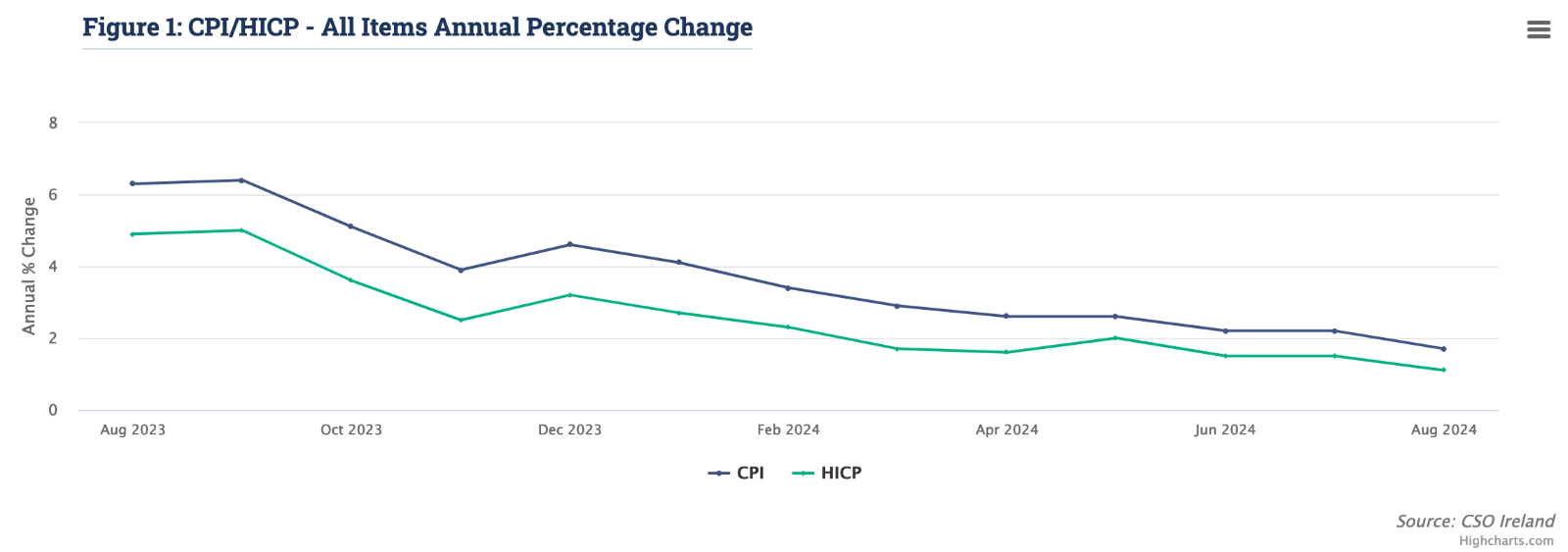
    The latest statistics show that the Consumer Price Index (CPI) rose by 1.7% between August 2023 and August 2024, down from July’s increase of 2.2% from last year. 

    Commenting on the report Anthony Dawson a Statistician in the prices division said, “Today’s publication of the CPI shows that prices for consumer goods and services in August 2024 rose by 1.7% on average when compared with August 2023. This is the first time since June 2021 that the CPI, Ireland’s official measure of inflation, has been below 2.0%.” 

    Source: CSO Ireland 

    The biggest drop in pricing was found in clothing and footwear, which went down by 6%, and a drop of 2% in utility prices such as fuel, water and electricity. 

    When asked about the effect these drops have on consumers Maeve Ahern, an author on the report stated: “We’re looking at a positive downward trend for households in terms of their utility bills and clothing costs mostly due to providers cutting their rates by about 3%.”

    Alcohol and tobacco saw a rise of nearly 4% as did transport costs, the highest increases in comparison to last year were found in restaurants and hotels at 4.5% which according to Ahern is a direct result of alcohol becoming more expensive this year.” The national average price for a pint of larger now sits at €6.25. 

    Transport has gone up “primarily thanks to an increase in petrol and diesel, alongside airfares getting more expensive as well,” says Ahern. 

    The CPI also stated that “Miscellaneous Goods & Services” have risen by 4%. This would be items such as health and motor insurance, or personal grooming services such as salons and barbers, according to Ahern.

    According to the EU Harmonised Index of Consumer Prices (HICP), which measures the average inflation rates across the EU, prices on average went up by 1%.  

    Alongside the CPI the National Average Price table was released. This measures the average prices for select goods and services across the country. 

    Source: CSO Ireland. 

    Other notable items include a decrease in the cost of a slice pan on average, cheese and spaghetti, with a 2 litre carton of milk remaining the same price. 

    Dawson added: “It’s important to remember that this is only a flash estimate and not the final HICP which is released in January of next year, so full quality control can’t be guaranteed, these flash estimates are a useful indicator to see the type of trajectory we’re on however.” 

    “I’ve definitely been spending more the last few shops, I think things are just getting pricier everywhere, especially food,” said Mary Donnelly (36), a primary school teacher when asked about her shopping habits.  

    When asked about her thoughts on Ireland’s inflation rate dropping, she said, “I can’t say I have much a grasp on that, but if things don’t change soon, we’re all going to be making major changes to our lives, especially with the cost of rent on top of all this.”

    John Scally, a senior economist with the Central Bank commented that, “we’re getting closer to our target of 2% annual inflation by 2025, 2% is an important target to hit for Ireland for the creation of conditions that will lead to sustainable growth for both households and for businesses as well.”

    According to Scally, “inflation has become much harder to parse in recent years thanks to the ongoing war in Ukraine affecting prices of things like gas and even crop plants and of course the Covid 19 pandemic which completely threw off the world economy never mind just Ireland’s.”

    “Ireland has always been at the whim of external inflation since we’re an open economy, and thankfully the shocks are beginning to subside, as of now we’re looking into inflation for next year and for two years ahead of that to keep our estimates as accurate as possible.”

    “We’re looking into ways to further improve our accuracy by looking at implementing new tools like machine learning and AI which should help not only with the accuracy of our reports but also the speed we can get them finished at.”

  • Inflation soars to 20-year high

    Inflation soars to 20-year high

    Image creative commons.

    By Eoin Glackin

    A new report from the Central Statistics Office (CSO) shows the annual rate of inflation, as measured by the Consumer Price Index (CPI), rose to 5.3% higher in November 2021 compared with November 2020. The largest annual change since June 2001 (+5.3%). 

    The most notable changes in the year were increases in Transport (+16.2%), Housing, Water, Electricity, Gas & Other Fuels (+12.0%), Restaurants & Hotels (+3.9%) and Alcoholic Beverages & Tobacco (+3.4%). 

    A decrease occurred in Miscellaneous Goods & Services (-0.3%).

    Consumer Prices in November increased by 0.6% in the month. This is the thirteenth month in a row that has shown monthly inflation. Prices rose by 0.3% in November 2020.

    The biggest monthly price increases were in Clothing & Footwear (+3.3%) and Transport (+1.3%). There were decreases in Alcoholic Beverages & Tobacco (-0.7%) and Restaurants & Hotels (-0.1%).

    The largest upward contributions to the CPI in the year were Transport (+2.07%), Housing, Water, Electricity, Gas & Other Fuels (+1.92%), Restaurants & Hotels (+0.61%) and Alcoholic Beverages & Tobacco (+0.23%).

    The largest downward contribution to the CPI in the year was Miscellaneous Goods & Services (-0.03%).

    The main factors contributing to the annual change were as follows:

    • Transport increased primarily due to higher prices for diesel, petrol and motor cars, an increase in airfares and a rise in the cost of services in respect of personal transport equipment.
    • Housing, Water, Electricity, Gas & Other Fuels rose mainly due to higher rents and mortgage interest repayments and an increase in the cost of electricity, home heating oil and gas.
    • Restaurants & Hotels increased primarily due to a rise in the cost of hotel accommodation and higher prices for alcoholic drinks and food consumed in licensed premises, restaurants, cafes etc.
    • Alcoholic Beverages & Tobacco rose mainly due to an increase in the cost of tobacco products and higher prices for wine sold in supermarkets and off licences.
    • Miscellaneous Goods & Services decreased primarily due to a fall in the cost of motor insurance premiums and lower prices for jewellery, clocks & watches and articles & products for personal care. This decrease was partially offset by higher health insurance premiums.

    The sub index for Services rose by 5.3% in the year to November, while Goods increased by 5.0%. Services, excluding mortgage interest repayments, increased by 5.4% in the year since November 2020.

    The CPI excluding tobacco increased by 0.6% in the month of November and rose by 5.3% in the year. The CPI excluding mortgage interest increased by 0.6% in the month and rose by 5.3% in the year.

    Prices on average, as measured by the EU Harmonised Index of Consumer Prices (HICP), increased by 5.4% compared with November 2020.

    The most notable changes in the year were increases in Transport (+17.1%), Housing, Water, Electricity, Gas & Other Fuels (+14.3%), Restaurants & Hotels (+3.9%) and Alcoholic Beverages & Tobacco (+3.4%). There was a decrease in Miscellaneous Goods & Services (-0.9%).

    The HICP increased by 0.6% in the month. This compares to an increase of 0.3% recorded in November of last year.

    The most significant monthly price changes were increases in Clothing & Footwear (+3.3%) and Housing, Water, Electricity, Gas & Other Fuels (+1.5%). There were decreases in Alcoholic Beverages & Tobacco (-0.8%) and Restaurants & Hotels (-0.2%).

  • High heels, big problems?

    High heels, big problems?

    The idea has graced the internet for over a decade: the economic climate determines the fashionable height of heels in women’s shoes. Is this an undeniable fact or just fabulous fiction?

    The stiletto – typically ranging from one to five inches – has been adored for decades. The designers credited with its creation were Salvatore Ferragamo, Roger Vivier and André Perugia. The shoe, rising to prominence in the 1950s, came at a time when Europe’s economy began recovering from World War II. The stiletto swiftly became a staple for many women across the globe. The shoes were famously seen on the character Carrie Bradshaw who spent a small fortune on Manolo Blahnik. Popular luxury brands such as Jimmy Choo, Christian Louboutin and Oscar de la Renta still carry this style today  

    In 2009 – at the ‘height’ of the recession – it was reported that the average size of women’s heels mentioned in social-media posts was an incredible seven inches. However, by the year 2011, the average dropped to a far more comfortable two inches.

    Clogs first appeared in 1300s European fashion. Their transformation to platform state – like many popular shoes – began in the 1970s, when clogs were worn by both men and women. Their demand slowly decreased until they resurfaced in Viktor & Rolf’s 2007 Winter Ready-To-Wear fashion show

    Also in 2011, Researchers at computer company IBM analysed fashion data to determine what the most popular pair of shoes were. They found that during those times flat shoes and kitten heels were in high demand.

    The evolution of the platform sandal started with 13th-century middle eastern kabkabs, which then led to the European chopine. Other periods where there were major spikes in heel height were in 1929 following the Great Depression and in the late 1960s and early 70s. Notably, the 1970s brought with them another economic downturn for the Western world

    “Usually, in an economic downturn, heels go up and stay up — as consumers turn to more flamboyant fashions as a means of fantasy and escape,” says Trevor Davis, a consumer product expert at IBM’s Global Business Services Unit.

    Even trainers couldn’t escape elevation. By 1990 the original trainer – the plimsole – was a thing of the past. Collections by Buffalo London, Fila, Nike and Northwave in the 90s paved the way for today’s chunky sneakers. Could the West’s recession of the early 1990s be a part of this trend? The fad originally died out in the early noughties only to be revived again in 2013 by the Adidas Ozweego
    In 1938, designer Salvatore Ferragamo presented a multi-coloured platform wedge named ‘The Rainbow’. Coincidentally (or not), the US faced a brief recession between 1937 and 1938 – America’s third worst downturn of the 20th century
    During World War II, wedges grew in popularity because of the lack of leather and rubber available. The materials were needed for the war effort and women were forced to use alternative materials to make their footwear. The desire for wedges faded as the fashion cycle turned to other heels for inspiration. However – along with platforms – wedge heels were all the rage in the 1970s
    One of the most iconic wedges was seen on Ginger Rodgers in 1945, where she sported a pair with no mid-soles
    Fashion is not only an art form but a means of escapism. The fluctuation in heel size has distracted consumers from focusing on economic failures in the past and may continue to do so

    Despite the fact that for the last year the majority of heel wearers have traded their stilettos for slippers, even a pandemic can’t stop the fashion wheel from turning.

    In terms of footwear, it seems like the only way is up. Luxury brands such as Miu Miu, Versace and Moschino lure us onto greater heights with their current collections. Could it be an indication that the worst is yet to come?

    [poll id=”2″]

  • Covid-19 abroad: Public health vs economy in Switzerland

    Covid-19 abroad: Public health vs economy in Switzerland

    Watch Nina Suter and Izzy Rowley discuss the situation in Switzerland

    Switzerland has vaccinated 2,431,709 people and is on its way out of a national lockdown.

    It’s clear that the country was hit hard by the crisis. The Swiss government recently announced that, at a conservative estimate, a third of the country’s population has been infected by Covid-19.

    However, when the country was facing its second wave of the virus the government was slow to respond, and many businesses remained open, including bars and clubs, resulting in a superspreader event.

    “As is probably the case everywhere, but especially here, the economy is really prioritised over health,” says Nina Suter, a Swiss native who is currently living in Zurich.

    “It’s wild when you have the Swiss Finance Minister [Ueli Maurer] saying ‘oh, we can’t afford a second lockdown,’ which is wild, this is one of the richest countries globally,” adds Suter.

    Zurich’s streets are finally opening up after a long lockdown. Image courtesy of H. Emre via Pexels.com

    The country is only now emerging from restrictions that were put in place to avoid a third wave, with restaurants and pubs allowed to open their outdoor seating.

    The government has introduced a new strategy of rapid self-testing. Swiss people will be able to obtain five tests per month each. It’s hoped that this will allow for early detection of the virus and will help to contain any new variants. 

  • Newbridge in pictures: Rural Kildare town adjusting to restrictions during Covid-19

    Newbridge in pictures: Rural Kildare town adjusting to restrictions during Covid-19

    TheCity.ie’s Kim O’Leary presents a collection of her own photos from her hometown of Newbridge, Co Kildare, where big and small businesses are fighting to adjust to restrictions – cautiously optimistic that their beloved town will one day flourish again.

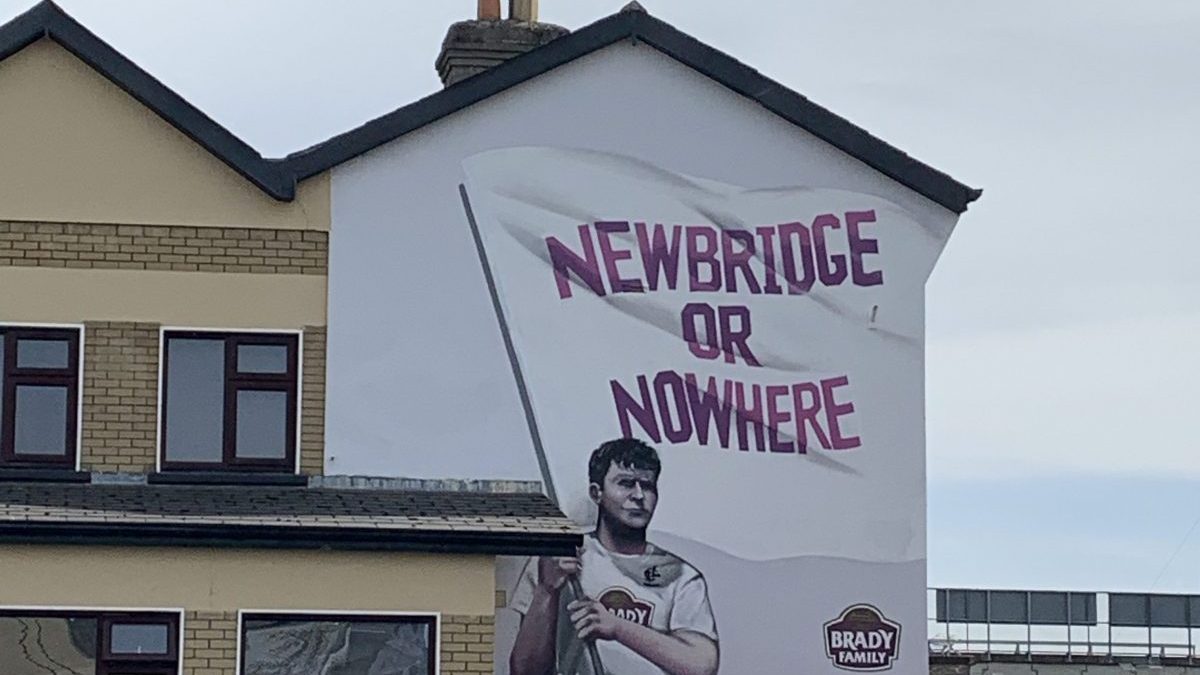
    ‘Newbridge or Nowhere’ became the town’s unofficial mantra following the summer of 2018 debacle, when Kildare rejected the choice of Croke Park as the venue for their All-Ireland qualifier round 3 match with Mayo. In the end the match was played in Newbridge’s St. Conleth’s Park and saw the Lilywhites emerge victorious over Mayo. This mural was painted to cement the landmark victory. (March, 2020)

    The Covid-19 pandemic has changed normal life as we know it, with many local businesses bearing the brunt of changes to the economic climate. And for my small rural town of Newbridge in Co Kildare, the difference between Newbridge before and during Covid-19 is startling; shops are closed, people now wear masks and gloves to the supermarkets and the atmosphere of dread and fear is palpable in the air.

    Newbridge Town Hall is located at the very heart of the town and the building has been used as a dance hall, a FÁS training centre, a bingo hall, a storage unit and it was also headquarters to the town commission and the community council. The first stone of the town hall (which is formerly a barracks chapel) was laid in 1859 by Lieutenant General Sir James Chatterton. (March, 2020)

    Newbridge, officially known by its Irish name Droichead Nua, is a town in County Kildare, Ireland. While the nearby Great Connell Priory was founded in the 13th century, the town itself formed from the 18th century onwards. The town grew to include a military barracks which opened in the early 19th century, which continues to function.

    The back-end streets behind Main Street in Newbridge are lonely during the Covid-19 pandemic, with many of the small shops and businesses closed. (April, 2020)

    In the 20th century the town saw great expansion of local business, and Newbridge began acting as a commuter town for Dublin. Over the last twenty years, the town has seen its population soar to 22,742 in the 2016 Census – making it the most populous town in Kildare.

    The newly refurbished post office in Newbridge opened earlier in the year, and it remains open during the Covid-19 pandemic to provide essential services to the town’s inhabitants. (April, 2020).

    In many ways — with GAA being so popular — you’re either a Moorefield or Sarsfields fan, with downtown considered Sarsfields’s turf.

    Like most places still open for business in Newbridge, strict ‘social-distancing’ practices are in operation inside the post office. Make sure to stay two metres apart. (April, 2020)

    St. Conleth’s GAA Park is located downtown, so when these two rival sides come together to play GAA, it’s sure to an entertaining display of Gaelic football prowess. In October 2019, Sarsfields were declared Kildare Senior Football Champions for the 25th time in their history after they claimed a six point victory over Moorefield in St. Conleth’s Park.

    People wear masks as they queue up outside the post office in Newbridge, adhering to the 2 metres social distancing rule. (April, 2020)
    It’s not all doom and gloom for local businesses, with SPAR and Life Pharmacy among the essential stores remaining open during the pandemic. (April, 2020)
    Judge Roy Beans restaurant on Edward Street is a must-see for burger lovers, with the American style restaurant crowned ‘Best Pub Burger’ two years in a row. Currently the restaurant is operating a takeaway service due to Covid-19 and its next door neighbour the EBS building society is open for business as usual. (April, 2020)
    Whitewater Shopping Centre — located on Main Street in Newbridge — is one of the country’s largest shopping centres, with thousands of visitors flocking to it every year. At the moment, many of its non-essential shops have closed but its outdoor water features are still proving popular with families. (April, 2020)
    Escalators have been powered down in the Whitewater Shopping Centre, with only a handful of stores open including the Marks & Spencer food hall. (April, 2020)
    A blind man walking down Main Street in Newbridge during the Covid-19 pandemic over Easter weekend. (April, 2020)

    The very top of the town is home to the larger supermarkets of Dunnes Stores and Tesco, as well as the newly opened skate park, and fast-food giants McDonalds and KFC.

    For the first time in their history since opening in Newbridge, McDonalds and KFC on Moorefield Road are shut for business with empty carparks over the Easter weekend. McDonalds shut its doors on Monday, April 23 and KFC shut on Wednesday, March 25.
    (April, 2020)
    A solitary man eats outside KFC in Newbridge during Covid-19. (April, 2020)
    The Dunnes Stores carpark in Newbridge is almost full as shoppers flock to gather their much-need food supplies. (April, 2020)
    A female shopper dressed in mask and gloves for this shopping excursion. (April, 2020)
    A woman visits the fish monger to collect her order. (April, 2020)
    The popular skate park in Newbridge opened last April after 20 years of campaigning by skate boarding enthusiasts, but during Covid-19 the park is going mostly unused. (April, 2020)
    One of the most iconic businesses located in Newbridge is of course Newbridge Silverware, which has spent over 80 years in the town. Its Museum of Style Icons features pop culture memorabilia from Princess Diana’s dresses to suits worn by The Beatles, and much more. (March, 2020)

  • Average Irish household to spend over  €2,600 this Christmas

    Average Irish household to spend over €2,600 this Christmas

    Retail Ireland’s Christmas Monitor 2017 predicts an increase in total sales of over €100 million, with sales over the Christmas season to increase to €4.5 billion from €4.4 billion last year. 


    Retail Ireland Director Thomas Burke said: “Now that the uncertain political environment of recent days has passed, retailers are looking forward to the approaching Christmas period with renewed optimism. Rising disposable incomes, more people at work, and falling prices will raise consumer spirits and enable greater spending over the busy Christmas period.” 
     

    With many people choosing to shop online and to buy from non-Irish websites to avoid the busy shopping centres and get better deals, the challenge for Irish retailers is to ensure that this increased spending is felt locally and Irish retailers benefit from this spending. 


    Retail Ireland Director Thomas Burke said: “The growing migration by Irish consumers online over recent months is creating a challenge for Irish retailers. Local traders have to date been unable to stem the flow of close to 75% of online consumer spending that currently leaves these shores.” 


    This increase in consumer spending is a result of an average rise in gross disposable income which was up 5.4 percent in the first half of 2017, an increase of over four percent from last year. Because of this increase, many Irish people are finding that they have more money to spend on clothes, food and drink, presents, decorations and anything else they need for Christmas.


    For presents, the Retail Ireland Monitor 2017 predicts that the focus for gifts will be primarily on personalisation, fragrance, champagne, and chocolates. For men, it will be focused on shoes, and for women, the main presents will be luxury accessories and fragrance. 


    Electronics are always in high demand, especially around Christmas time. Televisions, tablets, phones and video game systems are usually on the majority of children’s Santa lists. Retail Ireland predicts that from Black Friday right up to Christmas Day there will be a big emphasis on these products, with many retailers using discounts and promotions to drive sales.


    By Aimee Walsh

  • Renounce City’s Vote to Drop References to Australia Day

    Renounce City’s Vote to Drop References to Australia Day

    Lorem ipsum dolor sit amet, consectetur adipiscing elit. Sed ultrices ipsum non mattis pharetra. Integer laoreet non felis sit amet pharetra. Integer mollis eget felis non finibus. Nullam nibh mauris, fermentum vitae felis vehicula, aliquam bibendum sapien. In euismod velit vitae neque rhoncus congue. Aliquam luctus, sapien in consectetur cursus, quam urna euismod magna, sed pellentesque massa libero eu lorem. Aenean rhoncus gravida nisl vel pretium. Nam ac nisl non ipsum vestibulum vehicula vulputate sagittis magna. Aenean est nisl, convallis volutpat tempor ac, tempus ac ante. Class aptent taciti sociosqu ad litora torquent per conubia nostra, per inceptos himenaeos. Fusce rhoncus sodales tempor. Nunc pretium tortor felis, eget cursus magna accumsan a.

    Etiam eu molestie eros, commodo hendrerit sapien. Maecenas tempus leo ac nisi iaculis porta. Sed sapien tortor, aliquet a velit ut, lacinia molestie velit. Maecenas ornare consequat massa ullamcorper dapibus. Aliquam auctor, sapien sit amet accumsan facilisis, enim enim aliquet arcu, tincidunt pellentesque justo turpis id neque. Duis eleifend nunc sit amet mi dapibus ornare. Suspendisse vel libero sem.

    Sed nec blandit nibh. Pellentesque commodo suscipit gravida. Sed sit amet ex sed mi dignissim elementum in ut quam. Vivamus laoreet non mauris eget mattis. Nam turpis orci, consectetur vel accumsan sed, condimentum at sapien. Nunc ut egestas neque, eu hendrerit lacus. Suspendisse fermentum congue dui nec fringilla. Duis volutpat nunc lectus. Suspendisse potenti. Suspendisse egestas venenatis nunc. Donec at laoreet lacus.

    Pellentesque habitant morbi tristique senectus et netus et malesuada fames ac turpis egestas. Aliquam quam elit, mollis at odio gravida, ultrices pulvinar justo. Vivamus eleifend mollis dolor, et ornare turpis vehicula in. Pellentesque auctor ac enim sit amet euismod. Ut eu accumsan nunc. Nam ultrices, orci a volutpat molestie, ipsum magna posuere ex, vel lobortis dolor purus tristique purus. Integer arcu libero, feugiat non eros vel, aliquet sodales justo. Aliquam lobortis efficitur velit, vel tempor dui iaculis non. Mauris non ullamcorper leo. Nulla consectetur arcu eget condimentum auctor. Aliquam sagittis dictum augue. Duis fringilla nec augue eu laoreet.

  • Leading Article: A Better Way to Educate Primary School Children

    Leading Article: A Better Way to Educate Primary School Children

    Lorem ipsum dolor sit amet, consectetur adipiscing elit. Sed ultrices ipsum non mattis pharetra. Integer laoreet non felis sit amet pharetra. Integer mollis eget felis non finibus. Nullam nibh mauris, fermentum vitae felis vehicula, aliquam bibendum sapien. In euismod velit vitae neque rhoncus congue. Aliquam luctus, sapien in consectetur cursus, quam urna euismod magna, sed pellentesque massa libero eu lorem. Aenean rhoncus gravida nisl vel pretium. Nam ac nisl non ipsum vestibulum vehicula vulputate sagittis magna. Aenean est nisl, convallis volutpat tempor ac, tempus ac ante. Class aptent taciti sociosqu ad litora torquent per conubia nostra, per inceptos himenaeos. Fusce rhoncus sodales tempor. Nunc pretium tortor felis, eget cursus magna accumsan a.

    Etiam eu molestie eros, commodo hendrerit sapien. Maecenas tempus leo ac nisi iaculis porta. Sed sapien tortor, aliquet a velit ut, lacinia molestie velit. Maecenas ornare consequat massa ullamcorper dapibus. Aliquam auctor, sapien sit amet accumsan facilisis, enim enim aliquet arcu, tincidunt pellentesque justo turpis id neque. Duis eleifend nunc sit amet mi dapibus ornare. Suspendisse vel libero sem.

    Sed nec blandit nibh. Pellentesque commodo suscipit gravida. Sed sit amet ex sed mi dignissim elementum in ut quam. Vivamus laoreet non mauris eget mattis. Nam turpis orci, consectetur vel accumsan sed, condimentum at sapien. Nunc ut egestas neque, eu hendrerit lacus. Suspendisse fermentum congue dui nec fringilla. Duis volutpat nunc lectus. Suspendisse potenti. Suspendisse egestas venenatis nunc. Donec at laoreet lacus.

    Pellentesque habitant morbi tristique senectus et netus et malesuada fames ac turpis egestas. Aliquam quam elit, mollis at odio gravida, ultrices pulvinar justo. Vivamus eleifend mollis dolor, et ornare turpis vehicula in. Pellentesque auctor ac enim sit amet euismod. Ut eu accumsan nunc. Nam ultrices, orci a volutpat molestie, ipsum magna posuere ex, vel lobortis dolor purus tristique purus. Integer arcu libero, feugiat non eros vel, aliquet sodales justo. Aliquam lobortis efficitur velit, vel tempor dui iaculis non. Mauris non ullamcorper leo. Nulla consectetur arcu eget condimentum auctor. Aliquam sagittis dictum augue. Duis fringilla nec augue eu laoreet.

  • Physiological Responses to Rock Climbing in Young Climbers

    Physiological Responses to Rock Climbing in Young Climbers

    Lorem ipsum dolor sit amet, consectetur adipiscing elit. Sed ultrices ipsum non mattis pharetra. Integer laoreet non felis sit amet pharetra. Integer mollis eget felis non finibus. Nullam nibh mauris, fermentum vitae felis vehicula, aliquam bibendum sapien. In euismod velit vitae neque rhoncus congue. Aliquam luctus, sapien in consectetur cursus, quam urna euismod magna, sed pellentesque massa libero eu lorem. Aenean rhoncus gravida nisl vel pretium. Nam ac nisl non ipsum vestibulum vehicula vulputate sagittis magna. Aenean est nisl, convallis volutpat tempor ac, tempus ac ante. Class aptent taciti sociosqu ad litora torquent per conubia nostra, per inceptos himenaeos. Fusce rhoncus sodales tempor. Nunc pretium tortor felis, eget cursus magna accumsan a.

    Etiam eu molestie eros, commodo hendrerit sapien. Maecenas tempus leo ac nisi iaculis porta. Sed sapien tortor, aliquet a velit ut, lacinia molestie velit. Maecenas ornare consequat massa ullamcorper dapibus. Aliquam auctor, sapien sit amet accumsan facilisis, enim enim aliquet arcu, tincidunt pellentesque justo turpis id neque. Duis eleifend nunc sit amet mi dapibus ornare. Suspendisse vel libero sem.

  • Feeling the Pulse of the Nation: Part 3

    Feeling the Pulse of the Nation: Part 3

    This final article in the series on the Pulse of the Nation by Sinead Farrelly  will examine the effect that political events, both foreign and domestic, have had on Irish people’s feelings towards the economic situation.

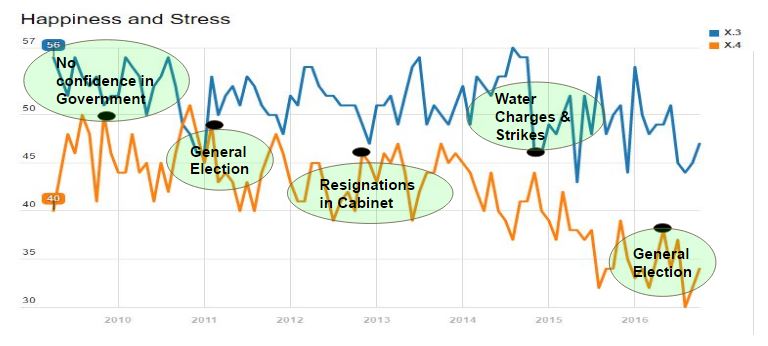
    Despite everything, it was interesting to see that generally people always felt happier, than they did stressed, over the entire period, except for at the end of 2010 when the International Monetary Fund (IMF) came into Ireland.

    Unlike the overall Economic Recovery Index (ERI), which was not hugely affected by political events, the impact on people’s emotions was much clearer. When the statistics were examined, it appeared as though when there was a time period of political instability with resignations or elections, then people appeared to be more stressed as there was an uncertainty as to who was leading the country in a time of economic strain.

    first-graph-sinead-farrelly
    Source: Sinead Farrelly

    In this first graph, happiness is indicated by the blue line, and stress is indicated by the yellow line. The major spikes in stress and dips in happiness came at times when the government was unsettled.

    The year of 2010 saw a flurry of resignations from ministers across the board as there was a general unease in the government at the time. While at the same time, votes of no confidence were put in against then Taoiseach Brian Cowen and also leader of Fine Gael Enda Kenny. Both motions lost and they each retained their positions. In 2012, there was also a vote of no confidence against Minister for Health James Reilly and this led to the resignation of Minister for Primary Care Roisin Shortall.

    The year 2011 began with the Green party withdrawing from government and automatically paving the way for a general election. Taoiseach Brian Cowen also resigned from his position at this time.

    In 2014, there were no major changes to the government or to the cabinet but people still were unhappy with the government as water charges were formally introduced at €60 per one adult household and €160 thereafter. Some 350,000 second level students were also forced out of school as teachers took industrial action over changes to the Junior Certificate.

    Each of these times saw the Irish people becoming more stressed and less happy, according to the Amárach research.

    This year’s general election saw Ireland without a government for a three month period as the Dáil voted four times to elect a Taoiseach. The Amárach results show that during those times that Ireland had an unstable government, the Irish people once more felt more stressed and less happy.

    As well as domestic political affairs, the Amárach research also questioned people on their feelings towards foreign political events. From October 2010 until December 2013, every month they posed the question: “The News From Other Countries Makes Me Confident The Recession Will End Soon.”

    second-graph-sinead-farrelly
    Source: Sinead Farrelly

    An interesting result which can be seen in the graph is that Irish people felt most confident about the recession ending soon when other countries required a bailout from Europe.

    The three major peaks in confidence in this graph appear in the summer of 2010, May 2011 and May 2012 when Greece, Portugal, Spain and Italy each received their bailouts. Famously (with Ireland included) these countries who received bailouts became collectively known as the PIIGS.

    The major dips in the graph came in November 2010, when the IMF came into Ireland and the country was at its worst point, and in July 2011 and June 2012. The two latter dips both correlate to events seen in Greece, firstly when they voted in a fresh round of austerity measures and received a second bailout, and secondly when the pro-austerity party won a landslide victory in the country’s elections.

    Both these events saw austerity measures becoming a mainstay in the Greek political landscape and both of these might have caused an upset in the Irish confidence as it proved that austerity measures were going to stay.

    The Amárach Research polls stopped asking a specific question about foreign affairs at the end of 2013. However, they did bring the topic back up again in June of this year in the wake of Brexit.

    On June 24th, the day after the Brexit referendum, there was a special Amárach poll carried out on the topic. It found that 37% of Irish people were going to become more cautious about their spending and saving following the shock result in the UK.

    This poll aligned with the July 2016 standard monthly results which showed 6% less people feeling financially comfortable and 5% less people feeling optimistic, while enjoyment and happiness both dropped by 3% and 6% respectively, with stress and anxiety both rising by 3%.