
Tag: EU

  • Government adds Irish language interpretation to EU meetings

    Government adds Irish language interpretation to EU meetings

    By Adam Jackson 

    The Irish Government will be providing interpretation services for meetings held in Ireland throughout the country’s first EU Presidency since Irish reached full status as an official EU language. 

    European Affairs and Defence Minister Thomas Byrne signed an agreement in January providing interpretation services for informal ministerial meetings and summits in Ireland. 

    These services will last the duration of Ireland’s eighth European Union Presidency from July to December this year, meaning that Irish will be given equal status to the other 23 official languages of the EU.  

    This is the first time that Ireland has held the Presidency since the Irish language gained full status as an official language of the EU, and the Irish Government is taking the opportunity to promote the language. 

    “The agreement marks a significant milestone in Ireland’s linguistic and cultural engagement with the EU and provides an opportunity to reaffirm Ireland’s commitment to multilingualism, and the full integration of the Irish language, in European affairs,” the Department of Foreign Affairs and Trade said in a statement. 

    Interpretation provisions, as well as the establishment of Irish as an official EU language, are part of the Government’s ongoing attempts to promote the use of the Irish language in an official capacity. 

    “I believe that the ability for Ministers and officials, from across the EU, to engage fully in their own languages supports meaningful dialogue, effective negotiations and good decision making,” Minister Byrne said in the statement.  

    By using the Irish language at an official level, the Government seeks to promote the use of the language more broadly and create more jobs for Irish speakers within the Government.  

    “I think it’s incredibly important that Irish, like any other official language, be given the necessary provisions for interpretations within the EU,” said Hannah Ní Dhoimhín, manager of Dréimire Language Services.  

    Dréimire is a company that provides resources for Irish language translation to organisations and individuals across Ireland. It is one of many organisations dedicated to current Irish language revitalisation efforts. 

     “It’s necessary that provisions be given to Irish language translation, in all areas, not only because Irish is our official language, but because Irish speakers are a minority group that the government needs to consider,” said Ní Dhoimhín. 

    While emphasising the importance of translation services, Ní Dhoimhín also acknowledged that the Government has been lacking in its engagement with Irish speakers, claiming it has not been taking its responsibilities to Irish speakers seriously enough. 

    “They just have to engage with Irish in a much more meaningful and serious way; because it is a minority language, the Government has been able to back away from any actual responsibility to the language,” Ní Dhoimhín said. 

    Despite its status as the official language of Ireland, Irish is not the primary language of most people living in Ireland.Of the 40% of the population who reported speaking Irish in the 2022 census, over half of that number said they couldn’t speak it very well.  

    “Any minority language revitalization effort should be led at the micro level. It must be a bottom-up situation, but bottom-up doesn’t mean that there is no responsibility at the top. It’s a stalactite-stalagmite situation. They need to meet in the middle,” Ms Ní Dhoimhín said. 

    In January Rural and Community Development and the Gaeltacht Minister, Dara Calleary announced that the Action Plan for Irish Language Public Services 2026-2028 had been approved by the Government. 

    This plan seeks to provide public services in Irish on the same level as they are in English. This includes public services such as healthcare, policing and social welfare. 

    It remains unclear how effective this plan, or the interpretation provisions for Ireland’s EU Presidency, will be in the preservation and revitalisation of the Irish language.   

  • How the EU deals with disinformation

    How the EU deals with disinformation

    With the vast interconnectivity that the world now experiences due to the growing population of internet users, unforeseen consequences have arisen that are yet to be remedied.

    One of these problems is the rise of what many like to call “fake news”. This is falsified information that is interwoven into news articles that are designed to be as believable as possible, aiming to stir hatred, bolster political agendas, or simply to modify events to suit one group over another.

    The term “fake news” has been called into question however, with many now preferring to call it disinformation. This helps to illustrate better that it is much closer to propaganda than it is to actual news.

    Propaganda has permeated the social media and news website landscape, many no longer realising what is propaganda and what is not, which makes the jobs of groups such as EU vs Disinformation that much more difficult.

    The EU vs Disinformation campaign was established to combat primarily Russian generated propaganda and disinformation online, and was set up by the European External Action Service East Stratcom Task Force.

    Russian backed propaganda has caused a mass influx of lies and deceit that has infested almost all forms of media. To understand the extent of disinformation that has been spread by pro-Kremlin sources, since its inception in 2015 the EUvsDisinfo taskforce has uncovered more than 3,800 cases. This year alone (2018), there has been almost a thousand such cases, coming in at around 977 at the time of writing. In the last week alone there has been roughly 35 cases.  

    While it is not only pro-Kremlin disinformation that is being published, EUvsDisinfo works solely against this form of news propaganda. This has been a point of contention for many who are against groups such as EUvsDisinfo, as it could also be very easily claimed that a large number of pro-White House disinformation also exists, and to a far lesser extent pro-EU disinformation (this latter, however, would not be backed by the institution).

    It is undeniable that the pro-Kremlin sources of disinformation are much more prevalent, however, as there is no other country that has managed to spread into so many other countries with such success.

    An older example of Russian disinformation and propaganda that a lot of people may remember is the chemical weapon attack that happened in Syria earlier this year. At the time it was said that upwards of 70 civilians were killed. This attack was followed by a coalition airstrike, and this is where some EU nations come into play, orchestrated by forces from the United States, the United Kingdom, and France among others, which reportedly killed a further 40 people or more.

    Moscow sources had been very forward in denying that chemical weapons were even used to begin with, but there is little to no evidence to support this. According to the BBC, the United Nations Organisation for the Prohibition of Chemical Weapons (OPCW) was delayed in surveying the scene of the attack, as they had come under fire during their risk assessment. Russia had also used the coalition airstrikes to boast about the Syrian Army’s own superiority, claiming falsely that 71 of 103 coalition missiles were shot down.

    A much more recent example of the prevalence of disinformation comes in the form of information that was being spread in relation to the yellow vest protests in France, with pro-Kremlin sources having a penchant for portraying Europe as being almost close to breaking point, or more extremely France being on the verge of full scale civil war.

    As EUvsDisinfo puts it, “another case from this week, about an armoured EU vehicle allegedly suppressing French protesters, perfectly fits the narrative about Europe in chaos (and possibly on the brink of civil war). The ‘news’ was debunked by Le Monde, saying that the EU flag on one of the vehicles had to do with its previous participation in European training.”

    Alternatively, the USA has been portrayed as being the driving force behind the yellow vest protests, oddly enough. “We have also witnessed a well-known blame game, with the US shown as the one provoking the ‘yellow vests’ protests, in the hope of weakening Europe’s position in the world. A classical move of pro-Kremlin disinformation, strengthening the picture of Europe in weakness, chaos and disarray.”

    A long, never-ending repeating cycle of disinformation and propaganda has continued, and may go unending if it was not for the work of EU vs Disinformation and other task forces like it that battle it wherever it may pop up.

  • Ireland last in EU for reading news online

    Ireland last in EU for reading news online


    Shane mcg image

    Ireland ranks dead last in reading news online and has one of the highest percentages of booking travel and holiday accommodation in Europe.

    A 2017 edition of Eurostat’s ‘The life of women and men in Europe’ shows there are large differences in how Irish men and women use the internet and how that compares to the rest of the EU.

    On average 72 percent of men and 68 percent of women use the internet to read news online, whereas in Ireland, only 53 percent of men do and less than half of women (46 percent) who use the internet read news online. These figures are enough to rank Ireland last out of all EU countries and not exactly close to the second lowest country France (Men: 57%; Women: 55%).

    When it comes to online shopping, Ireland is right up there with the highest spending nations. Sixty seven percent of men and women have booked travel and holiday accommodations in the last year, 15 and 16 percent over the EU average respectively.

    According to the report, Irish men and women use the internet in a lot of similar ways but there are some categories where there are differences.

    The report also shows what men and women are buying when they are online shopping. Overall, 68 percent of women buy clothes and sports goods online and 17 percent buy electronic equipment. On the other hand, only 53 percent of men use the internet for buying clothes and sports goods and 35 percent buy electronic goods.

    In total, 74 percent of women spend time on social media compared to 66 percent of men. It’s the opposite story searching for jobs online however where twenty percent of men seek employment online which is just below the EU average, but only 14 percent of women do (less than two-thirds of the average).

    The full report can be found here.

    By Shane McGannon

  • The cost of going green

    The cost of going green

    Ireland is unlikely to reach the ambitious emissions targets set by the EU for 2020. Cormac Murphy explores the cost of the country’s environmental record.

    (more…)

  • The future for migrants

    The future for migrants

    “The free movement of persons is a fundamental right guaranteed to European Union (EU) citizens by the Treaties. It is realised through the area of freedom, security and justice without internal borders.” This EU legislation guarantees freedom for its citizens but for the same cannot be said for those outside the strict EU borders. Outside Fortress Europe, migrants endure extreme hardship, risking their lives to enter the EU.

    In April around 900 Libyan migrants were drowned off the coast of Sicily in a desperate attempt to cross the EU border and escape the adversity they left behind. TheCity spoke to the journalist and PHD student, Roisin Boyd to discuss how such a tragedy occurred under EU legislation.

    Please see below for definitions:

    Asylum Seeker – Oxford Dictionary Definition – A person who has left their home country as a political refugee and is seeking asylum in another: ‘only asylum seekers who are granted refugee status are allowed to work in the country’

    Refugee – Oxford Dictionary Definition  – A person who has been forced to leave their country in order to escape war, persecution or natural disaster:  ‘tens of thousands of refugees fled their homes’

    Migrant – Oxford Dictionary Definition – A person who moves from one place to another in order to find work or better living conditions.

    For more information on this topic please click below:

    http://www.theguardian.com/world/2015/apr/22/most-migrants-crossing-mediterranean-will-be-sent-back-eu-leaders-to-agree

    http://www.irishtimes.com/news/politics/president-berates-eu-over-record-on-refugee-crisis-1.2191198

    http://www.eurotopics.net/en/home/presseschau/archiv/magazin/politik-verteilerseite/festung_europa_2007_08/debatte_festung_europa_2007_08/

    http://www.nytimes.com/2015/04/21/world/europe/european-union-immigration-migrant-ship-capsizes.html?_r=0


    By Maira DeGois and Rachael Hussey

  • Invisibility on the streets of Dublin

    Click on any image to view as a slideshow…

    By Maira De Gois

  • Asylum seekers left out in the cold

    Asylum seekers left out in the cold

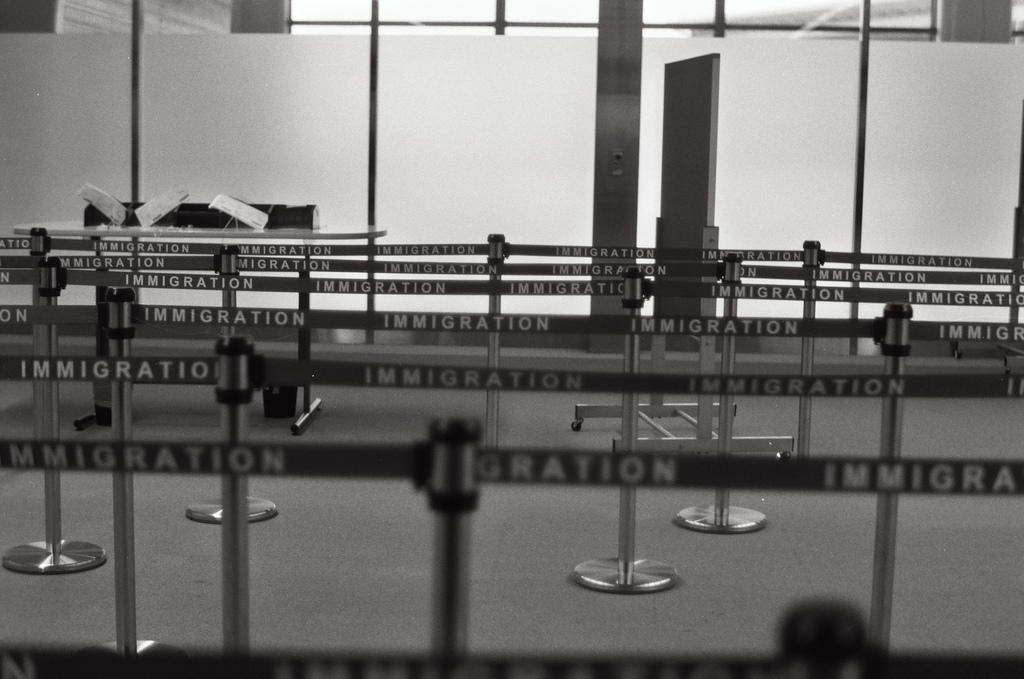
    immigrationThis nation’s ability to ignore longstanding and continuous violations of human rights has once again made headlines this week. Our Direct Provision system for accommodating asylum seekers has come under serious criticism after recent inspection reports have showed evidence of over-crowding, poor hygiene standards and poor fire safety standards across multiple asylum centres.

    Under our current system, asylum seekers are provided with full board (food and accommodation), and a weekly allowance of €19.10 per adult and €9.60 per child. Asylum seekers are not entitled to work in this country or to apply for rent allowance to live outside of a Direct Provision centre. This system was designed to meet the basic needs of people for a temporary period while their application for refugee status is being processed.

    However current inspection reports have revealed that the average time spent by asylum seekers in these hostel-style centres is three years and eight months. A backlog of thousands of applications has resulted in, in some centres, families of six being forced to share one bedroom.  Parallels are being drawn between these conditions and those found in the Magdalene laundries.

    Despite making headlines this week, this is not news. The  Direct Provision system has been attracting harsh criticisms almost since its inception. Within the first year of the establishment of the Reception and Integration Agency (RIA), which was set up to provide Direct Provision, a report was published which addressed the extreme poverty and exclusion experienced by children in the system. ‘Beyond the Pale’, published in 2001, addresses the fact that Ireland was failing to conform to its obligations under the UN Convention on the Rights of the Child.Image

    The report stated, “Asylum seekers in direct provision may experience extreme deprivation as a result of inadequate diet and inability to afford the purchase of sufficient and appropriate food from their incomes.” It also highlighted problems such as overcrowding, stress, depression, social exclusion, racism and malnutrition.

    Not only does it seem that little has been done to change our system, Ireland is actively choosing not to improve its system by opting out of the laws which will form the Common European Asylum System (CEAS). This new system includes the Reception Conditions Directive, which requires a common standard for living conditions in asylum centres and requires member states to grant asylum seekers faster access to employment (or in our case, to grant them access in the first place). This decision puts Ireland even further out of line with the standards employed by EU member states.

    So, the question remains; why is Ireland so unwilling to provide asylum seekers with basic human rights? The uncomfortable truth may well be that we as a nation continue to harbor closeted racist attitudes towards asylum seekers, and simply don’t care enough to campaign for better immigration policies.

    556px-Alan_Shatter
    Minister for Justice Alan Shatter

    Dr. Liam Thornton of UCD addressed this on humanrights.ie, claiming that TDs who had campaigned for an end to Direct Provision had actually lost support, “not just a few votes here and there, but very noticeable support.”

    The Minister for Justice and Equality, Alan Shatter (despite previously opposing the Direct Provisions system) has said that the system is the best we can provide given our current economic conditions. Most Irish citizens would probably agree with him. But like it or not, Ireland has an obligation under international law to ensure the basic human rights of asylum seekers are being met, and until Direct Provision is axed, we won’t be meeting that obligation.