Tag: European Commission

  • Irish as an official and working language of the EU

    Irish as an official and working language of the EU

    The European Commission and the Department of Culture, Heritage and the Gaeltacht held their third conference on Irish as a full official and working language of the EU this week.

    The aim of the conference was to raise awareness of the many job and travel opportunities within EU Institutions that are available to young graduates. Because it’s an official and working language of the EU, job opportunities are available for Irish translators, interpreters, and proofreaders.

    Katherine Licken, Secretary General of the Department, said it will provide “high-quality employment” and it is “important for the Government that Irish is a full working language in the EU”.


    According to Licken, the aim is to “promote” the Irish language and to provide “a sufficient number of qualified graduates” to work in the EU Institutions.


    Licken acknowledged the amount of interest shown in this topic due to the number of representatives from the EU Institutions present at the conference.

    A high-quality knowledge of Irish is of course required to work at EU level, though, first-class training for those interested is available. Aside from the array of job opportunities, internships available in all EU Institutions were discussed – for these a knowledge of at least two official EU languages is required.

    Earlier this year, a new internship scheme, funded by the Government, was announced for Irish language graduates to work within three EU Institutions – the European Commission, the European Parliament, and the European Council – over a five-month period. The internship provides graduates with valuable training in the field of translation and the opportunity to work in a multilingual, highly professional, and skilled environment.

    The overall theme of the day was working together as a Union to reach Ireland’s aims for the Irish language within the EU. Rytis Martikonis, Directorate-General for Translation in the European Commission said: “We are in this together and it works.” Mr Martikonis acknowledged that it “remains a challenge” to reach these aims, however, current “results are promising” and there has been an increase in Irish speaking staff within the EU Institutions.

    Irish became an official and working language of the EU in 2007, though, the aim is to end the derogation of the language by 2022.

    The conference was conducted in Irish and it was unusual to see Irish interpreted to a room full of EU staff of various languages. The conference illustrated the importance of Irish as our national language and the significance of maintaining and using Irish by future generations.

  • LuxLeaks explained ahead of Juncker’s G20 appearance

    LuxLeaks explained ahead of Juncker’s G20 appearance

    800px-Jean-Claude_Juncker_2012-06-27_d
    Jean Claude Juncker Image: Zinneke bit.ly/1qExEq7

    European Commission president Jean Claude Juncker has accepted the political responsibility for Luxembourg’s tax practices but the country’s former finance minister, with a 27 year tenure, also added that he was not the “architect” of the problem.

    What is the problem exactly or how was money moved around Europe by multinationals in order to avoid paying large tax bills? Financing structures are in place in Luxembourg which help companies pay very little tax, these structures also have the benefit of giving these companies tax deductions in the country where they have their headquarters.

    So far so easy, but it gets complicated. Companies routinely loan money from a branch in one country to a branch in another. For the company receiving the loan there is a tax deduction, i.e. Ireland offers tax deductions for companies that wish to set up in its borders. This we know and are used to. The initial loan’s interest payments are taxable in the country the loan was issued from. It is at this point that a loop hole is needed.

    The company let’s call it ‘A’,( but we’ll still keep calling Luxembourg by its name), is based in Ireland but sets up another branch of itself in Luxembourg, but this is a branch of its headquarters, not just any old branch. At the same time the initial branch of ‘A’ sets up a financing wing of its operation. These are the offices that have one mail box and one person employed that have been reported on in the media.

    Like before, the initial branch of ‘A’ moves loans from its financing wing to itself, all inside Luxembourg’s borders. The financing wing would then have to pay interest payments, one would expect. At the same time ‘A’ makes an identical loan to its headquarters in Luxembourg.

    This is where the Luxembourg’s tax laws come to the party. An application is made to the tax authorities that both ‘A’s headquarter’s branch and the financial wing of the initial branch should be able to make one single tax return. The interest payable and the tax deduction meet in ‘holy taximony’ and cancel each other out, leaving albeit a negligible little tax bill to be looked after.

    On the point of the #LuxLeaks, as they have come to be known, Juncker said that it was an inevitable outcome of Europe having so many different standards. Some have called for his resignation over the issue, but this has been rejected by him stating: “There is nothing in my past indicating that my ambition was to organise tax evasion in Europe.”

    This all comes ahead of the G20 summit in Brisbane, Australia where he will represent the EU. One of the main topics at the summit will be signing off on new measures to try and curtail corporate tax evasion.  In an interview with The Guardian parliament member Margaret Hodge called it “the height of hypocrisy”.

  • Racism still prevalent in Ireland

    Racism still prevalent in Ireland

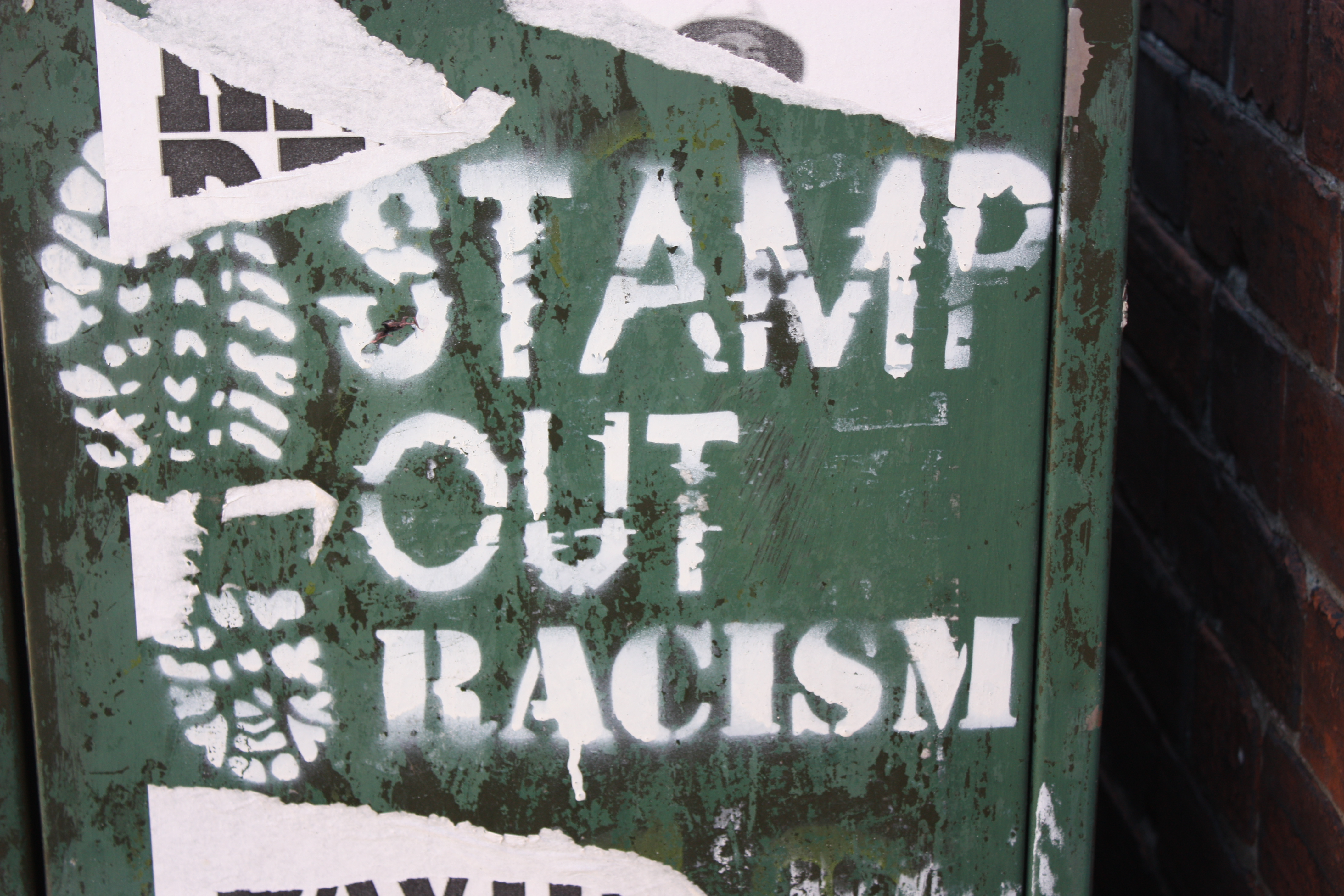
    Racism seems to be an ongoing, unreported, issue due to the influx of foreign nationals over the past decade. Image by: Machine Made
    Racism seems to be an ongoing, unreported, issue due to the influx of foreign nationals over the past decade. Image by: Machine Made

    According to a recent report racism is rampant in Ireland, with very few cases going reported.

    The report was conducted by Dr Patricia Kennedy, of the School of Applied Social Science in UCD, and states that 60 percent of foreign people in this country have encountered racism.

    An Garda Síochána Press & Public Relations Officer, Duty Sergeant Damian Hogan stressed that  “All matters relating to racism should be reported to An Garda Síochána”.

    He also noted that An Garda Síochána has a designated unit for dealing with racism at their Racial and Intercultural Office, which is located on Harcourt Street.

    The Racial and Intercultural Office is deemed to be responsible within An Garda Síochána for the development and monitoring of the implementation of organisational policies and strategies, which deal with racial, ethnic, religious and cultural diversity.

    The office received a thirty thousand Euros innovation prize by the European Commission in recognition of work already undertaken by the Garda organisation in raising awareness around racism and related issues.

    “I have been abused cycling through the city centre,” said Donatas Okafor, a Nigerian national, who came to Ireland in 2006.

    “I have had people drive by making monkey chants and stuff,” explained Donatas.

    When asked if he any of these incidents were ever reported Donatas replied; “No. I don’t have the time to be going through the effort of dealing with reports. I just get on with life”.

    Donatas did have some positive experiences to share about his time in Ireland: “I have lived in many countries over the years; England, Thailand, China, South Africa and Ireland is definitely the nicest of them to live in. There has been some isolated incidents but overall I would say Ireland is the least racist country I have lived in”.

    It seems that people of colour may encounter racism more than other foreign nationals. Hungarian national Katalin Takacs said, “I have never been racially abused but I have seen Luas staff abused over the colour of their skin and being told ‘go back to your country”.

    Katalin, who has lived in Ireland for the past 7 years, explained further, “I think people are angry over the economy and that state of the country and black people just seem to be an easy target for these people. It’s sad”.

    Paul Zhang and Anna Slugacz, who have been in Ireland for the past eleven and 7 years respectively, have never encountered racist events.

    “No one has ever been racist to me, or any of my friends thankfully,” said Anna. “I really like working in Ireland and at times you think that maybe some people think bad things about you, but no one has ever actually said anything”.

    Paul found some humour in an otherwise serious issue saying, “Ireland loves Chinese food, so that might be why me and my friends haven’t been abused. Thanks to our food”.