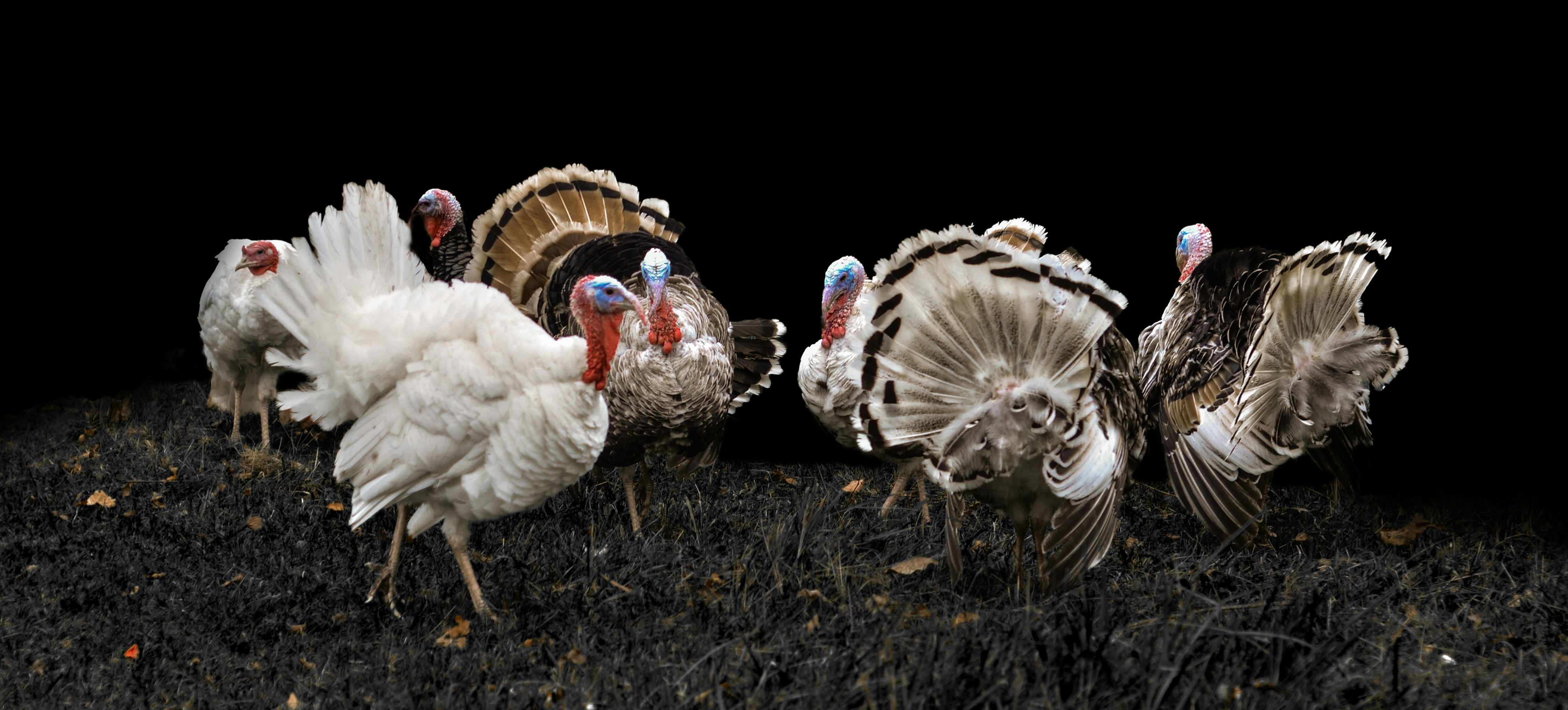
A rise in bird flu in turkey farms has caused worry. The farming and poultry communities are under pressure and are facing an array of questions from the public ahead of the Christmas season.
People are worried about having turkey on their plate for their Christmas dinner. The City looked into the ongoing issue.
For thousands of years, the ocean has been a key part of human life on Earth. From providing us with food, to presenting us with an obstacle to overcome, the ocean is an inescapable part of our existence.
Given that the world’s oceans cover 71% of our planet’s surface and contain 99% of its living space, it at times feels as though we as a species don’t pay enough attention to the deep blue.
However, on the Cooley Peninsula in Co. Louth, the ocean is a crucial part of people’s lives. This may be partly because Carlingford Lough is one of two fjords in the Republic of Ireland, but in this part of the world, the people who live here use the sea as a resource in every way imaginable.
The following images are a showcase of the various ways that the sea impacts everyday life in this part of rural Ireland.
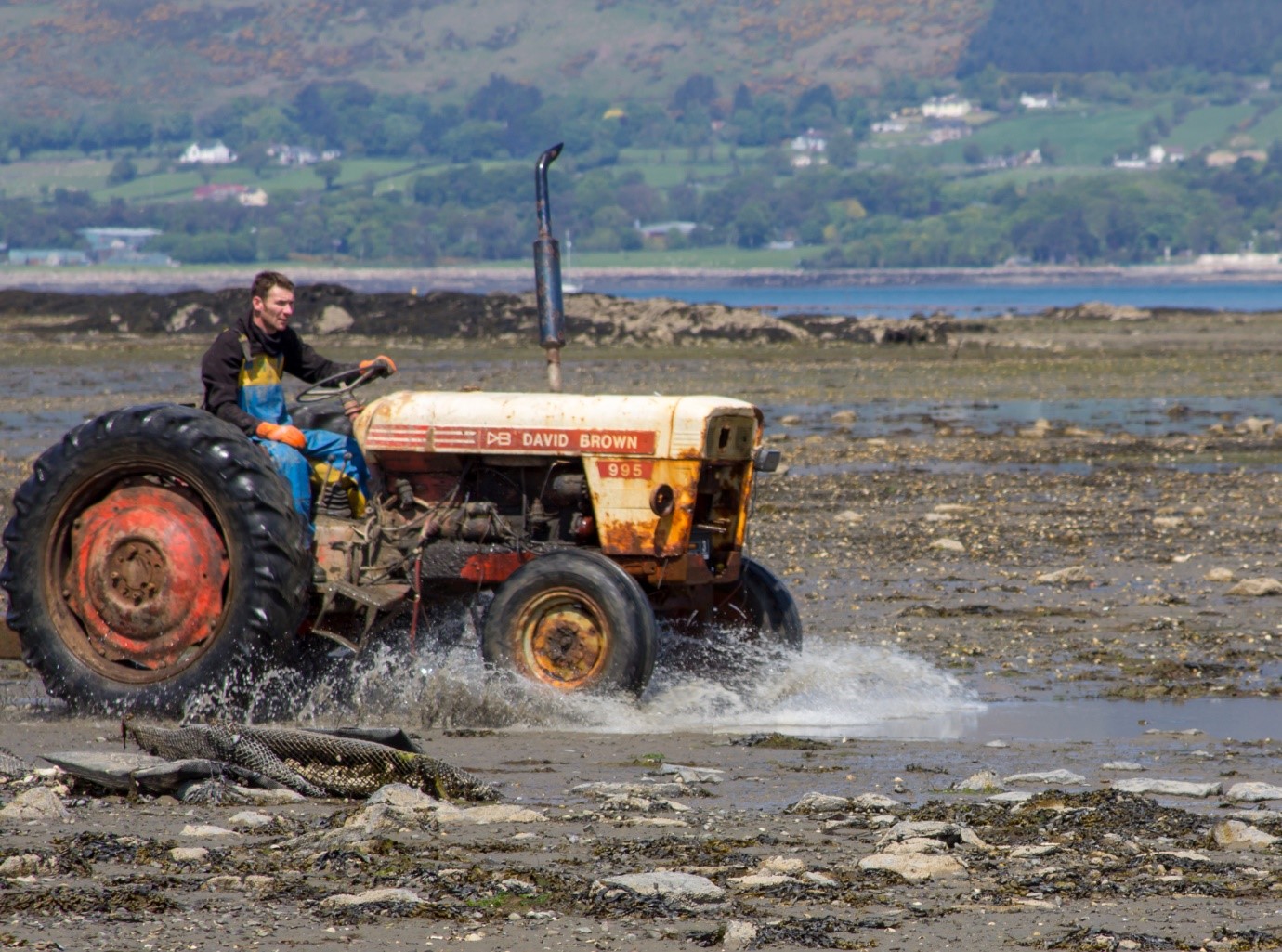
A farmer working to harvest oysters for the internationally renowned Carlingford Oyster Company, which has been operating since 1974. The Carlingford ferry (which actually sails out of Greenore) provides people with a means of transportation between Greencastle and Carlingford. The ferry has been sailing since 2017 and offers an easily accessible route to two different areas of outstanding natural beauty in the shape of the Mourne mountains in Co. Down and Slieve Foye, which overlooks Carlingford. The Carlingford Adventure Centre offers customers a wide range of water sport activities. The adventure centre was founded in 1990 as a windsurfing school and is now recognised as one of the most successful outdoor activity centres in the country.One of the local sailing club members preparing to take a boat out on to the lough as part of the weekend’s activities. The sailing club has many vessels at its disposal and when they’re not out on the water, they’re stored on site at the sailing club. The Carlingford Sailing Club along with the Carlingford Marina provides sailors with a way to connect with their local community via a shared joy of spending time on the sea. The sailing club hosts weekly races from April to October as well as social sailing every Wednesday evening during the summer months of June, July and August. A mountain of salt ready for transportation at Greenore Port which lies at the entrance to Carlingford Lough. HGVs are a common sight on local roads with the Cooley Peninsula being a large transit corridor for goods. The port at Greenore is a bustling hub of imports and exports. The port is Ireland’s only privately owned port, having been bought in 2014 by the Doyle Shipping Group. It has been in operation since 1863 and is the only deep-water port outside of Dublin Port on the east coast of the Republic of Ireland.
November is Men’s Health month which focuses on mental health, suicide prevention, prostate cancer and testicular cancer.
The purpose of this is to try and get men talking about their health. One of the initiatives for men’s mental health in November that has become a household name is “Movember”. This involves men growing moustaches to raise money for suicide prevention.
Despite the multiple efforts made to combat suicide it is unfortunately not uncommon in Ireland in men especially in the farming community.
In September 2023 the HSE released a report called “Dying to Farm: Developing a Suicide Prevention Intervention for Farmers in Ireland”
According to the report, over 20% of the farmers that were surveyed were considered at risk of suicide.
Photo Credits- Molly O’Reilly
The report also said 55.5% of farmers reported experiencing moderate to extremely severe depression, 44.1% of farmers reported experiencing moderate to extremely severe anxiety, and 37.9% of farmers reported experiencing moderate to extremely severe stress.
In addition to this there was multiple recommendations in the report to help combat mental health issues within the farming community in Ireland.
However, a year on, and the issue of mental health and suicide is still increasingly prominent in the Irish farming world.
However, Alice Doyle the now deputy president of the IFA and former Director of Mental Health Association, said information in these reports about mental health with farmers can often be inaccurate.
“You must be careful with the information provided. t’s an indicator (the statistics) but we should only see it as an indicator not as a definitive piece of information,” said Doyle.
Luke O’Reilly, a 61-year-old farmer from County Cavan who has lost extended family members to suicide, spoke about the importance of better mental health infrastructure for farmers.
“It can be very lonely in dark cold evenings in the winter, a lot of the time you are on your own with just your thoughts, which can be difficult for some. It’s important to speak up and get help,” he said.
O’Reilly recalled the era before the online streaming of marts, when you could go to the mart and get someone to check your blood pressure.
“It was great for socialising and for checking on older farmers that lived on their own and wouldn’t go to get checked,” said O’Reilly
The stigma surrounding mental health in Ireland can hinder people from asking for help. This can be seen in the agriculture industry as there tends to be a stereotype of farmers to fall into – to be strong, quiet and to simply get on with things.
The fact that the issues in work within agriculture are harder to walk away from as it becomes a lifestyle as well as a job makes it easier for people in agriculture to unfortunately experience mental health issues.
Photo credits- Molly O’Reilly
For instance, their hours are not structured and a problem arising can alter their career and income significantly.
The agricultural voluntary youth group Macra na Feirme also sent an email to its members for the month of November with the title “Rural Youth- Mind Our Men”
The purpose of the email is to reflect the importance of praising the work the men do within these communities and in the Macra group itself.
There was also a suggestion to organise events such as speakers to further reflect the importance of opening such conversations for men’s mental health and physical health.
“We encourage clubs and counties to consider the great role of many of the men in our organisation and we encourage you to celebrate their contributions during the month.”
IFA Deputy President Alice Doyle is originally from Carlow and now works with her husband on their farm in Wexford. She spoke about how important it is to have these conversations;
“They’re part of society (farmers) and they suffer from the same pressures that come from society as do and as anybody else. And then they have their own added pressures as well because of the sector that they belong to,” said Doyle.
Doyle explained how the services are there, but it is a matter of applying the services to those who need them.
“I had a girl who rang me to ask where she could find someone to speak to her dad, he is 70 years old and told her he felt a bit low,” she said.
An unfortunate reality of farm life is accidental deaths which can lead to mental health problems for surviving members of the family. Organisations such as “Embrace Farm” offer support for families grieving from accidental deaths.
“We think of the guy that’s driving the tractor but not necessarily the person who has been left behind,” said Doyle.
An initiative that has taken place to check the mental and physical health of farmers was a survey that was issued across 20 marts over Ireland.
Throughout the survey the farmers were asked questions about their well-being and then were followed up with support.
Doyle explained that there are services and infrastructure for farmers in Ireland, but the issue now is to make them accessible and enticing for farmers.
“Farmers like to talk to someone who understands their way of life is different to a nine to five job- they like to be able to talk to someone who understands farming.”
We’re living the digital technological revolution and every day we experience the impact of it but there is still so much more potential to create change with technology. Megan O’Brien explains how the food and agriculture industry is at the forefront of this change.
Picture courtesy of “Radical Growth Solutions”.
There is major innovation happening around the technology in this industry with a number of start-ups bringing ideas to the market that can help to combat our climate crisis, implement food crises solutions and teach us how to use our scarce resources in a more efficient and sustainable way.
There are roughly 70 million people in the small growth farming community in Pakistan and the average income for a typical family of 6 is $350 per year. Water is considered a scarce resource and these farmers cannot afford to waste it, that’s where Radical Growth Solutions (RGS) comes in; an ag-tech start-up that have built a smart irrigation system to enable these farmers to understand exactly how much water they need for each plant in their crop in order to utilise their resources more efficiently.
RGS is a start-up founded by Nabeel Yousuf. Originally from Jordan with a background in film and entertainment, Yousuf moved to Pakistan 10 years ago on a mission to create a movie to showcase Pakistan in the positive light that it is so often denied by the media. However, his dream took a turn down a different path when he connected with nature on an island in Thailand and decided to go back to Pakistan to grow vegetables. He loves this work, explaining: “We work on the land every day; it’s a very personal relationship and it teaches you give and take. You take care of the soil; it will give you food.”
However, it was while working as a farmer Nabeel encountered the problems that RGS is now working to solve: “The electricity was expensive, fertiliser was messy and all that so I thought there has to be a way of fixing this,” Yousuf said. “I looked at the models available online and they were very expensive so I started talking to engineers locally and I realised that we have the local resources to make this equipment and there is a massive market, why shouldn’t we try it?”
Explaining how the system works, Yousuf said, “For 11 thousand years, farmers have watered crops the same way.
“He gets up every morning and waters his soil. What we’re doing is we’re going a level below, we’re monitoring root conditions, we are not watering land, we’re watering plants. We collect real time data from the field using multiple sensors below and above ground and based on that information we determine exactly how much water each plant requires, not the land.
“It’s a completely automated system, we use soil sensors and weather sensors, so we don’t only just look at how much moisture there is and what is the temperature of the soil, we also look at weather conditions and how much humidity is available in the air. What side is the wind coming from and its speed? These things determine if the rain is going to come. We have predictive algorithms and models that determine when precisely it will rain and how much there will be, and it waters each plant accordingly. So, the main concept we’re working on is trying to optimise irrigation cycles.”
The system uses Internet of Things (IoT) and Long Range (LoRa) technology and will also focus on the collection and analysis of data using simple Artificial Intelligence algorithms. “If everything works out fine in the next 10 years, I’m going to have enough data using the sensors to literally be able to tell you how much water it requires to grow a watermelon for example,” Yousuf said. “Once we have those numbers, then I can try to make sure that people use that information to help each other.”
The impact of this is huge, it won’t just conserve water; a large amount of fertiliser gets lost as the crop gets watered through evaporation or seepage into the soil. Smarter irrigation will conserve fertiliser and pesticides too, pumps will be turned on less and so electricity will also be conserved meaning the farmer will save money. And finally, as the system is automated it will conserve manpower. “We don’t want to eliminate the human resource, but you would drastically enhance their livelihood with so much more time to do other things.”
By “other things”, Yousuf is referring to education and the sharing of experiences. Education is just as important in RGS as the product itself: “the first step is always to educate the farmer.”
Tik Tok, Facebook and YouTube are extremely popular apps and a lot of people in the farming community use them for entertainment, but Yousuf believes we should think about the potential for education through them. “Imagine in a country where you have about 70 million farmers and you have a small YouTube channel with locals from this community that have time now to talk about their methods, their success and the value of Agri-tech,” Yousuf said. “Imagine the potential to educate through that.
“With less time taken up with physical farming, they have more time to share experiences, it’s a massive ripple effect.”
Talking about how big the market could be for this innovative system, Yousuf isn’t concerned with dominating it, he actually welcomes the spotlight on his competitors as it means the world is becoming educated on the idea.
As the UN turns 75 this year, we’re talking about the impact of technology, impact comes from widespread dissemination, not coveting and Yousuf expresses a belief that reflects that. “It’s too big, there’s 7 billion people on the planet, I can’t serve everybody, and I don’t want to.
“In a competition, one person has to lose; in collaboration, everybody wins, and that’s always been my model. The best part of sharing is when you share knowledge. If I just learn things and keep them to myself, what’s the point, It’s all about sharing.”



You must be logged in to post a comment.