Tag: feminism

  • Studies Find That Media Framing Can Contribute to Online Harassment for Female Politicians 

    Studies Find That Media Framing Can Contribute to Online Harassment for Female Politicians 

    By Jessica Lee 

    In the digital age, politicians and the public have never been more accessible to one another. While social media can make it easier for politicians to reach potential voters, platforms such as ‘X’ and ‘Facebook’ have become breeding grounds for trolling and online harassment.  

    A report by UCD found that 73% of the Oireachtas members are experiencing abuse on social media regularly. 

    While politicians of every gender identity and background receive hate online, female politicians in particular are targeted the most by sexist and derogatory harassment.  

    It has been argued by academics such as Daphne Joanna Van der Pas and Loes Aaldering that the difference in the way male and female politicians are framed in the media is a contributing factor for the harassment women are subjected to online. 

    Research conducted by Utah State University found that media coverage of female politicians is primarily “focused on their background, family life and personality. Media tended to emphasise women candidates’ lack of viability, focusing more attention on the “horse race” or outcome-predicting aspects of their campaigns.”  

    The study also found that of the articles sampled, 13.6% of them contained reference to female candidates’ physical appearance – such as clothing, age, makeup and weight.  

    Source: Utah Women and Leadership Project  

    A 2019 study by Amanda Haraldsson and Lena Wängnerud notes that, “The media agenda follows male candidates’ political agendas more than female candidates and is more likely to question the chances women have of winning. Media frames, including trivialisation framing, and type of media attention – tabloid outlets for women and broadsheets for men – contributed to the media bias against female candidates.” 

    On the type of online abuse female politicians receive, Social Democrat councillor for Leixlip, Nuala Killeen said that “women are targeted about their looks and their age, it generally has nothing to do with our politics and more to do with misogyny.”  

    When it comes to male politicians, Councillor Killeen states that “they [men] are criticised for their politics and policies, not their appearance.” 

    Although she is “thick skinned” and rarely fazed by cruel comments, Killeen notes that negative media coverage as well as the personal nature of online harassment experienced by female politicians has led to women feeling discouraged about getting into politics or rerunning for election. “Women who are confident in their political experience and knowledge, who feel they can make a difference in their communities have seen the abuse other women have been subjected to and second guess if they really want to ensure the same thing.” 

    People Before Profit Councillor for Ballyfermot-Drimnagh, Hazel de Nortúin, has said that the rise in online misinformation and harassment will “make it very difficult for us to find female candidates willing to run in the future, particularly women of colour and from different backgrounds.”  

    De Nortúin added that councillors are “lacking resources when it comes to tackling online abuse” and are often subjected to “harassment about governmental issues which are out of our hand. People are angry at the government, which I understand, but we [councillors] in local politics have no say in what goes on in Leinster House… they are letting their frustration out on us.” 

    The type of political violence faced by Irish politicians based on gender. Source: Chr. Michelsen Institute 

    Research conducted by the Chr. Michelsen Institute found that female politicians are more prone to being subject to degrading talk and false rumours; in fact, they are 2.3 times more likely to experience this than men. Additionally, the false rumours that female politicians face are more likely to be of a sexual nature.  

    While male and female politicians across the political landscape experience trolling and abuse online, there has been a rise in incidents of verbal and physical face-to-face harassment taking place in Ireland. 

    Independent councillor for Fingal, Tania Doyle and her husband, were the victims of a violent attack by a member of the far right whilst out canvassing in their constituency. Doyle was punched in the head whilst trying to shield her husband, who was beaten to the ground and left bloodied and bruised after being kicked repeatedly. 

    Since the incident, Councillor Doyle has stated that she doesn’t know if she will stay in politics after the attack and has been questioning her decision to run.  

    With the increase in online and public abuse faced by politicians, a taskforce chaired by the former Garda Commissioner Nóirín O’Sullivan on safe participation in political life has been established to make recommendations about changes that can be made to ensure the safety of politicians, with a particular focus on protecting female politicians.  

    These recommendations include personalised security training and advice, and an opt-in social media monitoring service for political figures. Additionally, the taskforce also recommends that election candidates should not have to publish their home address due to safety concerns. 
  • Podcast: Sophie Doyle Ryder making a splash at 18

    Podcast: Sophie Doyle Ryder making a splash at 18

    18 year old Sophie Doyle Ryder is making a name for herself in the Irish music scene. Photo by Ray Keogh

    At just 18 years old, Sophie Doyle Ryder already has four singles under her belt. Her third single Too Much made it to number nine on the top 100 Irish Artists on Irish Radio.

    Ryder writes all of her own music and says that, while lockdown has been tough (her first headline show has been postponed four times in the last year), it has allowed her to throw herself into writing more songs than ever.

    “When all this does end, I have no issues just releasing as much music as I want and doing as many gigs as I want because I have all these songs that I’ve written,” says Ryder.

    Her music has drawn comparisons to other artists like Anne-Marie and Rihanna, and while she welcomes the comparisons, Ryder is also putting her own individual style into her songs.

    As she waits for the go-ahead for her first headline show in Whelan’s music venue in Dublin, Ryder is already looking to the future, with hopes to release an EP in early August and a full album planned for 2022. 

    As a Malahide native, Ryder has one important goal for the future.

    “The one place, before I die, I hope I can play Malahide castle … that would just be a dream.”

  • It’s about bloody time

    It’s about bloody time

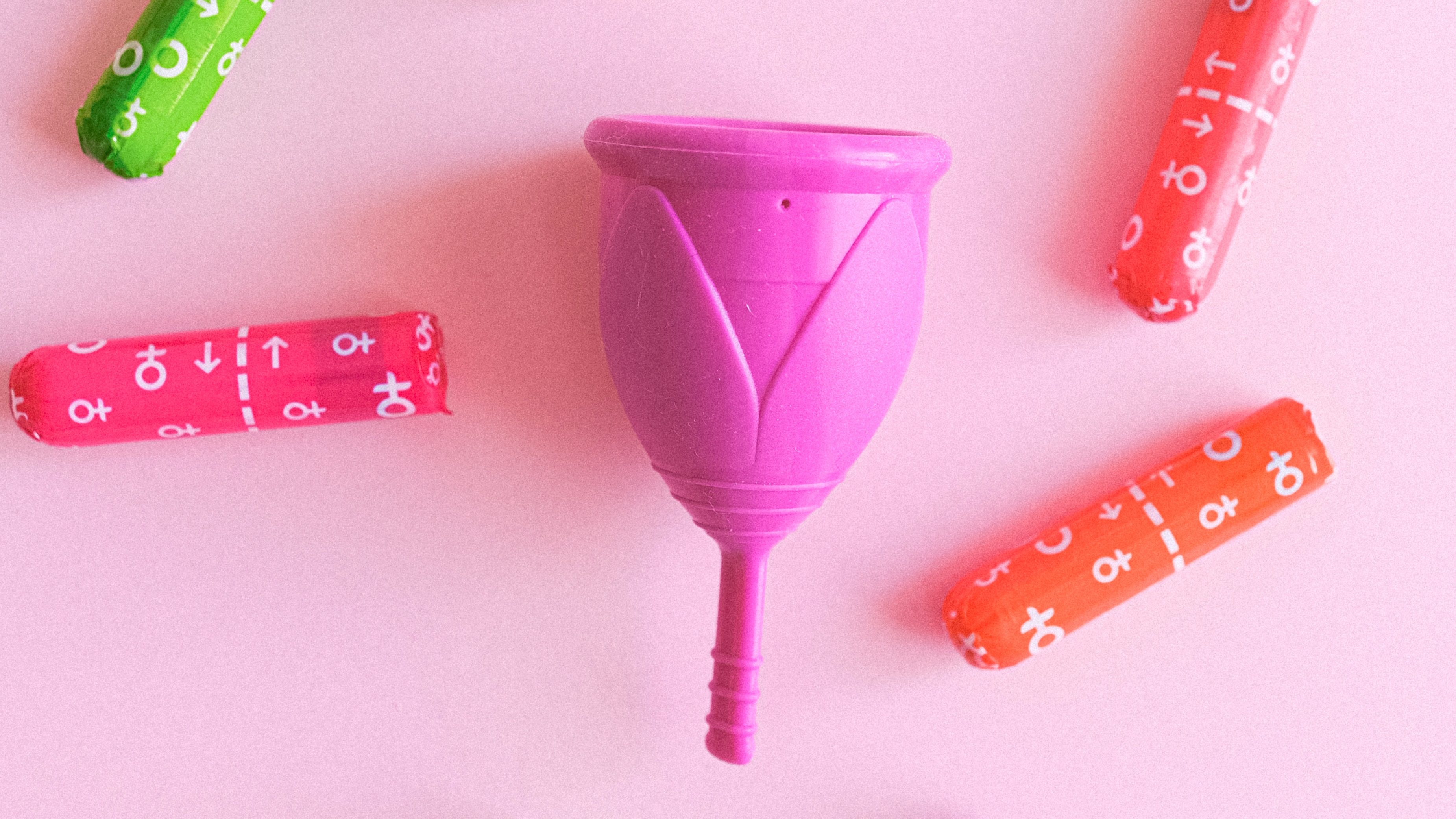
    Photo by Anna Shvets on Pexels.com

    Period poverty impacts women and people who menstruate all over the globe. It is referred to as the inability to afford basic female sanitary products.

    Recently, there have been a few developments in eliminating period poverty in first-world countries, most notably Scotland.

    Scotland was the first nation to provide free period pads and tampons in schools, colleges and in public areas. When the Bill that provided these products passed, the First Minister Nicola Sturgeon tweeted, “Proud to vote for this ground-breaking legislation, making Scotland the first country in the world to provide free period products for all who need them. An important policy for women and girls”.

    For centuries, women were not given the opportunity to speak freely about menstruation, and even in today’s society, elements of shame still persist. Pads are advertised as ‘discreet’ which reinforces the subconscious shame women are forced to bear during their menstrual cycle.

    A few weeks ago, New Zealand passed a law stating that complimentary period products would be made available at schools. They have allocated NZ$25m (€15m) over the next three years to promote period dignity.

    The country’s Prime Minister, Jacinda Ardern said: “Providing free period products at school is one way the Government can directly address poverty, help increase school attendance, and make a positive impact on children’s well-being,” reported Reuters.

    Photo by Dolapo Agunbiade

    Ireland may have its own period Bill on the horizon.

    “I believe in period justice as I want everyone to be able to easily access period products and not have financial inequality hold them back,” Labour Party senator Rebecca Moynihan, who has been spearheading this Bill, told The City

    “We don’t expect people to carry around toilet paper or soap, so why are we expecting them to carry tampons and pads? We need to challenge the idea that these are non-essential items,” she continued.

    The Senator also expressed the need for the State to collaborate with charities, so that those who experience homelessness and who are living in Direct Provision can also have access to period products.

    If passed, Ireland’s Period Provision Bill would be similar to Scotland’s. The Government would make menstrual products accessible to all by supplying free tampons and pads to schools, colleges and public areas.

    While period poverty has been discussed in the Dáil and the Seanad, the Period Products (Free Provision) Bill 2021 has been brought forward by Senator Rebecca Moynihan, Senator Ivana Bacik and other members of the Labour Party. It is currently on its Second Stage in the Seanad and has nine more stages to go before it can be passed.

    At the moment, period pads and tampons are subjected to 0% tax. However, this law was made before the advancement in period technology – such as menstrual cups, period underwear and bikinis. This limits women and people who menstruate from being able to purchase these items as they are classified as ‘luxury’ goods – luxuries that many cannot afford. 

    “We have an uphill battle when those responsible for covering news stories do not consider this issue important enough to turn up”

    Marcella Corcoran Kennedy

    Currently, there are three Dublin county councils that are running a pilot period scheme –they have been providing free sanitary products in local recreation centres.

    In a Plan Ireland survey of over 1,000 girls and young women between the ages of 12 and 19, 50% admitted to struggling with the cost of period products and, because of that, were forced to use other materials.

    The underlying problem is that menstruation is viewed as a woman’s issue and not a general issue. In this country, the majority of media coverage on this topic has been done by women. Periods will never be normalised until they are openly acknowledged by all genders. 

    “The women’s caucus held a photocall and press conference to promote the motion…not one male journalist saw fit to attend and not one television station, including the State broadcaster, saw fit to cover the matter,” said former Fine Gael TD Marcella Corcoran Kennedy in a Dáil Éireann debate regarding period poverty in Ireland.

    “We certainly have an uphill battle ahead to have this important issue discussed more widely when those responsible for covering news stories do not consider this issue important enough to turn up,” she continued.

    The eradication of period poverty relies on the eradication of poverty in general, as the latter cannot live without the former. 

    In terms of what we as the public can do to get the Bill passed, Senator Annie Hoey told The City to “get in contact with your local councillor, your local TD and Senator about it.”

    She explained that the more we pressure those in charge to address important matters, the more likely things are to change.

    Here is a link to an anonymous period survey – made by Senator Mary Seery-Kearney – to assist the government in collecting more data about the extent of period poverty in Ireland. 

  • Beanantees: The apparel brand empowering Wild Irish Women

    Beanantees: The apparel brand empowering Wild Irish Women

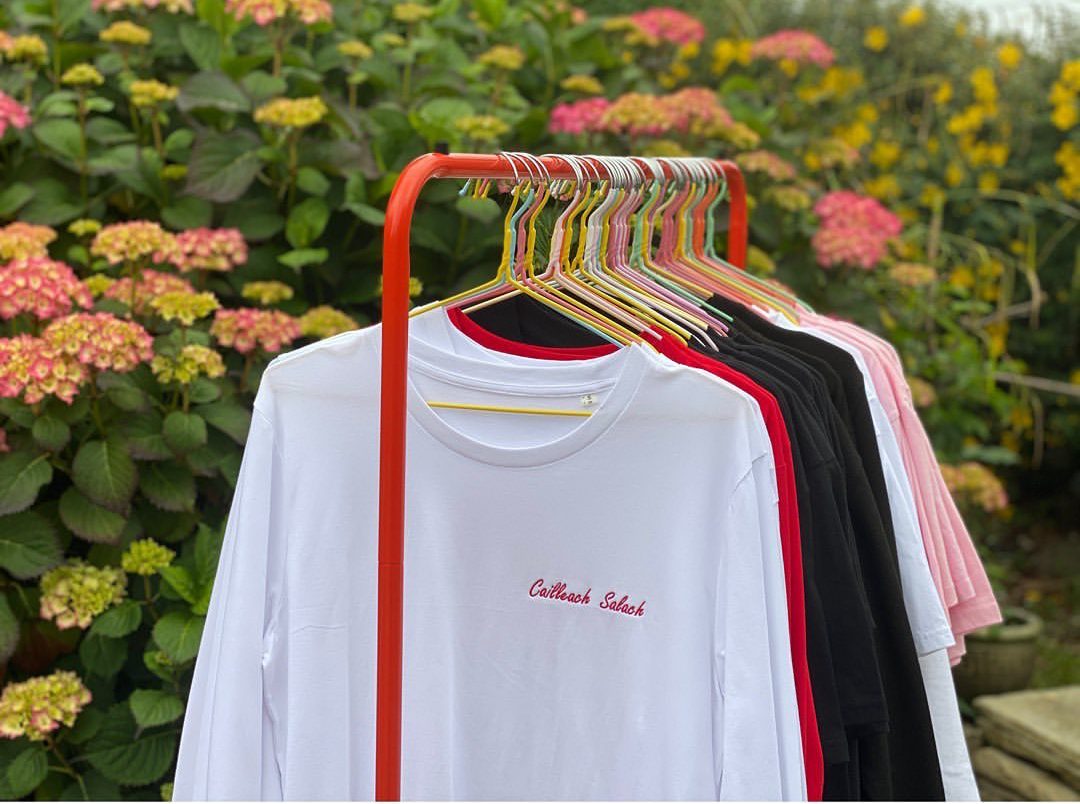
    Beanantees was created by two gals from the hills of Donegal,  Lana McGhee and Ciara Gallagher. McGhee had experience in marketing and Gallagher’s creativity stemmed from her background in fashion and design. Roise Collins chatted with the women about their brand and how it came about.

    Image source: Beanantees

    They sell a wide range of tees, jumpers and bags all embroidered with slogans as Gaeilge. All are influenced by music, feminism, culture and clever word play. 

    McGhee explained how it had all begun as a bit of craic. “Ciara had been embroidering her own clothes with funny sayings as Gaeilge for a while and I thought it was a great idea and spotted a gap in the market,” she said.

    The pair started with a pop up shop in the Bernard Shaw in late December and launched the website on the same day. Not quite in time for a proper Christmas launch, but they took a few snaps and posted them on Instagram. 

    They were ecstatic when they made a sale within the first hour.  She said, “We couldn’t believe it wasn’t from a friend of ours?!  We completely sold out in a couple of days and had to start taking preorders for the New Year.”

    The brand kept growing within the first few weeks. They started getting coverage on platforms like Lovin’ and Stellar and hit 1000 followers.  “That is when we realised there was actually something there,” McGhee said.

    “We came up with some new designs to celebrate things like International Women’s Day and ‘Galentine’s Day’ and the ideas just kept flowing.”

    Branding through Gaeilge was really important from day one, as Gallagher is from the Gaeltacht and grew up speaking Irish in school and at home. McGhee grew up in Glasgow and attended an equivalent of a Gaelscoil, where she learned Scots Gaidhlig which is fairly similar. 

    “So, we both had a grá for it, although neither of us are the most confident speakers. But that’s the whole idea. It’s adding a cúpla focail in places they aren’t normally found. As we’ve gone on we’ve mixed it up with some English on ones like ‘GRMA, next’.”

    “It’s adding a cúpla focail in places they aren’t normally found. As we’ve gone on we’ve mixed it up with some English on ones like ‘GRMA, next’.”

    She said, “We want them to be worn by everyone and not just for Gaeilgeoirs, so that works in our favour.”

    McGhee’s marketing background came into play when establishing an online presence. She said, “Social media has been a key driver for us. We have zero marketing budget in terms of paid ads. Partnering from charities has helped our profile in the nicest way possible.” 

    Since day one, Beanantees have donated 10% of their main collection to the Rape Crisis Network Ireland and the Dublin Rape Crisis Centre. For their ‘Is Cailín Doire Mé’ range, they partnered with Alliance for Choice who advocate for free, safe and legal abortion care in the North and recieved 20% of all profits from that range. 

    They also support the Russian LGBT Network and Galway Pride on their LGBTQ+ ranges. 

    “We don’t reach out to influencers in the way others do, but if we feel there is someone connected to one of our items, for example, we might send them one,” she said.

    McGhee continued, “For example, when we launched our ‘Is Cailín Doire Mé’ range, the actress who played Sister Michael from Derry Girls, Siobhan McSweeny, kindly shared it. We reached out to her and asked if she would like one. We prefer to do it like that than figure out who is the current Insta star.”

    “We also like to champion other cool gals in music, fashion and art. We’ll share what they are doing and they share what we’re doing. It’s a lovely part of what we do. That kind of relationship building has led us to opportunities like working with the Irish Women in Harmony,” she said. 

    Irish Women in Harmony was a charity single released by 40 Irish female artists who collaborated to perform ‘Dreams’ by the Cranberries. The collaboration was organised to raise funds and awareness for Safe Ireland, an organisation that provides support for women and children who are experiencing domestic violence and abuse.

    McGhee said, “They asked if we would like to be involved and we jumped at the chance. We brought them a few ideas and we settled on ‘Don’t mess with Mna’. 

    Image source: Beanantees

    “Once we had that sorted, we sent them to a few of the gals involved and again social media really carried the campaign for us. We’ve now done three rounds of 100 t-shirts and they’ve all sold out in less than 15 minutes. It’s just been brilliant to be able to donate such a huge amount to Safe Ireland and it’s obviously been lovely to see so many familiar faces in our little Beanantees!” she said.

    For many local or new businesses, the pandemic has been extremely challenging. But thankfully McGhee and Gallagher have been kept on their toes. “We have been so blessed to be kept super busy throughout the pandemic.

    “Even in the past couple of days since the Level 5 restrictions have been reintroduced we’ve had so many lovely shoutouts and features like the Irish Times Christmas Gift Guide.” 

    In these challenging times it is now more important than ever to support local businesses. 

    McGhee said,  “I think people are more interested in investing in Irish made gifts and with the high street closed they are going to have to shop online anyway so they may as well shop Irish. And we feel exactly the same. I’ve tried to shop Irish as much as I can the past few Christmas’ and plan to do the same this year!”

    If you would like to keep up to date with the Wild Women from Donegal, you can follow their Instagram @beanantees or to bag an empowering sweatshirt or tee for a Banrion on your Christmas list go to their website https://beanantees.com 

  • ‘Women’s rights were sidelined throughout the process’ – Afghan women and minorities fear consequences of US-Taliban peace deal

    ‘Women’s rights were sidelined throughout the process’ – Afghan women and minorities fear consequences of US-Taliban peace deal

    Najia Nasim is the Executive Director of Women for Afghan Women – an organization that has been cited as having some of the “bravest women in the world” by Amnesty International.

    As the Trump administration scrambles to end US military involvement in Afghanistan ahead of November’s Presidential Election, The City’s Cameron Weymes examines the consequences of largely excluding women and ethnic minorities from the recent ‘peace deal’ between the Taliban and the US.

    On February 29 the United States and the Taliban signed a ‘comprehensive peace agreement’ in relation to Afghanistan.

    According to the agreement, all US military forces will be withdrawn from the country within 14 months in exchange for a guarantee that the Taliban will “prevent any group or individual from using the soil of Afghanistan to threaten the security of the United States and its allies.”

    If the agreement is put into effect, it will bring an end to the United States’ longest ever war after almost 20 years.

    The Afghan government – which was largely ignored throughout the process – has rejected aspects of the agreement, such as the requirement to release 5,000 Taliban prisoners.

    For many Afghan women, the memory of Taliban rule before 2001 brings significant apprehension towards the deal.

    Afghans enjoying their weekend at Qargha Dam, near Kabul, August 2017. Photo: Cameron Weymes

    “Throughout the Taliban’s reign, women and girls suffered a brutal loss of agency and were denied their fundamental rights and freedoms, such as education, the opportunity to work, access to healthcare, and movement,” said Najia Nasim, the Executive Director of Women for Afghan Women, in an interview with TheCity.ie.

    “Taliban rule essentially imprisoned women and girls in their homes and eviscerated their basic rights and ability to participate in any facet of personal, political, or societal decision-making,” she added.

    “The gender inequality, domestic violence, and discrimination that rose dramatically during the reign of the Taliban led Afghanistan to be consistently ranked as one of the worst places in the world to be a woman,” said Najia.

    There was a notable lack of female involvement in the peace talks held in Doha, Qatar.

    “To date, women and civil society have been largely excluded from the negotiations. Women’s omission inhibits their ability to convey their unique experiences, grievances, priorities, and hopes for Afghanistan’s future, and to shape post-conflict institutions and broader society,” said Najia.

    The aftermath of a suicide bombing by the Taliban on a Kabul bank where five government employees were killed while collecting their salaries. August 29 2017 Photo: Cameron Weymes

    “Alarmingly, women’s rights were sidelined throughout the process that gave rise to the US-Taliban deal, heightening concerns that a withdrawal of US forces and an intra-Afghan dialogue will create a power-sharing arrangement that will facilitate a reversion to brutal Taliban rule,” she added.

    Minorities fearful

    Minorities such as the Hazaras, a predominantly Shia ethnic group, also have considerable grounds to fear a return of the Taliban to power.

    In the late 1990s the Taliban committed many atrocities against Hazaras as they took control of 90% of the country, including the massacre of 2,000 Hazaras in the northern city of Mazar-i-Sharif.

    In recent times the Taliban and Islamic State have targeted Hazaras in suicide bombings and other attacks.

    In 1997, the Taliban governor of Mazar-i-Sharif, Mullah Niazi, delivered a series of speeches about Hazaras.

    Dasht-e-Barchi, a Hazara majority area in western Kabul that has been targeted by the Taliban and Islamic State with suicide and gun attacks. Photo: Cameron Weymes

    “Hazaras are not Muslim, they are Shi’a. They are kaffir (infidels). The Hazaras killed our force here, and now we have to kill Hazaras,” he said.

    “If you do not show your loyalty, we will burn your houses, and we will kill you. You either accept to be Muslims or leave Afghanistan,” he added.

    Although Niazi was subsequently killed in a US drone strike, fear persists that the current Taliban leadership will be similarly hostile to Hazaras.

    “The Taliban have proven before that minorities have no place in the country. They have no respect for different religions or tribes,” said Raziya Masumi, an Afghan lawyer and women’s rights activist, in an interview with the TheCity.ie.

    “Shia groups were forced to say prayers as the Taliban did, and were lashed or even imprisoned for making mistakes during prayers.”

    On Friday 6 March 2019, Islamic State gunmen attacked an official event in Kabul dedicated to Hazara leader Abdul Ali Mazari, killing 27 and wounding 55 others.
    _____________________________________________________

    “Recently, more suicide attacks have happened in the west of Kabul where the majority are Shia. They attacked mosques and schools in these areas. The Taliban only accept their own beliefs and religious thoughts,” she added.

    For Atiq Lotan, a Hazara from Ghazni province, the peace deal is nothing short of a disaster.

    “In the Jaghori district of Ghazni, where I am from, the Taliban enforced Sharia law and carried out public executions. They also actively sought methods to forcefully convert Hazaras to their denomination of Islam,” he told TheCity.ie.

    “The recent legitimacy the United States has afforded the Taliban will result in a new era of persecution and political exclusion for Hazaras.”

    “In addition, the return of the Taliban to power means their crimes against us will be forgotten.”

  • Confidence, culture and childcare – The challenges for women in politics

    The Cabinet Women: Minister Heather Humphreys (left) pictured with An Tánaiste Joan Burton, Justice Minister Frances Fitzgerald and Education Minister Jan O'Sullivan
    The Cabinet Women: Minister Heather Humphreys (left) pictured with An Tánaiste Joan Burton, Justice Minister Frances Fitzgerald and Education Minister Jan O’Sullivan

    “I am proud to be one of four women serving at the Cabinet table – that’s the most number of senior female ministers we’ve ever had. Having a female perspective at the decision making table is essential.”

    Heather Humphreys is one Irish woman who has been very successful in her political career. The Fine Gael TD for Cavan Monaghan was appointed Minister for Arts, Heritage and the Gaeltacht earlier this year, taking the number of women who sit around the cabinet table to four.

    “I don’t think I suffered as a result of my gender, but the challenge of balancing home and political life is definitely a considerable difficulty for female politicians.  I have two daughters in their early 20s, but if my children were younger, I’m not sure how I would manage my current workload.

    “I juggled a full time job with being a county councillor when my children were young, which was tricky. I consider myself lucky, however, to have gotten involved in local politics when my children were young and by the time I got into national politics, the girls were that bit older. Timing was on my side,” she said.

    The 2014 local elections saw a historic number of women elected in Irish politics. Female representation in Local Government is now at 21 per cent, an increase of 5 per cent since 2009, and two newly elected TDs have brought the number of women in the Dáil to 27, the highest ever number. Despite this, the gender gap remains substantial, and women are still inadequately represented in politics.

    Minister Humphreys, who is a former mayor of Monaghan, believes that confidence has a big part to play when it comes to women putting themselves forward.

    “I think often women don’t have the confidence. They certainly have the ability, but confidence can be an issue. The long hours, the level of travel if you are a rural TD, and the notion that politics is an old boys club would also have put women off entering politics in the past.

    “However, while the hours involved will probably always be pretty intensive, I think the culture within politics is changing. Politics is a professional endeavour these days, the game has entirely changed, thankfully,” she said.

    The Irish Government has introduced gender quotas for the next general election, which will ensure at least 30 percent of candidates on ballot papers are female. Minister Humphreys says that she is in favour of this move.

    “Fine Gael has been specifically targeting female candidates and has professionalised its approach to recruiting women to run for the council or for the Dáil.

    “While I have always believed in the best person getting the job, regardless of gender, I am in favour of the gender quotas because they will help to give voters a better choice,” she said.

    Fine Gael TD Marcella Corcoran Kennedy 2
    Fine Gael TD Marcella Corcoran Kennedy

    Fine Gael TD for Laois Offaly Marcella Corcoran Kennedy came from a political family, so she was familiar with the work involved when she set out on her political career as councillor.

    “My father and grandfather were councillors on Offaly County Council. When my father announced his retirement in 1999 the local party organisation asked me to consider seeking the nomination. I had been active in my father’s campaigns over the years and so it was not a big step for me to consider,” she said.

    Despite her political background, Marcella said that she faced “all the usual challenges” as a female candidate.

    “Organising the campaign, the financial side and childcare, was challenging. Also, overcoming prejudices from some people who were of a generation that saw politics as a male preserve.

    “There are comparatively few Irish female role models available to women due to a traditionally male dominated political culture. The anti-social and anti-family working hours, and the sometimes confrontational aspect of the role may not appeal to women,” she said.

    Marcella offers her advice to women who may be interested in becoming involved in politics.

    “Join a political party, take on officership positions, consider running as a candidate, help out other people in their campaigns, connect with groups such as ‘Women for Election’. Political parties are under pressure to find female candidates for the next General Election as a result of gender quota legislation,” she said.

    Independent TD Clare Daly
    Independent TD Clare Daly

    Clare Daly, an Independent TD for Dublin North, became politically active as student in DCU, when she became president of the students union. She then joined the Labour Party, where she became actively involved in the campaign for the Divorce Referendum in 1986. Clare believes that fewer women are involved in politics than men because they “have more sense”.

    “The manner in which politics is structured in this country means that very little is achieved, certainly at local level, with the decisions being very much top heavy and top down, rather than bottom up.

    “I think women feel that they achieve greater results by being organised on the ground in their communities. Also, with very few role models of woman in politics, it isn’t seen as a natural path, although that is obviously changing,” she said.

  • This is why everyone hates feminists

    This is why everyone hates feminists

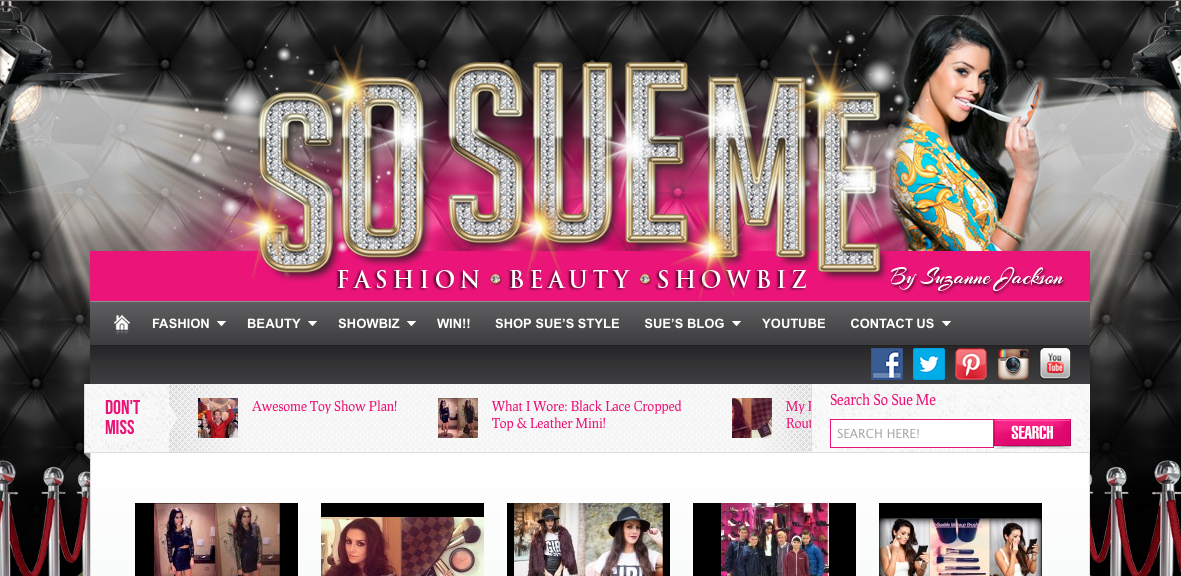
    In a recent article entitled  ‘Sigh: So Kill Me’ in the University Times, Leanna Byrne commented on the popular Irish fashion and beauty blog So Sue Me, decrying it as a mark of shallow consumerism and an affront to womankind. Says she:

    What the So Sue Me blog is giving us is a woman who eats, breathes and lives as a consumer. She is nothing more than the value her clothes or her beauty regime holds. A Barbie doll that is quite content living in the isolated confinement of the Dream House. With so few women as opinion leaders in the media, it is disappointing to see that one of the most influential female bloggers is one who conforms to a predetermined concept of ‘female’.”

    The writer is, of course, completely entitled to dislike beauty blogs and even entitled to write an article about it. The problems begin when she starts linking her opinion to a feminist perspective. A single blog can’t define the boundaries of what it means to be a woman, regardless of its popularity. So Sue Me is designed to cater to the needs of people who are interested in fashion and beauty, the same way Gibbon’s Stamp Monthly is designed to cater to the interests of stamp collectors.

    The hateful language in which Byrne describes the blog, its creator and its readers betrays a writer with a serious axe to grind and little of value to say. It serves only to fuel the stereotype that all feminists are bitter, angry and childish and it forces women who identify with feminist values to distance themselves from the word itself for fear of being linked to these qualities.

    The real question is why the writer felt the need to direct her anger at an innocuous fashion blog, when there are countless other examples of insidious sexism in Irish society and the media. Unfortunately few people are willing to speak up about it. This is why it’s so disappointing to see a strong female voice go to waste on an issue that shouldn’t even be an issue.

    By attacking the lifestyle that Suzanne Jackson champions on her site, the author is (ironically) setting boundaries for what is ‘acceptable’ for women to be interested in. Suzanne Jackson doesn’t (at least publicly) shame other women for not caring about makeup and clothes, where Byrne openly slates women who are. I’m a woman and a feminist and I also like reading makeup reviews, but by Byrne’s standards, that simply isn’t possible. Gender equality should be about opening doors, not closing them.