Tag: Fianna Fáil

  • An island of refuge? Ireland’s political parties and ‘Fortress Europe’

    An island of refuge? Ireland’s political parties and ‘Fortress Europe’

    Photo: Pixabay

    TheCity.ie’s latest series, ‘An Island of Refuge?’ tackles the immigration policies of seven political parties, highlighting their views on asylum seekers, the Direct Provision system, migrants, climate refugees and open borders. Editor Kate Brayden gives an overview of the findings.

    While Ireland’s recent General Election was undeniably focused on issues based at home, we have turned our focus to the increasingly unstable global landscape and its influence on our nation’s attitude towards migration and foreign affairs.

    Éire may be known as a welcoming place, but the strain of climate breakdown is impacting far-right rhetoric worldwide – examining whether our politicians are succumbing to this issue is a key concern.

    TheCity.ie’s team of journalists interviewed TD candidates and councillors from Sinn Féin, People Before Profit, The Green Party, Labour, Fine Gael and Fianna Fáil after dissecting each party’s manifesto statements on immigration and foreign policy to garner our coverage.

    In the aftermath of the election, the parties must now organise a government that will withstand the tests of the international stage. This includes policies relating to justice and climate breakdown. 

    Photo: Pixabay

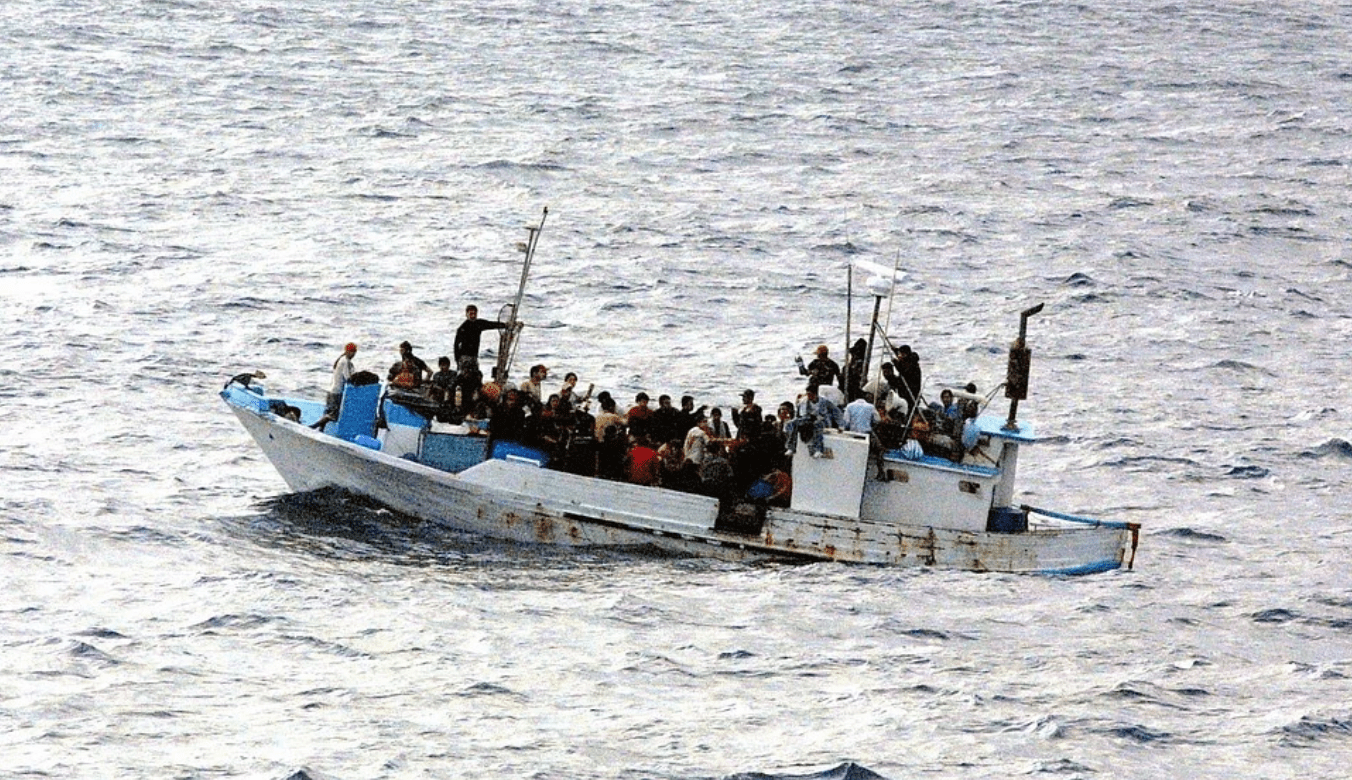
    Refugees are a core part of this, with thousands risking their lives to cross the Mediterranean every year, and some losing their lives in the fight to escape war. The policies of ‘Fortress Europe’ aim to keep people from nations specifically outside of this continent out, the very people who are affected by the planet’s destruction despite having the lowest carbon footprint. How do Ireland’s political parties hope to treat them?

    Sinn Féin, possibly writing the most intriguing manifesto in terms of economic promises, have claimed that they are against open borders, but also hope to end Direct Provision. What they would replace the system with, however, is a mystery. Should they find themselves in power, they intend to avoid a situation of mass climate-related migration – not solely for the difficulty it will pose to recipient nations, but because people deserve to live in their own nations and communities. Their stance certainly needs more explanation. 

    Mary Lou McDonald celebrates Sinn Féin victory. Photo: Instagram/africaworld_news

    People Before Profit and the Green Party have socialist and left-wing policies embedded in their manifestos, with PBP acting as fierce critics of imperialism and of tyranny abroad. References are also made to the UN Security Council seat Ireland is hoping to win, as well as US military presence in Shannon Airport. The party condemn the murderous regime of Bashar al-Assad – someone largely responsible for the flight of Syrians towards Europe

     The progressive stance of the Greens is reflected in their emphasis on freedom of movement, open borders and refugee housing, and they are highly aware of climate breakdown’s role in the displacement of innocent communities in developing countries.

    Labour’s political director Nat O’Connor has taken an arguably weak stance, admitting that Ireland is not playing the part of a wealthy country, accepting a low number of refugees, but “we can’t promise to do something that we cannot do”. Housing and health are first on the priority list for the party, which are worryingly diminished following the election.

    As the party competes for control of the Dáil, Fianna Fáil is proposing long overdue complete reform of the asylum system and to improve refugee accommodation. Their manifesto has figures and policies backed up by plans, which is a (welcome) change from some of the other vague manifestos. However, it could be all talk rather than action. Pledging to speed up the asylum process, they take a leaf out of the Greens book by promising an integration plan as well as allowing asylum seekers to access driving licences. 

    In 2015, the Fine Gael-led government pledged to take 4,000 programme refugees fleeing war-torn countries like Syria by the end of 2017. Even now, we’re still well short of that quota – having resettled only 3,206 such refugees. The government has faced fierce criticism over their handling of Direct Provision, with Fine Gael ministers exhibiting resistance to change. Former Minister for Justice Charlie Flanagan promised to improve the party’s numbers when it comes to refugee placements, but are they to be believed?

    Irish communities held protests last year nationwide, rejecting the possibility of new Direct Provision centres opening in their area. Migrants rights groups such as the Movement of Asylum Seekers of Ireland insisted that these protests were not to support asylum seekers, but were rooted in racial undertones “dressed up in human rights language”.

    “The Irish of #Fingal have voted once again for their own extinction,” O’Doherty posted on Twitter following the result.

    Interestingly, only 1 per cent of respondents cited immigration as a main voting concern of GE2020 in the Ipsos MRBI exit poll for The Irish Times/RTÉ/TG4/UCD. Within this umbrella topic, climate refugees, asylum seekers  as well as migrants are all grouped. 

    Desolate refugee camps. Photo: Pixabay

    There are important distinctions to be drawn between asylum seekers, migrants and refugees – but these terms often get mixed up in the course of public debate on what is a complex topic. The issue will only become more onerous as CO2 emissions cause further destruction in the Global South, South-East Asia, Australia, Canada and the US. 

    The movement of people has already led to dangerous, inhumane situations in the refugee camps of Libya and Greece, with the European Union recently rejecting a voting to ask members to step up search-and-rescue missions in the Mediterranean.

    An asylum seeker is someone seeking refugee status – but whose application has not yet been approved. In the meantime, as long as they’ve made an application for asylum to the country they’ve landed up in – usually on the basis they were forced to flee their home country – they are entitled to remain in the destination country while their request is being processed. If it’s ultimately approved, then they have permission to remain. If it’s rejected, then they’ll be deported. 

    Though some, who fail to qualify as refugees, are granted subsidiary protection to remain.  Migrants are not fleeing persecution; instead they choose to move country – often for economic reasons.  

    Those defined as refugees have been recognised as such under the 1951 Refugee Convention of the UN, while programme refugees have their claims formally assessed in refugee camps overseas – and are invited to the destination country under a resettlement programme.   

  • Fine Gael’s €1.2 million deficit following 2016 election

    Fine Gael’s €1.2 million deficit following 2016 election

    Fine Gael saw its deficit rise to €1.2 million in 2016, whereas Fianna Fáil was in position to deliver a surplus of €500,000 according to the annual financial accounts released on Thursday.

    This drop in finances, according to Fine Gael’s report, has been a result of the ‘disappointing’ election, with the number of members in the Oireachtas falling lower than anticipated, and funding being affected by this.

    According to a party spokesman, “Fine Gael also has a strong fundraising function, raising €1.4m gross in 2016.” The party took out a loan of €1.6 million to cover election expenses.

    According to the publication of Fine Gael’s 2016 donors and donations, they publicly declared receiving €65,324 as a party, and its TDs declared receiving €23,190.

    Interestingly, Fianna Fáil didn’t declare any funding as a party in 2016 (declarations are only mandatory if over €1,500 from the same individual in that year).

    Eleven Fianna Fáil TDs, the Ceann Comhairle Seán Ó Fearghail and Senator Lorraine Clifford-Lee, declared that they personally were donated a total of €19,500. This is the only record of donations associated with Fianna Fáil that has been made public from 2016.

    With the news emerging that Fianna Fáil are in a better financial position than Fine Gael after the cost of the 2016 election, it’s interesting to note that Fianna Fáil declared that they didn’t receive any substantial donations (over €1,500 by the same person), whereas a small party like the Socialist Party received €39,518 in donations.

    Fianna Fáil have stated that 72% of their donations are small figures, but “made by a large number of people”.  However, in these records of donations from 2016, there is no indication that more substantial donations (the other 28%) were made at all that year.

    By Mary-Kate Findon


  • Who’s going to run the country?

    Who’s going to run the country?

    Over the last few months we’ve seen a number of opinion polls showing a spectacular rise in popularity for independent politicians and smaller parties. How Dáil Éireann is going to look after the next election is anybody’s guess.

    The latest poll conducted by Ipsos MRBI and published in The Irish Times showed independents and others on 32 per cent, a whole 10 per cent ahead of the next biggest grouping, Sinn Féin.

    So how exactly is this going to work? Independents and smaller parties are never going to manage to come up with an agreement to form a government so it looks like a hodge-podge coalition is the only solution.

    With Fine Gael on 19 per cent and Fianna Fáil on 21 per cent, even a coalition of these two unlikely bedfellows wouldn’t manage to come up with a majority.

    Is a ‘grand coalition’ the only option left? John A. Costello was Taoiseach and head of a government made up of five different parties, as well as a number of independent TDs. That coalition managed three years before collapsing during the fallout from the Mother and Child Scheme.

    But would a modern day grouping like Costello’s manage any longer, or even that long?

    Following every poll we hear how people are disillusioned with the political system and are desperate for change. Those changes might yet occur, but if they do who is going to get into bed with who?

    The City spoke to representatives of the main parties to find out what they think.

    Image Jean Housen http://bit.ly/1sfKZvv


  • Hotels and Digs: The new student life

    Hotels and Digs: The new student life

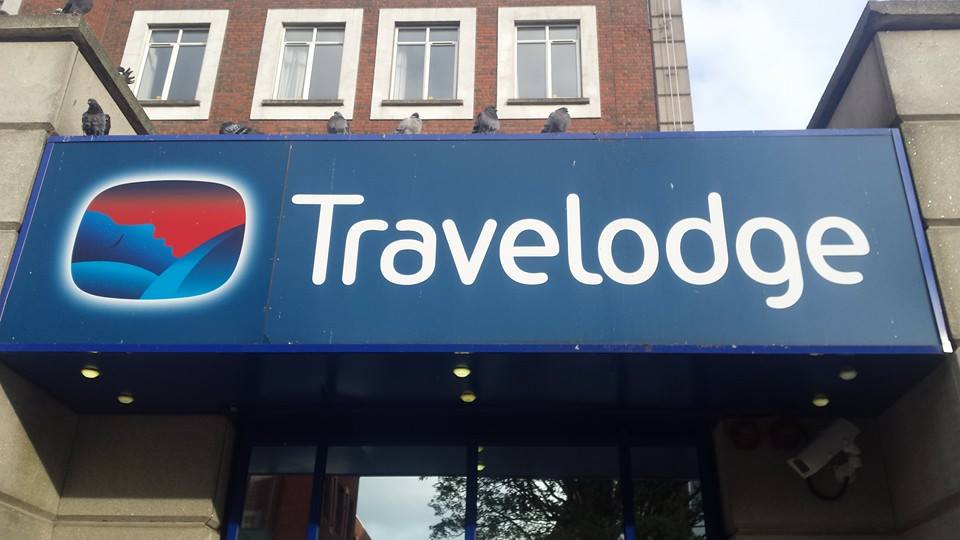
    travellodge
    Photo: Jennifer McDonald

    Soaring rent prices and a lack of accommodation in Dublin is forcing third level students to choose to study outside of the capital or in many cases, commute.

    Finding accommodation, and the money to finance it, is a huge struggle for students and one student who knows this more than most is 22 year old, Cian.

    Cian is a third level engineering student in DIT who said he was forced to live in hotels and travelodges for a whole college year due to the rocketing prices and lack of rented accommodation. “Yeah there were a few of us living rough if you like, it was a tough time”, says the 22 year old.

    “We had a house, it was a two bed, among four of us, on Sherad Street, but is was so unsafe that we just couldn’t stay. The house was infested with rats and there was a huge hole in the roof, the floor boards hadn’t been laid properly and the house was so damp, it was just horrendous”, says the DIT student.

    After moving out of this house, Cian said that he and six of his friends were practically homeless. “We grabbed couches where we could, our friends were great but we couldn’t stay anywhere permanent, some nights we were staying on couches of people we barely even knew”, he explains.

    Cian says that him and six of his friends moved from hotel to hotel each week. “We couldn’t let on that there were six of us in the room so one of us would check in and pay and then the rest of us would pay that person our share”, he says.

    Cian and six friends had to share one hotel room for most of the college year
    Cian and six friends had to share one hotel room for most of the college year

    Renting a room in the capital, if you are lucky enough to find one, can cost anywhere from €400 to €600 a month, according to adverts on Daft.ie, Myhome.ie and various other accommodation advertising sites.

    “We did save a lot of money living in hotels, but it was a horrible and stressful time”, says the engineering student. “We are from Leitrim so commuting just wasn’t an option and the hotels cost about €160 a week, so among the six of us that wasn’t too bad”.

    bnb
    B&Bs are becoming the only option for students in the Capital

    The hotel life was far from luxurious for the students Cian explains, “We were all on top of each other, we had no privacy and then there’s the problem of not being able to make any food, bar a dodgy cup of tea”.

    “We spent about €50 a week on eating out and to be honest it was all crap cheap food, like Burger King and McDonalds”, he says.

    Living in digs is becoming more and more popular now as students will take anything they can get.  Laura is a 25 year old student who shares her experiences of living in digs.

    “I got a room in a house and lived with the homeowner, a woman, and her young daughter”, she says. “The room was lovely and the rent wasn’t too bad so I was happy enough, but there was a lot of rules, which, as an independent adult, was slightly annoying”.

    Laura explains how she wasn’t even allowed her boyfriend over, “he wasn’t allowed to step a foot inside the house, the woman was concerned that her daughter would be getting a bad example. One day he carried in my bags for me and I got a bit of a warning”, laughs the 25 year old.

    “The house was lovely, reasonably priced and I was close to my placement so I put up with the rules”, she says.

    The Higher Education Authority has admitted that this is the first year it has seen students being forced to put off college because they cannot find adequate accommodation.

    With thousands of students opting to study in Dublin every year the problem is a growing one, which needs “short-term solutions not long-term aspirations” according to the Fianna Fáil leader, Michael Martin.