The City caught up with the ‘Bray Beach Bathers’, who are a group of men and women who all share a common love for swimming in the ocean, as they brave the cold water on a brisk, but beautiful October morning – which made for perfect swimming conditions.
In seaside towns across the country, sea swimming has become a rapidly rising phenomenon – but for many, it’s become much more than just a hobby – it’s become a way of life.
As part of their now daily routines, sea swimmers have formed several groups who come together for their daily dips into the Irish Sea all year round.
While every swimmer has their own respective reasons for being involved in taking part, one thing is for sure – no matter the weather, sea swimming is here to stay.
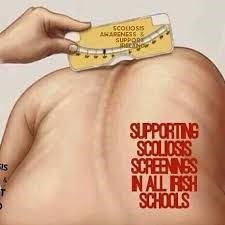
Many children are still facing long waiting times for diagnosis and treatment for scoliosis in Ireland, according to Scoliosis Awareness & Support Ireland.
When Taoiseach Simon Harris was minister for health in 2017, he said that no child would wait longer than four months for scoliosis surgery.
However, campaigners say that seven years on, surgery is still a long way away for many.
“As of September 2024, we continue to face significant challenges in addressing the backlog of scoliosis waiting lists for children,” said Elaine Kelly from Scoliosis Awareness & Support Ireland.
Kelly explained that the demand for spinal procedures often outpaces the available capacity within the healthcare system despite the efforts to improve the situation.
“Over the past 10 years efforts to improve the issue have included, allocating additional funding, an increased investment in healthcare and an increase in infrastructure and personnel to expand surgical capacity. Despite these efforts, many children and their families continue to experience significant delays in accessing necessary surgery,” Elaine Kelly said.
Source: CHI website, Children’s Hospital Temple Street
Aoibhínn Dunne, 20, from Dublin has been waiting over a year for spinal surgery with private healthcare.
Due to the cut in scoliosis screening in primary schools Dunne found out very late in life that she had scoliosis.
Dunne’s scoliosis causes her severe back pain, and because her scoliosis is in the shape of an ‘S’ it means her spine is pulling in different directions. This puts a lot of stress on her lungs and eventually her heart, as her ribs are pressing in against her lungs.
This is especially difficult for her as she studies drama in university and it affects her movement for acting on stage and breathing for singing.
Since being diagnosed with scoliosis at the age of 18, Dunne has had immense difficulty in getting on waiting lists for surgeries as “children often get prioritised,” Dunne said.
“By the time you are 18 there is a certain cutoff point for the number of degrees in the curvature of the spine; if you’re under a certain number then it probably won’t keep getting worse. However, mine is double the cutoff point, so I do have to get surgery, it’s just so hard, especially for me because I’m not a child anymore,” she explained.
“We appreciate that no politician can wave a magic wand and solve this overnight, but this has been going on now since 2009,” said Elaine Kelly.
“Even the emergency wait lists are over three months long,” Dunne said.
Kelly explained how past warnings have fallen on deaf ears and that the “response has been unacceptable from the Government. This is the last chance to get it right.”
“The waiting list for spinal surgery has increased in recent months, this is due to the backlog of children waiting for a first appointment with a consultant,” Kelly said.
According to Kelly, it’s not just physical pain that affects patients with scoliosis. Anxiety and stress associated with the delays in care can also have a negative impact on the mental health of children and families.
Kelly advises families to reach out for help. “Give families support groups contact details and information on their child’s diagnosis. Research- knowledge is power,” she said.
Staying healthy during winter- your top tips from TheCity.ie. Photo courtesy of iStock
By Johnathon Pearl
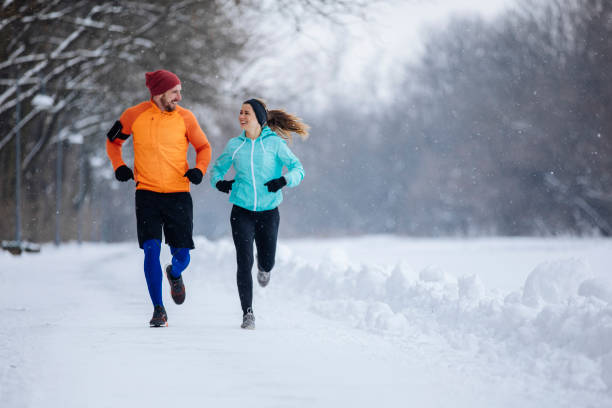
Winter is here and exercise is more important than ever, not only for the body but also for the mind.
With temperatures plummeting and evenings getting darker by the day, many people find motivation to exercise extremely difficult and as a result it simply gets lost in routine.
Summer months provide people with a lot more freedom to exercise. A December night in Ireland lasts almost 17 hours and the days start about 4 hours earlier compared to the summer months.
In Winter, particularly on weekdays it can be extremely difficult to get out for a run, go for a cycle and virtually impossible to go for a swim, unless you wanted hypothermia.
So how do people go about exercising in the Winter?
Strength and fitness coach Suzanne Flannagan explained just how important it is to keep up a level of exercise during the winter months and how to train efficiently.
‘’It is very important for young people to do some sort of exercise at all times but especially in the world we live in right now.
‘’With technology so advanced it is so easy for young people to just sit inside with play stations, which keep them entertained until they go to sleep and not exercise at all.’’
‘’We all know it is very difficult in the winter months, (gets dark early) so planning is vitally important. Designate an hour when it is bright to exercise 4 or 5 times a day and it will make you feel so much better about yourself.”
Suzanne Flannagan
‘’Any sort of exercise young people can benefit from, a simple jog out the back of the house, a workout with another family member, whatever people feel comfortable with.”
Flannagan emphasized the need to plan before exercising.
‘’We all know it is very difficult in the winter months, (gets dark early) so planning is vitally important. Designate an hour when it is bright to exercise 4 or 5 times a day and it will make you feel so much better about yourself,” she explained.
‘’Plan a time to exercise at the start of the week or even the night before, so that you know its going to be bright while exercising.
‘You don’t’ have to go outside to exercise’ remarked Flannagan when asked about the shortened days.
‘’Equipment like an exercise bike, a treadmill or even a rowing machine can be used but even getting a matt out in a corner by yourself and doing body weight exercises is perfect. It will give a great boost to your day.
Personal Trainer Gavin McCoy recently moved to Australia to study health and conditioning.
Speaking to thecity.ie he gave tips for exercising in Winter but also commented on studying the benefits exercise can have on the mind.
‘’Exercise is so important, so many studies are done on it, but I still think the majority of people don’t actually realize how valuable it is.’
‘’Learning more about mental health over here, (Australia) makes you become such a big advocate to encourage people to have at least one piece of exercise in their daily lives.’
‘’A lot of fitness advocates that are big on Tik Tok and Instagram constantly talk about taking rest days, but that doesn’t mean that you can’t do yoga or stretching. I would be really big on doing a piece of exercise a day.
‘’Some people might not think it but for an exercise Yoga is probably one of the best things you can do. Especially with the early nights, find a peaceful place in your house bring your mat and do some Yoga, it is brilliant for the mind.’’
‘’Of course, running, swimming, cycling help but not everyone likes or can do them, an hour of meditating or stretching are also great ways of feeling better particularly as the days in Ireland are quite short.’’
Talking about his studies he enlightens us on different ways to feel better about yourself and how different ways of exercising appeals to different personalities.
‘’Obviously, exercise is key but some of the ways I have learned that improves your mental health and day to day living are crazy.
‘’One of the probably eye-opening things we were told was having a cold shower at the start of every day. It is crazy because it puts you in such a good place mentally.
‘’I know everyone loves a warm shower and they are nice but, the idea of having a cold shower in the morning is that it’s your first challenge of the day, the idea of a shower like that is that it isn’t supposed to be nice and relaxing it’s all about passing the first challenge of the day, it is brilliant.’’
Gavin also stressed that ‘people should only focus on themselves and not other people.’
‘’I get asked about gym membership all the time, and whether or not people have to get gym membership to exercise, which just entirely isn’t the case. A lot of people focus on other people and what they are doing when all that people should be caring about is themselves.
‘’Going to the gym and working out with other people can be beneficial to some but it can be also quite daunting. It’s all about yourself and what you prefer, constantly thinking about what others are doing can be really difficult on people’ minds and it won’t allow you to get the best out of yourself.’’
Exercising is one of the most important things to do in Winter. Whether it is a run, a cycle, yoga or even swimming, every little helps.
Wrestler and bodybuilder Carl O’Reilly has been an advocate for keeping gyms classed as an essential service during the lockdown. In an exclusive sit down with the City.ie, Carl speaks about the importance of exercise and gyms during these tough times, and how many personal trainers are struggling to adapt to a new business based solely on digital technology.
In the midst of the Covid-19 pandemic, fitness resources like trainers and gyms are harder to access. Nathan Davies explores how technology makes it easier than ever to get fit at home.
Photo taken by Mike Mozart. Sourced from Flickr.
Never before has the topic of health been as important as it is today. Covid-19 continues to dominate the news cycle, placing our mental and physical health at the forefront of public consciousness.
The pandemic has also created new problems that must be overcome around health and fitness. Covid-19 restrictions have made it harder to access the resources needed to improve ourselves. Personal trainers and physiotherapists are harder to reach, while most gyms have been closed or severely restricted.
This new environment has seen an acceleration of an already growing trend; the digitisation of fitness.
Studies conducted in the past few months have shown just how Covid-19 has impacted the ways in which we keep fit. One survey from Dublin-based Amárach Research found that almost two-thirds of people surveyed had spent more time in online fitness classes than they did before the pandemic.
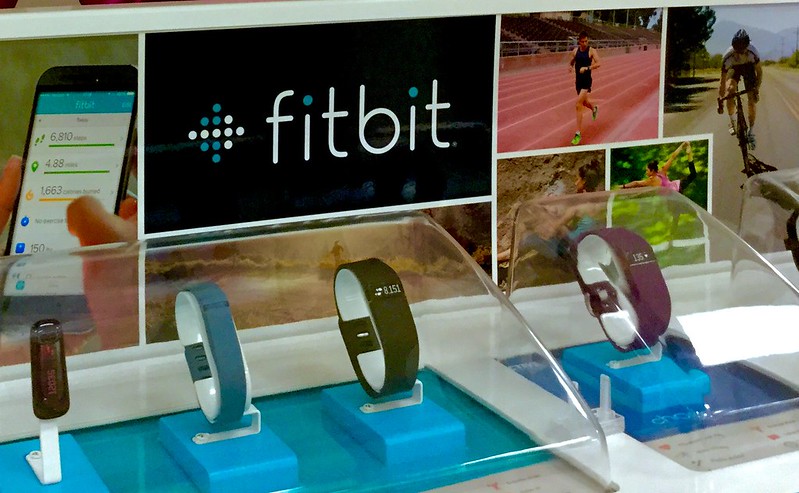
The study also brought to light the growing use of devices when tracking fitness goals, with 60% of people having used mobile apps, smartwatches, and other devices in order to track their activity and compete with family and friends.
The numbers show just how popular digital fitness is becoming, and personal accounts from athletes explain why.
“For me, the best thing about them [smartwatches] is being able to track how far and how long I swim for with the GPS in the watch.” said Wicklow-based triathlete Anthony McGrath. “I like to see how far I go and try to beat it the next time.”
Fellow triathlete Jean Fogarty favours the health benefits from her smartwatch: “I use mine to keep track of my weight,” she said. “Counting calories, checking resting heart rate and peak heart rate. You couldn’t do any of that years ago.”
Agreeing with McGrath, she sees the benefit in tracking her progress. “I can set a distance on the app and start running.
“When I hit that distance, the watch will buzz to let me know I have hit my goal. It takes so much of the weight off my shoulders. I don’t have to work out how far I ran. It knows how many calories I burned whether I’ve swam, cycled or even gone kayaking.
“It keeps me motivated. I know when I’m doing well. I know when I’ve had a lazy day. It kept me motivated during lockdown to keep exercising.”
However, these technologies have not come without their downsides. Like all digital technologies, the issue of privacy has inevitably been raised given how much data these devices are gathering.
Google’s ongoing acquisition of Fitbit has raised alarms given their history with gathering data for advertisement purposes. The ramifications of the merger have been scrutinised by the EU, who warn that it presents a “high level of risk to the fundamental rights to privacy and to the protection of personal data.”
Despite Google claiming they have no intention to use the data in this manner, the EU’s fears may be justified. Fitbit’s ability to gather sensitive health information on its 28 million users may present yet another digital privacy issue in the wrong hands.
This video was recorded for TheCity.ie by four third year TUD student journalists. They documented their daily routines at home during the covid-19 lockdown. These unprecedented times have cut the college year short for them, however it didn’t stop them from getting their assigned work done.
From exercising, to reading, to eating and to painting, these students have found many ways to keep themselves occupied during these difficult times. They documented all of their activities in this short video. The video goes to show that even during times such as these, you can keep entertained and enjoy yourself at home.
The last decade
has seen a complete transformation of the fitness industry in Ireland. Our
country is now filled with commercial gyms, boxing clubs, training academies
and smaller, private gyms. However, with this
surge in health and training, there is now more pressure for men and women to
feel like they must look a certain way, causing them to consider using
steroids.
In Ireland, the
sale of anabolic steroids is governed under the
the Misuse
of Drugs Acts 1977-2018. It is illegal for
them to be sold in gyms, online or anywhere outside of a pharmacy. According
to
http://www.health.gov.ie, article 12 of
the principal regulations deals with the documentation which must be received
by persons supplying controlled drugs e.g. pharmacists, pharmaceutical
wholesalers etc.
A public information campaign to raise awareness of the potentially serious side effects and health risks of using unprescribed anabolic steroids has been put in place by the Health Products Regulatory Authority (HPRA). The campaign ‘Zero Gains’ was developed in light of growing evidence of an increased use of anabolic steroids for body enhancement as well as new research showing a significant lack of awareness of the serious health complications posed by these products.
The Health Products Regulatory Authority ‘Zero Gains’ campaign Photo Credit – HPRA.ie
Dr Lorraine Nolan, Chief Executive of the HPRA, said that anabolic steroids can result in a range of serious health side effects, many of which can be life-threatening with long-term use.
“The HPRA believes
that the usage of anabolic steroids has been increasing in Ireland in recent
years as the volume of illegal anabolic steroids detained by authorities
increased ten-fold between 2015 and 2017,” said Dr Nolan.
“Growing evidence
ranging from the increasing levels of illegal products detained by the HPRA
each year, as well as needle exchange figures and a number of tragic deaths
highlighted in the media in recent times, point to a growth in non-medical use
in Ireland.”
“The HPRA…detained 449,411 dosage units of illegal anabolic steroids”
Dr Lorraine Nolan Chief Executive of the HPRA
Dr Nolan
continued, “The HPRA states that, in
2017, working in conjunction with An Garda Síochána and Revenue’s Customs
Service, it detained 449,411 dosage units of illegal anabolic steroids,
compared to 109,006 units in 2016 and 38,049 in 2015.”
Dr. Nolan added: “Our research highlights the social pressure on young people to look a certain way. Young men are seeking to gain muscle and bulk up, and whilst use of illegal steroids was previously associated with competitive bodybuilding and enhanced sport performance, nowadays usage appears dominated by the desire to have the perceived perfect body image.
“The research outlined in the launch of Zero Gains showed that 3 in 4 adults feel social media, TV shows, magazines and websites are pressurising young adults to look a certain way.”
Anabolic
androgenic steroids have two main modes of action in the body, one being
androgenic effects, which are generally
considered to be similar to testosterone (masculinisation) and anabolic
effects, which are associated with protein building in skeletal muscle and
bone. Men and women may appear healthy on the
outside using anabolic steroids but according to Dr. Nolan, this isn’t always
the case.
“The real story is that non-medical use of anabolic steroids can have devastating, long term and life threatening side effects”
Dr. Lorraine Nolan Chief Executive of the HPRA
“We believe there
are no gains from using substances that have been shown to cause a range of
physical, psychological and emotional damage when misused,” said Dr Nolan. “The
real story is that non-medical use of anabolic steroids can have devastating,
long term and life threatening side effects.”
In discussion with Psychologist Susan Eustace about the effects social media may have when taking anabolic steroids, she said: “We know social media plays a significant role in triggering and maintaining many forms of self-harm and damaging behaviour including steroid use.
“Platforms and sites using images appear to be particularly influential as they act as potent triggers for steroid users, for those not currently engaging in the behaviour, and for those who are attempting to give up or stay away from steroids. Social media also amplifies the influence of unhealthy gym culture which can be a major promoter of steroid use.”
“We know social media plays a significant role in triggering and maintaining many forms of self-harm and damaging behaviour including steroid use”
Psychologist Susan Eustace
Speaking to Kyle Mullen, an Irish influencer with over 27 thousand followers, he discussed his experience in the fitness industry and whether he has ever felt pressured to use anabolic steroids.
“No, I personally have not felt pressured, however, I’ve thought of using them, every single male gym goer does. I would say that some do feel pressured by some influencers as often times the lads with the best physiques get the followings and the fame so I’m sure lots feel that they need to use them if that’s their goal. For myself, however, I don’t feel those same pressures as I know of the negatives drugs can bring.”
Photo Credit: Kyle Mullen Youtube
Even though Mullen doesn’t take steroids himself he knows many others who have.
“Yes I know a lot of people all using to gain for different reasons,” said Mullen. “Whether it’s keeping up appearances for social media, for competitive reason or only for personal goals in fitness … it’s easily noticeable in physical changes, the mental/ emotional changes vary from minor to dramatic depending on the person and the amount they are taking but yes some are noticeable.
“From my understanding it’s very very easy to get your hands on them. However, as it is illegal and unregulated a lot of the time you don’t know what you are getting.
“A lot of people get sold essentially nothing, they think they are on steroids but have been sold water or whatever the concoction may be. But yes, they are very easy to get, no harder than booking a hotel or flight online.”
“They are very easy to get, no harder than booking a hotel or flight online”
Fitness influencer Kyle Mullen
A recent RTÉ Investigates series found steroids being sold for as little as €40 for a six-week course which could produce dramatic physical and psychological results. During the course of their investigation they found these products being supplied and sold in car parks, on Irish classified websites and outside gyms.
“The HPRA’s Zero Gains campaign aims to inform and discourage people from using anabolic steroids,” said Dr Nolan. “And from buying these products online or from other illegal suppliers, where it is believed many of these products are sourced.”
Sport Ireland recorded a rise in “doping whereabouts” failures in 2017 for the fourth year in a row, TheCity.ie can reveal.
Failures have risen from four in 2014 to twelve in 2017, a 200 percent increase in a four year period. Over this time, the number of athletes tested has fallen from 1,054 in 2014 to 989 in 2017.
A whereabouts failure includes those who have missed a test or failed to make a whereabouts filing, according to the World Anti-Doping Agency.
Under the Sport Ireland Act (2015), Sport Ireland’s function in relation to Anti-Doping includes “to facilitate, through the promulgation of guidelines and codes of practice, standards of good conduct, fair play and the elimination of doping in sport.”
Although testing as a whole fell from 2014 to 2017, GAA testing both in and out of competition and blood also rose steadily by 29 percent over the last four years.
Testing by the IRFU also increased over the four year period by 29 percent while the FAI testing rose by 2 percent.
Source // Flourish
No surprises as Athletics Ireland conducted the most tests over the last four years combined. Perhaps more unexpectedly, Ladies Gaelic Football testing has remained static at four each year for the last number of years.
The IRFU do not test in competition and the FAI do not do blood testing, while organisations like the GAA, Athletics Ireland, Swim Ireland and Horse Sport Ireland test both in and out of competition as well as blood.
Ciaran Dunne, the vice-captain of the London Senior Football Team and a player representative on the GPA isn’t surprised to see the number of GAA players tested rising.
“I don’t think any current or former players would have a problem with increased frequency of testing. Players have an ownership and responsibility for what we/they ingest and what goes into our bodies.
“I don’t feel it’s a major issue in the game and for the sport to be recognised and merited within the sporting world then anti-doping will need to be an element of it.”
In 2017, Health Ireland (HI) conducted one of the largest social surveys in Ireland in recent years. They looked at general health and health behaviour. In their findings, they discovered that 62 percent of people are overweight or obese. To add to these shocking figures, only 49 percent of people who are obese or overweight are trying to lose weight.
In today’s modern society, convenience food is needed due to the fact that everyone is too busy to cook. But at what point does this become too much? Only over a third of Irish people, 37 percent, admitted they eat their five portions of fruit and vegetables daily.
We spoke to Sorcha Hanway, the founder behind the healthy, wholesome and aesthetically gorgeous Instagram page @my_happy_plate_ which encourages people to get back in the kitchen and fall in love again with cooking.
Where did it all begin?
“I thought that the way to lose weight was to eat really clean and only eat steak, turkey burgers, broccoli and rice. I didn’t understand that healthy food could be tasty. I just started cooking and experimenting and it became so much fun. The more I cooked, the more experience I got, the more creative I became. Then it became a challenge how can I make something yum or how can I use something that was going off so I can eliminate waste.”
Why did you set up the page?
“I didn’t want to share it on my own page anymore but I didn’t want to make a food page. I felt I didn’t have the confidence but then one day I just thought I’d do it. I got great feedback and it just encouraged me to keep going. Knowing I had an audience and knowing how demanding Instagram is, it just encouraged me to cook loads.”
What are the benefits of @my_happy_plate_ for you personally?
It’s such a hobby for me like such an outlet. When I am cooking in the kitchen it’s like I go into a state of flow. I am so mindful in the kitchen. It’s like a form of meditation for me, it totally gets rid of anxiety. It’s so easy and healthy to do knowing you’re saving money and not eating badly.”
Where did you get the inspiration for @my_happy_plate_ ?
“I was inspired by the Body Coach because I liked to do things quickish and each meal I made had me buzzing to do something new. I always had cooking on my mind and how I could turn an everyday item into something different and inventive. It was a game of unlocking whopper taste. A collection of Instagram pages helped me conceptualise dishes and my general knowledge and flair for cooking.”
Have you had any cooking disasters?
“I tried blending beetroot into pancake mix to make it pink and it was so horrible I wanted to cry. So it’s all about experimentation but you won’t discover whopper stuff unless you are bold.”
What do you think about modern-day eating habits?
“I think with modern-day eating habits, people are in a very fixed mindset. They don’t realise that eating healthy isn’t that hard and once you make the transition, after a few days it becomes like the bible. Just like anything the more you practice the better you get at it. Once you start seeing how much you save money and how much better you feel, how you can jump out of bed, how much energy you have, you feel so much better.”
What steps do you think people can take to change their eating habits?
“Change their mindset. You know it’s not expensive to eat healthy, everything I make is easy, it’s not hard. Get a cookbook, an easy one like Lean in 15 by The Body Coach and just practice, practice, practice. If you’re picky, try have open mind.”
What tips would you recommend?
“Oh, definitely spices. I cook with spices every day. They transform a meal. You can turn a plate of veg to a plate of yumminess by making them spicy. Also if you want to eat healthy to lose weight, get tupperware, batch cook something and put it in the freezer and then you don’t have to worry for the rest of the week.”
Check out Sorcha’s Instagram page here for meal inspiration.
The Army Reserve fitness exam was the most common area of failure for applicants over the past four years according to figures obtained under the Freedom of Information Act.
In order to be accepted into the Irish Army Reserve, candidates must be between the ages of 18 and 35 years, complete a fitness test, interview, medical exam and pass garda vetting.
*The years 2015 & 2016 were combined. 2016 results are included with 2015 data in the graph.
The fitness exam is composed of three aspects:
A candidate’s Body Mass Index (BMI) is recorded to ensure they are considered healthy and within the required parameters (BMI between 19-24)
If successful, they may complete a local muscular endurance test. This consists of candidates performing 20 push-ups and 20 sit-ups within a minute.
Next, applicants must undergo an Aerobic Capacity exam which requires them to run 2.4 km in a given time. The maximum time for males being 11 minutes and 40 seconds, while females are given a time of 13 minutes and 10 seconds.
“Physical fitness is a basic requirement of military life which places unique physical and psychological demands on personnel,” said Captain Paddy Molloy from the Defence Forces Press Office. “In order to be prepared for these demands, regular assessment is required to ensure the standards are being adhered to.”
Speaking to TheCity.ie, the HSE has commented that “in relation to the general population, the Healthy Ireland Survey highlights that almost two-thirds of the adult population in Ireland are not sufficiently active to meet the national physical activity guidelines. In addition six out of ten adults in Ireland are overweight or obese, with BMI greater than 25.”
“The number of personnel failing fluctuates annually, but is assessed as being within acceptable parameters,” said Captain Molloy.
Statistics showed that last year 20 percent of failures were among female applicants.
According to Captain Molloy, “the fitness test makes allowances for age, gender and chronic physical injuries in line with international standards and best practice.”
Females made up 15 percent of those that have applied in 2018 so far. Last year saw a peak in female applications at 678, while this year saw a record low in recent years with 201 applicants so far.
No females have failed the garda vetting in the past four years.











You must be logged in to post a comment.