Tag: Football Association of Ireland

  • Levelling the playing field: Women’s football calls for a reshuffle

    Levelling the playing field: Women’s football calls for a reshuffle

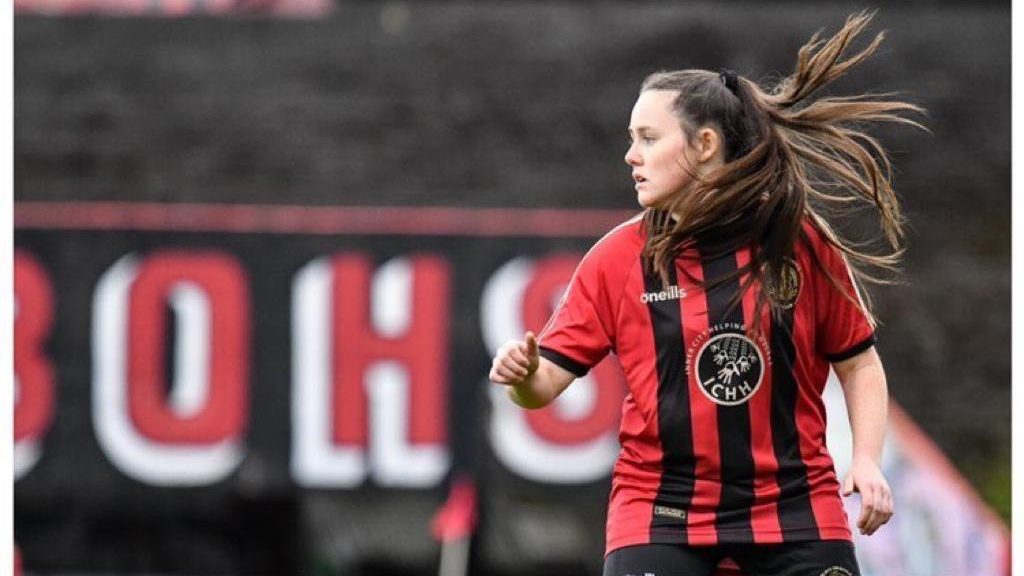
    Aoife Robinson playing for the Bohemians. Image courtesy of Mick O’Shea (@mickoshea100)

    Playing for Bohemians has always been a dream for striker Aoife Robinson.

    When she was younger, there was no women’s team set-up – so she would have to settle for playing for the men’s team, Robinson tells me with a wry smile.

    “We are looking to just be considered equal”

    Aoife Robinson

    While the set-up of the Bohemians women’s team in 2018 has been seen as a progressive move, there still remains potholes and inconsistencies facing women’s football’s road to equality.

    Today, women still face discrimination on and off the pitch – overtly and covertly – from the top down. 

    Robinson may have achieved her dream of playing for the Bohemians, but she has encountered gender-related obstacles along the way.

    “It always seems like the boys get first pick on anything,” Robinson says. “We are looking to just be considered equal. Like on match days – if we both have a game, the men’s team will be given the earlier time. And the women’s game is always later when everyone has gone home for their dinner and no one is sticking around to watch,” she says.

    Robinson continues: “Or even football gear. For one of my old clubs one time we did a sponsorship campaign and raised loads of money for gear. And the boys took the money and they got the gear. The boys would always be given new tracksuits and we’d just be given nothing.”

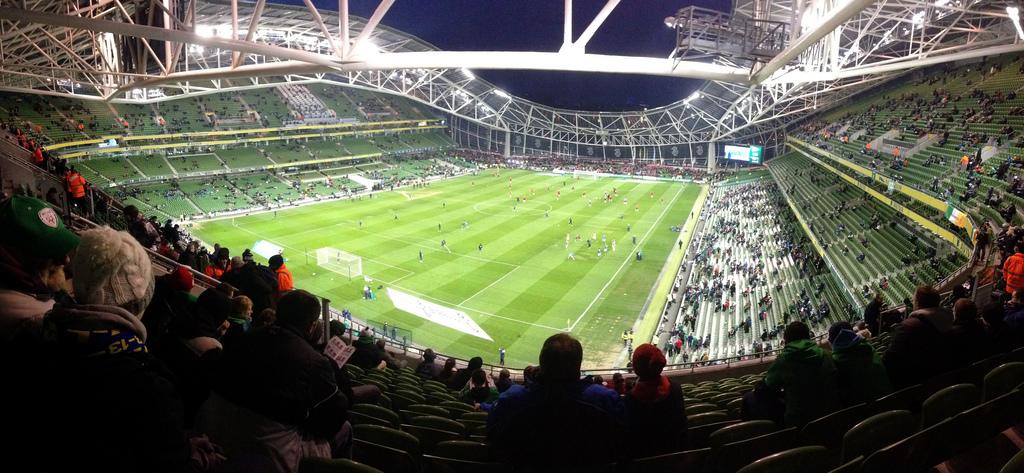
    Another bone of contention that raised a lot of eyebrows was the relocation of the FAI Women’s Cup Final between Peamount United and Cork City last December – it was set to be played in the Aviva Stadium but was changed to Tallaght Stadium. 

    “If the men’s matches are on the tele, why can’t the women’s matches be?”

    Robinson

    The FAI made the decision in order to secure more match day revenue. However, as the country was still under level-5 restrictions, the match was already scheduled to go ahead behind closed doors. 

    “That annoyed me and it shouldn’t have happened,” Robinson laments. “But with the no-fans situation, it could very well have been in the Aviva – because at that time, there were no fans at Tallaght anyway.”

    Games will remain behind closed doors for the foreseeable future for both men’s and women’s teams. But, strides have been made to secure that more streaming coverage is made available for fans.

    On Thursday 25 February 2021, the FAI announced that all SSE Airtricity and Women’s National League matches will be made available to stream on LOITV for season ticket holder. The Women’s National League (WNL) matches will be made available free to view without a paywall.

    While a welcomed decision, Robinson still feels this could have been done much sooner.

    “If the men’s matches are on the tele , why can’t the women’s matches be on the tele?” Asks Robinson. Especially now that women’s matches are being played in the stadiums. So you can’t be saying that we don’t have the facilities for cameras and stuff. It’s there.”

    Robinson continues: “Streaming it on Facebook and YouTube is good, that’s brilliant. But you’re only gonna watch it if you’re told about it. But if a match is showed on RTE, you know it’s there, you’ll leave it on. You literally have to be dedicated to go looking for it, and women’s sport shouldn’t be at that point anymore.”

    “If the men’s matches are on the telly, why can’t the women’s matches be on the telly?” asks Robinson. She welcomes this decision but says it could have been done sooner.

    “Especially now that women’s matches are being played in the stadiums – so you can’t be saying that we don’t have the facilities for cameras and stuff. It’s there.”

    Robinson adds: “Streaming it on Facebook and YouTube is good, that’s brilliant. But you’re only gonna watch it if you’re told about it. But if a match is shown on RTÉ, you know it’s there, you’ll leave it on. You literally have to be dedicated to go looking for it, and women’s sport shouldn’t be at that point anymore.”

    The state of women’s football remains an overlooked entity of Ireland’s sporting landscape. The skill and desire is clearly there, but the reluctance to recognise its potential leaves many feeling like the pitch is slanted against them more than ever. With Vera Pauw signing a contract extension until 2023 and the new FAI CEO calling for more promotion of the women’s game – time will tell if change is on the horizon.

    • The SSE Airtricity League WNL 2021 season will kick-off on 27 March – with Bohemians facing Treaty United at the Oscar Traynor Centre in the first of two 2:00pm kick-offs. Galway Women’s FC play Cork City in Eamonn Deacy Park in the other early kick-off. 
  • ACL injuries on the rise in football

    ACL injuries on the rise in football

    By Evin Grant

    The most common injuries in football are pulled hamstrings, sprained ankles and dead legs. However, a far more serious injury is starting to become more prominent across the sport in recent years.

    Anterior Cruciate Ligament (ACL) tears have been on the rise in recent years and offer far more serious consequences for footballers, often ruling them out for over eight months.

    Photo Credit: Pixabay

    Dr. Riley Williams of the Hospital for Special Surgery (HSS), recently explained some reasons for the ACL tear being closely associated with sports people, footballers in particular.

    “High-velocity, change in direction, pivots and rotation of lower extremities can affect the function and stability of an ACL,” said Dr Williams. “ACL injuries can occur when contact is made with another player but can also arise from non-contact situations such as landing awkwardly when passing a ball.”

    “Recovery time for an ACL tear can be anywhere between six months to a year”

    Recovery time for an ACL tear can be anywhere between six months to a year, depending on the circumstances and professional clubs will often enlist specialist treatment and around-the-clock rehabilitation services to aide their players recovery. Notably, Florian Lejeune, of Newcastle United, who amazingly returned from an ACL tear after just six months last season.

    However, for football clubs in Ireland who do not have such luxuries, an ACL tear to one of their players can be highly damaging and often lead to a prolonged length of absence. Hugh Douglas  of Bray Wanderers, Darren Cole of Derry City and Gary Boylan of Sligo Rovers are all SSE Airtricity League players who have suffered an ACL injury recently.

    One player who knows both the physical and mental anguish of injury is 20-year-old Bohemians striker, Cristian Magerusan. The highly rated, Romanian-born forward has suffered several metatarsal injuries and one ACL tear in the last two years alone.

    “The recovery was basically like starting from the beginning”

    “It was the worst pain ever when I did it,” said Magerusan about tearing his ACL. “The recovery was basically like starting from the beginning, so like small movements of the knee and trying to walk on it and all.

    “It’s been a long road and mentally very tough but I feel much stronger now coming back.”  

    Magerusan is now nearing return following a gruelling nine months on the side-lines. He underwent ACL reconstruction surgery and was back walking without crutches just three days later.

    From that point on, it has been a difficult journey for him both mentally and physically, but with a return to the pitch just around the corner, Magerusan and others show that the dreaded ACL tear can be conquered.

  • Should Ireland amalgamate in international soccer?

    Should Ireland amalgamate in international soccer?

    credit Steven Depolo on Flickr
    credit Steven Depolo on Flickr

    When you look to Irish national teams for a source of pride, rugby comes to mind first. It is a great testament to this small nation that we compete with countries that have 10 times the population to work with.

    So based on that, one would assume that any possible question regarding an amalgamation of the Republic and Northern Ireland soccer teams has to be answered with a yes. I however, disagree.

    The Republic of Ireland national team has shown before that it has the quality in its arsenal to compete with the best in the world and to make the latter stages of major tournaments.

    In the World Cup in 1990, 1994, and 2002, the Republic’s soccer team reached the quarter finals, and made it to the final 16 twice, respectively. During the same time period Northern Ireland failed to qualify on all occasions.

    For the European Championship in 1988 and 2012 the Republic reached the group stages of the tournament. The upper quadrant of the island has never reached a European Championship.

    Despite neither side succeeding in securing a trip to Brazil in 2014, the Republic still managed  to maintain a somewhat respectable record in terms of wins and draws compared to Northern Ireland’s shambolic campaign in which the green of the North recorded a draw and a loss against both Luxembourg and Azerbaijan.

    When you move the argument away from the pitch the sensible notion still points towards the Republic remaining a separate entity.

    The Football Association of Ireland (FAI) have purpose built grounds in the Aviva Stadium which is the home of Irish soccer. Northern Ireland do not have that luxury. Instead, they have leased the rights from Linfield F.C. for the use of Windsor Park. In return for this lease, 15 per cent of all revenue of gate receipts and TV rights leaves the Irish Football Association‘s (IFA) pockets and lines Linfield’s.

    The issue surrounding political and religious difference also needs to be considered. The Irish rugby team works as a combined entity because a) it has always been this way since its inception and b) the vast majority of rugby supporters would be of a higher social class and background. Not meaning to pigeonhole, but football supporters would have a greater tendency towards unruliness and hooliganism than their rugby counterparts.

    The only foreseeable benefit gained for the Republic of Ireland by amalgamation is that the Republic of Ireland would not have to press players who are born in the six counties to declare for the Republic.

    However, most Irish managers have a tendency to acquire players not only from Northern Ireland, but also Scotland, Wales, and England. Once they were born on the island or have a grandparent who was, they can declare for the Republic – therefore all of the Northern Ireland squad is fair game for the Republic of Irish team, they just need to be ahead of the curve in terms of recruiting them.

    Another issue is that the League of Ireland, which is already on the fringes of the FAI’s agenda, would become even more so, as an amalgamation of both countries national teams would result in an inevitable combination of both football associations.

    Northern Ireland’s only potential commodities are already available to the Republic and therefore the south will be offering up a much greater investment for what are limited dividends!