Tag: Gambling

  • Hedging our bets in lockdown

    Hedging our bets in lockdown

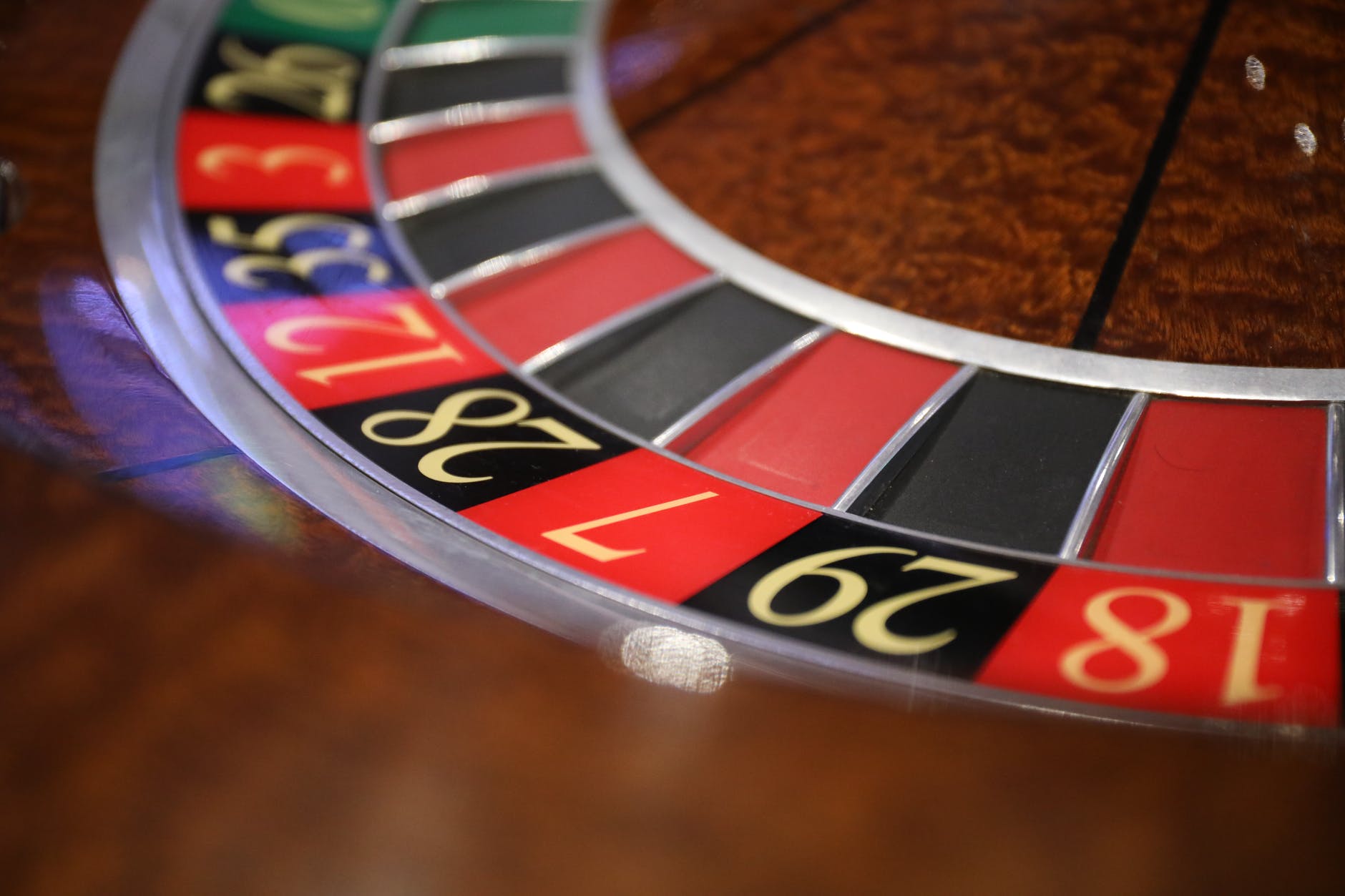
    Who really has the upper hand? Pictured above: a roulette wheel by Naim Benejoullon via Pexels.com

    A study by the Gambling Awareness Trust has concluded that online gambling in Ireland has increased “drastically” since the Covid-19 pandemic hit.

    The findings conclude that up to 0.8% of the population (50,000 people) in Ireland are believed to have a serious gambling problem, with almost two-thirds of the population taking part in gambling in some capacity.

    It says the most popular types of commercial gambling in Ireland include buying scratch cards, playing the lottery, betting at a horse or greyhound track and sports betting.

    Co-author of the report, Gambling trends, harms and responses: Ireland in an international context, Professor John O’Brennan says the gambling industry is growing at a “worrying” rate since the lockdown restrictions have been put in place.

    “It’s very clear that online gambling is one of the only industries that has actually thrived over the past year,” Professor O’Brennan tells The City.

    “Gambling companies are doing better than ever before, even though sport betting came to a halt for a number of months in 2020,” he added. 

    Advertisements

    In Ireland, 75.4% of sporting broadcasts show at least one gambling advertisement. They are the most common type of ad shown during any televised sporting event.

    “Advertising has been central to developing gambling problems in specific cohorts of the population. You can particularly notice that young people ages 18 to 25 are targeted through advertisements, with betting companies using young sports stars to promote special offers,” says Professor O’Brennan.

    Many countries throughout Europe such as Belgium and Italy have implemented a full-scale ban on gambling advertisements. However, Ireland is yet to apply any bans on gambling advertisements and they are the 7th most common form of ad shown on television.

    “Online gambling is like having a casino in your back pocket’’

    Professor John O’Brennan

    Regulation

    Professor O’Brennan says that Ireland is seriously “lagging behind” the UK in terms of handling problem gambling, as the Gambling Commission was set up over two decades ago. 

    “Almost every other country in Europe has a gambling regulator to help deal with the issue, but for some strange reason, Ireland still hasn’t established one. Governments in the past have promised but failed to deliver on establishing a gambling regulator in Ireland,’’ said Professor O’Brennan.

    Minister of State for Law Reform James Browne hopes to bring proposals for a gambling regulator to the government towards the end of 2021.

    After releasing a statement following a Cabinet meeting , Minister Browne said legislation that may be introduced will check age verification for mobile gambling and monitor spending limits for people on gambling apps, and a prohibition on promotions aimed at luring customers back into gambling.

    In a statement, the Department of Justice said work is underway on establishing legislation by developing “the necessary modern licensing and regulatory provisions for the gambling industry”.

    Problem gambling

    “It [online gambling] has increased exponentially during Covid-19 with so many people stuck at home on their mobile phones,” says Pam Bergin, the executive co-ordinator of The Gambling Awareness Trust.

    The Gambling Awareness Trust is an Independent charitable fund that helps the prevention and treatment of problem gambling in Ireland. They work in partnership with numerous problem gambling organisations and agencies to help reduce gambling-related harm.

    “This is an issue that will keep growing throughout lockdown. Online gambling is continuing to grow in terms of accessibility as people can place bets on any sporting event across the world, including 24-hour virtual events,’’ Bergin said.

    All bookmakers across Ireland currently remain closed under the level five Covid-19 restrictions.

    “That social outlet of being able to visit the bookies has been taken away for a lot of people, forcing people to move to online gambling instead.

    “Online gambling is growing in terms of accessibility with 24-hour virtual events”

    Pam Bergin

    “We noticed that a lot of the people who contacted problem gambling websites were people who conducted online gambling for the first time,’’ Bergin says.

    If you require more information regarding problem gambling, visit gamblingcare.ie

  • All bets are on: are virtual sports feeding gambling addictions?

    All bets are on: are virtual sports feeding gambling addictions?

    The online gambling world has expanded. Photo: Pexels

    As people go without live sport to watch on their screens, TheCity.ie’s Kim O’Leary examines how certain fans are turning to gambling online to ease their boredom – with potentially harmful consequences for those battling an addiction.

    The global coronavirus pandemic has rocked the sporting world, with the cancellation and postponement of major live events ranging from the Tokyo Olympics to Wimbledon.

    As most countries respond to the Covid-19 threat with social distancing, sports fans who are missing live events are turning their attention to virtual sports, which have seen a surge in popularity thanks to technological advances.

    Betting companies, endeavouring to keep their punters gambling,d have set up their own online platforms to facilitate virtual sports such as horse racing, grey hound racing, cycling, football, and tennis as well as traditional casino games like roulette and the slots.

    What are virtual sports?

    Virtual sports are a selection of fixed odds games/events that use a random number generator to decide the outcome. All gamblers betting on these games and events view the same schedules and the same outcomes. Currently the most popular virtual sports include football, horse racing, motor racing, basketball, and virtual cycling.

    Despite their recent surge in popularity during the global Covid-19 pandemic, virtual sports have actually been around since the early 2000s. Virtual horses ran during the foot and mouth disease outbreak in 2001, when live racing was cancelled in Britain and Ireland.

    Earlier this month, hundreds of thousands of people watched ITV’s broadcast of the The Virtual Grand National – an AI version of the country’s biggest horse race, at the exact same time the real race was meant to be held.

    Virtual football games are proving a hit on Betway

    While real-world sporting attractions are limited this weekend to the likes of Belarusian Premier League clashes – FC Smoldvichi-STI versus Dinamo Minsk on Friday and Slavia Mozyr’s fixture against FC Minsk on Saturday at 1pm – there is a full-schedule of virtual sports for punters to tune into.

    There is, in theory, no physical limitation on the number of virtual sports events that could run, and punters are being reminded that the dangers of excessive gambling online are very real.

    Speaking to TheCity.ie, Barry Grant, counsellor and founder of charity Problem Gambling Ireland, says that the pull of virtual sports and gambling online can pose a very real danger.

    “The lockdown in Ireland started after the Cheltenham races which is a big event for betting, and now there is a risk certainly with people at home or off work where they are becoming bored and start gambling online and through virtual sports. In some ways we have seen an increase in the numbers taking to online gambling, yet our helpline has been fairly quiet so far which is a little worrying. But being at home and out of work all increase the risk for people to start gambling,” says Grant.

    Gambling problems may worsen

    Grant explains that counsellors around Ireland are working hard to continue offering counselling services during the Covid-19 pandemic, themselves taking to apps such as Zoom to talk to people who have contacted them for help.

    But Grant feels that more can be done by the Government and betting companies to try curb the rate of gambling addictions in Ireland, as many gambling companies are now tweeting advertisements and links to virtual markets.

    For example Boylesports’ Twitter feed shows messages such as “You can bet on virtual events every minute 24/7!” alongside a link to the nine different virtual markets.

    Some gambling companies like Paddy Power are also trying to be seen to encourage users to play responsibly by setting a deposit limit.

    Grant says that perhaps Ireland can look to other countries’ gambling restriction laws to help the current situation. “The Government and the gambling companies could follow the likes of Belgium and Sweden who have placed financial restrictions like on how much a person can bet, taking into account what people have to lose. The National Lottery here also has a restriction on its website for how much people can spend. I think something like this would help,” says Grant.

    And what advice would Grant give for those who have started gambling online through virtual sports?

    “The advice is that people should look at how much time and money they spend on gambling sites. it’s also possible to self-exclude yourself and block certain online sites through software such as Bet Blocker. And I would definitely recommend that people look at other hobbies like physical exercise instead,” says Grant.

    While virtual sports are all the rage during this pandemic, punters are reminded to not let the virtual world become an addiction.

    Contact Problem Gambling Ireland on 089 241 5401 (call-back service) or Gamblers Anonymous on 01-8721133 for assistance.

  • Ireland is ill-equipped to deal with gaming’s latest threat

    Ireland is ill-equipped to deal with gaming’s latest threat

    The video game ecosystem rarely gets a look in when it comes to the Irish media apart maybe from the odd trailer around Christmas to entice the little ones or a write up about how Red Dead Redemption 2 is the best thing since sliced bread. But in reality, fans are lucky to get a consistent review section in a national newspaper. Though, when unsavoury gaming news rumblings about exploitation and underage gambling start emerging, you imagine the power elites here would act. Well … they did, then swiftly washed their hands of the subject. “Anyway, here’s another PlayStation 4 advert. Enjoy.”

    Over the last few weeks, many fans – and government officials – have debated the legality of loot boxes and micro-transactions (in games purchases, represented by virtual containers, that gifts players with items, weapons, and modifications based on chance). The main issue is the way games ask players to unlock, often pay-walled, content, encouraging gambling, especially amongst the current generation of youngsters.

    The Irish Government, however, have no plans in cracking down on the questionable “loot boxes,” after initially joining an international declaration condemning the “blurring of lines between gaming and gambling.” David Stanton, Department of Justice, has since clarified that the declaration “does not have legal effect.”

    S
    Since it’s release, Destiny 2 has been embroiled in controversy with its questionable microtransactions // PlayStation 4

    Presently in Ireland, we don’t have a clear and concise, legislative stance when it comes to online gambling – this concerns video games also. A number of European countries have called for an EU-wide ban on the loot box algorithms, following an investigation into four high-profile games by the Belgian Gaming Commission.  

    As far as Ireland is concerned, however, Mr Stanton says: “It should be understood, that if a game offers in-game purchases – be they loot boxes, skins, etc. – which are promoted to gamers as increasing their chances of success, such purchases are essentially a commercial or e-commerce activity. This activity would fall within normal consumer law.”

    In short, this doesn’t concern the Department of Justice, unless a game offers the possibility of placing a bet or the risk for financial reward within the game, then it must be licensed as a gambling product.

    But that covers the situation from a government standpoint, what do the game developers have to say about it? These are the people who dedicate months, even years to expertly craft a playable experience worthy of purchase. So, surely, they have their opinions on such an important issue concerning their industry.

    “As I gamer I enjoy a micro-transaction when it’s cosmetic. Since I play mostly competitive games, if there is a micro-transaction that says ‘buy this sword or item for more damage’ it kills the game. It would be comparable to sports if they made steroids legal but too expensive for everyone to play evenly,” says Michael McNabola, Director of Operations at Hail Games.

    Of course, as a fan, everyone has that purist belief that every game should serve its original purpose – escapism at its finest. But once you swap the casual gamer life for a vocation, that perspective begins to shift.

    fortnite_vs_pubg_2
    Fortnite’s style of loot boxes are far less predatory than its competitors // PlayStation 4

    “I can see the necessity of micro-transactions in free to play games in order to make their income. This is their business model and it’s a requirement to make a profit as ad revenue in free to play games are not nearly as lucrative. However, there is no justification in my mind for full priced titles from large developers like EA and Ubisoft having micro-transactions in their game,” adds Stephen Farnan of SavePoint Studios.

    Loot boxes don’t have to be wholly negative, though, if introduced honestly and in a way that doesn’t hinder the gameplay. Epic Games unearthed a highly-profitable gem this past year when Fortnite – specifically its Battle Royale mode – became a runaway success.

    Though such innovation should be championed, seeing free-to-play games (F2P) generating such a copious amount of money has altered the large developers’ motives. Often obsessed with a game’s longevity, developers employ F2P economies into their projects, while also slapping on a hefty retail price.

    “It involves locking away content that five years ago would have been freely included in the game. There is an argument from some that this is required since games are more expensive to make now, but the biggest games are making more money than ever and recent titles like the new Spiderman game released with no micro-transactions and has sold extremely well,” says Stephen.

    Whether micro-transactions should be regulated or monitored is regularly debated by developers, and there isn’t a simple fix, sadly. These gaming economies affect the balance of the game.

    “In order to crowbar in a system to an existing game, you may have to make normal progress slower to make micro-transactions valuable or lock away previously free content. This means the original vision of the developer becomes blurred and tainted,” says Michael.

    Disappointed by Ireland’s official response to loot boxes, Stephen says: “Loot boxes are a form of gambling that is extremely predatory in practice while being aimed at children, they are in desperate need of official regulation. In some cases, the line between micro-transactions and loot boxes, and online games on sites, such as Paddy Power, are being blurred.

    “In both instances, you pledge real money in order to win a game of chance. The only distinction is one potentially gives you a real-world reward, while the other does not, so you could argue that money spent in loot boxes is lost already, win or lose, and thus is potentially even worse than gambling in some ways.”


    Star-Wars-Battlefront-II-loot-crates-microtransactions-625x352
    Star Wars Battlefront 2 was one of the major titles that warranted investigating by the Belgian Gaming Commission // PlayStation 4

    Ireland’s lack of understanding and interest in the industry is a core component as to why the topic is continually being overlooked.

    “The Irish government doesn’t have enough knowledge diversity be able to help; greedy developers and investors will just work on ways around how to take as much money from their consumers as possible regardless of any regulations. There should be a not-for profit organisation that rates and reviews the quality of games and companies’ reputations,” adds Michael.

    Suffice to say, micro-transactions do not belong in retailed games. As Fortnite has shown, if a game is free-to-play (F2P) and the developer actively listens and converses with an audience, then the game is less likely to be embroiled in ignominy. But in an age where downloadable content (DLC) and season passes are a permanent bedfellow of major titles, it’s inevitable that micro-transactions will continue to grow, as all power elites, even in gaming, are driven by money. Hopefully, the gaming community will vocalise their gripes and concerns, deterring these financial predators, and prioritising legitimate projects.

  • The Rise of the Irish Gambling Problem

    The Rise of the Irish Gambling Problem

    The turning of the roulette tables is mesmorising, as everyone waits with baited breath for the outcome
    The turning of the roulette tables is mesmerising, as everyone waits with baited breath for the outcome All photography by Louise McLoughlin

    Sitting in a casino on O’ Connell street, all sense of time and outside life is blocked out. There are no clocks, the temperature is constant. No one here seems to be able to tell you what time it is, or how long they have been here. There is no need; why would you want to know how long you have spent throwing money into a slot machine? This suits everybody perfectly. The owners of the casino probably don’t want you distracted from the gambling tables. And the gamblers probably don’t want to be made aware of how much time or money they are spending there.

    The concentration put into gambling is intense. New people have come in to play, but no one has left the casino yet, only for a quick smoke and then they hurry back hoping their seat hasn’t been taken. Everyone has their own tricks and traditions. One person walks away every time his bet is placed and won’t look as the Roulette table turns. People hold their breath and stare at the table unblinking as they wait to see if they have finally struck gold. A young Hungarian man punches the table as his final bet of the day is lost. He tells me that the total spent so far is over three hundred euro. He doesn’t have a job, that money belonged to his sister. Before he leaves to go sell his iPad to get more money, he looks me in the eye and says that when he comes back he will just spend fifty euro. That’s all he needs, because then he “will win for sure this time.”

    Unfortunately this is all too common an occurrence on a Wednesday afternoon in a Dublin casino. Gambling has become a rising problem in Ireland that few seems to be talking about. With all the concentration on other addictions like alcoholism or smoking, that have always been prevalent in Irish society, gambling addiction is an issue that sometimes seems to have fallen by the wayside.

    David Hickson, the Managing Director of the Fitzwilliam Casino and Card Club expressed his concern at the Government’s lack of involvement in helping those with gambling addictions. “There are no gambling regulations in this country. Everywhere else has it. There’s been gambling regulations in place in the U.K. for almost fifty years. Around nine or eleven years ago there was a draft Bill put to the Government to place tighter restrictions on gambling in this country. So far, nothing has come of it.”

    Talking a walk through the Casino and Card club, David shows me the protocols that they have put in place to try to regulate their own client’s gambling. “We have a system for people who want to become a member. Anyone can join, we get people on their holidays who want to come in for a day. We still make them fill out a form and show us I.D before they can enjoy the casino.”

    The casino encourages people who think they may be developing a problem to take themselves off the membership list for a period of time
    The casino encourages people who think they may be developing a problem to take themselves off the membership list for a period of time

    You would think that every casino is just after money. David assures me that this is not the case. While there are some such places, a lot of casinos prefer to enjoy a more stellar reputation. “We train our staff to be able to identify when a person might be developing a problem. We look out for changes in their behaviour. That’s when we would go up to them, offer them a coffee and a chat. We would talk to them about how they are feeling and ask if they think they might be developing a problem. If someone is getting agitated or aggressive that’s when we would usually step in.”

    It does appear that the aim of the Fitzwilliam Card and Casino Club isn’t to take advantage of people.  It is evident that there are two types of casinos, those who cater to responsible gambling, and those where anything goes. However, casinos are not the only place where betting can take place. We all know about places like Paddy Power and Ladbrokes, but now with the emergence of the internet, online gambling is making gambling addiction easier to fall prey to, and also easier to go unnoticed.

    One would have to wonder, if the government doesn’t seem to be doing anything about regulating gambling, is anyone regulating it? Stephen, who wishes not to go by his real name, works in the customer care department of Paddy Power for their online site. He assured me that Paddy Power have their own restrictions in place to promote safe gambling. “I got a call one time, this guy was in his bedroom whispering down the phone to me so that his wife wouldn’t hear him. He told me that he was after spending his pension on the site and needed us to refund some of it so that his wife wouldn’t find out and kill him. Of course we couldn’t refund him the money, but we did talk to him about responsible gambling and I told him that due to our policy on “R.G.” we would have to shut down his account.”

    The presence of online gambling is making it harder for people to spot a developing addiction
    The presence of online gambling is making it harder for people to spot a developing addiction

    Sadly, this isn’t the only incident of desperation Stephen has heard over the phone. “I get phone calls like this all the time. One time a guy rang up and said that he needed us to give him back the last few hundred euro he spent. I asked him why and he said that he needed to take his wife to hospital and he had lost the last of the money that he had gambled. I ended up giving him the money back, which I probably shouldn’t have done. But I did close down his account afterwards.”

    The difference between going to a place like the Fitzwilliam Club and dealing with customers from an online site over the phone is huge. The Fitzwilliam actively encourages their clients to go seek professional help. They have self exclusion policies where a member may voluntarily remove themselves from their membership for a chosen amount of time or indefinitely. The Club also reserves the right to revoke a membership if they deem it necessary. Unfortunately it is not so easy to maintain this level of care through the phone, as Stephen points out.

    “It would be nice if we could do more for them. But we can’t. I mean my job is to, I guess, to shut down their accounts and hope it does help. Maybe for some it’s that smack of reality that they need. I like to think so anyway. But we still see the same people try to reopen their accounts or make up new false ones, and they get so far for a few hours but we always end up finding out. We call them and tell them that whatever they gambled we have to return and shut down their new account as it isn’t a legal bet in terms of our policy. And they all have the same reaction. They’re just delighted they get the cash back.”

    As gambling starts out as a bit of fun for most people, it is very easy to fall into that lifestyle of “just ten more euro.” You might not even realise how much you are spending. It is so easy to just keep betting, especially online as the money doesn’t seem real. It’s all just a silly game right? Just to pass the time? Sadly, it’s this casual way of looking at gambling that makes people believe it’s harmless. This is the reason so many people don’t even realise they have a problem.

    There is nothing I have seen stronger than a gambler’s sense of denial. With the blame for a loss being put on everything but themselves, gambler’s seem almost blind to their addiction. Hopefully, with the help of casinos like Fitzwilliam, and the pressure being mounted on the government for tighter gambling restrictions, there is still a chance to help people before the gambling scene in Ireland begins to spiral out of control. As a Chinese proverb goes, “If you must play, decide upon three things at the start: the rules of the game, the stakes, and the quitting time.”


  • Bet fixing “happens more than it is reported”

    Bet fixing “happens more than it is reported”

    Las Vegas and Atlantic City are the only cities that allow gambling in the U.S, which has led to a lot of corruption issues. Image by Martin Davidsson
    Las Vegas and Atlantic City are the only cities that allow gambling in the U.S, which has led to a lot of corruption issues. Image by Martin Davidsson

    Sport is rife with corruption and bet fixing “happens more than it is reported”. That is the opinion of Irish sports betting journalist Wayne Bailey.

    Wayne, who writes a sports betting column for the Irish Independent, said that the betting industry is becoming the scapegoat for an issues that goes beyond the industry’s control.

    “I think it would be easy to simply blame the betting industry, said Wayne. “It’s the criminals who carry out this type of thing and a lot of the betting firms are losing money because of it. It would be simple to say that if there was no betting on the sport, it would be corruption free but that’s not necessarily true – look at cycling for example.”

    Wayne further explained how the ‘corruption’ within the industry is obviously not in its best interests and has serious financial ramifications.

    “The money involved for reaching certain competitions is massive so there’s always a reason for corruption, even if you removed the betting. The betting industry doesn’t have much to gain – they can often lose large sums and their reputation gets damaged too so it’s in their interest to make sure it stops.”

    Improper regulation is the problem according to Wayne.

    “From what I gather, a lot of these recent cases are to do with Asian betting firms. These don’t seem to be properly regulated at all, and in countries like the U.S. betting is illegal so you have Italian Mafia running betting shops in places like New York and in Boston, Irish ‘Mafia’ types run the show.”

    Wayne, who is a former editor of Betfair.com’s opinion and advice website, stressed that the the betting industry at home is ‘clean’ and one that leads the way in terms of regulation.

    “In Ireland and the UK, I think that the industry has totally cleaned up its act in the last ten years. There is a paper trail and websites such as Betfair now hand over any suspicious activity to the police so it’s harder to be corrupt in this part of the world.

    “When the exchanges (person to person betting as oppose to betting against a bookmaker) came about which allowed laying (backing a team or horse to lose), people said it would cause more corruption. But the ability to back a team to lose was always there – you would just back the opposition to win or draw which is effectively the same thing.

    15 or 20 years ago, there was no paper trail but with the online stuff, it’s easy to trace people who are suspicious. So I’d argue that betting companies are trying their best to stop it, in this part of the world.”

    Wayne, who also runs his own betting advice website, based on horseracing, believes that the corruption runs deep, and in horse racing maybe breed in the sport due to its links with the betting  world.

    “I do think it happens more than it is reported. In horse racing, there is quite a bit of corruption going on although I suppose that’s to be expected as it is a sport which revolves around gambling. Other sports take place for sporting reasons but racing takes place in order for people to gamble.”

    Wayne also believes that the reportage of bet fixing as “a new problem” in the media  is false and that the real losers in this is the general public.

    “Corruption in racing has been going on forever and it’s been going on a long time in football too. Although he was cleared of the charges, Bruce Grobbelaar was up on charges in the 90’s for supposedly throwing Liverpool games. While the case against him fell apart, it was clear that corruption was certainly taking place in the game. It’s certainly a problem though and the real loser is the Joe Soap punter who bets on a team or horse in good faith, not knowing that they don’t have a chance.”