
The Irish government was on the brink of collapse at the most crucial time in Brexit negotiations but surprisingly it was not Brexit that almost caused an early election. Louise Burne explains the timeline of events that almost brought down the Dáil.
The last two weeks have provided Leo Varadkar’s first real challenge since he was elected leader of Fine Gael and Taoiseach in June 2017.
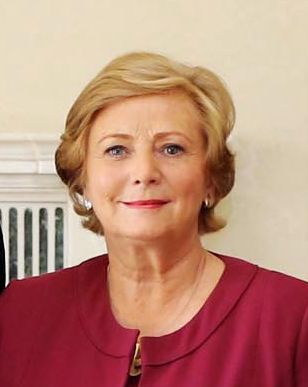
The controversy surrounding Tánaiste Frances Fitzgerald and her knowledge of the legal tactics undertaken by the legal team for An Garda Síochana against garda whistleblower Sgt Maurice McCabe threatened to bring an end to the confidence and supply agreement between Fine Gael and Fianna Fáil.
A pre-Christmas general election was narrowly avoided when Fitzgerald, former Minister for Justice, handed in her resignation to Varadkar on Tuesday 28th of November. This resignation came just hours before Fianna Fáil’s planned vote of no confidence in the Táiniste.
With more new information being released hourly in the last few weeks, it has been difficult to keep up with the many twists and turns of the story.
This story is not one that began recently. It dates back to 2006 when garda whistleblower Sgt Maurice McCabe first started expressing concern over malpractice in An Garda Siochana.
However, it was Fitzgerald’s role in the controversy that threatened to bring Varadkar’s government down in recent weeks.
15th May 2015
Minister for Justice France Fitzgerald received an email advising her of the legal strategy that was being undertaken by the legal team for An Garda Síochána during the O’Higgins Commission of Investigation. The commission was established in February 2015 to investigate Garda malpractice in the Cavan/Monaghan division, as alleged by Sgt McCabe.
The email sent to Minister Fitzgerald outlined that the legal team for an Garda Síochána would reference a previous allegation of child sexual abuse that had been made against Sgt McCabe in 2006.
“The counsel for the Garda Síochána has raised as an issue into the hearings an allegation made against Sergeant McCabe which was the case examined by the IRM,” the email read.
“The allegation had been that a serious criminal complaint against Sergeant McCabe (which he has always denied) had not been properly investigated by An Garda Síochána”.
The email went on to say that the legal team could use the previous allegations against Sgt McCabe as his motivation to imply that there was malpractice in the gardaí.
It also confirmed that the Garda Commissioner Nóirín O’Sullivan had “authorised” the legal team’s approach.
O’Sullivan also called a senior official in the Department of Justice around this time to advise that this would be the legal approach that An Garda Síochána would be taking.

October 2017
The questions surrounding what Fitzgerald knew and didn’t know about the legal strategy taken by An Garda Síochána in the smear campaign against Maurice McCabe did not surface for nearly two and a half years.
Labour TD Alan Kelly questioned Frances Fitzgerald’s knowledge of the legal strategy using parliamentary questions.
9th November 2017
The Department of Justice searched official records and unearthed the email sent to Frances Fitzgerald in May 2015.
Current Minister for Justice, Charlie Flanagan, was made aware of the email on 13th November.
14th November 2017
Leo Varadkar says in a Dáil meeting that the Department of Justice had been unable to find any correspondence that may have indicated that Frances Fitzgerald had been told in advance of the O’Higgins Commission of the legal strategies of an Garda Síochána.
He repeated this again on November 15th.
Varadkar later says that Fitzgerald had only been made aware of the strategies in May 2016 following the Commission. He asserted that Fitzgerald and the Department of Justice were only made aware of the stance taken by the legal team when they became known to the public. At this stage it was too late to do anything.
16th November 2017
The Department of Justice confirms to Fitzgerald that an email was found.
The Tánaiste later says that the email sent to her in May 2015 has now been brought to her attention. She says she assumes she read it at the time but cannot remember.
The Taoiseach sees the email for the first time on 20th November.
20th November
The Department of Justice confirms that it was made aware of the legal strategies undertaken by An Garda Síochana in May 2015. The Department also confirms that Fitzgerald knew of the strategy at this time.
23rd November
Sinn Féin tables a motion of no confidence in the Tánaiste. Sinn Féin’s Mary Lou McDonald had warned Fitzgerald earlier in the day that it was her last chance to come clean and provide clarity on what she did and did not know about the emails sent to her in 2015.
Fine Gael says the party unanimously supports Fitzgerald.
24th November
Fianna Fáil confirms on Friday they will call a vote of no confidence in the Tánaiste on Tuesday. This threatens to end the supply and confidence agreement struck up between Fianna Fáil and Fine Gael after the last general election. Fianna Fáil leader Michael Martin meets Leo Varadkar and says that Fianna Fáil does not want a general election before Christmas and instead were seeking Fitzgerald’s resignation.
Varadkar pledges support to Fitzgerald and says that if Fianna Fáil successfully votes no confidence in the Tánaiste, a general election would be held before Christmas.
25th & 26th November
Martin and Varadkar meet to discuss the controversy. On Saturday, the Fine Gael leader hands over Department of Justice documents to Martin which outline the legal strategies of the lawyers for An Garda Síochána.
Martin continues to call for the Tánaiste’s resignation but Varadkar continues to pledge both his and his party’s support to Fitzgerald.
27th November
New documents are released by the Department of Justice on the eve of the vote of no confidence.
One document reveals that the Minister for Justice’s then private secretary responded to the May 2015 email saying that “the minister has noted the below”.
Fitzgerald insists she will not be stepping down.
Taking to Twitter, she says that she could not interfere with the O’Higgins Commission.


28th November
Just hours ahead of the vote of no confidence, Tánaiste Frances Fitzgerald resigns.
Fitzgerald says she resigned to “avoid an unwelcome and potentially destabilising general election at this historically critical time.”
Taoiseach Varadkar says that he regrets accepting Fitzgerald’s resignation and that he believes that “a good woman is leaving office with a full or fair hearing.”
A general election is now off the cards.
30th November
A crazy two weeks in the political world comes to an end as Varadkar announces Simon Coveney as the new Tánaiste. Heather Humphreys takes over from Fitzgerald as Minister for Business, while Josepha Madigan becomes Minister for Arts.

You must be logged in to post a comment.