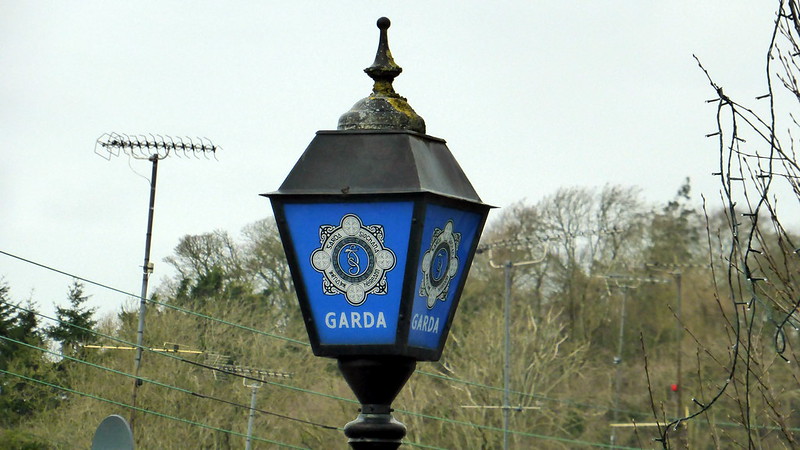
An Garda Síochana have reduced the amount of members carrying firearms following a review in 2019 by the Policing Authority Ireland, as the force moves towards a model of having specialist armed response as their main firearm unit. Jonathan Kelly explores the relationship between the Garda and arms.
Photo taken by Sean MacEntee. Sourced from Flickr.
According to figures released by the Garda Ombudsman (Gsoc), armed Gardaí have fired their weapons on only 16 occasions since 2016, with accidental discharge accounting for a third of incidents. Last June, a detective guarding the Israeli embassy in Dublin accidentally shot himself in the leg.
“That could happen in an emergency, a fella taking his gun out and the damned thing going off. Lucky no one was killed,” Mr. Michael Mangan, a recently retired detective said. “For 27 years I carried a gun, I never had to use it though.”
“I withdrew it a couple of times in very dangerous situations but lucky enough I never had to use it” he added.
The 2019 review found more than a quarter of the force, 27% or 3,778 members carried a firearms authorisation card. The Policing Authority found many of them were working desk jobs and non-frontline areas. More than 1,000 cards have been revoked to date, with now 19% or 2,776 of the force armed.
Mr. Mangan said, “I wouldn’t agree with uniform people (Garda) being armed, I think guns should be carried by detectives though,” when asked about a fully armed police force.
When the City spoke to some members of the public, the majority of people revealed they would feel less safe if all Gardai were armed. One of the respondents wrote: “Naturally I’d feel nervous, there’s always a few bad eggs in every bunch.”
However, only half of the respondents agreed with reducing the number of armed Garda. “I’m proud that the Irish are one of the only countries in the world with an unarmed police force,” another replied.
According to Gsoc, Gardaí have used tasers on 125 separate occasions over the last five years. Taser guns are currently only available to specialist units such as the Emergency Response Unit, the Armed Support Units and Special Detective United, although consideration is being given to arm all frontline Gardaí with them. Less than half of the respondents would be in favour of such a move.
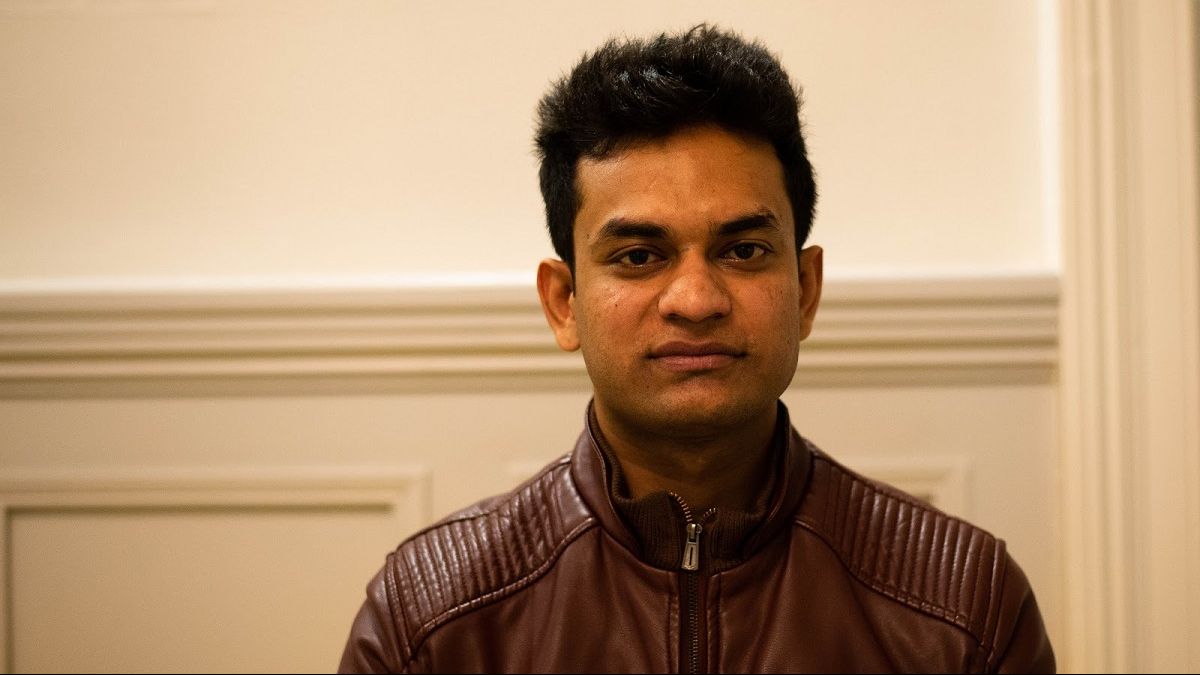
Caption: Prince Singh studies International Business Management at Griffith College Photo: Ayumi Miyano
After a barbaric assault, one international student studying in Dublin has called for Ireland to try ensure the safety of students coming herefrom all over the world. Ayumi Miyano sits down with Indian national Prince Singh to hear his experiences as an international student studying in Ireland.
On January 15, Singh and his friend Ambarish Kumar — Masters students at Griffith College — were attacked by a group of eight to ten children in the Sundrive Park area of Dublin.
The group of children began following the two Indian students when they entered the park and eventually threw a bicycle lock at both of them.
Kumar was hit by the bicycle lock and was left bleeding. The Gardaí arrived 30 minutes later, followed shortly by an ambulance to aid both students.
Singh and Ambarish were then sent to St. James Hospital but had to wait there for five more hours, before Kumar could finally receive treatment – two stitches on the back of his head.
“When I asked the Irish police what I can do as self-defence, they told me that running is a good option. You can run, but you cannot do anything for self defence,” he said.
“You cannot do anything to the minors. Because if you do anything harmful to them, they will report you. They will report you instead which would abolish your career.”
In Ireland, the law deals with children found in breach of the criminal law in the Children Act 2001. Under the act, children who have not reached the age of 12 years cannot be charged with an offence. In addition, the consent of the Director of Public Prosecutions is necessary to charge a child under 14 years with an offence. With regards a child under the age of 18, for which they have been found guilty, can be automatically expunged from the record once certain conditions are met. The act also explains “any penalty imposed on a child for an offence should take the form most likely to maintain and promote the development of the child”.
“I’m thankful to my college – they are supporting me. My Embassy – they are supporting me. My college is also supporting me. But I don’t get any support from the Irish Government,” he said.
“At least, the Irish Government needs to re-educate them so they will not do these kinds of things to anyone else,” he said.
“I think moral education is important. They should try doing the Yoga activity which creates some peacefulness in kids’ minds and invent some sports activity for those types of kids who are wandering all the time, here and there on the streets.’’
Also, Singh recommends that the Government provide security for international students.
However, the Reports of racism in Ireland by iReport.ie shows a “continuing steady rise” in the number of violent crimes in the second half of 2017. In the same period, 256 racist incidents, including racist assaults, threats to kill or harm, and hate speeches were reported to the iReport.ie. According to the report, “crime and discrimination are targeted most at ethnic minority people who were born or have become Irish citizens”.
The report also shows two-thirds of racist crime victims did not report theseto the police. The most common reason for not reporting to Gardai was “I did not think the Gardai (Police) would do anything”.
“Will they do anything for the safety of international students?” he said.
“Lots of students are coming from all over the world to study in Ireland,” Singh explains.
'There is no equality': Mother of Waterford acid attack victim says family 'has been let down' https://t.co/CKWRKHazWf
In May 2019, the European Migration Network announced that more non-EEA students are coming to Ireland to access higher education, with numbers increasing by 45 percent between 2013 to 2017.
In India — Education in Ireland, the Irish education brand managed under the authority of the Minister for Education and Skills organises seminars — Official Government of Ireland education fairs. The events are held occasionally in prominent cities such as New Delhi, Mumbai, Bangalore.
International students are a big part of third level revenue for Ireland. About 20 Irish higher education institutions attend the seminar to attract many Indian students from their sales talks.
Although the number of foreign students is increasing, EMN describes the problem which international students are facing; The inefficiency of the immigration registration system is one of them.
When non-EEA students start their life in Ireland, they need to register as immigrants at Irish Naturalisation and Immigration Service office.
Photo: iua.ie
However, the number of available dates for an appointment is often quite limited and it requires a long time for students to get an appointment.
In addition, most students have to wait six to seven hours at the immigration office on the day of registration.
According to EMN, these processes “cause stress and anxiety in relation to their legal status and have a negative impact on their academic experience in Ireland”.
Also, there is a difference in fees between EEA (European Economic Area) students and non-EEA students in some higher education institutes as applies to other EU States.
In the master’s course of International Business Management at Griffith College, the fee for non-EEA students is €14,000, which is €4,300 more expensive than the one for EEA and Irish students.
“We are like fixed assets for the Irish Government. We are paying lots of money. If we stopped coming to Ireland, they will definitely suffer in their education industry,” Singh comments.
“We have only one option – we go back to our country. But we have already paid lots of money here. We need our degrees also. We want to educate ourselves.
“Now I realise I will try to go back to my country as soon as possible. I don’t want to stay here anymore,” Singh commented.
The hurdles for foreign students are already high enough, with expensive fees and complicated immigrant registration process.
On the official Education in Ireland website, they boast that international students can expect “world-class standatds. Warmest of welcomes”. Prince Singh and others, sadly might argue that their welcome did not fulfil that promise.
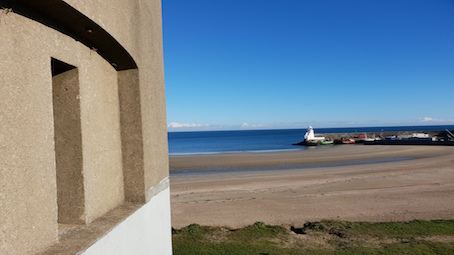
Balbriggan is Ireland’s youngest town with an average age of 30.8 years and Ireland’s fastest-growing town. There has been rapid immigration in the last two decades resulting in Ireland becoming an increasingly diverse country in terms of national and ethnic origin.
In 2016, 535,475 non-Irish nationals were living in Ireland, a decrease of 1.6% since 2011. Balbriggan has grown to a population of 21,722 according to a 2016 census population, a 191% cent increase compared with the national average of 35%.
Data compiled by Fingal County Council shows almost one-third, 28%, of the population is foreign-born, compared with 13% nationally with a further, 19.1% identifying as non-Irish.
With this in mind, Balbriggan is seen as a litmus for how Ireland will deal with integration for future generations. Unfortunately, there has been a conflation of race and gang issues.
Credit: Robert Geoghegan
This sentiment between racial issues and youth gangs came to a head-on, in November 2017; it was reported at the time that a large group of residents met at Balbriggan Garda station to highlight the growing issue and to sign a petition to get more Gardai on the street and to call on the Government to do more in the fight against crime.
Another article reported that residents were concerned about the lack of resources and the growing need for more Gardaí on the streets. Quoting the then Sinn Fein councilor, Malachy Quinn, “people make their voice heard that we demand more investment in Gardai and services for our town.”
Mr Quinn concluded: “As a region with the youngest population, it is vital that investment should reflect this.”
“I don’t see myself as anything but Irish,” said local Balbriggan resident Ilya Gourilev.
Ilya said: “I have spent most of my life here in Ireland, my passport is Irish”. Ilya, moved to Ireland when he was twelve; first he lived in Blanchardstown and then in 2006, he moved to Balbriggan. 2006 saw the population increase from 9,615 too 15,146 in 2011, an increase of 57% during the worst global economic crises.
Credit: Robert Geoghegan
Our Balbriggan and new
Irish
A Balbriggan Leadership Group, Our Balbriggan, is chaired by President of Dublin City University, Professor Brian MacCraith. Our Balbriggan was set up to connect with residents, public services and businesses in a meaningful way. It was announced that a ring-fenced €20 million plan is to be put in place to help transform Balbriggan main street and harbour. The Our Balbriggan development document notes the town “felt divided”, the lack of integration holding back its potential.
A spokesperson from Balbriggan Integration Forum talked about what Fingal Council have been doing to try and improve integration in Balbriggan: “With the help of the Fingal County Council Community Development Office and Cairde, the Balbriggan Integration Forum runs many activities that help people to integrate into their community.
“From participating in the Balbriggan Patrick’s Day Parade to the committee baking cupcakes decorated with the flags of all the different nationalities who live in Balbriggan.
Credit: Robert Geoghegan
“We were recently given a Communities4Environment grant to clean and improve the grounds of the Cairde Centre, where we are based: we plan to invite the people of the town in to paint a mural together. We held an Integration Through Art exhibition in the Cairde Centre in October.” He added.
It is through education that change happens, TheCity.ie spoke to local resident Charmaine Nolan about the changing identity of Irish people: “My children are Irish, they are mixed race, and they only identify as Irish. Which is something I would have had difficulty wrapping my head around a couple of years ago.
“Growing up in Balbriggan has been a blessing with how diverse it is. I am however worried when my kids become teenagers because my oldest is eight and my youngest is five, so it is okay at the moment. I am not sure what will happen in secondary school, and maybe I shouldn’t have to be.”
The country is looking to Balbriggan for the future, and hopefully, Our Balbriggan is Ireland’s future.
It is common knowledge that occupational hazards are very much part and parcel of choosing an occupation with An Garda Síochána. The first half of the 2010s it seems however, were particularly dangerous years for members of the force.
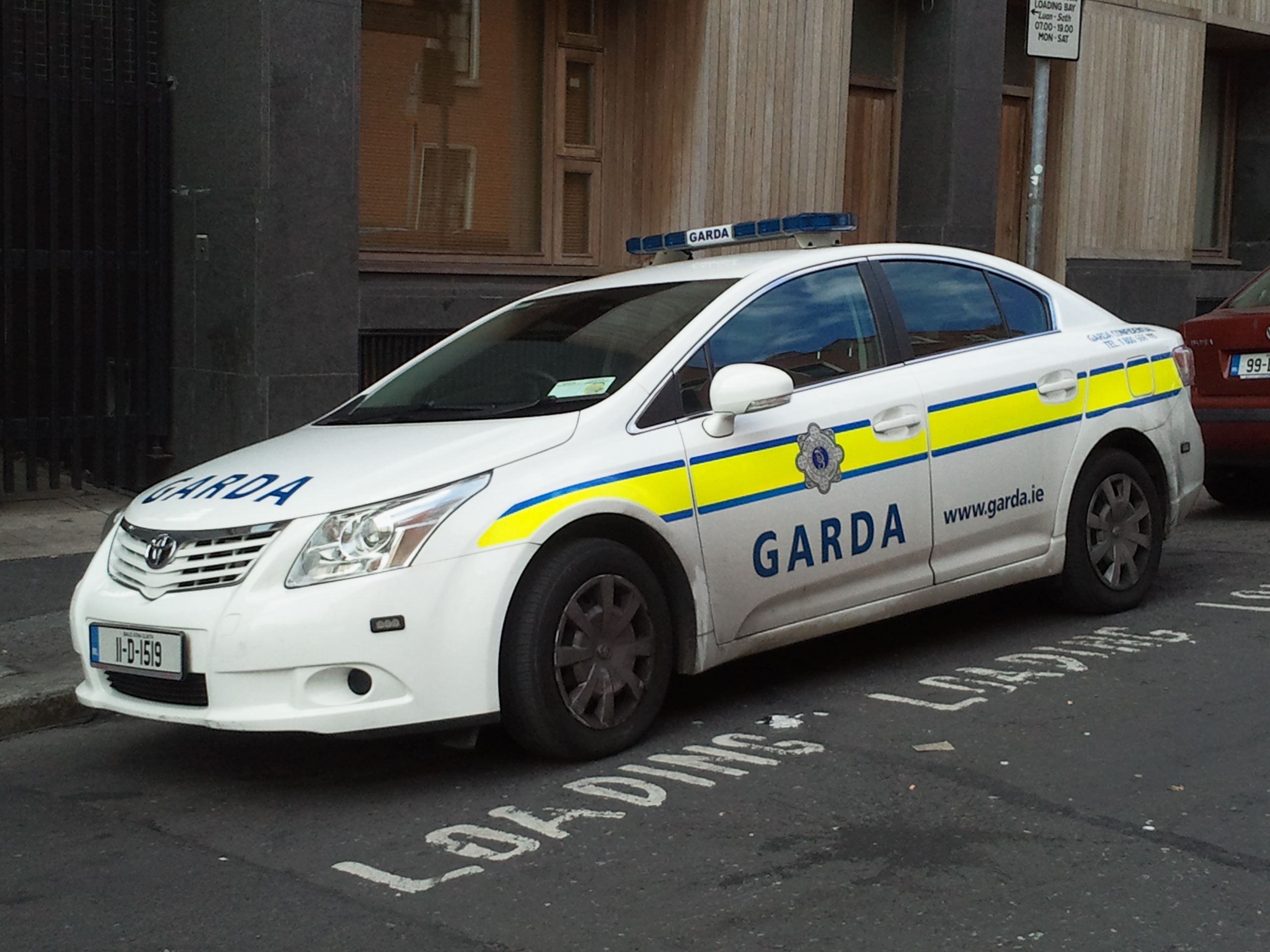
Figures released from An Garda Síochána’s Freedom of Information office have revealed the number of injuries sustained by members of the force since 2008. Most notable of these statistics are the number of assaults on gardaí and the number of road accidents, which have taken place.
2008 as shown below reveals that the number of recorded assaults on members of the force had begun to see a decrease from 2009 onwards, only to skyrocket in 2013. The figures continue to elevate to just under 300 attacks on gardaí in 2015. Interestingly however, the number eases in 2016 and has reached 153 so far this year.
On duty members of the gardaí throughout 2010 to 2016 have been involved in a large number of road traffic related accidents, with figures of injuries sustained by gardaí reaching almost 100 per year. 2009 saw a drop by about 22%, only to increase again by another 30% the year after. The trend eases in 2011 to 84, but rises until 2013 to 128 accidents, a spike of 35% in the space of two years.
This current year, however, the figures for recorded road accidents stand at 61.
Figures from the garda appropriation accounts of 2016 have shown that the number of garda vehicles damaged over the past eight years have risen substantially. While 2008 saw 482 recorded vehicles damaged in the year, both attributable and not attributable to gardaí, that figure has not once decreased since then.
The number of damaged vehicles peaks in 2015 at 682, the closest figures to that being 667 damaged vehicles in 2011 and 639 2012. There has however been a somewhat significant decrease in these numbers last year with the number of damaged vehicles totalling 602, an easing of 11.8%.
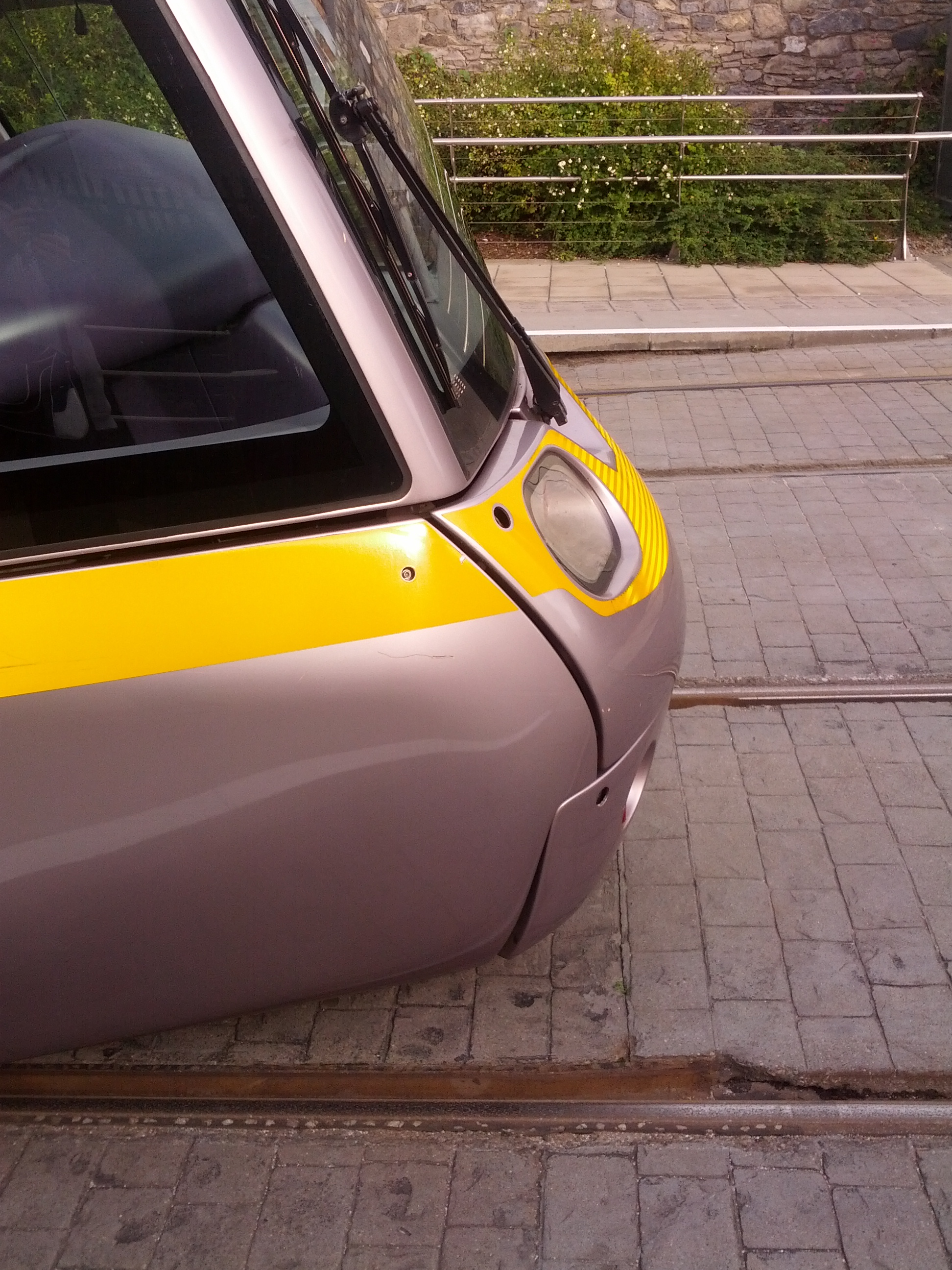
Red Line Luas users are still subjected to frequent anti-social incidents, despite additional security and Gardaí patrols.
Though that particular Luas line has become infamous in recent years, the frequency with which incidents take place (of which only a fraction are actually reported) is startling.
Despite regular checks by ticket-inspectors and STT Luas Rail Security officers, the trouble-makers, all of varying ages, continue to wreak havoc upon commuters.
In fact, Luas officials have complained of an increase in the amount of threatening behaviour they have to deal with, as well as a rise in the levels of verbal and physical abuse directed towards them.
Worryingly, racial abuse is a becoming a common occurrence, with slurs directed at both members of the public and Luas employees.
One Dublin-born ticket-inspector, who has worked on both the Green and Red routes and asked not to be named, stated that there was simply “no comparing” the two rail-lines as regards the behaviour of their patrons.
“A lot of them [anti-social Luas-users] have nowhere else to go, and just ride up and down all day making a nuisance of themselves”, stated the Transdev employee, who pin-pointed the inner-city section of the Red Line between Rialto and Connolly as the source of most complaints.
Although an increase in security presence was made in the wake of South Dublin Central TD Catherine Bynre’s complaints of “inadequate security” early last year, there has been no noticeable improvement, with around 25 incidents being reported to Gardaí every week.
Transdev has stated that the safety and well-being of their customers is of paramount importance as they strive to deliver “an environment for Luas customers that is as free as possible from anti -social behaviour, low-level crime and fear of crime”.
“Anti -social behaviour is rife in society generally and unfortunately Luas is not immune to the challenge which such behaviour throws up”, stated the company.
Combined, the Red and Green lines transported nearly 30 million people in 2012, an increase of 6% from 2011. However, public order offences on the trams also rose, this time by 11%. Nevertheless, the Luas still continues to provide a reliable, affordable and (for the most part) safe method of transport for its customers.
By Greg Synnott, Michael Coleman and Saoirse Ivory
A series of tax adjustments and cuts were announced by Minister Michael Noonan in yesterday’s budget. The City were outside government buildings when the announcement was made.
The €2.5 billion plan included €900 million in additional revenue and €1.6 billion in cuts.
Members of the Independent Workers Union protesting
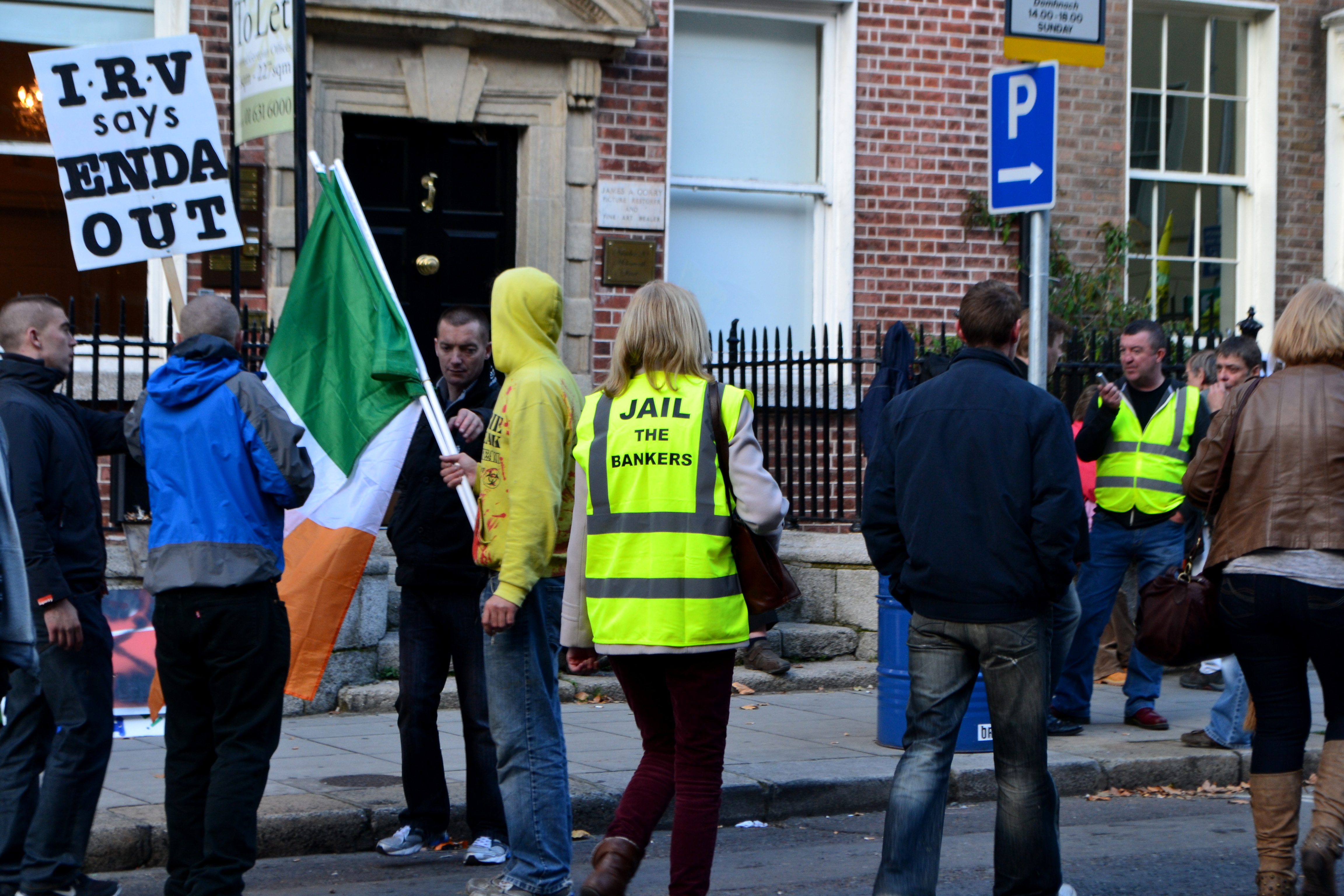
IRV protesters outside the Dáil
Some of the measures announced by Minister Noonan and Minister Brendan Howlin include:
A reduction in jobseekers allowance to €100 per week for under 25s
An increase to the price of beers, spirits and cigarettes of 10 cent, and an increase to the price of wine of 50 cent
Funding to third level institutions will be cut by €25 million
The abolishment of the phone allowance for pensioners
The banking sector will now pay €150 million to the exchequer annually
Free GP care will be provided for all children under five
Additional jobs will be added in hospitals, schools and An Garda Síochána starting next year, but overall pay will be reduced by €500 million
Prescription charges on individual items is to increase to €2.50
Tax relief for single parents (who could previously both claim the credit) will be changed to a Single Person Child Carer credit, which only the primary carer will claim
A new unified DIRT rate of 42% was introduced
Tax relief for medical insurance will be capped at €500 for children and €1000 for adults
Minister Noonan concluded his speech by saying that Ireland is still facing some tough times, but is on the road to recovery.
Meanwhile, outside the Dáil, a surprisingly small number of protesters turned out despite an enormous Garda presence.
Many protesters, who felt the government were targeting the weakest in society, were disappointed by the turnout.
Protester Pamela Hackett gives her view on the Budget
“I’m very disappointed,” said Pamela Hackett, “I thought there’d be a load of people out here.”











You must be logged in to post a comment.