Tag: gender

  • When is it ‘too late’ to change your college course?

    When is it ‘too late’ to change your college course?

    A study conducted by the Higher Education Authority (HEA) in 2024, found that 92% of college applicants who entered during the 2022/23 academic year progress into the third year of their course, and subsequently their final year as well.

    The study indicates that gender also plays a part in the statistics on who is more likely to remain in college throughout their programme.

    Those who identified as female aged 25-34, and those aged 35-44 years were the age ranges of students who maintained the highest college completion rates at 68% and 66%.

    Those who identified as male, however, had a lower percentage than their female counterparts. Male students aged 25-34 had a college completion rate of 60%, while the age group of 35-45 had one of 55%.

    The gap between gender in third-level education does play a role, whether we acknowledge it or not. This is especially prevalent in the older aged groups, with their rates of completing college being 5-10% lower than their younger counterparts.

    Age and gender do play a factor in college dropout rates, but so does those who aren’t as financially well off. The HEA did a study on the progression rates of students who receive the SUSI (Student Universal Support Ireland) Grant from 2012-2022.

    But what happens to the remaining 8% of students that either drop out of their chosen course, or change their course entirely?

    Scott McDonald was a third-year mechanical engineering student in TU Dublin before deciding to change from his heavily maths-based course to a new option, culinary arts. He became a first year again this September.

    “I realised I didn’t enjoy my degree anymore when I was struggling to get up in the morning for lectures and spending extra hours doing studying for topics I no longer understood,” said McDonald.

    “I was becoming a lot more unhappy and miserable in my course. I’m pretty sure you could see it in the way I did my assignments too. The biggest for me was I began to dread what my future might be someday, working in an industry I clearly didn’t enjoy anymore. I just didn’t want to continue being unhappy to force myself to finish a degree I began to hate.”

    According to the HEA report, degrees with the highest dropout rateswere in the services degrees, which include social care, at a high of 28%.

    This is followed by any engineering, manufacturing or construction degrees at a dropout rate of 20%.

    Scott continued: “When I switched to culinary arts, it was a completely different ball game. When I was in engineering, everything had to be so exact, to the T. But with my new course, I can be more creative and have more sense of freedom to explore things how I want in the kitchen. All my friends and family can see how much happier I am. I’m really glad I got over my fear and switched,” he said.

    Students often feel pressure to continue with courses they decided to do when they’re 18 or 19, with parents often adding to the stress of students continuing courses they aren’t happy in.

    “My advice for others going through a similar thought process is that you’ll be much happier once you take that leap of faith. You’ll see how much happier you can be when you start focusing on yourself, and what you really want to do now. You have the time,” Scott said.

    Stories like Scott’s serve as a reminder to everyone pursuing degrees that no matter the year or age, that you aren’t limited on what you can do. But the most important being, there isn’t any shame on starting again.
  • ‘Inspire the next generation’: Shining a spotlight on ladies Gaelic games

    ‘Inspire the next generation’: Shining a spotlight on ladies Gaelic games

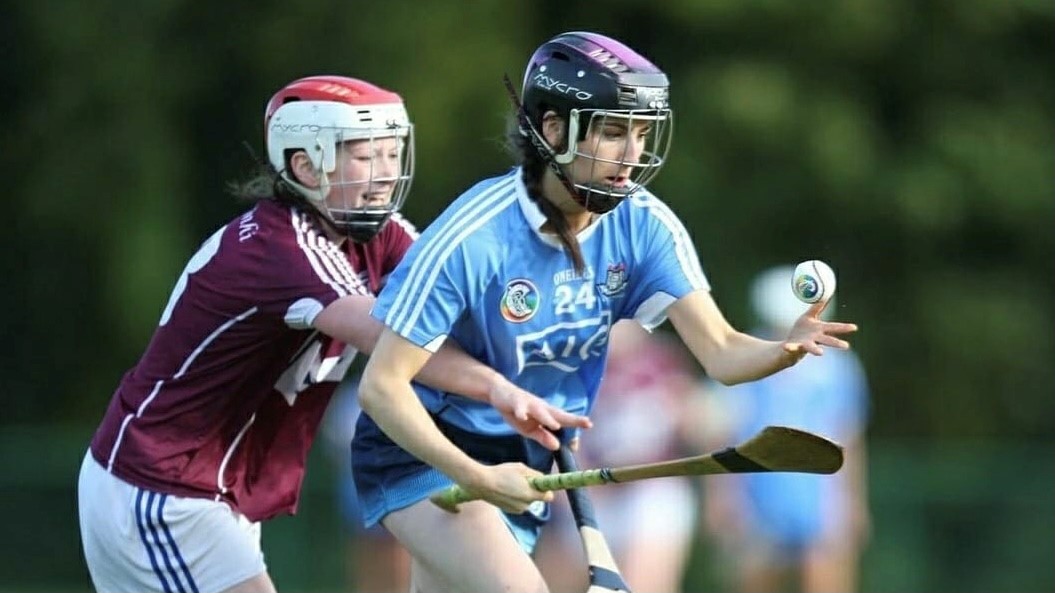
    Julia Buckley in action for the Dublin senior camogie team. Photo by iLivePhotos.com

    The sporting world is still, primarily, a man’s world.

    While huge strides have been made in recent years, there is still a long way to go before men and women have equal opportunities across all sports.

    The lack of coverage of both ladies Gaelic football and camogie is stark when compared to their male counterparts and is “completely disproportionate to the amount of women playing sport”, says Niamh Tallon, founder of HerSport.ie – a website aimed at promoting women’s participation in sport and increasing the coverage they receive.

    Despite women making up 40.8% of the people playing sport in Ireland, they receive just 6% of the total sports coverage, says Tallon.

    “You can’t say it has to be 50/50. That isn’t fair either, and you’re going to have different weeks where there’s more news in women’s sports or more news in men’s sports, but it’s not even near comparable at the moment.”

    Of course, this disparity has quite a knock-on effect for female players.

    While male Gaelic football and hurling players can enjoy the many perks that come with the high profile – it can be a lot harder for women to achieve the same status.

    “It’s about making them feel supported; making them feel that they have the opportunities and showing them what the possibilities are”

    Niamh Tallon

    “It’s important to make sure that female athletes get the recognition that they deserve because there is such a knock-on effect when it comes to sponsorship opportunities, the funding that they get, the level of support, and also trying to inspire the next generation,” says Tallon.

    This is what websites like HerSport.ie and others have been set up to do: highlight the high level of talent in women’s sports and provide role models for the next generation of All Stars.

    It is important that young girls understand that there is a space for them in the sports world.

    Other organisations are working to increase people’s awareness of ladies Gaelic games.

    20×20.ie have created a campaign, ‘If she can’t see it, she can’t be it‘, that aims to increase media coverage and participation at all levels of women’s sports.

    Campaigns such as this one are extremely important as a way of improving overall attitudes to women in sport, among both men and women.

    “It’s about making them feel supported; making them feel that they have the opportunities and showing them what the possibilities are,” says Tallon.

    The drop-out rate among young girls from their local clubs is noticeably higher than it is among boys, with many people believing that this is due to the fact that the world of sports is still primarily a male-dominated scene, with women in sport not being taken as seriously as men.’s.

    Tallon believes it is down to individual clubs to do everything they can to foster the talent in the young female athletes.

    “Sometimes it’s as simple as having someone at their level that can talk to them. You know if you have a coach who is a 40 or 50-year-old man coaching a 14-year-old Gaelic team then there’s no link. Sometimes it might just take someone who is 20 and a girl to be there and just interact and help out here and there.”

    Dublin senior camogie player, Julia Buckley, believes that many of the issues faced by women in camogie and Gaelic football are down to lack of funding, and stresses the importance of providing expenses for players that may have to travel long distances for training or games.

    “No one should be out of pocket for playing for their county,” she says.

    “Women don’t always have the same access to facilities, media exposure and funding that their male counterparts do. Fixing this would definitely bridge the gap tremendously.”

    This particular issue was recently brought to the forefront when the ladies Gaelic football semi-final switched venues twice and had the throw-in brought forward at the last minute.

    The venue was initially changed in order to accommodate a training session for the Limerick hurlers, and then again due to frost. The situation was made worse when the throw-in was brought forward to ensure the game would be finished in time for the upcoming men’s game between Tipperary and Mayo.

    “These are things that just wouldn’t happen in the men’s game. If we’re going to talk about equality, there has to be some substance to it, not just pushing things under the carpet like they’re not happening. They are happening – every year. The ladies game is probably one of the fastest growing sports in the country, but we don’t seem to have the officialdom in the association that can keep pace with it and to bring the professionalism that is required,” Galway manager Tim Rabbitt told the Irish Times.

    Instances like this where women’s sports are forced to play second fiddle to men’s sports are common. But there are also inequalities within women’s sport itself.

    With campaigns such as Lidl’s Level The Playing Field campaign promoting ladies Gaelic football, camogie is being left behind.

    Lidl ‘level the playing field’ ad campaign highlights the gender-disparity in Irish sports

    Buckley believes that camogie’s lack of profile is a major issue, and that low participation rates are “an obstacle that its counterparts don’t have to deal with”.

    While there has been a shift in attitudes in recent years, and more is being done to improve the coverage of camogie as well as ladies Gaelic football, there is still a long way to go.

    Ex GAA president Liam O’Neill recently told Off The Ball AM that bringing the GAA, LGFA, and Camogie Association under the one organisation would go a long way towards bridging the gap between men’s and women’s sports. 

    Whether this actually comes into fruition remains to be seen.

    However, the future for both ladies Gaelic football and camogie is bright:

    “It’s certainly exciting to see what’s going to happen in the next while, and it’s important to appreciate where we’ve come from. But we also need to make sure we are always pushing on for a more balanced sporting world for girls,” says Tallon.

  • Joanne Cantwell on the future of women in sports

    Joanne Cantwell on the future of women in sports

    RTÉ presenter Joanne Cantwell talks to thecity.ie about her experience of being a female sports presenter in today’s climate. With the new 20×20 campaign shaping a new narrative for women in sports, is sexism still prevailing in an industry predominantly run by men?

  • Ireland last in EU for reading news online

    Ireland last in EU for reading news online


    Shane mcg image

    Ireland ranks dead last in reading news online and has one of the highest percentages of booking travel and holiday accommodation in Europe.

    A 2017 edition of Eurostat’s ‘The life of women and men in Europe’ shows there are large differences in how Irish men and women use the internet and how that compares to the rest of the EU.

    On average 72 percent of men and 68 percent of women use the internet to read news online, whereas in Ireland, only 53 percent of men do and less than half of women (46 percent) who use the internet read news online. These figures are enough to rank Ireland last out of all EU countries and not exactly close to the second lowest country France (Men: 57%; Women: 55%).

    When it comes to online shopping, Ireland is right up there with the highest spending nations. Sixty seven percent of men and women have booked travel and holiday accommodations in the last year, 15 and 16 percent over the EU average respectively.

    According to the report, Irish men and women use the internet in a lot of similar ways but there are some categories where there are differences.

    The report also shows what men and women are buying when they are online shopping. Overall, 68 percent of women buy clothes and sports goods online and 17 percent buy electronic equipment. On the other hand, only 53 percent of men use the internet for buying clothes and sports goods and 35 percent buy electronic goods.

    In total, 74 percent of women spend time on social media compared to 66 percent of men. It’s the opposite story searching for jobs online however where twenty percent of men seek employment online which is just below the EU average, but only 14 percent of women do (less than two-thirds of the average).

    The full report can be found here.

    By Shane McGannon

  • Suicide Rates hit 14 Year Low, According to Figures

    Suicide Rates hit 14 Year Low, According to Figures

    By Kieva McLaughlin

    In 2001, 13.5 out of every 100,000 people in Ireland died by suicide, a rate of death that has never been exceeded since. The lowest rate of suicide over the last fourteen years was in 2015, with 9.7 out of every 100,000 people taking their own life.

    The numbers of suicides have generally been steadily decreasing since 2001. However, this stopped between 2008 and 2012, and the rate of suicide fluctuated between 11.1 and 12.4 per 100,0000 people during the recession. The numbers then returned to the 2007 rate of 10.6 in 2013 and have continued to decrease since then.

    The increase in suicides between 2008 and 2012 can at least partly be attributed to the recession. Increased unemployment combined with depression and substance abuse was found to be some of the main factors in people taking their life during this time, according to a report by the Suicide Research Foundation.

    During the recession, many people lost their jobs and had no means to support their families and in a lot of cases lost their homes. Psychotherapist Olivia Fox talks about how challenging being unemployed can be for people.

    She said: “It can lead to depression and a feeling of worthlessness. In general, we could see an increase of hopelessness as people who had worked hard to get a job and a roof over their head saw their life work wiped out overnight.

    “Even in this modern world of gender equality, men often psychologically feel the burden of being the ‘provider’ and when they can no longer do so, the resulting depression, pressure and hopelessness can have devastating consequences on the mental health of some.”

    The suicide rates during the recession were not in fact higher than some of the early Celtic Tiger years but rather returned to higher figures after a decreasing trend in the previous few years.

    number-of-suicides
    (Source: Kieva McLaughin)

    Gender

    In 2015, nearly five times as many males died by suicide (375) in Ireland as females (76) and again it’s important to point out that last year’s figures are provisional. We do however, have one of the highest rates of male suicide in the world with nearly eight males taking their lives every week.

    Only 25% of males who take their own lives have a history of self-harm in comparison to 50% of females. Under 40% of males are diagnosed with a psychiatric disorder before taking their life while 70% of females are. More women contemplate and attempt suicide than men so where does the big gap come from?

    Olivia Fox attributes it to the fact women are less likely to follow through when they think about the consequences.

    “Men are more likely to act impulsively there and then without giving consideration to the outcome. Also the method people use to take their own life causes a disparity in the sexes. Women tend to overdose whereas men tend to use more violent methods, such as hanging or shooting which are more likely to result in death.”

    Another reason she explains is that, “Men are less likely to talk about their feelings or express emotion. This can result in them isolating themselves from any personal or social supports and in them drinking more. Alcohol involvement in death by suicide seems to be higher in men than women.”

    number-of-gender-suicides
    (Source: Kieva McLaughlin)

    Area

    The area with the most suicides in 2015 was Carlow, with 21.2 suicides per 100,000 people, more than the double the national average.

    The figures show a large disparity from cities and their surrounding rural areas. Waterford City reported no suicides in 2015 but the rate more than doubled in the county area from 8.8 in 2014. Galway City had a small increase from 11.1 per 100,00 in 2014 to 12.7 in 2015, but the surrounding county area’s figure rose more dramatically from 10.2 to 17.4.

  • The  “it”  Generation

    The “it” Generation

    Winter has finally arrived and with it gender-bending fashion is becoming a style staple for how we wrap up. It liberates gender stereotypes and sexuality.

    Combining a male and female style aesthetic, androgynous fashion is giving way to a unified gender whose ambiguity defies social and psychological roles within society. A third gender has arrived and “it” is here to stay, (pun intended).

    To put it in to context, stylist Louise Cassidy explains the current trend:

    “I am a straight female, with a doting boyfriend and a keen appreciation for the female form. Experimentation is so prudish. The niche now is to be ‘blasé’ when it comes to his and hers.

    “You love men, loathe boys, and lust after women not girls. I don’t question my sexuality for noticing an ample bosom, nor do I question my femininity for donning a crisp shirt with baggy jeans.

    “The crossing between male and female stereotypes is arousing and has opened borders of non-specific sexuality. Androgyny simply allows you to have your cake and eat it in as many different flavours as you can fantasise. So why choose?”

    The fashion reins have been loosening; Androgynous styling is continuing to dominate the collections of top fashion houses and the high street has been hot on their heels to follow.

    Top Shop released their new AW14 collection; silk shirts, sharp tailored basics, wide legged tuxedos, crushed velvet collars and printed cigarette trousers were all staples of the eagerly anticipated collection.

    COS, an independent line from the ever growing H&M group, prides itself on designing collections for the contemporary man and woman. There is uniformity in their androgynous collections, which demonstrate a quintessential retake of the wardrobe basics interchangeable between genders.

    Major fashion houses like Helmut Lang and Armani have also featured uni-sex clothing in their recent collections.

    While an androgynous aesthetic might be of the moment now, its popularity has remained an undercurrent within the history of fashion.

    Emma Mullen is a fashion buyer and has been working in retail for six years; “I hate discussing trends because being trendy is not the same as having style. Style is transcendent of time, like when Coco Chanel designed the iconic Chanel suit, or when Katharine Hepburn became an unconventional icon with her wide legged trousers and oversized blazers. These women were not trying to set trends, they simply had style.”

    The 1960’s were the climax of androgynous fashion. Glam rock introduced feather boas, hip hugging jeans, and lavish jewellery as integral items of effeminate dress. This revolutionised sexual and masculine stereotypes. In a stark contrast, models like Twiggy were changing the runways with boyish frames and short hair.

    David Bowie in his free spirited reincarnation as Ziggy- hello spandex and glitter and the rise of Grace Jones and Prince paved the way for a new and undefined style, capitalising on their sexual ambiguity.

    Padraig Murray is a fashion student at NCAD and outspoken member of the LGBT community. He believes fashion is more than clothes but a representation of the person and a reflection of the society we live in “as we get more liberal with our wardrobes, it seems to mirror society as a whole becoming more liberal”

    “Traditional gender roles can be extremely narrow. As a homosexual, growing up I felt restricted to choose between masculinity or femininity, as the only acceptable social norm to follow. Androgyny has opened peoples minds, the LGBT community no longer feel like a misunderstood minority within society.”

    “Some see androgyny as a ‘neutered’ nature or existence, having no strict aversion to either sex but masturbation is an androgynous act too, you are playing both roles within the sexual scenario. Would you consider that a neutered experience too? Androgyny open the gates for sexual experimentation and an open platform for self expression.” He said.

    In 1994, Calvin Klein released their first gender neutral cologne, CK One. The face of the fragrance Jenny Shimizu became the poster girl for female androgyny with her boyish frame and shaved hair. The 1990’s also saw the arrival of the metro-sexual male as the boy band was born.

    Elliot Sailors, Jana Knauer, Stella Tennant, Krisitna Salinovie, and Jamie Bochet are all models known for their androgynous appearances. Hitting the catwalks in 2010 model Patricia Arajo changed the face of androgynous modelling, becoming the first transgender model to break in to high fashion.

    Since her arrival, catwalks in London, Milan, New York and Paris have been set alight with androgynous, transgender and cross dressing models. Paul Smith, Marc Jacobs and Jean Paul Gautier have introduced these models in to the mainstream, having them walk in their ready-to-wear collections.

    The newest face of androgyny is Andrej Pejic, originally scouted as a girl his long blonde hair and delicate features have seen him in hot demand from all the largest fashion houses.

    Today it seems sexual barriers barely exist and gender ambiguity is here to stay. Androgynous fashion is no longer a taboo but a fact of life.