Children’s charities, and members of the Social Democrats have strongly criticised the Government, following the decision to delay the introduction of a second tier child benefit paymemt.
The proposed top up, which would have provided families in need an extra €145 per month on top of existing monthly child benefit payments will not be included in the 2026 budget, despite talks of its introduction.
Social Democrat’s children’s spokesperson Adrian Farrelly stated “this government’s failure to plan for two tier child benefit in Budget 2026 shows a serious disconnection from the growing child poverty crisis.”
The disappointment with The Government’s decision follows a nationwide survey by the Irish Human Rights and Equality Commission (IHREC), which found a striking 84% of participants say they are worried about the cost of living.
Photo: Towfiqu Barbhuya – Unsplash
The Children’s Rights Alliance emphasised the scale of the issue, noting that “one in seven children were living in households dependant on incomes 60 per cent below the median. One in five children (21.2) were living in enforced deprivation.”
In its Pre Budget Submission, SVP also highlighted the severity of child poverty, describing figures as “deeply concerning” stating that “consistent poverty has increased from 4.8% in 2023, to 8.5% in 2024. That’s over 45,000 more children now living in consistent poverty.”
Further emphasising the inadequacy of current supports within the country, SVP’s National President, Rose McGowan, added that current supports are insufficient and “currently meet only 64% of a teenagers needs.”
Photo: Luke Pennystan – Unsplash
Barnardos CEO, Suzanne Connolly also highlighted the urgent need for targeted financial support, stating “Every day across our services we see immediate and long term difference that early intervention can make to help a child thrive.”
The charity also pointed to the ongoing struggles faced by children, noting that “we witness too many children across the country going without daily necessities and access to vital services.”
Both Barnardos and SVP have made clear calls for increases to existing child payments, arguing that current modest payments are insufficient to meet basic living costs.
SVP has recommended increasing current child income supports by €15 per week for children aged 12 and over, highlighting that “current payments meet just 64% of their essential needs” along with an increase of €6 per week for those under 12.
Barnardos similarly urges targeted top ups of the same figures to ensure that children in low income families have access to essential needs and vital services.
From the Government side, Minister for Social Protection Dara Calleary has defended the delay, citing the need for careful planning while emphasising that extra payments remain a priority.
“A second tier of child payment is something that we are looking at within the department, and my officials are doing a lot of work on it. The proposals around it, though, would involve a complete rejig of existing payments” said the Minister.
Irish comedians and musicians are speaking out at the prospect of commercial events at the Iveagh Gardens being shut down.
According to event organisers and locals in Dublin, a small group of people are campaigning against events being held in The Iveagh Gardens, which is already having a negative effect on the use of this space. There were no clear reasons as to why they were campaigning against them.
The Office for Public Works (OPW) is running a consultation into these events happening and will run until Friday, 6 October, having been extended from its original date of 29 September.
In the deadline set by the OPW, words of support must be sent to them by this date.
Source: Office for Public Works
Stuart Clark is the Deputy Editor of Hot Press, and he took to X, formerly Twitter, to voice his opinion.
The gigs in the Iveagh Gardens are under threat. If this perturbs you as much as it does me, we have up until Friday to forcibly tell the Office of Public Works how we feel. Hit them up at EventsIveaghGardens@opw.ie Don't let them take another bit of cultural Dublin from us!!!!
Sharon Mannion is a comedian, actor and improviser and she echoed the same sentiments.
“We will definitely miss the events at this venue. It would be such a shame if one of Dublin’s best gigs were to go. The festival here is a highlight for the community and a highlight for comedy.”
“It would be a loss for the comedy scene in Ireland if gigs stopped here and what would that mean for us?” she concluded.
“I will miss coming here if the gigs are cancelled, especially with how easy it is to get to.”
Nellie O’Neill, Social care worker
The OPW are trying to stop music and comedy events happening in the Iveagh Gardens next Summer, I think this would be a great loss to the city, please email EventsIveaghGardens@opw.ie before Friday so we can save our cultural events! pic.twitter.com/AZ1fXJXuSt
Nellie O’Neill is a social care worker and has attended events at the Iveagh Gardens at least once a year over the last decade.
He said, “The gigs have become part of my summer with a lovely venue in the city centre of Dublin. There is great public transport with great access to the heart of the city.”
“The thoughts of that venue not being allowed to run just because some small group of people had other ideas of what this park should be used for, worries me. Stephen’s Green is just over the road and there are no problems there!”
“I will miss coming here if the gigs are cancelled especially with how easy it is to get to,” he added.
In a statement, the Office for Public Works (OPW) said:
“A public consultation about how the Iveagh Gardens accommodates all visitors is taking place. This consultation has been extended to Friday, 6 October.”
“This consultation is inviting all visitors to share their experiences of the gardens and their views on how the gardens are used. We are seeking to gather a wide range of views on how visitors enjoy the Iveagh Gardens to balance the needs of all visitors.”
“This is to ensure that all visitors can share their views on our events. The views received will help inform the role this wonderful historic garden plays in Dublin in the coming years,” the statement concluded.
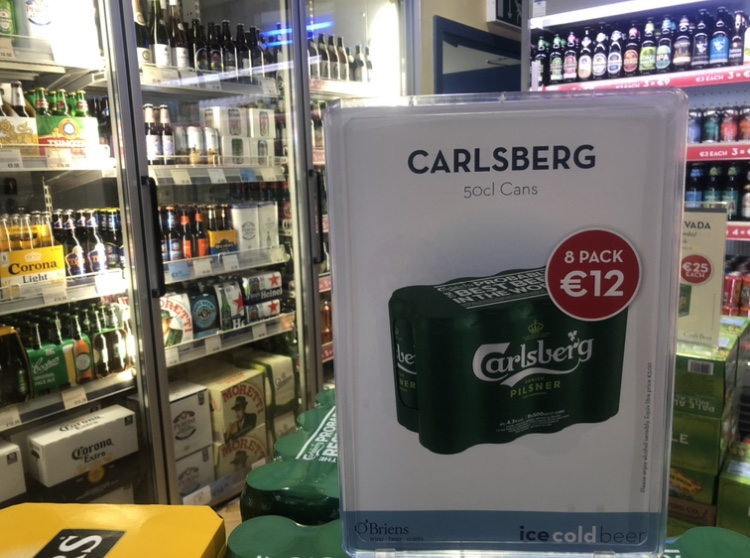
Carlsberg advertisement in O’Briens Wines Glasnevin. Photo by Mario Bowden
On Tuesday 4 May 2021, the government revealed plans to implement a minimum pricing on the sale of alcoholic products in of January 2022.
In a nutshell, the price of alcohol sold in off-licences will be determined by the strength of the product – priced at 10 cents per gram of alcohol. The higher the alcohol content, the higher the price.
This policy is based on the 2018 Public Health Alcohol Act that the previous government decided not to put into action before the last election.
Minimum pricing will not apply to bars and pubs, only to the off-licence sector.
At the press conference to announce this policy, Minister for Health Stephen Donnelly and Tániaste Leo Varadkar spoke about the proposal’s aim to reduce the health harms of excessive drinking. The hope is that minimum pricing will curtail alcohol-related death and disease rates in Ireland.
Data shows that alcohol misuse is responsible for 2,700 deaths each year in Ireland.
Data released by the health research board (HRB) revealed that during the pandemic in 2020, the average Irish person consumed 10.1 litres of pure alcohol – the equivalent of 116 bottles of wine and 445 pints of beer per person each year. This is a slight reduction from the 2019 average of 10.8 litres.
The HRB noted this was a “relatively small decline, considering pubs have been closed for the majority of the year”.
It’s also pretty far off the government’s goal to reduce the average per person alcohol consumption to 9.1 litres in 2020.
Beer fridge in O’Briens Glasnevin. Photo by Mario Bowden
“It’s understandable that people are drinking more at home,” said Varadkar at the press conference. “I’m doing so myself. To most drinkers, I want to say this: minimum pricing is not targeted at you. But, rather at the heaviest drinkers, those who attempt to seek out the cheapest alcohol. And particularly children, experimenting with alcohol for the first time.”
There is sufficient evidence to back the government’s plans. In 2018, Scotland introduced a similar minimum pricing system. Since its introduction, alcohol related deaths have fallen significantly. Canada has also had minimum pricing in place since 2010.
So, what will minimum pricing look like?
Minimum pricing will vary depending on the product being sold and its alcohol content.
For instance, a 500ml can of lager will start at €1.70, whereas a 500ml can of cider will begin at €1.78. A bottle of wine’s minimum price will be €7.40, while 700ml bottles of vodka start at €20.71 and gins and whiskeys at €22.09.
As the price is decided per gram of alcohol, it significantly increases as the percentage of alcohol increases – designed to impact on the strongest alcohol most.
In shops like Lidl and Aldi, a number of good wines come in underneath this threshold – the shelves will be transformed.
For those of us who enjoy a craft beer, you won’t be able to get a relatively strong IPA (6.5% ABV) in a 500ml can or bottle for €2.56 per can/bottle. We can wave goodbye to any four for €10 deals.
Minimum unit pricing of alcohol will not affect restaurants or pubs and will apply to off-licences and supermarkets only.
It will target cheap, high-alcohol products — for example, own brand drinks sold by retailers. pic.twitter.com/Vsiz7KIcCJ
To little surprise, the new pricing scheme has come under scrutiny from both retailers and consumers alike. For consumers, the proposal mostly targets those with lower-incomes who will now be spending a bigger proportion of their income on drink.
Ireland’s alcohol prices already remain the second-highest in Europe – 88.9% higher than the EU average, only lower than Finland.
In Italy, for instance, a country closer to the EU average, a 660ml bottle of beer costs as little as 90 cents in a supermarket and imported German beer only around €1.60.
Beer fridge in O’Briens Glasnevin. Photo by Mario Bowden
For retailers like Pearse Greally, the manager of O’Brien’s Wines of Glasnevin branch, the lack of clarity communicated by the government has been frustrating.
“There’s not been that much information [given] to retailers yet. For example, how it will work with the smaller brands? We sell Tennents for €1. If the minimum price of that is going to be at €1.72, what does that mean for more premium beers like Heineken? Will Heineken then increase their price to €2.50 or three euro a can to keep its premium headline? Because this increase [in price] isn’t a tax, where is that increase coming from or going to?” asks Greally.
The government in the Republic of Ireland is also calling on Northern Ireland’s government to implement its plans for minimum pricing at the same time as the south. Especially around Christmas time, when cross-border shopping is most active. Northern Ireland is set to introduce minimum pricing in 2023, a year after the Republic.
“We have high competition with the North because drink is much cheaper there.” says Greally. “And if their minimum pricing doesn’t come into effect until January 2023, why are we doing it a year early? We’ve already increased the tax on drink as well and now we get this? So no one really understands from a retail point of view.”
While a number of unanswered questions remain, not least how off-licences will compete with pubs and restaurants, one thing is for sure: students can wave goodbye to cheap cans.
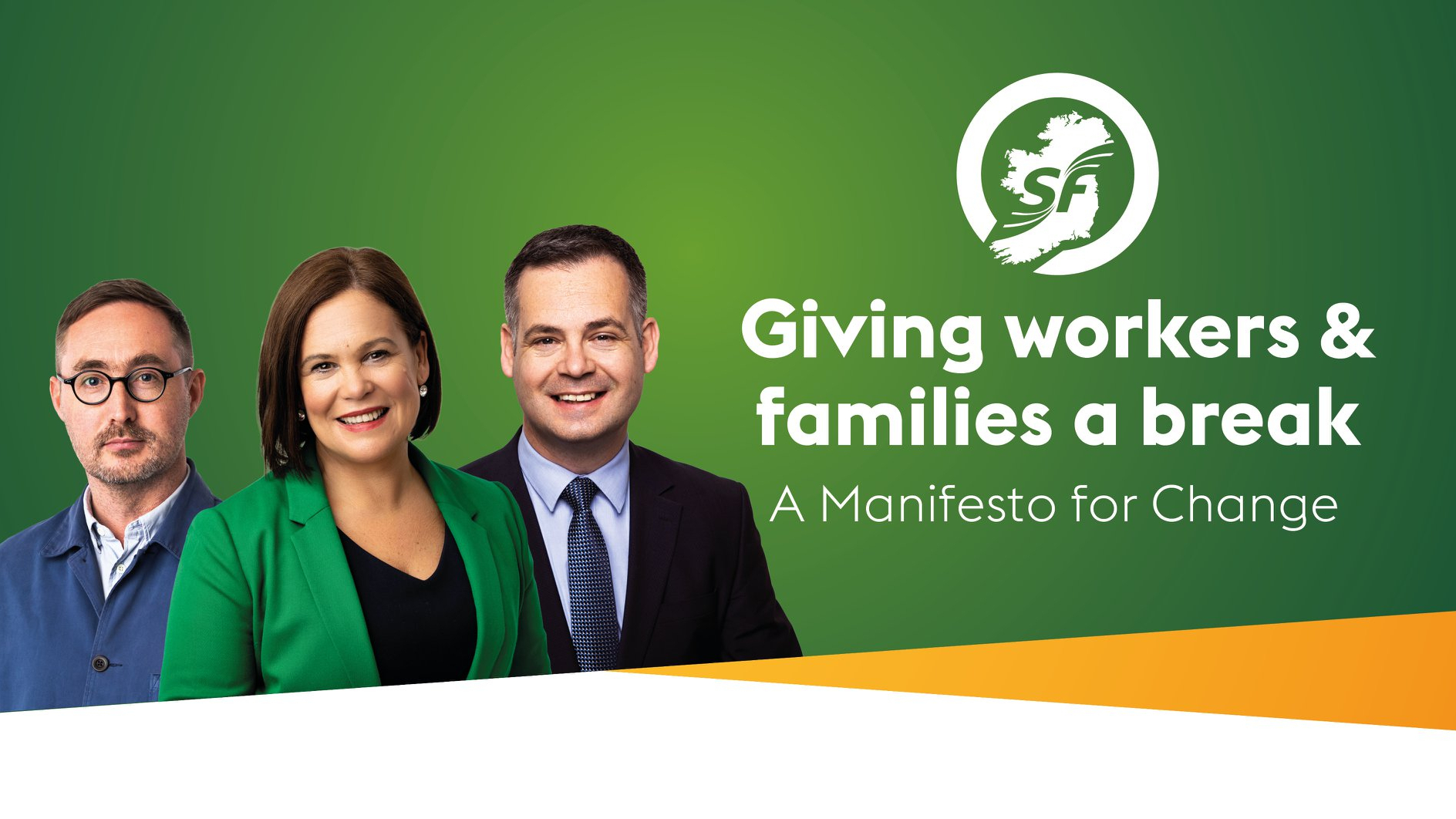
Sinn Féinare the first serious challenger of Fianna Fail and Fine Gael’s two-party hegemony in Ireland’s 100-year history as a state. There’s a sense, then, that we have experienced radical change.
Sinn Fein received the majority of the popular vote and have a mandate for change, as the phrase goes. They face a great challenge, with crises in the housing and health sectors reaching exceptional levels. If change is to come, it will have to be far-reaching.
But for all the talk of change afoot, there’s barely a breeze, let alone a gale.
Regardless of what Sinn Fein do, we will still live in a broadly liberal state, whether liberal conservative or liberal liberal – right or left liberal. What do I mean by this? It seems confusing, given that the media typically delineates the battle lines along binary left-right grounds.
What I mean is that the foundation of our political system – the nation state – is the inheritance liberal individualism’s precursor: The Protestant Reformation. This enshrined the principle of non-conformist individualism, stressing the individual’s agency to interrogate received traditions for him or herself.
In his insightful new book, Dominion, Tom Holland argues that the modern secular state originates in Christianity. The efforts of Pope Gregory VII resulted in the first systemic split between Church and State, the sacred and secular. However, the balance of power rested with the Pope.
Martin Luther feared this power and demanded that princes be given the ultimate right to govern. And so, due to the Reformation, the power shifted hands from the Pope to the princes. As democracies were formed, it passed from princes to, ostensibly, the people.
Of course, the issue with this narrative is that the people do not have “the power”.
This is a very rough sketch, but you get the idea. Of course, the issue with this narrative is that the people do not have “the power”. Or rather, they consider their political engagement, whether that means voting, protesting, lobbying, or striking, to be the guarantee that their voice is heard – to be the guarantee of their “power”.
What this has effectively created, however, is an “elite” whose job it is to engage with political questions, to come up with solutions, and to convey these solutions to the public. But for this relationship to be maintained, the modern electorate must have only a simplified and impoverished account of the issues at hand.
I don’t know how many of you read every party’s political manifesto. I have no background in political science, but I attempted it. The promises made were about vast sums of money and huge infrastructure, the kinds of promises the average citizen is unable to evaluate but which sound attractive.
What this highlighted to me is that the art of modern politics is to conceal more than you reveal – to imply more than is true. This is reinforced by the existence of spin gurus, that professionalised form of lying.
What the narrative I outlined fails to convey, therefore, is thatwe, the West, have come to accept the nation-state as the best system for organising our society, and with it, the second pole, that of the market.
Effectively, the state is no more than a “giant utility company”
This narrative also fails to convey that the modern nation is broadly utilitarian in its functioning. Effectively, the state is no more than a “giant utility company” according to philosopher Alasdair MacIntyre.
It is organised to provide services to individuals, not to pursue the common good. It guarantees the maximum amount of happiness to the maximum number of people. The role of the modern state, therefore, is to negotiate between the competing interests of individuals and the interest groups they form. The fundamental unit is, whether left or right, the individual citizen, and his or her happiness is paramount.
What the left, in terms of Marxism and other forms of communitarianism, seeks to create is a community-oriented society. It seeks the good of the people, not the individual. It is also striking that it is the “good”, rather than the happiness, of people which is its ultimate aim.
Modern forms of democratic socialism, the type Sinn Fein purveys, similarly purports to work for the good of the people. It promotes a very active state and the sponsorship of public goods such as healthcare and education.
Photo: Pexels
This is not to say that the right does not seek the good of the people. But contemporary conservatism is effectively neoliberal, that is it supports an exceptionally strong market with limited intervention by the government.
What both of these ideologies accept is the idea that the state is the fulcrum around which their ideas pivot. And with the state, they accept the aims of their policies to be the maximising of happiness for the maximum number of citizens.
To think therefore that Sinn Féin will produce any change in this regard, the most fundamental, would be wrongheaded. What Sinn Féinwill do, by themselves or as part of a left-wing coalition, is repeat the mistake of left-wing governments in attempting to apply communitarian values to the nation state.
Communitarian values emphasise the common good of communities over individuals. It supports the individual’s active participation in and identification with the community. By this means, the individual develops his or her practical reason and comes to understand how best to act.
It is like making a deep commitment to your local supermarket, not realising that it is part of a multinational chain.
But to attempt such an identification with or participation in the modern state is to misunderstand its function and its nature. It is like making a deep commitment to your local supermarket, not realising that it is part of a multinational chain. The loyalty is misplaced.
So, whatever the government, whatever the policies they may promise, we are still stuck with a state no more our own than the stores we shop in. Our lives are still determined by an elite, whether left or right.
Perhaps that’s why we don’t bat an eye at Saoirse McHugh’s idea of a devolved state. Is there a sense that the nation-state model isn’t working? It does seem to be the case, as dissatisfaction with democracy rises.
So, while the political machinations continue and a government is formed, while historians and economists fill columns and airtime, and while the links between Sinn Fein and the IRA are investigated, you and I might sit here and wonder where all this “change” will take us?
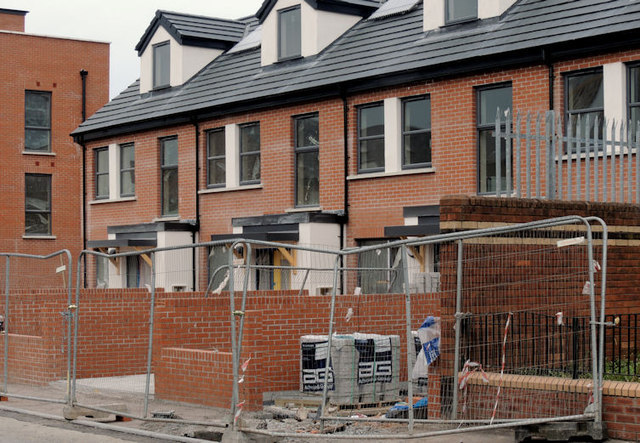
The government announced the plans for the spending on
social housing as part of the budget 2020. It has been said that they plan to spend
€1.2 billion on social housing as part of the new Budget. Announcing the
budget, Minister for Finance Paschal Donohoe unveiled capital funding to
support the delivery of over 11,000 new social homes in 2020. With the promise
of new social housing being built, I looked into how much exactly has been spent
on social housing in 2019.
After sending an FOI request to the Government
for housing, I was given the Social Housing Construction Status Report. It
demonstarted positive progess in social housing. The latest Construction Status
Report shows that:
There are 6,439
social homes are currently onsite nationwide.
There were 143
additional schemes on site across the country at the end of the second quarter (Q2)
than at the end of quarter one in 2019.
The number of schemes
on site at the end of Q2 2019 (1,559) is nearly 50% higher than at the end of
Q2 2018 (1,067).
The number of homes expected to yield from these
schemes is up more than 8% from 20,324 to 22,139.
The number of new dwelling
completions in Q2 2019 was the highest in Dublin at 1,546 followed closely by
the Mid-East with 1,233. Together, 56% of all new dwelling completions in Q2
2019 were in Dublin or the Mid-East.
In a press release the housing Minister
Eoghan Murphy said that “7,000 homes would be built next year, with a further
800 acquired and 2,631 leased in the long-term.”
However
even with the numbers showing that houses are being built, it’s still easy to
see that the houses aren’t affordable. Figures
from the Department of Housing show that more than 10,000 people have been
homeless in Ireland for the past seven months.
In August 2018, official figures counted 9,527 people as homeless; this
increased to 10,275 in August 2019. The reason for these numbers to be so high
is due to the fact that although houses are being bulit they are not affordable
and more money is being pumped into subsidised private sector tenancies than
affordable social housing.
The
figures I received in respone to my FOI confirm that the government will spend
more on social housing rental subsidy schemes next year than it will give
directly to Local Authorities to build and buy real social houses. The capital
budget of €1.2 billion is being spilt between social housing and rental subsidy
schemes. €700 million will go directly to scoial affordable housing and an
estimated 7,000 social houses will be built in 2020.
However
a current spend of €800 million is going into long term leasing and landlords
are expected to receive more than the €700 million being spent on social
housing. The figures do show houses are being built but there is not enough
capital spending and there needs to be more short term support.
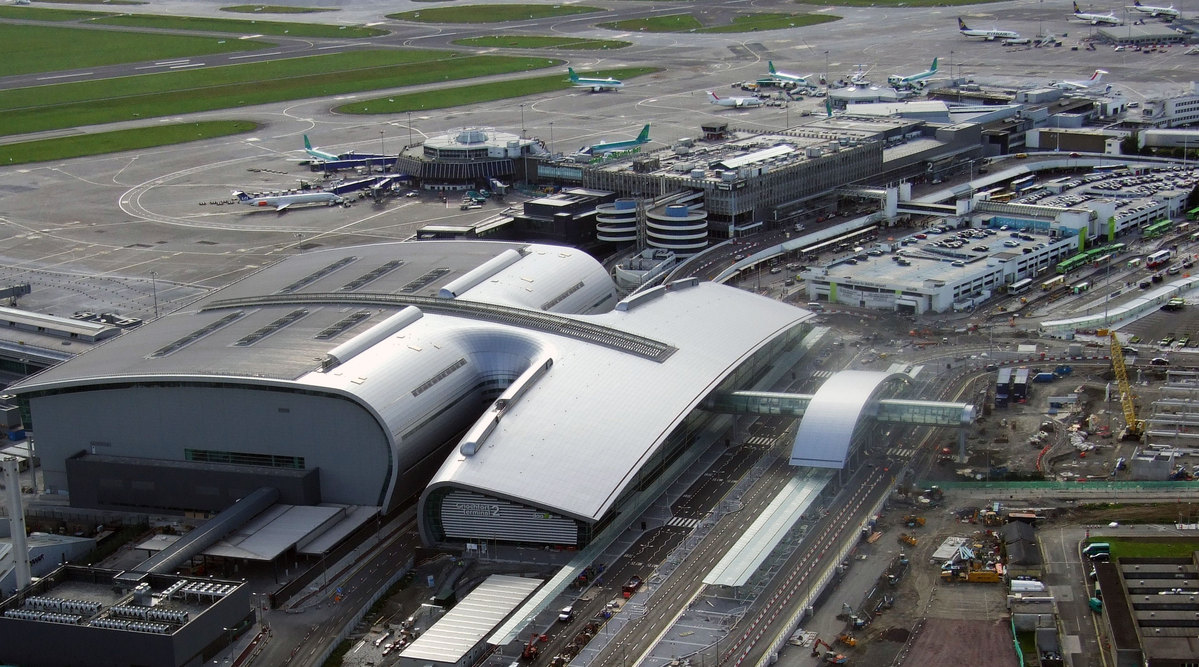
The tourism sector of the Irish economy is set to receive a major
boost with the building of a new runway
at Dublin Airport. In 2018, over 31 million people passed through Dublin
Airport, travelling to over 180 destinations across the world. An Bord Pleanála
passed the application for another runway at Dublin Airport in 2007, but due to
the economic crash, plans had been put on hold until 2016.
The new runway will be over 3,000 metres long, more than six times
longer than O’Connell Street and will open potential new markets for tourism in
long-haul destinations such as the Americas, Asia and Africa. Construction first
began on the runway in December 2016 and is on course for its scheduled
completion in 2021.
The north runway is expected to deliver a 31% gain in connectivity
between Dublin and the rest of the world, making it a crucial European airport.
It will open opportunities for connecting tourists to spend some time in Dublin
and the rest of Ireland. In the last five years, Dublin Airport has seen a 34%
increase in total passenger numbers and a 59% increase in transatlantic seats,
highlighting the need for another runway to cope with this ever-increasing
demand.
“The north runway is expected to deliver a 31% gain in connectivity between Dublin and the rest of the world”
Tourism Ireland is the company responsible for marketing Ireland to
potential tourists abroad and they see the building of the new runway as an
opportunity to attract a more diverse audience to Ireland. Sinead Grace, Media
and Public Relations Manager for Tourism Ireland said: “As the main gateway for
tourists to Ireland, Dublin Airport has a critical role to play in the
continued growth of tourism, particularly from long-haul and emerging markets.”
“As an island destination, the importance of convenient, direct,
non-stop flights cannot be overstated, they are
absolutely critical to achieving growth in inbound tourism,” she
continued. “As such, we work very closely with all airports on the island
of Ireland, to drive inbound flights.”
“As the main gateway for tourists to Ireland, Dublin Airport has a critical role to play in the continued growth of tourism”
Sinead Grace: Media and Public Relations Manager for Tourism Ireland
Tourism is Ireland’s largest indigenous industry and one of the main
benefits of the new runway at Dublin Airport will be the fact that it will be
able to handle every type of commercial aircraft due to its length, which
currently is not possible as the existing runways aren’t long enough. This will
be a big boost to opening up markets in foreign locations.
Source: Wikimedia Commons
Grace went on to talk about the importance of tourism in Ireland:
“Tourism is responsible for in excess of 4% of GNP in the Republic of Ireland,
and for employing about 325,000 people across the island.
“In 2018, we welcomed almost 11.2 million overseas visitors to
the island of Ireland (+5% on 2017), delivering revenue of approximately €5.86
billion (+5%). We are very much focused on driving growth in overseas
holidaymakers; and growth in revenue from overseas holidaymakers,” she
added.
“In 2018, we welcomed almost 11.2 million overseas visitors to the island of Ireland, delivering revenue of approximately €5.86 billion”
Sinead Grace: Media and Public Relations Manager for Tourism Ireland
The first pavement of concrete is currently being laid onto the runway
and the Dublin Airport Authority (DAA) said that this is a key milestone in the
construction of the €320 million runway. Dalton Philips, Chief Executive of the
DAA, said: “We’re delighted to be starting to build the top pavement concrete
layer of Ireland’s new runway. North runway is an essential development for the
Irish economy and will help underpin additional tourism, trade and foreign
direct investment for years to come.”
The government
has set up a committee to deal with the issue of period poverty. The new
committee, which has been set up by the Health Minister, is chaired by the
Department of Health.
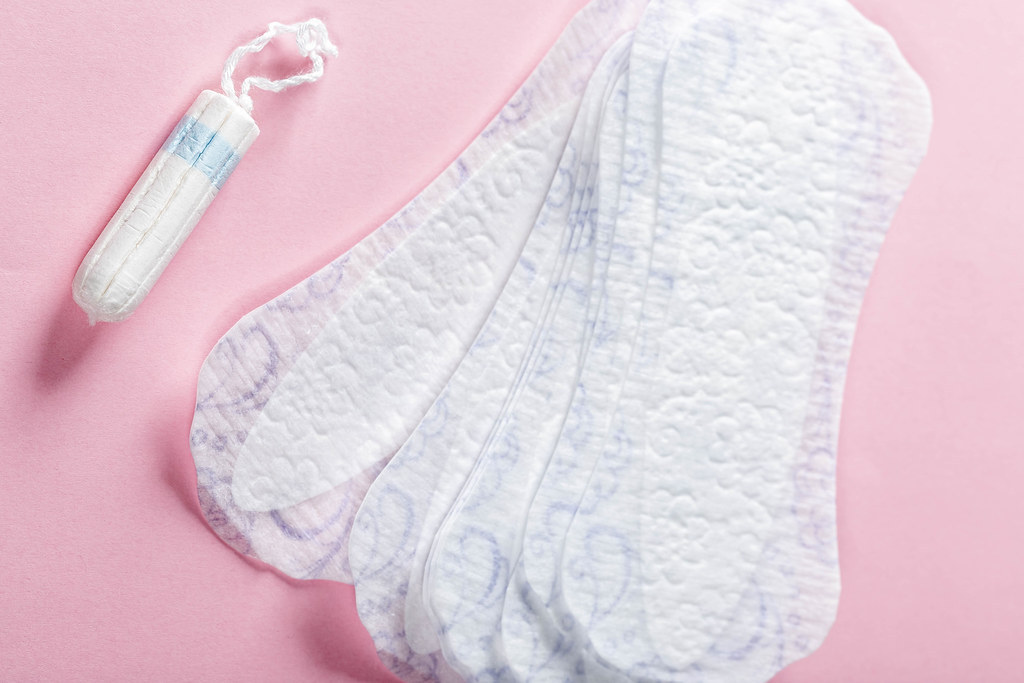
Period poverty is not something that is mentioned or
talked about so therefore not many people may know it is a thing. Period
poverty is an issue where girls and women struggle to afford sanitary products.
This is happening everywhere all over the world.
Earlier this year, Health Minister
Simon Harris committed to taking action on free sanitary products in all public
buildings in Ireland to make girls and women feel comfortable and safe. This is
one step towards taking action on the issue.
In a press release Simon Harris spoke of the first step
of this journey. “Period poverty is a global challenge but I believe Ireland
can be a leader in this regard. Menstruation is not a choice. Women are facing
significant costs for looking after their health and I am pleased we are taking
steps, with my colleagues in Government, to address this area.”
The decission for this committee to be set up was a
result of a survey that was done last year. The survey included more than 1,100
young girls. The survey stated that half of females aged 12-19 in Ireland have
experienced issues paying for sanitary products.
The Oireachtas passed a
motion calling on the government to provide free sanitary products in all public
buildings in Ireland. By passing this motion it has allowed the Health minister
to set up the committee to solve the period poverty problem in Ireland. The motion which was tabled by the Oireachtas women’s caucus, is aiming
to have sanitary products stocked for free in schools, universities, hospitals,
Direct Provision centres, garda stations and prisons.
Deputy Catherine Martin, who is part of the National
Women’s Council, had this to say about the issue on the motion page of the Oireachtas
website “The average woman will have 507 periods from age 12 to 51. In Ireland,
sanitary products can cost from €2 to €6 per pack, with the average pack
containing 10 to 15 pads or tampons, and that a 12 pack of pain relief tablets
costs between €6 and €10. Most women and girls will have 13 periods a year,
with some using up to 22 tampons and/or towels per cycle leading to an
estimated annual cost of €208 for sanitary products and pain relief, costing
€8,100 over a lifetime”
As according to the World Health Organization’s
constitution the motion has called on the government to provide a wide range of
safe and affordable sanitary products in all public buildings and also for
menstrual education to be viewed as a human rights context
Menstruation happens all over the planet, in every
country every day, yet it is almost taboo to discuss it. The only sanitary
product provided for free in most bathrooms across the world is toilet paper. For
most of us period poverty is not an issue but it is a matter that needs urgent
action and attention.
Taoiseach Leo Varadkar, Health Minister Simon Harris and
Health Promotion Minister Catherine Byrne have announced that a HIV PrEP
(pre-exposure prophylaxis) programme will begin from November.
The programme will initially be rolled out in a limited
number of clinics and will expand in 2020 following Minister Byrne’s
announcement that €5.4 million is being made available in Budget 2020 for the
full roll-out of a “world-class” PrEP programme in Ireland.
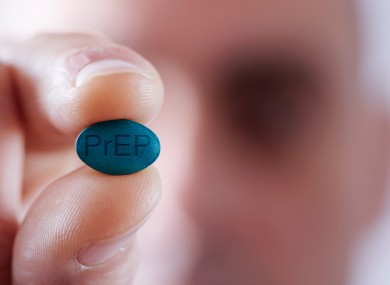
PrEP is a pre-emptive oral anti-retroviral medication for
HIV-negative people to reduce their risk of getting HIV through sex or sharing
needles. The combination of tenofovir and emtricitabine (sometimes known as truvada)
is proven to be 92-99% effective.
To date, PrEP has been prohibitively expensive and has only
been available to buy in Ireland on prescription at a price of over €400 a
month for the brand-name medication, and around €100 for the generic
equivalent.
“To date, PrEP has been prohibitively expensive and has only been available to buy in Ireland on prescription”
“The budget announcement of a PrEP programme for Ireland in
2020 is welcome although long overdue,” said Noel Donnellon, member of ACT UP
Dublin, a group committed to ending the HIV crisis. ACT UP Dublin reformed in
2016, following the dramatic spike in HIV diagnoses.
Photo Credit: Dept of Health
HIV diagnoses reached a record high last year, with 531
cases in 2018 according to figures released by the HSE. The number is an 8%
increase from figures in 2017. However, many experts are keen to point out that
this rise is also related in part to an increase in the number of individuals
getting tested.
“We will be carefully monitoring the roll-out, but we are concerned
at the continuing underfunding of sexual health services that are needed to
underpin a successful programme,” said Donnellon.
Those eligible for free PrEP, will need to get a drug payment scheme (DPS) card. There is no means test for a drug-payment scheme card but it does require a PPS number.
“For decades we have confined conversations about HIV to the shadows. Those living with HIV have felt stigmatised and shamed”
Minister for Health Simon Harris highlighted the importance
of reaching this milestone.
“For decades we have confined conversations about HIV to the
shadows. Those living with HIV have felt stigmatised and shamed,” he said.
“Today, all that changes. From next month, the State will
introduce a PrEP programme and confront the increase in cases of HIV in a real
and practical way.”
Dr Fiona Lyons, Consultant in Genitourinary and HIV
Medicine, GUIDE Clinic, St. James’s welcomed the imminent availability of PrEP
without charge to those at risk of acquiring HIV.
“PrEP is an important part of the HIV prevention jigsaw
puzzle that together with other HIV prevention interventions, should reduce the
number of new HIV infections in Ireland,” she said.
“I also welcome the announcement by the Government of the
roll out of a PrEP programme which includes resources to support services to
implement PrEP. This is crucial to successful PrEP implementation. I would like
to thank everyone who has worked so hard to make this happen.”
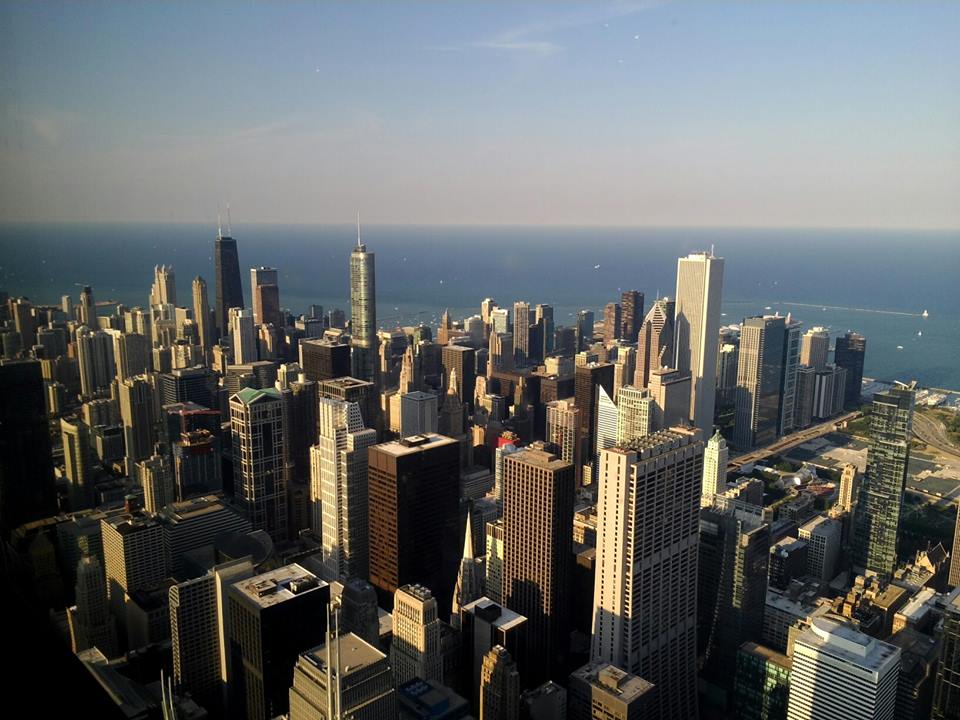
Irish J-1 visitors to Chicago could become a thing of the past as leading programme-provider USIT has advised students against travelling to the Windy City in 2014.
In an email circulated to US work and travel participants, the company cites “a lack of suitable accommodation and job offers” in the city, traditionally a mainstay for the Irish expat community, which may make their J-1 more difficult as the reason behind the announcement.
The call comes in the aftermath of a turbulent couple of years for J-1 visitors to Chicago, with the unruly behaviour of such young people causing landlords and employers to turn their backs on temporary visa holders.
According to Chicago Irish Immigrant Support, as many as 2,300 such travellers ended up in the Mid-Western hub in 2012 as opposed to the usual 700 or so, an increase which resulted in dozens of hospitalisations as well as a number of arrests.
Image courtesy Al Foran
Despite a reduction in this year’s number, where Chicago’s J-1 community accounted for just only 1,000 of 8,000 such visitors to the States overall, USIT says it was prompted to make the unprecedented call in light of numerous complaints from clients last year over the lack of suitable jobs and accommodation.
The announcement has been met with derision by members of the city’s large Irish-American community, with local business owner Dan O’Donnell, a cult figure for many J-1 students having voluntarily helped thousands find safe work and housing since 1997, labelling it a “stupid” decision.
“I sent out emails and letters last year to college newspapers in Ireland encouraging a sensible amount of students to come out to Chicago so we could manage the situation better, and it worked as evidenced by last summer. We want to encourage them to come over and enjoy American cities, not discourage it,” said Mr. O’Donnell.
The revelation, which comes after the Irish Government lobbied successfully earlier this year to protect the J-1 programme in its current format, will cause many future J-1ers to reassess the wisdom of travelling to Illinois next summer.
You must be logged in to post a comment.