Tag: Green Party

  • “The whole climate and nature crisis, to me, is the reason I’m in politics.” Senator Malcolm Noonan on his political career

    “The whole climate and nature crisis, to me, is the reason I’m in politics.” Senator Malcolm Noonan on his political career

    Malcolm Noonan is someone who is well-known around Kilkenny. He was a member of Kilkenny County Council for almost 15 years and served as Mayor of Kilkenny between 2009 and 2010.  

    He was then elected to the Dáil in 2020, and served as a minister, before becoming a Senator this year. 

    From his office in Leinster House, I sat down to speak with Malcolm about life as a public servant, his experience in the world of politics, and the challenges that politicians face. 

    Politics wasn’t always Malcolm’s calling. Enviromental activism has always been a key tenet of his life. From a young age he was engaging with his local community and the world around him. “I was just interested in nature and the environment,” he said. 

    But politics came knocking when he was approached by the Green Party to run for Kilkenny County Council in the 2004 local elections. “They said, “would you be interested in running?” and I said, “I’m not so sure.” So, I gave it a bit of thought, and then I said, “Sure, what will be the worst thing to happen?” and then the worse thing happened. I got elected.” 

    Malcolm topped the polls in that election, a feeling he describes as “amazing.” Very soon, he began to realise the possibilities of the role, beyond his ideological goals. “It’s funny, when you get elected you actually realise, I can make a difference in people’s lives. I can get a disabled persons grant, I can help someone get a house.” 

    His entry into politics was certainly accidental, least of all did he think he would still be involved in it some 20 years later. Malcolm was very aware of the precarious nature of being an elected official. He studied for a Rural Development degree so that he would have something to fall back on. “When I stood in 2009, the party was in government, and we lost most of our council seats. That made me realise how vulnerable this could be.” 

    In his time on Kilkenny County Council, he was heavily involved in many community initiatives, including forming and chairing the Heritage Forum in Kilkenny, and establishing Kilkenny’s first Integration Forum. “These are refugees brought in by the state from refugee camps in Uganda and South Sudan. They were amazing families.” 

    Integration is something that Malcolm feels is still important today, especially with all of the discussion around immigration online. 

    After 15 years on the council, Malcolm contested the 2020 general election for the Green Party and won a seat for Carlow-Kilkenny, something he didn’t expect. “We went to the count centre, and I looked like I was dead and buried, and lo and behold I got a huge dump of transfers.” 

    As was well documented, the months after the general election were chaotic. The three big parties, Fianna Fáil, Sinn Féin, and Fine Gael were neck-and-neck. And then, just a few weeks after the vote, the pandemic hit. Malcolm initially thought that he would be spending the next five years in opposition, now he felt that his party couldn’t sit on the fence. 

    “The Greens will always go into government,” he said. “We feel we have a duty; we’re a policy driven party, and we should step-up where we’re needed.” 

    Noonan describes his appointment as a Minister with great enthusiasm. 

    “He [Eamon Ryan] called me down to his office and I recall it being like Charlie and the Chocolate Factory.” He was given the portfolio ‘Heritage and Electoral Reform’ (which later became ‘Nature, Heritage and Electoral Reform’), which entailed the National Parks and Wildlife Service, National Monument Service, and all of the biodiversity policy. “My immediate reaction was I skipped up the corridor, clicking my heels. I was delighted with myself. I’ll never forget the day I was appointed.” 

    The term of a government is both very short and very busy. “My legacy from that time was giving a huge uplift to the heritage sector, [and] the biodiversity sector.” 

    But all good things must come to an end, and the 2024 election was looking gloomy for the Green Party. Having lost many of their councillors in the local elections earlier in the year, the mood closer to election day was more sombre. 

    I asked Malcolm whether he felt that his colleagues in the other coalition parties had turned on the Greens, and I was surprised by the honesty of his response. 

    “There was a narrative emerging over time. Some of it was built around Eamon Ryan. It suited some in the media to attack Eamon. It suited some in a ‘business as usual’ agenda to target us. And then, perhaps, there’s an element of our colleagues who say, “all that bad stuff, carbon tax, that’s the Greens.” 

    But he doesn’t put all the blame solely on outside actors, he admits that there were failings in how the Green Party put itself across. 

    “I do feel that we spend so much time delivering, and I don’t think we did a good job of communicating why we were doing this stuff. Behavioural change is really hard.” 

    Malcolm is proud of the things that his party achieved in government, such as cutting public transport fares, expanding the LocalLink bus network, and installing free solar panels on schools, But as someone living in rural Ireland, I could see that the Greens were failing at advertising those achievements to the public. 

    Malcolm said, “I remember a man giving out to me. I was out at an event in a rural village and he was giving out yards about Eamon Ryan, and next thing the 891 (a LocalLink bus in county Kilkenny) passed and he said, “God, isn’t that great!” and I said, “That’s Eamon Ryan for you.” 

    When election day came, and in the days afterwards, it was clear that it was not looking good for the Greens, and Malcolm was knocked out at the 8th count. “You have to dust yourself off and say, “people have voted, that’s the way it is.”” 

    But opportunity came knocking again during the Seanad Elections this year, where Noonan was elected to the Agriculture Panel. Now Malcolm is a Senator, still roaming the halls of Leinster House.  

    I touch upon a serious topic, about the increase in hostility towards politicians, both online and in-person. It is quite shocking.  

    “I’ve had death threats, both in writing and on the street.” he said. “I’ve been physically assaulted; you get verbal abuse.” He says it doesn’t happen often, but it does make him question why he does the job, and why anyone, particularly young people, would want to get involved. “No other workplace would accept the level of abuse that politicians receive,” Noonan said. 

    Away from the politics, Malcolm Noonan is an artist. He paints, he draws, and he plays in a band. Like most people, there is the family side to it all. “Dad taxi”, as he calls it, to football matches. He admits that being in government kept him away from his family, so he’s enjoying having more time with them these days. 

    To finish up, I ask Malcolm what he is most concerned about, and optimistic about, in the future. 

    What he is most concerned about is what he is also most optimistic about: the climate. 

    “The whole climate and nature crisis, to me, is the reason I’m in politics. Every year there’s a COP, and every year they walk away with some kind of agreement on something. At the root of it all is our financial and economic system. I fundamentally believe that we need to move away from our reliance on economic growth as a measure of our progress as a nation.” 

    But it is young people who make him feel optimistic about the climate. The likes of Greta Thunberg, whom he is a big fan of. In a school in Urlingford, County Kilkenny, he tells me that the pupils received a handwritten letter from Sir David Attenborough, telling them to keep going with their Green Schools initiative. 
    “If David Attenborough, the most famous naturalist broadcaster in the world, can take time to handwrite a letter and handwrite an envelope, and send it to a school in Urlingford, County Kilkenny, well, there has to be hope.” 
  • No date set for Weaver Park reopening

    By Jonathan Kelly

    Tracey Robbie and her two children sit outside the playground in Weaver Park in the City Centre. The charred remains of the climbing frame still stand and the playground on Cork Street has been closed to the public since an arson attack caused excessive damage on the 09 October.

    “It’s a terrible shame because it’s a great resource for the area, and it’s not here that long”, Tracey tells Thecity.ie. “We only came down now to see if it was reopened yet.”

    Weaver Park was opened in October 2017 as part of the Liberties Greening Strategy, a project that aims to create and refurbish green spaces. The area, which also features a skate park, was nominated the following year for the European prize for Urban Public Space 2018.

    “There’s always anti-social behaviour there anyway,” Tracy adds. “Even when the kids are in there, they’re kicking the boards up the top, climbing on top of the thing. Graffiti everywhere, drink bottles spilled and litter all over the place. They tend to put yoghurt or grease down the slide to make it sticky and stuff.” 

    The park was officially opened by Mayor Mícheál MacDonncha. Speaking at the 2017 event,  he said: “Vandalism happens in parks in every area, unfortunately. But I think the best way to overcome that is with good policing and community vigilance.

    “The more the park is used, the less vandalism you’ll see. This park belongs to the community, and we need to isolate those who wish to commit anti-social behaviour.”  

    This is the second time the playground has been closed due to fire damage since opening. The local Green Party councillor for the south-west city area, Michael Pidgeon called them “acts of extreme criminal idiocy.”

    Pidgeon added: “Weaver Park gets a huge amount of use locally and is rightly treasured by people of all ages. A tiny minority of people are responsible for this damage, so the fire cannot be used as an excuse to stop further park developments in the area.”

    Since the first attack, cameras and a security speaker system have been installed outside the playground along with more lighting around the park following complaints from locals about visibility. But Tracey Robbie believes it doesn’t make a difference. “I remember once my dad had told off a big lad once, and he’s normally a very quiet man, and the lad just answered back.  It’s not just here (anti-social behaviour), it’s everywhere,” she stated.

    In the last few years, many public playgrounds have become victims of criminal damage and arson attacks. In 2018, playgrounds at Willie Pearse Park in Crumlin and Griffeen Valley Park in Lucan were badly damaged following arson attacks. Four years prior, a playground in Ballymun was destroyed following fire damage.

    When asked about how long Weaver Park Playground will remain closed, Cllr Pidgeon replied: “We don’t have a timeline for repairs, but all councillors in the area are pushing for the quickest possible reopening of all park facilities.”

  • Building greener pastures

    Building greener pastures

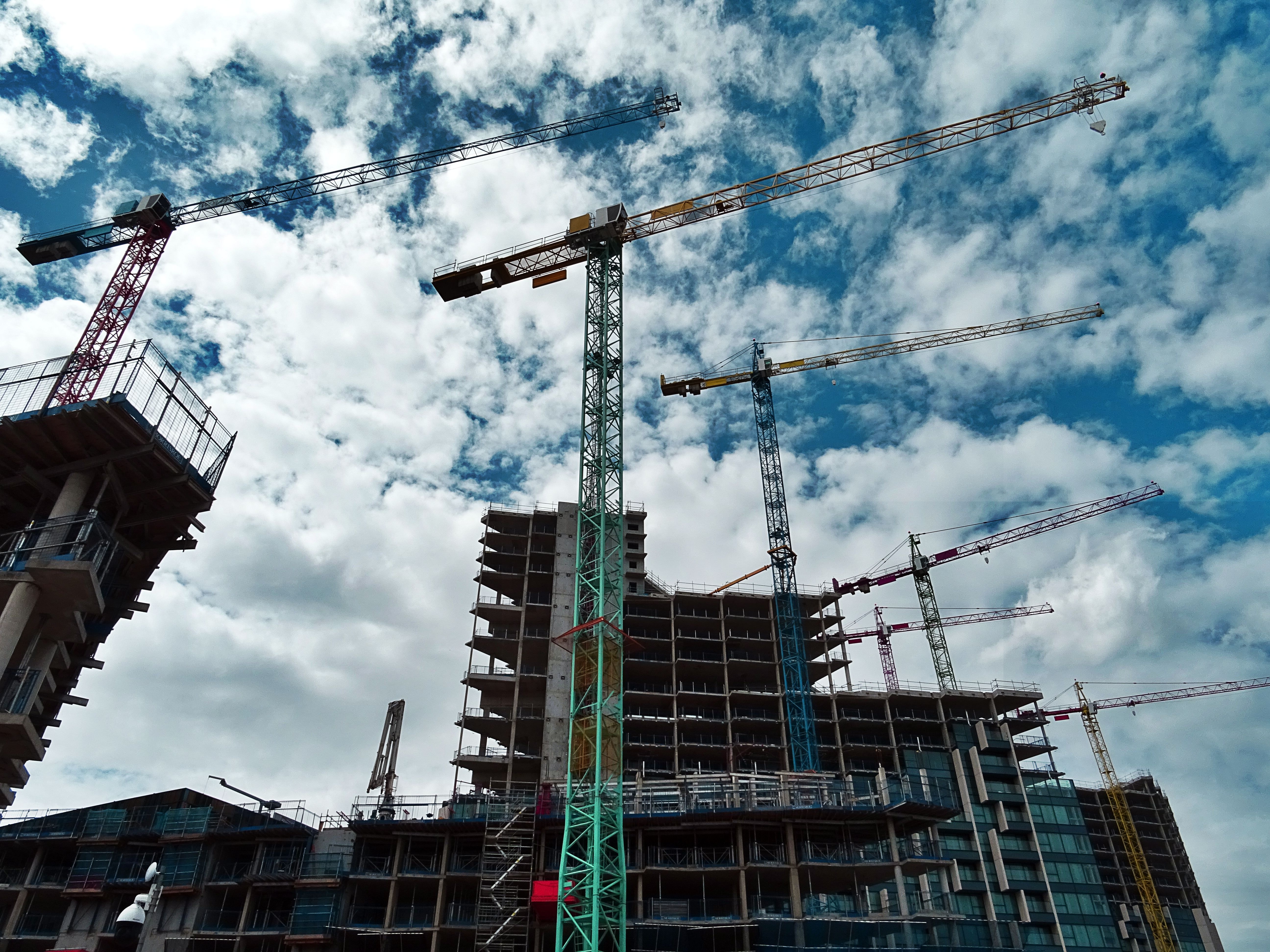
    Can we build the green future we need? Image courtesy of SevenStorm via Pexels.com

    Construction and buildings account for 36% of the world’s energy use, 39% of energy related carbon dioxide (CO2) emissions, and 33% of global water use and waste.

    The ever-looming climate crisis means something’s gotta give – Ireland’s construction industry has to change, and it has to make that change affordable to the average person.

    According to Francis Duffy, Green Party TD and spokesperson for housing, most of the homes now built in Ireland are highly-insulated and airtight ‘passive houses’, designed to use external elements like sunshine and shade to maintain a cosy climate and smaller carbon footprint.

    Unfortunately, there is more to truly green construction –  the materials used have carbon footprints all of their own, and that’s where our attention needs to be.

    “The big elephant in the room now is embodied carbon,” says Duffy.

    “When you dig a hole in the ground and take material out of it, whether that’s steel, iron, or cement, it gets transported, processed, manufactured, and transported again to site.

    “Then it lives a life on a site or in a building. It may be replaced or maintained, but at the end of its life, it’s transported again, disposed of, recycled, or upcycled.

    “There’s energy and carbon involved in all of that, which means that a bit of material gains embodied carbon,” Duffy explains.

    “We’re hitting around 900 kilograms per square meter of embodied carbon in our buildings, and an A-rated building is 300 kilograms per square meter,” he tells me.  

    As an architect, Duffy is working on a private project in Dublin with the Irish Green Building Council. The aim is to use materials with low levels of embodied carbon.

    “The big elephant in the room now is embodied carbon”

    Francis Duffy

    The frame of the building will be made from timber which “absorbs CO2 as opposed to spewing it out, which makes it CO2 negative”, says Duffy, who has extensively studied the use of timber as a sustainable material in construction.

    “We’re using recycled bricks and lime mortar to hold them together. That makes the bricks easy to separate at the end of the building’s life, which means they can be used again,” he explains.

    Duffy believes this is the future of building.

    “You’re looking at 80% of a building being designed and constructed with the idea that at the end of its lifespan you can take it apart and re-use a lot of it in another project,” he explains.  

    Globally, efforts are being made to reduce the waste produced by building.

    Cobod (construction of buildings on demand) are a construction technology company in Copenhagen, Denmark, who are pioneering 3D printed housing in Europe.

    “We generate less waste [by 3D printing], because we have more precise numbers on how much material is needed for the building in advance,” says Vytautas Naslenas, a sales and marketing coordinator for Cobod.

    However, Cobod print with concrete which Naslenas admits is not particularly sustainable.

    “There are new solutions and companies are investigating how to make a mixture with a smaller CO2 footprint, but of course that is yet to come,” he says.

    Affordability, speed, and how little waste is produced are the major draws to this method – by automating the process you make it quicker and reduce labour costs.

    “I believe that in 15 years this will be the norm. Looking at how quickly things are moving from our side, it could be even sooner,” says Naslenas.

    The cost of sustainable building is a huge issue – if construction emissions are so significant, as many people as possible need to be able to embrace sustainable construction methods.

    “The housing regulations have improved significantly over the last number of years but they have made building really expensive,” says Michael Canney, chair of the board of Sustainable Projects Ireland.

    “There’s a need to facilitate a more low-cost build without compromising on quality and energy efficiency,” Canney says.

    Canney lives in the Cloughjordan Ecovillage, and Sustainable Projects Ireland work closely with the ecovillage.

    An eco paradise: an aerial view of Cloughjordan Ecovillage. Photograph courtesy of Eoin Campbell JustMultimedia.com

    The ecovillage is 67 acres in total and divided into three parts: high-performance green homes, a community farm, and biodiverse woodlands.

    The houses in the ecovillage are built “using local labour, local materials, recyclable and reclaimed materials” as much as possible, says Canney.

    Cloughjordan is working hard to attract young people who are potentially earning less to their community.

    “We’re in negotiations with a couple of housing associations to take a number of sites and develop them using an affordability model,” Canney explains. “And we’d be offering those at rates that acknowledge the need for affordable housing rather than the maximum yield we could get for them.”

    “We are also looking at co-housing models where a number of people can come together and build a house cooperatively,” he says, explaining that people would choose DIY construction methods that allowed them to build themselves without the cost of employing skilled labour.

    “There’s a need to facilitate a more low-cost build without compromising on quality and energy efficiency”

    Michael Canney

    Canney feels there’s a bigger issue lurking in the shadows here.

    “So many people are really confused about these ideas of embodied carbon, recyclability, and what’s recyclable in real terms,” says Canney.

    “I think people could do with some really clear guidance on this, because we are bombarded with greenwashing from manufacturers.

    “There’s a real obligation on state and semi-state bodies to really inform the public in a very non-biased way about this, so people can really make informed decisions.”

  • ‘If they want us in power, they’re going to have to do more than greenwashing us’ – Reactions to FF/FG’s letter to the Green Party

    ‘If they want us in power, they’re going to have to do more than greenwashing us’ – Reactions to FF/FG’s letter to the Green Party

    Eamon Ryan, leader of the Green Party (Photo: GreenParty.ie)

    The Green Party is set to hold a teleconference to evaluate their official response to Fianna Fail and Fine Gael’s letter, which answers the 17 questions posed by the Greens regarding policy promises. TheCity.ie’s Kate Brayden speaks to County Clare Green Party councillor Roisin Garvey and Futureproof Clare about the vital Shannon LNG concession, and the 7% emissions target urged by the United Nations.

    In a letter published this week inviting the Greens into further governmental talks, FF and FG wrote that they “welcome the desire of the Green Party to be involved in recovering, rebuilding and renewing Ireland in the aftermath of the COVID-19 Emergency” and respect the “strong policy platform” outlined by the Greens, led by Eamon Ryan.

    Crucially, the two parties stopped short of promising a 7% emissions reduction target by 2030 – despite the fact that the EU have said the minimum reduction needed is 8% to remain outside of the 1.5C temperature increase. The target is based on the 2019 “Emissions Gap” Report from the UN Environment Programme.

    Ireland releases about 60 million tonnes of greenhouse gases each year, roughly broken down into 40 million tonnes from energy (electricity, heat and transport) and 20 million tonnes from agriculture. The country’s current annual reduction is just 3%, with The Climate Change Performance Index ranking Ireland 48th out of 56 countries for our negligent policies.

    In the document, it was written that FF and FG “would like to understand and tease out with you through talks, the specific actions that would have to be taken to achieve” the 7% reduction. 

    “We all need to understand the impact it would have on employment, poverty, agricultural practice, public transport, regional development and on the different sections of society.

    “Considerable work will have to be done to outline where and when further carbon reductions could or should come from given that we will have to significantly reboot and revive the economy,” they wrote. 

    Chair of the State’s Climate Advisory Council, Professor John FitzGerald recently commented that achieving a 7 per cent reduction in annual emissions would be extremely difficult but said: “If you do the groundwork…you could get to it in the second half of the decade.”

    The Greens emphasised the need for a just transition in their 17 point plan, which advocated for a Universal Basic Income, retrofitted public housing, affordable public transport and a significantly improved healthcare system, among others. Major changes in agriculture, public transport and energy would provide the means for the reduction in emissions.

    Despite the estimated €30 billion cost of the Covid-19 pandemic, the chair of the National Advisory Council on Climate Change has affirmed that Ireland needs to prioritise investment in climate action going forward. New research undertaken by University College Cork’s MaREI Centre for Energy, Climate and Marine states that the party’s 7% emissions reduction goal would require “transformative changes” and huge costs, but is a feasible challenge.

    ‘Is the new Green Party emissions reduction target feasible and what would it mean for the energy system?’, written by Hannah Daly, James Glynn & Brian Ó Gallachóir, asserts that the changes could bring significant health, wellbeing, economic and employment benefits to society.

    The Fianna Fáil and Fine Gael leaders committed to enacting climate legislation within 100 days of forming a government, but this legislation could fail to be implemented. The Greens are seeking concrete answers for their detailed questions on exactly how their policies would be enacted should they enter into Government with FF and FG.

    “If they want the Greens in power, they’re going to have to do a lot more than greenwashing us – there’s going to have to be proper commitment,” said Roisín Garvey, Green Party councillor in County Clare. 

    “We’re not tied to five years: Fine Fael and Fianna Fail really need us, because they know that if there’s an election now, they’d be crucified. Now is time to try and get policies we want, not just the promises that we want,” Garvey added.

    County Clare Green Party Councillor Roisín Garvey (Photo: GreenParty.ie)

    “I think Fianna Fail and Fine Gael know that, and they also know that there’s going to be huge fines from Europe if we don’t meet our targets. So I think now is a very good time for us to be in negotiations. We have a much better chance now than when we went in with Fianna Fail in 2008, when there were only six TDs. The climate crisis wasn’t being taken seriously by anybody. 

    “The fact that we have 12 TDs now since the General Election shows that it is an issue – that’s an unprecedented amount. However, FF and FG are just agreeing things in principle to get us into negotiations. But Eamon Ryan’s been around the block before, he’s not naive about it. Those 12 TDs have been in politics for a long time: they’re definitely going to be committed to getting proper timelines.”

    It’s important to note that in 2007, six Green TDs entered Government as the junior party in coalition with Fianna Fail. The party were later decimated four years later, suffering a wipeout in the General Election and losing all six of its seats. The party returned to the Dail in 2016, receiving just over one percent of the vote in local election.

    Today’s Green Party are heavily split over whether to prop up a FF/FG Government, which younger voters categorically don’t want. Younger members and outliers believe that the radical change needed simply cannot happen with FF and FG. The dramatic 2020 General Election, which saw Sinn Féin emerge with 33% of the overall vote, proved that real change is desired following years of homelessness, housing and rent crises and a deeply worrying healthcare system. The Greens are now between a rock and a hard place, facing strife for entering a FF/FG coalition and political backlash if they refuse to. What they choose now could decide the future of the party by turning their youth vote away (possibly to Sinn Féin) – but the climate is on a timer. Could they pass climate action policies with two parties who are notorious for their abysmal apathy on climate justice.

    Shannon LNG: concrete concession or vague promise?

    Stating that both parties are “committed to a pathway to phase out all fossil fuel exploration licenses”, FG and FF also claim to be open to introducing a moratorium on exploration licences for offshore gas exploration. Referring to the controversial Shannon LNG project, which would import dangerous fracked gas from Pennsylvania, the letter states:

    “Both of our parties accept that as we move towards carbon neutrality, it does not make sense to build new large-scale fossil fuel infrastructure such as liquid natural gas import terminals.”

    FF and FG mention that economic activity must be stimulated in the areas which were expecting local development plans, and exploring how strategic investment in the Shannon estuary and port infrastructure could support renewable energy.

    William Hederman of Futureproof Clare, speaking to TheCity.ie, mentioned that zero room for loopholes must be allowed by the Green Party if they want to ensure that no LNG terminals or fracked gas imports will go ahead in future:

    “A crucial first step is for the new government to tell the European Commission that Ireland wants Shannon LNG taken off the EU’s projects of common interest (PCI) list.

    “For Fine Gael and Fianna Fáil to accept that it does not make sense to build LNG import terminals is a huge milestone. It is the result of years of grassroots campaigning, particularly in Kerry, and also here in Clare, that has grown into an international coalition against Shannon LNG,” Hederman continued.

    “However, the language used by Leo Varadkar and Micheál Martin is vague and looks like they are trying to leave wriggle room. We must keep pressure on them to translate this statement into a firm commitment. Building new infrastructure such as this would lock Ireland and the EU into fossil fuels for decades, when we need to be rapidly transitioning to renewables in order to avoid catastrophic climate breakdown.”

    Fianna Fail and Fine Gael wrote that they “would need to have a shared understanding of what is meant by new fossil fuel infrastructure, what type scale does this relate to, and whether this proposed ban would apply to
    State infrastructure or to private sector infrastructure as well.”

    Stating that they would need a “clear understanding” of the State’s powers in this area and the limitations of European law, as well as international treaties, but removing Shannon LNG from the EU’s Projects of Common Interest list is very much possible.

    Extinction Rebellion poster during the 2020 General Election (Photo: Instagram)

    Speaking on the list, Roisín Garvey chastised the two parties on their unwillingness to face the realistic possibilities of climate action policies.

    “Fianna Fail and Fine Gael act like we can’t do that – but sure we all know that’s not true. They shouldn’t play us as fools. FF/FG need us more than ever, because we can bring back jobs, we can save people money in how they run their houses through retrofitting, we can put money into transport instead of cars; this is now a really good time for them to hear us out.

    “We’ve seen it happen in other countries. There have been hugely successful policies in Denmark and Scandinavia and Germany – lots of places have figured out their education, their housing, their transport: we don’t have to come out with these ideas all by ourselves. They’ve been around for years, that’s why the Greens exist, because we’ve all seen it done.”

    The 12 Green Party TDs and two Green Senators will hold a second teleconference meeting this week to evaluate their response to the joint Fianna Fáil and Fine Gael letter inviting the party into formal talks.

  • An island of refuge? Ireland’s political parties and ‘Fortress Europe’

    An island of refuge? Ireland’s political parties and ‘Fortress Europe’

    Photo: Pixabay

    TheCity.ie’s latest series, ‘An Island of Refuge?’ tackles the immigration policies of seven political parties, highlighting their views on asylum seekers, the Direct Provision system, migrants, climate refugees and open borders. Editor Kate Brayden gives an overview of the findings.

    While Ireland’s recent General Election was undeniably focused on issues based at home, we have turned our focus to the increasingly unstable global landscape and its influence on our nation’s attitude towards migration and foreign affairs.

    Éire may be known as a welcoming place, but the strain of climate breakdown is impacting far-right rhetoric worldwide – examining whether our politicians are succumbing to this issue is a key concern.

    TheCity.ie’s team of journalists interviewed TD candidates and councillors from Sinn Féin, People Before Profit, The Green Party, Labour, Fine Gael and Fianna Fáil after dissecting each party’s manifesto statements on immigration and foreign policy to garner our coverage.

    In the aftermath of the election, the parties must now organise a government that will withstand the tests of the international stage. This includes policies relating to justice and climate breakdown. 

    Photo: Pixabay

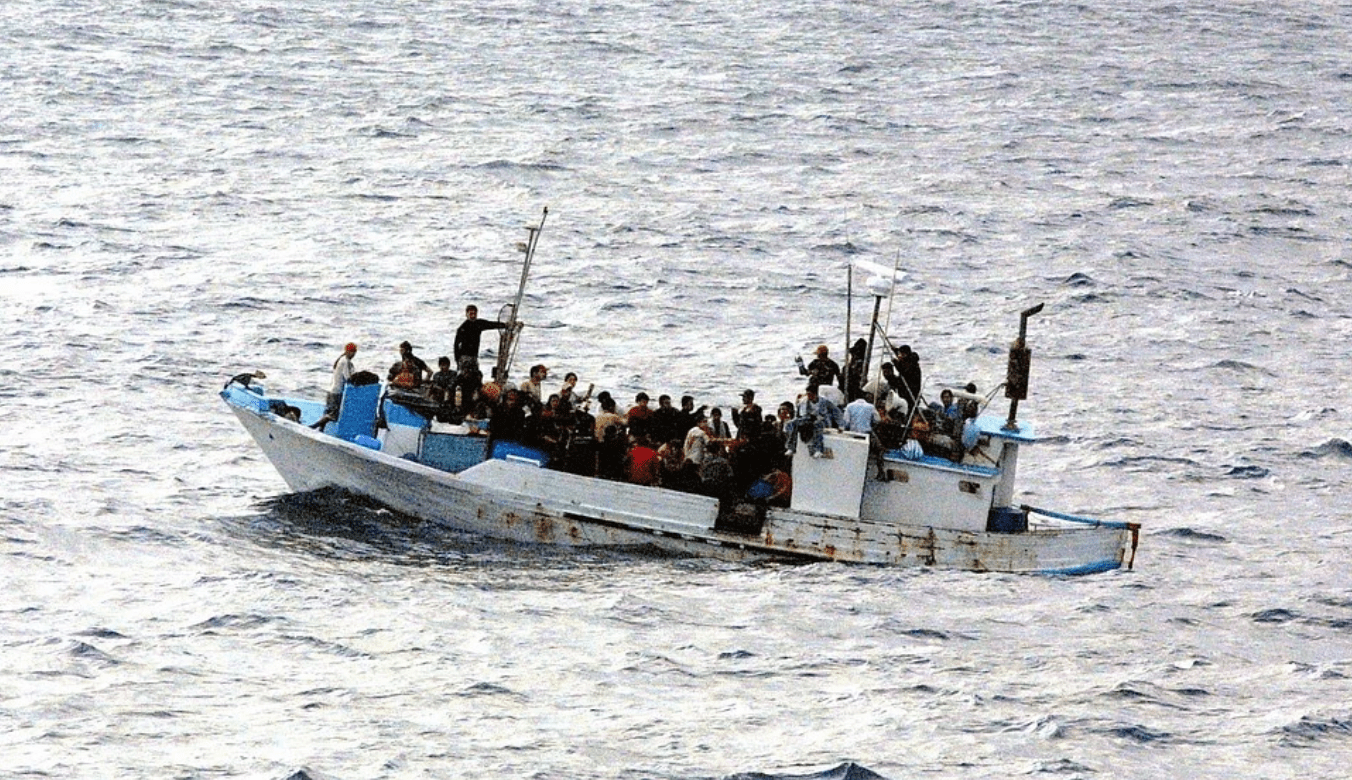
    Refugees are a core part of this, with thousands risking their lives to cross the Mediterranean every year, and some losing their lives in the fight to escape war. The policies of ‘Fortress Europe’ aim to keep people from nations specifically outside of this continent out, the very people who are affected by the planet’s destruction despite having the lowest carbon footprint. How do Ireland’s political parties hope to treat them?

    Sinn Féin, possibly writing the most intriguing manifesto in terms of economic promises, have claimed that they are against open borders, but also hope to end Direct Provision. What they would replace the system with, however, is a mystery. Should they find themselves in power, they intend to avoid a situation of mass climate-related migration – not solely for the difficulty it will pose to recipient nations, but because people deserve to live in their own nations and communities. Their stance certainly needs more explanation. 

    Mary Lou McDonald celebrates Sinn Féin victory. Photo: Instagram/africaworld_news

    People Before Profit and the Green Party have socialist and left-wing policies embedded in their manifestos, with PBP acting as fierce critics of imperialism and of tyranny abroad. References are also made to the UN Security Council seat Ireland is hoping to win, as well as US military presence in Shannon Airport. The party condemn the murderous regime of Bashar al-Assad – someone largely responsible for the flight of Syrians towards Europe

     The progressive stance of the Greens is reflected in their emphasis on freedom of movement, open borders and refugee housing, and they are highly aware of climate breakdown’s role in the displacement of innocent communities in developing countries.

    Labour’s political director Nat O’Connor has taken an arguably weak stance, admitting that Ireland is not playing the part of a wealthy country, accepting a low number of refugees, but “we can’t promise to do something that we cannot do”. Housing and health are first on the priority list for the party, which are worryingly diminished following the election.

    As the party competes for control of the Dáil, Fianna Fáil is proposing long overdue complete reform of the asylum system and to improve refugee accommodation. Their manifesto has figures and policies backed up by plans, which is a (welcome) change from some of the other vague manifestos. However, it could be all talk rather than action. Pledging to speed up the asylum process, they take a leaf out of the Greens book by promising an integration plan as well as allowing asylum seekers to access driving licences. 

    In 2015, the Fine Gael-led government pledged to take 4,000 programme refugees fleeing war-torn countries like Syria by the end of 2017. Even now, we’re still well short of that quota – having resettled only 3,206 such refugees. The government has faced fierce criticism over their handling of Direct Provision, with Fine Gael ministers exhibiting resistance to change. Former Minister for Justice Charlie Flanagan promised to improve the party’s numbers when it comes to refugee placements, but are they to be believed?

    Irish communities held protests last year nationwide, rejecting the possibility of new Direct Provision centres opening in their area. Migrants rights groups such as the Movement of Asylum Seekers of Ireland insisted that these protests were not to support asylum seekers, but were rooted in racial undertones “dressed up in human rights language”.

    “The Irish of #Fingal have voted once again for their own extinction,” O’Doherty posted on Twitter following the result.

    Interestingly, only 1 per cent of respondents cited immigration as a main voting concern of GE2020 in the Ipsos MRBI exit poll for The Irish Times/RTÉ/TG4/UCD. Within this umbrella topic, climate refugees, asylum seekers  as well as migrants are all grouped. 

    Desolate refugee camps. Photo: Pixabay

    There are important distinctions to be drawn between asylum seekers, migrants and refugees – but these terms often get mixed up in the course of public debate on what is a complex topic. The issue will only become more onerous as CO2 emissions cause further destruction in the Global South, South-East Asia, Australia, Canada and the US. 

    The movement of people has already led to dangerous, inhumane situations in the refugee camps of Libya and Greece, with the European Union recently rejecting a voting to ask members to step up search-and-rescue missions in the Mediterranean.

    An asylum seeker is someone seeking refugee status – but whose application has not yet been approved. In the meantime, as long as they’ve made an application for asylum to the country they’ve landed up in – usually on the basis they were forced to flee their home country – they are entitled to remain in the destination country while their request is being processed. If it’s ultimately approved, then they have permission to remain. If it’s rejected, then they’ll be deported. 

    Though some, who fail to qualify as refugees, are granted subsidiary protection to remain.  Migrants are not fleeing persecution; instead they choose to move country – often for economic reasons.  

    Those defined as refugees have been recognised as such under the 1951 Refugee Convention of the UN, while programme refugees have their claims formally assessed in refugee camps overseas – and are invited to the destination country under a resettlement programme.   

  • ‘1.44 million people globally will need to resettle by 2020’ –  Green Party take progressive stance on global refugee crisis

    ‘1.44 million people globally will need to resettle by 2020’ – Green Party take progressive stance on global refugee crisis

    With the Green Party ready and waiting to help form the next government, KATE BRAYDEN has been closely examining their vision for an Ireland free of marginalisation – and grilling their politicians on policy relating to open borders, Direct Provision and refugees.

    The 2020 General Election has seen a predictable emphasis on domestic policies — particularly on housing and health — with foreign policy firmly taking a back seat. 

    And considering the ever-increasing climate crisis, there will be an undeniable rise in the number of refugees in Ireland, as well as asylum seekers and migrants. 

    According to the UNHCR, refugees – protected by the 1951 Refugee Convention – are people fleeing persecution and armed conflict. 

    By the end of 2014, there were 19.5 million refugees worldwide, seeking to escape perilous circumstances by crossing borders to seek safety.

    Twitter/@xrwsm

    An asylum seeker is someone seeking international protection (refugee status) – but whose application has yet been approved or rejected. They seek asylum on the basis that returning to their country of origin would lead to persecution on account of race, religion, nationality or political beliefs. 

    Unfortunately, international law is still catching up to the impact of climate breakdown on refugee applications. A displaced person must go through a Refugee Status Determination (RSD) process, conducted by the government of the country of asylum or the UNHCR.

    On the other hand, migrants choose to move mainly to improve their lives, rather than because of a direct threat or persecution. 

    While migrants can return safely home, refugees are not safe to do so.

    In 2019, 4,487 people applied for international protection in this country; an increase of 814 on the previous year. 

    From my own close examination of the Green Party’s manifesto for General Election 2020, their foreign affairs policies suggest a strong commitment to playing a role on the international stage – both when it comes to the climate crisis and the resulting increase in refugee applications.

    Twitter/@IrishRefugeeCo

    The Greens are firmly of the view that global co-operation and co-ordination will be needed to address the challenges that lie ahead. 

    European Union policy and practice must prioritise the rights of the vulnerable over the interests of multinational companies, they feel.

    The movement of people has become increasingly restricted with some countries appearing to adopt a “Fortress Europe” mindset by closing borders, preventing search-and-rescue operations in the Mediterranean by NGOs and stoking fears through far-right rhetoric of “The Other”.

    Speaking to The City.ie, Dublin West Green party councillor Daniel Whooley said Ireland is failing to take in its “fair share” of refugees at present.

    The young politician also feels that our own ‘troubled history’ with famine and emigration should push us to “help those in need” even more.

    “The UN Refugee Agency has estimated that 1.44 million people globally will need to resettle by 2020.” 

    When compared with other countries, you might be forgiven for thinking that Ireland appears to take a somewhat hardline stance on asylum seekers.

    Photo credit: Unsplash

    In 2015, the number of asylum applications allowed by the Irish authorities was 20 times less than in Norway – a country with an almost identical population to ours but significantly wealthier. 

    Whooley said that “reflects a slow system of dealing with asylum backlogs, as well as a tendency to reject applications more often than we accept them.”

    Pointing out 17% of Irish citizens live abroad, the politician added: “It’s only fair that we take up the mantle that many nations did for our ancestors during our troubled history and help those in need.” 

    In terms of foreign policy, the Green Party manifesto asserts ‘that the need for world peace and justice overrides national and commercial interests.’

    “There is no place for violence – or threat of violence – in the democratic political process,” they say. 

    The party is also calling for – among other international development proposals – immediate recognition of the State of Palestine, an end to arms trading with Israel and an end to the blockade and closure of Gaza.

    The party proposes to increase Ireland’s Overseas Development Aid contribution to 0.7% of Gross National Income by 2025.

    Aid directed towards the ongoing refugee crisis in the Mediterranean should be co-ordinated with the EU – with funding for refugee housing a priority, they suggest. 

    The Green Party’s manifesto outlines their vision for an Ireland free of marginalisation.

    It stresses how we’ve benefited from increased cultural, social and political diversity through the arrival of a new generation of migrants.

    To achieve their goal, the Greens hope to develop a new Migrant Integration Strategy and revive the National Action Plan Against Racism – which expired in 2008.

    Green Party chairperson Hazel Chu told TheCity.ie: “The problem with anti-refugee stances and anti-immigration rhetoric is that people are going for what the populist vote would be, which is to blame it on someone else. 

    “If you have more refugees coming in, people will say those are the ones who are burdening us. 

    “Right now, people are claiming there is mass immigration in Ireland when there’s not.”

    Nasc CEO Fiona Finn said her organisation is disappointed by Fine Gael’s plan – announced in recent weeks – to home a mere 2,900 refugees here over the next four years. 

    She told TheCity.ie: “The 2,900 promised places over the next four years represents a reduction on Ireland’s previous resettlement commitments.

    “Only 7% of the resettlement places needed globally are available. 

    “Now is the time for progressive and ambitious programmes to meet those needs. 

    “We hope to work with whoever is in government next, to push for expanded resettlement quotas and new solutions.”

    Meanwhile, the Greens want to work towards ending Direct Provision and replacing it with a not-for-profit system based on accommodation provided through existing or new approved housing bodies. 

    The stated vision of the Greens embraces the responsibility of the Irish Government to step up to the plate in the realm of foreign affairs and climate refugees – who are still not protected by international law. 

    A landmark United Nations ruling that governments cannot return people to countries where their lives are threatened by climate change is a momentous first step for global climate action. But it’s not yet legally binding.

    Refugees do not travel in search of economic opportunity but to escape war, persecution, death, torture and rape. They are entitled to the protection and assistance of other states under international law, and under shared principles of human decency.”
    Filippo Grandi
    UN High Commissioner for Refugees

  • Whatever happened to the Green Party?

    Whatever happened to the Green Party?

    It’s four years since Ireland entered the bailout. Those dark November days will live in infamy and have been etched into the Irish psyche.

    Those events were the beginning of the end for the Cowen Government, and the Green Party announced it was leaving the administration shortly afterwards. In the 2011 general election that followed the Greens were wiped out, losing all of their six seats. Following their electoral demise, where is the party today?

    Green Party Logo

    The local and European elections held in May were their first big test since 2011 and the results were described as “disappointing” by the party leader Eamon Ryan.

    Ryan came close to winning the final European Parliament seat in Dublin but it wasn’t to be. He lost out to Fine Gael’s Brian Hayes. Overall, the party won 12 local council seats but failed to send anybody to Europe.

    So why did the party decide to get into bed with Fianna Fáil? Wouldn’t they be in a much better position if they had decided to stay in opposition?

    “We’ve been a party for 30 years and at some point you have to take on the responsibility of governing” he says, “We were in a fairly powerful position and managed to get some good legislation through”.

    Following that fateful decision and the general election that followed a few years later, the Greens suffered the loss of all of their Dáil seats and failed to win any in the Seanad, leading to the party having no Oireachtas representation.

    However, Eamon Ryan points out that every European Green Party has faced complete or near complete wipe-out after being in government. He describes the public attitude to green politics as a tide coming in and going out.

    Green Party Leader Eamon Ryan
    Green Party Leader Eamon Ryan

    With a general election at most 18 months away, what would the Green Party’s priorities be if it ended up in government again?

    “We still don’t have a proper system of regional government in this country” he says, “Political reform as a whole would be one of our main policies”.

    The education system and secondary education in particular is an area the party would seek to change. “Secondary education focuses too much on rote learning. It’s all about ticking boxes and that doesn’t prepare you for life” says Ryan.

    With just 12 seats on local councils and no national or European representation, there’s a long way to go before the Green Party has much hope of changing either of these systems.