Tag: Green Week 2021

  • Rage against the greenwashing machine

    Rage against the greenwashing machine

    Smoking up the atmosphere: just 100 companies are responsible for 71% of the world’s emissions. Photo via Wikimedia Commons

    As a child during the late 1990s, I was surrounded by reminders of my personal duty of care to our planet. 

    My boyhood hero Barney the Dinosaur relentlessly implored me to never let the water run, just as Captain Planet had for my older brother. 

    Although I was somewhat unsure of what a compost bin was, I made sure to lecture my parents as to the virtues it would bring to our household.

    Despite constant assurance that my lifestyle habits could change the world, I always felt that underlying sense of futility common amongst those born around Fukuyama’s end of history.

    This ambient dread was perhaps exacerbated by a sense of contradiction – the Celtic Tiger culture of my formative years celebrated reckless excess and unfettered corporate growth while we were personally made hyper-aware of our individual responsibilities to the earth. 

    As I grew older, I began to feel that these unexplained anxieties had been anything but irrational – according to a much cited and hotly debated 2017 study, just 100 companies are responsible for 71% of emissions.

    While it is undeniably important to remember that our individual actions can make a change, I was immediately struck by the dissonance of how little attention had been given to the perspective that climate change is primarily driven by corporations. 

    “On an international level, fossil fuel companies seem to be particularly assiduous greenwashers”

    Caroline Whyte

    This perspective had been kept out of my consciousness, in part, through the corporate strategy of greenwashing – the marketing ploy through which the companies who are disproportionately responsible for burning up our planet attempt to present themselves as saviors of mother nature.

    “I’d say there are two kinds of corporate greenwashers, intentional and unintentional,” says Caroline Whyte of the Foundation for the Economics of Sustainability, or Feasta.

    “Intentional greenwashers aim to make money off naive consumers who are concerned about the environment and are befuddled by clever marketing. These greenwashers seem not to believe that there’s an environmental crisis at all – or if there is, that it somehow won’t affect them and so they can just make a few superficial gestures to placate the public and then continue on as before,” says Whyte.

    “The unintentional greenwashers are different because they genuinely wish to improve their businesses’ environmental impact. The problem is that they believe that ‘green’ GDP growth is possible in the aggregate, so they don’t see any need for systemic change, either within their own organisations or in the wider economy,” she continues.

    Whyte believes that the motivation for companies to greenwash stems from a mandate to maximise profits for shareholders, as well as financial constraints which make it impossible for corporations to truly put the environment first. 

    “Corporations have more of an impact than individuals for sure, because of their formidable political lobbying power, their ownership of the mainstream media and their ability to hire expensive lawyers to fight legal challenges to the damage they do,” Whyte says. 

    Here in Ireland, many of us were made aware of greenwashing after Ryanair declared themselves “Europe’s lowest fares, lowest carbon emissions airline” just five months after their inclusion on the EU top 10 carbon emitters list – and they are far from the only Irish company to employ misleading marketing campaigns. 

    Ryanair is just one of many companies using Greenwashing tactics. Photo from Ryanair’s Media Centre

    “The Origin Green programme in Ireland is a clear example. It’s run by Bord Bia, but many Irish agricultural companies are participants,” says Whyte. 

    “Bord Bia has a conflict of interest because it’s simultaneously generating metrics to try and show how sustainable Irish agriculture is, and also acting as a marketer for Irish products abroad.

    “Bord Bia publishes figures showing that the amount of emissions generated per litre of milk produced in Ireland has gone down – while failing to mention that overall production of milk has increased dramatically over the past decade, so that aggregate emissions are growing relentlessly.

    Bord Bia has been contacted for comment on this but The City is yet to receive a response.

    “On an international level, fossil fuel companies seem to be particularly assiduous greenwashers,” says Whyte.

    “Intentional greenwashers aim to make money off naive consumers who are concerned about the environment and are befuddled by clever marketing”

    Whyte

    In Whyte’s view, the corporate orientation towards shareholder profit as well as the greenwashing campaigns which justify these environmentally harmful business models need to be ended if we are to move towards a sustainable future. 

    “To end greenwashing there needs to be a reorientation of international trade law and corporate law in favour of stability and resilience rather than aggregate productivity growth, along with a massive recalibration of debts, the setting of hard limits on the supply of raw materials whose use breaches planetary boundaries, such as fossil fuels, and a shift in the overall focus of the economy away from increasing consumption and towards well-being.

    “Companies can of course also set internal targets for becoming more sustainable in. But that doesn’t have as much effect on broader economic dynamics or on their own general orientation, and so it’s the weakest action of the three – although it gets the most attention right now.”

    The European Parliament have taken steps to address greenwashing through the introduction of the EU taxonomy for sustainable activities in order to define and categorise which economic activities can genuinely be categorised as sustainable.

    The full list of sustainable activities is set to be completed in December of this year.
  • Packing plastic: The rise of zero-waste shopping

    Packing plastic: The rise of zero-waste shopping

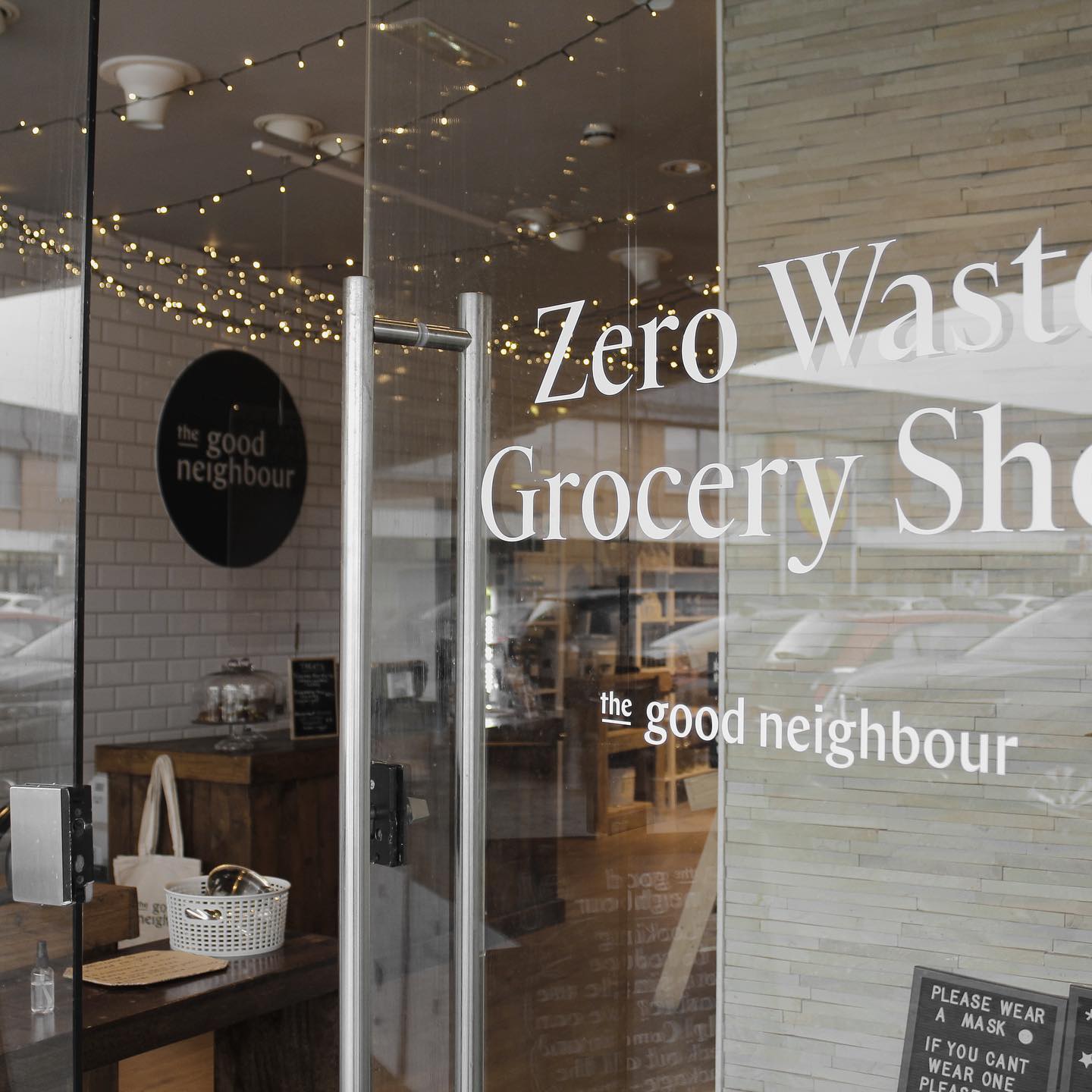
    Zero-waste shop, The Good Neighbour, in Dundrum . Image courtesy of The Good Neighbour

    Waste probably isn’t the first thing that comes to mind when you think of your local grocery store. 

    As you coast through its aisles, fixated on convenience and choice, the harsh reality is easy to forget – our weekly shopping runs are wasteful endeavours.

    The plastic packaging our food comes in is a nasty ecological sore. Thankfully, the solution is easy: come prepared with alternative/reusable packaging options.

    The Good Neighbour in Dundrum is one example of a business that is following the increasingly popular zero-waste model, designed to focus purely on reducing the amount of plastic waste.

    “The concept is simple – bring your own container, and we weigh it in-store and deduct the weight of your container, so you are only charged on whatever food you take home,” says Jess Dollinger, the owner of The Good Neighbour.

    The zero-waste shop initially opened its doors to the public in December 2019, which happened to be just four months before the Covid-19 pandemic hit.

    The interior of The Good Neighbour, with containers of rice and grains on display. Image courtesy of The Good Neighbour

    According to Dollinger, The Good Neighbour was forced to “pivot” in order to deal with the impact of the pandemic. 

    “We didn’t originally offer the option for customers to place orders, but we now offer orders for delivery and collection. Offering that service has really helped the business due to the high volumes of people quarantining,” Dollinger said.

    “We’ve also got a great community of customers who want to make sure the shop thrives, so we’ve been very lucky throughout the pandemic,” she continued.

    The shop offers over 300 bulk goods including grains, fruit and veg, spices, and several cleaning products – all package free.

    “Our mission is to be as organic and plastic-free as possible. At this point, around 60% of our products are organic, and we’re constantly working on increasing our organic offering to customers,” Dollinger stated.

    It’s “crucial for the industry”, says Dollinger, that her shop sells affordable products, as there’s a perception that choosing to live a zero-waste lifestyle is exorbitant for the everyday consumer.

    “I think that we’ll eventually see a zero-waste shop in every area of Dublin”

    Jess Dollinger

    The Good Neighbour works alongside multiple local growers and producers to stock as much Irish produce as possible.

    “Wherever possible we source locally. Unfortunately, a lot of things simply can’t be grown here, but where we can we purchase from local growers and suppliers.

    “We’ll continue to support local farmers and produce, particularly throughout the pandemic,” Dollinger says. In recent years, climate change awareness has increased, and consumer habits have shifted to reflect that.

    In Ireland, some companies are responding to that change with supermarkets taking action to reduce packaging and waste. Vegan and vegetarian sections have increased in size, and a lot of single-use coffee cups are now compostable.

    Now, more and more people are choosing to live a zero-waste lifestyle. 

    Currently, there are eight zero-waste shops open for business in Dublin alone. The majority of these shops opened within the last two years.

    “I stumbled across my first zero-waste [shop] when I was living in the UK. When I returned to Dublin, I noticed that several [zero-waste] shops began popping up across the city,” says Orla Browne, an environmental activist and frequent zero-waste customer.

    “Living a zero-waste lifestyle is becoming more fashionable than ever before”

    Orla Browne

    Although the attitudes towards an eco-friendly lifestyle for many has changed, Ireland still currently produces the highest volume of plastic waste per person in the EU at 57 kilos per capita, which is considerably more than the EU average of 33 kilos per capita.

    “Since returning home, I have noticed a change in attitude towards these issues, but you only must observe the stats to see how far behind we are in comparison to the rest of Europe.

    “To contribute to the greater good, embarking on a zero-waste lifestyle by reducing small amounts of plastic in your household is a start,” Browne added.

    However, Browne feels like we are still far off when it comes to acting on reducing plastic waste.

    “The stats show that Ireland is well behind when it comes to dealing with environmental issues. This is something we as a nation should be wary of.

    “I think people hesitate to go zero-waste because they are afraid that other [zero-waste] advocates will judge them if they don’t fully commit at all times.

    “However, it’s not true. I found encouragement and the will to try harder by surrounding myself with like-minded people,” says Browne.

    The zero-waste movement has arrived and the greater availability of this retail option to all Irish shoppers will allow it to become the norm.

  • Green death: Saving the planet from beyond the grave

    Green death: Saving the planet from beyond the grave

    Glasnevin Cemetery. Photo by James Molloy

    As the population of the world move towards living a greener and more eco-friendly lifestyle, many of the traditions and habits we posses have had to adapt or change in some capacity in order to help us achieve this greener approach to life.

    One such change we can undertake, even after we have left this earth, is to change our attitudes about burial rituals. Eco-burials are a growing phenomenon amongst the population as a cheaper and eco-conscious alternative to traditional methods.

    Eco-burials follow the ethos of sustainability and the use of biodegradable materials, such as willow instead of the traditional varnished wood. Everything takes the environment into account, from the type of casket to the location of the burial.

    Eco-burials are a growing industry in Ireland as people search for a safer, cheaper, and more viable means of burial going into the future. There are currently two companies operating natural burial sites in Ireland – Woodbrook Natural Burial Grounds in Ballinlug East, Co Wexford and Knockma Woodland Burials in Tuam, Co Galway. These burial grounds differ from the traditional graveyard as they are set in living woodlands, with stones used as grave markings instead of imposing headstones.

    “They’re not as scary as the hard-based traditional coffin. They remind people of cradles or Moses baskets”

    Colm McAteer

    Colm McAteer, who owns Green Coffins in Donegal, shared his views on the benefits of eco-friendly funerals, the current trends and how he sees the future of this growing industry.

    “The materials we use are biodegradable, they’re completely natural. Willow grows freely… It’s mainly softwood versus hardwood. It’s using a sustainable resource that’s readily available.”

    He notes that it isn’t a new thing, as materials such as willow were originally used before the introduction of “cheaper materials like chipboard” and veneer, which are now traditionally used in the mass production of coffins but not really sustainable in the long-term.

    A Willow casket pictured above. Photo provided by Colm McAteer

    “A lot of the time people just like the look of them,” he says, “they’re not as scary as the hard-based traditional coffin, there’s more warmth in the material and there’s more warmth in the skill in making them. They often remind people of cradles or Moses baskets.”

    McAteer fully expects the popularity of the eco-friendly coffin to keep growing. 

    “We think it will become the replacement, the norm or the new norm, and every year we get busier. What you do find is if one member of the family chooses that, in general other members do too.”

    Green Coffins produce a number of different styles of coffins using various other materials aside from willow, including water hyacinth, banana leaf, pandanus, golden wicker and corrugated cardboard. Each coffin is made by hand to fit and takes from “three to three and a half days” to produce, according to McAteer.

    He further adds “there’s a complete and utter craft in weaving the casket, to keep the size, to keep the walls straight as they go up, and it’s not something you learn overnight. It’s an old skill that was almost dead here in Ireland.”

    McAteer also opened Ireland’s first natural burial site in 2010, Woodbrook Natural Burial Grounds in Co Wexford. 

    Woodbrook Burial Ground. Photo by Colm McAteer

    “We want to look after our environment and it’s a simple natural burial,” he says. “They’re using you or your place of burial as a conservation tool.”

    “Done right, they also create pockets of biodiversity close to major cities, and they are becoming places for people to reconnect with nature. People do come and spend time there and sit on the benches, they do enjoy the fact that they can be re-immersed in nature,” he tells me.

    The burial ground itself is non-denominational with people of all faiths and walks of life buried here. McAteer also believes that as time goes on, there will be more of these natural burial sites cropping up around the country as an alternative to the traditional graveyard.

    The natural burial grounds in Woodbrook offer a cheaper alternative to a traditional grave plot — the charge is €950 per plot, as opposed to €2,000 to €5,000 for an average plot.

    Another natural burial site is Knockma Woodland Burials in Tuam, run by Donagh Hawtin. According to Hawtin, the benefits of a natural burial ground are that they are “more ecological, they leave less of a carbon footprint, they help with conservation.”

    Knockma Burial Ground. Photo by Donagh Hawtin

    “Unlike a traditional burial ground which is regimented with concrete, headstones and whatever else, this is still a living, breathing and growing environment,” she explains.

    She says there is a trend away from traditional burial sites: “It is an alternative, which is something that surprised us. People are going away from the church; they are going away from tradition. Graveyards are getting full and there is no alternative.”

    “People are going away from the church; they are going away from tradition… Graveyards are getting full and there is no alternative”

    Donagh Hawtin

    “It’s a growing market,” she continues. “We have had a lot of presales. People can buy it straight or they can come and find their plot, there’s no time limit.

    “People like that we are already an established woodland, we haven’t been built up to be a woodland, we’re not regimented.

    “The burial ground is changing, and it is our generation changing tradition and looking at alternatives.  I believe that this is the future, and we are doing our bit for the new way of living and saving our planet.”

    Further afield, Canadian company Bio Urns was established in 1997 by Gerard Moline.

    According to their website, Bio Urns are the “world’s first biodegradable urn designed to turn you into a tree in the after-life. Specially made with two separate capsules, the urn is designed to contain the seed or seedling of your choice which will grow into a tree as a way for a person to be remembered by.”

    The company also opened a natural burial ground in Quebec where people go to plant their bio urns.

    It offers worldwide shipping and the urn costs €180.

    So, whether you choose to be laid to rest in a in a bio-degradable casket, buried in a natural burial ground or become a tree in your afterlife there are plenty of options for those who want to continue their eco-friendly lifestyle and help improve their carbon footprint even after their gone.

  • Podcast: ‘This is way bigger than Covid’: The pandemic’s effect on climate activism

    Podcast: ‘This is way bigger than Covid’: The pandemic’s effect on climate activism

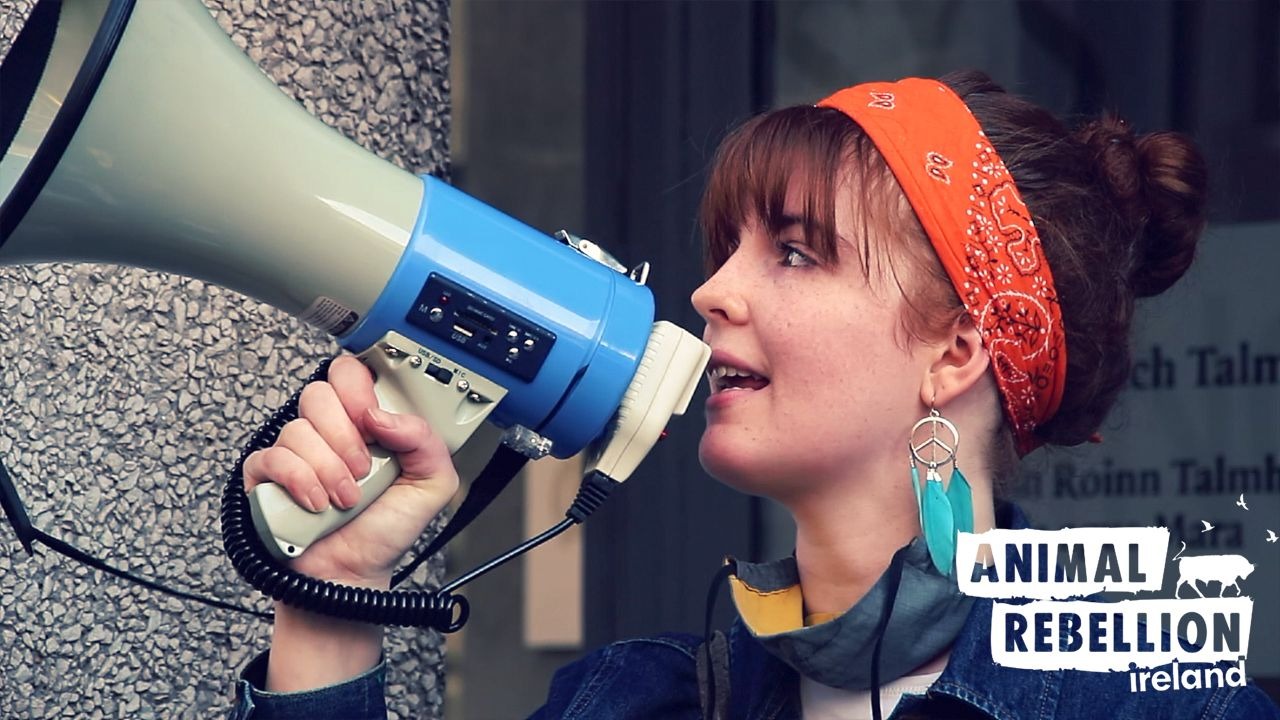
    Ceara Carney protesting at the Department of Agriculture with Animal Rebellion – a subgroup of Extinction Rebellion. Photo courtesy of Animal Rebellion Ireland

    Prior to the pandemic, Extinction Rebellion were one of the biggest groups at the forefront of climate activism, making headlines worldwide. But ongoing lockdowns saw them forced to take a step back and rethink their plans.

    “We are very much on the way back with some new tactics and we can’t wait to get back to the streets in huge numbers again” 

    Ceara Carney

    Actress, podcast host, and activist Ceara Carney wants to make it clear that the group hasn’t gone anywhere.

    “Our main tactic of mass mobilisation was taken away from us,” she explains. “But we’ve had some activists and rebels throughout the pandemic and lockdowns constantly meet to figure out our strategy going forward.

    “We had our People’s Assembly meeting a few weeks ago where there were 116 people on a Zoom call and we came out with some visions of where to go next. We are very much on the way back with some new tactics and we can’t wait to get back to the streets in huge numbers again.”

    Carney attending a protest with Extinction Rebellion and Irish Wildlife Trust to highlight overfishing in Irish waters. Photo courtesy of Ceara Carney

    For the past year, activism hasn’t quite looked like it used to – large scale protests have been replaced with smaller actions and social media posts.

    Last week, two Cork rebels broke Covid restrictions by travelling to Dublin to live stream a graffiti attack on the Department of Foreign Affairs.

    After dousing the building with red paint, the two spray painted phrases such as “no more empty promises” along the exterior.

    The activists explained that the purpose was to highlight the lack of action from the government in response to the global climate crisis.

    Carney portrays a sea goddess at Killiney Bay as part of a campaign to raise awareness for rising sea levels. Photo courtesy of Ceara Carney.

    Following the live stream, many people took to social media to express their disgust at the act of vandalism.

    “People were just really upset that this historical building had been destroyed, and the irony of that just gets to me,” Carney says. 

    “If we don’t change, and the government doesn’t change, that building could be subject to water damage from rising sea levels because Dublin is a coastal city. So if people really cared about that building they would be putting pressure on their government too to act now and fight the climate crisis. Nothing like that will matter if we keep going the way we are going.”

    If you are interested in getting involved with Extinction Rebellion, email welcomexri@protonmail.com

  • Get behind me seitan: Viral TikToker Futurelettuce on his vegan journey and his recipes for success

    Get behind me seitan: Viral TikToker Futurelettuce on his vegan journey and his recipes for success

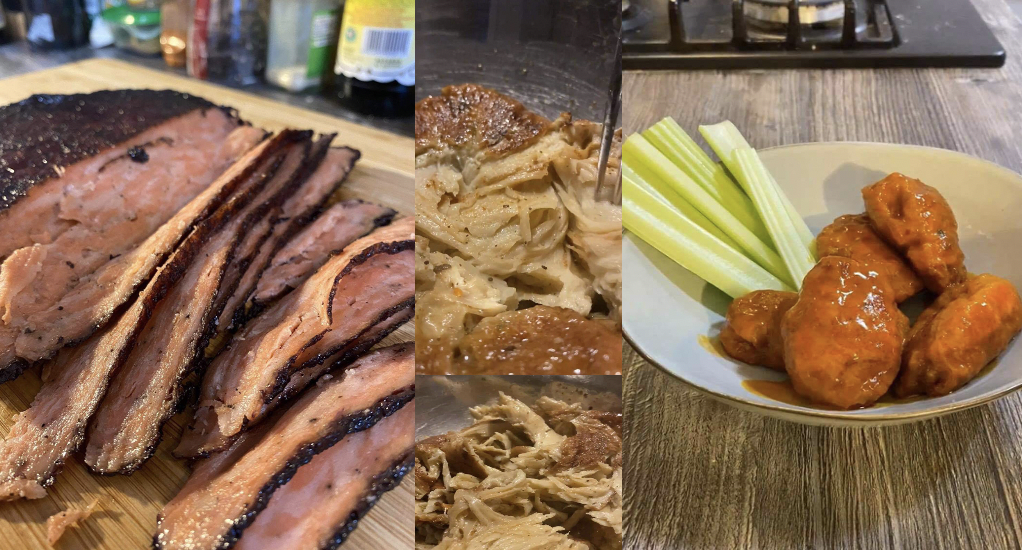
    Futurelettuce creates delicious vegan recipes from chicken wings to washed pastrami. Photo provided by Futurelettuce

    It’s difficult to predict what TikTok trend will be next to go viral – and for an Irish college student who prefers to go by the pseudonym Futurelettuce, it was a surprise when one of his vegan cooking videos joined sea shanties and maid costumes as one of the app’s unexpected crazes.

    “I first became vegan after writing a paper on veganism for a college philosophy class,” Futurelettuce tells me, “I couldn’t argue against it and that stuck with me after the assignment was done.” 

    While it was initially a struggle to adjust to a plant-based diet, Futurelettuce began to enjoy researching nutrition and experimenting with vegan dishes – a particular favourite was the “two-ingredient vegan chicken” that he decided to share to TikTok on 20 February.

    “I think it got popular because people like to be shocked and the unexpected outcome of what began as flour looking like chicken got people to share it around.”

    Futurelettuce

    The video features a step-by-step tutorial on how to make a meat substitute based on the Chinese dish seitan, and became an instant hit on the app – it has since been viewed over 10 million times and gained the Futurelettuce account nearly 70,000 new followers over the course of three weeks. 

    “I first saw it done in a Facebook group and thought I’d give it a try,” Futurelettuce says about the process of his seitan recipe.

    “You make a ball of flour and water, keep kneading it and rest it for a few hours ideally. Then you wash it underwater, and you’ll be left with a lot of starch water. Finally, you can add your seasoning, cook it up and it will resemble something like meat.

    “I think it got popular because people like to be shocked and the unexpected outcome of what began as flour looking like chicken got people to share it around.

    “It was very strange when it began to get popular, especially watching people make reaction videos to it. Watching people watch me is the weirdest feeling for sure,” he continues. 

    The success of the video has since extended its reach beyond the confines of TikTok – Google Trends shows a notable uptick in searches related to seitan starting from the video’s February release. 

    Off the back of his newfound virality, Futurelettuce was asked to make a video on Buzzfeed’s massively popular Tasty Facebook page – where he made sure to acknowledge the East Asian cultural origins of seitan. 

    “When there’s a TikTok trend going around people aren’t going to want to explore the history of the trend, so I felt a bit uncomfortable that I didn’t mention its origins in the original video,” Futurelettuce states. 

    “I do think there is a problem with people taking these ideas and not crediting them, so I felt it was necessary,” he adds.

    “I didn’t want to use the usual talking points, I wanted to let it be known that veganism shouldn’t be restricted to just saving animals”

    Futurelettuce

    “I’ve seen a lot of comments saying I was virtue signaling, but anything right-wingers disagree with they’re going to be outraged, they’re just an attempt to distract from the conversation.”

    An avowed leftist and union organiser when not in the kitchen, Futurelettuce is committed to the idea that veganism must go hand and hand with a wider commitment to social justice and the human rights of marginalised groups.

    “I didn’t want to use the usual talking points, I wanted to let it be known that veganism shouldn’t be restricted to just saving animals,” he says.

    “It’s hypocritical if you’re a vegan and you’re also racist. Intersectional veganism is the way forward.”

    “Both veganism and socialism are grounded in the idea of liberation. One is for the working class, one is for animals. It’s about decommodifying animals and treating them as living things,” he says.

    With EU Green Week just around the corner, our conversation then turns to the environmentalist element of veganism.  

    “There was a UN report a couple of years ago that said eating a plant-based diet is the most effective thing an individual can do to prevent climate change and one of the biggest contributors to Irish CO2 emissions is animal agriculture,” he tells me. 

    So, if you’re looking for a greener meal this week, head over to TikTok and take inspiration from one of Futurelettuce’s creations.

  • Roll out the carpet: Dublin city’s cycle lanes get a scale and polish

    Roll out the carpet: Dublin city’s cycle lanes get a scale and polish

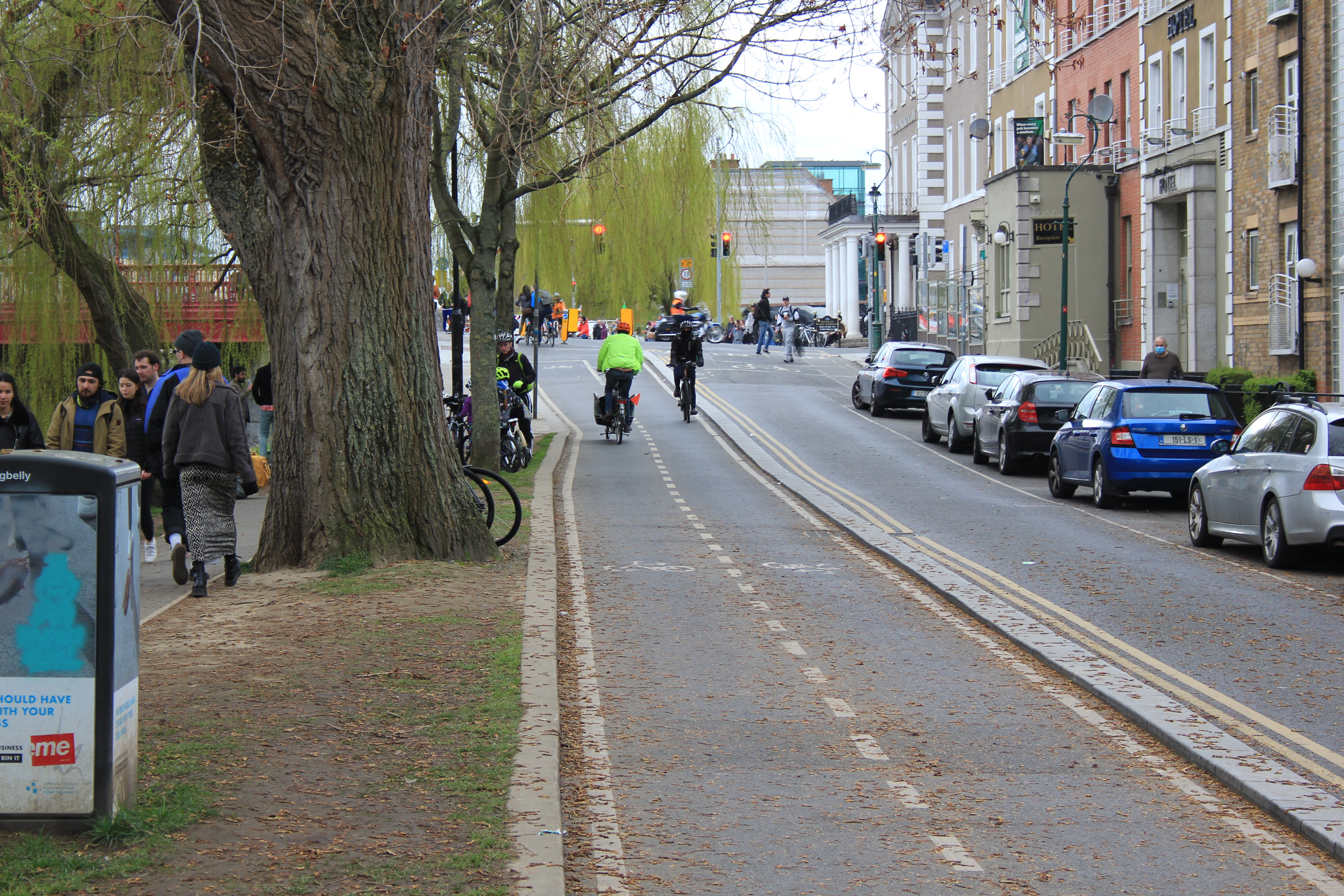
    Double cycle lane along the Grand Canal, photo by Mario Bowden

    Dublin city centre sits still and quiet these days. Traffic is noticeably tamer, with less gridlock traffic at rush-hour. For cyclists, this means less jostling and narrow manoeuvring through buses and cars. A bit of breathing space.

    Certainly there are fewer people cycling in to work too – as people shift to working from home. But the bike is still in-motion. For some it’s a mode of work – takeaway drivers and couriers are still zipping around. For others it’s a form of escapism: people getting out and about in the sunshine, others doing ‘wheelies’.

    Some are opting for the bike in order to avoid public transport too. Indeed, this trend is not unique to the current health crisis – people were encouraged during the 1918 Spanish Flu to get peddling.

    New Cycle Lanes

    With the lack of footfall in the city centre since the first lockdown, space became time. There was time for Dublin City Council (DCC) to implement various new and distinctly designated cycle routes across the city.  

    “I don’t think anyone would say cycling has been well provided for on Dublin city streets”

    Ali Grehan

    Some of the new cycle lanes across the city include the implementation of the the Liffey Cycle Route along the North Quays, contraflow lanes on Nassau Street, and the more recent route up O’Connell Street Upper and North Frederick Street. All of these are provided with bollards and black and white ‘orcas’ to segregate cyclist traffic from cars, buses and trams.

    “The new cycling lanes are still a work in progress,” says Ali Grehan, Dublin City Architect at DCC.

    Grehan continues: “They are much needed. I don’t think anyone would say cycling has been well provided for on Dublin city streets, particularly heavily trafficked ones – so in that sense they are successful in that they’re making necessary improvements.”

    While the quick thinking of DCC has been a positive for the city, it is not without its pitfalls. For instance, the Nassau Street contraflow lane suddenly stops at Dawson Street, forcing cyclists to merge with traffic suddenly – not to mention Luas tracks – at one’s peril, with any false move.

    The implementation of cycle lanes is not exclusive to the city centre either. Griffith Avenue on Dublin’s Northside has seen a fully segregated lane being rolled out across parts of its 4km stretch from Glasnevin to Marino. In May 2020 the Phoenix Park closed off sections of its roads to cars for the summer months – creating more space for people to mill about on their bikes.   

    On the Continent  

    European cities have always been miles ahead of Dublin when it comes to cycling infrastructure. But, we are not alone in terms of cities that took the current opportunity to shift the emphasis to cycling – Paris being the most prominent.

    It’s estimated that Paris’s cycling population grew by 65% in 2020 – significantly decreasing the CO2 emissions normally emitted from traffic.  Paris authorities responded to this increase by constructing more cycle routes, and further expansion of its bike scheme.

    “The problem is, while you can look at Copenhagen or Amsterdam – [which have] great cycling infrastructure – it’s difficult to transpose one city’s approach to another,” Grehan says.

    “Dublin has its own particular physical and cultural context and any initiative has to understand and respect this. It’s a complex issue. An example is Dublinbikes. There was a general expectation among commentators that the system would be vandalised. People were surprised when there was virtually no vandalism and Dublinbikes became very successful, very quickly.”

    The full extent of the success of Dublin’s cycle lanes remains inconclusive as the city remains less active than in normal times, Grehan concedes. But with smarter innovation and progressive steps made by campaign teams and authorities, a change to Dublin’s road culture is being paved.

  • Building greener pastures

    Building greener pastures

    Can we build the green future we need? Image courtesy of SevenStorm via Pexels.com

    Construction and buildings account for 36% of the world’s energy use, 39% of energy related carbon dioxide (CO2) emissions, and 33% of global water use and waste.

    The ever-looming climate crisis means something’s gotta give – Ireland’s construction industry has to change, and it has to make that change affordable to the average person.

    According to Francis Duffy, Green Party TD and spokesperson for housing, most of the homes now built in Ireland are highly-insulated and airtight ‘passive houses’, designed to use external elements like sunshine and shade to maintain a cosy climate and smaller carbon footprint.

    Unfortunately, there is more to truly green construction –  the materials used have carbon footprints all of their own, and that’s where our attention needs to be.

    “The big elephant in the room now is embodied carbon,” says Duffy.

    “When you dig a hole in the ground and take material out of it, whether that’s steel, iron, or cement, it gets transported, processed, manufactured, and transported again to site.

    “Then it lives a life on a site or in a building. It may be replaced or maintained, but at the end of its life, it’s transported again, disposed of, recycled, or upcycled.

    “There’s energy and carbon involved in all of that, which means that a bit of material gains embodied carbon,” Duffy explains.

    “We’re hitting around 900 kilograms per square meter of embodied carbon in our buildings, and an A-rated building is 300 kilograms per square meter,” he tells me.  

    As an architect, Duffy is working on a private project in Dublin with the Irish Green Building Council. The aim is to use materials with low levels of embodied carbon.

    “The big elephant in the room now is embodied carbon”

    Francis Duffy

    The frame of the building will be made from timber which “absorbs CO2 as opposed to spewing it out, which makes it CO2 negative”, says Duffy, who has extensively studied the use of timber as a sustainable material in construction.

    “We’re using recycled bricks and lime mortar to hold them together. That makes the bricks easy to separate at the end of the building’s life, which means they can be used again,” he explains.

    Duffy believes this is the future of building.

    “You’re looking at 80% of a building being designed and constructed with the idea that at the end of its lifespan you can take it apart and re-use a lot of it in another project,” he explains.  

    Globally, efforts are being made to reduce the waste produced by building.

    Cobod (construction of buildings on demand) are a construction technology company in Copenhagen, Denmark, who are pioneering 3D printed housing in Europe.

    “We generate less waste [by 3D printing], because we have more precise numbers on how much material is needed for the building in advance,” says Vytautas Naslenas, a sales and marketing coordinator for Cobod.

    However, Cobod print with concrete which Naslenas admits is not particularly sustainable.

    “There are new solutions and companies are investigating how to make a mixture with a smaller CO2 footprint, but of course that is yet to come,” he says.

    Affordability, speed, and how little waste is produced are the major draws to this method – by automating the process you make it quicker and reduce labour costs.

    “I believe that in 15 years this will be the norm. Looking at how quickly things are moving from our side, it could be even sooner,” says Naslenas.

    The cost of sustainable building is a huge issue – if construction emissions are so significant, as many people as possible need to be able to embrace sustainable construction methods.

    “The housing regulations have improved significantly over the last number of years but they have made building really expensive,” says Michael Canney, chair of the board of Sustainable Projects Ireland.

    “There’s a need to facilitate a more low-cost build without compromising on quality and energy efficiency,” Canney says.

    Canney lives in the Cloughjordan Ecovillage, and Sustainable Projects Ireland work closely with the ecovillage.

    An eco paradise: an aerial view of Cloughjordan Ecovillage. Photograph courtesy of Eoin Campbell JustMultimedia.com

    The ecovillage is 67 acres in total and divided into three parts: high-performance green homes, a community farm, and biodiverse woodlands.

    The houses in the ecovillage are built “using local labour, local materials, recyclable and reclaimed materials” as much as possible, says Canney.

    Cloughjordan is working hard to attract young people who are potentially earning less to their community.

    “We’re in negotiations with a couple of housing associations to take a number of sites and develop them using an affordability model,” Canney explains. “And we’d be offering those at rates that acknowledge the need for affordable housing rather than the maximum yield we could get for them.”

    “We are also looking at co-housing models where a number of people can come together and build a house cooperatively,” he says, explaining that people would choose DIY construction methods that allowed them to build themselves without the cost of employing skilled labour.

    “There’s a need to facilitate a more low-cost build without compromising on quality and energy efficiency”

    Michael Canney

    Canney feels there’s a bigger issue lurking in the shadows here.

    “So many people are really confused about these ideas of embodied carbon, recyclability, and what’s recyclable in real terms,” says Canney.

    “I think people could do with some really clear guidance on this, because we are bombarded with greenwashing from manufacturers.

    “There’s a real obligation on state and semi-state bodies to really inform the public in a very non-biased way about this, so people can really make informed decisions.”

  • Meet the young entrepreneurs using Depop to revolutionise the fashion industry

    Meet the young entrepreneurs using Depop to revolutionise the fashion industry

    Clothes Rack, photo via pixabay

    Fashion has never been more disposable. A quick scroll through the fashion hashtag on Instagram will present you with an endless feed of bloggers’ Shein hauls and Boohoo Ootds.

    Because mass produced clothing is sold at cheap prices, it is often treated as disposable by consumers. It feels like every day there’s a new trend, promoted by the latest influencer, that’s being swept off the rails and destined to spend eternity gathering dust in a wardrobe or decomposing (slowly) in landfill. 

    Keeping up with these trends seems like harmless fun, and it may not be obvious that the clothes we wear are one of the biggest culprits when it comes to harming the planet. Carbon emissions, excessive water consumption and the release of microplastics into the environment are just some of the problems fast fashion presents – not to mention the exploitation of garment workers.

    The good news is that slow fashion is on the rise. With well-known Irish personalities like Roz Purcell and Tara Stewart using their platforms to educate others on the sins of the fast fashion world, as well as to advocate for shopping second-hand, it seems thrifting is now on trend.

    “The fast fashion era arose from the manufacturing of low quality clothes needing to be replaced faster, which in turn created the mindset of clothing being disposable.”

    Blathnaid Devilly

    Depop is at the forefront of the sustainable fashion movement. Experiencing a massive influx  of users since the pandemic hit, it describes itself as “the fashion marketplace app where the next generation comes to discover unique items”.

    The platform is a godsend for young designers and entrepreneurs looking to grow their small companies.

    Caitlín Ní Dochartaigh, owner of Sugar and Spice Vintage, uses Depop to host her store which specialises in 90s and early 00s clothing and accessories.

    “I really love being able to curate the style and aesthetic of my shop to build my brands image. I’m not very tech savvy so it takes away the pressure of maintaining my own website because Depop hosts my shop. The app also has several features to highlight their sellers which from my experience has been beneficial for gaining followers and boosting sales,” she says.

    Ní Dochartaigh, who describes her personal style as a hybrid of a gothic Bratz doll and Sporty Spice, handpicks the majority of her stock from European thrift markets.

    “Sustainable fashion is really important to me,” she says. “Fast fashion has an undoubtedly negative impact on the environment and the people producing our clothes, so sustainable fashion is a great way to avoid these harmful consequences. I also really love finding funky items that you won’t find on the high street. It definitely helps you to cultivate your own distinctive personal style. And it stops clothes from going to landfill which is always a bonus.”

    Blaithnaid Devilly is a Dublin-based stylist who is also reaping the benefits of Depop for her store, Bedelic. A lover of all things 1970s – she tells me she could watch Reeling in the Years on repeat just to see what people wore – Devilly uses Depop to sell handpicked pre-loved garments.

    Bedelic stemmed from her love of fashion’s ability to express one’s personality and a nostalgia for the charity shops she would frequent as a child. Through uploading aesthetically pleasing images and styling unique looks, Devilly garnered attention and built a following on social media.

    “I wanted to create a place where people of any style, size or gender could find what they are looking for and feel comfortable in standing out from the crowd and being whoever they want to be,” says Devilly.

    Devilly admits that her lifelong love for sustainable fashion was less to do with an eco-conscious mindset and more so a desire for an original personal style.

    “It was only when I started to sell online did I realise the importance of someone purchasing second-hand and the positive impact this new obsession could have in fighting climate change.”

    If you’re a fast fashion addict, starting your journey can be a bit daunting. Devilly’s advice is to start with what you already own.

    “Take everything out of your wardrobe and try to style new looks together. It can be quite fun to play dress up while blaring your favourite tunes. Guaranteed you will come up with 10 new looks that you would have bought straight out of a magazine.

    “If you’re not ready to drop fast fashion completely, then I have this rule where if you do buy from brands, buy something that would last over ten years. You see the fast fashion era arose from the manufacturing of low quality clothes needing to be replaced faster, which in turn created the mindset of clothing being disposable.

    “The price of these garments don’t reflect on their true cost. You will certainly have to spend more money on your new garments but the clothing would be better quality and down the line you will purchase less.”

  • Away with the dairy: Going vegan for Green Week

    Away with the dairy: Going vegan for Green Week

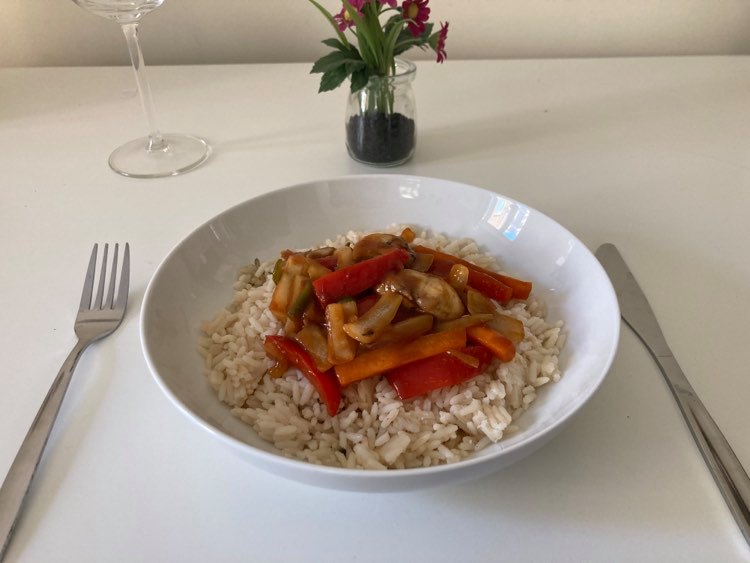
    This vegan stir-fry is so full of flavour, you won’t notice the lack of meat. Photo by Niamh Alexander

    It has become widely accepted that when it comes to reducing our carbon footprint, going vegan is one of the most impactful things we as individuals can do.

    It is a little bit surprising then that just under 1% of the world’s population is vegan.

    Numerous studies have proven that the food production industry is one of the largest contributors to climate change, with livestock production alone contributing around 14.5% of total greenhouse gas emissions (higher even than the transport sector). While some meat industries are more sustainable than others, even the most eco-friendly meat products are more harmful than the ‘worst’ vegetables.

    Further studies have shown that a global reduction in our meat and dairy intake by 2050 would cause a reduction in emissions of over 72%.

    You do not realise how many food products contain dairy until you’re not allowed to eat it

    Faced with facts like these, it’s hard to argue against adopting a vegan diet, especially when our planet is steadily approaching the point of no return. 

    With this in mind, I decided to try and switch to veganism for a (brief) period of time to see how difficult it can be. (Answer: very.)

    I knew going into this challenge that it wouldn’t be cutting out meat that would be the most difficult part, but the lack of dairy.

    I definitely found that it was dairy products like milk and cheese that I missed the most. You do not realise how many food products contain dairy until you’re not allowed to eat it.

    My first challenge was finding something to eat for breakfast that wasn’t just a quick and easy bowl of cereal.

    A quick google search told me that most cereals are not actually vegan because of the added vitamin D that apparently comes from sheep (who knew?), which ruled out my foolproof plan of simply substituting my usual milk with a soy or almond alternative.

    I found that smoothies made with almond milk and dairy-free yoghurt were a good way to start the day, and tasted amazing. I used frozen fruit, which is a good way to reduce food waste by ensuring the fruit doesn’t go bad before you get through it, and it’s cost effective. 

    Lunch was also a bit tricky, as I struggled to come up with something that wasn’t just a sandwich or wrap with a meat filling and copious amounts of cheese. 

    I may have cheated a little bit here by making a large pot of butternut squash soup with enough to last me several days. Served with a slice of soda bread, this is a really simple and filling lunch option. 

    I did switch things up at the end of the challenge and tried out this sweet potato salad recipe, which tasted amazing and was so easy to make.

    Butternut squash soup, photo by Niamh Alexander

    I opted for a vegan burrito instead – and honestly, it was hard to tell the difference

    Surprisingly, dinner was probably the easiest meal to find vegan alternatives for.

    One of my favourites was a vegetable stir-fry with cashew nuts added in as a protein-rich substitute for meat. For the sauce I used this maple syrup and ginger recipe – which tasted just as good as it sounds.

    I definitely found my willpower being tested when my housemate suggested a takeaway towards the end of the week, and I wanted nothing more than a cheesey pizza.  Thankfully, I resisted and opted for a vegan burrito instead – and honestly, it was hard to tell the difference. 

    I am a self-confessed picky eater, so going into this I was unsure if I would be able to stick it out. I found I was putting a lot more thought into what I was eating, which had the knock-on effect of making me eat a lot healthier. 

    I do have a lot of admiration for people who stick to a vegan diet full time – it takes a lot of effort to make sure everything you are eating is definitely vegan, but that is probably something that gets easier over time. 

    I don’t think I had long enough to notice most of the benefits I’ve read about, but I did feel more energised throughout the day – probably because I was making healthier choices (and chocolate had been ruled out).

    While I probably won’t be switching to a full-time vegan diet any time soon, I will definitely be putting more effort into reducing my meat intake and doing what I can to source sustainable products.

  • Boosting biodiversity before it’s too late

    Boosting biodiversity before it’s too late

    Photo via Pixabay

    All over the world, millions of animals and plant species are currently threatened with extinction. This slow erasure of wildlife is down to nothing other than human activity. 

    As populations rise, we scramble to convert undeveloped land into housing estates, shopping centres and schools. These establishments cater solely to our own demands, with a disregard for the basic needs of the species that inhabited there before. 

    Deforestation is a man-made problem that endangers not only the existence of animals but also our own. By removing trees, overhunting and extracting water, we are contributing to monoculture and ultimately the global rise in temperatures. Without biodiversity, our ability to eat, breathe and survive is severely jeopardised. 

    One way to preserve biodiversity is to get planting. We have all been made readily aware that trees emit oxygen and absorb our carbon dioxide, so a simple solution would be to plant more of them.

    As tempting as it may be to grow a giant sequoia in your back garden, you might not have the space. That’s where Ecosia comes in handy. It is a Berlin-based search engine company that uses its profits from placing advertising in users’ searches to plant trees internationally. 

    One of the goals of the European Union’s biodiversity strategy is to plant 3 billion trees by 2030. While Ecosia’s numbers are nowhere near the billion range, it claims to have planted 122 million trees globally, with 15 million active users. 

    The company says it does not track its search users. “We don’t store your searches permanently, and don’t create personal profiles of you based on your search history. Nor do we sell your data to advertisers. Moreover, we protect your searches from potential eavesdroppers with a securely encrypted connection.”

    Ecosia Logo

    Ecosia issues regular reports on how it spends profits and discusses future projects and plans on its blog, site and podcast.

    Down below the trees, bees play an important role in maintaining the equilibrium of our planet. They are in rapid decline worldwide because of human interference. Bees, as well as other woodland creatures, face habitat loss because of pesticide usage, drought, air pollution and climate change. Without bees, people would lose their farming jobs, food groups and other plants. 

    An Irish company, Beebombs, has come up with a way to encourage bee activity. Beebombs are small wildflower seed balls that can be thrown onto patches of land. Once the flowers have sprouted, they should invite bees and other wildlife. One of the handiest things about the product is that you don’t need to have a green thumb. “Once scattered, you don’t need to water or tend your Beebombs,” the instructions say.

    Another way to protect our ecosystem is by rewilding. Rewilding is all about handing the reins back over to mother nature. 

    One notable case occurred in Yellowstone National Park in the United States.

    In the 1930s, the park got rid of all of the wolves, which inadvertently led to an uncontrollable rise in cervids (i.e. deer), a lack of foliage, and erosion on its river banks. The park service re-stabilised the park’s ecosystem by reintroducing wolves in the late 1990s. 

    In Devon, England, wild beavers were successfully brought in – after a five year trial – to inhabit the east of the county. The trial was so successful that there have been reports of possibly bringing in other animals, such as lynx, boar and wolves.

    “We are on the last bus, but if we all got together and acted now and governments followed, then we still have a chance”

    Randall Plunkett

    Ireland may not be getting wolves anytime soon, but there are some who are making strides in preserving biodiversity.

    Nephin Beg Range in north county Mayo is an 8,000 hectare wilderness area that has been allocated for reforestation, as well as habitat restoration. The motivation behind Nephin Beg is to allow nature’s flow to take over from human intervention so that the environment can thrive. 

    There has also been a wave of farmers who have converted their farms to nature conservatories, in order to improve and protect our decaying ecosystem. 

    In an interview about rewilding, farmer and aristocrat Randal Plunkett told the Irish Times: “we are already on the last bus, but if we all got together and acted now and governments followed, then we still have a chance.”

    Other ways we can prevent the loss of biodiversity are by recycling correctly, reducing our carbon footprints by driving electric, walking or cycling and by going package and plastic free when doing the weekly shop. 

    Small changes over time can make a difference – but how much time do we have left?