Tag: homeless

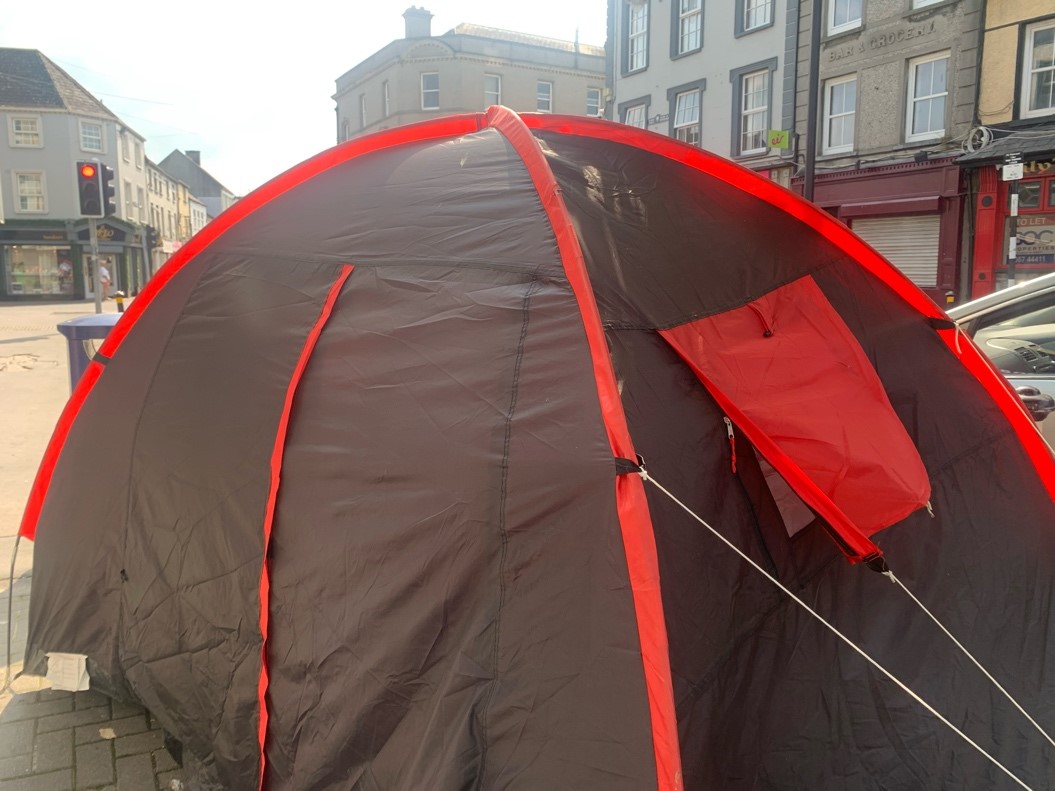
  • A homeless man has been reduced to living in a tent in the town of Nenagh for the past two years 

    A homeless man has been reduced to living in a tent in the town of Nenagh for the past two years 

    By Jason Quigley  

    The plight of homelessness has been brought glaringly home to the people of Nenagh with a destitute man living in a tent on the town’s main street for two years. 

    The man’s tent located on Pearse Street Nenagh. 

    Photo: Jason Quigley 

    The man, in his early 50’s, who agreed to speak under the condition of anonymity, said that he has no hope left and will eventually end up dying on the street. 

    The man, originally from Ballinasloe in Co Galway, became homeless over ten years ago and arrived in Nenagh in 2022. He has been sleeping rough ever since, alongside his small dog, in a tent located in the town centre. 

    “I’ve been in emergency accommodation, it’s all overcrowded and I need somewhere safe,” he said. 

    “At my age, I don’t want to be dumped into homeless accommodation where there could be drugs and fights – I’m not going to be associated with that behaviour.” 

    The man has claimed that Tipperary County Council told him to move the tent off the street. However, he says he’s staying put. “I’m going to get a mattress and lay outside the front door of the council building until I’m listened to.  

    “There’s a few others in the same situation like myself,” he said. 

    He stated that the town of Ballinasloe is not safe for homeless people and he feels “safer in Nenagh”. The man said, “I don’t sleep at nighttime and go to bed at five in morning when everyone is waking up and the birds start whistling. 

    “I haven’t experienced any hassle from anyone, no one really bothers me.” 

    I’ve no hope anymore, I’ve been doing this for ten years and can’t get anywhere. You give up believing when you’re in my situation, I won’t keep my hopes up,” he said. 

    Local homelessness volunteer, Maura Finn, believes more needs to be done to help this “vulnerable man” and people should not be worried about the man’s dog who is “everything to him.” 

    “They won’t allow him to enter any sort of accommodation with his dog. The dog is his only companion and protects him at night on the street,” she said.  

    Nenagh Sinn Féin representative Damian O’ Donoghue has described the alarming increase of homelessness in Co Tipperary as a “worrying and dire situation”. 

    Mr O Donoghue believes that the crisis needs to be treated as a “national emergency” and that the situation is “worse than it’s ever been”. He went on to say that the noticeable sightings of tents across Nenagh and North Tipperary was unacceptable and grim. 

    “The biggest problem with this situation over the last few months has been eviction notices from landlords,” said Mr O Donoghue. 

    “People are then put into a situation where they can’t find alternative accommodation in their area. Couples who are on relatively good incomes are struggling to find anything – this is placing many people into stressful and extremely difficult situations.” 

    Mr O Donoghue added: “I’m dealing with up to ten families now who have an eviction notice hanging over their heads, other councillors and politicians in the region are dealing with much higher numbers. 

    There’s also many people who are too afraid to come forward to seek emergency accommodation services in the county.” 

    He said that, ” we haven’t been building houses properly for the last few decades – which is a systematic failure from the government.” 

    However, Mr O Donoghue believes that Tipperary County Council aren’t receiving enough state funding from the government. “There’s a number of vacant council homes in Borrisokane and the surrounding areas which are currently being redeveloped, but there needs to be a faster approach from the council to these renovations. 

    “There’s so many derelict houses in every town in Tipperary and they all need to be urgently identified and tackled by the council. The cost of living is making it harder for couples to put down a deposit for a house, which then causes a massive domino effect on the situation. The homeless crisis in the area will unfortunately continue to degrade for another while longer. But we need houses built urgently and we need them built now,” Mr O Donoghue concluded. 

  • Can’t pay? Move away

    Can’t pay? Move away

    By Leigha O Reilly Hughes

    With homelessness, young people leaving the country as they are unable to afford rent, families living in hotels and the lack of housing for those who need it, the housing crisis is one of the most prevalent and pressing issues that Ireland is facing. 

    There are many factors that make up the cause of the housing crisis in Ireland, and the government is one of the biggest problems. The government has a large share of the responsibility due to the fact that there have been years of housing issues in the country with not much progress to solve. 

    It is also the result of allowing Irish property to be placed in the hands of profit-seeking corporations rather than those seeking to provide housing for those who need it.

    Homelessness

    One of the biggest problems the housing crisis has caused is the number of homeless people in Ireland. 

    There are many causes to homelessness in Ireland, such as personal reasons like mental health and abusive relationships. However, the biggest cause of homelessness in Ireland is due to the lack of affordable housing available.  

    The Department of Housing releases monthly data that captures details of individuals in state funded emergency accommodations. 

    The monthly homelessness report of August 20201 showed that 6,023 homeless adults entered emergency accommodation. 4,220 of those individuals were from dublin. The number of homeless males made up 3,949 of this number, which is 66%. Females made up 2,074, which is 34%.

    Source: Department of Housing 

    There were a total of 953 families homeless in Ireland in August 2021. 723 of these families were from Dublin. This resulted in 2,189 total child dependents. 

    Ballymun, which is an outer city suburb of Dublin, is hit hard with homelessness. 

    “20% of Dublin’s homeless are from Ballymun,” says Dean Scurry, a homelessness activist from the Ballymun area. 

    Abandoned homes in Ballymun. Poster reads “this house could be a home”

    “With that there are about 90 vacant homes in Ballymun that could be used for families instead of leaving them in hotels for other organisations to make money,” says Scurry. 

    Abandoned homes in Ballymun

    The impact on young people

    The housing crisis has caused serious problems for the younger generation of Ireland. Younger people between the ages of 20-30 are paying higher amounts on housing for smaller and rented accommodation. 

    Ireland also has one of the highest rental costs in Europe. 

    According to the Irish Times, the average monthly price for rent stood at up to 1,477, while the average is now 2,035 euro. This is 100% up from the 742 euro a month that was seen in 2011.

    These high rent prices have resulted in young people living at home, unable to afford rent and save for mortgages. It has also caused young people to emigrate to different countries as affording rent is out of the question. 

    Eva Tiernan, 22 from Dublin who has a Level 8 in science degree from UCD, has had to emigrate to Whistler Canada for the foreseeable future. 

    “The renting prices in Dublin are unrealistic. I would love to be able to move out in my city surrounded by the people I love, but I can’t,” says Tiernan.

    “I feel like my only option is to move to another country so I can live a life where I’m not solely working to pay rent. I want to eventually come back to Dublin, but how will I ever be able to rent and save for a mortgage there?”

    In the last four years, 308,000 people have left Ireland – 125,000 of those aged between 15 and 24 years.

    The government’s new “housing for all” strategy intends to address the housing issue by expanding supply, promising to build 33,000 homes per year by 2030, a level of residential building not seen since before the financial crisis.

    A decade of escalating costs and severe undersupply has created a divide in Irish politics, isolating major parties from a growing number of young voters.

    When the Budget of 2022 was released, people were hopeful that the government would provide a solution to help put an end to the growing problem. However, the Government failed to commit to a target of 20% of all housing stock to be social housing, with an annual capital envelope of €3.3bn for social housing. The allocation of €1.7bn for a social housing build of 9,000 units and €224m for 4,100 affordable units in 2022 needs to be increased substantially

    If rent costs are not lowered and more affordable housing isn’t being built for those who need it, homelessness and emigration of Irish people will continue to rise. 

  • Warm For Winter – The man behind the campaign

    Warm For Winter – The man behind the campaign

    By Pádraic Daly

    Currently, there are 10,514 homeless people in Ireland, according to Focus Ireland. They put the official number of those sleeping on Dublin’s streets in November as 92. Ireland’s homeless crisis has been getting worse; in September 2019, 9,698 people were homeless. Just a year later, this number had increased by almost eight per cent.

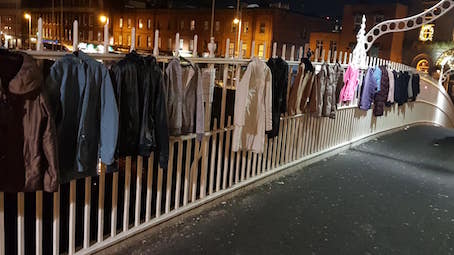
    One man who decided to take action is Patrick Fryers. Patrick set up Warm For Winter in December of last year, an initiative for leaving warm, winter clothing in public places for homeless people to take and wear.

    Speaking to TheCity.ie, Patrick said: “I was halfway through my first year of college and had my eyes opened to how serious homelessness is in Dublin. I came across a picture on social media where people in another country had tied warm jackets around trees for the homeless. Straight away I knew we could do that here.

    “I contacted friends and family and asked for their old winter jackets. I then chose Connolly station as my drop off location as it was sheltered under the bridge. After my first drop off, I posted it on social media and received huge feedback and support. So, with this I contacted the local Supervalu in Clones and we arranged a collection point in the shop. I had a continuous supply of jackets and was able to carry out three drops a week.”

    Patrick explained: “I provide assistance for the homeless by making sure that all and everyone can avail of a warm jacket, hat or scarf when in need. I put them in a public place so that people can take them and still hold their dignity, I hoped it could be done without any stigma attached.

    “The homeless figures have risen year on year, including a huge number of children and let’s not forget the hidden homeless. We need to be aware of the huge effects of homelessness including people’s mental health – especially that of the children.”

    This year, Patrick’s campaign placed jackets on the Ha’penny Bridge, in the centre of Dublin, as it was much more visible to the public. The campaign’s hashtag, #warmforwinter currently has hundreds of posts on twitter. On the 6 December, Dublin City Council (DCC) went about taking down the jackets Patrick’s campaign had left on the Bridge.

    Source: @NaomiOhReally Twitter

    “Last year I put out roughly 150 coats under Connolly Bridge and there was no objection or response from DCC. Perhaps as the Ha’penny bridge is in the heart of Dublin and is a hot spot for tourists, this may be why the DCC removed the coats.

    “To date, they have made no effort to contact me and have not stated where they have put the jackets. They say they have been donated to charity but have not specified which charity, therefore we really do not know whether this has indeed happened. People donated these clothes in good faith, wanting to help those in need.”

    In a statement to TheCity.ie, Dublin City Council said: “The decision was made, based on health and safety concerns, in order to avoid obstruction and congestion occurring along a key pedestrian artery, crossing the river Liffey.  The items of clothing will be redistributed, to those in need through Homeless Services. 

    “Dublin City Council recognises the well-intentioned call to action, to which the public responded.  It is the council’s duty to protect the public and prevent accidents from occurring on this footbridge, through any restrictions in pedestrian flow, particularly at this time of year when thousands of people use this bridge on a daily basis.”

    DCC also stated they are “very open to coming to an alternative arrangement, recognising the spirit of giving and generosity at this time of year”, but Patrick has not heard anything from them in regard to coming to an arrangement.

    Despite the reaction from DCC, Patrick is hopeful for the future of Warm For Winter: “This small campaign seems to have captured the imagination of the public. People have responded so generously and kind-heartedly. I have been contacted by concerned citizens, worldwide, hoping to replicate this initiative.”

  • Simon Community: Over a quarter increase in demand for homelessness services

    Simon Community: Over a quarter increase in demand for homelessness services

    By Marc Morrison

    The Simon Community has experienced a 26% increase in demand for their services in just one year, according to their annual report published on Thursday 5 December 2019.

    The report stated a total of 16.776 people used Simon Community services in 2018, including 2,834 families with 5,331 children, that’s an increase from 13,304 people in 2017.

    Wayne Stanley, National Spokesperson for the Simon Community said: “These numbers show that this homelessness crisis is continuing to impact on the lives of many people.”

    The report also stated that the charity supported 5,263 people with housing and 1,738 people with emergency accommodation.

    “16.776 people used Simon Community services in 2018, including 2,834 families”

    “Our communities ensure that people are not forgotten or left behind in this homelessness and housing crisis,” Mr. Stanley said.

    This report comes as the latest homeless figures for October were published this week which saw 10,514 people living in emergency accommodation, which is an increase of almost 800 people compared to October last year.

    In a statement, Minister for Housing Eoghan Murphy said: “The number of people in emergency accommodation is unacceptably high and we must continue to implement every necessary support, whilst also driving the continuing increase in the supply of new homes.”

    This week Minister Murphy survived a no-confidence motion put forward by the Social Democrats by a margin of 56 votes to 53.

  • In her words: from homeless to housed

    In her words: from homeless to housed

    By Robert Geoghegan

    This article consists of both written and spoken word. *Jane’s name has been changed to protect her privacy.

    You could be forgiven if you thought that Dublin city today almost embodies the opening paragraph from Charles Dickens’ book A Tale of Two Cities. Depending on who you talk to, we are nearing the best of times, and again you could ask someone else and they might tell you it is the worst of times.

    *Jane

    Ireland has been in the midst of a housing and rental crisis over the last number of years and consequently, there has been an increase, year-on-year, of people finding themselves homeless.  The preconceived notion that all homeless people are either drug addicts or alcoholics, is a notion that should have been challenged a long time ago.  We now know, or at least we should know, that homelessness could happen to anyone.  The current figures say that a total of 10,275 individuals are in emergency accommodation with nearly 1,000 of them being children. Steadily, more people are finding themselves couch surfing, moving back into their parental home or on the brink of poverty just to pay the rent. 

    This is the story of a young woman called Jane* who found herself through a series of unfortunate circumstances that led to her becoming homeless. For Jane, like most people, her adult life began after she opened her Leaving Cert results. Unfortunately, those results were not what Jane was hoping for. Looking for results to anchor her in the age of wisdom, instead they anchored her in an age of young foolishness, tripping up Jane’s dreams of going to college.

    Moving back into your parents’ home is a thought some might consider.  For many there is a sense of shame moving back, for Jane moving back was the only option.  For a while, everything was back on track and being at home offered stability for Jane and her son if only momentarily.

    The spring of hope, for Jane, turned into the winter of despair. Leaving her mother’s house with nothing but a bag of essentials, having left her son with his father, Jane set out to find somewhere to stay for the night.  What do you do? Where do you go? People say school never prepares you for real life, how to pay taxes or balance a budget. School certainly doesn’t tell you what to do when you find yourself in the precarious situation that is homelessness. Jane found herself ringing her local county council who in turn gave her a free phone number to ring.

    When you ring the number, you are greeted with an automated service. You must wait on the phone as numbers count down to zero. For this, you need a fully charged phone or a phone at all for that matter. You then wait until it counts all the way down to 1 and if you are lucky, you’ll have a bed for the night. Most people above the number 50 usually don’t receive one. Upon finding herself lucky enough to get a bed for the night, the reality of Jane’s situation set in.

    Incredulously for Jane, the people staying at the shelter had jobs. They were regular people in difficult circumstances. People you wouldn’t take a second glance at, people you walk beside on the way to work or even work with.

    All throughout her homeless ordeal, Jane was trying to complete a degree course to become a secondary school teacher. Jane found her grades slipping and felt a sense of shame while on her teaching placement; teaching the youth of tomorrow how to best lead their lives, Jane couldn’t help feeling like a fraud and ashamed at finding herself homeless. The emotional strain became too difficult as she juggled being homeless, a single mom away from her child, and a student; so, she decided to defer.

    Things began looking up for Jane when her Housing Assistance Payment (HAP) was accepted by a landlord. HAP is a form of social housing support for people who have long-term housing needs. With this new form of security things began to turn around for Jane.

    She considers herself one of the lucky ones as she managed to transition from being homeless to a private rental accommodation and in the end, managed to finish her degree.

    But the threat of homelessness remains a very real threat for Jane. With the continued rental costs spiralling out of control, who knows how long the best of times will last.

  • 2800% increase in number of emergency beds

    2800% increase in number of emergency beds

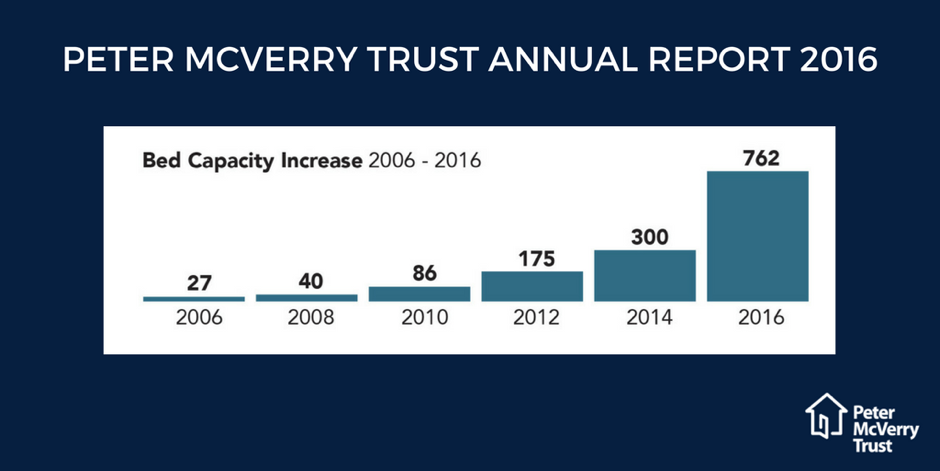
    Peter McVerry Trust (PMVT) annual report has revealed an increase of 2,800% in the number of beds it has provided in emergency accommodation in the last decade.

    The figures released in the latest annual report by the national housing and homeless charity revealed that their bed capacity has seen a twenty-eight fold increase in the past ten years.

    “We’ve been responding to a deepening crisis for the past five years and each year, as the number of people in homelessness has grown higher, it has become much more difficult to respond as resources are stretched ever further,” said Pat Doyle, CEO of Peter McVerry Trust.

    PMV2
    Source: @PMVTrust

    “We have said to government all along that the solution has to be a housing led one yet we find ourselves constantly being asked to deliver greater levels of emergency accommodation,” said Mr. Doyle.

    Mr. Doyle also said that this is “frustrating” because “emergency accommodation is more expensive and less effective than other models such as Housing First. Yet Housing First receives less than one percent of the national homeless budget each year in Ireland.”

    The report also found that there was a sixteen percent increase in the number of people in housing supported by the trust.

    The trust said the government should “switch its funding to more effective forms of responding to homelessness, such as Housing First rather than continue to rely more and more [on] emergency accommodation.”

    Speaking at the launch of the report at the Croke Park Conference Centre, Minister for Housing, Planning and Local Government, Eoghan Murphy, said the Housing First model “almost seems obvious as a solution.”

    The Minister however said “that wasn’t the case when it was first introduced, and it has needed its own pioneers here in Ireland, which it has in the McVerry Trust.”

    PMV3
    Source: @PMVTrust

    The Housing First model is based on providing both housing and intensive case management which aims to end rough sleeping by helping people with access to housing and support for health or social needs so they can live independently in a community.

    In late 2017, Peter McVerry Trust signed an international partnership with the Pathways Housing First Institute. The organisation is headed up by Dr Sam Tsemberis, the founder of the Housing First movement.

    Minister Murphy said he had recently met with Dr Tsemberis to discuss the Housing First model and its success in other countries. “I have read a great deal about it, and indeed it was probably the first thing that Pat and Fr Peter raised with me when we met in my first week on the job,” said Minister Murphy.

    The minister also thanked Father McVerry, the trust’s many employees and CEO Pat Doyle for their hard work with the charity.

    “We are dealing with a crisis in homelessness – a crisis which has a number of different fronts, which must be tackled simultaneously,” said Minister Murphy.

    He also announced that a Director of Housing First will be put in place by the Dublin Region Homeless Executive shortly.

    The Minister added: “The Rebuilding Ireland target is to triple housing first in Dublin to 300 – this is being vigorously pursued. It of course requires the building of more single accommodation by local authorities and Housing bodies.”

    The report also found that 1,208 people accessed the charity’s prevention services in 2016. Some of the prevention services include the Information and Access Centre, the Homeless Youth Cafe and the Streets to Home support service.

    By Keeva Tyrell


  • Invisibility on the streets of Dublin

    Click on any image to view as a slideshow…

    By Maira De Gois

  • Do they know its Christmas time at all?

    Do they know its Christmas time at all?

    With homelessness being a big issue in the media in recent weeks, TheCity.ie’s Leah Louise King went on a soup run in Dublin’s City Centre to get a first-hand view of how bad the problem is.

    When homeless man Jonathan Corrie passed away this month just metres from Dáil Éireann, it really hit home with the public who realised that something needed to be done about this ongoing problem.

    Within days, Minister for the Environment Alan Kelly pledged that the Government would supply 220 more emergency spaces to accommodate people sleeping rough, while Focus Ireland announced they would be providing 31 additional beds for homeless people, in a building just off Thomas Street.

    However, this emergency accommodation is likely to only be available until March, and is not a long term solution to the problem.

    I went along on a soup run on Tuesday night with Teach Mhuire, a transition house for males who remain drug and alcohol free.

    All of the volunteers met at Teach Mhuire’s drop-in centre on Gardiner Street, where we were split into groups of six or seven people to cover various parts of the city.

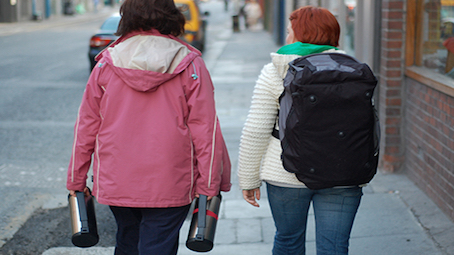
    Each group brought flasks of hot water, a box which contained sandwiches, chocolate, bananas, soup and tea bags, and a bag with socks and gloves.

    I went along with a group of students who volunteer with Trinity Vincent De Paul Society who help with the soup run every week.

    Doing the soup run was a real eye opener, and it allowed me to see homeless people in a different light.

    On a normal day, walking through the streets of Dublin, you wouldn’t notice very many homeless people, but when you’re out at night looking for them, that’s when you notice how bad the problem is.

    Most people, including myself, tend to paint homeless people with the same brush, assuming that they all want the same thing; money to feed their habit. But doing the soup run showed me that they are all so grateful for something as small as a cup of tea, a sandwich and a pair of gloves to keep their hands warm.

    One man in particular who caught my attention was sitting just off South William Street, with his head down, and when we asked if he wanted tea or soup he refused as he had gotten tea off so many different people that night, but thanked us anyway.

    What struck me the most is that he told us that some man approached him earlier that night and gave him a gift, said ‘Happy Christmas’ and walked off, and you could see how happy that made him.

    It was freezing cold that night, and doing the soup run in that weather really made me understand a little bit more how the homeless feel on a daily basis.

    Before the soup run, I spoke to Mary Dalgarno, who has volunteered for Teach Mhuire for twelve years, and she told me that some people choose to stay on the streets at night because they are afraid to go into hostels.

    “Some of the hostels are quite dangerous,” she said, “I brought a guy to a particular hostel a few years ago, when I saw him during a Friday night street run, and no joke there were needles everywhere.”

    “The following morning I rang him to see how he got on. He asked if we had any runners to bring him in as his got stolen throughout the night. When I went in to see him, his eyes were black and blue. He had been beaten up”.

    Mary added that when doing the soup run, there are some people who just want someone to talk to.

    “I have met people on the streets, it could be eleven o’clock at night and they would tell me that I was the first person who has said hello to them all day, because they stay with their heads down all day. It’s sad. A lot of them are hurting very badly from something that has happened in their lives. If they want to talk about it, I will listen, if they don’t, I will respect that.”

    I also spoke to another volunteer called Alex, who is a recovering addict and was once homeless. He told me about his struggles on the street:

    “It’s very hard to look back and see how it all happened,” he said, “for me, the more I drank and took drugs, the more disorientated my thinking became and I began thinking that I was better off on the streets. I didn’t know what else to do. You become so paranoid and eventually get locked up.”

    “When I first got kicked out of my own home, I thought it was my road to freedom, but when I look back now, I only see the harm I done to myself and others.”

    Alex told me how he was abandoned as a child and he used that as an excuse for his behaviour. Unfortunately, the families get the worst of it, because an addict will almost always blame their mother or father, brother or sister for the way they are.

    Despite attempts to become clean, Alex start using again when his wife and daughter passed away, but he is now clean and off the streets four years.

    “On a psychological level I had become very sick mentally, because I hated myself for feeling I had to live the way I did,” he said, “It’s very hard to come back from all that, and I’m blessed that I did, and it’s only through an awful lot of help.”

    “To stay off the streets these days, you have to face up to everything, which means staying away from certain people. Your attitude plays a big part, you need to be thankful for not being out there anymore. I had to learn to be patient,” Alex added.

    “I have been off the streets nearly four years now,” said Alex, “being accepted by people now means a lot to me. They don’t see me in a drunken state any more.”

    “There is hope for everybody, regardless of how low down they are,” he added.