
Tag: housing crisis

  • The main concerns of young Irish in today’s hectic world 

    The main concerns of young Irish in today’s hectic world 

    A new survey shows that Ireland faces several challenges and major international problems, which make it hard for young people to grow up with confidence and ease when looking towards the future.  

    According to the most recent Central Statistics Office (CSO) “Growing Up in Ireland” survey, people aged 25 are mostly concerned about housing and poverty, with domestic issues being the most impactful. 

    Their concern is understandable. This is not only a policy issue but also a real and ongoing challenge. Many people in Ireland are aware of it through their own experience, or through family members and friends who are facing housing difficulties. 

    New stories emerge every week of students commuting long distances, couples in their 30s trapped in shared flats, or young adults who simply cannot afford to move out from their parents.  

    In total, over ten thousand people were officially homeless in Ireland in 2022, and more than 7,200 of them were in Dublin – a city rapidly becoming unliveable for many.   

    Although poverty and housing instability often come hand in hand, one of the main issues facing Irish families of all backgrounds is finding safe, reasonably priced homes. According to the latest government statistics, as of December 2024, more than 2,000 families in Ireland were residing in emergency housing. 

    This has a huge impact on children, as homelessness affects every aspect of their lives from infancy to young adulthood. Temple Street Hospital research shows that homelessness has a negative influence on a child’s physical, emotional, cognitive, and social development. 

    Even though the number of homeless people for young adults is not the highest out of the age groups, it is still a significant number, despite Ireland having one of Europe’s lowest youth unemployment rates (ages 15-24). 

    Ireland’s youth unemployment rate appears to be encouraging. Compared to several other EU member states, including Spain and Greece, where youth unemployment still surpasses 25%, the Irish percentage is far lower at only 12% of those aged 15-24 being unemployed or out of education. 

    But having a job does not guarantee housing access. Many young Irish workers are underemployed, working part-time, on zero-hour contracts, short term or temporary employment, and sometimes without any benefits or security being offered with the contract.  

    New data from the CSO shows that 18% of 25-year-olds went back to their parents’ house after attempting to live on their own, while 43% have never left. This indicates that by their mid-twenties, over 60% of young adults remain in the family home. Many of whom do so out of necessity rather than choice.  

    The numbers show a generation trapped by rising rents, stagnating incomes, and a property market that continues to price everyone out of the market but the wealthiest. While Ireland has one of Europe’s fastest-growing economies, many of its younger residents and workers are missing out on that wealth.  

    Having a stable place to live is one of the basic prerequisites for being able to engage as a full member of society and build your own independence, future and family. Yet it has become a privilege that is denied for so many young people in Ireland.  

    High pricing, a lack of availability, and low-quality housing are causing stress and worry, forcing thousands of young people to go abroad, including those educated and certified to become much-needed teachers and healthcare workers.  

    Without continuous and engaged government intervention, we risk allowing another generation to grow up not finding in Ireland the security and support they need to thrive.  

  • Students in Ireland Struggling with Rising Rent and Limited Accommodation 

    Students in Ireland Struggling with Rising Rent and Limited Accommodation 

    By Jamie Ryan 

    Yugo Student Accommodation – Photo Credit: Jamie Ryan 

    The student accommodation crisis in Ireland has been an on-going issue for the past few years. 

    Every year, a new batch of students from across Ireland are accepted into universities, in which it is not an option for them to commute – along with returning students who are also actively seeking out accommodation for their upcoming academic year.  

    Kerry Ann-Darcy, 22, a recent graduate of Maynooth University, but originally from Dundalk in Louth, struggled each year during her time in university to seek accommodation.  

    “It’s not easy to find student accommodation in general, especially when there is a ‘first come, first serve’ general booking forum for on-campus accommodation,” Darcy explained.  

    “The university was not helpful and suggested that alternative accommodation could be found on a website called ‘Student Pad’ but that was it. But on Student Pad, the landlords are extremely picky with terms such as gender specific, academic year specific, course specific, degree specific and so on. 

    “Even once I did get accommodation, there were issues with it. My landlord had a table and chair for us in the dining room at the house viewing but had it removed for when I moved in and he told me that I ‘was imagining that there had been one there’. 

    Yugo Student Accommodation – Photo Credit: Jamie Ryan 

    “He complained and gave out to me because we had access to a bedroom, bathroom and kitchen – although that’s what I was paying him for but that’s the bare minimum. In third year, my landlady said that I had to be finished in the kitchen before 6pm but some of my classes only finished at that time,” Darcy added. 

    Back in 2022, the Minister for Further and Higher Education at the time, Simon Harris, made calls to homeowners living nearby to universities to rent out any spare rooms that they may have in their house to students – as a result of the severe lack of student accommodation to supply the high demands.  

    This alternative, however, does not necessarily end up costing students less as research carried out by the USI (Union of Students in Ireland) in February found that students are paying an average of €660 across the country to live in digs, with just 43% of those students given full access to the room, seven days per week. 

    This same study also found that of those surveyed, 59% said that they chose to live in digs as a result of being unable to find an alternative.  

    Antrim native Caitlin Procter, 19, was unable to attend university this year due to the lack of student accommodation available.  

    “After being accepted into multiple courses, I wasn’t even able to accept any of them because I couldn’t find anywhere to live,” she explained.  

    “I was really annoyed and frustrated about it so I sought elsewhere for digs but was still unsuccessful and unfortunately I can’t afford to commute two and a half or three hours per day to and from Belfast and Sligo,” she said.  

    This is a situation that unfortunately, too many students and university hopefuls find themselves in each year and it appears to be getting worse and worse.  

    Ardcairn House Student Accommodation – Photo Credit: Jamie Ryan 

    Dylan Downes, 22, a former student at the University of Limerick, originally from Wicklow, was living in digs for his first year in third level education as the commute between Wicklow and Limerick twice each week was unfeasible.  

    “I felt that living in digs was my only choice to be honest. I got an apartment with some of my friends for the following year, but I really felt that I probably lost out on the social aspect of college in first year,” Downes explained. 

    “My commute to and from college each day was around forty-five minutes, which is obviously better than three hours but even still, when you’re paying €700 per month for a room, it is disheartening, and I sometimes felt pretty isolated. 

    “Thankfully, my accommodation search in second year was far less stressful because one of my friends had already reserved an apartment for the following year and offered me the other room with him, in many cases looking for accommodation is more about who you know than anything else in my experience,” he said.  

    The student accommodation crisis is a direct result of the greater housing crisis that Ireland has been dealing with for the last decade. 

  • Vacancy reports lack correct ‘classification and consistency’ says TU Dublin Planning professor

    A planning professor has called for a consistent definition of vacancy and dereliction across all stakeholders as “fit for purpose data has not been achieved”.

    The Residential Buildings Report by GeoDirectory found that the number of vacant properties in Q4 of 2021 represented 4.4% of the national housing stock.

    In comparison, the Census Vacancy report shows 166,000 vacant properties in Ireland, with 48,000 dwellings recorded as vacant since 2016, according to the Central Statistics Office (CSO).

    Helen Murray O’Connor of the School of Transport Engineering, Environment & Planning at TU Dublin has called for ‘stronger definition and classification’ when preparing reports on dereliction and vacancy. 

    “These reports are authoritative and statutory sources of data, but we need to look at what definitions they are using,” she said. 

    GeoDirectory says their database distinguishes between a ‘dwelling’ which is a single residential unit as opposed to a ‘building’ which can comprise one or more dwellings”, the Residential Building Report predominantly focused on individual ‘dwellings’.

    In comparison, the CSO, who deems a vacant dwelling as “classed as vacant by census enumerators if it is unoccupied on Census night, is not used as a holiday home and is not usually inhabited by occupants who are temporarily absent at the time of the census”.

    The Census definition of a vacant dwelling is a point-in-time indicator taken on Census night as to whether the property was inhabited or not on Sunday 03 April 2022.

    The GeoDirectory report contained a range of variables on residential dwellings such as address point for each dwelling and building type, dwellings by building type (detached, semi-detached, terraced, duplexes, bungalows, temporary), there was no separate classification for apartments, but GeoDirectory defines an apartment as a dwelling which exists in a building of 5 or more dwelling and buildings under construction. 

    “Although both the Census and GeoDirectory’s databases are thorough and useful data, I do not think there’s consistency in it as we don’t know what they are measuring and what they are counting,”

    “There needs to be a consistent definition between vacancy and dereliction across all researchers, publishers, county councils, and government departments to achieve truly fit-for-purpose data”, O’Connor said. 

    Reports findings 

    According to the report, the counties with the highest rates of vacant properties were Leitrim (13.3%), Mayo (11.9%) and Roscommon (11.6%). Dublin had the lowest vacancy rate with 1.4%, followed by Kildare (2.1%), Waterford, and Louth (both 2.8%).

    In addition, the report said there were 22,096 residences classed as derelict, a 7.3% decrease since 2016. 

    Annette Hughes, director of EY Economic Advisory, said “based on our analysis for this report, the 90,158 vacant residential properties and the 22,096 derelict residential properties across Ireland should be investigated to ascertain if they can be returned to the housing stock, a move which would also support our retrofitting targets.”

    Kevin Duff, Planning Officer for An Taisce believes stakeholders do not have the resources or the correct understanding of the vacancy and dereliction issue in Ireland. 

    “We need to look at how councils and agencies are differentiating between a dwelling or a building, while also ensuring the stakeholders have defined the difference between a vacancy and a derelict building”, he said.

    Duff believes the regeneration or redevelopment of derelict buildings can help aid the current housing crisis, whilst also maintaining the heritage and history of the city. 

    The redevelopment of formerly derelict buildings at 71-75 Aungier Street is a perfect example of this he says. Truncated buildings were retained and reconstructed adding additional stories, with individual shop units developed below. 

    Speaking of the redevelopment, Duff said “This is a great example of inner-city regeneration, where 

    derelict buildings were maintained and reconstructed with a new student housing development behind,”

    “It goes to show how derelict buildings can provide a good mix of uses that add to a city.”

  • Fixing or Worsening the Student Housing Crisis?

    Fixing or Worsening the Student Housing Crisis?

    By Injae Kang 

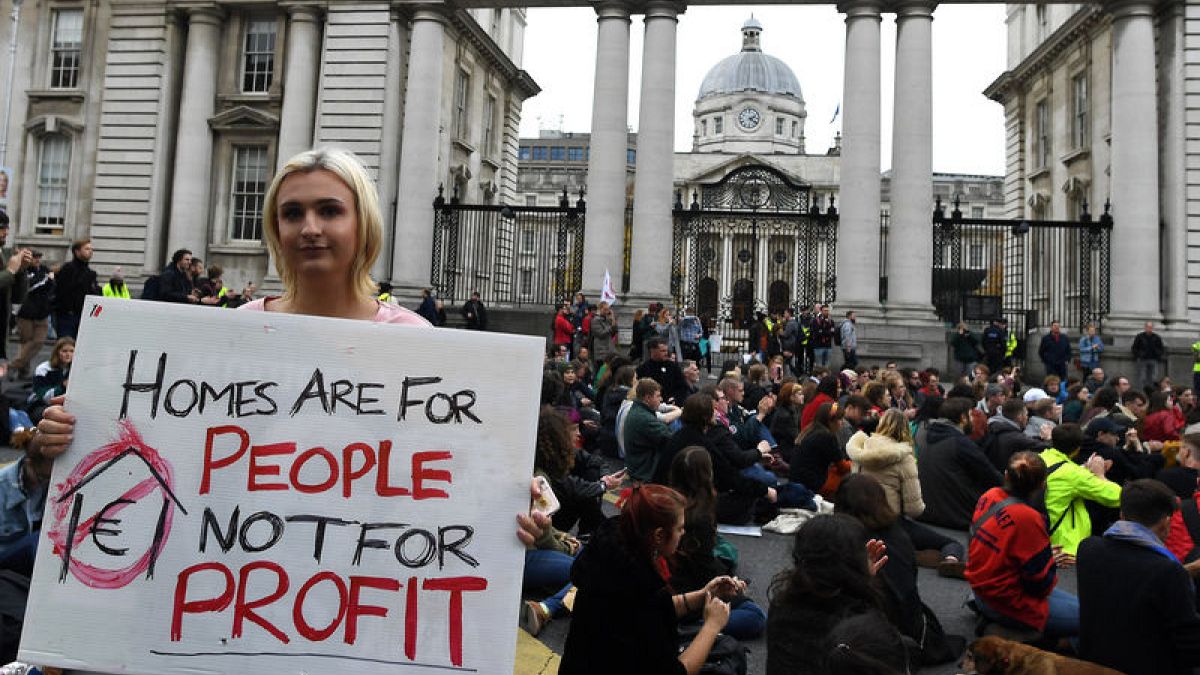
    People block traffic by staging a sit down protest at Ireland’s housing crisis in a ‘Raise the Roof’ rally outside the Taoiseach’s office at Government buildings in Dublin, Ireland, October 3, 2018. REUTERS/Clodagh Kilcoyne

    Finding an affordable room or accommodation in Dublin is an additional challenge for students living away from home. Third-level students in Dublin are facing difficulties with finding accommodation as excessive demand for living in Dublin City has led to a price spike.

    In response to the shortage of student housing, the Irish government launched the National Student Accommodation Strategy (NSAS) in July 2017 which is designed to deliver Purpose-Built Student Accommodation (PBSA). It is expected to reduce the demand for accommodation in the private rental sector by both domestic and international students. The government’s strategy aims to provide a supply of 28,806 bed spaces in the Dublin area and a total national supply of 54,654 bed spaces by 2024.

    PBSA Bed Space Projection

    Chart, line chart

Description automatically generated

    Source by the Department of Education and Skills and the Department of Housing

    Despite the government’s optimistic expectation of PBSAs being available to students in Ireland that would alleviate pressure on the private rental market, it has been criticised over both a lack of supply of PBSAs and the outrageous price.

    While the NSAS aimed to deliver 25,346 PBSA bed spaces to the Dublin area in 2021, the rate of delivery of bed spaces is tapering off. The Covid-19 pandemic created unexpected variables that caused third-level institutions and university campuses to remain closed and resulted in low occupancy rates in PBSAs in the 2020/21 academic year.  

    1,450 PBSA beds were delivered to the Dublin area in 2020 and 1,350 new beds have been delivered as of 2021, bringing the total number of beds to 18,900 in 2022. Furthermore, a total number of 19,300 beds are expected to be delivered by the end of 2023, according to a report from Cushman & Wakefield.

    The purpose of PBSA beds is to provide a solution to the shortage of student housing that offers some practical features, such as being located near the college and offering an affordable price. However, the PBSAs operate under private ownership, instead of universities. This means that they normally come with an extortionate price tag since luxury social areas such as cinemas, music rooms, and bowling alleys are included in the price.

    Prices for the rooms range from €250 to €300 a week. Paying over €1,000 per month for a single room with a shared kitchen is exorbitant for students.

    Caoimhe O’Carroll, a vice president for the Dublin Region in the Union of Students in Ireland said that: “Delivering affordable and fit-for-purpose PBSA will go a long way in alleviating the student accommodation crisis. However, the NSAS was launched in 2017 and since then hasn’t made a dent in the demand for student beds in Ireland.”

    “PBSA is often beyond student price points and puts a high burden of financial pressure on students and or their parents. It is shocking that PBSA rent is not capped at an affordable cost for students.”

    “Luxury PBSA that is outside students’ price points do not meet the demand in the market. Most Dublin PBSA complexes have cinema rooms, in-house gyms etc. These in-house amenities are an unnecessary cost to developers – a cost which is invariably transferred to the pockets of students and reflected in exorbitant rent.”

    In contrast with the realistic prices of student housing, some colleges in Dublin provide an ideal cost of living guideline for 2022/2023 to assist students in budgeting for college. According to the guidelines, monthly rent costs in the private rental market are €750  at Trinity College Dublin, €636 at Technological University Dublin, and €670 at Dublin City University. The average monthly rent cost for students living away from home is €685. 

    Trinity College Dublin says the monthly rental cost in the private rental market is up to €750. However, Vera Yakupova (21) a student at Trinity College Dublin says that the price suggested by TCD is only for a limited number of students. “This might be true only for people who either live at Trinity Hall (On-Campus accommodation) or in a private shared living space. But most students that I know pay more than €600, sometimes even double that.”

    “I searched for a room on Daft.ie for several months and was unable to find an affordable room. So I applied to Trinity Hall and got rejected. They said that there was only a very limited number of rooms available.”

    “Also, once my friends from college were rejected, they moved several times until they found a place to live that they like and find affordable.”

    A picture containing chart

Description automatically generated

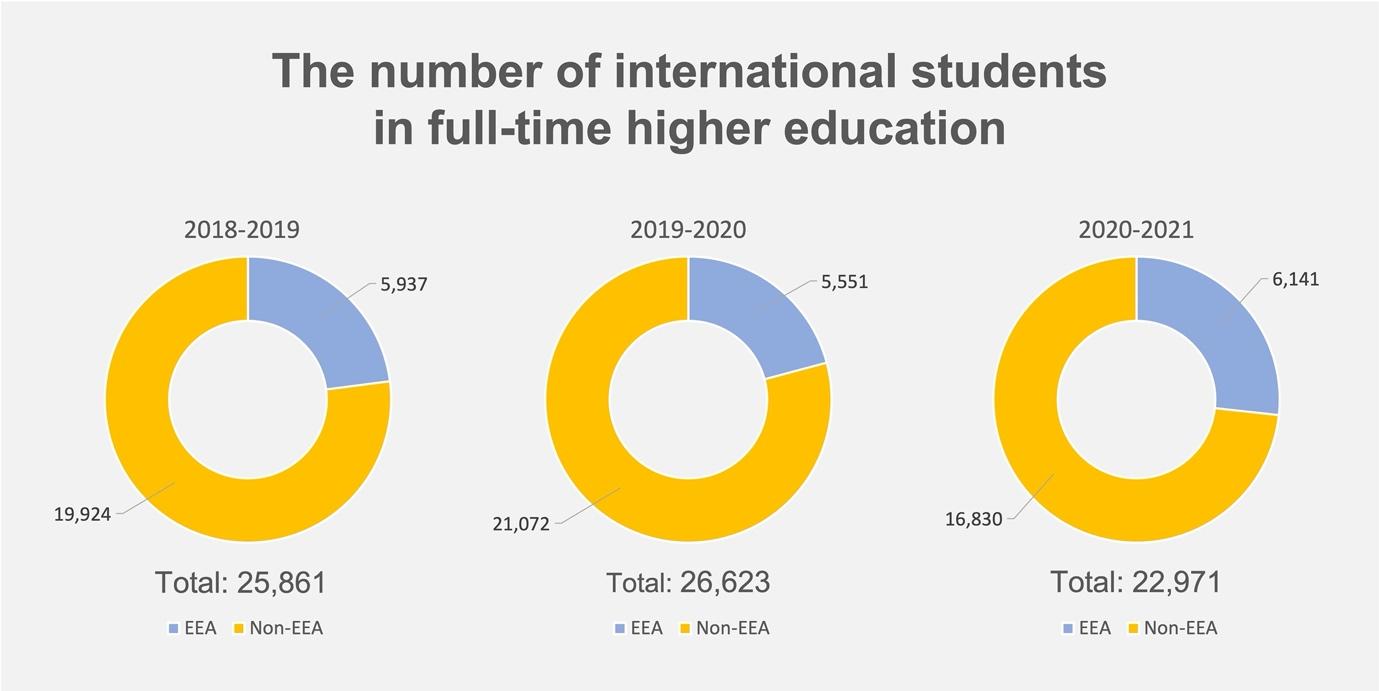
    The number of international students in full-time Higher Education

    Source by Higher Education Authority

    Furthermore, it has also been criticised that there aren’t enough PBSAs in Dublin, despite the extortionate price of PBSA beds. The supply of PBSA beds does not meet the demand for student housing, as the number of international students has been increasing (except for the academic year 2020/2021) and international students are more likely to find private accommodation rather than rent in the private rental sector because of Covid-19.

    The number of international students in full-time higher education in Ireland has risen from 25,861 in 2018/19 to 26,623 in 2019/20, which is the biggest number over 7 years.

    The number of international students in Ireland in 2020/21 decreased by 13.7% compared to the previous academic year following the pandemic.

    Due to the return of on-campus learning and the large portion of international students settling in Dublin for college, the shortages of PBSAs are expected to increase. As a result, some students in Dublin had to stay in hotels or hostels while they waited for their accommodation.

  • Housing crisis ‘mustn’t stop us helping refugees’, says former housing minister 

    Housing crisis ‘mustn’t stop us helping refugees’, says former housing minister 

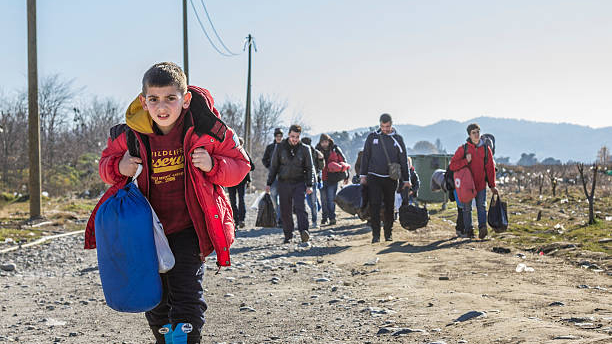
    Refugees arriving at the refugee camp of Vinojug in Gevgelija, Macedonia, after having crossed the border with Greece at Eidomeni on December 23, 2015

    By Paul Caffrey 

    Ireland must continue to provide homes to vulnerable refugees in 2020 even though our own housing crisis makes the issue “specifically pointed”, a Fine Gael Senator has said. 

    Former housing minister Paudie Coffey spoke exclusively to TheCity.ie after this website established that his ruling party has been falling short of its stated targets for refugee resettlement since 2015.  

    Stressing that he was expressing his personal views and not those of his party, the ex-TD said Ireland must stay committed to helping those forced out of their own countries – despite us facing a “housing challenge” on the domestic front.

    Former Housing Minister for Fine Gael, Paudie Coffey

    Locals in Waterford, where the Senator is based, have played a crucial role in welcoming refugees to Ireland.

    This was despite initial controversy in the county about turning a popular three-star Dungarvan seaside hotel into a refugee centre.  

    Senator Coffey said there had been “a lot of unrest” in his political backyard at first in 2015 – but that the scheme ultimately became a success in terms of integrating the new families into the community.  

    In 2015, the FG-led government pledged to take 4,000 programme refugees fleeing war-torn countries like Syria by the end of 2017. 

    But even now, we’re still well short of that quota — having resettled only 3,206 such refugees here since 2015, according to figures supplied to TheCity.ie by a Fine Gael spokesperson. 

    And Justice Minister Charlie Flanagan has vowed to home 2,900 more in Ireland between now and 2023. 

    International development policy features prominently in Fine Gael’s election manifesto that promises to “continue to play our part in the EU’s response to meeting the needs of asylum seekers and refugees”. 

    Welcoming 50 Syrian refugees to Mosney, Co. Meath — once Ireland’s most popular holiday camp — at the end of last year, Minister Flanagan said it was “only right and proper that Ireland plays its part and offers a helping hand to those less fortunate than ourselves.”

    Ireland is currently the only EU country in the running for a non-permanent seat on the United Nations security council in 2021. 

    Certainly, a solid track record on the international assistance front would be a prerequisite for impressing the New York-based bigwigs.   

    In Dungarvan, Co. Waterford, over 100 refugees have been housed in the picturesque Clonea Strand Hotel.

    Housing crisis. Credit: Unsplash

    But the original implementation of that plan wasn’t all plain sailing.  

    In late 2015, there was a spat in Senator Coffey’s constituency when plans to move 90 Syrian refugees into the beachside hotel were announced. 

    Like Mosney once had been, it was a popular destination for tourists and Irish families on staycations alike. 

    At that time, several local business people, county councillors and locals in Dungarvan reportedly complained that the tourist spot was “inappropriate” for refugees.  

    They claimed that placing the Syrian families in the Clonea Strand would have a negative impact on local business. 

    One man reportedly told an emergency meeting that he did not “like them being housed on my doorstep”.  

    But ultimately, the scheme became a success and a further 40 refugees were homed in Waterford in 2016. 

    Then in 2017, Waterford locals set up a programme of events to help the Syrian families feel a “sense of inclusiveness” in Ireland. 

    Speaking ahead of Saturday’s General Election, Senator Coffey said he fully supports the continuation of the Irish Refugee Resettlement Programme during 2020 and beyond. 

    Previously, he served as junior minister in charge of housing under Enda Kenny’s leadership.

    The senior Fine Gael politician told TheCity.ie last night:

    “I think if Ireland considers itself a modern, developed society, then we do have a responsibility to care for those that do seek refuge.”  

    Recalling some strong opposition to the resettlement scheme being rolled out in his constituency five years ago, he said: “I wasn’t against it.  

    “There was a lot of unrest.  

    “I think we should continue the programme.  

    “It is specifically pointed because we have a housing challenge.  

    “But we have a responsibility to assist those seeking refuge. 

    “I understand they have a good quality of life in Dungarvan.

    “And from my experience, they’ve been integrating into the community quite a bit.”

    Indeed, ordinary Waterford locals set up the Déise Refugee Response Group in 2017 saying the refugee families deserved “at the very least, our compassion, patience and kindness – but most of all action to help.” 

    Their group collects food, toys and supplies — including clothes, dolls, colouring pencils and soccer boots — for the Syrian families.   

    Over the past decade, Ireland has also welcomed Somalian, Sudanese and Rohingya refugees. 

    However, the Childrens’ Rights Alliance (CRA) last year expressed concerns about how good a life Ireland can offer refugee families — particularly the children. 

    About 1,200 of the first 2,500 refugees admitted to Ireland following the 2015 pledge were children.  

    In a report last September, the CRA pointed to language barriers in education and recreational activities as well as mental health issues among the youngsters. 

    The CRA also highlighted instability in accommodation and a lack of interpreters available to help refugee children. 

    Meanwhile, if returned to Government this weekend, Fine Gael is also vowing to meet the “huge challenge” of increasing the Overseas Development Assistance (ODA) programme to 0.7% of gross national income by 2030. 

    The party’s manifesto says: “This will be a huge challenge – a trebling of our current commitment. It will require cross-party commitment across the Dáil.” 

    Break-out panel: Paul Caffrey
  • Government promises to meet social housing needs – How do they measure up?

    Government promises to meet social housing needs – How do they measure up?

    By Megan Gorman

    The government announced the plans for the spending on social housing as part of the budget 2020. It has been said that they plan to spend €1.2 billion on social housing as part of the new Budget. Announcing the budget, Minister for Finance Paschal Donohoe unveiled capital funding to support the delivery of over 11,000 new social homes in 2020. With the promise of new social housing being built, I looked into how much exactly has been spent on social housing in 2019.

    After sending an FOI request to the Government for housing, I was given the Social Housing Construction Status Report. It demonstarted positive progess in social housing. The latest Construction Status Report shows that:

    • There are 6,439 social homes are currently onsite nationwide.
    • There were 143 additional schemes on site across the country at the end of the second quarter (Q2) than at the end of quarter one in 2019.
    • The number of schemes on site at the end of Q2 2019 (1,559) is nearly 50% higher than at the end of Q2 2018 (1,067).
    • The number of homes expected to yield from these schemes is up more than 8% from 20,324 to 22,139.

    The number of new dwelling completions in Q2 2019 was the highest in Dublin at 1,546 followed closely by the Mid-East with 1,233. Together, 56% of all new dwelling completions in Q2 2019 were in Dublin or the Mid-East.

    In a press release the housing Minister Eoghan Murphy said that “7,000 homes would be built next year, with a further 800 acquired and 2,631 leased in the long-term.”

    However even with the numbers showing that houses are being built, it’s still easy to see that the houses aren’t affordable. Figures from the Department of Housing show that more than 10,000 people have been homeless in Ireland for the past seven months.  

    In August 2018, official figures counted 9,527 people as homeless; this increased to 10,275 in August 2019. The reason for these numbers to be so high is due to the fact that although houses are being bulit they are not affordable and more money is being pumped into subsidised private sector tenancies than affordable social housing.

    The figures I received in respone to my FOI confirm that the government will spend more on social housing rental subsidy schemes next year than it will give directly to Local Authorities to build and buy real social houses. The capital budget of €1.2 billion is being spilt between social housing and rental subsidy schemes. €700 million will go directly to scoial affordable housing and an estimated 7,000 social houses will be built in 2020.

    However a current spend of €800 million is going into long term leasing and landlords are expected to receive more than the €700 million being spent on social housing. The figures do show houses are being built but there is not enough capital spending and there needs to be more short term support. 

  • In her words: from homeless to housed

    In her words: from homeless to housed

    By Robert Geoghegan

    This article consists of both written and spoken word. *Jane’s name has been changed to protect her privacy.

    You could be forgiven if you thought that Dublin city today almost embodies the opening paragraph from Charles Dickens’ book A Tale of Two Cities. Depending on who you talk to, we are nearing the best of times, and again you could ask someone else and they might tell you it is the worst of times.

    *Jane

    Ireland has been in the midst of a housing and rental crisis over the last number of years and consequently, there has been an increase, year-on-year, of people finding themselves homeless.  The preconceived notion that all homeless people are either drug addicts or alcoholics, is a notion that should have been challenged a long time ago.  We now know, or at least we should know, that homelessness could happen to anyone.  The current figures say that a total of 10,275 individuals are in emergency accommodation with nearly 1,000 of them being children. Steadily, more people are finding themselves couch surfing, moving back into their parental home or on the brink of poverty just to pay the rent. 

    This is the story of a young woman called Jane* who found herself through a series of unfortunate circumstances that led to her becoming homeless. For Jane, like most people, her adult life began after she opened her Leaving Cert results. Unfortunately, those results were not what Jane was hoping for. Looking for results to anchor her in the age of wisdom, instead they anchored her in an age of young foolishness, tripping up Jane’s dreams of going to college.

    Moving back into your parents’ home is a thought some might consider.  For many there is a sense of shame moving back, for Jane moving back was the only option.  For a while, everything was back on track and being at home offered stability for Jane and her son if only momentarily.

    The spring of hope, for Jane, turned into the winter of despair. Leaving her mother’s house with nothing but a bag of essentials, having left her son with his father, Jane set out to find somewhere to stay for the night.  What do you do? Where do you go? People say school never prepares you for real life, how to pay taxes or balance a budget. School certainly doesn’t tell you what to do when you find yourself in the precarious situation that is homelessness. Jane found herself ringing her local county council who in turn gave her a free phone number to ring.

    When you ring the number, you are greeted with an automated service. You must wait on the phone as numbers count down to zero. For this, you need a fully charged phone or a phone at all for that matter. You then wait until it counts all the way down to 1 and if you are lucky, you’ll have a bed for the night. Most people above the number 50 usually don’t receive one. Upon finding herself lucky enough to get a bed for the night, the reality of Jane’s situation set in.

    Incredulously for Jane, the people staying at the shelter had jobs. They were regular people in difficult circumstances. People you wouldn’t take a second glance at, people you walk beside on the way to work or even work with.

    All throughout her homeless ordeal, Jane was trying to complete a degree course to become a secondary school teacher. Jane found her grades slipping and felt a sense of shame while on her teaching placement; teaching the youth of tomorrow how to best lead their lives, Jane couldn’t help feeling like a fraud and ashamed at finding herself homeless. The emotional strain became too difficult as she juggled being homeless, a single mom away from her child, and a student; so, she decided to defer.

    Things began looking up for Jane when her Housing Assistance Payment (HAP) was accepted by a landlord. HAP is a form of social housing support for people who have long-term housing needs. With this new form of security things began to turn around for Jane.

    She considers herself one of the lucky ones as she managed to transition from being homeless to a private rental accommodation and in the end, managed to finish her degree.

    But the threat of homelessness remains a very real threat for Jane. With the continued rental costs spiralling out of control, who knows how long the best of times will last.

  • The numbers behind the rent crisis

    The numbers behind the rent crisis

    There is a huge disparity between the average national house price and the average that people are paying to rent properties in Ireland, recent statistics have shown.

    Despite recent growth, national house prices in Ireland are 25 percent lower than they were in May 2007 at the height of the boom.

    Rent prices, however, now stand at a national average of €1,200 per month, an all-time high.

    The rent price index never experienced the same dramatic fall as the residential property price index (RPPI) in the worst years of the recession, falling by only 25 percent in total. In contrast, the housing market saw prices decrease by more than half by the end of 2012.

    pasted image 0

    Furthermore, the twelve quarters between the fourth quarter of 2014 and the third quarter of 2017 saw consecutive year on year increases of six percent or higher, with inflation standing above ten percent for the previous six quarters.

    House prices have experienced a significant growth since 2013, when they were at their lowest, and grew by close to eight percent nationally in 2016.

    Having said that, the far more dramatic fall of house prices in the wake of the recession has caused such a disparity to exist between house prices and rent prices.

    Such a gap between house prices and rent prices highlights the extent of the rent crisis in Ireland and there is nowhere in which that gap is more evident than in Dublin.

    The rent crisis has manifested itself in the capital, where it is now 23 percent more expensive to rent accommodation than it was at the 2008 peak. On the other hand, house prices in Dublin are 25.9 percent lower than they were at the same time.

    Despite significant growths for both the rent and property industries in Dublin in recent years, rent continues to grow at a faster pace.

    Dublin rent growth exceeded Dublin property growth in 2016, averaging a quarterly growth of 2.2 percent, compared to a 1.4 percent average quarterly growth in house prices.

    Rents have been broadly increasing in Dublin since a low in quarter one of 2011.

    South Dublin has been the area worst affected by the rent crisis, and it now costs just under €2,000 per month to rent property there, with the average standing at €1,955.

    Apartments, in particular, have been subject to extreme rises in rent prices in the capital and are now 17.6 percent greater than they were in 2007.

    pasted image 0 (1)

    In real figures, a Dublin house costs €280,380 on average compared to €412,324 in July 2007. In contrast, it cost roughly €1,725 to rent in an area like Rathfarnham at the start of the year and cost €1,518 to rent in Rathfarnham in 2007, which further emphasises the growing rent crisis in Ireland.

    image2 (2)
    Rent Prices in South Dublin are nearly four times more expensive than in Leitrim.

    Growing rent prices have led to a fall in living standards for a number of tenants, with overcrowding becoming an issue across the country.

    Last month, RTE’s Primetime Investigates televised an investigative look into some of these rental properties, in which up to 12 tenants were living in one bedroom in bunk beds, in filthy and unsafe conditions.

    Many of these properties did not meet health and safety regulations, and would put the tenant’s lives in danger if a fire broke out. The high price and low standard of rental properties in Ireland has led to people choosing to save for a mortgage to buy a home rather than waste ‘dead money’ on rent.

    Dr Rory Hearne of Tasc believes that the rent problem can be traced back to the Celtic Tiger and the subsequent collapse of the construction industry in Ireland.

    “Up until last year we were only seeing 10,000 new houses being built every year, when in actual fact we needed roughly 25,000 a year. There is a gap between the housing that’s needed and the housing that’s being supplied,” said Dr Hearne.

    Dr Hearne is supported by statistics which show that there were only 251 properties available to rent across Cork, Galway, Waterford and Limerick cities, as compared to 2,250 properties in 2009 – a 90 percent decrease.

    Dr Hearne believes that the policies implemented by the Irish government following the crash in 2008 have led to this current crisis and is critical of how Real Estate Investment Trusts (REITs) are dominating the private rented sector here.

    A Real Estate Investment Trust is a foreign company that bought up cheap Irish assets during the recession and are now renting these properties at ‘significant prices’. Dr Hearne believes that the government is at least partly responsible for allowing these companies to flourish in Ireland.

    “The government attracted these companies in and gave them a tax break on the profits they made,” said Dr Hearne. “These companies know that it will be very difficult for Irish people to buy property in the coming years and, therefore, know that there are huge profits to be made in the rented sector.”

    With homelessness, and the threat of homelessness, at the fore of much political discussion, such statistics show that there is no easy fix to the problem.

    By Shane O’Brien and Aimee Walsh