Tag: Hurling

  • Surge in Off-the-Ball Incidents in GAA Sparks Concern at Underage Level 

    Surge in Off-the-Ball Incidents in GAA Sparks Concern at Underage Level 

    By Jason Quigley

    In recent months, GAA matches across the country, particularly at juvenile level, have seen a worrying increase in off-the-ball incidents.  

    These occurrences, ranging from pushing and shoving, to more aggressive acts – have marred what should be a showcase of youthful talent and the spirit of fair play.  

    As tensions rise, so too has the involvement of parents and spectators, often leading to chaotic scenes on the sideline. 

    One individual who has witnessed this growing issue firsthand is John O’ Shea, former Public Relations Officer (PRO) for West Tipperary GAA. 

    John, a well-respected figure within the GAA community, believes that this current trend is deeply concerning and calls for immediate action, both from the GAA and the coaches overseeing these young teams. John expressed his frustration over the lack of concrete measures to curb these incidents. 

    “What we’re seeing now is not just the odd scuffle or disagreement. It’s consistent, particularly in juvenile games. I’ve seen parents running onto the pitch, furious over a referee’s decision, and that only escalates the situation. The referees are doing their best, but they are often left vulnerable.” 

    He recounted several matches where tempers flared beyond control, not just between the players but also among the supporters.

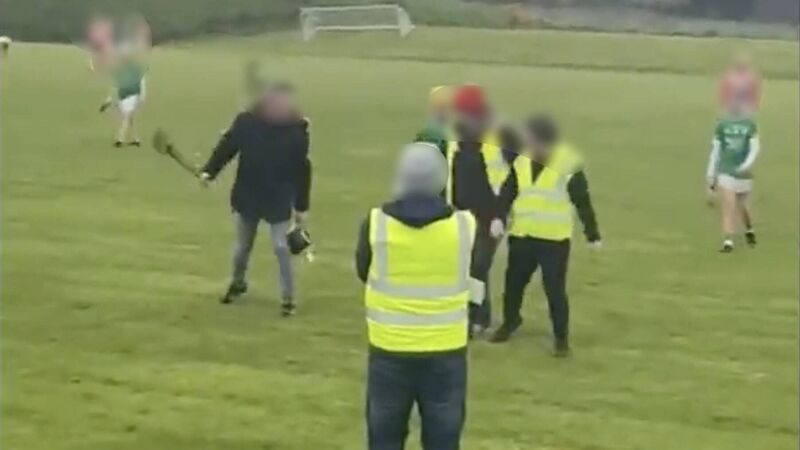
    Under 14 Hurling match fight. Mitchelstown v St Vincents. Pictures: @CraicOfTheAsh on twitter 

    “I was at a minor match a few weeks ago,” John said, “and after one controversial call by the referee, a parent stormed onto the field. It led to complete chaos—players were getting distracted, coaches were shouting, and the focus shifted from the game to the argument. This shouldn’t be happening, especially with kids on the field.” 

    John believes that a lack of discipline and respect for match officials is a core reason behind the rise in such incidents. However, he also feels that the GAA itself needs to take a firmer stance. 

    “The GAA has been slow to address this. We need more accountability from the top down. Stronger penalties for violent conduct and off-the-ball incidents need to be enforced consistently across all levels of the game. It’s not enough to just talk about it anymore. We need action.” 

    However, John is quick to point out that responsibility also lies with the coaching staff. He believes that some of the pressure to win, particularly in competitive juvenile games, is being projected onto young players in a negative way. 

    “Coaches need to remember that their role is to develop these players—not just in terms of skill but also in terms of attitude and sportsmanship. When coaches are constantly shouting and criticising officials, that behaviour gets transferred to the players, and they start seeing it as acceptable. It’s a vicious cycle, and it’s happening far too often,” John said. 

    Patrick Ryan,  who has been refereeing GAA games for over 30 years, says he’s very concerned about the rise of violence at matches. 

    Referee Patrick Ryan (middle) at a semifinal county minor game. Picture: West Tipperary GAA 

    “There’s a shortage of referees at the moment, and this kind of behaviour only discourages them further. If we lose more referees, we lose games. It’s that simple,” he says 

    While the GAA continues to promote respect, discipline, and a love of the game through its “Give Respect, Get Respect” campaign, Patrick insists that more needs to be done at the grassroots level. In particular, he suggests that educational programs for both coaches and parents should be implemented, alongside increased security measures at games to ensure safety for all involved. 

    “As the GAA community reflects on the escalating issues, the message is clear: the future of the sport at minor and juvenile levels is at stake, and immediate action is required to preserve the core values of the game.” 
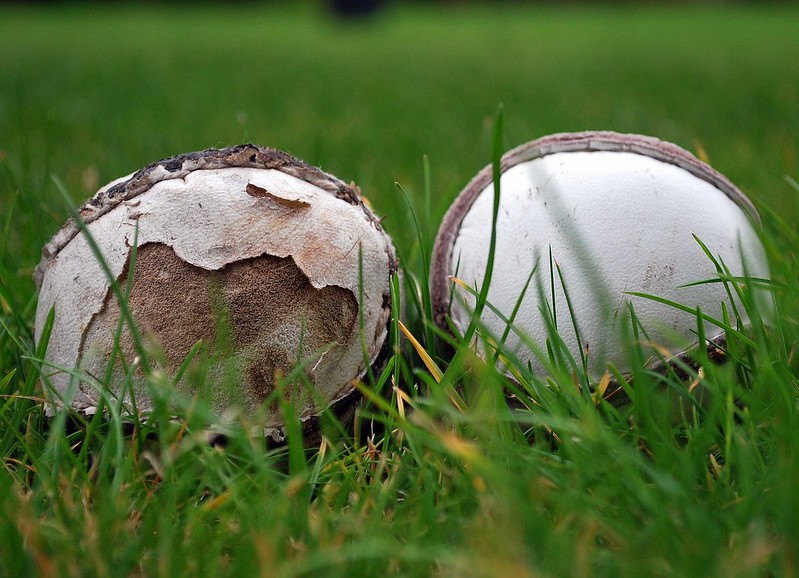
  • Introduction of yellow sliotar is not a major worry for Kerry manager Fintan O’Connor

    Introduction of yellow sliotar is not a major worry for Kerry manager Fintan O’Connor

    Gavin Dalton speaks to Fintan O’ Connor in relation to the incoming yellow sliotar rule for the approaching intercounty championships. 

    Photo taken by Mary Gherlihy. Sourced from Flickr.

    Kerry’s Senior Hurling boss Fintan O’ Connor feels the introduction of yellow sliotars is just another new feature to this year’s championship that intercounty squads will learn to adapt to. 

    The GAA’s announcement on Friday last week regarding the introduction of yellow sliotars for the forthcoming intercounty championship is one that has left many in the hurling world rather bemused. Stars Joe Canning and Brendan Maher have been outspoken in recent days, highlighting their confusion at what has been seen as a somewhat rash decision by many. 

    Although aware it will be a shock to many who are so used to the traditional white sliotar, speaking to The City Dublin, O’Connor believes it will be a positive change in the long run. 

    “In fairness to the players, it can be hard to readjust to new changes at first,” O’Connor said. “I heard Joe Canning saying he’s been using a white sliotar for 28 odd years, and to suddenly become accustomed to a yellow sliotar in just two weeks is certainly challenging. 

    “In saying that, it’s just the look is going to be different. I’m presuming the weight will be the same, so I don’t think there’ll be any major problems with the change once the players become more familiar with it. It’ll probably be a change for the better. They’ll be able to chip the ball and tell it’s speed and make it easier for hawkeye to access whether it’s a score or not, so all these factors will come as a positive going forward.”

    With substantially less preparation time for squads prior to the approaching championship than in years gone by, when asked if the timing of the of the alternative sliotar introduction was right or whether it had been implemented hastily, O’Connor added: “ Perhaps you could say it’s been a bit rushed, but I think the whole thing has been a bit rushed so I feel sorry for those involved from that point of view.

    “Everything has been a bit crammed into a couple of weeks, and maybe the introduction of yellow sliotars may have been rolled out over a couple months had the GAA had time to do that, so I suppose they just wanted to get it out there for 2020. Due to the nature of the championship this year, maybe they’ve been left with no choice.”

    With preparations for Sunday’s Allianz League Division 2A Final against Antrim underway for O‘Connor and his team, the Blackwater Community School man is aware of the stress involved with the changes his players and intercounty squads nationwide have had to become accustomed to— the yellow sliotar just another on a list of alterations.

    “From the GAA player’s point of view, I suppose the lads are in such a different environment to where they were last year getting ready for the championship,” O’Connor explained. “It’s very difficult for them coming to training and not being able to sit down and have their meal after and travelling alone in cars for example – it’s probably a stressful enough time for all intercounty hurlers at the minute. As Brendan Maher was saying about the sliotar change, it’s hard this year anyway with all the things going on to have another thing thrown at you. 

    “But at the end of the day whether it’s a yellow or white sliotar, all panels, coaches and managers, like they’ve been doing with all the protocols, will just get on with it.”

  • Dublin GAA unveil new jersey as they Drive for Five

    Dublin GAA unveil new jersey as they Drive for Five

    The wait is finally over as Dublin have unveiled their new jersey for the 2019 season.

    The design is a light blue shade on the body with navy on both sleeves while the collar is similar to that of the previous jersey. The main difference in the kit is the shorts, which are a mixture of both blue and navy, paying homage to Dublin’s traditional colours.

    It was launched at the AIG HQ at North Wall Quay, with 5-time All-Ireland winner Brian Fenton in attendance. Dublin hurling captain and Lucan Sarsfield’s clubman Chris Crummey was also present. The jersey has gone on general sale and is retailing at around €70.

    Crummey, who has won a Leinster Senior and Minor Championship with the county, is a fan of the new jersey.

    “I really like the new jersey. I think it’s great they kept the collar as so many other teams are moving away from it and I feel without it, it has more of a training top look,” he said.

    Dublin gaa 2019 jersey
    Dublin Jersey 2019 // Twitter @DublinGAA

    Crummey is looking to lay down a marker in 2019 and believes Dublin shouldn’t be aiming for anything less than All-Ireland glory after a promising 2018 where they were beaten by a solitary point by both Kilkenny and Galway.

    He continued: “I am really looking forward to wearing the jersey next year and my hopes for next year would be to win Leinster and the All-Ireland.”

    The design has also been complemented by a number of Dublin fans, including Shane Redmond who is looking forward to wearing the jersey next season.

    “I was a fan of last year’s jersey, and they kept it similar enough here with this design. I’m a fan of the navy at the sleeves and collar, and the shade of blue on the body is nice as well. I’m not convinced on the shorts but I don’t think I’ll have to worry about wearing them!”

    The footballers will begin their ‘drive for five’ against either Wexford or Louth while the hurling team begins with a tough test away to Kilkenny.

  • Consistency is key for Cúltech

    Consistency is key for Cúltech

    The Synthetic Hurley made by Cúltech has increased the consistency of striking, according to recent data obtained from a novel experiment conducted by journalists of thecity.ie.

    In a test conducted on the 10th April 2017 the results found the synthetic variant to be 20.83% more consistent than ash-made hurls. The standard deviation (which measures how spread out data is from the average) of the traditional hurl was 18.19m however the synthetic cúltech’s standard deviation was only 15.05m. This confirmed the hypothesis that the synthetic hurley had greater consistency when striking the ball.

    The test results also produced some data of interest with regards to the distance one could strike the ball. On this occasion the traditional ash hurley marginally outperformed its synthetic counterpart. In the case of two of the three test subjects their greatest strike was recorded using the traditional ash (81.6m and 75.2m respectively) with the third test subject achieving a max distance with the synthetic Cúltech (65m). This data seems to dispel the myth that a synthetic hurley will help the user achieve a greater distance when striking the ball.  (see fig.1)

    Maximum distance achieved
    Wood Graphite
    Test subject 1 81.6 79.57
    Test subject 2 59.03 65
    Test subject 3 75.2 74.09

    (Fig. 1)

    Interestingly, the results also showed that all three test subjects minimum recorded striking distance was greater when using the synthetic Cúltech. The three minimum strike distances recorded for Cúltech were 63.73m, 59.9m and 49.87m. The three minimum strike distances recorded for the traditional ash were 62.37m, 59.72m and 39.17m. This might also suggest a greater deal of consistency from the synthetic hurl. (see fig.2)

    Minimum
    Wood Graphite
    Test subject 1 62.37 63.73
    Test subject 2 39.17 42.34
    Test subject 3 59.72 59.9

    (Fig. 2)

    The test was conducted under very strict circumstances in order to eliminate as many variables as possible. All three test subjects used a 33 inch synthetic cúltech and a 33 inch traditional ash hurley when striking the ball. Both hurleys were also similar in weight. All three tests were conducted on the same day under the same conditions (dry, mild, little to no wind). In order to eliminate momentum from the test, each subject was not permitted to move their feet meaning their swing was as close to identical each time. In order to combat the influence of fatigue each test subject took ten shots with a synthetic cúltech then the next subject would go. After every ten shots the test subject would change the hurl they were using. Test subjects took a total of 100 strikes (50 with each hurley). The distance measurement was taken from where the ball first made contact with the ground after being struck from the hurley. This eliminated the influence of a favourable or unfavourable bounce. The sliotars used for these tests were official O’Neill’s size 5 sliotars, all balls were brand new and identical. This eliminated the ball as a possible variable. Therefore the only remaining variable was the material of the hurl. All of these measures were taken in order to make it as fair a test as possible.

    Hurling is an ancient Irish game that has been played for over 3,000 years. Traditionally the game has always been played with a wooden hurley (typically made from ash). However in more modern times there have been several attempts at developing a synthetic hurley. Early attempts at this were largely unpopular as the synthetic material was a poor shock absorber meaning pain could shoot into the arm of the user when the hurl collided with another.

    However, Irish company Cúltech have developed a solution to this problem and their synthetic hurley has passed all health and safety regulations set out by the GAA. They have done this by using a hollow shaft and using a corked bás (the flat part used to strike ball). The hurley is manufactured using plastic components including epoxy, nylon and graphite. They claim that their product offered a larger ‘sweet spot’ thus offering the user a greater chance of a good strike. Another urban myth surrounding the synthetic hurl alternative is that it increases the distance a player can strike the ball. St. Vincent’s GAA senior hurler Andrew Brennan is a strong advocate for the traditional ash. However, after seeing the data from this research he conceded that Cúltech may be more consistent when it comes to striking. “Traditional ash is still better for general play and there are more options in terms of the shape of the hurl to suit whoever is using it,” he said, “the ash hurleys just look better [as well].”

    image1
    Average striking distance of ash hurleys compared with Cúltech hurleys.

    By Eoghan McGrane

  • Croker an insider’s view

    Croker an insider’s view

    10670171_10152402399028733_4673937741540461965_n
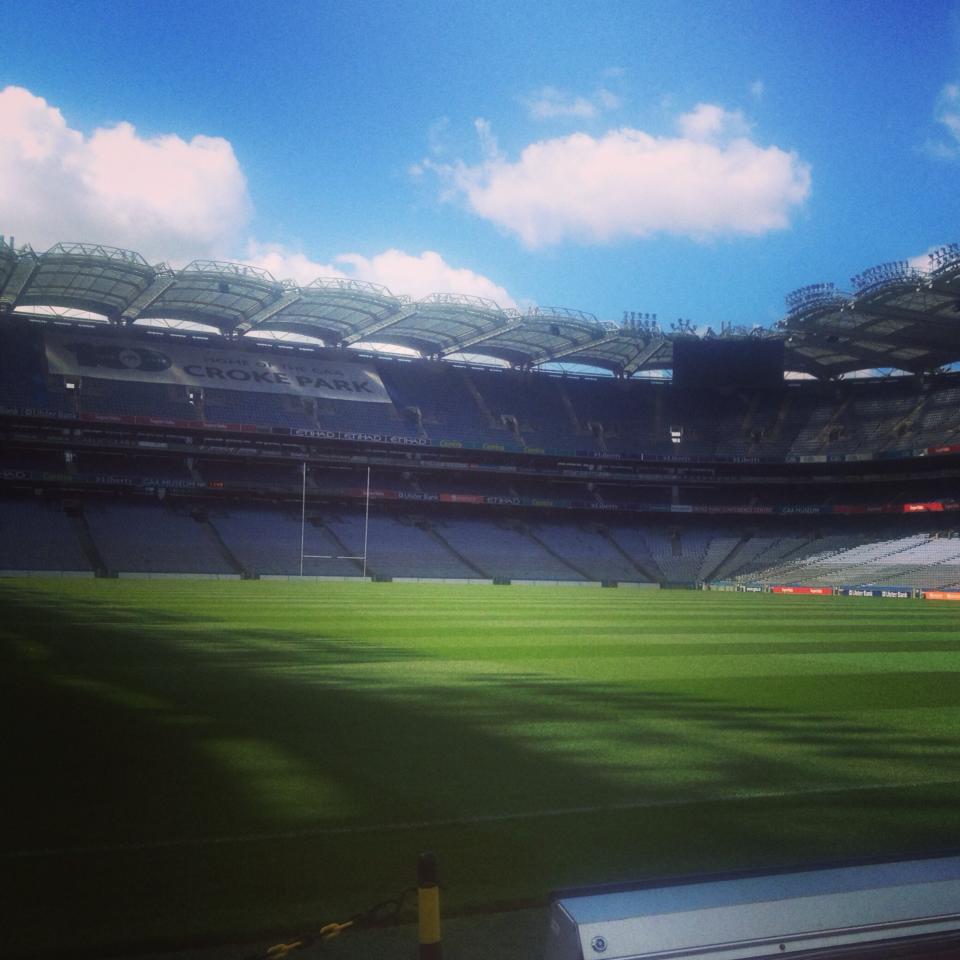
    Croke Park on matchday. Photo: Alison O’Hanlon

    There’s an uncapturable magic that surrounds Croke Park on All-Ireland day.

    As part of my job in the press office at the stadium I get unrivalled access on All-Ireland day.

    It all starts from the minute you wake up and pull on your county colours. It all comes to either a triumphant or turbulent end once the referee blows the final whistle after 70 minutes of play; an indescribable feeling comes over you.

    It’s a sense of pride and Irishness that – if it could be bottled – would be worth millions. It’s the banter on Jones’ Road, the pint in Quinn’s Pub and the pre-match discussion with your match day companion; it’s all these things, but so much more.

    Days like the All-Ireland Final don’t just happen by themselves. It takes a team of 2,200 people to put in weeks of hard work in order for the day to run as smoothly as possible.

    Like all good Irish traditions, All-Ireland day for the GAA staff starts with mass at 9am in the GAA museum. The mood for the day is set as either Liam or Sam (the two coveted GAA trophies) join the priest on the alter for the celebration of the Eucharist. As the mass ends and the match day staff “go in peace”, another great Irish tradition is next to be observed: ‘the Full Irish’.

    Mass being celebrated in Croke Park.

    Bellies full from the big breakfast, attention soon turns to the organisation of the 2,000+ staff that help run the event in different capacities. Last minute team meetings take place to make sure everyone is fully aware of their role. From cooks, stewards and media officers to programme sellers, ticket scanners and An Garda Síochána, everyone is expected to put in an error-free performance.

    Midday hits. Stiles open. It’s lights, camera, action for the workers. Behind the scenes, Croke Park is being watched from every angle through security and TV cameras in the Garda and Event control rooms located above Hill 16.

    View from the control room in Croke Park Picture credit: Ray McManus / SPORTSFILE
    View from the control room in Croke Park.                       Photo: Ray McManus/SPORTSFILE

    As team buses pull in, you can see the focus which surrounds the players. They are zoned in, mentally prepared and are trying to escape into their own little world through their headphones.

    With dressing rooms lined out and pre-match rituals beginning, you can stand in the Hogan tunnel and experience the roar of the 82,000 strong crowd. You start to feel the beat of your heart in your ears as nerves and excitement take over.

    The Kerry Football Team arrives in Croke Park Picture credit: Brendan Moran / SPORTSFILE
    The Kerry Football Team arrives in Croke Park.
    Photo: Brendan Moran / SPORTSFILE

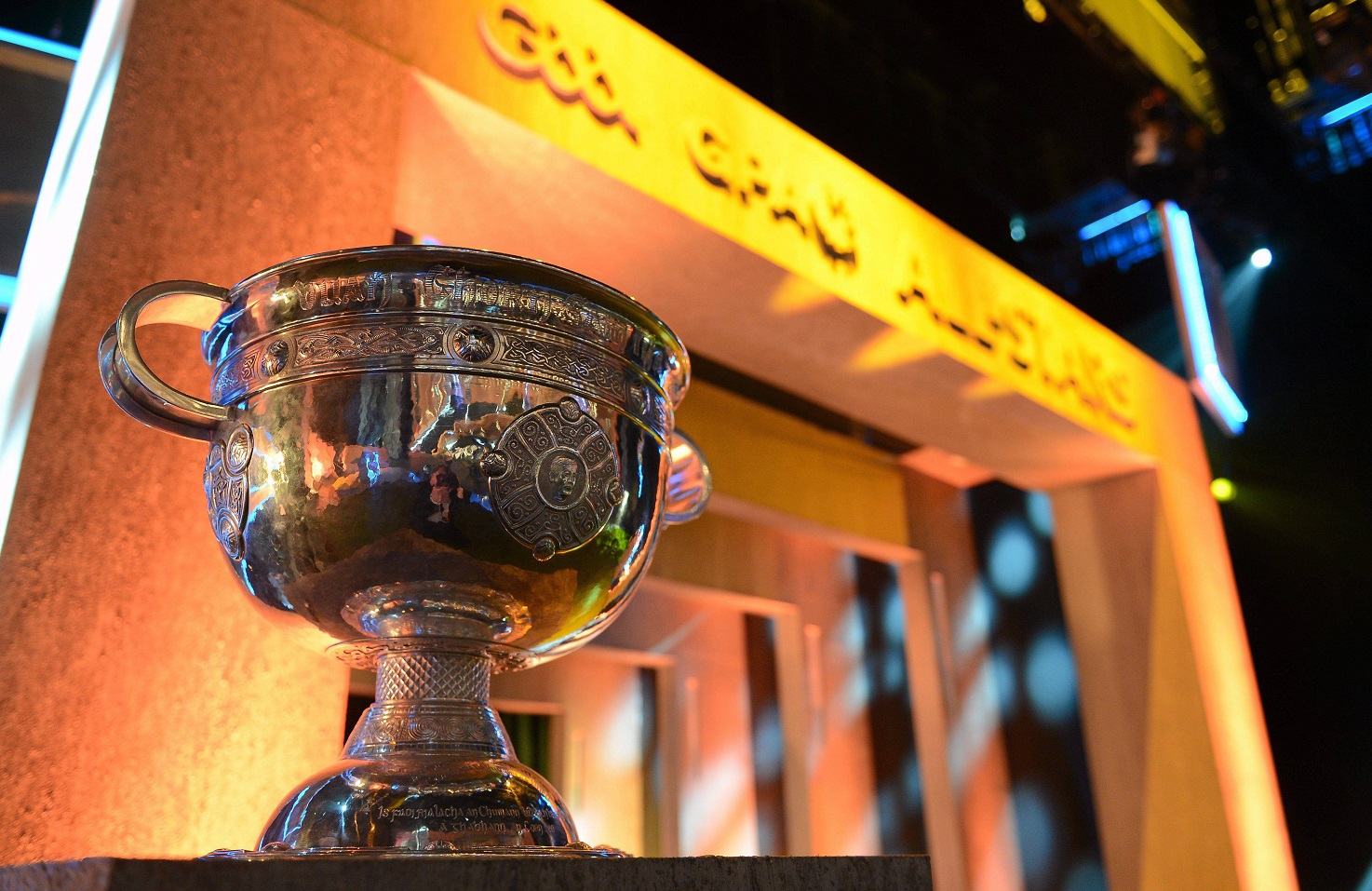
    The Sam Maguire and Liam McCarthy cups are brought to the pitch from their holding place in the GAA museum by two pre-selected school children from the participating counties. Gerry Grogan, who is the match day announcer and principal of Donaghmede National School, then takes the cup up to its resting place in front of the President, Michael D. Higgins and GAA President Liam O’Neill.

    Picture credit: Brendan Moran / SPORTSFILE
    The Liam McCarthy Cup. Photo: Brendan Moran / SPORTSFILE

    The competing teams then take it in turns to run out onto the pitch, with the subs and team management lining the tunnel to hype the players up as they take the famous steps out onto Croke Park.

    1382414_10151688307773733_1806566238_n
    The Cork hurling team take to the field.

    In what feels like a blink of an eye, the 70 minutes of playing time are over and Kerry or Kilkenny or whoever is lucky enough to have been named All-Ireland Champions ascend the steps of the Hogan Stand to collect their silverware.

    At that moment, everyone who has participated in the day’s events feels a sense of pride. You are no longer just a steward, a cook, a member of An Garda Síochána or a ticket-seller; you are a witness to a historical moment in time and you are there to take it all in with the victors.

    Henry Shefflin celebrates his 10th All Ireland medal with his two children
    Henry Shefflin celebrates his 10th All-Ireland medal win in September 2014. Photo: Alison O’Hanlon

    Following the afternoon’s drama, cameras are switched off and another hectic season comes to a close. The staff of the GAA all tumble out of Croke Park in dribs and drabs, woven into the travelling supporters, back to their everyday lives. The players head to a special reception, where each player is allowed to select one person to join them and the team in a lounge beside the dressing rooms.

    This is what is so special about our national game and the GAA. On game day you could play the role of a manager, a player, an official, a spectator or a steward. On the next day, you go back to being a farmer, a teacher, a student or a parent.

    A volunteer steward keeps an eye on the final.    Picture credit: Ray McManus / SPORTSFILE
    A volunteer steward keeps an eye on the final.
    Picture credit: Ray McManus/SPORTSFILE

    It is the sense of pride in the jersey, the commitment of playing unpaid and the fact that all of this is done year after year on a voluntary basis that makes this day so special. That is what makes the GAA.

    1237144_10151688305983733_861481116_n
    The promised land of Croke Park. Photo: Alison O’Hanlon


  • Reilly ready for second test in Hurling/Shinty International Series

    Reilly ready for second test in Hurling/Shinty International Series

    Laois Goalkeeper Eoin Reilly in action during the All-Ireland Senior Championship. Picture credit: Diarmuid Greene/SPORTSFILE
    Laois Goalkeeper Eoin Reilly in action during the All-Ireland Senior Championship. Photo: Diarmuid Greene/SPORTSFILE

    Scotland shocked Ireland with a 3-14 to 2-8 win in the first test of the Senior Hurling/Shinty International Series this weekend. However, the Irish team have won the series for the past four years in a row and remain hopeful ahead of the second test. Goalkeeper Eoin Reilly talks to The City’s Áine Hennessy about this minority sport and what it involves.

    “I got involved in hurling/shinty when I was 19 years old back in 2009. I was selected as first-choice goalkeeper for the Irish U21 team ahead of three others from across the country,” he said.

    The Laois native is representing Ireland for his sixth year running in the International Series, a game which combines hurling with the traditional Scottish sport of shinty.

    The 24 year old, who is the current senior hurling goalkeeper for Laois, explains the basic rules of hurling/shinty.

    “The main difference between hurling and shinty is that you can’t catch or kick the ball. A player usually scores goals only, but the International Series uses a scoring system consisting of both goals and points.

    “We use hurls and the Scottish boys use shinty sticks. Their game is very skillful on the ground, whereas hurling is more skillful with high balls,” he said.

    The International Series is played on a home and away basis. The Irish team travelled to Scotland on Friday October 17, where they had a training session that day, followed by the game in Bught Park in Inverness on Saturday October 18 which was aired live on TG4.

    Eoin said that it was a great honour to play for his country, and is hopeful that Ireland will win their home game in Newry on October 25.

    “We have a strong team this year and all the lads are very skillful. The Scottish boys take it very seriously too. We’ve won it (the International Series) the past four years in a row but it has always been very close.

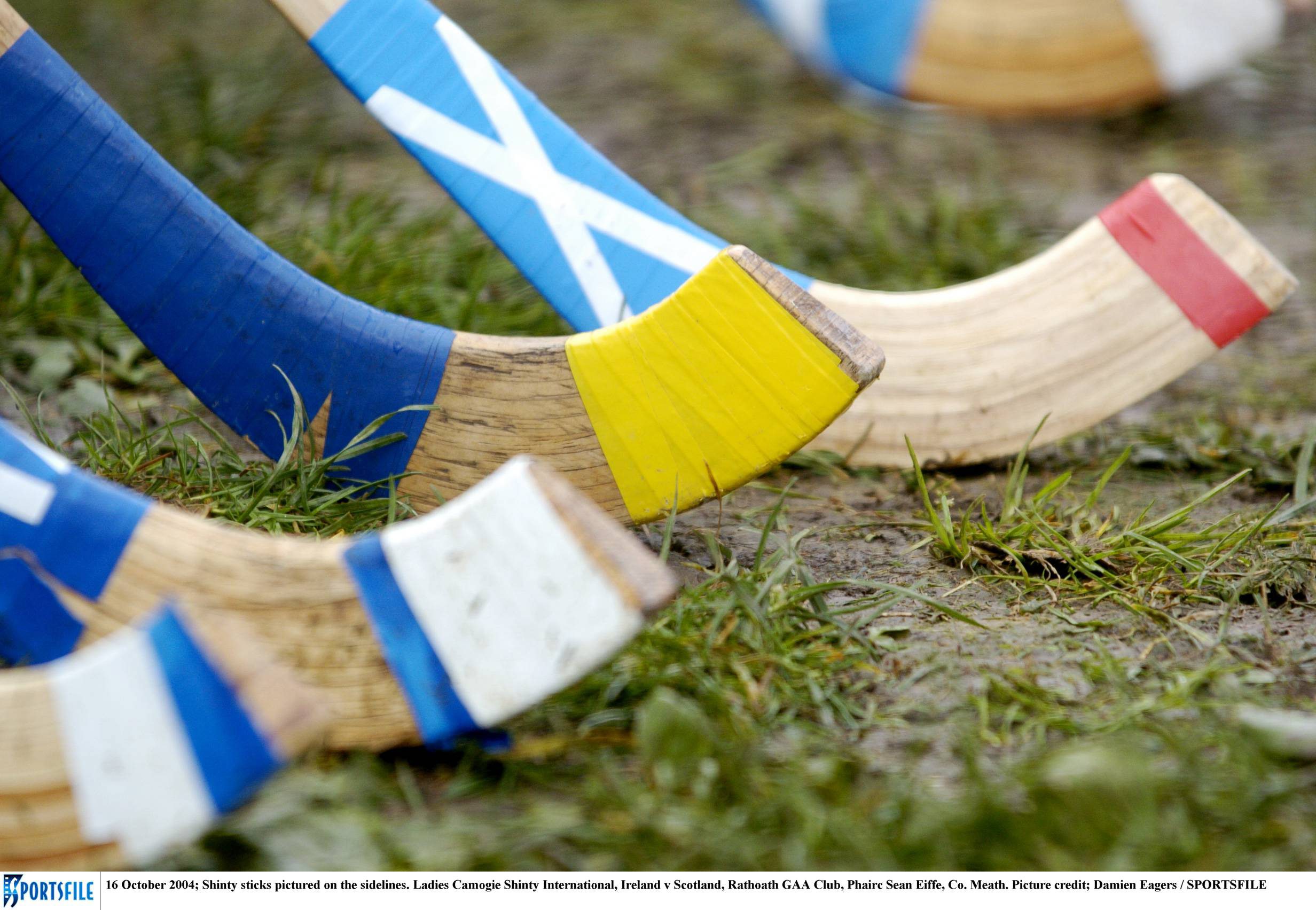
    Shinty sticks pictured on the sidelines. Picture credit: Damien Eagers/SPORTSFILE
    Shinty sticks pictured on the sidelines. Photo: Damien Eagers/SPORTSFILE

    “It’s not often that you get to play for Ireland, so it’s a great honour. The series is a date in my calendar that I look forward to every year,” he added.

    The Hurling/Shinty International Series gets little publicity in comparison to the Australian Rules Series. Eoin says the reason for this is probably centred around a lack of funding.

    “Shinty is a minority sport in Scotland. It’s only played in the Highlands. Aussie Rules on the other hand is a professional sport in Australia, so the funding for it is incredible.

    “As well as that the Irish Aussie Rules team is made up of an All-Star selection. In hurling/shinty, the team is made up of players from the so-called weaker hurling counties. Only a few players would come from the likes of Cork, Clare, Kilkenny and Tipperary,” he said,

    Around 2,000 spectators attended the first test of last year’s series in Scotland, a big crowd for shinty supporters in Scotland, and up to 3,000 attended the second test in Croke Park before last year’s Aussie Rules game.

    This year’s return game will take place in Newry on October 25 and will also be shown live on TG4. It kicks off at 5pm.

  • An All-Star popularity contest?

    An All-Star popularity contest?

    The eagerly awaited nominations for the 2013 GAA GPA All-Stars were announced this month, with the awards ceremony to be held, for the first time, in Croke Park on 8th November.

    The awards process has always been subject to criticism, but in recent years have seen enough highly controversial decisions to bring the validity of the process into question.

    This year especially was a vital one for the All-Stars credibility. After a footballing year that saw Monaghan come from nowhere to claim an Ulster title, Cavan shock the country on a run to Croke Park and London appear in their first ever Connacht final (not to mention a resurgent Tyrone team), it was a vintage year for the sport.

    If football enjoyed a good year, it was nothing compared to the renaissance that gripped hurling this season. Clare’s fourth All-Ireland victory was just the tip of an iceberg that included Limerick bridging a 17-year gap to the Munster title, Dublin winning their first Leinster final in 52 years and an overthrowing of the traditional powers that saw Kilkenny, Galway and Tipperary fail to advance past the quarter-finals.

    However, the nomination of Clare hero Shane O’Donnell for a place on the team of the year highlights one of the main problems afflicting the All Stars in previous seasons. While O’Donnell was unarguably the main factor in Clare’s victory over Cork in the All-Ireland replay and deservedly awarded the Man-of-the-Match, this does not warrant an All Star.

    O'Donnell celebrates in the wake of Clare's All-Ireland victory [credit: rte.ie]
    O’Donnell celebrates in the wake of Clare’s All-Ireland victory [credit: rte.ie]
    To be placed on the short-list for the team of the year after 65 minutes of playing time (O’Donnell was replaced by Darach Honan with five minutes remaining) undermines the entire nomination process, not to mention robbing those players who performed consistently over the year the opportunity to be recognised.

    The failure of O’Donnell to be included on the Bord Gais Under-21 team of year, and yet still be nominated for its senior counterpart speaks volumes as to the lack of thought given to his selection.

    This sentimentality and willingness to accommodate big names was also apparent in the football selections with the nominations of Cian O’Sullivan (Dublin) and Sean Cavanagh (Tyrone). Despite both players spending the vast majority of their years at midfield, O’Sullivan received his nomination in the half-backs and Cavanagh in the half-forwards.

    Under the current rules, players are nominated in the positions they lined out in for the majority of the year, with the nominations being grouped into differing lines of the field (e.g. 3 keepers, 9 fullbacks, 9 halfbacks, 6 midfielders, etc.). While O’Sullivan and Cavanagh both had an outstanding year, the performances en route to the All-Ireland final of Aiden O’Shea and Michael Darragh MacAuley make the selection of the two midfield slots a mere formality.

    While both players had stints in their nominated positions, this is more an excuse to shoe-horn O’Sullivan and Cavanagh into the team rather than a legitimate reason.

    Situations such as these have arisen in the past, most notably in 2010. That year several questions were raised over Graham Canty’s inclusion at centre-back over Downs Kevin McKernan, despite the Corkmans year being plagued by injury. Add that to the fact that not one of the All-Ireland winning Cork forwards received an award compared to three from the Down side they defeated and the inconsistencies begin to pile up.

    Last year, Bernard Brogan’s nomination ahead of the likes of Paddy McBrearty and Michael Conroy was seen as an example of the ‘big name bias’ many feel influences the All Star selection committee. Brogan had, by all accounts, a disappointing 2012 season, hampered as it was by injury and bad form, while McBrearty and Conroy were both pivotal in helping their respective side’s advance to the final.

    The announcement of Kerry stalwart Tomas O’Se’s retirement from inter-county football last week threw up a remarkable statistic. Despite redefining the wing-back position, one of the greatest defenders of the modern era received only five All-Star awards during his 15-year career.

    [credit: irishmirror.ie]
    Kerry legend Tomas O’Se in action [credit: irishmirror.ie]
    While the All Stars garner great publicity for the GAA both here and over-seas, as well as affording players from so-called ‘weaker counties’ well-deserved recognition for their accomplishments, steps must be taken to improve the selection process before the scheme becomes a joke or, even worse, descends into Railway Cup levels of non-interest.