Tag: Immigration

  • A match made in TUD: When flowers are no longer enough

    A match made in TUD: When flowers are no longer enough

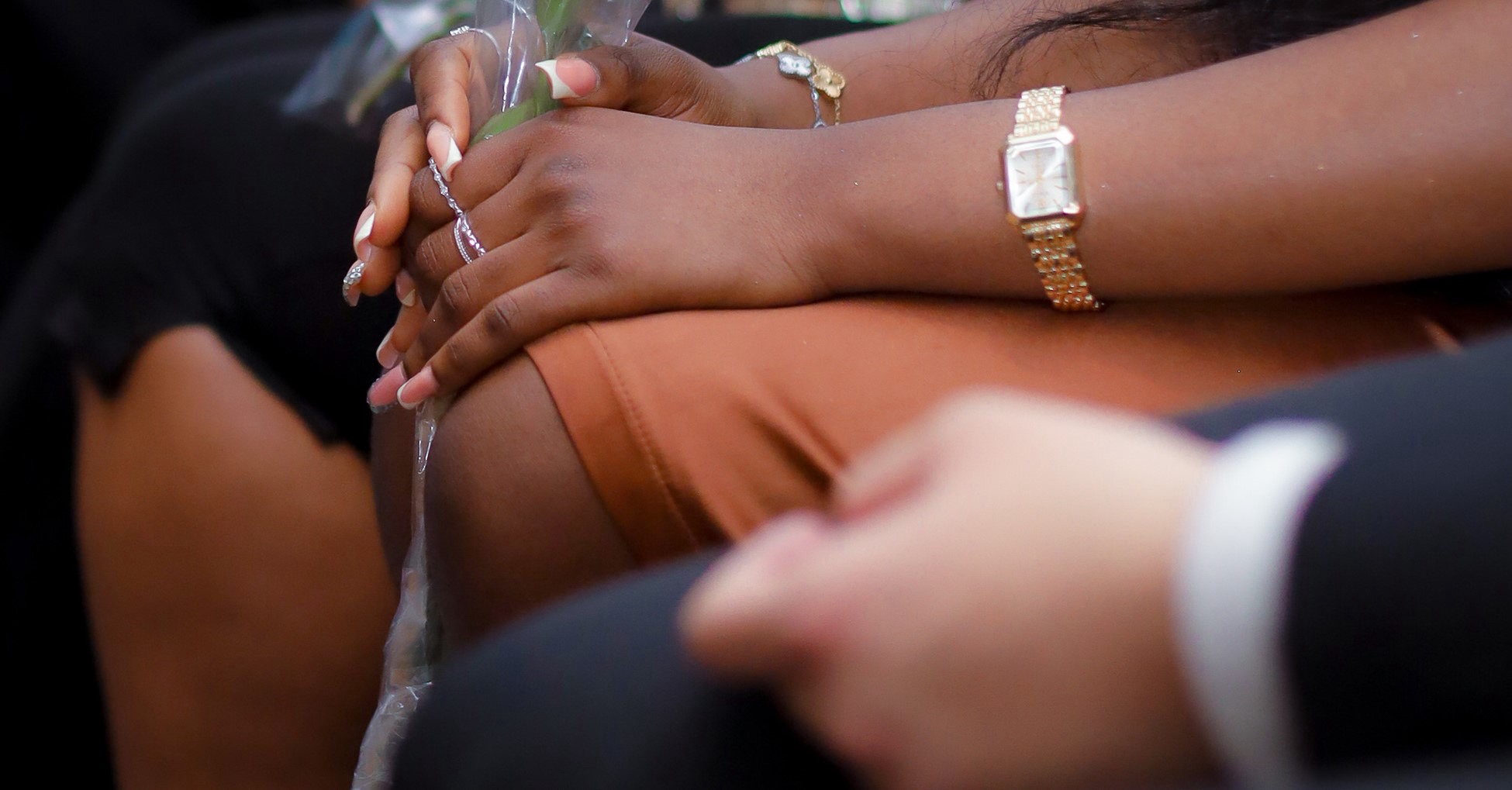
    Technological University Dublin’s African society Valentine’s event represents love beyond just romance and serves as a medium for promoting cultural integration.

    By Samuel Adeleke

    Photo credit: Samuel Adeleke

     With Valentine’s Day around the corner, a time often seen as a period to show and express love, TUD African Society brought the celebration early by organizing a Valentine’s event on 10th of February, at Bst259 Bolton Street.

    For Sharon Ojuade, President of the TUD African society, the theme of ‘A match made in TUD’ was not chosen for love and romance alone.

    “With this event, we aimed to create a relaxed and comfortable environment where people from the same background, different backgrounds, and experiences gather in one room, enjoying the atmosphere,” said Ojuade.

    In organising the event, the committee also sought the support of student entrepreneurs who offered services or provided freebies to participants in an African style.

    This included DJs, photographers, MCs, and the types of foods to be served.

    “Events like this give people a sense of belonging and serve as an avenue to promote student entrepreneurs from Africa and allow them to thrive,” said Ojuade.

    “Before the world loves you, your community must also love,” she added.

    The committee has experienced a record number of ticket sales for the event. For the president, it is inspiring to see that they live in a country with a strong sense of community.

    “Just because we live here doesn’t mean we shouldn’t have fun moments; people should still pursue what they need to pursue outside the community,” said Ojuade.

    Although it is an African society gathering, the event is open to other nationalities. “The first person to get a ticket for the event is an Asian. He reached and said he wanted to be part of it.” said Ojuade.

    According to Divine Nebo, the social director of the society, “the event is not just about finding love, it is about finding people who are like you to bond with on a different level.”

    And by extension, the theme of the event, ‘A match made in TUD’, is to show that love can be found anywhere, not just in school, but in environments like this, outside of social media.

    With students outside the African community feeling the pull of the event, Divine said, “the event is not only about Africa, but expressing the depth of African culture to non-Africans to see what African culture is about, beyond what social media portrays.”

    John Ologunlola, the event manager, also collaborated and highlighted the potential of the event to serve as a platform for non-Africans to experience African culture.

    “Even though they might not fully understand the African culture in its entirety, it is a valuable learning process,” said Ologunlola.

     Ologunlola mentioned that, as a Nigerian, he is learning more about the African culture and finding expression in the community alongside other African nationals, including Ghanaians and Congolese.

    With students like River Rogers, who is half Irish and half Polish, the intentions of the TU African society executive came to light.

    “It is my first time being in an African event,” Rogers said. “I am not African, but I can still attend and make some new friends,” he added.

    Not only did Rivers find the Afrobeat songs being played amusing, but he also left with the intention of trying an African dish. “I definitely need to try the African jollof rice,” he said.

    Mark Ologunlola, a former executive of the society, commended the event as a brilliant way of promoting cultural pride.

     “Events like this help people develop real relationships, and give people a picture of what love is,” he said.

     Ologunlola expressed excitement at seeing other people at the event, “no matter what part of Africa or the world you come from, we are all one body.”

    While the event promotes communal love, in a friendly society that helps people socialise, Nicole Okerikre, an African national from Nigeria, who participated in the event as a contestant, said, “This is a period of love, but people should find love in themselves first.”

    Denoting that self-love is non-negotiable.

    For Jaeson Jang, an Asian, ‘A match made in TUD was not just a Valentine’s event, but an opportunity to find expression among people of other cultures.

    “The African culture is amazing, I feel like family, I feel welcome. Everyone is enjoying themselves; no one feels lonely,” Jang said.

    Jang’s experience underscored the aims of the TU African Society to promote an atmosphere where joy, laughter, and love are shared without identity being a barrier.

    “Everyone can integrate into every culture; you only have to do it respectfully,” said Jang.

    By the end of the night, a match was indeed made in TUD as the event ended with Jaeson Jang from Asia and Nicole Odunsin from Africa emerging as winners.

    It was a reminder that love in its most powerful form goes beyond just being African or giving flowers; it is in identifying with people from other nationalities and embracing a sense of community.
     

  • Dublin Divided: Anti-immigration Protest Faces Counter Demonstration 

    Dublin Divided: Anti-immigration Protest Faces Counter Demonstration 

    By Áine McKeon 

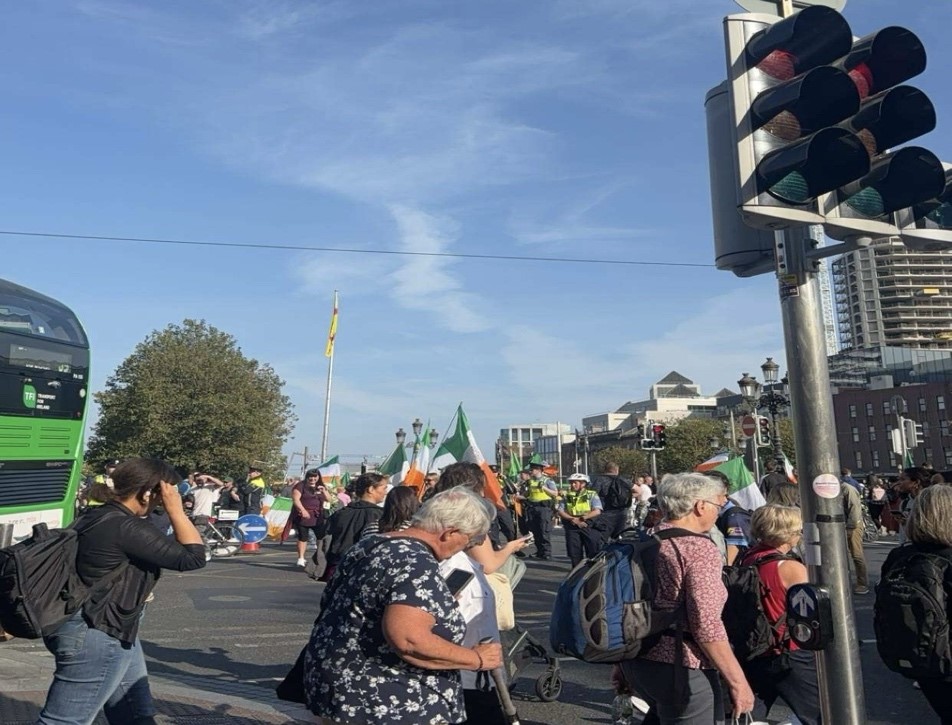
    On Thursday September 19th , Dublin witnessed a sharp division as anti-immigration protests were met with vocal opposition from counter protesters, displaying deepening divisions over the country’s immigration policies. 

                      Source: TheBurkeanIE on X 

    The protest resulted in considerable disturbance for the public and multiple arrests. Groups against Ireland’s immigration laws organised the march, which began in front of the General Post Office (GPO) on O’Connell Street. 

    Protesters expressed their disproval of the country’s immigration and asylum seekers laws. During the demonstration chants like “Get them out” and “Irish Lives Matter” could be heard. 

    Lorraine Vallessca, originally from the Philippines, who has lived in Ireland for nearly 16 years, described how she felt walking past the protest. 

    “I was on my way to work when I first saw the protest – as an immigrant myself who’s lived here basically my whole life, for the first time I felt scared”, she said 

    Irish flags and banners with anti- immigrant messages were held by the protesters and upon arriving at Leinster house, the marchers retreated to O’Connell bridge where they staged a sit-down protest that blocked important roadways.  This led to significant delays in Dublin City Centre, stopping the Luas and other public transportation systems causing extensive disruption. 

    “Close the borders” and “foreigners” were just some chants screamed at passerby’s during the march. 

    “Hearing the chants and anger in their voices was uncomfortable when I finally got to work, I thought I’d feel relieved, but I was anxious my whole shift” explained Lorraine. 

           Source: Aine McKeon 

    The Gardaí dispatched public order units in reaction to the crowds’ unwillingness to disperse on top of the increasing tensions.  

    Nineteen people were taken into custody for defying Gardaí instructions and causing disruption to the public. Investigations into the event are still ongoing. No injuries were recorded. 

    A short distance away, at the bottom of Grafton Street, a small anti- racism organistaion staged a counter protest, chanting “refugees are welcome here”. Gardaí were stationed to prevent clashes between the two groups. 

    The protests have generated a lot of discord. Numerous civil rights and community organisations have organised counter demonstrations to promote diversity and inclusion. The Irish Refugee Council and MAS (Movement of Asylum Seekers in Ireland) have denounced the anti-immigration discourse whilst highlighting Ireland’s longstanding status as a haven for refugees. 

    This protest follows a rising trend of far-right and anti-immigration protests in Ireland in recent years. 

    One of the onlookers of the protests who asked to remain anonymous said, “it is upsetting to see this happening in our country – Dublin hasn’t felt like a safe place in a very long time, it’s just not the same.” 

    The individual who claimed to have lived in Dublin for over 20 years, emphasised that the protest’s driving force was dissatisfaction with the way the immigration system is being run, not hatred. 

    Anti- immigration protests have been more frequent over the past year, which is reflective of the growing dissatisfaction among a minority of people with how the government is managing immigration and asylum policies. The highly publicised demonstrations have sparked a national conversation on Irelands Immigration laws, ranging from nonviolent marches to more aggressive riots. 

    Source: TheBurkeanIE on X             


    Over the past year, there has been a noticeable increase in the number of refugees and asylum seekers in Dublin’s inner-city areas, such as Ballymun, East Wall and Finglas. Anti-immigration sentiments have been concentrated in certain places, where locals have expressed discontent about the increasing demand for healthcare and housing provided by the influx of people. 

    Tensions in Ballymun escalated due to demonstrations at a shelter for asylum seekers, citing rising homelessness and stretched public resources. Nonviolent protests included vandalism and police clashes. 

    On November 23rd, 2023, after a stabbing attack that left three children and one adult injured, rioting broke out in Dublin. Rumors of the attacker’s immigration status contributed to the incidents anti-immigration riot. A few hundred people gathered in the throng, who at first expressed protest but soon turned aggressive. Buses, Gardaí vehicles and businesses vandalised and set on fire by rioters, Dublin’s city Centre was also looted, resulting in extensive damage.  

    While Ireland adjusts to the reality of its shifting demographic despite the polarising nature of the protests. The government has previously discussed enhancing efforts and discuss concerns between immigrant communities and Irish citizens. 

  • Covid-19 abroad: Canada’s response to the coronavirus pandemic

    Covid-19 abroad: Canada’s response to the coronavirus pandemic

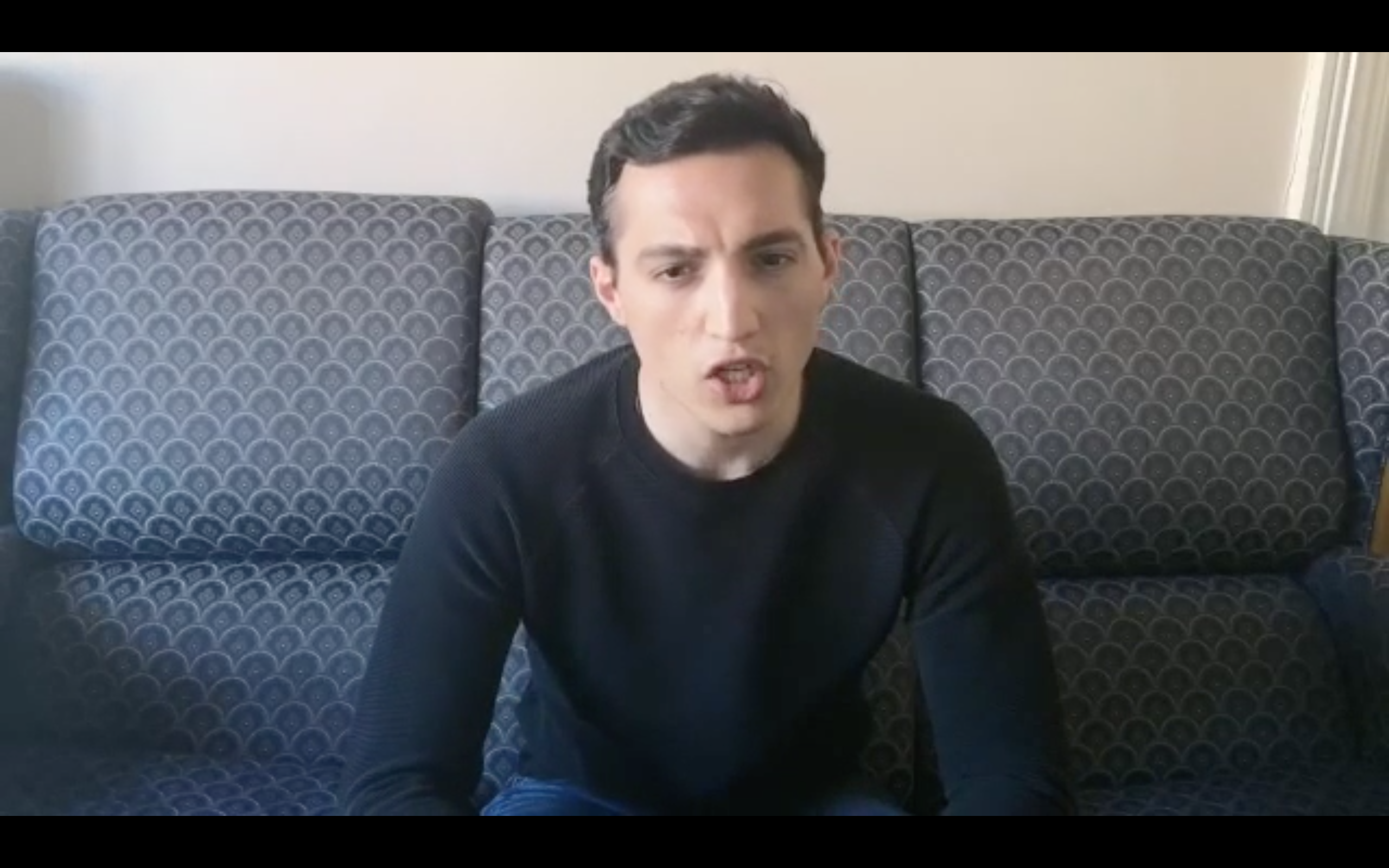
    Watch Katy Brennan and Nicole Kidd discuss how Covid-19 has been handled in Vancouver, British Columbia

    As Canada begin to ease its restrictions , Katy Brennan speaks to Nicole Kidd, who gives an account of the country’s dealings with the Covid-19 pandemic over the past year

    The first community transmitted case of coronavirus in Canada occurred on 5 March 2020. Cases grew rapidly, and by mid-March, all provinces had declared a state of emergency.

    In response to the growing number of cases, Canada severely restricted its borders, banning all non-essential travellers and forcing any exceptions to self-isolate for 14 days.

    Each province implemented varying degrees of restrictions and has continued to do so as case numbers rise and fall.

    Some provinces, such as Ontario and Quebec, introduced heavy restrictions like school closures, shutting down non essential retail, and curfews. Other areas, like British Columbia, have taken a lighter approach.

    Nicole Kidd left Ireland for Vancouver, British Columbia, three years ago.

    We feel really spoiled over here because we have never not been able to go eat food, or go out for lunch, and our bars are open

    Nicole Kidd

    She explains that social gatherings are banned and most people work from home, but stores, cafes and bars have remained open throughout – offering people some sense of normality.

    People are expected to socialise exclusively with people from their own household, but exceptions are made for those who live alone, who are permitted to have a ‘bubble’ of two other people.

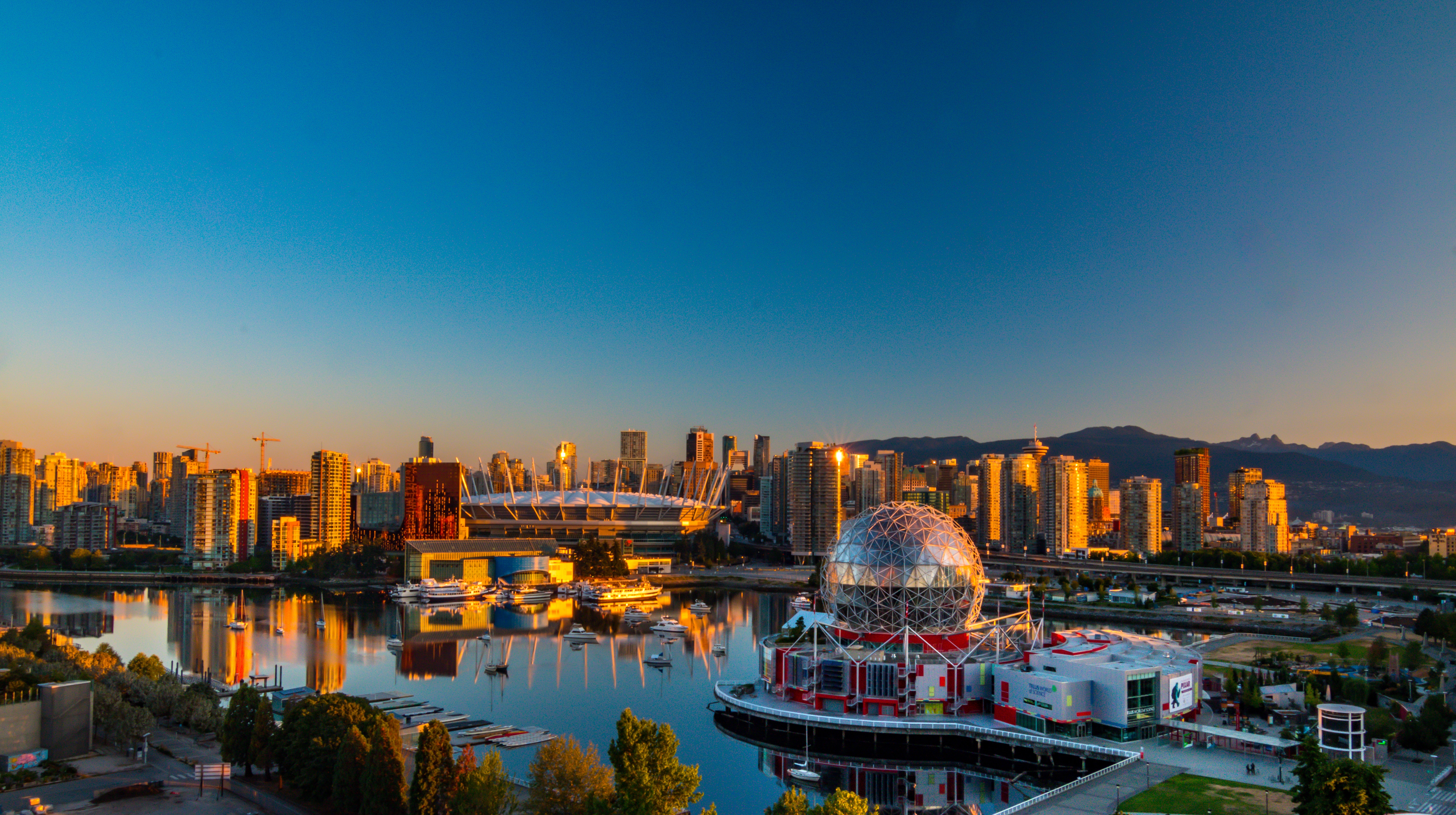
    A shot overlooking Vancouver. Photo by Adi Kavazovic on Pexels

    Kidd is grateful to have maintained a decent social life – something she thinks is important for mental health and hard for those back home in Ireland. 

    “We feel really spoiled over here because we have never not been able to go eat food, or go out for lunch, and our bars are open,” she says.

    Kidd is a qualified yoga teacher and while she is eager to get the vaccine and return to normal life, she is happy the pandemic has allowed her to devote more time to her yoga.

    Canada’s vaccine rollout began on 14 December, and since then the country has vaccinated 1.1 million people. The rollout consists of three stages, working its way down from most vulnerable to least vulnerable.

  • Undocumented people in Ireland stranded in insecure employment, the survey finds

    Undocumented people in Ireland stranded in insecure employment, the survey finds

    Picture from Pixabay

    There are an estimated 15,000 undocumented people currently living in Ireland. This is one of the most underrepresented and vulnerable groups in the country. Migrants Rights Centre Ireland carried out a survey into the lives of over 1,000 undocumented people in the country. Laura Matjusaityte examined the results of this survey. 

    Karuna’s youngest daughter is 5 now, her eldest daughter is 11. Both sisters have never met in person. 

    Karuna has been living in Ireland for the past 10 years. Her youngest daughter was born and spent all her life in Ireland. Nevertheless, both of them are living here as undocumented people. 

    Karuna hopes that one day she will be able to gain legal status in the country for herself and her daughter. Then both of her daughters could finally meet and she “could breathe easily for the first time in 10 years”. 

    This is only one example from many heartbreaking stories coming from undocumented people who are living in Ireland. 

    According to Migrants Rights Centre Ireland (MRCI), an NGO working with migrants,  there are some 15,000 to 17,000 undocumented people in the state including 2,000 to 3,000 children. 

    Chart shows the nationalities of undocumented people living in Ireland. 

    A recent survey carried out by MRCI into the lives of 1,000 undocumented people living in Ireland showed that one of the biggest threats to undocumented people is a lack of job and salary security. 

    One of the survey participants, Billy, said that getting his papers “would be a dream come true”. 

    “I won’t have to worry every time there is a knock at the door. I’ll finally feel safe at my own home,” Billy said in the survey. 

    The survey revealed that over 90% of undocumented people living in Ireland are employed and more than a quarter of them do not receive even the minimum wage. Almost half of the survey participants reported that their working hours exceed 40 hours per week. 

    Another participant Zeinab, who has been living undocumented in Ireland for three years, said that there are times when she doesn’t get full pay, and sometimes she doesn’t get paid at all. 

    “If I had my status I could stand up to this, I could get a better job and give my children a better future,” Zeinab said. 

    Chart shows division by gender among undocumented people who took part in the survey. 

    The survey further revealed that 70% of undocumented people in Ireland are aged between 24-44, almost 60% of them are women and 40% men.  

    More than a quarter of the survey participants are providing care to older people in private home settings. A little less than 20% are working in cleaning and maintenance sectors, 20% in restaurants and catering services, and 10% are employed in the childcare sector. 

    Chart shows sectors in which undocumented people are employed. 

    A high percentage of undocumented workers admitted that they have been stuck in the same employment for years because they don’t have legal status. 

    Three-quarters of respondents have been  in the same employment for three years or more. And more than 80% admitted being employed in the same sectors for over three years. 

    Tjanasi Jack, Chair of Justice for the Undocumented Group, which is part of MRCI, spoke at the launch about fairer solutions for undocumented workers in Ireland. 

    Tjanasi said that according to the survey over 75% of undocumented workers were living in Ireland for five or more years and more than 90% of them have permanent employment. 

    “So many of us have stepped up and continue to work providing essential services throughout Covid-19. Unfortunately, the survey also revealed high levels of exploitation, with over a quarter of workers not receiving the minimum wage. This is unacceptable,” Tjanasi said. 

    The current Immigration Act 1999-2004 allows people to seek immigration permissions in the state. The Department of Justice encourages people to come forward and apply for the humanitarian leave to remain, which would allow non-EEA nationals to stay living in the country. 

    However, in practice, undocumented people often fear that the application would be unsuccessful and put them on the radar of Irish authorities and choose not to do so. 

    Carol Sinnott, a solicitor from Sinnott Solicitors closely working with undocumented people, said that undocumented migrants are “living under the radar in constant fear of deportation” and without the ability to lawfully work and pay taxes in the state. 

    “I have never met an undocumented migrant who would not be willing to work legally and pay taxes in the state,” Sinnott said, adding that “in fact, all of the undocumented migrants whom I have met are desperately trying to find a way to legalise their status”. 

    The Department of Justice spokesperson Colm Daly said that “the Government is sympathetic to the situation of people who find themselves in an undocumented position here in Ireland”.   

    According to the Department of Justice, the government is currently committed to creating a programme for Government, which would allow a new pathway for long-term undocumented people and their dependents to legalise their status, if they meet the required criteria.

    “I believe that if the Minister for Justice implements a programme to provide a pathway for migrants to legalise/regulate their status in the state, it would be an extremely positive development for those migrants and the state,” Sinnott said. 

    The Department of Justice stated that the government is “committed to introducing new pathways to status regularisation within 18 months of its formation”. 

    The works on the programme have yet to begin. 

  • Watch: Being an immigrant in Ireland

    Watch: Being an immigrant in Ireland

    First generation immigrants in Ireland spoke about their experiences in Ireland, the good, the bad and the ugly. A report for TheCity.ie by third year TUD student journalists.

    Two of the immigrants are 3rd year student journalists and focus on their first impressions of Ireland, racism they may have encountered and even what they miss about their home countries and also recount the kind Irish people that they have encountered while living in the country. Racism is a huge issue in Ireland and this video goes to show that it is still present in 2020 and this needs to come to an end. However, the pleasant memories are recalled and spoken about too.

  • Dublin rally for America’s ‘Dreamers’

    Dublin rally for America’s ‘Dreamers’

    A rally was held in Dublin on Monday evening in support of the Deferred Action for Childhood Arrivals (DACA) programme in the United States.

    The DACA programme was established by the Obama administration in 2012 to protect those who entered the US as minors from deportation. Donald Trump made the decision to end the programme in September this year.

    Those protected under DACA are called the “Dreamers” and 787,580 were granted approval by the time Donald Trump announced his decision to rescind the programme.

    On September 5th, the New York Times reported that US officials said “some of the 800,000 young adults brought into the United States illegally as children, and who qualify for the programme … will become eligible for deportation” as early as March.

    The New York Times also reported that Mr. Trump had said in a statement that he was driven by a concern for “the millions of Americans victimised by this unfair system.” Jeff Sessions, US Attorney General, said the program had “denied jobs to hundreds of thousands of Americans by allowing those same illegal aliens to take those jobs.”

    The rally in Dublin was organised by the Young, Paperless and Powerful (YPP), a group that focuses on the rights of undocumented youth in Ireland. The twin rally in New York was organised by ‘Make the Road New York’, an immigrant organisation based in the US.

    The two organisations are appealing to Irish-American Republican congressman Peter King to “stand for the undocumented in the US” before the 6th of December, which is the deadline Congress was given to find a legislative alternative and to draft a bill that would allow Dreamers to permanently stay in the US.

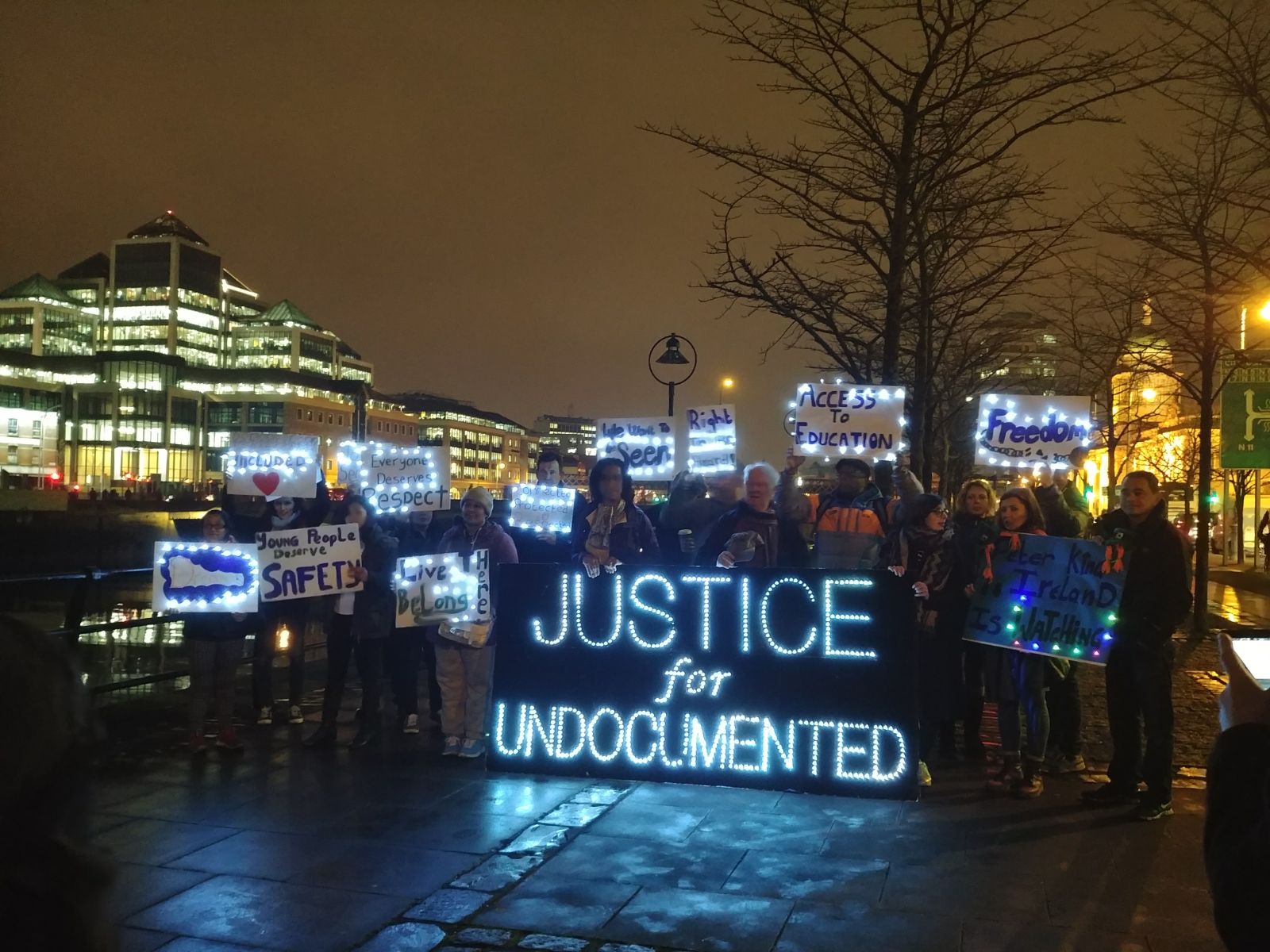
    Speaking to the crowd gathered at the Famine Memorial in Dublin, Sumayyah, a member of YPP said: “We believe that no young people should grow up undocumented in Ireland or anywhere. We’re a group of about 25 people, some of us are undocumented, some of us are not.

    “But tonight is not about us. It’s about the undocumented young people in the US who really need our help,” she added.


    Hajar 3
    Rally held in Dublin for undocumented in America. Photo by Hajar Akl


    “Young people in the United States are in the fight of their lives [to protect DACA],” said Migrant Rights Centre Ireland (MRCI) community worker Kate O’Connell, addressing the crowd.

    A letter written by a formerly undocumented student called Shiv was read out to the crowd. He spoke of his depression and fear of being “taken away” from his family during the seven years he was undocumented.

    “Every single year since 2007 I would watch a Taoiseach go to the US and seek the legalisation of undocumented Irish and I thought, ‘what a hypocrite’. Ireland has always been a nation of immigrants who left many years ago for a better life.

    The Irish diaspora in the UK, the US and the Australia, for example, are a testament of how much immigrants can contribute to a country.”

    In the letter, he also said “undocumented people make a huge contribution to Ireland, but so often their potential is wasted. We are young and full of potential, we are products of the Irish education system who cannot go to university.”


    Hajar 2
    People gather by the river Liffey in support of the undocumented in America. Photo by Hajar Akl


    The MRCI estimates there are up to 26,000 undocumented people in Ireland and that between 3,000 and 5,000 of them are under the age of eighteen.

    By Hajar Akl

  • Kenny announces referendum to allow Irish citizens abroad to vote in presidential elections

    Kenny announces referendum to allow Irish citizens abroad to vote in presidential elections


    Aoife Loughnane looks at the Taoiseach’s newly unveiled referendum plans and explores what this will mean for the Irish diaspora.

    (more…)

  • Deflector Trump struggling to keep a lid on ties with the Kremlin

    Deflector Trump struggling to keep a lid on ties with the Kremlin

    While Donald Trump sounded more presidential at his recent address to Congress, the issue of Russian connections still lingers for team Trump. What does this all mean for the president, and for the Irish as the Patrick’s Day shamrock approaches? James Carroll reports.

    (more…)