Tag: Influencer

  • From likes to learning: Irish university launches new social media ‘influencing’ course 

    From likes to learning: Irish university launches new social media ‘influencing’ course 

    By Leonardo Parada Borda

    A new university course in content creation and social media was introduced last week by the South East Technological University (SETU) for people looking to become ‘influencers’.

    The programme (bachelor of arts content creation and social media) will begin in Carlow next September, with applications opening in November this year. 

    Although courses in social media and content creation already exist in Ireland, this course is slightly different. It is the first full-time bachelor’s degree (NFQ Level 7) course in Ireland, with a course duration of three years. 

    Other courses, like the social media marketing courses at University College Dublin (UCD) or the Atlantic Technological University (ATU), offer part-time courses in which you receive a diploma (not on the NFQ) or a certificate (NFQ Level 6) and runs for a duration of three months. 

    So, what makes it different to other courses like social media marketing or journalism? 

    Dr Eleanor O’Leary, the programme director of the course, said that the programme focuses a lot more on practical skills like creative writing, creative video and audio skills, journalism, and crisis management.  

    “The bachelor in content creation and social media is designed to provide students with a broad education to work in front of and behind the camera in digital environments,” she said. 

    Dr O’Leary mentions that the course intends to develop “students’ creativity and individual aesthetic”. 

    “We are also very focused on preparing students for working online and understanding the risks and challenges of operating in this space and the impact on mental health and wellbeing,” she added. 

    “Influencing has grown, and I think it will continue to grow as a form of marketing.”

    Alan Kelly, Social Media Marketing Coordinator at ATU

    With its ever-changing nature, social media poses another obstacle. Influencers must learn how to adapt to the latest trends within the industry to succeed. It’s a way for them to maintain authenticity and address cultural and societal issues. 

    “We stay up to date by working with industry experts, supporting and undertaking research, co-creating our educational offerings with students and industry leaders and reviewing what we offer every year,” Dr O’Leary said.

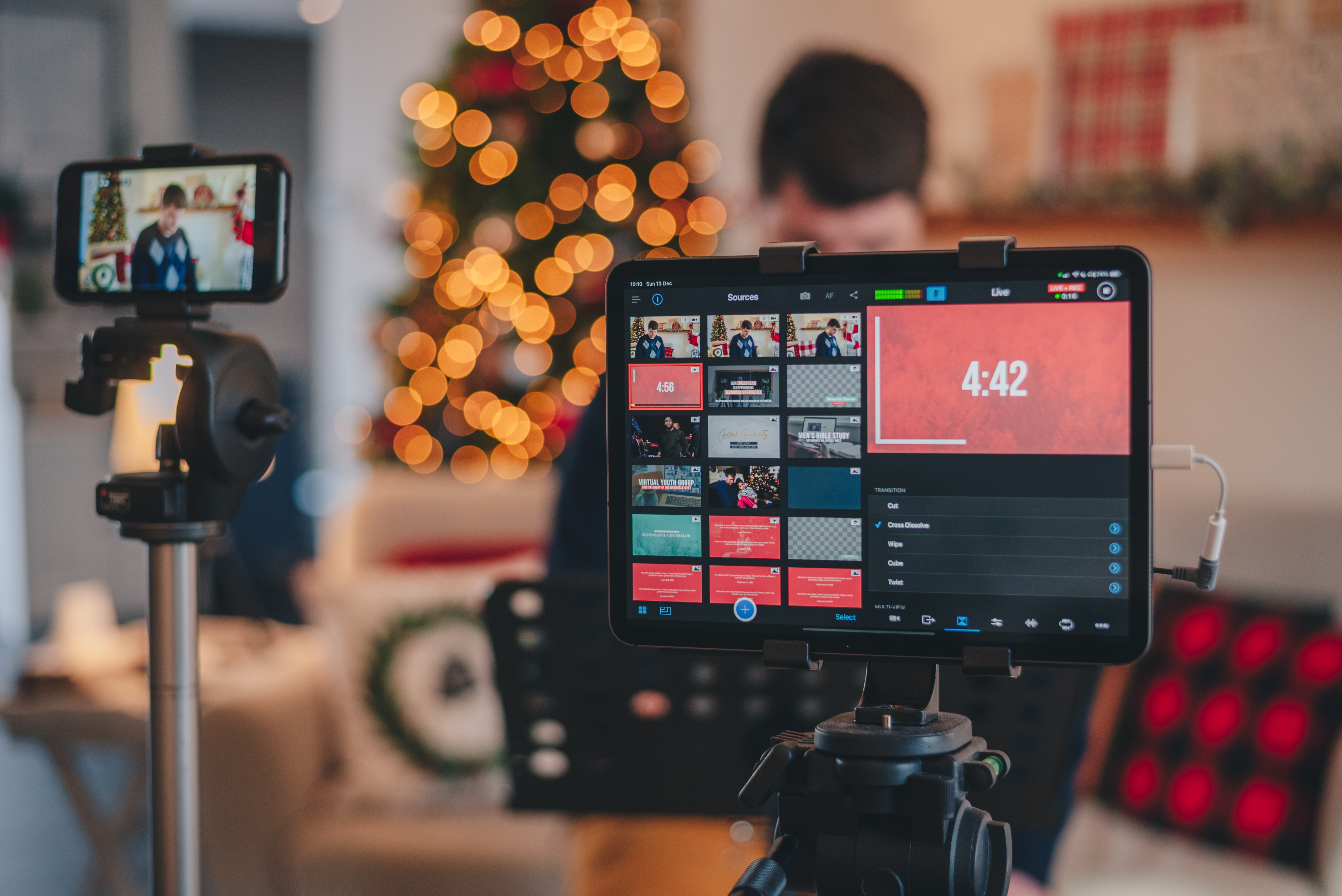
    Photo by: Carlos Muza/ unsplash.com

    “Having worked in media education for over a decade, you are attuned to the aspects of media industries that change and those that stay the same. Core skills are often consistent over time, and it’s about paying attention to how audiences respond to, utilise, and communicate through new media technologies,” she added. 

    Mr Alan Kelly, the course coordinator for social media marketing at ATU, mentioned that the new course integrates all aspects of marketing, business, and technology into the programme. 

    “I think the degree itself isn’t focused only on influencing, so I think it’s sustainable because it has many aspects,” Kelly said. 

    “Fair play to them. They’re trying to be seen, and by including the words ‘influencer’, they’ve managed to market the programme really well based on that.” 

    “Influencing has grown, and I think it will continue to grow as a form of marketing,” he added. 

    Kelly said the course has a promising future and will ‘continue to evolve and grow’ if there is more emphasis on marketing and business rather than influencing. 

    “I don’t think there will be that many sustainable jobs, I think a lot of people are already there, but I think the course itself offers a lot more than influencing, which I do think is really important.” 

    “You can go out there and be an influencer without doing a course. If you have some decent technical skills, you can look up a YouTube video, but people don’t know enough about the ethical issues and the legal aspects that come with it.” 

    Kelly mentioned that Meta and the virtual world will also help social media influencers stay active and have an additional platform to market themselves. 

    “It will evolve. New platforms have come out. We can look at Meta and the virtual world as an example. Marketing will migrate there, and so will influencers,” he said. 

    “I think there is still that ethical and legal minefield out there […] There will also be people who want to fight with you on social media, and the way they communicate that with you can be terrible. There are going to be problems going forward.”

  • All things Influence – An inside look at the ‘Instagram Influencer’

    All things Influence – An inside look at the ‘Instagram Influencer’

     Influencers are beginning to pop up on everyone’s social media, especially in 2020. Amber Baxter talked to Teresa Walsh about her phone experience online as one such influencer.

  • The importance of social media to content creators

    The importance of social media to content creators

    Over the past number of years, social media has slowly become a large part of most people’s everyday lives. The popularity of Facebook, Snapchat, Instagram and Twitter has grown exponentially over the past decade. Erin Killoran explores how content creators now rely on social media.  

    Image source: Pixabay

    Over the past number of years, social media has slowly become a large part of most people’s everyday lives. This has led to a phenomenon of a new way of promoting products, services and content via social media. As a result of this large companies such as the popular skincare brand ‘The Ordinary’ have changed their marketing strategies to advertising their company exclusively via social media platforms. 

    Recent studies have shown that the average adult spends 2 hours and 3 minutes on social media per day. This consumption of social media has allowed for ordinary individuals to create content and upload it online for the general public to enjoy, with the possibility of financial reward for the creators. Presently, Youtube, TikTok and Spotify are by far the most popular platforms for content creation. 

    The rise in popularity of podcasts has led to a huge surge of people creating a production of their own, covering a number of different genres. This new phenomenon is revolutionary as it allows the audience to listen in their own time, unlike traditional radio programmes. But in order to gain  any form of traction with these podcasts, these content creators need to promote themselves on various social media platforms to prevent getting overlooked in this heavily saturated market. 

    TheCity.ie spoke to the host of ‘GleeCap Podcast’, Conor Burke, who said: “Social media is essential for me for not only promoting my podcast, but also plays that I produce and star in. It is single-handedly responsible for getting a few thousand listeners a week on the podcast. I always tell people if I didn’t have to promote anything, I probably wouldn’t have any social media because it just takes up so much time.”. 

    Becoming a creator online has become extremely accessible for most people as there is no longer a need for a significant amount of funding to start up a project. Burke said: “I set the podcast up in late May, and our following has just grown organically through Instagram. It not only grew the following of the podcast on social media, but also my own personal social media accounts. Before creating this podcast, I don’t think I particularly thought about how heavily I would have to promote it online to achieve a consistent audience.”

    Prior to social media, any form of promotion was solely reliant on print media, TV and radio advertisements. Now, this is no longer necessary and has made advertising significantly easier for everyone. Burke told TheCity.ie: “There’s absolutely no way that this podcast could have grown to the extent that it has without social media. Without it,  I would have just recorded an episode and posted it online, but no one would be able to discover it and listen to it.”

    This method of social media self-promotion has eliminated the need for advertising and the assistance of marketing experts. Therefore, removing unnecessary costs for content creators working with a limited budget.

    Studies have proven that when social media users engage with their followers, they gain more traction. Burke said: “Interacting with listeners on Instagram and Twitter has grown our podcast exponentially. 

    “We often post interactive memes and get people to ask us questions prior to an episode. And while recording our podcast we’ll answer them. I have definitely found that the number of listeners go up due to this interaction as it allows them to look forward to the next episode. I also think that the numbers go up depending on the guest that we have on due to them promoting the episode via their social media accounts.”

    Due to his consistent  promotion of this podcast on social media, Burke has garnered the attention of a number of stars from the TV show Glee, including Dot Marie Jones, which has given him the opportunity to interview her and soon, a number of other stars of the show. He said, “I know that when the cast episodes come out, more people will listen because of their large social media following.”

    Burke also mentioned the importance of having a business profile as a content creator. “Instagram’s ‘business profile’ feature has been very helpful for myself. It has allowed me to see what posts my followers react well to and how much overall traffic my account is getting each day and gives me some kind of indication as to how many people are going to listen to my most recent episode.”

    The uses of social media for content creators is endless and continues to help millions of people grow their audience each day. 

  • The pressures of being an influencer

    The pressures of being an influencer

    Influencer.  It seems to be the term of the moment.  

    This single word is usually always followed by the same question; what the hell is an influencer?

    To put it simply, an influencer is a social media user who has an influence over a large number of followers.

    There are fashion influencers, beauty influencers, fitness influencers, and so on.  You name it, someone is trying to influence it.  

    These influencers are often sponsored by large companies to promote their products to followers.  Some of Ireland’s most successful influencers include Suzanne Jackson (So Sue Me), Pippa O’Connor Ormond, and Rob Lipsett.

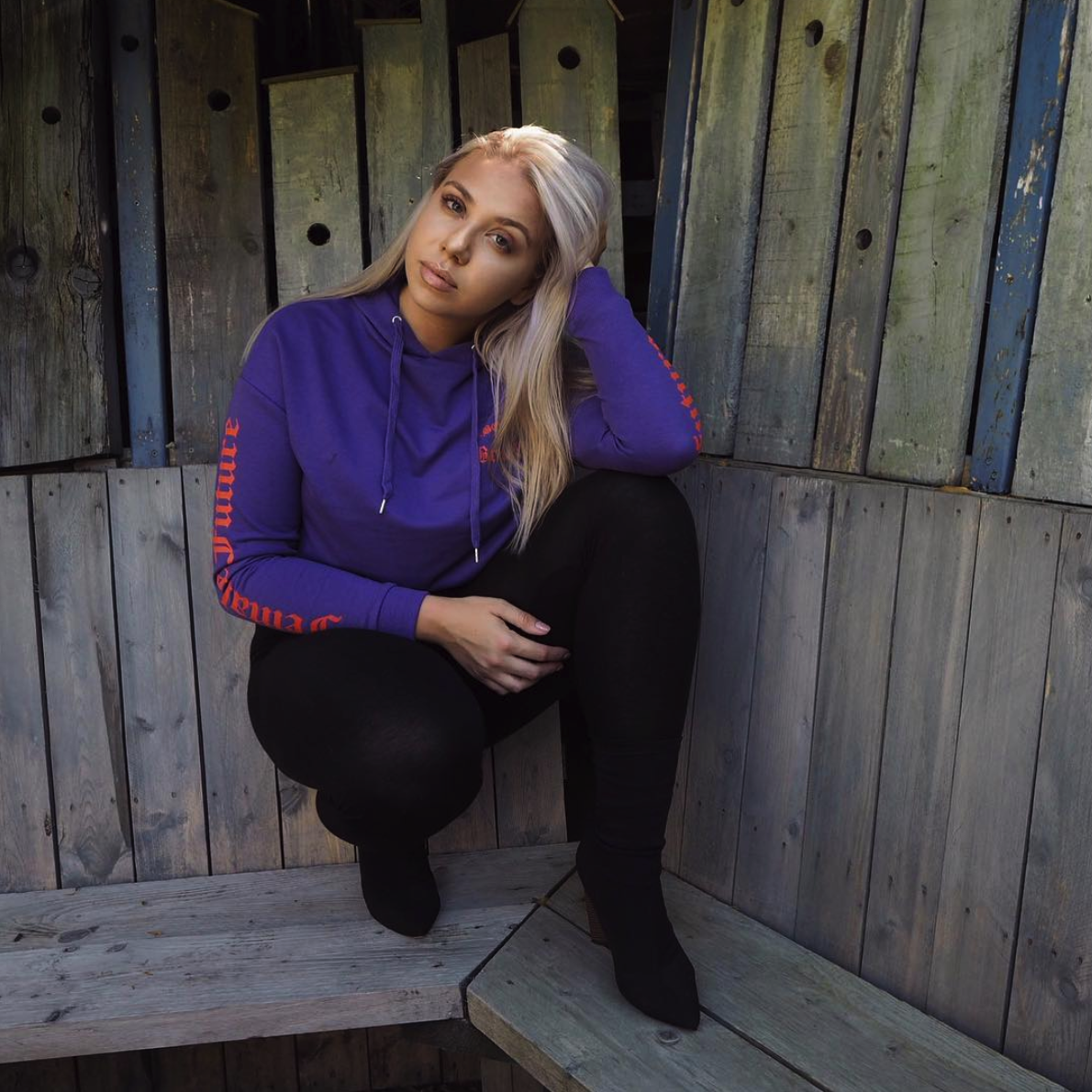
    Emma Doyle is a 21 year old fashion design student from Dublin who is trying to make her mark as a social media influencer in a saturated market.  

    Emma 1
    Emma Doyle, a rising star in social influencers

    “I started my blog the summer after I finished school in 2014,” says Emma.  “I was looking at doing fashion design in college so I started it as a fashion blog and I wanted to put up different outfit pictures.

    “I didn’t expect it to become anything,”  she explains.  “I just wanted to do it for myself to see if I liked it.

    “I found out that I really liked makeup and beauty, which I didn’t realise. I started incorporating that in as well and doing reviews when I bought new makeup and products.”

    It has been a challenge for Emma to establish a following.  She started her blog from nothing and it has taken a lot of time and effort to build her profile.  She now has 12,000 Instagram followers and 1,500 people who log on to Snapchat to watch her everyday routine.

    “It’s weird because [my following] kind of goes up and down,”  she says.  “You get out what you put into it.  If I have a busy few months when I’m in college and I’m scraping by trying to put up a post a day, I won’t get many new followers.”

    Often, followers come when you least expect them.  Emma explains:  “Say when I’m away on holidays and I’m putting up a load of pictures when I’m away, I’ll end up getting way more followers that week.  

    Emma 2
    Emma Doyle finds posts on holiday outfits attracts followers

    “It might not even be blog related.  It could be my outfit on holidays and that would be it.  It’s weird.”

    When Emma started blogging in 2014, it was the fashionable thing to do.  Snapchat was in its infancy and Instagram videos or stories had not yet been introduced on the picture sharing app.

    However, as technology has changed, so have Emma’s tactics.

    “I feel like people don’t really read that much anymore so I rarely write on my blog,” Emma explains.  “I think it’s moved to watching things.  You need to Snapchat and make videos to get your point across.”

    Emma believes that coming on camera and speaking to her followers creates a level of intimacy and this is why people continue to follow her.

    “I have a small audience but they’re all interactive,” she smiles. “They all do really care.”

    Despite her growing success, there are times the fashion design student wonders why she continues to blog.

    “Sometimes I do question ‘should I keep going with this?’ and think about the things I shouldn’t do anymore,” Emma says.

    Are there ever days where she’s just not bothered?

    “Definitely,” Emma says with a firm nod of her head.  “There are days that I feel like I’m in a rut and like you feel that you’re not improving.  You’re wondering what’s the point in me doing this if it’s not going to be really successful?

    “I think it’s hard because no matter how far you go, you think this.  When I first started, I never thought I’d get to where I am now.  Now I’m here, I feel like it’s the same and I haven’t gotten anywhere.”


    It’s the small things, however, that motivate Emma to keep going.

    “I get press stuff sent to me now,” she smiles.  “I get sent new products and I didn’t get that at the start.  So I have to think about that too and think of that as success.

    “Sometimes a bigger company will reach out to you and it’s like wow.  In your head you’re thinking ‘I can’t believe that this is happening’ and you’re shocked by it.  You can’t even imagine it happening a month before.  

    “Things happen that you don’t expect and it gives you a bit of motivation.”

    Talking to Emma across a small table in a Dublin coffee shop, she radiates confidence. There is an air of self-assurance that streams from her voice as she speaks passionately about what she does.  

    She explains, however, this was not always the case.

    “Anyone who knows me knows I have never been overly confident,”  Emma says. “Speaking on Snapchat and Youtube has made me a different person.  I feel like I can talk to people.

    “Even in college I can talk to my lecturers much easier.  Before, I wouldn’t even ask a question.”

    What changed?

    “I just don’t care,”  Emma smirks.  “You grow a thick skin and now I actually just don’t care.  Sometimes I’m thinking ‘should I post this? It’s a bit risky or a bit weird’.  I wonder ‘should I say this?’

    “Then I realise that I just don’t care and I post it.

    “If I cared, I wouldn’t be where I am.  At the start if I had cared when I got my first nasty message, that would have been it and I would have finished.”

    Social media influencers have come under fire in recent months about the authenticity of their posts and whether they are talking about a product because they actually like it or because they are being paid to talk about it.

    The Advertising Standards Authority of Ireland (ASAI) launched a new code of conduct for bloggers and influencers in January 2016. This states that influencers must say when they have been paid by a company to promote a product by writing either #ad or #sp (sponsored) on their photos and videos.

    Despite these rules, influencers have gotten into hot water recently for not posting the relevant hashtags.  In recent months, at least two influencers have been issued warnings by the ASAI for not disclosing ads.

    Should we be questioning the authenticity of influencers?

    “I question it myself,”  Emma says.  “Sometimes you see a post and you just know it’s sponsored.  You know when you look at it.  You can tell by the picture and the way it’s posed.

    “I can almost predict it and then I scroll down to the caption and I see #ad I know I’m right.

    “I do think that’s it fair that they’re paid,”  Emma says.  “I don’t think it’s bad being paid. Why wouldn’t they get paid for doing it?  It is a full time job.”

    She is forced to stop when I start laughing.  I question whether it is a full time job.

    “I think it is,”  she says.  “I understand how much time and work goes into it.

    “For every sponsored Instagram post, they have to do their makeup and get a photographer.  Say for example #IWorkWithPrimark, they have to go and shoot those looks.  They get a voucher, go into Penneys, buy the stuff.  Obviously you wouldn’t complain about that.  That’s not a chore.  

    “Then you have to go hire a photographer and get them to take the photos.  They have to do their makeup and style their outfits. They have to edit the photos, put them up and write a caption as well.  It does take time.  That’s a couple of hours out of your day.   If they’re paying that photographer, that’s money out of their own pocket.   It is fair they get paid.”

    Is it a sustainable full time job that Emma would consider when she leaves college?

    “I don’t think it’s going to be going anywhere,”  she says.  “I think it’s only going to get bigger.  More people want to work with influencers. It’s hard to know what it will be in the future.

    “I don’t know what I want to do when I finish college,”  she reveals.  “Last year, I was thinking about not going back to college and just seeing where it would take me.  I wasn’t sure if I definitely wanted to do my course.  So I was going to try and see what I could do by blogging full time.  

    “I decided to go back to college and finish it off because it’s only one more year. I’m happy I did go back.  My course is beneficial and I need something to back me up.   It’s not safe for me to do it full time yet and I need a steady income and routine.”

    So what does the future hold for Emma Doyle?

    “I’m not thinking about what I’m going to do when I leave college just yet,”  Emma says.  

    “I’d love to try fashion buying or styling.  I’d love to design or have my own online fashion shop.”

    Emma 3
    A classic outfit post influencers would be expected to post

    It’s clear Emma will have a lot of options and opportunity when she leaves college next May.  Whether she will continue to blog and “influence” remains to be seen.  

    What’s also clear however, is that influencers are here to stay.  In fact, the influencer industry is only going to grow as we become more and more dependent on that rectangular piece of glass we carry around in our pockets.

    By Louise Burne