Tag: Instagram

  • Cleanup in Ireland’s dirtiest old town

    Cleanup in Ireland’s dirtiest old town

    Watch Colm McGuirk investigate cleaning up the streets in Dublin

    According to work carried out by Irish Business Against Litter and An Taisce, the level of littering in Ireland reached a 13-year high last year. Of the 37 towns and cities inspected, the amount of litter increased in 24.

    With parts of Dublin ranked worst overall for litter volume and illegal dumping, community cleanup groups in the capital are a welcome sight. The City joined one such group as they treated a sports court in The Liberties area to a spring clean.

    “We’re aiming to do cleanups around Dublin within our 5k,” says Kathleen Reilly, referring to the allowed travel limit under Covid restrictions.

    Spurred into action by the state of the stretch of the Royal Canal near her home, Reilly’s friend Ciara Haughney proposed the group’s first cleanup in March.

    “I just got so down and disheartened looking at all the trash in the canal,” she says. “Especially when you see nesting birds and swans trying to make a nest, and they’re picking up litter with their beaks. It’s just really depressing.”

    After being supplied with litter pickers, bags and gloves by Dublin City Council, Haughney put the word out to friends in the area, “and surprisingly loads of them were like, ‘yeah it’s a disgrace, I really want to help.’”

    The success of the first cleanup effort encouraged Kathleen Reilly to set up an Instagram page, and more volunteers signed up.

    “Whenever you actually look,” says Reilly, “it’s very dirty. There’s a lot of litter, there’s a lot of dumping. It’s not pretty to look at. So it’s just kind of encouraging people to be looking after their city.”

    A number of factors connected to the Covid-19 pandemic have contributed to the recent spike in littering. Firstly, restrictions on indoor activities have meant a massive increase in outdoor recreation, where not everyone, it seems, pays the appropriate respect to the surroundings they’re enjoying.

    Another factor is the deluge of disposable containers produced by a shift to a takeaway model for restaurants, bars and cafes, while PPE equipment also featured high up on An Taisce’s list of most common litter items.

    How rubbish! An image of torn bin bags with their content scattered across the pavement. Photo by Colm McGuirk

    Cleaning up the streets during Covid-19 has brought its own unique challenges for councils.

    “We’ve broken our [street cleaning] crews into pods,” says John McPartlan, Dublin City Council public domain officer. “If someone is sick or is a close contact, you lose that person; you can’t take anybody from another pod to make up for it.”

    McPartlan also explained the rationale behind the positioning of bins in the city – many have suggested there aren’t enough around.

    “The rule of thumb for a bin is that the area has to have heavy footfall or else have food outlets like chippers or takeaways, sandwich shops, that type of thing. Where someone comes out and eats their food and then wants a bin. We don’t put bins in housing estates, or quiet streets.

    “A lot of the parks only have bins at the entrance to the park. The workers in the park are there to maintain the park and then the waste management function is to empty the bins. But you won’t have vehicular access into the parks, which is generally how we empty bins; we send the side loader around. But we do try to put as many bins in heavily used areas as we can. We’ve started putting out beach barrels now in these locations [that have recently become popular for outdoor recreation].”

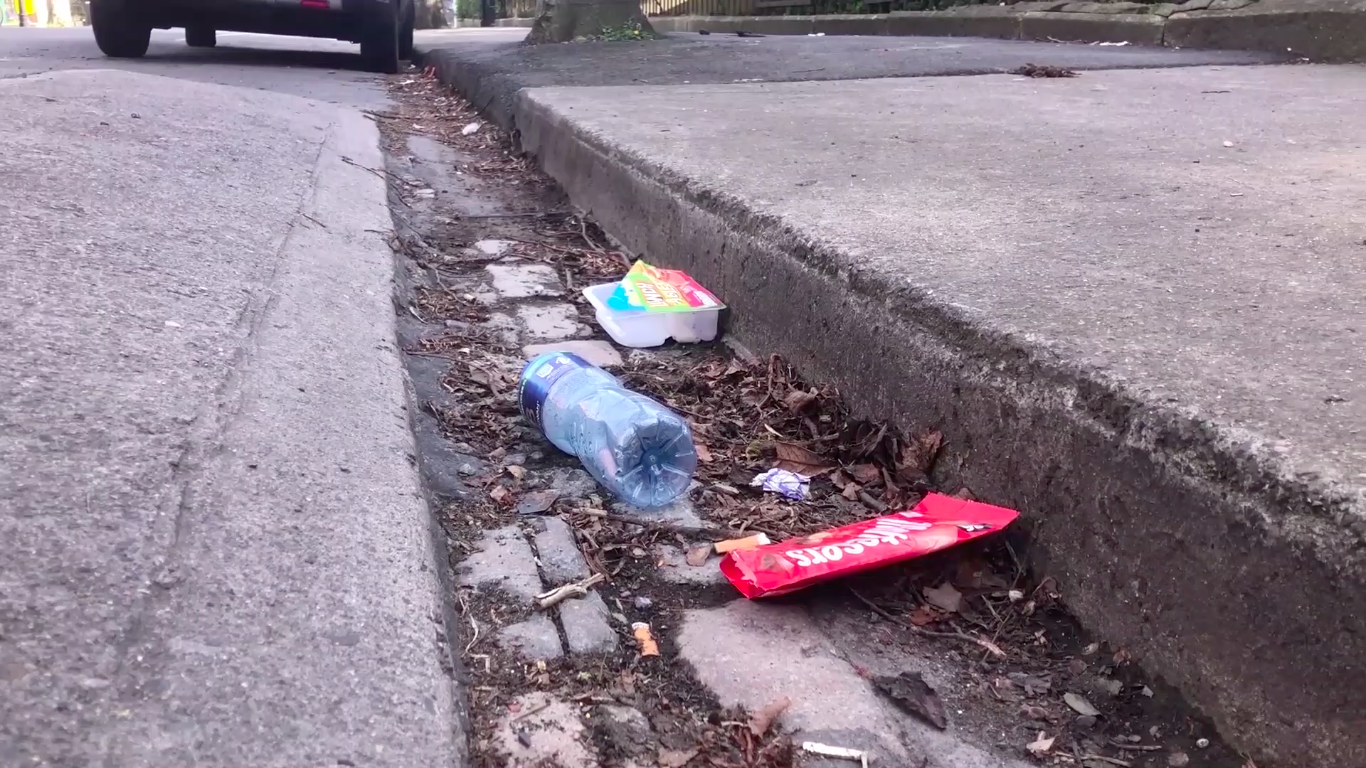
    Today’s snack, tomorrow’s problem? Photo by Colm McGuirk

    To date, Haughney and Reilly’s group have done six cleanups and counting, and anyone can join in; look for Make Our Streets Clean on Instagram if you’d like to get involved. The floor is open to suggestions on where to tidy up next – the scene of today’s mission is beside the home of one of the volunteers.

    Alternatively, search online for a similar group near you, or ask your local council for litter-picking equipment.
  • Weigh in: Should paid promotion of diet products be banned?

    Weigh in: Should paid promotion of diet products be banned?

    Photo by Cottonbro on Pexels.com

    The Food Safety Authority of Ireland (FSAI) recently shut down FatBurney.com – a website selling weight loss products apparently containing a harmful chemical that can have unpredictable, and sometimes fatal, side effects.

    The reason for the closure was because the company was “selling and marketing a highly toxic industrial chemical, 2,4-Dinitrophenol (DNP) using a website address that implied the substance may be used for weight loss”, the FSAI said in a statement released on 8 February.

    The chief executive of the FSAI, Dr Pamela Byrne, expressed concern over the use of DNP in weight loss products, stating that there are “serious health risks from taking slimming products purchased online”.

    “DNP’s use has serious and unpredictable side effects, including death”

    Dr Pamela Byrne

    “It is illegal for DNP to be sold for use as a weight loss product and it is not allowed in food. Its use has serious and unpredictable side effects, including death. There has been one recorded death in Ireland in 2015 and the UK National Poisons Information Service has recorded 32 deaths in the UK from 2007 to date,” she said.

    Ads promoting many different kinds of these products – all promising a miraculous weight loss – have become commonplace, usually featuring an image of a slim, glamorous celebrity expounding on the benefits of a detox tea or meal replacement shake. Companies recruit legions of celebrities and influencers to flog their products to the eager public.

    Celebrities such as Khloe Kardashian, Amber Rose, and Trisha Paytas have all been associated with dieting products, posting paid ads on their social media accounts to encourage fans to invest in these products in order to someday achieve a body like theirs. 

    The dieting industry has become a billion-dollar business; it was worth a massive $71 billion in the United States in 2020 (down 9% from the year before), and celebrities are cashing in.

    Products promising to cause a lack of appetite have grown in popularity, with brands selling pills, gummies or even lollipops that claim to prevent cravings, and aid in a quick and easy weight loss.

    However, this growth in popularity has not been without its controversy. While some celebrities and influencers have embraced the dieting culture, others have not been afraid to speak out against it. The Good Place star Jameela Jamil has been extremely vocal on the topic and has called out multiple celebrities for endorsing companies that promote various weight loss products.

    Jamil, who has been open about the tough experiences she has had with dieting products, has not held back on her criticisms of the industry:

    “It’s incredibly awful that this industry has bullied you until you became this fixated on your appearance. That’s the media’s fault. But now please don’t put that back into the world, and hurt other girls, the way you have been hurt. You’re a smart woman. Be smarter than this.” She commented under a now deleted Instagram post of Khloe Kardashian endorsing a weight loss shake by the brand Flat Tummy Co.

    Jamil maintains that the dieting culture is grounded in misogyny – and has an extremely detrimental effect on the minds and bodies of young girls:

    “No. F*ck off. No. You terrible and toxic influence on young girls. I admire their mother’s branding capabilities, she is an exploitative but innovative genius, however this family makes me feel actual despair over what women are reduced to,” she wrote in a now deleted tweet aimed at Kim Kardashian.

    “Weight loss pills and drinks are all about making money. It’s not healthy or sustainable”

    Grace Taylor

    Paid advertisements are extremely lucrative for influencers and this, combined with celebrity worship culture, has created a viable business model for weight loss brands.

    Paying people to promote and tell their followers to invest in a certain product, when in some cases they haven’t actually tried it themselves, means that people are willing to endorse products without knowing potential side effects. 

    “Weight loss pills and weight loss drinks are all about making money. It’s not healthy or sustainable. I think people buy these products because so many companies promote how fast you can lose weight, and everyone would love a quick fix” says Grace Taylor, who runs a fitness account on Instagram (@gracey.fit).

    While they may seem like an easy alternative, they are not conducive to a healthy and sustainable diet:

    “Any product or company that states you can lose weight quickly are just doing it in a very unhealthy way,” says Taylor. “Whenever my followers have asked me about weight loss products, I will always tell them you are better off eating the same amount of calories in a meal rather than a meal replacement drink.”

  • The importance of social media to content creators

    The importance of social media to content creators

    Over the past number of years, social media has slowly become a large part of most people’s everyday lives. The popularity of Facebook, Snapchat, Instagram and Twitter has grown exponentially over the past decade. Erin Killoran explores how content creators now rely on social media.  

    Image source: Pixabay

    Over the past number of years, social media has slowly become a large part of most people’s everyday lives. This has led to a phenomenon of a new way of promoting products, services and content via social media. As a result of this large companies such as the popular skincare brand ‘The Ordinary’ have changed their marketing strategies to advertising their company exclusively via social media platforms. 

    Recent studies have shown that the average adult spends 2 hours and 3 minutes on social media per day. This consumption of social media has allowed for ordinary individuals to create content and upload it online for the general public to enjoy, with the possibility of financial reward for the creators. Presently, Youtube, TikTok and Spotify are by far the most popular platforms for content creation. 

    The rise in popularity of podcasts has led to a huge surge of people creating a production of their own, covering a number of different genres. This new phenomenon is revolutionary as it allows the audience to listen in their own time, unlike traditional radio programmes. But in order to gain  any form of traction with these podcasts, these content creators need to promote themselves on various social media platforms to prevent getting overlooked in this heavily saturated market. 

    TheCity.ie spoke to the host of ‘GleeCap Podcast’, Conor Burke, who said: “Social media is essential for me for not only promoting my podcast, but also plays that I produce and star in. It is single-handedly responsible for getting a few thousand listeners a week on the podcast. I always tell people if I didn’t have to promote anything, I probably wouldn’t have any social media because it just takes up so much time.”. 

    Becoming a creator online has become extremely accessible for most people as there is no longer a need for a significant amount of funding to start up a project. Burke said: “I set the podcast up in late May, and our following has just grown organically through Instagram. It not only grew the following of the podcast on social media, but also my own personal social media accounts. Before creating this podcast, I don’t think I particularly thought about how heavily I would have to promote it online to achieve a consistent audience.”

    Prior to social media, any form of promotion was solely reliant on print media, TV and radio advertisements. Now, this is no longer necessary and has made advertising significantly easier for everyone. Burke told TheCity.ie: “There’s absolutely no way that this podcast could have grown to the extent that it has without social media. Without it,  I would have just recorded an episode and posted it online, but no one would be able to discover it and listen to it.”

    This method of social media self-promotion has eliminated the need for advertising and the assistance of marketing experts. Therefore, removing unnecessary costs for content creators working with a limited budget.

    Studies have proven that when social media users engage with their followers, they gain more traction. Burke said: “Interacting with listeners on Instagram and Twitter has grown our podcast exponentially. 

    “We often post interactive memes and get people to ask us questions prior to an episode. And while recording our podcast we’ll answer them. I have definitely found that the number of listeners go up due to this interaction as it allows them to look forward to the next episode. I also think that the numbers go up depending on the guest that we have on due to them promoting the episode via their social media accounts.”

    Due to his consistent  promotion of this podcast on social media, Burke has garnered the attention of a number of stars from the TV show Glee, including Dot Marie Jones, which has given him the opportunity to interview her and soon, a number of other stars of the show. He said, “I know that when the cast episodes come out, more people will listen because of their large social media following.”

    Burke also mentioned the importance of having a business profile as a content creator. “Instagram’s ‘business profile’ feature has been very helpful for myself. It has allowed me to see what posts my followers react well to and how much overall traffic my account is getting each day and gives me some kind of indication as to how many people are going to listen to my most recent episode.”

    The uses of social media for content creators is endless and continues to help millions of people grow their audience each day. 

  • The rise of the “BoPo” movement on Instagram

    The rise of the “BoPo” movement on Instagram

    Loving your appearance can be hard. It often seems like everywhere we look, we’re being told we’re not good enough. Not thin enough, not pretty enough, not curvy enough. Niamh Talbot discusses how these tides are beginning to change, starting with social media.

    Stock photo from Pixabay.

    Body image concerns are common among young women and can have serious negative consequences. Most young women use social media daily, and research suggests that viewing idealised appearance-focused content is associated with poorer body image. But perhaps social media isn’t all bad?

    Looking back, social media hasn’t exactly been safe spaces for body positivity. However, a growing number of women online are pushing back against society’s ideals and the physical pressures engrained in so many of us.

    A new “body positivity” or “BoPo” movement has emerged on social media in recent years. The movement aims to challenge narrow beauty ideals and encourage acceptance and appreciation of bodies of all shapes, sizes, and appearances. 

    Instagram is leading the way on social media with BoPo accounts such as @bodyposipanda gaining over 1 million followers. These accounts are sharing their stories with hashtags like #bodypositivity, #bopo, #bodyacceptance, and #effyourbeautystandards to promote the notion that all bodies are beautiful and worthy.

    A search for the hashtag #bodypositive returns almost 9 million posts, and #effyourbeautystandards generates almost 4 million posts.

    Research has shown that viewing body positive Instagram content may improve women’s body image, at least in the short term.

    In a 2019 study, 195 young women viewed either body positive content, idealised content with thin women, or appearance-neutral content taken from Instagram.

    Before and after viewing this content they were asked to rate their mood, body satisfaction, and the extent to which they focused on their appearance.

    They found that brief exposure to body positive Instagram posts resulted in improved body image and mood in young women, compared to idealised and appearance-neutral posts.

    These women felt more satisfied with their bodies and had a more positive mood. In contrast, those who viewed idealised Instagram posts had poorer body image and mood.

    Popular Irish influencers have embraced this body positive movement, with the likes of Roz Purcell leading the way. Purcell has posted many ‘Instagram vs Reality’ shots to highlight that the version many people portray online is merely a polished persona. Speaking about her posts. She said, “In a world of beautiful strangers and comparison try remember what this place is, the highlight reel, that split second you see of someone’s day, that good angle or edited photo. That’s all it is – nothing more.”

    Other Irish influencers are following suit, like makeup artist Aideen Murphy (@aideenkate).

    Murphy hasn’t always had a good relationship with body image and explains it’s been a journey: “In the influencing world, you’re around a lot of women who have the ideal body type. It’s like people expect you to look exactly like them, and they expect you to want to look like them too. And I definitely did at one stage. I felt like skinny equaled successful.”

    After nearly two years of a strict gym and diet routine, Murphy decided to finally give it a break. “I wasn’t seeing the results I wanted which was so frustrating, I still wasn’t as slim as my friends and it felt like my body just wasn’t built for it. Then I started to see a lot more women, who looked like me, posting content embracing their bodies and size. They could still post fashion and beauty content being so called “plus-size” and their followers loved it.”

    “I just eventually decided, why am I being so hard on myself trying to be something I’m not. If these women could be confident in themselves and still be successful, why couldn’t I,” she said.

    Murphy believes it’s imperative that influencers take responsibility when it comes to editing and posting photos, “It can be so dangerous for young girls to see perfect bodies and clear skin all over their feeds and think that people naturally look like that. I think seeing someone you admire post photos showing all their so-called “flaws” can hugely affect how you think about yourself, especially as a teenager.”

    “Seeing other women in their bikinis and underwear with their rolls, cellulite, stretch marks, hyperpigmentation, and bellies on show normalised fat bodies for me and taught me not to feel ashamed in my own skin,” Murphy said.

    “I saw these beautiful, gorgeous bodies and saw myself.”

  • How Instagram is being used to encourage people to Buy Irish

    How Instagram is being used to encourage people to Buy Irish

    With support ramping up to shop local this Christmas, Eibhin Kavanagh looked at the use of Instagram to promote Irish businesses and buy Irish.

    People are using the popular platform to promote Buy Irish. Image source: PickPic

    Since the coronavirus pandemic began last March, companies have fumbled to set up an online presence to keep in touch with their customers and continue to get sales, even when their shutters are down.

    Social media has become the key to customer engagement for businesses, especially smaller businesses. Platforms like Instagram that provide business tools such as profile shops and insights into engagements have become essential for them.

    In Ireland, there are 1,895,000 Instagram users as of March 2020.  This accounts for 38.5% of the entire population, according to statistics by Napoleon Cat stats.

    Coming up to Christmas, most media platforms are pushing people in Ireland to buy Irish. With Instagram being a widely used platform, it is without a doubt being used to promote this message.

    With the ability to reshare posts as stories and tag friends and family in posts, many buy Irish accounts and gift guides for Christmas have been shared around and have gained a lot of popularity. 

    Rebekah Caulfield created a post on Instagram with an Irish gift guide containing over 250 Irish businesses to support this Christmas. As of writing, the post has gained 107k likes and 962 comments.

    Rebekah Caulfied talked to the City about her gift guide and how it got popular.

    “So, I wasn’t even necessarily planning on doing it. Basically, I just made a personal decision that this year that I wanted to support Irish businesses when I was getting my Christmas presents for my friends and family. I was just trying to get organised and on my notes on my phone I was keeping track of businesses that I liked or came across to go back on,” Caulfield said.

    After taking note of Irish businesses she saw on Instagram, Rebekah created the original post which contained 17 categories including kids, fashion, lifestyle, and art.

    “Obviously a lot of people are interested in buying Irish and supporting small businesses, so my friends were like ‘oh it would be great if you posted it’, so I posted it and it blew up,” she said.

    “First all my friends and family were commenting and sharing it on their pages and then I started getting new followers coming in and businesses would start reposting it. Then some influencers with big followings started reposting it, so for a solid week it was just growing with reshares constantly coming,” she said.

    Caulfield was able to use her platform after the initial post to continue to add to the gift guide through Instagram stories and highlights. She has since added over 200 businesses to the original post. 

    With lockdown starting last March, Caulfied noticed more businesses using their social media accounts to engage with their customers.

    “With everything going on, it was just being more aware of businesses on Instagram and tuned into that and I think a lot of brands were putting more work and time into their social media so that way I was getting to see them more, whereas normally you weren’t as focused on that pre-lockdown,” she said.

    Fiona O’ Raw runs the account @buyirish. The account was set up on the 14th of March, the date the schools closed. The account aims to highlight and draw attention to Irish businesses.

    Fiona O’ Raw talked to theCity about how she used Instagram to provide people with the resources to buy Irish.

    “I thought if we don’t help people find small Irish businesses, especially online, then we’ll end up losing a whole chunk of businesses,” O’Raw said.

    Since starting the account in March, O’ Raw has gained over 8,000 followers and has made over 2,500 posts, all related to buying Irish.

    “Instagram has its good and bad elements. It suits itself. It does help you find other businesses but to really make momentum you need that bit of promotion. A huge impact takes a post from somebody with huge numbers of followers,” O’ Raw said.

    Fiona O’ Raw was recently contacted by The Late Late show about her work, which showed how a share can benefit an account on Instagram.

    “I was contacted by Ryan Tubridy, who has something like 150,000 followers. Within 15 hours I had 300 new followers and within five days I had 1,000.”

    However, some of the ways Instagram operates has had a negative impact on her account, as well as on business accounts. The use of algorithms within the feed has created issues with post visibility and has resulted in posts being missed by followers. 

    “The change to the feed not being chronological is an absolute pain and it’s definitely going to affect business. People are not necessarily seeing the post. It even interfered with how I do my work because it means that sometimes I might not see someone’s weekend giveaway until Monday so I couldn’t post it up for them,” O’ Raw said.

    “Instagram has a different way of getting to people, sometimes I click and think how did you find me, you know? I think on a website you nearly have to know the website’s there or have some advertising to get people to your website, where Instagram seems to kind of find its own way,” she said.

    While O’ Raw has been running the account since March, she commented on the recent increase in support for buying Irish as Christmas approaches.

    “The increase in followers has really been ramping up since getting near Christmas, I’d say since October, so the message is starting to get out there that we need to be supporting local,” she said.

    Buying Irish and Local is not just for Christmas, these businesses will be slumped in January otherwise.”

    Fiona O’ Raw

     
    While the support for buying Irish and support local has increased, both Rebekah Caulfield and Fiona O’ Raw agreed that buying Irish is something that continues to be important all year round, and not just at Christmas. 

    “I definitely do think it’s something that’s important all year round, it’s such a topical thing,” Caulfield said. 

  • Are Instagram filters affecting your health?

    Are Instagram filters affecting your health?

    By Paula Bowden

    Filters. They’ve pretty much been around since the dawn of social media. Whether it’s a touch of sepia tone or the much loved dog-ears filter, you’d be hard pressed to find a social media user that hasn’t used a filter at some point. However, while the primitive filters of the past have simply changed the brightness and tone of an image, today’s filters offer users the opportunity to change their face shape, lengthen their legs and even make themselves appear slimmer, no tricky software required.

    For many, filters are still a simple bit of fun but for some users, they offer up a dangerous comparison, and can have damaging effects on self-esteem, leading to a warped self-perception.

    In 2018, Dr. Tijion Esho, coined the phrase “selfie dysmorphia” – the phenomenon of people requesting cosmetic procedures to resemble their filtered social media image. While previously, Dr. Esho and his counterparts were used to clients presenting pictures of celebrities for inspiration, a growing number of people are now taking their own selfies to the cosmetic surgeon and looking to make their own filtered images a reality.

    While one may laugh at the initial absurdity of this idea, Mellissa McKeon (24) said her decision to get lip and cheek fillers four years ago was largely based on a desire to look more like her online presence in real life.

    “When I was 20, I went on a date with a guy who I had met online and he basically flat out told me that I didn’t look like my social media pictures. He played it off as a joke, but it devastated me and made me completely question the way I looked and my confidence.

    “when an app gives you that opportunity to change the thing about yourself that you hate, well I obviously jumped at the chance”

    “I think from a young age I’ve always had confidence issues and my lips were always something I was really self-conscious about, I’ve always felt they were flat and just unattractive. So naturally, when an app gives you that opportunity to change the thing about yourself that you hate, well I obviously jumped at the chance, but I took it a step further and tried to create that look in real life.

    “I will say, looking back at all my pictures from my very early 20s and the fact that they look nothing like me. It makes me sad to look back because I was so unhappy.”

    With little or no self-esteem and a severe hatred of her own body, Melissa spent three months receiving treatment for body-dysmorphia and depression, learning how to change the obsessively negative way she thought about her appearance.

    “It’s not like you’re ever completely cured,” said Melissa. “But I do treat myself better now, I’m kinder to myself and I don’t use social media as much which helps.”

    Last month the social media giant, Instagram, announced a ban on so-called plastic surgery filters from their platform as they look at reviewing the terms of their wellbeing policy.  

    One of the filters in question, dubbed fix me, mapped out lines on the users face giving indication of where a plastic surgeon might nip and tuck to create the perfect face, while another filter plastica gave users inflated lips and higher cheek bones, showing them what they might look like if they went under the knife.

    “We’re re-evaluating our policies – we want filters to be a positive experience for people”

    In a statement, Instagram said: “We’re re-evaluating our policies – we want filters to be a positive experience for people.” They added that while they were re-evaluating their wellbeing policies they would be removing all effects from the gallery associated with plastic surgery and stopping any further approval of similar new effects as well as removing current effects that are reported to them.

    The fix me and plastica filters.
    Credit: DANIEL MOONEY/INSTAGRAM

    Spark AR, the augmented reality platform that creates the filters, also released a statement on their Facebook which said: “We want Spark AR effects to be a positive experience and are re-evaluating our existing policies as they relate to well-being. While this happens we’re removing all effects associated with plastic surgery from the Instagram Effect Gallery.”

    These changes follow on from a recent ban by Instagram on posts that make “miraculous” claims about weight loss and are linked to a commercial promotion.

    As well as this, Instagram also said that it would begin hiding promotions for cosmetic surgery and other diet products from under 18s. The new policies will also be applied to Facebook, which owns Instagram.

    Barry Murphy is communications officer for the eating disorder association of Ireland, Bodywhys. He spoke to thecity.ie about the role that social media can play when it comes to mental health.

    He said: “I suppose one of the challenges around social media is that it can heighten that sense of comparison maybe that we didn’t have many years ago, where we took all of our social queues in an offline context or in a peer context and obviously social media has kind of shifted a lot of that over.

    “It’s become 24 hours a day, seven days a week potentially, but is there a simple answer to what effect this is having? I don’t think any one study or piece of research could really give you a succinct answer on that.”

    “There’s a lot of information coming out now that social media is not particularly detrimental to youth mental health”

    Barry continues: “I think when we’re talking about young people and technology we always have to ensure that that conversation is constructive and nuanced. We also have to remember that social media has not replaced traditional risk factors such as bullying or trauma. Social media has not superseded traditional risk factors in any way, they are very much still core.

    “There’s a lot of information coming out now that social media is not particularly detrimental to youth mental health,” said Barry. “It’s a little bit of a mixed picture.”

    Bodywhys can be contacted on 01 210 7906 or alex@bodywhys.ie.

  • Does Instagram promote unattainable goals?

    Does Instagram promote unattainable goals?

    Since its creation back in 2010, Instagram has gone from strength to strength and has quickly become one of the most popular social networking sites, with over 800 million users worldwide.

    However, for an alarming amount of its users and mental health experts, the positivity which Instagram encourages is becoming a major issue in the lives of many young people around the world.

    There is a relentless nature to Instagram, a feeling among its users that they must project nothing short of a ‘perfect’ lifestyle. From this arises the same question that has been asked millions of times before, ‘when is it time to stop scrolling?’

    In comparison to Twitter, where a simple spelling mistake in a viral tweet earns you some nasty nicknames, Instagram actually appears to be quite a friendly platform to interact with. It is a visually led site, where trending posts will only go viral due to popularity. This is measured in likes that occur through a simple ‘double-tap’ on your screen, meaning posts go viral because of positive reactions.

    However, there is growing concern that the emphasis on promoting positivity may be harmful to both yourself and those who see your content. Facebook may make you believe its users are boring, whereas Twitter may make you believe everyone is feisty, but Instagram, in many cases, makes you believe that everyone else is happier and better off than you. Being bombarded with happy couples, expensive clothing or just simple good looks in your face every time you open the application may not have a good impact on your mental health, and recently this has been highlighted as a major issue that needs tackling.

    In 2017, the Royal Society for Public Health (RSPH), an independent charity seeking to improve the mental health of the public, produced a country-wide survey of 14 to 24 year-olds, in which they asked them to rank the ‘big five’ (Twitter, Facebook, Snapchat, Youtube, Instagram) in terms of how each one affected their sleep, and their F.O.M.O (fear of missing out).

    Instagram came last in this survey, with results showing particularly bad scoring on areas such as sleep, self-body-image and F.O.M.O. Only Snapchat came close in terms of negativity. However, many believed Snapchat provided an opportunity for ‘real-world relationships’.  Niamh McDade of the RSPH said: “On the face of it, Instagram can look very friendly. But that endless scrolling without much interaction doesn’t really lead to much of a positive impact on mental health and well-being. You also don’t really have control over what you’re seeing. And quite often you see images that claim to be showing you reality, but aren’t. That’s especially damaging to young men and women.”

    The likelihood among young men and women is that they are following their favourite celebrities or footballers, all of whom are living lavish lifestyles much different to the norm. Logging onto a feed displaying items you can’t afford will create anxiety and depression and this is just one aspect of the potentially harmful factors associated with Instagram.

    For Darragh, a 23-year-old from Dublin, the unrealistic nature of Instagram led to an unhealthy mind-set, one he says he could feel himself slipping into. “I just remember being in final year when my life revolved around studying and getting assignments done, the same sort of posts I was always seeing began to really annoy me. Seeing people going out and having a good time, or even travelling just really got to my head because I would be spending hours every day following the same routine for a year. It got to the point where I could feel I was about to get annoyed before I would even open the app but I would do it anyway, it was strange, sort of like an addiction that I hated.”

    Unfortunately for Darragh, things became worse, something he partially puts down to his use of social media, including Instagram. He said: “The whole time I kept thinking that the feeling of depression or even anger looking at any sort of post would pass as soon as final year was finished, but it just never went away, and I wasn’t able to get that thought process out of my head. I ended up going to St. Pats for their mental health programme, that’s how bad it got.”

    Instagram has always been the same platform, since its creation it has always been about self-promotion and perhaps displaying a false portrayal of how we live.

    So, what changed? Why, after several years of using social media, was it only now Darragh saw issues with it? One factor Darragh believes might have played an integral role was the introduction of ‘sponsored’ posts, a system where you come across various adverts, mainly fitness related, that will appear on your timeline or as you tap through stories.

    As well as this, a new algorithm meant popular posts based off follower numbers make it to your timeline even if you never followed them yourself. Darragh believes “I was never that active during that [final] year … sports had to be put on hold for projects and I could tell in my appearance I was gaining a bit of fat. And then I start seeing fitness posts everywhere and it just makes me that bit more conscious and it is nothing less than horrible feeling to deal with.”  

    Through Darragh’s words, I was able to understand how his daily battle with mental-health is one that is not easily won. We are constantly having adverts for the latest fitness workout or new fashionable clothing brand shoved down our throat, and it is advertising that is already impossible to avoid.

    The constant use of Instagram may leave us chasing an unrealistic lifestyle that we will never reach, leaving us with an unfulfilled feeling that won’t ever go away.

    For more information and advice on issues surrounding social media, you can visit http://www.rsph.co.uk

  • Fashion doesn’t stop at 50

    Fashion doesn’t stop at 50

    Blogger Hilda Smith spoke to thecity.ie about her fashion blogging success. Hilda created her blog, Over the Hilda, three years ago and now has over 3,000 followers on Instagram. 

    On her reasons for starting a fashion blog, she says: “I realised that there were no bloggers catering to women of my age. It was as if only young people were interested in fashion. Also, I was tired of being sold skin creams and makeup that were not right for an older woman’s skin.

    “In a moment of madness, I said I was going to start a blog myself. I am a technophobe, who even found it difficult to get into Netflix, so my family did not hold out much hope of success.

    “I had plenty of life experiences to share … menopause, my interest in staying healthy and fit into midlife and older … so having laughed in my face at first, they finally got behind me.”

    Hilda Smith Instagram @overthehilda
    Hilda’s blog details her fashion tastes as well as elements of her personal life // Instagram @overthehilda

    She said she has always been an over-sharer.  She writes her posts as if she is chatting to friends and telling them what she is doing. “It could be about how I am worried about my memory, how to survive 35 years of marriage and not kill him, or about the wonderful new lipstick I have found or the cream I consider is not worth the money.”

    Before she got into blogging, Hilda was a secondary school English teacher at The King’s Hospital for 34 years. She has been retired for six years. She graduated from Trinity in 1974 and was involved in drama and hockey coaching.  

    Hilda gets her fashion inspiration from magazines, other bloggers, and her daughter Courtney, who is regarded as one of Ireland’s top fashion stylists.

    She says the main aim of her blog is to start a conversation with similar like-minded women of a certain age, “to discuss issues such as being ignored by the media because we are considered irrelevant”.

    She said: “I suppose I really want to showcase that when we reach 50, 60 or 70, it does not mean that we have to go and hide away. I was always interested in fashion and I still am. I will not be told how to dress.

    “I feel that women over 50 have been undervalued, overlooked and ignored by brands. It is as if when we turn 50 we are expected to start wearing granny clothes or elasticated trousers. Many of us are interested in fashion and looking good and we are not invisible.

    “I love seeing older women rocking their leathers and ripped jeans. And I also admire those who wear beautiful elegant dresses and timeless pieces.”

    Hilda Smith Instagram @overthehilda (2)
    Though Hilda is not your stereotypical blogger, she believes her fashion sense is just as valuable as any 18-year-old influencer // Instagram @overthehilda

    Hilda says that there have been so many articles recently stating that women should not wear jeans, bikinis or short skirts after a certain age, and they certainly should not show off their cleavage after 50.  She believes women should ignore these rules about dressing for your age and just wear what they want.

    Hilda says she usually shops in Zara, Warehouse and H&M and has found items in Penneys and Topshop too.

    “I like LK Bennett for something special and find Arnotts wonderful if I want to spend a bit more. I will shop anywhere and love browsing in boutiques too. I have only recently bought into the online trend, generally, I prefer to feel the material, but if I know a brand suits me I can shop online.”

    Speaking about her style, Hilda says: “I am classic with a twist, I guess. I love boho but it doesn’t really suit me; however, I love it on others.  My style has changed and developed hugely. I am less afraid of trying something different. I have worn many of the trends before and love seeing them re-interpreted.”

    Hilda says in order to create a successful fashion blog you either need lots of clothes, money or contacts in fashion or an amazing photographer who knows how to make you look good.

    She says: “It takes time to build up a following and I have done really no self-promotion. But my name is getting out there now and brands are approaching me, although I want my blog to be about more than fashion.”

  • Snapchat refuses to be bought

    Snapchat refuses to be bought

    Snapchat was rencently offered three billion dollars in cash from Facebook  and turned it down.

    Web pundits since, have been debating how insane this idea actually was.

    As John Herman of Buzzfeed observed yesterday, one reason analysts are struggling to understand Snapchat is that we don’t have much data on how the service is actually used.

    All we know, as Herman summarizes, is:

    • Snapchat users collectively receive 400 million “Snaps” a day
    • 88% of these ‘snaps’ are sent to just one other person

    The question on everyone’s tongues is how will Snapchat monetize itself to justify this offer with many people arguing online that this kind of action may mean we are right back in the “tech bubble”.

    In its infancy, a lot of talk about Twitter was around the same argument, and now it is one of the larger success stories of recent years. The same was said of Facebook, and Google and….

    One thing is for certain, Snapchat has a reasonable chance of becoming just as successful if it comes out with a clearly laid out plan for making money.