Tag: Interview

  • “That was a light I had never felt before” 

    “That was a light I had never felt before” 

    The journey to New York and the unexpected encounter of discovering God beyond Catholic beliefs. 

    By Samuel Adeleke 

    From the rave club to the altar, Samuel Walsh, a 22-year-old Irish man, has come a long way, He was born into a Catholic family and studied biochemistry at UCD.  

    Although he has always been passionate about science and biology, he made a big switch to sales and business. 

    He has always been interested in sports and trained in taekwondo, football, and hockey when he was younger.  

    Walsh had a much stronger desire to know God beyond just a household religion. “I grew up as a normal Irish teenager not knowing God,” he said.   

    “When I got to college, things got ramped up, I started partying a lot and got surrounded by the wrong crowd 

    “I remember I had just finished my school leaving certificate examinations when my friends and I started smoking throughout the week, and it grew from there,” Walsh said. Not only did Walsh develop the habit of smoking weed, but it also became a gateway to many more. 

    Things got worse when Walsh started his first job. “My manager was a DJ, and he invited me into the rave scene, and as a naïve teenager, I joined and started taking rave drugs and was also consumed with the lust for women.” 

    While Walsh believed he was fulfilling his desires and turning fantasies into reality, he soon faced an internal spiritual conflict that brought awareness of his identity. “I felt terrible, I was going away from myself and going down a way that leads to destruction,” he said. 

    However, the change that this awakening would bring about didn’t occur until Walsh spent a summer holiday in the USA. “Two years ago, there was a visa that allowed Irish students to spend a summer abroad, and my friends from college and I flew to New York and worked as bartenders for the summer.”  

    “As young Irish guys in New York, we were enjoying ourselves, smoking and partying,” he said. 

    One day in New York, Walsh had an encounter that would change his life. “I met this young woman in a smoothie shop. She asked what my name was, and then asked, ‘Do you believe in God?’” Without hesitation, she started mentoring Walsh in Christianity, faith, and the truth of God’s word. 

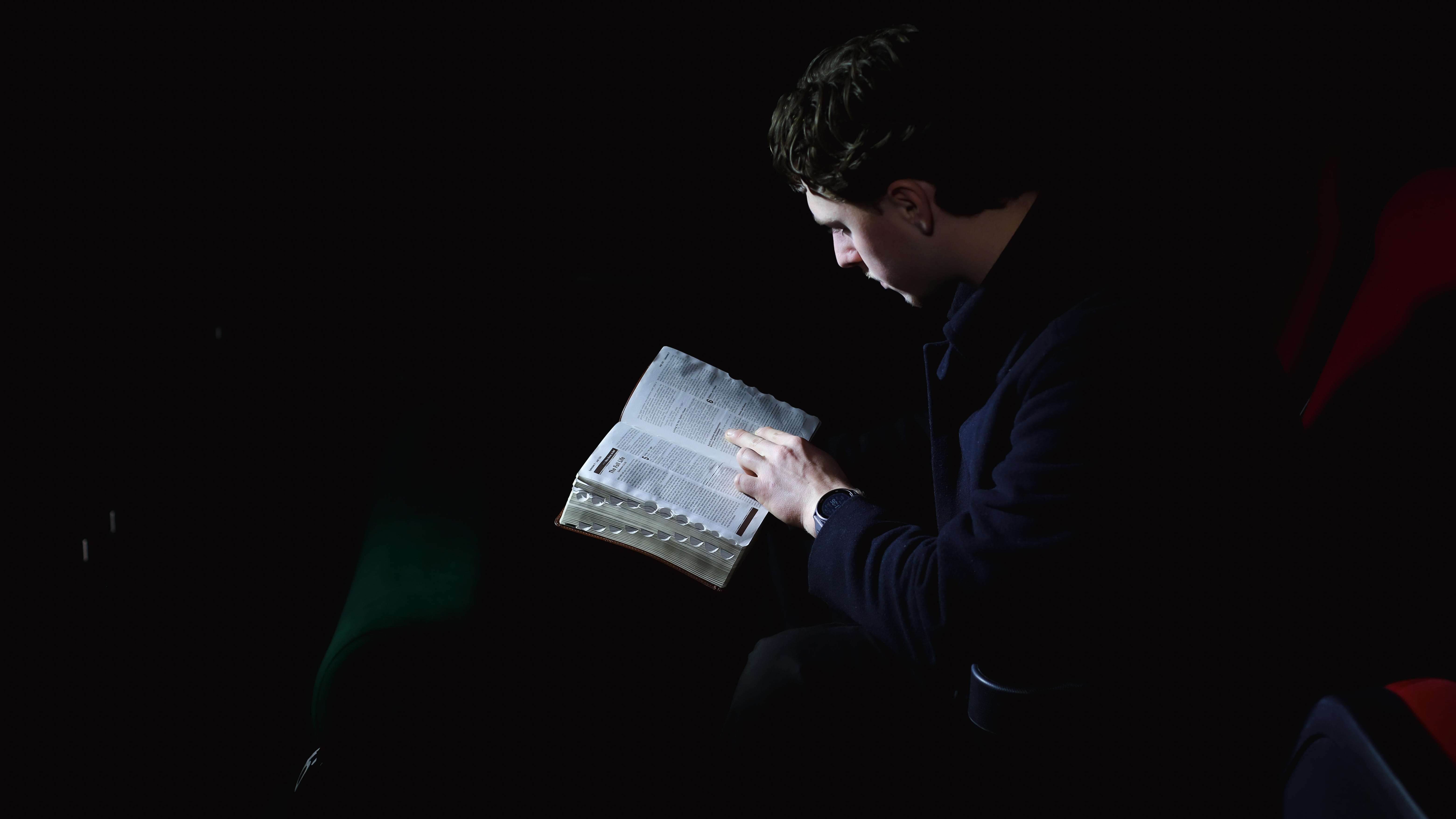
    “That was a light I had never felt before, a moment I clung to, and at that point, everything just fell into place.” “I felt this need and a calling to step into the light.” He said. 

    Photo Credit: Samuel Adeleke

    With this calling came the need to move from darkness and from the friends who wanted to pull him back into that world 

    “It was difficult, but God really provided me with light to step into, and I am eternally grateful for this,” Walsh said.  

    “It was truly an inner knowingness and an inner certainty placed in my heart and in my soul by God, an alignment I couldn’t turn down,” he added. 

    Although Walsh acknowledged that he had a religious inclination growing up with his dad being Catholic and his mother a Protestant, he said, “they were just labels, they were not practicing at all, my dad used to when he was a child, but not anymore.”  

    But Catholicism was also deeply woven into Irish life, shaping not only people’s beliefs but also their cultural identity. “The Catholic Church was the government back in the days. They controlled everything, so they had a lot of power.” Walsh said. 

    “Catholicism never interested me as a child; that’s why I never touched religion because I saw it as slow and boring, but when I first heard about Christianity in New York, it was like a fire, a spark of energy, this flow of the Holy Spirit that I’d never felt before.”  

    “While Catholicism involves a lot of traditions and rituals, Christianity is very relationship-centered,” said Walsh. 

    Walsh, who was concerned about how his parents would react to his shift from Catholicism to Christianity, was pleasantly surprised by their reaction.  “They were surprised because they never expected it, but they were happy for me.” 

     By extension, Walsh’s friends began to see changes in his personality.  “I used to be very arrogant before Christ, but afterwards they saw that I acted and treated them differently,” he said.  This in turn prompted a change in his friends, some of whom have started going to church themselves.  

    Not only did Walsh start attending church, but he also joined a Christian community on campus, where he continued to grow his faith.  

    This community gave him the opportunity to share his testimony of newfound faith in just two months into his journey, in front of about 100 people.  

    “I was nervous, but it was a great opportunity and a moment to express what God has done in my life,” he said. 

    From sharing his testimony to just 30 people, Walsh was also allowed to preach during communion in his church in Tallaght and to the larger young congregation at St. Mark’s Church in front of 2-300 people.  

    “From there God has just been taking me from step to step and I think that’s how he works” he said.  

    “If he can trust you to speak in front of 30 people then he can trust you to speak in front of 300 people but you must not jump the steps.”  

    Photo Credit: Samuel Adeleke

    With such great momentum Walsh has experienced in such a short time, from raving in the club to becoming a spotlight on the altar, he has been enjoying the presence of God that has humbled him and kept him grounded.  

    But “Christianity is not all rosary, it is a difficult journey that brings hardship, slander, and persecution, but we are grateful that we have the grace of God through Christ, which helps us get through it and be victorious,” Walsh said. 

    While Walsh mentioned that he will not shy away from an opportunity to explore Catholicism as an adult, he said, “young people trapped between the Catholic traditions and Christianity as a way of life, should read the word of God, seek counsel from older Christians, and not be afraid to explore different churches.”  

    “Find a group of Christians or mentors who can guide you along your path. If you try to search for God on your own, you might find reasons to fall off.” He added. 

    Walsh saw the church as a wonderful community.  

    “The church is one of the most welcoming places on earth. When I am in church, I feel this overwhelming sense of welcome around the church, and now I call it my second family because that’s what they truly are,” said Walsh. 

    For Samuel Walsh, the trip to New York was more than just a summer vacation; it was a moment when he encountered the light of God’s word, a time that helped him understand Christianity beyond tradition and gave him the chance to share his testimony. He now invites others to see that same light by sharing his story. 
  • Making a Mark

    Making a Mark

    Mark Smith is an award-winning Irish actor and theatre maker.  

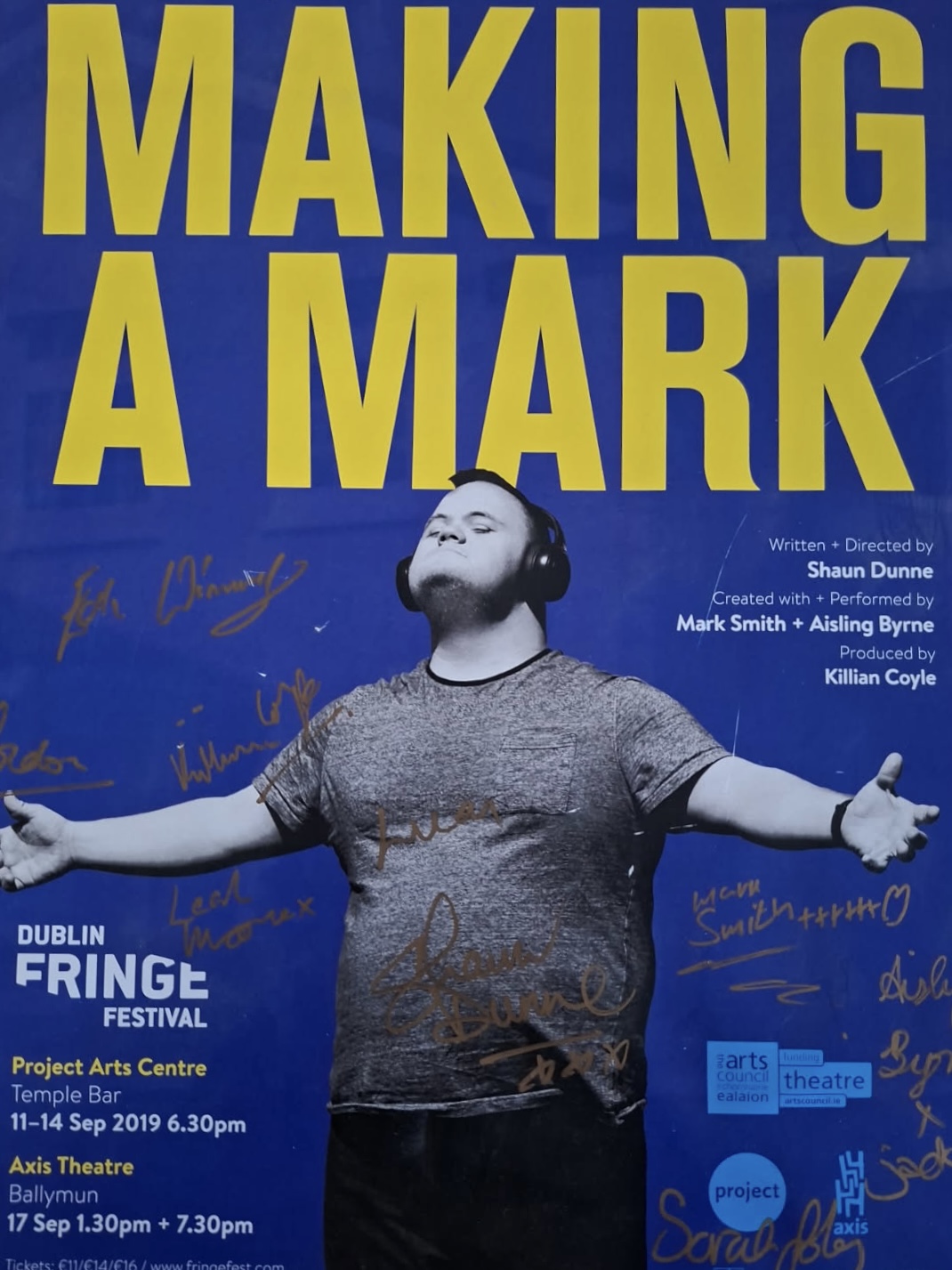
    He is best known for his one-man autobiographical show, ‘Making a Mark’, which toured Ireland in 2019. 

    The Celbridge star, who has Down Syndrome, turned 44 in April, but started acting at just four and a half years old in school Christmas shows.  

    Smith’s accomplishments don’t stop there.

    “As well as the acting, I won a silver medal for Ireland in the World Special Olympics in 1999. I went over to North Carolina, and I was this close to winning a gold!”, he told me.

    He was involved in many Special Olympics after this and met Nelson Mandela and Stevie Wonder at the 2003 event, noting that Mandela was such a “lovely guy”. 

    At 14, he began acting classes in Leixlip, alongside Harry Potter star, Devon Murray, who played Seamus Finnegan in the iconic movies, and numerous Fair City stars. 

    “Have you ever heard of Song for a Raggy Boy? The director, Aisling Walsh, was my early acting mentor”, Smith explained, referring to the 2003 hit movie starring Robert Sheehan and Aidan Quinn. 

    He also recalled the moment his career took off, when he met Aisling Byrne, the creative director of ‘Run of The Mill Theatre’, a company he works very closely with. 

    “It was Christmas 2018; I was sitting in a cafe signing about eight or nine forms with Aisling for my show, ‘Making a Mark’, and I remember her saying to me – “You’re not an amateur anymore, you’re a professional actor now” – and I just couldn’t believe it,” he said. 

    The play was co-written by Shaun Dunne and produced by Aisling Byrne. 

    Smith explained how the show toured for over four months across nine venues, with his nephew Cian traveling with him.  

    He explained that this was an amazing experience, not just for him, but also for Cian, as he was a budding sound technician, who was able to get behind the scenes with his actor uncle. 

    Though he loved performing in Sligo and had a great laugh, his most memorable performance was at, “The the Axis Theatre in Ballymun – had a few shows there for my Nana, which was so important to me. It was the only time we did matinee and evening shows. She passed away not long after. It was the last time I saw her”. 

    Family is important to Mark Smith, especially with him being one of six children. 

    In 2014, four of the Smith family were attending Maynooth University together.  

    Smith’s mum Jacqueline, his sister Yvonne, and his brother Gary went to college alongside Mark, which he admitted was very helpful. 

    “I was able to get free lunches and coffees from them at the breaks”, he laughed. 

    He studied 14 different modules during his time in the ‘The Inclusive Learning Initiative’ (ILI) – a project with specialised teaching and tailored to those with special needs. 

    As well as professional acting, Mark has a second job on Tuesdays and Wednesdays in the same university, nearly ten years on from his time as a student there. 

    “I manage a lot of their post and big deliveries there, and I organise what goes in and out, like packages. I also help the students a lot, I sort out their student leapcards for them and help them get new ones,” he explained. 

    Meanwhile, in his other profession, he has been putting a huge amount of time and effort into a short film called, ‘Mary is Missing’.  

    “I play the main character, Pete O’Hara,” he said.

     “Let’s just say he is evil, I can’t tell you any more than that yet.”

    Mark Smith playing main character – Pete O’Hara – in new movie, ‘Marry is Missing’ – Photo courtesy of Run of the Mill Theatre.

    Smith had to be a tad cryptic as though the movie has been released to film festivals, it hasn’t had a public showing yet. 

    Just a month ago, it won awards at the International Cork Film Festival and now has been long listed for the 2027 Oscars – a huge success. 

    Westlife singer Mark Feehily was watching the movie at the festival, and congratulated Smith on his incredible performance, telling him that he will follow his career. 

    “I couldn’t believe it, I love Westlife. He even sent me voice messages about the movie after he watched it, he called me an absolute legend. He also gave me two free tickets to the next Westlife concert! I can’t wait,” said Smith, after his interaction with a singer from his favourite band. 

    Nelson Mandela, Stevie Wonder, Mark Feehily, Harry Potter stars, and even Hozier?  

    Smith told me about the fellow celebrities he has met over his years in the industry, yet his favourite was none other than Canadian heart throb, Justin Bieber. 

    “It was 2016 and I was in Maynooth after winning a lip sync battle with a few friends. That’s when I met Justin Bieber, in the Glenroyal Hotel. We had a few drinks together and had a chat”, he told me. 

    Smith knew Bieber was in the area and spotted him in the carpark of the hotel and jumped out of the car to say hi. They chatted for hours about what they had in common over some Cokes and Fantas. 

    Smith and Bieber having a stroll in Maynooth 2016 – Photo courtesy of Jacqueline Smith.

    Smith would like to live near Bieber in the future in a big house in LA – where his family could go and visit in “small batches”. 

    When asked about his five-year plan and he told me, “I’d love to work with Netflix and Disney, but that would be more of an eight or nine-year plan. I’d love to be in a big TV show and play a villain.”. 

    Smith’s favourite series is ‘Law & Order: SVU’, with his favourite character being Olivia Benson. 

    His top three films include The Silence of the Lambs, Harry Potter – The Deathly Hallows Part Two, and High School Musical – adding that he would love to star alongside Zac Efron one day. 

    Julie Walters, who played Molly Weasley in the Harry Potter franchise, is one of Mark’s inspirations as an actor, along with Judy Dench, and also Daniel Radcliffe, who Mark shares a birthday with.  

    Smith is a strong advocate for people with disabilities and Down Syndrome all around the world. 

    Mark Smith has a very important motto, “You have to see it to be it”. 

  • Ashling Nyhan- Balancing Studies and Sports 

    By Kelsey Doogan 

    Photo Credit: Paul Lundy Sports Photography 

    20- year old Dublin Ladies Football star Ashling Nyhan is representing her club, St Brigid’s, at the highest level,all while studying Sports Science and Health at TU Dublin. “From playing myself, I wanted to understand how athletes can get the very best out of themselves physically and mentally,.” said Nyhan.  

    Hailing from Castleknock in Dublin, near Phoenix Park, Ashling told TheCity how she got into sport and what drove her to play at such a high level. 

    “I was kind of nearly forced into GAA when I was younger. I have three older sisters who all play sports and I use to kick around with them in the garden, my oldest sister played underage for Dublin as well. My dad also coached a few underage Dublin teams, and I loved going out to watch their games, that definitely sparked my hopes to play for Dublin.” 

    As children we often brush off memories as our minds are so busy with different thoughts and it’s hard to remember things, but certain memories will live with us forever. Ashling told us about her earliest childhood memories. 

    “My earliest memory is probably playing the Go Games for both the girls and boys teams, I played with my cousin on the boys team which was quite funny as we were very competitive.” 

    The sports stars of today are expected to take on so much in their younger years between representing their school or college, to working a part time job. Playing for their club and doing it all while pulling on the Dublin jersey, and Nyhan is no exception to this trend. 

    “I do find it quite hard to juggle both college and training. Sometimes one has to give for the other to progress. Especially around exam time, I could have a very long training session the night before an exam. Some nights I’id be up late trying to get everything done but it all balances out in the end, so far anyway. I love what I study and the high intensity environment, so it’s worth the balance.” 

    For many of those who are lucky enough to succeed in their sport, it comes at a great sacrifice to their free time. Events and social gatherings often take a back seat as a result. 

    “I don’t really have much free time, but when I do I like to spend it with my family, friends and my boyfriend. I like to try switch my brain off from football the days I have off. I think it’s important to try separate the environments and basically have a life outside of football. I think it helps keep a good mental space for the long season we do end up having.” 

    Photo Credit:  Maurice Grehan 

    The days are long for students like Ashling as they aim to squeeze their busy schedules into a short space of time that comes in a day. Athletes balance more than most adults do in their day- to- day routines. 

    “Typically if I am in season during college, In the morning at 5:45 I work in a gym as a PT so it’s early hours ( I am so bad for early mornings ). I then head into college – the commute isn’t too bad its only around 25 mins to Tallaght. I get home after college around 4/5 and then I head to training around 5/6 ish. Training does go on for quite a while nearly 5 hours sometimes but we’d cover everything from pitch work, gym work, meetings and videos. I normally get home around 10:30pm and then It’s just about switching off and getting ready to go to bed.” 

    Reeping the rewards of a busy life is an amazing incentive to keep going and word through the hard times. 

    “Captaining Dublin at U14 was a really special moment because it was the first time I realised how much I loved leading and being part of something bigger than myself. Making the step up to the Senior panel and pulling on the Dublin jersey at that level was another proud moment ,it’s something I dreamt of as a kid, and to live it is unbelievable and play with some of the girls I looked up to growing up as well was surreal. But I think my proudest was winning the All-Ireland Final this year, I have been to watch the All-Ireland Finals every year, dreaming of doing it myself I never thought it would be possible so to do that with girls I have grown up playing with from u13 was a dream come true.” 

    Photo Credit: Maurice Grehan

    Ashling as achieved so much already in her playing career so we asked her what helped to keep her going and the best piece of advice she ever received from a coach over the years that has stuck with her all this time. 

    “One thing that has stuck to me that coaches have said are “Control the Controllables” –  there’s so much you can’t control in a game or training, but your attitude, your effort, and how you respond to things are always in your hands. I think that helps keep my head when going through the highs and lows of the game.” 

    Life is filled with goals and ambitions. There is life after college and we all take different paths, whether that is continue our studies in another field or gaining a job.  

    “After college I want to do a masters in physiotherapy. Any components of my course that relate slightly to physiotherapy I love and actually understand so well. It has always been an area of interest for me even outside of sports.” 

    Ashling is just one of the thousands of student athletes up and down the country  balancing their busy lives and they are an inspiration to us all.  

    Word Count: 965 

  • “I’m not far off the dream:” Aspiring pilot explains the ups and downs of learning to fly 

    “I’m not far off the dream:” Aspiring pilot explains the ups and downs of learning to fly 

    Being a pilot is an occupation that the majority of us would imagine to be of high importance and extremely pressurised. Now, imagine being in that position as young as 23-years-old. While that would sound daunting to most, that is the reality for Dáire Murphy, a young man from Lucan, Dublin, who will complete his training to become fully-fledged pilot. 

    Murphy started honing his craft at the National Flight Centre (NFC) where he completed all his necessary training as a student pilot and got a commercial flying license. This allowed him to continue his training and get inside the cockpit.  

    “I’m with Emerald Airlines now, so I’ve done my initial training with them, health and safety, fire training, all that sort of stuff,” said Murphy. “I’m doing a two-week course doing flight simulations, then I do what’s called line training, where I fly with a specialised captain until they deem me fit enough to not need anyone there and I can be a fully unrestricted commercial pilot flying passengers.”  

    It is a job that is heavily sought after, but extremely tough to get into, due to the harsh nature of flying and the long process of the training and exams, which many people who think they want to go into aviation simply cannot complete. 

    “The exams are designed to filter out people who aren’t suitable for the job, they don’t want people who just like the idea of being in uniform and sitting up the front. You can’t just pick someone off the street and teach them how to fly an airplane. You do have to put the work in,” said Murphy. 

    Daire Murphy pictured after receiving his Private Pilot License. Photo from nfc.ie 

    An obvious factor which may turn a lot of people off aviation is the cost. Like many other things, the cost of training would instantly discourage many young hopeful pilots, with Murphy himself further showing how much commitment he had to this course: 

    “By the time you’re walking into an airline, you could have shelled out around €100,000 or €120,000, which is a huge amount of money. I was working in retail before and 50%, sometimes more, of what I was earning was put aside into a different account for my training. If I was earning around €3,000 a month I wasn’t actually seeing much of it.” 

    Like any other sort of course, there are always people who will drop out. Dropout rates are usually correlated with the difficulty level of a course with “4 out of 13 dropped out of [Murphy’s] full time course during the exams, so only 9 will graduate from the class, which is sad because you make friends with these people, but you have to want it.” 

    While it could be assumed that a line of work such as this would require intense studying and training, the short time frame given to complete these hours may come as a surprise to some. 

    “It is a legal requirement to complete 13 exams and 750 hours in the classroom, which is about 6 or 7 months. It’s the equivalent of a 4-year masters condensed into these 7 months or so,” he said. 

    The common narrative is that people go into this line of work because they got the idea from a family member, but not Murphy. He explains how flying has been the only thing he was talking about “since [he] could talk”. 

    He said, “maybe it’s rare that someone with no aviation background wants to do it, but I’ve never questioned it, I never thought that it wasn’t for me and I wouldn’t change any decisions I’ve made along the way.” 

    In a world in which there are so many different lines of work to go into, it is rare that somebody sticks to what they are doing from, in Murphy’s case, as young as 17 years old.  

    “There were times when I was sat there doubting myself, thinking I’d never be able to get through it, or I’d never see the end of it.” 

    This line of work really is a one step at a time type of work, with even Murphy himself evidently feeling that it is almost never ending at times. However, he can see the light at the end of the tunnel now. 

    “I still have a few more weeks in the classroom, making sure we know everything, then a few more flight simulations which will be done by December. Then I have to fly the aircraft and do what’s called a circuit, which is basically just flying the aircraft around, practicing takeoffs and landings, then I’m ready to have passengers on board. I’ll still be observed at that point because safety is the priority,” he explained.  

    Emerald airlines are unofficially known as a stepping stone towards being an Aer Lingus pilot, which Murphy hopes will get him one foot in the door in order to achieve his ultimate goal. 

    “When Aer Lingus go hiring and recruiting pilots, they do take a lot of young pilots from Emerald. They’re starting a new course in January, and they’re talking 10% of Emerald’s pilots, which is a huge number. Aer Lingus would definitely be my end goal, like a lot of other Irish pilots would say.” 

    While it’s been established how this business is not suitable for everyone, Murphy would encourage people who are considering aviation to “not overthink it and just go for it”. 

    “The more you think about it, the more reasons you’ll come up with not to do it. Definitely do your research and don’t dwell on it too much. You’ll start coming up with reasons not to do it if you just start thinking negatively.” 

  • A rising Irish spud: Content creator Olivia Spuds on being Dublin’s Mini Mic Gal

    A rising Irish spud: Content creator Olivia Spuds on being Dublin’s Mini Mic Gal

    By Gary Petrov

    A Q&A with one of Dublin’s latest viral content creators. The City’s Gary Petrov speaks to Dublin’s ‘Mini Mic Gal’ Olivia Spuds about her content creating, her rising platform, how it all came to be, and where she hopes it will all take her. 

  • From a Motorbike to Medical School – Rashid Omondi’s Remarkable Journey

    From a Motorbike to Medical School – Rashid Omondi’s Remarkable Journey

    By Dearbhla Kiarie

    At just 19 years old, Rashid Omondi is on the brink of fulfilling a lifelong dream—studying medicine at an Irish University, University College Cork (UCC). Hailing from the coastal town of Pangani, Tanzania, Omondi details the inspiring story of not only his personal ambition, but the unwavering support of his community. 

    Omondi’s passion for medicine began at just seven years old, when he witnessed local doctors helping his sister after she suffered a stroke. The young man describes this as “the moment he knew he needed to pursue higher education”. 

    Together with his parents and teachers, Omondi soon discovered that Ireland was the place to be when it came to medical education.  

    “I didn’t know where to start but my teachers told me it would not be easy, especially for someone from my situation,” said Omondi.  

    In fact, the financial burden of moving to Ireland nearly forced Omondi to abandon his dream, but he was met with support from his family.  

    “My father told everyone about our situation and immediately my wonderful community started to help,” Omondi said. 

    Omondi’s family bike. Photo: Rashid Omondi 

    To fund his dream, Omondi made a heart-wrenching decision: he sold his family’s only mode of transport, a beloved motorbike. 

     “It was a tough choice, but my parents knew it was necessary for my future,” he said.  

    For the next two years, his community rallied around him. Friends and family organised fundraisers, offering rides to tourists who were visiting the coastal town, as well as selling handmade jewellery and carved wooden animals. 

    Handcrafted items for sale in Omondi’s town. Photo: Rashid Omondi 

    “The support was and still is incredible,” Omondi says.  As the funds began to accumulate, Omondi worked tirelessly on his studies and became the top-performing student in his region.  

    “When I applied for UCC, I had no idea how it would go,” he said. “I was told not to get my hopes up because there are thousands of smart kids out there. But I believe God was guiding me through.” 

    Omondi explains how he was not accepted into any Irish universities the first 

    time around, but that did not discourage him from applying again: “If anything, it was a relief to know I had some more time to learn about life in Ireland and to raise as much money as possible.” 

    The following year, Omondi’s dream became a reality when he was officially accepted into UCC. 

    The decision to uproot his life was one that took some time and reflection, leading the young student to defer his studies for a year. Until he begins his medical degree in Cork next September, Omondi plans to learn as much about Irish culture as possible.  

    “I felt nervous at first but now I have heard from many of the tourists here that the Irish are very welcoming,” he said. 

    Omondi continues by expressing his gratitude to his friends and family for making his lifelong dream a possibility. “Every class I attend, I will think of them,” he said. “I want to make them proud. My success is their success.” 

    Looking ahead, Omondi envisions a future where he can return to Tanzania, equipped with knowledge and skills to improve healthcare in his community.  

    Rashid Omondi’s story is a powerful reminder of the impact of community, illustrating that with determination and support, anything is achievable.

  • A Covid tale of two cities

    A Covid tale of two cities

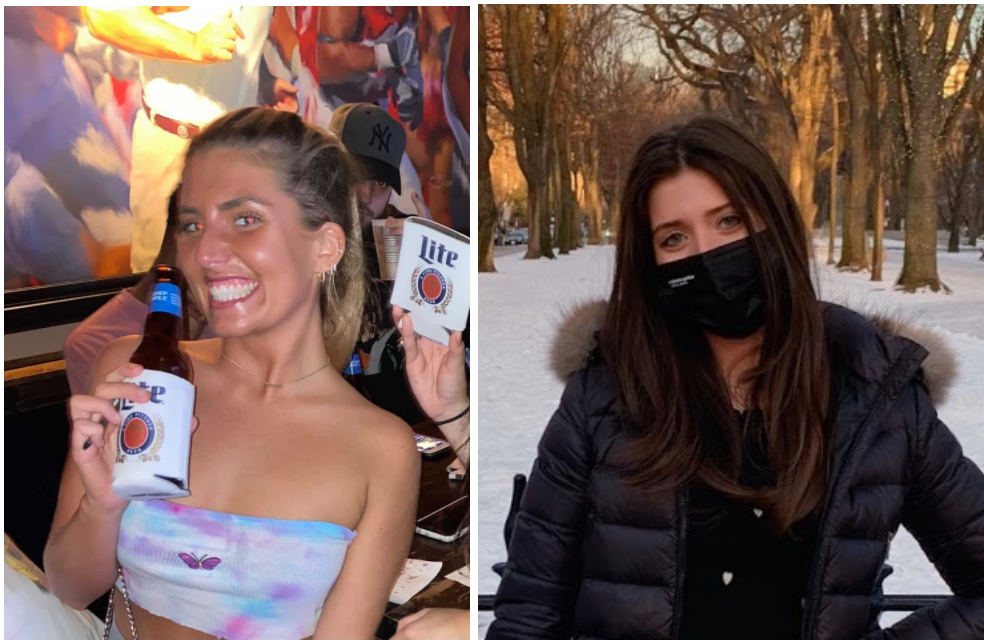
    Beaming Tara Wiekert (left) enjoys a brew indoors at a bar in Tuscaloosa, while Julia Hadley (right) is smiling through her state-mandated mask outdoors in Boston. Photos courtesy of Tara Wiekert and Julia Hadley

    In North America, each state decides on its own Covid-19 regulations. Different states can have radically different restrictions – changing the experience of the pandemic for their residents.

    A part of Biden’s 2020 presidential campaign was the requirement of masks to be worn throughout the US as he stated it could “save 100,000 lives” if masks were made mandatory to wear in every state.

    Less than a month into his inauguration, President Biden has already pushed nationwide mandates, requiring masks to be worn by all Federal employees and by those who use public travel throughout the US.

    However, social distancing regulations are very different depending on the state.

    Answering the same set of questions, two students who reside in different states share their lifestyle and opinions with Jessica Viola on the Covid-19 pandemic.

    Tara Wiekert lives in Tuscaloosa, Alabama, and studies advertising with a minor in German at the University of Alabama.

    Julia Hadley is a health science major at Boston University in Boston, Massachusetts. These responses are based on the student’s opinions as well as on their state’s individual regulations. 

    What is your opinion on Covid-19 now, in 2021? 

    Tara Wiekert: “I think it’s serious and something everyone needs to be made aware of. I know it affects older people more severely, which is why I think a lot of people at school don’t take it that seriously, since we are in a college town surrounded by people who are all mainly around the age of 20-25.”

    Julia Hadley: “My opinion on Covid-19 has remained the same over the past months. It is a very scary time for so many individuals and has affected far too many people. While the vaccination is bringing so much hope for the future, it’s still imperative people take precautions.”

    “While the vaccination is bringing so much hope for the future, it’s still imperative people take precautions”

    Julia Hadley

    What measures are being taken to prevent the spread of Covid-19 in your college?

    TW: “The school requires students to be tested for Covid-19 randomly. I try to wash my hands as often as possible, but since life here feels so normal, I do not take immense measures to prevent the spread of Covid-19. I still go out, eat out, and hang out with all my friends the same way as we did before.”

    JH: “At BU, students who attend classes on-campus or live on-campus must take a Covid-19 test every three days. When taking a class in-person, students must provide proof of their negative Covid-19 test. Throughout campus, students must wear masks at all times.”

    Are you taking college classes in person now and are other work spaces open?

    TW: “Alabama is probably one of the states with the least amount of Covid restrictions. We have some in-person classes and some online depending on what the professor prefers. Libraries and other study areas are open, however, you must wear a mask on campus at all times.”

    JH: “All students and faculty are required to get a Covid-19 test every 3 days, allowing students to take classes in person, if permitted. Libraries and study areas are open, but space is limited. Students must wear a mask at all times, while also having a negative Covid-19 test result, in order to enter the space.”

    “I still go out, eat out, and hang out with all my friends the same way as we did before”

    Tara Wiekert

    How has socialising been for you in 2021?

    TW: “In all honesty, life in Alabama has been rather normal. Bars have been open for a while now. They only shut down at the beginning of last semester for about two weeks.

    “All or most college organised events are happening here in Alabama. We just won the National Championship for (American) football.”

    JH: “Boston does have indoor dining and restaurants utilise glass shields and place diners a safe distance away from one another. The state’s mandates include setting limits on gatherings, also mask and face-coverings must be worn indoors and outdoors with a capacity limit and there’s a curfew for restaurants as well as businesses.

    “At this moment, no organized events are happening within my college campus and are highly discouraged within Massachusetts.”

    University of Alabama students celebrating their American football victory in January 2021. Video courtesy of Tara Wiekert

    What is your opinion on how your state is handling Covid-19 procedures now?

    TW: “In my hometown of New Jersey, my life has changed a lot, and I am able to do a lot less, yet both states seem to be doing ‘fine’. I do think wearing a mask in public should be required for the safety of others and the elderly. However, in Alabama, my life seems rather normal and I often forget Covid-19 is even a ‘thing’. I am doing everything that I used to do even before Covid-19 hit.” 

    JH: “Just as everyone around the world, my life has changed since COVID-19. I have limited traveling, restricted seeing people outside of my immediate circle, among many other things. While adapting to our new ‘normal’ has had its challenges, it is a sacrifice I am willing to contribute to keep myself, family, and friends safe during the pandemic and, I am extremely fortunate for their good health thus far.”

    “Adapting to the new ‘normal’ is a sacrifice I am willing to contribute to keep myself, family, and friends safe during the pandemic”

    Julia Hadley

    American universities have been a hot spot for the spread of Covid-19. Throughout the course of the pandemic, more than 85 colleges have had over 1,000 reported cases on campus. In a recent study, 70% of Covid-19 cases in the US have been spread by young aged 20-49 years old.

    Although Massachusetts has almost over 2 million more residents in it than Alabama, they comparatively have a little over 72,000 more confirmed Covid-19 cases than this southern state. As it stands now, Massachusetts has 546,800 confirmed cases and Alabama has had 474,666 coronavirus cases since the beginning of the pandemic.

    Masks, social distancing, and socialising remain hot-button issues – will Biden manage to unite his nation?

  • ‘There’s the makings of a Tolkien epic inside everybody’ – Irish filmmaker Paddy Slattery on seeing the stories surrounding us

    ‘There’s the makings of a Tolkien epic inside everybody’ – Irish filmmaker Paddy Slattery on seeing the stories surrounding us

    Irish filmmaker Paddy Slattery.
    Photo: Paddy Slattery

    TheCity.ie’s Ruadhan Jones recently spoke to director Paddy Slattery, whose debut feature film, Broken Law, premiered at the Dublin International Film Festival last month.

    When the crowd gave Paddy a standing ovation, you could excuse him for feeling overwhelmed with emotion. His debut feature film, Broken Law, premiered before a full house on Ireland’s biggest cinema screen — Imax in Cineworld. Of course, it wasn’t just the crowd’s response that overwhelmed him…

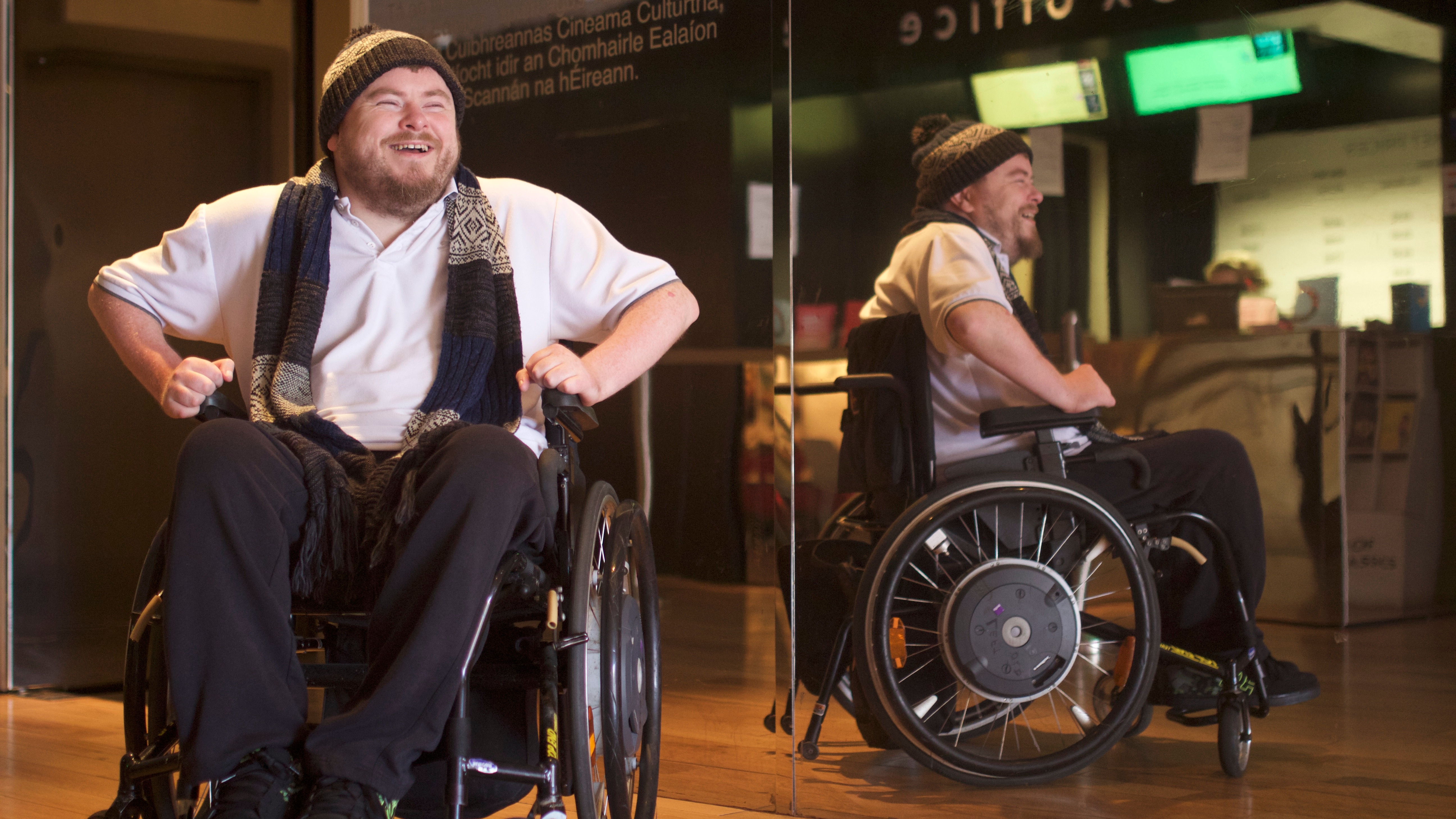
    “It wasn’t the ideal viewing experience,” he said. “Being a wheelchair user, I had to sit front and centre. It was like the whole wall was the film! I had to look left to see one side of the action and right to see the other. But the whole occasion drowned that out — it was a massive honour.”

    “That we sold out the theatre and had a brilliant audience response was a dream, an absolute dream.”

    It was a deserved reward for a director whose route to the “big time” has been an unusual one. Paddy is a quadriplegic, the result of a car crash at the age of seventeen. This may have been a life-changing incident — and it does make productions significantly challenging — but in the end: it was this accident which set Paddy on the path to Cineworld and his feature film debut.

    “After the accident, I spent a lot of time in and out of hospital, lying on beds, doing rehab – and watching films,” Paddy told me. “They were my creative escape and allowed me to discover a whole untapped well of imagination. I always say, when my body switched off, my mind switched on.

    “Film in particular gives you license to escape into another person’s story – it gave me a great sense of freedom. That was the catalyst for me from a very early stage. I didn’t understand the extent of my disability, all I knew was that I wanted to be a filmmaker.”

    Paddy explains himself with a literary, as well as a filmic, sense – he often pauses before coming out with a subtle phrase or metaphor. After one such aside, he apologises for “meandering into my own imagination. I’m forgetting what I’m doing.” There’s just the hint of a smile, self-deprecating, as he moves through the kitchen to make his lunch. Right back into the nitty gritty.

    Gemma-Leah Devereux, who recently played Liza Minelli in Judy, ensures the film isn’t simply another testosterone-fuelled melodrama. Photo: Broken Law

    It’s nearly twenty years since the accident. Ten years on from it, Paddy made his first short film — and in the following ten years, he made several more. Some he directed, some he wrote, some he produced.

    It was a difficult path – all the films were crowdfunded and shot on low budgets with little time. Throw in the added complication of his physical condition and you can see the kind of obstacles Paddy had to overcome.

    “The first short film felt massive, massive. It was like the same anxieties I had making the first feature. There was so much riding on it, and when you put so much time, love, and passion into something – you really want it to come together right. It felt like a big step doing it, and each short film after felt like a stepping stone to something bigger, something better.”

    “A lairy Dublin crime melodrama that launches a headbutt at you right out of the screen”

    Peter Bradshaw — The Guardian

    That something bigger and better was his first feature film, Broken Law, and it has been well reviewed thus far. Peter Bradshaw of the Guardian called it “a lairy Dublin crime melodrama that launches a headbutt at you right out of the screen”. While a few punches don’t land, it has “loads of energy and belligerent moxie”.

    Blending a number of different genres, Paddy hoped it would be a project appealing to investors and audiences alike. But it still took nearly ten years and three or four false starts before it finally got going.

    “Y’know, you get so close to production,” Paddy said. “Then one thing or another falls apart – usually finance. So when it finally comes together, you are a little anxious and tentative. You don’t really feel that it’s happening. It’s not until you’re on set for the first day calling action that you think – yeah, the train is finally leaving the station. It was crazy – a long, long journey to get to that point.

    On the set of Broken Law.
    Photo: Paddy Slattery

    “Our primary aim was to entertain an audience, and we also wanted something that wouldn’t be a difficult pitch to raise money. And when raising money, you want to give the impression that the investor will get some money back! For the next one, I hope we’ve enough learning behind us to do something better, to be more ambitious artistically and financially.”

    In all of his answers, Paddy conveys a pleasant pragmatism and earthiness – you get the sense that he really wants to make good films, the kind that audiences will enjoy. When he talks, it’s about stories and people, about their unique qualities. He’s not an abstract aesthete, and he isn’t mindless either.

    “If you sit down with anybody and they tell you their life story, you’ll suddenly realise that there’s the makings of an absolute Tolkien epic inside everybody. It mightn’t be obvious; it may not be overtly extraordinary to passers-by. But it’s about having a keen eye and a keen ear to listen, to find that story everybody has in them.”

    “Lots of projects planned, but I need to emotionally divorce myself from this one first. I’ll tackle the next mountain once I come down from this one.”

    Paddy has a chuckle when I ask him if he has any projects planned. It’s a bit of an obscure chuckle at first, almost as though it were a silly question.

    “Ugh, too many, I’ve about 80 buns in the oven. Lots of projects planned, but I need to emotionally divorce myself from this one first. I’ll tackle the next mountain once I come down from this one.”

    Metaphors galore and a contented smile – I feel that he’s holding out on me. He knows what’s to come, and there’s a bit of pleasure in knowing and not telling. Here’s hoping what’s to come is a good one: the promise appears to be there.

    A focused Paddy sits in the back watching proceedings. Photo: Paddy Slattery

    If his last answer is anything to go by, he’s lacking neither knowledge nor enthusiasm. My final question was meant to be an easy one, something nice and simple to finish on. “Who is your favourite filmmaker?” I ask him. He reacts as if it’s the hardest so far. There’s a moments pause, a bit of head scratching, before a grin and finally a response.

    “All of them! Bergman, Haneke, Von Trier, Gasper Noe, Kubrick, Kurosawa, Tarkovsky… did I say Bergman? Scorsese, Spielberg, Sheridan, Lean, Wilder, Ford, Cassavettes, Coppola. Truffaut, Godard. I love them all. I love good films – I could sit here all night and name names. I just love films, I love them all!”

    If he can distil even a shred of the work of these “names”, his next film is sure to be an exciting one.

  • Video:  Ibrahim Halawa on his time in an Egyptian prison

    Video: Ibrahim Halawa on his time in an Egyptian prison


    Ibrahim Halawa speaks to Hajar Akl, Mary-Kate Findon & Leanne Salmon about the 4 years he spent in prison in Egypt and how he is adapting to life back home in Dublin.

  • Video:  Justin Greene explains what life is like in RTÉ

    Video: Justin Greene explains what life is like in RTÉ

    Justin Greene, News & Current Affairs Director in RTÉ, tells Hajar Akl, Mary-Kate Findon & Leanne Salmon what life is like working in the media