Tag: Iraq

  • The Human Rights Violations Seen From Space

    The Human Rights Violations Seen From Space

    The City’s Cameron Weymes compares historical Google Earth imagery to illustrate human rights violations committed by various governments in the Middle East.

    Human rights have been defined as “norms that aspire to protect all people everywhere from severe political, legal, and social abuses.”

    Each event shown below has been documented by rights organizations to be contrary to these principles.

    Slide the bar left and right to reveal differences

    The Iraqi government assault on the Marsh Arabs

    [twentytwenty]

    marshhawizah121984

    marshhawizah122002

    [/twentytwenty]

    What Human Rights Watch said:

    “HRW believe that many of the acts of the Iraqi government’s systematic repression of the Marsh Arabs constitute a crime against humanity”

    The Background

    In March 1991, in the aftermath of the Gulf War, uncoordinated uprisings against Baath Party rule broke out in Iraq, one in the Kurdish majority north and another in the Shia south. The revolts were in response to George H.W. Bush’s appeal for the Iraqi people to “Take matters in to their own hands and force Saddam Hussein to step aside.”

    While the Kurds achieved success by establishing an autonomous zone in the north, the Shia rebellion had been put down by Saddam by early April.

    During the conflict many rebels had sought refuge in Iraq’s marshlands, home to 200,000 people who relied on the area for fishing and agriculture. In response to the perceived disloyalty of the Marsh Arabs, Saddam executed hundreds of locals, forcibly transferred its population to the cities and began draining the wetlands.

    The Satellite Photos

    The tragic environmental and humanitarian effects of these actions can be seen from the above satellite photos. The ‘Hawizeh Marshes’ were left almost entirely devoid of water, halting a way of life that had existed for centuries.

    Systematic destruction of Kurdish towns in southeastern Turkey

    [twentytwenty]

    nusaybin782015

    nusaybin9132016

    [/twentytwenty]

    What the UN said:

    “The UN Human Rights Office published a report detailing allegations of massive destruction, killings and numerous other serious human rights violations committed between July 2015 and December 2016 in southeast Turkey, during Government security operations that have affected more than 30 towns and neighbourhoods and displaced between 355,000 and half a million people, mostly of Kurdish origin.”

    The Background

    Nusaybin is a city of 80,000 people in southeastern Turkey, a region with an ethnic Kurdish majority. In late 2015, fighting broke out between the Turkish army and Kurdish militants. By the summer of 2016, Turkish government forces had put down the insurrection and began demolishing thousands of homes, leading to accusations of collective punishment against Nusaybin’s residents.

    The Satellite Photos

    The above images show houses destroyed by the Turkish government in Nusaybin.

    [twentytwenty]

    sur2014

    sur2017

    [/twentytwenty]

    The Satellite Photos

    Similarly to Nusaybin, large parts of Diyarbakir, the largest Kurdish majority city in Turkey, were flattened after fighting broke out in 2016 between Kurdish militants and the Turkish army.

    The indiscriminate aerial bombardment of rebel-held Aleppo

    [twentytwenty]

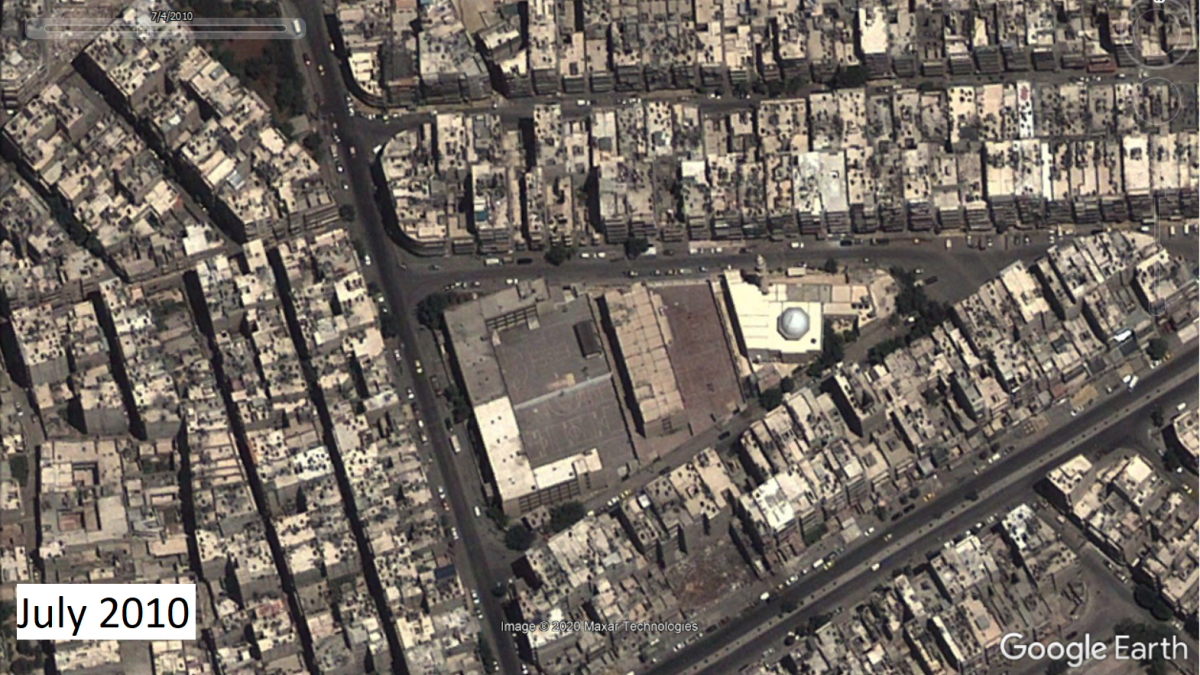
    eastaleppojuly2010

    eastaleppofeb2017

    [/twentytwenty]

    What Human Rights Watch said:

    “The Syrian military has dropped barrel bombs, sometimes dozens in one day, on opposition-held neighborhoods in Aleppo, Idlib, Dara’a and other cities and towns. They have pulverized markets, schools, hospitals and countless residences. Syrians have described to me the sheer terror of waiting the 30 seconds or so for the barrel bomb to tumble to earth from a helicopter hovering overhead, not knowing until near the very end where its deadly point of impact will be.”

    The Background

    In 2012, Syrian rebels fighting Bashar al-Assad began taking control of large swaths of Aleppo, Syria’s largest city. The rebels would eventually take the eastern half of the city, before a regime offensive backed by Russian airpower regained control in late 2016.

    The conduct of the Syrian regime and its Russian allies during the battle led to widespread allegations of war crimes, as highly inaccurate barrel bombs (barrels full of scrap metal and explosives) were dropped on densely populated rebel-held areas.

    The Satellite Photos

    The above images show the effect of regime and Russian airstrikes on buildings in eastern Aleppo.

    The expansion of Illegal Israeli settlements in the West Bank

    [twentytwenty]

    westbanksettlements2

    westbanksettlements1

    [/twentytwenty]

    What Amnesty International says:

    “Israel’s policy of settling its civilians in occupied Palestinian territory and displacing the local population contravenes fundamental rules of international humanitarian law.”

    The Background

    Israel took control of the West Bank following a Six-Day War with its Arab neighbours in 1967. The territory has subsequently undergone a process of colonisation as over half a million Israeli settlers have moved into the West Bank and East Jerusalem, an act illegal under international law.

    The Satellite Photos

    The above image shows the illegal expansion of the Nofei HaSela settlement in the occupied West Bank.
  • ‘NaTakallam has been my window to the world’ – The refugee language service ideal for lockdown learning

    ‘NaTakallam has been my window to the world’ – The refugee language service ideal for lockdown learning

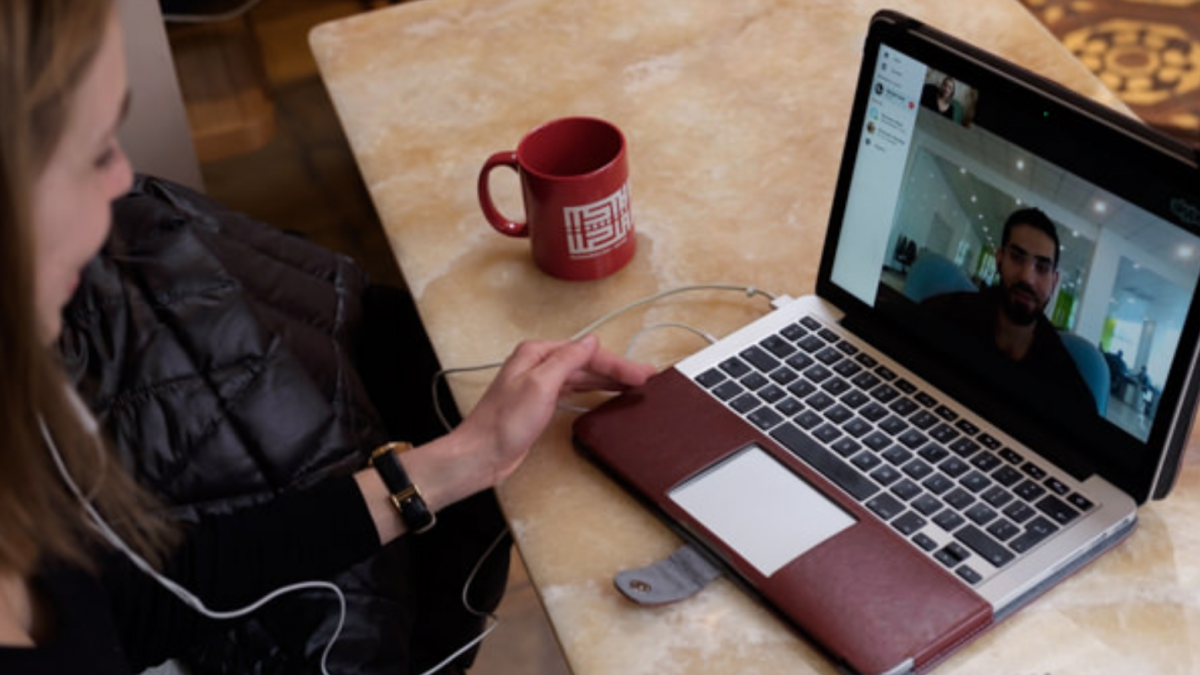
    Learners and conversation partners connect online
     (Photo: NaTakallam)

    The City’s Cameron Weymes examines the work of NaTakallam, a business that hires displaced people as language teachers online.

    NaTakallam, which means “We Speak” in Arabic, was launched in 2016 by Aline Sara, a Lebanese-American woman who was looking for an affordable way to improve her native Levantine dialect of Arabic while living in New York.

    At this time, millions of Syrians were fleeing the brutal civil war in their country, mostly to neighbouring countries such as Lebanon, Turkey, Iraq and Jordan. 

    Sara saw an opportunity to provide an income to displaced people through an online teaching service that would connect Syrians with learners from around the world, and decided to establish NaTakallam.

    The company now works with over 100 conversation teachers and provides Arabic language courses in partnership with Cornell University in the US.

    NaTakallam has subsequently expanded to include Persian, Spanish and French, hiring displaced people from Iran, Afghanistan, Venezuela and Central America.

    Shadi Khaled is one of NaTakallam’s dozens of refugee employees.

    Shadi was a music teacher in northern Syria when the war forced him and his family to seek refuge in neighbouring Iraq in 2013.

    Despite this, Shadi found his teaching qualifications were not recognized by authorities in northern Iraq. 

    Shadi Khaled at his home in northern Iraq
    Photo: Shadi Khaled

    After almost four years of working in a variety of jobs, including carpentry, he was hired by NaTakallam in 2017 as a language teacher.

    Shadi now conducts online conversation classes in Arabic to students around the world from his home in a refugee camp near the Iraqi-Kurdish city of Erbil.

    “The best thing about the programme is that it gives students an opportunity to practice their language skills and allows teachers to provide for themselves and their families,” he said.

    “At the moment I currently have ten students, some of who are now fluent in Arabic. We do grammar and vocabulary along with discussions about various topics like politics, economics and history.”

    Many displaced Syrians in the Middle East are unable to work due to a lack of work permits and other impediments.

    As a result, millions of people, often highly educated, are reduced to handouts and cash in hand labour jobs. 

    NaTakallam allows displaced Syrians to overcome some of these obstacles by providing them with an income.

    For example, Shadi is unable to send and receive bank transfers due to his refugee status in Iraq, but can now get paid by NaTakallam through the local Western Union.

    According to Shadi, the coronavirus crisis has increased demand for classes, as learners seek to make use of their free time.

    “The situation here in Northern Iraq is the same as other countries, we’ve been partially on lockdown, giving us more free time. 

    “Since the coronavirus crisis began many of my students are calling me from around the world and saying ‘we have extra time now, it’s a good opportunity for us to do extra practice’,” he added.

    NaTakallam founder Aline Sara
    Photo: NaTakallam

    Shadi uses his income from NaTakallam to provide for his wife and two children, who have also gotten to know some of the Arabic learners.

    “My students speak with my family and I with theirs. Our lessons are an exchange in cultures and traditions,” Shadi added.

    “We are not just teachers and students, our bond is greater than that. I tell my students not to be shy in asking anything from me, we are like family and it’s common to keep in touch after a course has come to an end.

    “Natakallam has been my window to the world, each program allows me to travel the globe.”

  • ‘I never imagined I would live through such moments of fear’ – Iraqi blogger Omar Muhammad discusses life under ISIS

    ‘I never imagined I would live through such moments of fear’ – Iraqi blogger Omar Muhammad discusses life under ISIS

    Omar Muhammad exposed the crimes of ISIS in his home city of Mosul
    Photo: Omar Muhammad

    The City’s Cameron Weymes spoke to Omar Muhammad, an Iraqi researcher and historian who blogged about life under ISIS at great personal risk.

    On June 6 2014, the Islamic State of Iraq and Syria (ISIS) launched an attack on the northern Iraqi city of Mosul. Within a few days, Iraqi government forces in the city — who vastly outnumbered the ISIS militants — capitulated in the face of the attack. 

    Many Iraqi security forces were hanged, burned and crucified by the militants as ISIS overran their positions, while thousands of others were taken captive and later executed.

    In addition, a huge portion of government security forces abandoned their uniforms and escaped among the civilians fleeing towards the neighbouring Kurdistan Region.

    Mosul during rare snowfall, February 2020.
    Photo: Twitter/Mosul Eye

    In the midst of the chaos, one Mosul resident felt compelled to document the events that were unfolding.

    Omar Muhammad was a researcher in the study of Orientalism at the University of Mosul at the time of the attack. 

    Since the US invasion of Iraq in 2003, Mosul had become a hotbed of jihadist activity and had seen hundreds of terrorist attacks. 

    However, in early June 2014, as ISIS were establishing control over the city, Omar sensed he was witnessing something exceptional.

    “I witnessed the offensive on Mosul by ISIS, as my neighbourhood was one of the first areas to come under attack,” he said, in a phone call with TheCity.ie.

    “When I saw their equipment, uniform and organization, I realised that everything was different this time. Within three days of taking power, a highly organized administration was running the city, including a religious police and a Ministry of Finance among others. In addition, their banners were visible everywhere.”

    ISIS banner in eastern Mosul. January 30 2017.
    Photo: Cameron Weymes

    “This told me that the occupation by ISIS was different from what happened before and was a turning point in the history of Mosul, so I decided to start documenting what was happening.

    “I thought we shouldn’t lose what was happening in Mosul. Life in the city had to be documented, not by ISIS or outsiders, but by the people themselves.”

    Omar decided to set up a blog under the pseudonym ‘Mosul Eye’, and began writing about the chaotic first few weeks under ISIS rule. 

    Early blog post topics include the establishment of ISIS checkpoints in the city, the destruction of statues, emptying of prisons and the general state of panic among the population.

    Despite ISIS’ notorious reputation, Omar wasn’t immediately aware of the danger involved in his actions.

    “To be honest, I didn’t feel the risk in the early days. It wasn’t until one month in that I realised the danger when ISIS implemented a charter outlining the manner in which they would rule the city.

    “All of these new regulations were implemented: the genocide against the Yazidis, the deportations of the Christians. The killing of anyone who didn’t follow their rules.” 

    A church ransacked by ISIS in Bashiqa, north east of Mosul, December 2016.
    Photo: Cameron Weymes

    On June 17, the ISIS administration called for a meeting with staff at the University of Mosul, which Omar attended. The ISIS member who led the meeting was familiar to Omar, he had been a PHD candidate in economics at the university.

    “He said the university would be shut down until they recreated the entire education system. In future the only goal of education would be to create a Muslim fighter (mujahid) who knows how to fight the enemies of ISIS.

    “This speech stuck in my mind for a long time afterwards. It was a very sensitive moment for me. I thought, what am I going to do? Should I continue?

    “I decided to stop, I didn’t want to be part of this machine that was manipulating the minds of the people.”

    For the next two and a half years, Omar would live under ISIS rule. He continuously documented events in the city such as public executions and US-led coalition bombings.

    The entrance to Mosul University, where Omar was a research student, January 30 2017.
    Photo: Cameron Weymes

    With ISIS high in the international news agenda at the time and their territory completely inaccessible to outsiders; Omar’s blog became a valuable source for news outlets around the world, including the New York Times.

    However, the stresses of living under ISIS while secretly exposing the nature of their rule to the world began to take a toll on Omar.

    “Everything at that time was about death because I might get killed at any moment. Nothing was about life. I had to prepare for my own death and to ensure my family would not be punished for my actions.”

    “What I’m saying now does not capture the reality of the events. What I saw is beyond my comprehension or imagination. I never imagined I would live through such moments of fear.”

    The struggle to rebuild

    In October 2016, the Iraqi government and its allies began a campaign to retake the city from ISIS. After a brutal nine month battle, the city was declared liberated. 

    Iraqi Federal Police during the battle for western Mosul, April 8 2017.
    Photo: Cameron Weymes

    For Omar and many of the city’s residents, the battle to rebuild the city had already begun. 

    “When half of the city had been liberated, we organized a musical to convey a positive message to the people. This contributed to the process of civil action in the city.

    “Subsequently, there were campaigns to restore Mosul University’s library, to clean the streets of rubble and to rebuild public spaces.”

    In the aftermath of the battle, the Iraqi government — who had lost the city without a fight and caused a great deal of damage in its liberation — took a back seat in the rebuilding process. 

    In the absence of government help, many Mosul residents took the initiative to rebuild their homes and businesses.

    “The vast majority of the reconstruction in Mosul has been done by international organizations and the people of Mosul themselves.

    “However, international organizations didn’t do enough. They didn’t have a grand strategy, but were following divided goals according to each particular organization. For example, one group would focus on minorities, another on schools. Most of the focus was on the east side, while the most damaged part of the city — the west — was left largely neglected.

    “Even with all of these reconstruction efforts, we still lack basic infrastructure,” added Omar. 

    “Hospitals are a huge concern now with the outbreak of coronavirus in Iraq. What are we going to do if we don’t even have a health care system?”

    “We are lacking adequate roads, bridges and schools. When you consider this, you will see that the place is still suffering and you can’t call it a recovered city.”

    In addition, local businesses are being hindered by the presence of Iranian backed militias — known as Hashd al-Shaabi — who helped liberate the city.

    The militias are demanding protection money from business owners and have a hand in much of the commercial activity around the city.

    Hashd al-Shaabi militiamen pose for a photo during the Battle of Mosul, January 30 2017.
    Photo: Cameron Weymes

    “We call the economic centre of the city ‘the Wall Street of Mosul’. It’s where all the money is, you can find a goldsmith’s market and currency exchange there.

    “The problem is that the militias have taken over markets like these and are now controlling the economy.”

    Hope for the future

    Mosul and its neighbouring towns are among the most ethnically diverse in the region, and are home to Arabs, Kurds, Christians, Turkmen and Yazidis.

    Trust among the communities has broken down after years of sectarian warfare since the US invasion.

    In the aftermath of ISIS, Omar sees a glimmer of hope.

    “It is in a very early stage, but conversations between Mosul’s different communities have reached a peaceful level I would say. Although it will take more time to generate a better kind of communication.

    Rebuilding Mosul University’s library.
    Photo: Mosul Eye

    “The reconstruction of the two churches in the city of Mosul is helping bring back the confidence and trust of the Christian community,” said Omar.

    “The rebuilding of the iconic al-Nuri Mosque is an important project, which will serve as a social and economic hub for the surrounding area.

    “The town of Bashiqa on Mosul’s outskirts has recently seen a return of its Yazidi population. It is serving as a mediator between the people of Mosul and the wider Yazidi community {in the aftermath of the ISIS-led genocide against them}.

    “Another challenge is whether these people can feel safe again in the city of Mosul.

    “Is the fear of ISIS gone or not? I wouldn’t say yes, because people are still afraid of them coming back or the {Iranian backed} militias making more problems in the city. 

    “But I have hope, despite all of the problems I have mentioned. I have to say that I’m very optimistic about Mosul. Many important social problems have changed, and we have found many solutions,” he added.

    “This is my city, I love Mosul more than anything else.”