Tag: irish politics

  • Aontú Commit to Calling Motion of No-Confidence in Tánaiste Simon Harris

    Aontú Commit to Calling Motion of No-Confidence in Tánaiste Simon Harris

    Aontú have committed to calling a motion of no-confidence in Tánaiste Simon Harris as soon as the opportunity arises for them to do so. This comes after public outrage directed at Harris following the death of Harvey Sherratt in July, while the Dáil was in recess. 

    Harvey Sherratt, who suffered with spina bifida and severe scoliosis, sadly passed away after spending almost three years on a waiting list for spinal surgery. Harvey eventually had his surgery in December of last year but died after a deterioration in his health. This led to the hashtags ‘#JusticeForHarvey’ and ‘#ResignHarris’ trending on social media and saw people gather in Dublin City Centre in August to remember Harvey and protest the suffering of children on waiting lists. Sinn Féin leader Mary Lou MacDonald, People Before Profit TD Paul Murphy and Aontú leader Peadar Toibín all spoke at the protest.

    Hundreds of people gathered in Dublin City Centre in August to demand justice for Harvey Sherratt and all children who have suffered while on surgery waiting lists. (Photo: RTE)

    The anger directed at Simon Harris stems from a claim he made back in 2017, while he was Minister for Health. While speaking on RTE Radio 1 in 2017, Harris claimed that by the end of that year, no child would have to wait longer than four months for scoliosis surgery, a claim which has still not been delivered eight years later.  

    Last year in the Dáil the Tánaiste also said that he would meet with Harvey’s parents, Gillian Sherratt and Stephen Morrison , another promise he didn’t keep. Harvey’s parents have said recently that Harris has agreed to meet with them on the 29th of this month. Harris spoke to the family by phone following Harvey’s death, but Ms Sherratt said that the conversation was ‘too little too late,’ when she appeared with Mr Morrison as guests on the Late Late Show. She also said that ‘it’s a pity that it took our child dying to have him willing to meet us now, because he ignored me when I tried last year.’ 

    Earlier this month, Aontú leader Peadar Toibín committed to calling a motion of no-confidence in Simon Harris at the earliest opportunity. Holding the government accountable for children, like Harvey, who suffered because of CHI, Tusla, homelessness and the cost-of-living crisis were outlined as the motivations for calling the motion. 

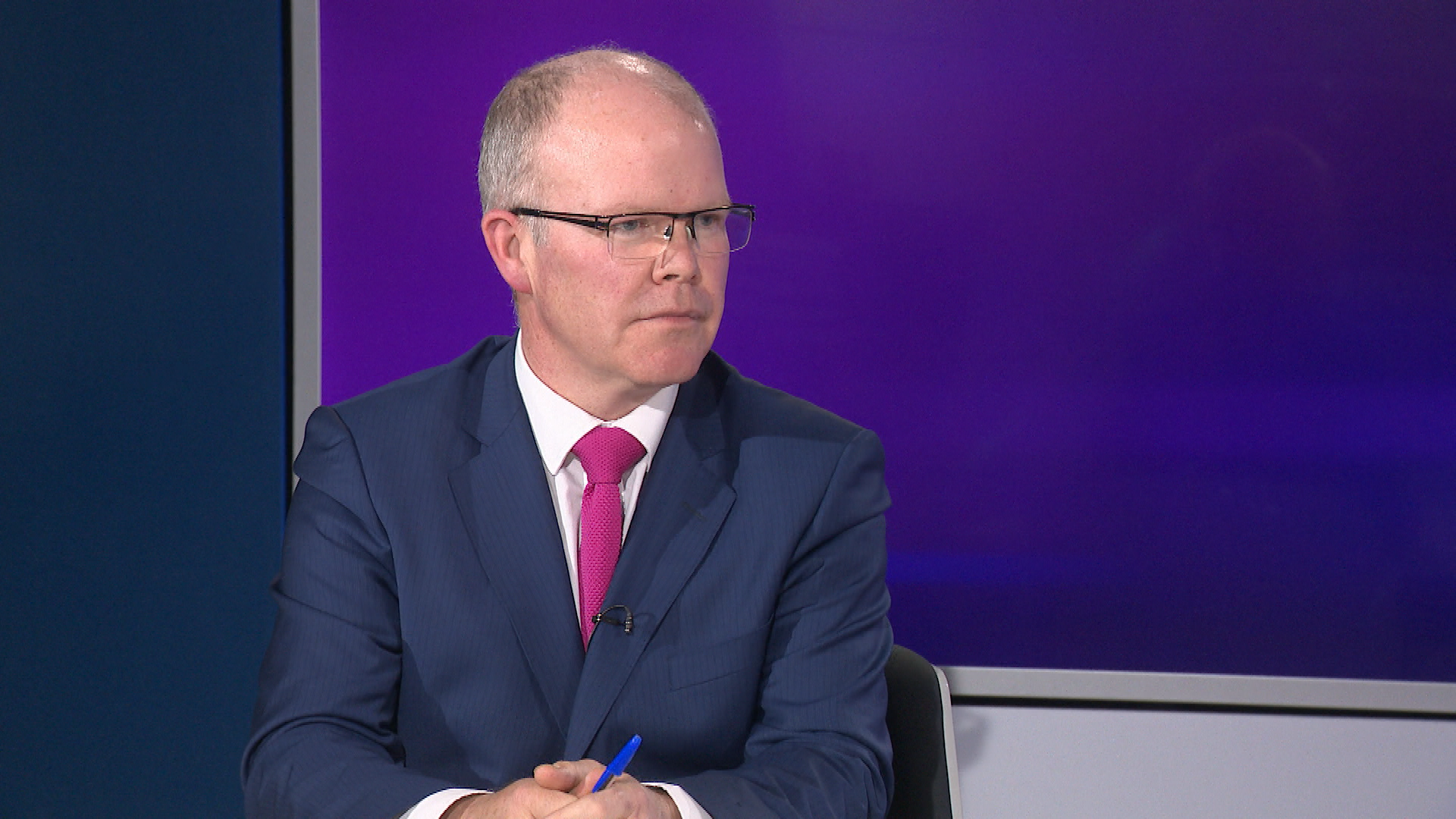
    Aontú leader Peadar Toibín committing to bringing a motion of no-confidence in Simon Harris before the Dáil.

    When asked about the motion, Aontú councillor Emer Toibín said that: 

    ‘Aontú is fully committed to calling a no-confidence motion against Simon Harris. However, that opportunity will not arise until October. That is how the system works, and we must await our designated turn.’  

    Dáil Eireann returned from recess last Wednesday, but government business will take precedence meaning Aontú won’t realistically have a chance to call the motion until October. Issues such as the upcoming Budget, the death of missing boy Daniel Aruebose and the alleged online threats directed at Simon Harris will be among topics discussed in the Dáil in the coming weeks. 

    When Aontú do call the motion of no-confidence in Simon Harris, it will be the second motion of no-confidence called in the Dáil this year after five opposition parties tabled one against Ceann Comhairle Verona Murphy in March. The five main opposition parties – Sinn Fein, Labour, Solidarity-People Before Profit, Independent Ireland and the Social Democrats tabled the motion of no-confidence in the Ceann Comhairle, alleging that she colluded with the Government to introduce new speaking rights for independent TDs who support the Government which were supposed to be for opposition TDs only. The Government countered the no-confidence motion with a motion of confidence, which was passed by 96 votes to 71. 

  • “Our right to survive” – rebellion week rages on

    “Our right to survive” – rebellion week rages on

    By Jade Carpenter and Paula Bowden

    “Our future, our lives, our right to survive.” This was the chant coming from the crowd gathered outside Leinster House on Tuesday evening, as Minister for Finance, Paschal Donohoe’s environmental provisions for budget 2020 were met with a lukewarm reaction from climate activists and members of Extinction Rebellion.

    “Our future, our lives, our right to survive” Credit: Jade Carpenter

    As part of #RebellionWeek, the so-called rebels took to the streets of Dublin to stage sit-ins and protests, calling for action on the climate crisis —but exactly what action are protestors calling for?

    “Reducing cars, reducing traffic, even more bins. We need more recycling bins,” said protestor Sian Conway. “I live out in Kilbarrack and we had a bottle bank bin for ages and now it’s just gone. It’s just not there anymore. I think the government really need to be facilitating people to recycle with more resources.”

    Protestor, Brendan McGlynn, believes the government needs to think big to combat the crisis and halt climate change.

    “I think there has to be a massive active involvement to change the systematic problem that we have in place,” said Brendan. “It has to be across the board a massive change that makes people feel uncomfortable. You have to make people feel uneasy because everyone needs to change, and change a lot.

    “I think at the minute the government aren’t really putting all their cards on the table and really going for it, but they need to, because it is an emergency now and it isn’t enough to just push recycling as an incentive we need a massive systematic change otherwise things will just stay the same,” he added.

    “The workers, united, will never be defeated” Credit: JadeCarpenter

    Iryna, a member of Extinction Rebellion, was manning a refreshment tent at Merrion Square providing drinks and snacks for protestors. She told us about their aims for the protest and what action they want to see.

    “Extinction Rebellion’s main goals are; to tell the truth, organise a citizen’s response, reduce fossil fuels and to reduce our emissions completely by 2025,” Iryna said. “Every single person we’ve seen at the sight so far has been so friendly and so supportive and I think they really appreciate what we’re doing. I do believe we’re doing the right thing.”

    Outside Leinster House the focus was very much on a peaceful protest as activists held banners and sang songs late into the evening, taking turns at the megaphone to explain their own reasons for being there. As the Garda barrier around the entrance to government buildings eventually dispersed, protestors cheered and clapped, serenading members of the force with a chorus of “Gardai we love you, we’re doing this for your children too.”

    “Gardai we love you, we’re doing this for your children too” Credit: Jade Carpenter
  • Confidence, culture and childcare – The challenges for women in politics

    The Cabinet Women: Minister Heather Humphreys (left) pictured with An Tánaiste Joan Burton, Justice Minister Frances Fitzgerald and Education Minister Jan O'Sullivan
    The Cabinet Women: Minister Heather Humphreys (left) pictured with An Tánaiste Joan Burton, Justice Minister Frances Fitzgerald and Education Minister Jan O’Sullivan

    “I am proud to be one of four women serving at the Cabinet table – that’s the most number of senior female ministers we’ve ever had. Having a female perspective at the decision making table is essential.”

    Heather Humphreys is one Irish woman who has been very successful in her political career. The Fine Gael TD for Cavan Monaghan was appointed Minister for Arts, Heritage and the Gaeltacht earlier this year, taking the number of women who sit around the cabinet table to four.

    “I don’t think I suffered as a result of my gender, but the challenge of balancing home and political life is definitely a considerable difficulty for female politicians.  I have two daughters in their early 20s, but if my children were younger, I’m not sure how I would manage my current workload.

    “I juggled a full time job with being a county councillor when my children were young, which was tricky. I consider myself lucky, however, to have gotten involved in local politics when my children were young and by the time I got into national politics, the girls were that bit older. Timing was on my side,” she said.

    The 2014 local elections saw a historic number of women elected in Irish politics. Female representation in Local Government is now at 21 per cent, an increase of 5 per cent since 2009, and two newly elected TDs have brought the number of women in the Dáil to 27, the highest ever number. Despite this, the gender gap remains substantial, and women are still inadequately represented in politics.

    Minister Humphreys, who is a former mayor of Monaghan, believes that confidence has a big part to play when it comes to women putting themselves forward.

    “I think often women don’t have the confidence. They certainly have the ability, but confidence can be an issue. The long hours, the level of travel if you are a rural TD, and the notion that politics is an old boys club would also have put women off entering politics in the past.

    “However, while the hours involved will probably always be pretty intensive, I think the culture within politics is changing. Politics is a professional endeavour these days, the game has entirely changed, thankfully,” she said.

    The Irish Government has introduced gender quotas for the next general election, which will ensure at least 30 percent of candidates on ballot papers are female. Minister Humphreys says that she is in favour of this move.

    “Fine Gael has been specifically targeting female candidates and has professionalised its approach to recruiting women to run for the council or for the Dáil.

    “While I have always believed in the best person getting the job, regardless of gender, I am in favour of the gender quotas because they will help to give voters a better choice,” she said.

    Fine Gael TD Marcella Corcoran Kennedy 2
    Fine Gael TD Marcella Corcoran Kennedy

    Fine Gael TD for Laois Offaly Marcella Corcoran Kennedy came from a political family, so she was familiar with the work involved when she set out on her political career as councillor.

    “My father and grandfather were councillors on Offaly County Council. When my father announced his retirement in 1999 the local party organisation asked me to consider seeking the nomination. I had been active in my father’s campaigns over the years and so it was not a big step for me to consider,” she said.

    Despite her political background, Marcella said that she faced “all the usual challenges” as a female candidate.

    “Organising the campaign, the financial side and childcare, was challenging. Also, overcoming prejudices from some people who were of a generation that saw politics as a male preserve.

    “There are comparatively few Irish female role models available to women due to a traditionally male dominated political culture. The anti-social and anti-family working hours, and the sometimes confrontational aspect of the role may not appeal to women,” she said.

    Marcella offers her advice to women who may be interested in becoming involved in politics.

    “Join a political party, take on officership positions, consider running as a candidate, help out other people in their campaigns, connect with groups such as ‘Women for Election’. Political parties are under pressure to find female candidates for the next General Election as a result of gender quota legislation,” she said.

    Independent TD Clare Daly
    Independent TD Clare Daly

    Clare Daly, an Independent TD for Dublin North, became politically active as student in DCU, when she became president of the students union. She then joined the Labour Party, where she became actively involved in the campaign for the Divorce Referendum in 1986. Clare believes that fewer women are involved in politics than men because they “have more sense”.

    “The manner in which politics is structured in this country means that very little is achieved, certainly at local level, with the decisions being very much top heavy and top down, rather than bottom up.

    “I think women feel that they achieve greater results by being organised on the ground in their communities. Also, with very few role models of woman in politics, it isn’t seen as a natural path, although that is obviously changing,” she said.