Ireland is on the brink of elimination from the men’s FIFA world cup qualifying, with this international break being the most crucial set of games so far.
“The boys in green” sit bottom of UEFA qualifying group B after two games, with pressure mounting on manager Heimir Hallgrimsson after an abysmal loss to Armenia and a hard-fought draw to Hungary at the Aviva Stadium in early September.
“It’s do or die, I think not only mathematically but mentally, and especially for Heimir [Hallgrimsson] as a manager,” Matthew Brennan, of OffTheBall, added.
Brennan added: “Portugal away is the toughest game, but you’d be thinking there needs to be something there for us to qualify, and Armenia at home should be a win. If you can’t win the on paper easiest game of qualifying, you don’t deserve to go to the World Cup.”
Hallgrimsson’s men will travel to group leaders, and one of the favourites for the whole World Cup, Portugal on October 11.
Spearheaded by an aging Ronaldo, Portugal will be looking to keep their 100% record by the end of the break, with the potential to qualify for 2026 World Cup should they beat both Ireland and Hungary.
Although the game against Portugal may seem like a write off, Ireland were very unlucky to not beat Portugal in 2021, also a World Cup qualifying game.
Manager at the time, Stephen Kenny, had the boys less than a minute away from a famous win, until a Ronaldo double broke the hearts of the nation.
The must-win game for Ireland is the second game versus Armenia. What was thought to be a routine game which would see Ireland climb up to second, turned to disaster.
Ireland was dominated in both halves, conceding 2 goals in 51 minutes, before Roma’s Evan Ferguson clawed one back before the hour.
Should Ireland lose to Portugal, they would have to hope for Armenia to draw to Hungary to have the best chance at qualifying.
However, two losses this international break will see Ireland eliminated from qualifying.
This would mean a decade-long absence from men’s football tournament finals and would stretch the World Cup drought to 24 years.
There are positives for Ireland fans, with Brennan adding his players to watch for the games.
“[Jayson] Molumby is a great addition, he might get some stick from supporters, but he’s having a great season for West Brom in the [English] Championship. Will Smallbone as well for Millwall is always one to perform and bringing back John Egan you know even with a few years absence from the squad is experienced and played in the [2-1] loss to Portugal,.” he said.
“It’s good to see Festy [Ebosele] back, he’s performing well with İstanbul [Başakşehir], he gives an extra burst of pace you might not normally get.”
With the games just days away, injury has already struck the team, with both Sammie Szmodics and Callum O’Dowda pulling out of the squad due to injury, with Dundee United midfielder Will Ferry accepting the call up in their place.
This leaves Hallgrimsson with just 23 men for the two games (as opposed to the usual 24).
Ireland’s two qualifying games will take place on October 11 and 14, with the game against Portugal being first, and available to watch on RTÉ.
Gavin Dalton speaks with FAI women’s administrator Rachel Graham about the recent, first of it’s kind virtual Soccer Sisters hub for the October Mid-term break.
With Covid-19 preventing the usual week long camp style delivery of the popular Soccer Sisters programme, Aviva along with the FAI improvised to continue the coaching via a virtual delivery for participating girls to practice and hone their skills from the comfort of their own back garden. With video tutorials from Irish soccer stars Jessica Ziu and Isabeal Atkinson, the Soccer Sisters provided new skills and techniques for each day of the week for aspiring young women’s soccer players to replicate at home. Gavin Dalton spoke with one of the event’s organisers Shelbourne and the Republic of Ireland’s Rachel Graham about how the week went.
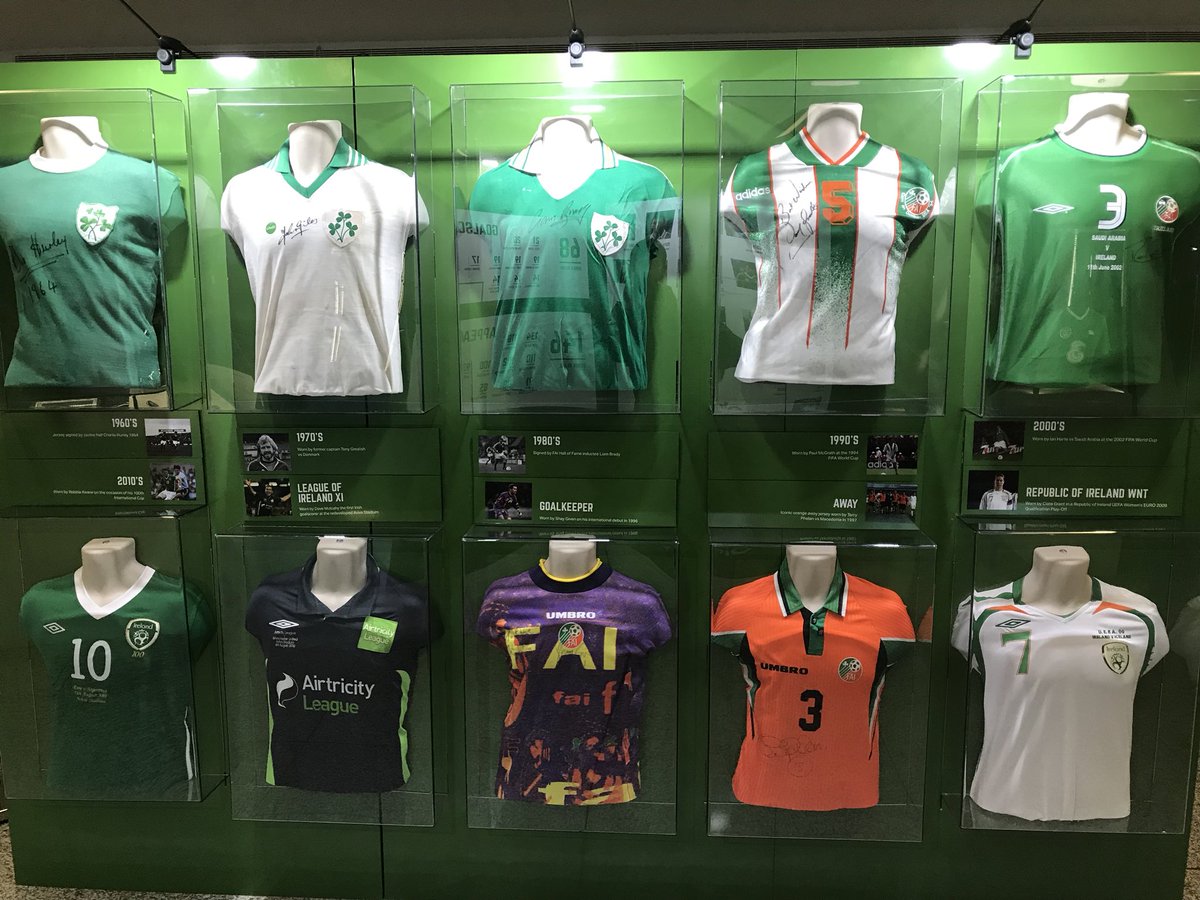
The National Football Exhibition was held in the Printworks, Dublin Castle last week in celebration of Irish football for the lead up to Euro 2020.
The exhibition will tour the country over the coming months and will provide free access to anyone interested in learning about 60 years of the European Championships. It offers the chance to relive some iconic Irish footballing memories while you can discover rare memorabilia, programmes, jerseys and artefacts.
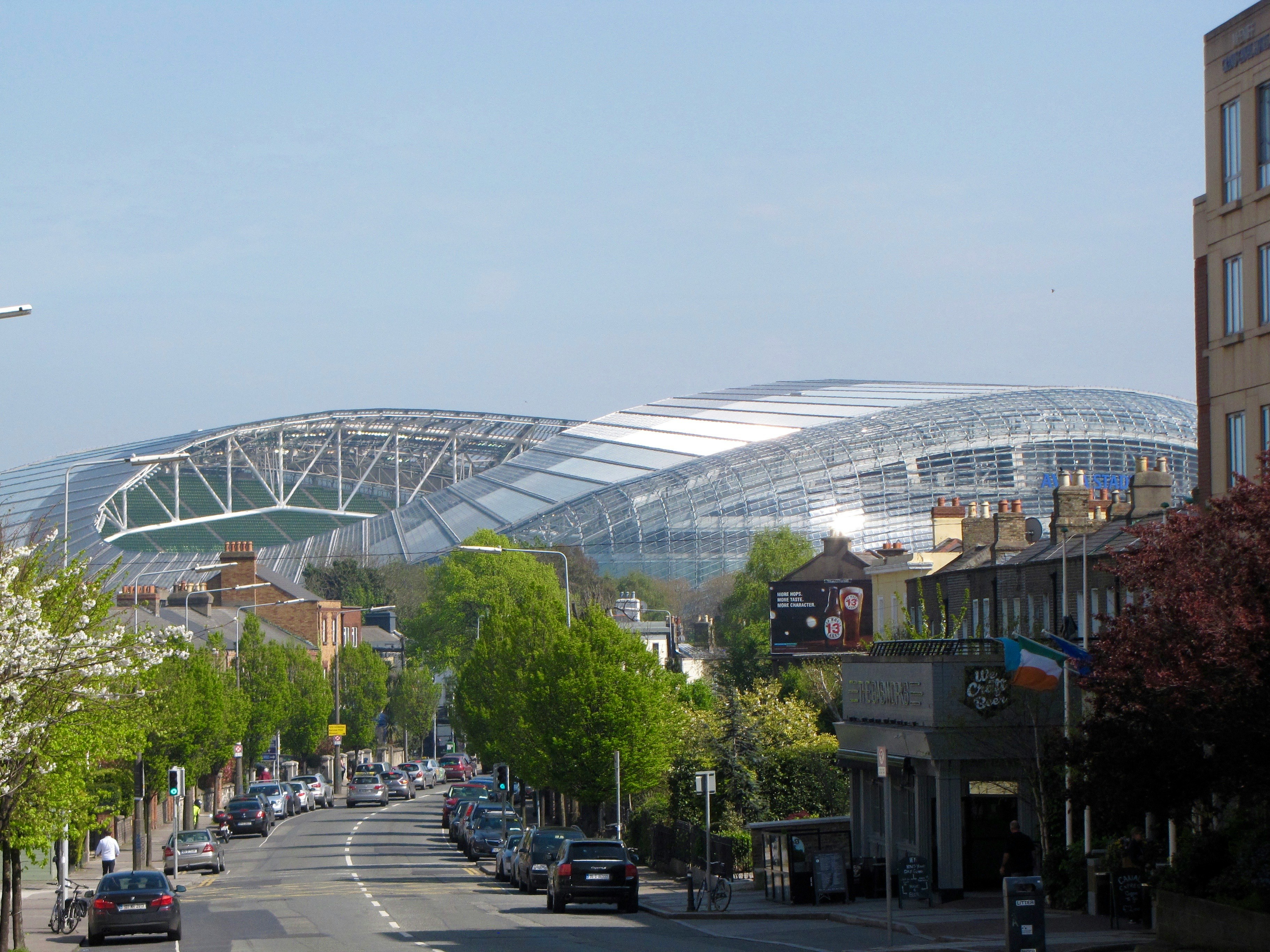
TheCity.ie spoke to Irish soccer fans before the game with Northern Ireland at the Aviva Stadium on November 15th.
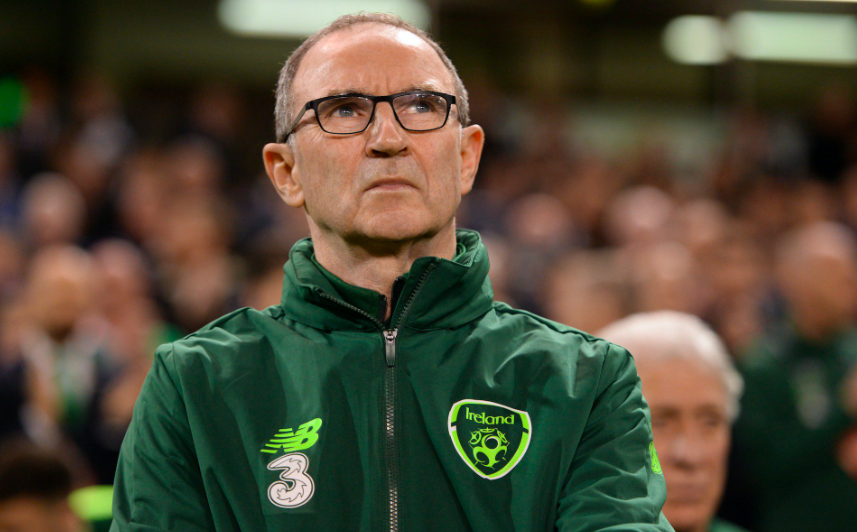
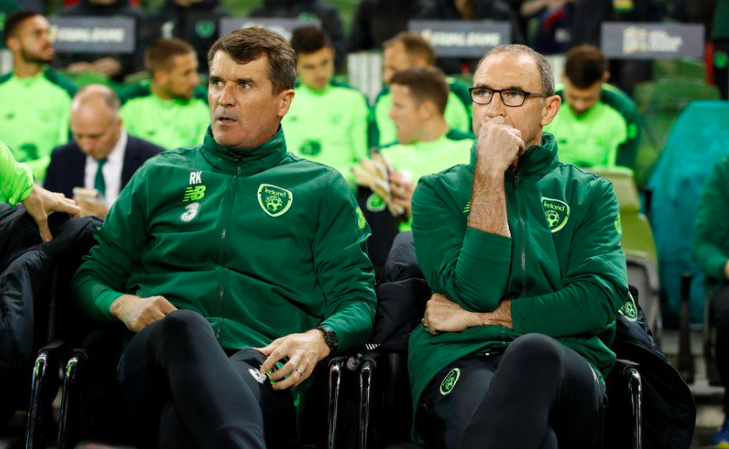
The verdict over whether Martin O’Neill was still the man to lead Ireland was unanimous among supporters. Many have since got their wish as the Football Association of Ireland parted ways with both Martin O’Neill and Roy Keane.
The pair endured a turbulent end to their stints in the Irish setup with a lack of quality on the pitch and an abundance of controversy off it.
The duo had enjoyed some of Irish soccer’s fondest memories including a victory against Italy in reaching the last 16 of Euro 2016 and win over the World Cup holders Germany at the Aviva stadium.
A crucial victory away to Wales ensured a World Cup qualification playoff in 2017 before succumbing to Denmark in an embarrassing 5-1 home defeat.
The Euro 2020 draw takes place in Dublin on December 2nd and Mick McCarthy looks to be the man tasked with taking Ireland to the tournament.
Apathy appears to be the main word to describe the attitude of Irish football fans towards the national team these days. This may have played a role in the decision taken by the FAI last Wednesday to part company with Martin O’Neill as Ireland manager. It had been a dreadful year for Martin O’Neill’s men, who ended 2018 without scoring a single goal in their last four games. The final goal scored by the Boys in Green in 2018 was a consolation effort by Shaun Williams in a 4-1 drubbing by Wales in Cardiff back in September (less than a year after Ireland had beaten the Welsh on the same ground to clinch a World Cup play-off). Ireland played out two goalless draws this international break, most recently away to Denmark last Monday night. However, it was the goalless draw against Northern Ireland last Thursday night – played out in front of a sparsely packed Aviva Stadium – which displayed the apparent apathy of the Irish fans for the national team for all to see. There was much talk about the empty seats on social media, with many blaming Martin O’Neill’s style of play for people not wanting to go to the game. Interestingly though, the last time Ireland played Northern Ireland in a friendly match at the Aviva Stadium back in 2011, there were only 15,092 people in attendance, compared to 31,221 fans at the Aviva last Thursday night. So were the empty seats at friendly internationals a product of Irish fans tiring of Martin O’Neill, or was this an ongoing issue spanning many years?
Ireland did not play a single friendly international in front of a sell-out crowd at the Aviva during Martin O’Neill’s five year reign. The closest friendly to being a sell-out was the 0-0 draw against England back in June 2015 which was attended by 43,486 people, followed by 2016’s 1-1 draw with the Netherlands ahead of Euro 2016 which was watched by 42,438 spectators. The fact that no friendly game has sold out at the Aviva Stadium since Ireland’s very first game at the ground back in 2010 against Argentina shows that problems with empty seats at friendly games have deeper roots. Although, it is fair to say that distaste for O’Neil’s regime could still be seen in attendance figures. Those friendly games mentioned earlier against England and the Netherlands had higher attendances than Ireland’s two home UEFA Nations’ League games against Denmark and Wales last month. The 0-0 draw against Denmark on 13th October was seen by 41,220, while the 0-1 defeat to Wales was attended by 38,321 fans. Ireland played both Denmark and Wales at the Aviva Stadium in 2017 also, with attendance falling by 10,000 in the respective games a year later.
Friendly games have mostly been treated with disregard by Irish fans ever since the Aviva Stadium opened back in 2010, even when Giovanni Trappatoni was in charge of Ireland. They are arguably not the best indication of the fans’ displeasure with the manager. The sharp drop in attendances for both the Danish and Welsh games in the space of a year would be more of an indication given they were competitive games. The next time Ireland will be in action will be in March when UEFA 2020 qualification begins. The draw for the qualification groups will take place in Dublin on December 2nd, where Ireland will find out who they will have to get past in order to qualify for their third consecutive European Championships. By the time Ireland line out again in March, there will be a new man in charge with former Irish boss Mick McCarthy taking the reigns. A big crowd will of course be expected for the new manager’s first game in charge, especially given it will be a competitive match. However, once Ireland take the field for their next friendly game at the Aviva, do not expect there to be a sell-out crowd.
It has been a year of ecstatic sporting highs, and heart-breaking personal lows for Gary Messett.
2018 got off to a flyer for the Irish Cerebral Palsy football captain, when he claimed the FAI Football for All Award in March.
In June, summer was in full swing and the football mad Bray man was looking ahead to August with the 2018 Cerebral Palsy European Championships down for decision in Holland.
But the 31-year-old’s life was turned upside down when his 50-year-old father Bobby unexpectedly died in tragic circumstances.
The passing of a loved one in such sudden circumstances would break many men, but Gary’s life hasn’t always been plain sailing and he has often been forced to make the best of difficult situations.
After suffering a stroke, aged two, he was diagnosed with cerebral palsy.
Growing up, playing football on the streets of Bray was something he found great enjoyment in and it helped him to carry on with his life.
He started out his career as a five-year-old with St Fergal’s FC, eager not to let his disability hinder his dreams of one day representing Ireland.
He said: “My mam and dad were very worried [when I was diagnosed with cerebral palsy]. I tried to stop it affecting me and I was football mad, from day one I was always thinking about football, football, football.
“From a sporting perspective, I had a great group of friends around me and they didn’t treat me any differently.
“I was really focused on being the best that I could be. I was proving to myself that I was good enough to play against ‘mainstream’ players.
“Playing mainstream with other kids at a young age brought me on another level, especially in terms of cerebral palsy football.
“A lot of people with this disability struggle to play regular football because of the ability of the other players. I just kept focusing on myself to get to the level that I wanted to be at.”
Gary’s persistence eventually paid off, when a chance meeting with the chairman of the Irish cerebral palsy football team led to him being asked to represent Ireland at the 2004 Paralympics.
Gary Messett in action for Ireland // Twitter @FAIreland
He recalls: “I was fifteen at the time and kicking a ball outside my estate. I literally got spotted kicking a football on the side of the road.
“The chairman of the Irish cerebral palsy team back then was Leo Greene – who lived in the estate across from mine. He spotted me playing with my hand raised and was intrigued by me.
“Leo approached me, explained who he was and politely asked if I had cerebral palsy. I told him that I did, and he asked would I be willing to represent Ireland in the upcoming Paralympics.
“He had a chat with my mam and dad and the following weekend I was brought out to the Ireland training camp, from there it just kicked on.”
Fourteen years and 85 caps later, Gary is the current captain of the Irish team, having led his side to a European bronze medal in the summer, just months after his dad’s passing.
He said: “I was made captain in 2017 and from there it’s just been a tremendous honour.
“With the squad of players we had this year we were expecting to win a medal, but it’s one of those things where you take it game by game.
“We were very disciplined and approached every match with respect. I’ve won a few individual awards but for me, being the person that I am, it’s more about me pushing myself on.”
Gary admits that his father was an influential figure on his footballing career and says that focusing on the sport has helped him come to terms with his loss.
He said: “Football is like an outlet for me. It’s something I enjoy – playing for my country especially.
“You’re representing your country, your family and your friends.
“At the same time, I obviously have thoughts of the horrible thing that happened to my dad, in that regard it is shit.
“He was my role model and a huge influence on me as an athlete and a person.
“But I know if he was here he would have hit me a slap on the head and just told me to keep focusing on what I’m doing.
“It’s one of those things where I just want to carry on his name and do him proud.
“In the past five years he got mad into his cycling and he also did a kayak from Belfast to Scotland.
“Just two months before he passed, he told me that he wanted to do a father and son run next year, which he obviously can’t do now.
“He was just one of those people who strived to better himself.
“It’s about just trying to keep busy, rather than sitting around doing nothing where it will just hit you like a tonne of bricks, I’m doing OK right now.
“I have a few people who rely on me now, being a dad and stuff, so I’m focusing on that.”
Gary was joined by a large group of his family while at the Euros in Holland, including his two-year-old daughter Poppie and his fiancé Hollie, which he said helped with the healing process.
Messett captaining Ireland to a bronze medal at the 2018 European Championships // Twitter @FAIreland
The Ireland midfielder shared a heart-warming moment with his family after scoring a decisive goal against the Netherlands in the third place play-off, a memory that Messett says he will never forget.
However, his young daughter wasn’t always able to travel to watch her dad’s games after a complicated birth.
Gary said: “In 2016, Poppie was born, but she came into the world a little bit startled. Eventually we got the all clear that everything was OK – to an extent.
“She needed to be monitored for a few years, but I went to Rio [for the 2016 Paralympics] a few weeks after, which was a decision me and my fiancé made at the time.
“Hollie said that I had to go because I put so much time and commitment into it.
“But when I was over there I wasn’t in the right frame of mind.
“If I had to make that decision again, I wouldn’t go. My head wasn’t in it and I didn’t give someone else a chance who might have done better than me.
“You win some and you lose some and it was the decision I made. At the same time, this is all the making of me.
“It will be nice to look back in a few years and say to Poppie, ‘Your Dad was here and there playing football’.
“She came over to Holland with my fiancé, and I had twelve members of my family over to support me.
“Getting the winning goal in the third place play-off and running over to my family was a surreal moment that I’ll remember for the rest of my life … I’m extremely grateful for the opportunities that I’ve had.”
Gary has also hailed the support he received from his Ireland team mates in the aftermath of his father’s death and can’t wait to put on the green jersey again.
He said: “The management team is fairly new, and we’ve been together just two years under Paul Breen and Rob Sweeney.
“Above the management team is Oisin Jordan who is the Football for All National Coordinator, who has also been very good to me.
“The FAI have been very supportive and the support structure behind it all has made things easier.”
📹 Captain Gary Messett scored the pick of the goals today as Ireland’s CP team 🇮🇪 reached the semi-finals of the 2018 IFCPF European Championships 🏆 #FootballForAllpic.twitter.com/z6U1Wp8aKo




You must be logged in to post a comment.