Tag: Italy

  • Covid Abroad: How Italy was woken up to the first wave of coronavirus in Europe

    Covid Abroad: How Italy was woken up to the first wave of coronavirus in Europe

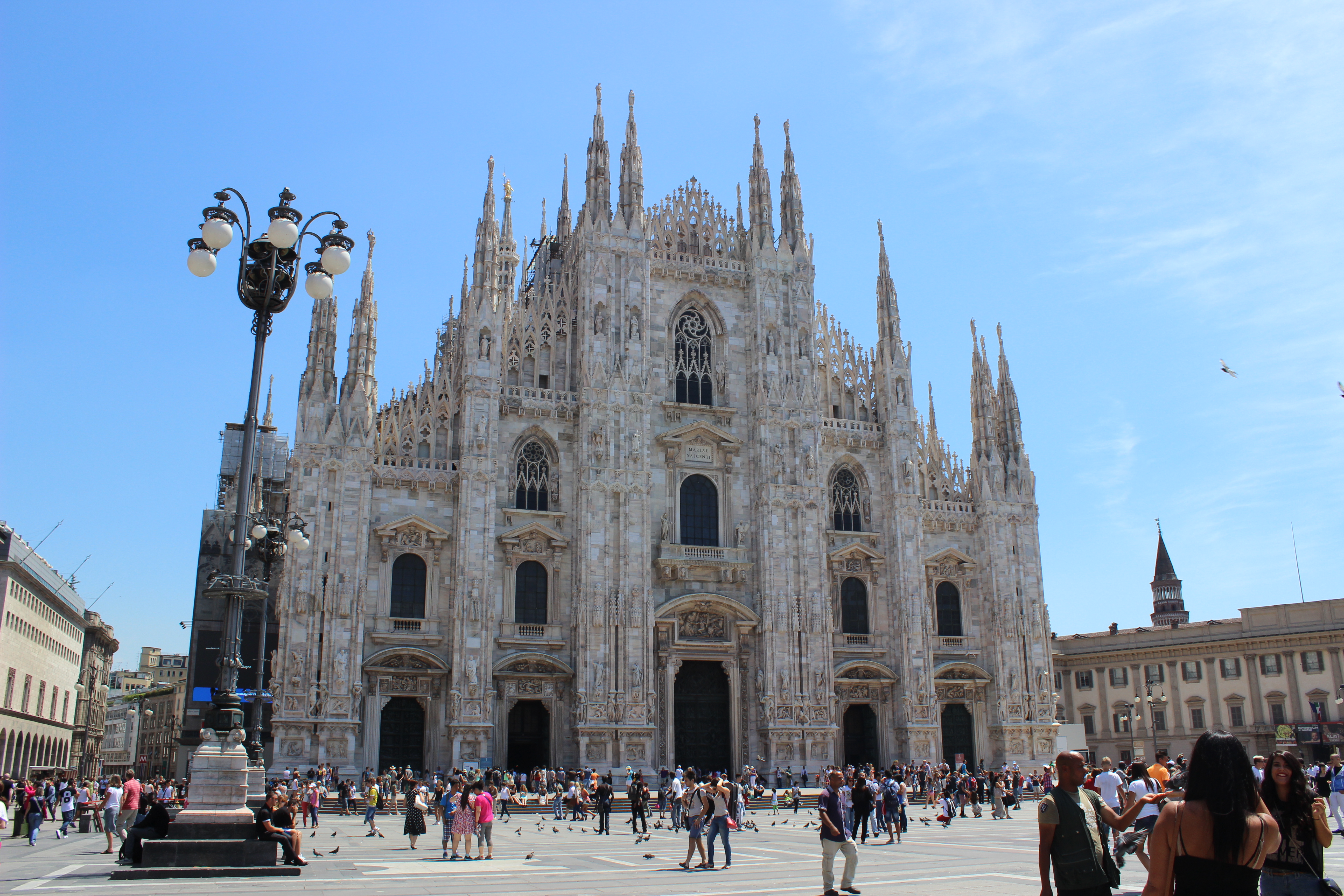
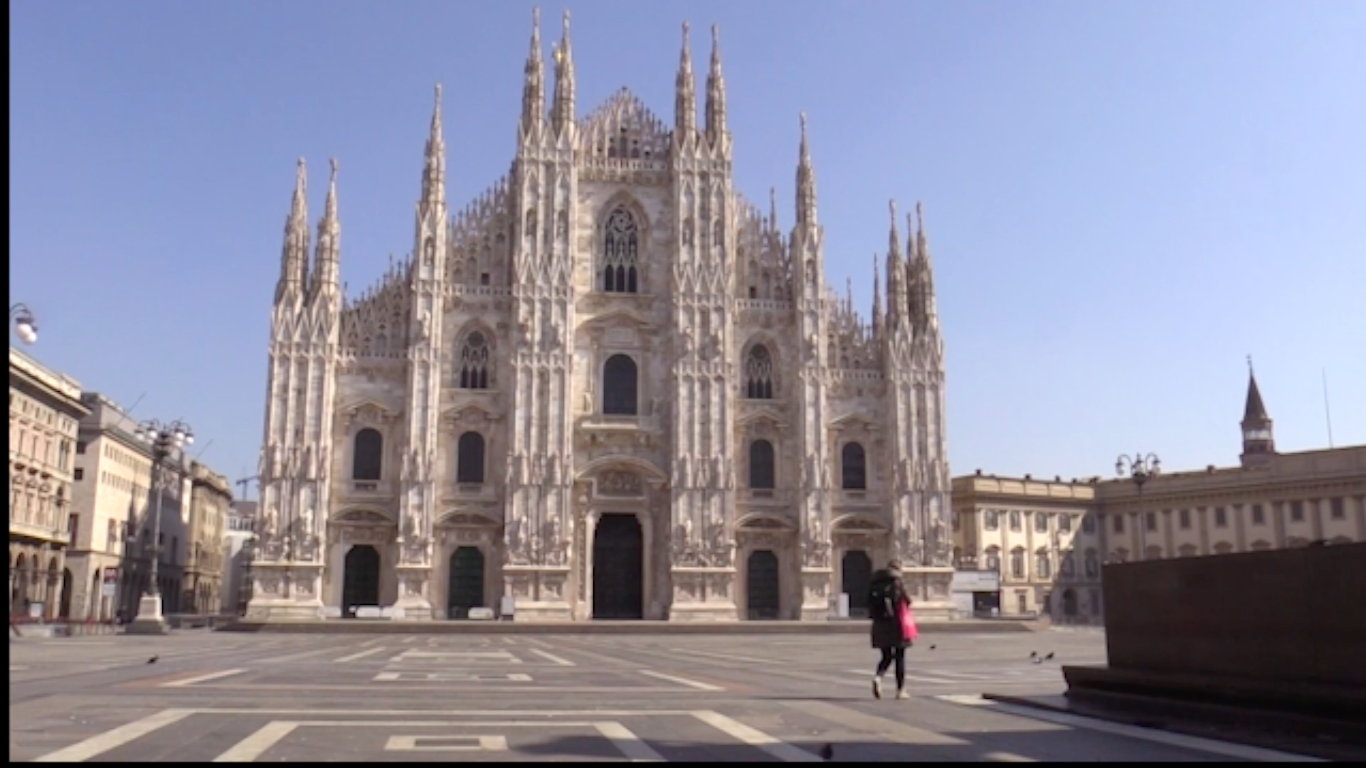
    An eerie empty duomo during the Italian Covid-19 crisis. Image by Andrea Lattanzi from Pexels.com
    Mario Bowden spoke to Maria Elena Tagliabue face-to-face over Zoom to hear about her experience as an Italian during the pandemic

    On the 23 February 2020, Maria Elena Tagliabue read the news that a town 20km from her was going into lockdown after an outbreak of a then-unknown virus imported from China. Back in her hometown of Crema for the weekend, in the north of Italy, an unusual gut feeling came over Maria Elena when her friends asked her to join them in a bar. 

    “I texted one of my friends saying ‘I don’t know if we should meet, is it safe?’ and he laughed a bit at me saying ‘Cmon! It’s just a flu. Our friend is a med student and he’s coming. C’mon see you later’. We met up beforehand and we noticed that the town was very eerie. Months later he apologised for pushing me to go out that night,” Tagliabue tells me.

    Two weeks later, coronavirus cases were spiralling out of control, and Italy’s hospitals became overwhelmed – especially in the North. The whole country was rapidly instructed to stay inside, without exception. Tourist sites were deserted.

    The coronavirus had arrived in Europe – and Italy was its first victim. 

    To this date, there have been 2.65 million cases of Covid-19 in Italy – and 92,000 deaths.

    Tagliabue calls me from her apartment in Varese, a town 50km from Milan. Varese is not far from Bergamo – a town where the virus hit its community hard and fast. Its hospital became overflowed with patients. Images emerged of mass coffin convoys – amplifying the virus’ threat on our screens.

    “I think it made it more real and [us] more anxious and cautious” says Tagliabue.

    “The stories people told from Bergamo and even my hometown Crema are heartbreaking. Especially in the first wave when things were more hectic. Hospitals were less organised and doctors had less masks,” she says.

    Despite the threat remaining high, Italy is easing its restrictions. Each region operates on a tiered coloured zone system – red being the most severe, orange slightly less restrictive and yellow the most moderate. There is also a white zone – a marker of low-danger Covid world. However, no region is currently there yet. 

    A lone seagull at the Roman Forum. Image by Stefano Barbieri via Pexels

    At the moment, regions across the country have begun transitioning to a yellow zone. Household visits are allowed, in-person teaching at schools can resume at a reduced capacity and restaurants and bars can open up until 6pm are among the most notable changes. Lombardy has entered the yellow zone.

    While it is a welcomed change, Tagliabue remains sceptical about opening up too soon. 

    “It doesn’t feel like this yellow zone can last very long.” she concedes. “Especially in Lombardy, which is the most populated region in Italy. There are things to do which leads to crowds. It feels liberating now but at the same time, I’m not confident this can last. Maybe [we can implement it in] March or April when [the] outdoors can be more useful,” she continues.

    “It doesn’t feel like this yellow zone can last very long. It feels liberating now – but I’m not confident it can last”

    Maria Elena Tagliabue

    The pandemic also spun Italy’s ever-controversial political climate into further uncertainty. While popularity was high for Giuseppe Conte after his initial dealing with the pandemic, the Prime Minister was forced to resign after Italia Viva leader Matteo Renzi, pulled his party out of an already unstable coalition – collapsing it in the process.

    Renzi’s decision was met with some scrutiny – as it embroiled the unwanted idea of fresh elections. But as a former Prime Minister himself, Renzi saw the need for change – and a pandemic was no excuse to continue on in the same vain. Italy’s economy shrunk by 8.9% in the last year and is experiencing its worst recession since the second World War. 

    On Thursday 4 February 2021, Mario Draghi was drafted in by President Sergio Mattarella to become the new Prime Minister. As the former chief of the European Central Bank, Draghi has been hailed for his role in pulling the EU out of the European debt crisis in 2012. He’s hoping that 2021 can mirror a similar, colossal turnaround. For Mario Draghi, it’s now his objective to prevent Italians going to the polls – by smoothly forming a new government and help recover Italy’s economy. 

    For Tagliabue, the virus remains an ongoing threat. Despite the lifting of restrictions, she believes sticking to her built up routine will keep herself and others safe. But she is a believer too. She looks forward to the first gig that she can go to in a post-covid world.
  • Technological changes in Italian agriculture

    Technological changes in Italian agriculture

    Digital agriculture is at a turning point and the expanding market for technological and organisational aspects is constantly growing. Although the digitisation of the agricultural sector has many advantages, there are still obstacles to the development of its full potential in Europe. Abderrahmen Ben Chouchane explores these technological changes by looking at Italian agriculture.

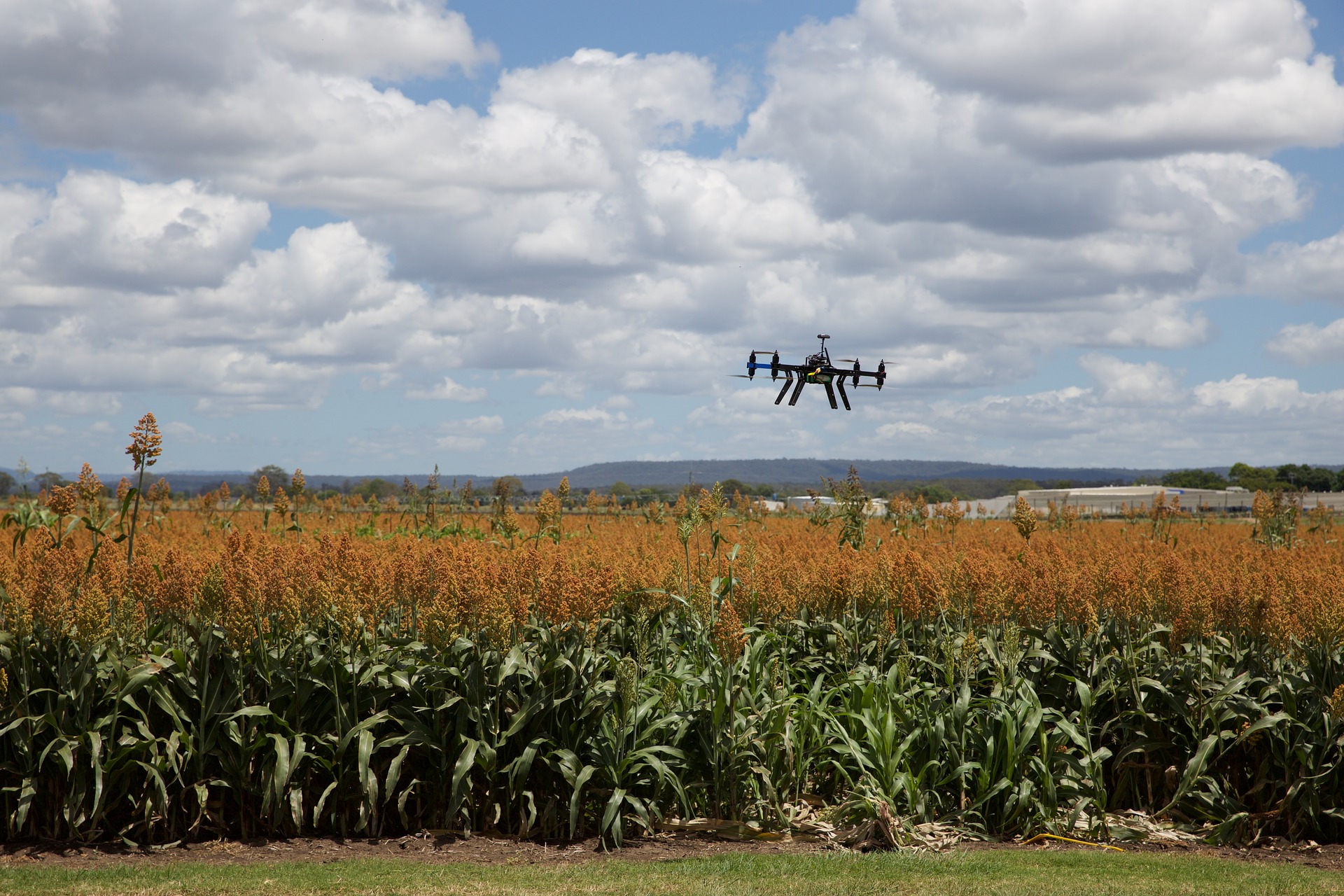
    Picture from Pixabay.

    Digital technologies can help European farmers provide sustainable and quality food. Not only do they help farmers produce more food with less, but they can also help fight climate change.

    Giovanni Nardecchia is a young Italian agricultural entrepreneur who studied Agricultural Sciences and Technologies and decided to invest his talent in the family business.

    “The land is about 8 hectares and we mainly cultivate olive trees” said Mr. Nardecchia,

     “Given the area we are in and the numerous European laws, we try to do our best. My father worked here for many years and it took me a long time to convince him of how important change is.”

    Mr Nardecchia explains the first steps:

    “The use of drones allows a considerable saving of time, resources and energy, given that they can do tasks that would otherwise be for one or more people. Despite this, the olive tree must avoid being subject to an excessive lack of water at the beginning of the vegetative season (spring) and in the summer months. A good solution is micro-irrigation, which allows the plant to receive the right amount of water, avoiding damage deriving from excessive humidity.”

    Technologies of this kind are developed, for example, by Carbon Bee, which proposes a measuring instrument (mountable on drones, robots, and tractors) capable of collecting detailed data on plant diseases.

    “CarbonBee is also really good because drones are also excellent tools that help determine the health of crops from area to area. This allows the farmer to intervene in the most appropriate way, possibly redistributing the quantities of fertilizer, water, and pesticides,” Mr Nardecchia said.

    In the past two years, thanks to Airbnb, he has been able to transform the abandoned house into a small agritourism, increasing the family income.

    This dream model created by the Nardecchia family does not represent the Italian majority, in fact, the statistics show it. The adoption of new technologies remains far below expectations and varies from region to region.

    The European Commission has been monitoring the digital progress of the Member States since 2014. For the 2020 edition, Italy ranks 25th among the 28 EU Member States.

    According to the EU average, Italy has very low levels of basic and advanced digital skills. The number of specialists and graduates in the sector is also far below the EU average. Although the country ranks relatively high in the supply of digital public services, their use remains low.

    Francesco D’Angelo lives in the province of Dogliola in a renovated farm, surrounded by 3.6 hectares of land which has 150 olive trees and a grove with a wonderful view of the sea.

    Mr D’Angelo said: “It sounds good but after working for 50 years in these lands you understand that it is hard to change and what they don’t tell you is that you need money to buy all the new stuff (technologies) they talk about and then they should give us courses to learn how to use them. However, for some of us it takes at least another 50 years to adapt.”

    Under pressure, D’Angelo had to adapt and began selling vegetables online using the MangioaKm0 app which is used to sell local vegetables and fruits online.

    “It certainly helps me to make some more money than usual but unfortunately I compete against large companies that are much more technological and much more effective than mine. This gap must be addressed so that everyone, including small and medium-sized farmers, can access and benefit from the technology,” he said.

  • ‘The balcony is a place for communication’: Japanese pianist Rie Matsushita on the  Italian music movement

    ‘The balcony is a place for communication’: Japanese pianist Rie Matsushita on the Italian music movement

    Photo: Rie Matsushita

    TheCity.ie’s Ayumi Miyano spoke with the Puglia-based pianist about the spread of live music rippling through Italy at a crucial time in the nation’s history.

    Due to the global Coronavirus crisis, many concerts and live music gigs have been cancelled or postponed. But people are still in need of music during this time, despite the lack of official events, says Japanese pianist, Rie Matsushita.

    Matushita moved to Valenzano, Puglia in 2016 and began enhancing her music career from then until the present day. The culture of Italy has a special place for music, says Matsushita, and brings people together despite social distancing, quarantine and a devastating death rate.

    “In Italy, most apartments, even small ones, have a balcony. Usually people lean out from their balcony and talk with their neighbours. The balcony is sort of a place for communication,” she said.

    Balcony-based culture in Italy. (Photo: Rie Matsushita)

    “People like to sing in Italy. In summer, there is a karaoke competition in our neighbourhood and we sing a song outside. People don’t worry whether they sing well or not. Everyone sings a song out loud naturally here,” Matsushita added.

    This aspect of Italian culture surprises her, since people only do karaoke inside a building in her home country of Japan.

    During the quarantine period, people have been singing and playing instruments on their balcony throughout Italy — this movement initially blossomed among music lovers, but now professional musicians have joined the boom. 

    “Normally, professional musicians don’t often play their music for free because they have pride as a professional. Only when they receive money from the audience do they show their skills, which they have been training for years to master. That’s not only for Italian musicians but for everyone in the world, I guess,” she continued.

    “But now their activities have suddenly stopped because of the Coronavirus. Then, gradually they started to sing and play their instruments on their balcony,” Matsushita added.

    Video: Rie Matsushita

    “Now, everyone who is involved in music — amateurs or professionals —play their music for someone outside of their house. I thought I would be happy to share the music with people who are coincidentally walking under my balcony, and also I can make a video of myself playing to share at Facebook or Instagram.”

    The power of online music

    Why are people in need of music now? According to Deborah Kelleher, Director of the Royal Irish Academy of Music, spoke to theCity.ie that listening to music allows people to “block out the stressful noise and uncertainty that surrounds us”: 

    “I think a pandemic such as Covid-19 shows people how important their music is to them. Music performance enables you to concentrate on one thing – playing or singing,” Kelleher said. 

    During the pandemic, the digital platform has been a favourite among musicians hoping to strike a chord with online audiences.

    “As a national conservatoire for music, we have seen firsthand how keen our students and examination candidates are to keep their music lessons going, even online,” Kelleher commented. 

    Professionals can stream and upload their music onto their website and social media channels. In this digital society, this may not necessarily be a recent trend. However, there is a “newer” movement involving musicians sharing their music videos on particular social media groups while in lockdown, like “Musica contro il Corona Virus”.

    According to Matsushita, this movement allows professional musicians to share their music for free — which they were hesitant to do before the Coronavirus pandemic. However, it’s a “win-win” scenario for musicians and audience members alike for its entertainment value and the online engagement created for the performer’s talent.

    Music — even performances streamed online rather than live concerts — enables us to heal, no matter what is happening around the world.

    “Listening to music also achieves this and can add to our happiness, especially if you choose the music that you love the most and reminds you of good times,” Kelleher said.

  • The City’s Guide To Milan

    The City’s Guide To Milan

    This slideshow requires JavaScript.

    Milan is Italy’s second most populated city and is the main industrial, commercial and financial centre of the country. The city is also a major world fashion and design centre, with the likes of Prada, Gucci and Louis Vuitton popping up on every corner.

    But this city has so much more to offer than designer boutiques and TheCity is here to help you explore it.

    One of the main landmarks is the Duomo di Milano or Milan Cathedral, the fifth largest Cathedral in the world (which seats forty thousand people). This church has been written about by Mark Twain and was actually where denim was invented. They used denim because their clothes constantly ripped on the rocks and denim was tough. Years later Levi Strauss came to Milan and bought the material to use in everyday fashion. That is why Milan has an absurd number of Levi Strauss stores. One of the best things to do is climb to the top, via stairs or elevator and take in Milan’s splendid views.

    The Galleria is located right beside the Duomo and is one of the oldest shopping malls in the world, dating back to 1861. Unless you are packing serious cash you can expect to do a lot of window shopping as this is the home of Dolce and Gabbana, Valentino, Roberto Cavalli and Versace, to name but a few . You will normally see a crowd of people in the middle taking turns doing something –they are spinning on the bull’s balls for good luck. G’wan, give it a go!

    Next stop, right near the Galleria is Luini (Via Santa Radegonda,16 20121 Milano), which sells panzerotti, a typical stuffed savory pastry from Puglia, brought to Milan by Giuseppina Luini in 1949. It is dough with fresh ingredients inside of it, so soft and good. It’s super cheap as well and you can make an amazing meal out of it. The line will look big but it moves quickly and is beyond worth it.

    Right across the road from Luini is Cicciolatitaliani, the best gelato shop in Milan. Not cheap but so unbelievably worth it. Tip: grab a ticket to stand in line at Cicciolatitaliani before you go to Luini if the line is super long, you could be waiting up to a half an hour for your Gelato.

    From there head east a few blocks (a compass may be useful at this stage) to the Rectangle of Gold. You won’t be buying anything there because it is so outrageously expensive, a shirt would set you back a mere €40,000. However, it is a really cool place to window shop.

    Check out Castello Szforcesco, the home of the former Milanese Royal family. The castle has a ton of museums but if you are tight on time, you don’t need to go see them. One of them houses The Rondanini Pietà, the last sculpture Michelangelo was working on when he died.

    When you walk through the Castle you end up in Parco Sempione. Don’t go after the sun sets because it can be super sketchy, but during the day it’s beautiful. Grab a cheap bottle of wine and some cheese or meat and hang out there for a little bit.

    If you’re looking for the best coffee in Northern Italy, there is a street called Via Dante, which is basically packed with amazing cafés. A little tip for you is, it’s cheaper to drink your coffee when standing. One cannot visit Milan without ordering at least one shakerato –  it’s Italian iced coffee and will blow your mind. Try Caffé Milano (via Dante 13/15) they do a great shakerato.

    A trip to Milan is also not complete without visiting the canals. Not many people know of their existence but they were built in order to transport stone to Milan from other parts of Italy and Europe to build the Duomo. A great place to head to is Piazza Ventiquattro Maggio, it’s where several of them meet and there are great restaurants along them with seating outside, we really liked the young hip vibe you get from this less touristy part of the city.

    Here around 6-9 PM you can find aperitivo which is a very Milanese tradition and I strongly suggest you do it. You buy an overpriced drink (7-10€), then you get to eat unlimited food from the buffet. My favourite place is called Spritz and is a two minute walk from the Piazza.

    For night life, you can head to Colonne where everyone will be drinking outside listening to music and just having a good time. Lots of students and lots of fun. It’s also very close to the Piazza. If you wanting to go clubbing in Milan, it usually depends on the night. The clubbing scene changes based on the month, so ask your hostel or hotel for more information.

    With respect to eating dinner out, anywhere that is five blocks away from a tourist trap and doesn’t have an English menu is likely to be more authentic and usually much cheaper as well.

    Finally, Milan is also the home to one of the most famous paintings in the world. Da Vinci’s The Last Supper is located in the refectory of the Convent of Santa Maria delle Grazie, and is incredible to see, however, you must book tickets well in advance, especially during the summer months.

    So there you have it folks, now go forth and eat pizza and pasta to your hearts content… Caoi!

  • Berlusconi in hot water once again

    Berlusconi in hot water once again

    Former Italian Prime Minister Silvio Berlusconi was expelled from the senate of his country last Wednesday, after four months of debate on the subject. He was voted out by 194 votes to 112.

    His expulsion was ultimately due to his conviction in August for tax fraud by his Mediaset TV Company, however Berlusconi has also been slammed for carousing with young girls- allegedly prostitutes, and political corruption.

    This decision comes just under 2 months after he was forced, due to a lack of support from his own party, to opt for an official vote of confidence in his arch political rival, Enrico Letta, whom he had originally been vociferously against.

    Though it has been an undeniably unfortunate couple of months for the politician, most political pundits believe that we have not seen the last of the tenacious Italian, with many news headlines unironically referring to the “long road” ahead of him or the fact that he is “down but not out”.

    Irish politicians are no strangers to criticism. Credit: Labour youth on flickr
    Irish politicians are no strangers to criticism. Credit: Labour youth on flickr

    While Irish politicians are used to being shamed, it seems that once they have been taken down a peg or two, they remain there. Unlike their international counterparts, such as Toronto mayor Rob Ford, who, despite admitting to using crack and being videotaped threatening to kill somebody refuses to give up his post.

    Brian Cowen stuck it out for as long as he could back in the day; however he was ultimately forced to resign after multiple no confidence votes and public shamings.

    However the vast majority of commentators seem absolutely certain that Berlusconi will not merely fade into obscurity. In October after Berlusconi’s shock vote of confidence, TheCity compared the corruption of Italian and Irish politicians, with inconclusive results. However it’s safe to say we have a clear winner in the “Who’s more persistent” category.

    Featured Image photo credit: Simone Ramella

  • Roma continue fiery start to the Serie A with 100% record

    Roma continue fiery start to the Serie A with 100% record

    A.S. Roma have erupted from the traps of the new Serie A campaign and maintained an incredible 100% start to the season, notching up an astounding nine wins from nine games under the careful guidance of new manager Rudi Garcia.

    The Rome club are the only team left out of Europe’s major football leagues, who have managed to take full points in all of their domestic games.

    With Osvaldo, the club’s top scorer for the previous two seasons having made a summer switch to Pochettino’s in-form Southampton side, supporters were looking for a replacement striker just as prolific as his predecessor to be brought in, and the arrival of Adem Ljajic did not exactly ignite the imaginations of the Giallorossi fans.

    With a solid and experienced centre-back partnership in Leandro and Benatia delivering some admirable performances at the back, and Maicon proving he can still compete competently at the top level in the game after his poor spell at Manchester City, Garcia has certainly built a strong foundation from which his side can push on and focus more attention on threatening at the other end.

    Beloved Roma captain, talisman and rare “one-club” player, Francesco Totti has defied recent pundit criticisms of his age and illustrated his ongoing significance and indispensable ability in his twenty-one year tenure at the club by playing a part in eight of the nine league fixtures, generating six assists and netting three goals, two of which he had the pleasure of scoring against bitter rivals Internazionale.

    A beloved figure within the Italian media, Il Gladiatore (The Gladiator) has been named Italian Footballer of the Year a record five times
    A beloved figure within the Italian media, Il Gladiatore (The Gladiator) has been named Italian Footballer of the Year a record five times

    Francesco Totti certainly deserves his nickname of Il Re di Roma (The King of Rome) and it will be an emotional day for the club and indeed the city when the Serie A’s top active goalscorer eventually decides it’s time to hang up his boots.

    However it is not just the impressive feat of maintaining a 100% record to a tough start to the season, rather the style and newfound confidence, approach and concrete defensive philosophy that Roma seem to be enjoying under the Frenchman’s reign as boss.

    Garcia’s team have conceded just one goal in all nine fixtures and scored twenty-three.

    Not to overstep the mark and predict an Arsenal-like “Invincibles” season for the Italian outfit, but Garcia has instilled a successful balance between defence and attack similar to that of the Gunners historic season. In actual fact, I do not believe the club has enough quality or depth in their squad, particularly in the attacking arena, to mount a significant assault on the title and pry it from Juventus’ firm grasp, but their flying start to the season has to be respected and admired by fans and rivals alike.

    Garcia’s team have conceded just one goal in all nine fixtures and scored twenty-three. A record eight clean sheets is more than the majority of the bottom clubs in the division will achieve throughout the entire season. Roma fans will be chomping at the bit considering their side’s tremendous defensive record thus far.

    Rudi Garcia has already won the hearts of the Giallorossi with one vitally important 2-0 derby victory against Lazio, a 3-0 smashing of Internazionale in the San Siro and their recent 2-0 victory over second place Napoli.

    A Serie A title may not be on the cards this season, but a push for the top three and a significant Coppa Italia challenge looks more than promising for Roma, who will be craving some silverware, especially after being narrowly defeated in last year’s final by local neighbours and fierce rivals Lazio.

  • Who’s worse, Irish or Italian politicians?

    After a vicious campaign denouncing and undermining Italian Prime Minister Enrico Letta, former Prime Minister Silvio Berlusconi just last week shocked the world by opting for an official vote of confidence in his political rival.

    The move came as a surprise to many, considering Berlusconi’s previously very vocal criticisms of Letta and his party, the Italian Democratic Party.

    Berlusconi announced in recent weeks in no uncertain terms that he and his People of freedom (PDL) party would be leaving Letta’s coalition government and would be voting against him in any confidence vote.

    However it became clear last week that despite what Berlusconi had promised, a large number of his own party were not prepared to follow his lead and leave the coalition government, or give Letta a vote of no confidence.

    Berlusconi Protest Signs Photo: Alan Denney on Flickr
    Berlusconi Protest Signs Photo: Alan Denney on Flickr

    Although Letta appears to have won this round, it is by no means a death sentence for Berlusconi’s career. Like many Irish politicians of late, the 77 year old politician is famous for coming back from scandals, both legal and political.

    However his sins finally appeared to have caught up to him in August 2012 when he was convicted of tax fraud and sentenced to 4 years in prison (later reduced to just one).Then in 2013 he was found guilty of abuses of power and paying for sex with a then 17 year old and sentenced to 7 years.

    The people of Ireland can no doubt empathise with Italians in their current political climate, having in recent years seen less than perfect politicians such as Charles Haughey and Bertie Ahern in positions of ultimate power, not to mention the infamous Morning Ireland interview in which then Taoiseach Brian Cowen was involved.

    Even with these convictions and the humiliation of last Wednesday’s defeat hanging over his head, Berlusconi is still not a complete write off. He has vast monetary and media resources at his fingertips, and a good chunk of the Italian public are still fiercely loyal to him. So what will happen next is anyone’s guess.

    Photo credits Alan Denney and Alessio85 on Flickr