Tag: Jiujitsu

  • Plant powered athletes

    Plant powered athletes

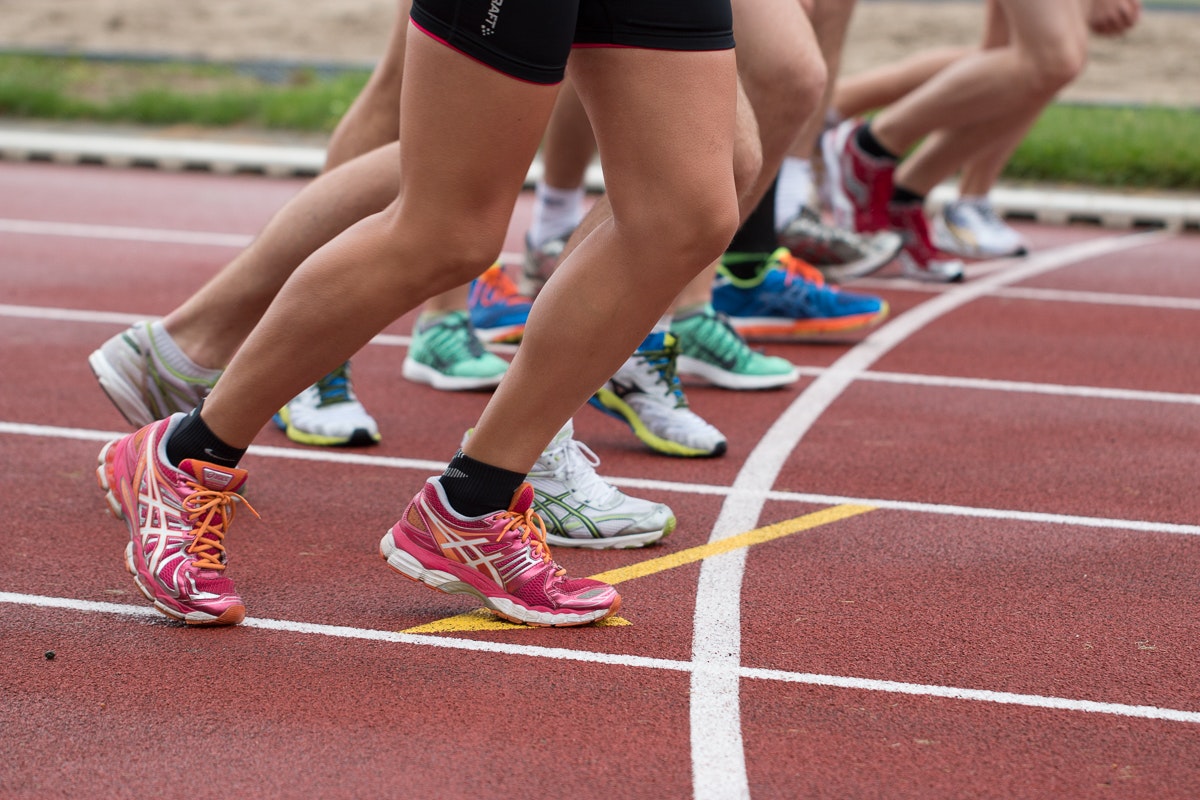
    Do veggies make you run faster? Image via Pexels.com

    There’s no doubt that veganism has been rising in popularity in recent years – a lifestyle that was once obscure has now become common. Still, the words vegan and athlete don’t seem to go together.

    When it comes to sports nutrition, we are told protein is key. This is often wrongly assumed to be something a plant based diet can ultimately lack – conjuring the image of one who follows the diet as a frail, weak, possibly malnourished person.

    Thankfully it’s 2021 and that particular image is, slowly but surely, dying out. 

    “I was always interested in nutrition, especially for improving performance,” says Gerard Prendergast, a gym owner, personal trainer, triathlon coach and yoga instructor.

    “I felt [veganism] would suit my training at the time which was endurance sports. I was blown away at how my body adapted to eating a wholefoods, plant-based diet. I had more energy, felt lighter, my stamina improved and even my mood and mental health seemed to improve.”

    Prendergast began boxing and weightlifting at an early age and went on to play for the ROI VI International Futsal team at 28. At 32, he completed his first triathlon, which encouraged him to take on bigger and more challenging events.

    Gerard Prendergast crosses the finish line at DecaUK – Image courtesy of Gerard Prendergast

    “In 2017 I entered into DecaUK, 10 Ironman distance triathlons in 10 consecutive days. Every day for 10 days I was required to swim 3.8k, Cycle 180k, and run a full marathon – 42k. I won that event 4.5 hours ahead of the second place finisher.

    “In 2018 I completed 52 Ironman distance triathlons in 52 weeks to raise money for Mental Health Ireland. I have completed other challenges such as 100 mile run on a 500m loop and cycling the height of Everest on an indoor trainer.”

    Judging by Prendergast’s impressive lifestyle, it appears there’s no doubt a vegan diet can provide an athlete with the power they need to succeed.

    “Athletes absolutely can thrive on a plant based diet,” he says. “It’s been proved all over the world over the past few years with athletes like Serena Williams, Novak Djockovic and Lewis Hamilton all seeing great benefits to their careers by eating plant-based. I myself can back that up, after struggling to finish a 5k run in 2012 to becoming a Deca Ironman champion.”

    “Athletes absolutely can thrive on a plant-based diet and it’s been proved all over the world over the past few years.”

    Gerard Prendergast

    “I had always worked out and eaten well but I really wanted to go even further with knowing what is in my food,” says Dawn Butler, a 35-year-old athlete from Kildare. 

    An ex professional wrestler, Butler now trains in Brazilian jiu jitsu as well as partaking in weightlifting. On days spent away from the intensity of the gym and training, Butler enjoys long walks, hikes, and hill climbing.

    After recovering from stage four Hodgkin’s Lymphoma, Butler turned to veganism as a way to repair and nourish her body.

    Dawn Butler on a plant powered hike in the Connemara mountains. Image courtesy of Dawn Butler

    “I took my time and looked into lots of research and eventually I just couldn’t stand dairy anymore. I was really put off when I saw where dairy comes from and I knew I couldn’t be a part of that world,” explains Butler.

    “I knew with the level of training I do that I have to really pay attention to my nutrition. I always check in with how I’m feeling and I always get a good variety of foods. I notice that I have more energy being vegan.”

    Despite her fitness level and rigorous training, Butler admits she is no stranger to ridicule from her gym buddies due to her diet choices.

     “I train as hard as anyone I know – I have muscles and strength and I train with a lot of men. I definitely do not feel I am any weaker because of my diet. I get very frustrated when some people try to tell me about my protein intake when, in fact, they can’t tell me theirs. They assume because they eat meat they get more than me when in truth I probably get twice the amount of protein.

    “If I am seen having a protein shake, it’s because my diet is ‘wrong’, but that does not apply to a meat eater who also uses protein shakes. I don’t use protein shakes because I am vegan. I use them as part of the diet and lifestyle that I have.

    “People assume and don’t ask. If somebody asks me about it I’m happy to chat and educate but when someone assumes my protein intake it gets very disheartening. It feels like a throwaway ‘fact’ and a way to debunk veganism.”

    As annoying as such remarks might be, Butler has no plans to ditch her plant based diet any time soon and has her sights set on pursuing Brazilian jiu jitsu, currently training to take part in a tournament later this year.

    Veganism undoubtedly has the potential to enhance one’s athletic performance, but Butler has some advice for those starting out.

    “I do believe it’s possible for athletes to thrive on a vegan diet. I do however think it is harder. There is less room for error and I think you need to keep on top of it. It’s very important to keep the range of foods wide and get sources of everything in there.”

  • Irish Jiujitsu: wrestling for well-being

    Irish Jiujitsu: wrestling for well-being

    With the explosion in popularity of Mixed Martial Arts, Ellen Corrigan takes a look at the Irish Jiujitsu scene via coach and advocate, Grace Colley.

    It can be said that Irish people are becoming more health conscious and interested in their physical wellbeing. In 2017, the ‘Irish Sports Monitor’ conducted a nationwide survey and calculated that 43% of the Irish population (approximately 1.6 million people) participate in sport at least once a week.

    With countless sports clubs and exercise classes available, it can be hard to single out just one. In recent years, jiujitsu studios have multiplied across the country and are slowly gaining recognition.

    Jiujitsu, a form of Japanese martial art, is a method of close combat involving two opponents. Different studios teach varying styles, but it is generally considered to be a graceful and safe form of combat. While popular amongst martial arts enthusiasts, Irish judo clubs are still relatively new and unknown to many. I spoke to jiujitsu coach and advocate, Grace Colley, to find out more about the sport.

    Q: When did you first become involved in jiujitsu and why?

    A: I first started in February 2017, and got involved because of my brother. He’d started jiujitsu in January that year after signing up for a Brazilian combat course. I had absolutely no idea what it was or what it entailed, all I knew was that there was a grappling element similar to wrestling.

    I was really intrigued so I tagged along to one of his classes, and decided there and then that I was joining. My mam and my brother both told me no way, they thought it was too rough and dangerous so I persisted out of pure stubbornness.

    As well as that, I had just completed all my college exams the month before and decided I needed a new challenge. I’d always been fit in school, but I found the transition from school to college really difficult. I stopped exercising and gained weight, and had also started working in a fish and chip shop which really didn’t help. I decided I wanted to get fitter and healthier, and saw this as a kind of New Years resolution. Almost two years later and it’s safe to say that this is the only resolution I’ve ever stuck to!

    Grace competing- photo credit_ Grace Colley
    Grace Competing. Credit: Grace Colley

    Q: Where do you train and what is your grade?

    A: I train in Jungle BJJ Dublin as a blue belt. Basically, there’s five ranks in jiujitsu – white, blue, purple, brown and black belts. I’m on my second belt, which I received in April this year after just over a year of training which was a bit bizarre. In jiujitsu, because there are only five ranks, it takes a considerable amount of time to upgrade to a higher belt.

    Even for a really skilled person who trains multiple times a week, it could take ten to twelve years before they earn a black belt. It’s definitely quite different from other martial arts in that aspect. In karate, for example, you might see children with black belts but you wouldn’t see that in jiujitsu. It takes a long time to climb up the ranks, but that isn’t what it’s about. It’s about learning the skills to actually get there.

    Q: How did you become involved in coaching?

    A: I just recently started coaching kids classes in October this year, so just about two months now. Jungle BJJ started initially as a part-time gym, only running evening classes. As the interest in jiujitsu developed and more people wanted to get involved, it turned into a full-time gym offering morning and afternoon classes too.

    I was approached by my coach during the summer to teach kids classes because he was absolutely overwhelmed with clients. I was super excited about the idea and I absolutely love it so far. I go to work straight from college so I’m often stressed and in a foul mood, then I see the kids and they just completely lift my spirit and keep me smiling.

    As well as that, it’s given me a new sense of focus and responsibility within my own training. I want to perfect my own moves so I can give my all to the kids. It’s just so rewarding to be able to share my passion for a living and pass that fire on to these children.

    Q: What is your favourite thing about jiujitsu and what are the challenges?

    A: I could honestly go on and on about my favourite things about jiujitsu but I’ll try keep it short! I love how it makes you forget about everything else going on. When you’re in that moment of someone fighting you and you have to defend yourself, you’re thinking about all the techniques you’ve learned and you’re trying to apply them in real-time.

    It’s the best way to take your mind off everything else, it’s such an escape. It boils down to a moment of absolute mental clarity and everything goes quiet. No matter what’s happening in work or college or relationships, you step on the mat and start sparring and you leave all that outside. In that sense, I find it so good for managing positive mental health.

    I also really appreciate the sense of progression it gives you. If you’re showing up to training, you’re getting better. It’s addictive in a sense because you can feel yourself improving with each session. Finally, you become part of a community when you join a jiujitsu club. You meet these people that you have nothing in common with, but you’re there because you love this sport. You grow into this close family so quickly because given the nature of the sport, you’re in close contact quite a lot! Everyone’s there because they want to be there and they’re having a great time and you see them at the very best version of themselves. It creates this amazing, positive energy that’s just incredible to be around.

    Honestly, the only things I find challenging are the body aches! You can get injured at times but that really only happens when you execute a move incorrectly. Other than that, I genuinely struggle to find anything negative to say about the sport. It’s changed my life for the better, and I just wish that I’d started years ago.