Tag: League of Ireland

  • From Title Thrills to Relegation Spills: The League of Ireland’s Latest Chapter Concludes 

    From Title Thrills to Relegation Spills: The League of Ireland’s Latest Chapter Concludes 

    By Aidan O’Boyle

    Another year of chaos. Nothing new. The League of Ireland delivered yet again just like Shamrock Rovers, who stumbled over the line to get their 5th title in 6 years.

    The Champions season started how it ended, with a defeat. After a slow start to the season with just the one point in three games, the south Dublin side went seven games unbeaten. That run was ended by bitter rivals Bohemians in one of the games of the season in late April. 

    That sore loss clearly gave them a push as they then went 11 games without defeat with 8 of those being wins. But back came Bohs to defeat them for the third time that season and end the strong run. 

    Another eight games unbeaten in the league which included them finally getting a win over Bohs, thrown in with a few nice cup and European qualifiers wins, set up Shamrock Rovers for a straightforward stroll to the title. 

    However, they made it a little bit uncomfortable on themselves with three consecutive defeats before finally securing the title with a 1-0 win over Galway United in front of their adoring fans. 

    The Shamrock Rovers team and backroom staff celebrate. Photo: Stephen McCarthy/Sportsfile.

    Pat Shelly a lifelong Shamrock Rovers fan was delighted with his teams’ title win. “The lads made us sweat a bit, but we did it. We had some excellent unbeaten runs this season. Hopefully we do the double now.” 

    The double in question was the league and cup double. Their opponents in last weeks FAI Cup final on Sunday were Cork City. The Leesiders had a horrible league campaign ending it relegated and with an abysmal four wins in the league. They were desperate to end on a high note with a cup win and give their fans something to smile about. 

    However, it was not to be as Shamrock Rovers completed the double with two second half strikes from Rory Gaffney defeating a spirited Cork.

    Seanie Maguire celebrates scoring Cork City’s first goal in their cup semi-final win. Photo: Ryan Byrne/INPHO

    Derry City and last season’s champions Shelbourne ended their seasons on a positive note securing European football for next season. 

    Shels who finished third will be playing in the Conference League qualifiers. Losing Damien Duff halfway through the season didn’t help but Joey O’Brien steadied the ship with a great end to the league season going six unbeaten including massive wins against Shamrock Rovers and Bohemians. 

    Shelbourne fan Jack Dinan was relatively happy with the season “We’re playing in the Conference league group stages and did decent in the league. A few new signings with the prize money from Europe will set us up nicely for next season.” 

    Derry whose last league defeat was on the 3rd of August against the league champions, finished second which confirmed Conference League football for next season. However, a Shamrock Rovers cup win upgraded them to Europa League football which is a big boost to the The Candystripes.

    Bohemians’ fans were also in the unfamiliar position of supporting their arch-rivals. They were handed a Conference league qualifier spot after Rovers completed the double.

    A mixed season from Bohs seen them exit the cup in the 3rd round and hang onto 4th place in the league with a comprehensive 4-1 win over Drogheda on the final day ending their run of four league games without a win. 

    St. Patricks Athletic won’t be playing European football next season as they finished their season with three stalemates. This, coupled with a shock semi-final exit in the cup at the hands of Cork City, meant it was a dismal end to the season for The Saints, who also said goodbye to their teenage prodigy Mason Melia as he departs for Spurs in January. 

    Despite finishing sixth in the league Drogheda United had an “absolutely fantastic season” according to their manager Kevin Doherty. After finishing ninth and in the relegation playoffs last season it was a more consistent year for The Drogs this time around. A loss on the final day against Bohs ended their European dream. 

    Drogheda manager Kevin Doherty was positive about his teams season. Photo: Seb Daly/Sportsfile. 

    Sligo Rovers and Galway United both avoided the relegation playoffs at the expense of Waterford who played Bray Wanderers in the playoff last Friday. 

    Relief was the overriding emotion for Waterford fans and players as goals from Conan Noonan and Sam Glenfield broke Brays hearts again in what was their second playoff defeat in two years.

    Galway avoided the dreaded play-offs after producing a performance the late Ollie Horgan would have been proud of with a hard fought 1-1 draw on the final day of the season against Waterford.

    Sligo Rovers struggled with the loss of several key players, but a breakout season for 19-year-old Owen Elding helped soften the blow. Having occupied the bottom of the table for a period, seventh in the league isn’t a bad finish in hindsight for the West Coast team. 

    While many fans won’t be happy with their teams’ season, neutrals will all be saying one thing: More of the same next season please.
  • FAI provides cover as League of Ireland enters corridor of uncertainty

    FAI provides cover as League of Ireland enters corridor of uncertainty

    A football taking in the sunset. Photo by David Doyle

    The Football Association of Ireland (FAI) will provide a €3.6 million funding support package for League of Ireland clubs that will be distributed to Premier and First division clubs.

    The Minister of State for Sport, the Gaeltacht & Defence, Jack Chambers, confirmed that the government will provide additional support to kickstart the SSE Airtricity Premier and First Division in the upcoming League of Ireland season. 

    The FAI have revealed a package of €3.6 million to clubs in the Premier and First Division, providing support for the clubs preparing for a season that will begin behind closed doors. The support package will be of benefit to clubs at the beginning of the season, particularly during the period of the absence of fans.

    “Work is continuing on the safe return of grassroots football when the public health situation allows”

    Jack Chambers

    Chambers took to social media on confirming the funding would be allocated to the League of Ireland. ‘’Positive engagement with the FAI today, I made clear the Government’s support for the return of the League of Ireland’’, tweeted Deputy Chambers.

    “I also provided assurances that we will provide additional supports in the period ahead. Work is continuing on the safe return of grassroots football when the public health situation allows,’’ Chambers added.

    Each Premier Division club will receive a minimum support fund of €215,000, with an additional €135,000 to be added depending on their revenue streams generated from the 2019 season. However, it is thought that more funding may be required as crowds are not expected to return to the games until at least June 2021. First Division clubs will receive a minimum amount of €50,000 for the upcoming season.

    Sponsorship

    The FAI announced a new three-year sponsorship deal with Bank of Ireland, who will be associate sponsors of the League of Ireland and the FAI Cup. Bank of Ireland will launch a range of campaigns for the FAI, as they are reintroducing the community engagement programme, More Than A Club, after it was withdrawn in 2019 due to a loss of EU funding.

    FAI Chief Executive Officer Jonathan Hill spoke at the official announcement of the deal saying: “This is another important day for the League of Ireland football and another significant boost for our domestic game”.

    ‘’The League of Ireland has captured the hearts and minds of Irish football for over 100 years and Bank of Ireland will now help us strengthen and improve the league and cup structures moving forward into the modern era,’’ Hill said.

    When speaking on the reintroduction of the community engagement programmes, Hill was ‘particularly delighted’ that Bank of Ireland will be a supporter of the More Than A Club programme, which is specifically designed to improve the relationship between clubs and local communities around the country.

    This positive sponsorship deal for Irish football follows weeks after the announcement of SSE Airtricity’s extension of its patronage to the Women’s National League. 

    Having sponsored the men’s Premier Division for over ten years, the Irish energy company will now subsidise both the men and women’s leading divisions for the first time. 

    “It is a ‘significant boost’ for the direction of the League of Ireland structure”

    Jonathan Hill

    Hill expressed his delight with the double sponsorship announcement, by saying that it is a ‘significant boost’ for the direction of the League of Ireland structure.

    Clubs have made their return to training this week, as they prepare for the season, due to kick-off on 19 March. Fixtures for the Premier Division have been released, with the First Division and Women’s National League fixtures to be announced this week. Broadcasting deals for the League of Ireland’s upcoming season are yet to be confirmed.

  • Home advantage remains despite crowd restrictions in League of Ireland

    Picture from Pixabay.

    COVID-19 restrictions have seen crowd numbers drastically reduced in the League of Ireland. Nathan Davies analyses the results of the 2020 campaign to see just how much of an impact fans have on Irish football.

    On the 7th of March 2020, Sligo Rovers kicked off against Shamrock Rovers in front of a crowd of 2,342 supporters – it turned out to be the last match played in the league for almost five months.

    Following government recommendation, the Football Association of Ireland (FAI) suspended all football matches nationwide just five days after that Sligo game. When the league finally returned on the 31st of July, the landscape of Irish football had changed dramatically. Stadiums were empty. The roars of support were gone, and with them went much of the spirit of the game for many fans.

    Under the government’s “Living with Covid” plan, an outdoor event could be watched by a limit of 200 people. In practice, most of the 200-person allowance was taken up by players, staff and matchday officials. This left only a few dozen fans able to attend. This was a far cry from the thousands that attended stadiums around the country before March.

    Fans are considered integral to football. Often referred to as “the 12th man”, they bring an atmosphere to the game that pushes their team to do better. Figures from the League of Ireland seem to support this; a team playing in front of their own fans is likely to win 45% of the time, draw 24% of the time and lose just 31% of games.

    With the number of fans attending matches now limited or gone entirely, we looked at the League of Ireland results post-lockdown and compared them to previous seasons to see exactly how empty stadiums are affecting matches.

    The results may come as a surprise.

    Since the return of football in Ireland in July, the win percentage of home teams sits at 44% – just a 1% difference from the previous season, and the same percentage as both 2017 and 2018. This would suggest that the lack of fans has had little impact on the likelihood of a home victory.

    A similar metric of Points Per Game (PPG) reveals the same result:

    The above graph shows that there has been little change in the success rate of the home team in the past 5 seasons, despite the lack of fans since the restart in 2020.

    When factoring in wins and draws, the success of home teams this season is identical to last season. With home advantage remaining despite no crowds, questions are raised about what causes it. Many stars in the game have placed the blame on the effects of travelling long distances for the away team. However, in a country as small as Ireland, this might not be quite as relevant.

    Research published in the England-based Journal of Sports Sciences suggests that the phenomenon of home advantage in football may be down to the home team feeling more comfortable in the familiarity of their own stadium.

    While home advantage may not be impacted, one aspect of the game has been affected by the lack of crowds: goals.

    Results since the restart have seen some of the lowest number of goals per game in League of Ireland history.

    The average goals per game scored after the restart have been lower than the few matches that were played before March. The goals-to-game ratio this season has been one of the lowest seen in the League of Ireland since its formation in 1985.

    The season has been marred by a surprisingly high number of scoreless draws and few high scoring results. While the results do not appear to be affected by the lack of crowds, it does seem that the number of goals scored along the way has diminished. 

  • Streaming the way forward in new technology phase for sport

    Streaming the way forward in new technology phase for sport

    With a lot of sport being played currently behind closed doors, there is an increased clamour to allow people to still watch the local team they support. This has placed a large emphasis on streaming and technology to continue to allow sports to be broadcasted to those that want to watch them. Andrew Blair White talks about how these changes are affecting sport.

    Photo taken by Rose De Dan. Sourced from Flickr.

    Heatley Tector is the owner of HBV Studios, who have been involved in the streaming of All Ireland League Rugby games from St Mary’s College, Naas RFC and Young Munster. “It’s a very exciting time to be broadcasting sport as there is a lot of demand for it,” he said. “A lot of these local clubs want to give a chance for members and regular visitors to watch their home games live and try to replicate being at the ground like they normally would. 

    “It is our job to then go ahead and produce a good service so that the viewer will enjoy and feel good value for getting to watch the game in their home.”

    The numbers watching these local games are big with the AIL, GAA and League of Ireland all bringing in good viewing figures. The ‘Watch LOI’ campaign has allowed a lot of season ticket holders of local teams the opportunity to watch every game left in the season after the year was put on hold initially back in March. Since resumption, the streams have been very popular with people anxious to watch their local club and anxious to feel like they are back involved within their own club. 

    Tector added: “It is the way the world is going these days – there is a lot more technology present and it leads to more matches being streamed. 

    “The last few years, we have been broadcasting cricket coverage all over Ireland and now we are looking to branch out into other sports. We have got some rugby and also are looking to get into some hockey after this lockdown eases. This is exciting as it broadens what we can offer to each individual client, and we are looking to impress every single client that we work for. That is always our aim.”

    However, broadcasting of games at a high level is not cheap. The majority of local clubs are having to rely on donations or good will from members to fund the chance of streaming games. This is a big ask in some local clubs but the good heart of an awful lot of people is showing through in these difficult times. Sponsors of leagues and of teams have stepped up to the plate brilliantly in the last few weeks, making sure that streams can be performed and that entertainment can therefore be provided. It’s a great environment when it works well, with everyone benefiting from the pictures and getting that feeling of normality with watching their local club on the weekend – no matter what the sport.

    With the current restrictions potentially lasting for another while longer, there doesn’t seem to be a great chance of fans attending games very soon. Instead, clubs will have to be creative, they will have to try their best to show games to their fan base and more. Perhaps people will be in need of Heatley Tector and HBV Studios, they need a broadcaster to provide quality content. 

    It’s changing times at the moment, and streaming is the way forward for sport. 

  • Dundalk edge out Cork City to complete double

    Dundalk edge out Cork City to complete double

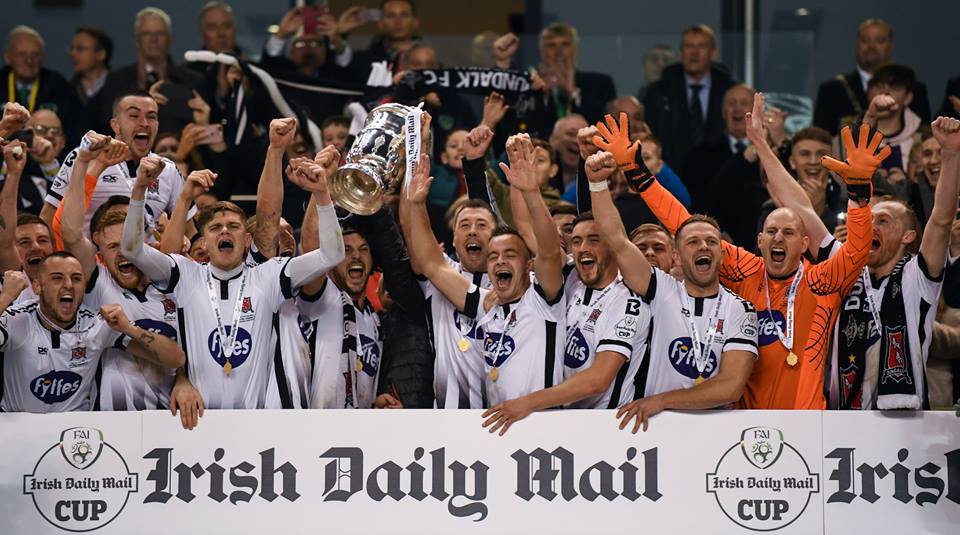
    Dundalk have clinched the league and cup double for the second time in four years after Patrick McEleney scored an unlikely header to secure the FAI cup.

    McEleney was an unsuspecting presence with a brilliant run from deep and he was on hand to meet Sean Gannon’s perfect cross with a thunderous header which Cork’s goalkeeper Mark McNulty could not keep out in the seventy-third minute. His decisive goal was the best part of the game in which there were few clear chances.

    It was a raucous affair in front of 30,000 spectators in the Aviva Stadium featuring hardcore fans from Cork, Dundalk and neutrals alike. The match looked set to be a feisty one from the beginning with smoke flares being fired from both sets of fans. 

    The match started aggressively with fouls coming in from both sides. Other than that the action was scarce between but Dundalk were arguably the better side in the early stages.

    The final did liven up in the eighteenth minute when Dundalk deservedly led through defender Sean Hoare who scored with a free header after he was left unmarked following their first corner of the game.

    However the joy only lasted mere seconds as the goalscorer quickly turned culprit in dramatic fashion. He was deemed to have fouled Cork forward Karl Sheppard in the penalty box and the referee had no choice but to blow his whistle.

    Kieran Sadlier celebrates his equaliser // Twitter @CorkCityFC

    Kieran Sadlier was the hero who slotted home the pivotal penalty in last year’s penalty shootout, and the midfielder replicated his heroics when he tucked the ball home with ease this time around again.

    The sudden upturn in action did not stop there. The drama culminated in some last ditch defending from the champions as Cork’s Shane Griffin had to clear the ball off the line following another Dundalk corner. 

    The rest of the half played out with Dundalk having more possession of the ball and Cork City being resilient.

    Patrick Hoban, whose 29 goals in the league helped propel Dundalk to the league championship, did not have much of a say in the game. However, he was quick to pounce on some careless play from Cork and unleashed a rasping shot which was parried away in the 68th minute.

    After McEleney’s goal went in, Cork City made attacking substitutions and were more exposed at the back as they searched for an equalising goal. Dundalk could have sealed it in the closing stages when Michael Duffy was through on goal following a swift counter attack, but he could not beat Mark McNulty.

    A tussle in the Cork penalty box // Twitter @FAIreland

    The reigning champions did create some nervy moments for Dundalk, notably when Sadlier’s deflected effort from long range forced goalkeeper Gary Rogers to tip the ball over the bar. Dundalk withstood late pressure and were successful in denying Cork City a third consecutive FAI Cup title.

    Speaking after the match, Dundalk manager Stephen Kenny reflected on the final. He said: “It was a great feeling to win it. It was a late enough winner. We won and lost here [The Aviva]. And when you lose, it’s a lonely lonely place, you know. To win it in the manner where we played well, pushed and pushed and eventually we knocked on the door. And the euphoric nature of winning like that is really special.

    “The players deserve huge credit for the way they kept at it when things weren’t really going for us. In the end [we] won the game.”

  • Recreational drug use in professional football continues

    Recreational drug use in professional football continues

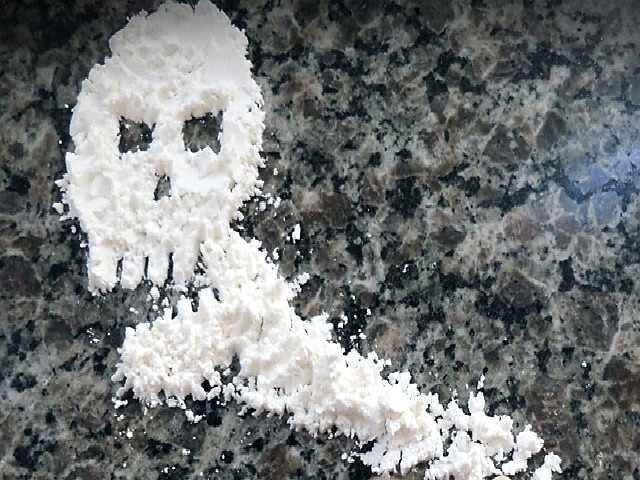
    Following Hull City footballer Jake Livermore’s failing of a drug test earlier this year, the issue of recreational drug use in football has come under the microscope once again.

    The one time England international tested positive for cocaine use after a random drug test which followed his side’s 2-0 victory over Crystal Palace in April.

    Livermore, who was provisionally suspended by the Football Association and his club, had recently experienced the death of his newborn daughter and, on these grounds, his suspension was lifted by the FA in September.

    Hull City manager, Steve Bruce, attributed Livermore’s use of the class A drug to the sadness the player felt after his daughter’s untimely passing.

    Closer to home, there have been a number of instances whereby League of Ireland players have been cited by the Football Association of Ireland following positive drug tests.

    Most recently, the Professional Footballers’ Association of Ireland (PFAI) announced on October 21st that a League of Ireland player had failed a drug test for a banned substance, which the Irish Independent said was ‘believed to be cocaine’.

    The player, who remains unnamed, waived his right to have a B sample tested according to the PFAI who confirmed that ‘the drug in question was of a recreational nature’.

    The PFAI’s statement noted that the player involved had a right to anonymity and, further, requested that those using social media and other outlets refrain from gossip or speculation until the matter had been resolved.

    Positive drug tests have remained however, highly unusual in Irish soccer.

    The last, and only, time that a League of Ireland player tested positive for cocaine was in 2003 when, then Shamrock Rovers goalkeeper, Barry Ryan, failed a random test and received a 15 month ban from the FAI. This ban was reduced to 9 months after an appeal and Ryan moved on to the now defunct club, Dublin City FC.

    In 2012, Dundalk F.C. midfielder Shane Grimes, then of rivals Drogheda United, tested positive for the stimulant methylhexaneamine, otherwise known as MHA, and was subject to an 8 month playing ban.

    Grimes’ situation was an interesting one as the panel judging the case acknowledged that the player most likely used the substance unknowingly – it is an ingredient in the widely used pre-workout supplement ‘JACK3D’ – although the player’s carelessness in this regard was also noted.

    A statement by the US Anti-Doping Agency (USADA) a year before Grimes’ positive test was titled ‘Beware – Your Supplement Could Cause a Positive Test’. The statement warned athletes to exercise caution when using products like ‘JACK3D’ or other products that may have in fact been ‘designer steroids’.

    For more stories from Conor Murphy, you can visit his Twitter at @conormurphylfc.

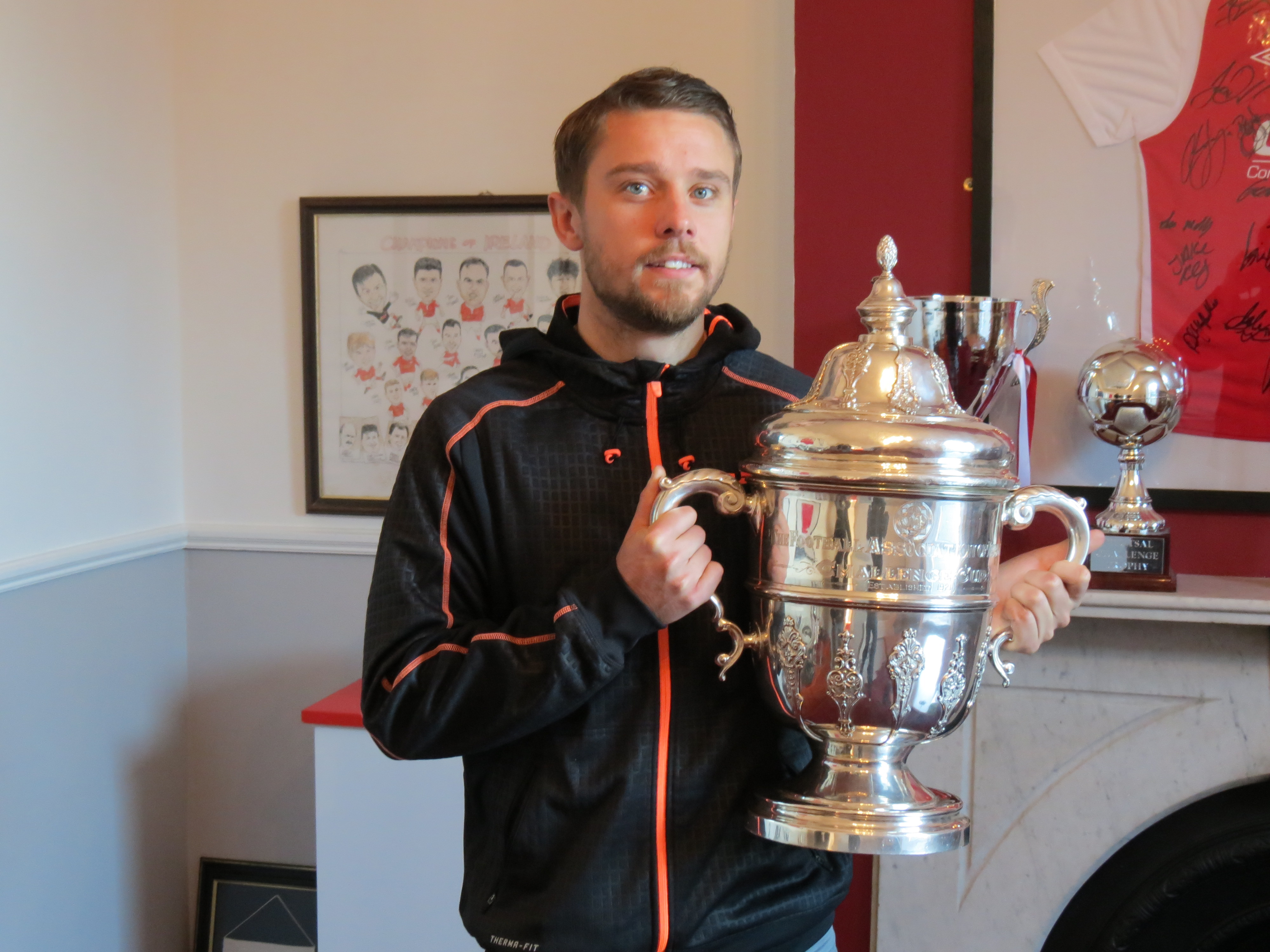
  • Ger O’Brien – A Season Review

    Ger O’Brien – A Season Review

    After winning the FAI Cup for the first time in 53 years, St Patrick’s Athletic captain Ger O’Brien sat down with The City to share his thoughts on the season gone by. The defender also spoke about his own future as well as other pressing matters in the League of Ireland.

  • Airtricity League title evades the capital – 2014 Season Review

    As another year of Irish league football comes to an end, the time for reflection for managers, players and fans has arrived. Whether your club has won the league, embarked on a memorable cup run, exceeded expectations or spectacularly failed to live up to them, little will change the love we feel for the club we support. Here’s a round-up of all the Dublin-based Premier Division clubs for the 2014 season.

    Bohemians

    Dalymount Park will welcome back First Division football next season. Photo: Jack Pollock
    Dalymount Park will welcome back First Division football next season. Photo: Jack Pollock

    After retaining their SSE Airtricity Premier Division status in 2013 with a 10th place finish, the Gypsies pushed on in the 2014 season to surprise everyone at Dalymount Park and finish in a commendable 7th place.

    Having only secured safety in the final weeks of the 2013 season, this campaign was a far more productive effort under now departed boss, Owen Heary. The 38 year-old, who spent seven years with the Phibsborough based club as a player and manager, guided his team to the latter stages of all three domestic cups. Bohs reached the semi-final stages of the EA Sports Cup, only to lose out to Shamrock Rovers 0-2. The FAI Cup brought more heartache, as the side were narrowly defeated by St Patrick’s Athletic despite threatening a late comeback in their quarter-final tie. The lesser acclaimed Leinster Senior Cup also saw the club excel, before being convincingly beaten by rivals Shamrock Rovers once again at the quarter-final stage.

    Dinny Corcoran ended the season as the Gypsies’ top scorer, as he bagged 13 league goals to ensure relegation was never at the forefront of his teammates’ thoughts. Summer signing Jason Byrne also provided the goals for Heary’s men, but at 36 years of age, time is running out for the Dublin-born striker to break the League of Ireland’s all time scoring record of 235 goals, currently held by Brendan Bradley. Byrne still needs just over 20 goals to match Bradley’s feat.

    Shamrock Rovers

    Photo: Shamrock Rovers FC
    Shamrock Rovers narrowly missed out on European qualification for next season. Photo: Shamrock Rovers FC

    Having previously secured a domestic cup treble in the 2013 campaign, Rovers were expected to improve on their 5th place finish and to challenge for the league title. However, the Hoops were to end another season without qualifying for Europe.

    Midway through the season, manager Trevor Croly left the club by mutual consent as the club decided he was no longer the man to take the club forward. Pat Fenlon, the former Hibernian boss, took over the reins as the club desperately tried to secure European football for the first time in four years. With their league form proving indifferent, the cups took on more importance as the club searched for an alternative route into Europe.

    The Hoops surrendered their EA Sports Cup to Dundalk, who claimed a 3-2 victory in a pulsating final. The club also lost its grip on their two remaining trophies, as they exited both the Leinster Senior Cup and the Setanta Sports Cup at the semi-final stages. Most painfully, Pat Fenlon’s side saw their last opportunity to qualify for Europe pass them by, as they lost to Derry City in their FAI Cup semi-final replay. The FAI Cup was high on the list of priorities for boss Fenlon, with the club having gone 27 years without claiming the trophy.

    Gary McCabe ended the season as the club’s top scorer with seven goals, as the Tallaght-based club struggled to find a prolific scorer. Goalkeeper Barry Murphy was named as the club’s Player of the Year.

    St Patrick’s Athletic

    Richmond Park Image
    Fans of St Pat’s can look forward to some Europa League action in July 2015. Photo: Fionnsci

    In claiming the SSE Airtricity Premier Division title in 2013, St Pat’s finally shook off their tag of ‘nearly men’. However, Liam Buckley’s side failed to recapture their title-winning form in 2014, as arguably the best squad in the league vastly underperformed to seal only a 3rd place finish.

    In light of their league triumph, the Inchicore club’s struggles in the cup competitions were largely overlooked last season. This campaign, in contrast, will be remembered for their exploits in both European and the domestic cups. Having gained a remarkable 1-1 draw in their Champions League second-round qualifier first-leg against Legia Warsaw, those at Richmond Park began to dream of a fairytale meeting with Scottish giants, Celtic. Unfortunately, those visions would remain imaginary, as the Polish champions thrashed St Pat’s in the second-leg, to end their chances of progressing.

    Liam Buckley and his players did claim the Leinster Senior Cup after beating First Division side Longford Town in the final. With Europa League qualification secured through their final league position, St Pat’s head into the FAI Cup Final on November 2 with little to fear, as they go in search of more silverware.

    Christy Fagan marked a memorable personal campaign with 20 league goals; Conan Byrne and Chris Forrester also reached double figures. Keith Fahey also enjoyed a fine campaign as he made his eagerly anticipated return to the League of Ireland.

    UCD

    UCD. Photo: Ed Scannell
    UCD’s future in the Premier Division remains in their own hands. Photo: Ed Scannell

    The perennial target for the Students is to remain in the SSE Airtricity Premier Division and they still have a chance of extending their five-year stay. In 2013, UCD sealed their safety after finishing in 9th place and in doing so, avoided the uncertainty of a relegation play-off. However, Aaron Callaghan’s side were not so fortunate this time around, as they will have to wait until Halloween night before their Premier Division status is decided.

    With the club’s target of survival the only real aspiration for management and players, cup competitions always prove to be a thankless task at the UCD Bowl. The Students exited all domestic cup competitions in the early rounds, as they lived up to their low expectations. Striker Cillian Morrison left the club in July to join Cork City, in what has become a familiar scenario for UCD as they continue to lose their best players on an all-too regular basis. The likes of Michael Leahy, Craig Walsh, Dinny Corcoran and David McMillan have all left the side in the past 12 months. However, management encourage the club’s best players to move on, in order to further their careers at more ambitious sides throughout the division.

    Time will tell if UCD are to prepare for life in the Premier Division once more, or whether they will finally endure relegation to Irish football’s second-tier.

  • A portrait of our league

    A portrait of our league

    Last March I embarked on a photographic quest to depict the essence of our much-derided domestic football league.

    Historical, sometimes dilapidated but always characteristic, League of Ireland clubs’ stadia still retain a quintessential flavour of the game in its simplest form, something that is regrettably absent in the new generation of modern super-stadiums which have come to prominence around the globe.

    This slideshow requires JavaScript.

  • Should Ireland amalgamate in international soccer?

    Should Ireland amalgamate in international soccer?

    credit Steven Depolo on Flickr
    credit Steven Depolo on Flickr

    When you look to Irish national teams for a source of pride, rugby comes to mind first. It is a great testament to this small nation that we compete with countries that have 10 times the population to work with.

    So based on that, one would assume that any possible question regarding an amalgamation of the Republic and Northern Ireland soccer teams has to be answered with a yes. I however, disagree.

    The Republic of Ireland national team has shown before that it has the quality in its arsenal to compete with the best in the world and to make the latter stages of major tournaments.

    In the World Cup in 1990, 1994, and 2002, the Republic’s soccer team reached the quarter finals, and made it to the final 16 twice, respectively. During the same time period Northern Ireland failed to qualify on all occasions.

    For the European Championship in 1988 and 2012 the Republic reached the group stages of the tournament. The upper quadrant of the island has never reached a European Championship.

    Despite neither side succeeding in securing a trip to Brazil in 2014, the Republic still managed  to maintain a somewhat respectable record in terms of wins and draws compared to Northern Ireland’s shambolic campaign in which the green of the North recorded a draw and a loss against both Luxembourg and Azerbaijan.

    When you move the argument away from the pitch the sensible notion still points towards the Republic remaining a separate entity.

    The Football Association of Ireland (FAI) have purpose built grounds in the Aviva Stadium which is the home of Irish soccer. Northern Ireland do not have that luxury. Instead, they have leased the rights from Linfield F.C. for the use of Windsor Park. In return for this lease, 15 per cent of all revenue of gate receipts and TV rights leaves the Irish Football Association‘s (IFA) pockets and lines Linfield’s.

    The issue surrounding political and religious difference also needs to be considered. The Irish rugby team works as a combined entity because a) it has always been this way since its inception and b) the vast majority of rugby supporters would be of a higher social class and background. Not meaning to pigeonhole, but football supporters would have a greater tendency towards unruliness and hooliganism than their rugby counterparts.

    The only foreseeable benefit gained for the Republic of Ireland by amalgamation is that the Republic of Ireland would not have to press players who are born in the six counties to declare for the Republic.

    However, most Irish managers have a tendency to acquire players not only from Northern Ireland, but also Scotland, Wales, and England. Once they were born on the island or have a grandparent who was, they can declare for the Republic – therefore all of the Northern Ireland squad is fair game for the Republic of Irish team, they just need to be ahead of the curve in terms of recruiting them.

    Another issue is that the League of Ireland, which is already on the fringes of the FAI’s agenda, would become even more so, as an amalgamation of both countries national teams would result in an inevitable combination of both football associations.

    Northern Ireland’s only potential commodities are already available to the Republic and therefore the south will be offering up a much greater investment for what are limited dividends!