
Malcolm Noonan is someone who is well-known around Kilkenny. He was a member of Kilkenny County Council for almost 15 years and served as Mayor of Kilkenny between 2009 and 2010.
He was then elected to the Dáil in 2020, and served as a minister, before becoming a Senator this year.
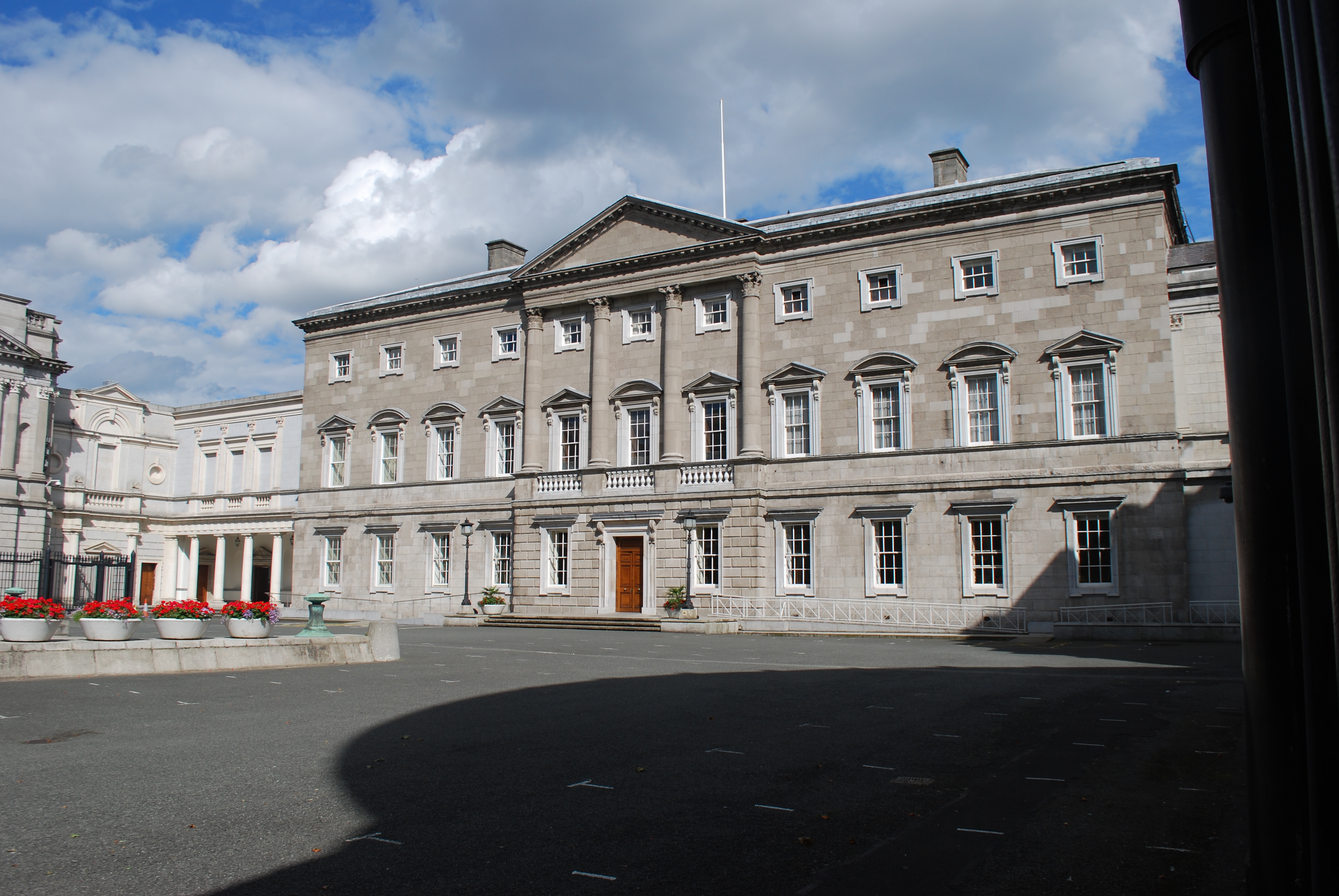
From his office in Leinster House, I sat down to speak with Malcolm about life as a public servant, his experience in the world of politics, and the challenges that politicians face.
Politics wasn’t always Malcolm’s calling. Enviromental activism has always been a key tenet of his life. From a young age he was engaging with his local community and the world around him. “I was just interested in nature and the environment,” he said.
But politics came knocking when he was approached by the Green Party to run for Kilkenny County Council in the 2004 local elections. “They said, “would you be interested in running?” and I said, “I’m not so sure.” So, I gave it a bit of thought, and then I said, “Sure, what will be the worst thing to happen?” and then the worse thing happened. I got elected.”
Malcolm topped the polls in that election, a feeling he describes as “amazing.” Very soon, he began to realise the possibilities of the role, beyond his ideological goals. “It’s funny, when you get elected you actually realise, I can make a difference in people’s lives. I can get a disabled persons grant, I can help someone get a house.”
His entry into politics was certainly accidental, least of all did he think he would still be involved in it some 20 years later. Malcolm was very aware of the precarious nature of being an elected official. He studied for a Rural Development degree so that he would have something to fall back on. “When I stood in 2009, the party was in government, and we lost most of our council seats. That made me realise how vulnerable this could be.”
In his time on Kilkenny County Council, he was heavily involved in many community initiatives, including forming and chairing the Heritage Forum in Kilkenny, and establishing Kilkenny’s first Integration Forum. “These are refugees brought in by the state from refugee camps in Uganda and South Sudan. They were amazing families.”
Integration is something that Malcolm feels is still important today, especially with all of the discussion around immigration online.
After 15 years on the council, Malcolm contested the 2020 general election for the Green Party and won a seat for Carlow-Kilkenny, something he didn’t expect. “We went to the count centre, and I looked like I was dead and buried, and lo and behold I got a huge dump of transfers.”
As was well documented, the months after the general election were chaotic. The three big parties, Fianna Fáil, Sinn Féin, and Fine Gael were neck-and-neck. And then, just a few weeks after the vote, the pandemic hit. Malcolm initially thought that he would be spending the next five years in opposition, now he felt that his party couldn’t sit on the fence.
“The Greens will always go into government,” he said. “We feel we have a duty; we’re a policy driven party, and we should step-up where we’re needed.”
Noonan describes his appointment as a Minister with great enthusiasm.
“He [Eamon Ryan] called me down to his office and I recall it being like Charlie and the Chocolate Factory.” He was given the portfolio ‘Heritage and Electoral Reform’ (which later became ‘Nature, Heritage and Electoral Reform’), which entailed the National Parks and Wildlife Service, National Monument Service, and all of the biodiversity policy. “My immediate reaction was I skipped up the corridor, clicking my heels. I was delighted with myself. I’ll never forget the day I was appointed.”
The term of a government is both very short and very busy. “My legacy from that time was giving a huge uplift to the heritage sector, [and] the biodiversity sector.”
But all good things must come to an end, and the 2024 election was looking gloomy for the Green Party. Having lost many of their councillors in the local elections earlier in the year, the mood closer to election day was more sombre.
I asked Malcolm whether he felt that his colleagues in the other coalition parties had turned on the Greens, and I was surprised by the honesty of his response.
“There was a narrative emerging over time. Some of it was built around Eamon Ryan. It suited some in the media to attack Eamon. It suited some in a ‘business as usual’ agenda to target us. And then, perhaps, there’s an element of our colleagues who say, “all that bad stuff, carbon tax, that’s the Greens.”
But he doesn’t put all the blame solely on outside actors, he admits that there were failings in how the Green Party put itself across.
“I do feel that we spend so much time delivering, and I don’t think we did a good job of communicating why we were doing this stuff. Behavioural change is really hard.”
Malcolm is proud of the things that his party achieved in government, such as cutting public transport fares, expanding the LocalLink bus network, and installing free solar panels on schools, But as someone living in rural Ireland, I could see that the Greens were failing at advertising those achievements to the public.
Malcolm said, “I remember a man giving out to me. I was out at an event in a rural village and he was giving out yards about Eamon Ryan, and next thing the 891 (a LocalLink bus in county Kilkenny) passed and he said, “God, isn’t that great!” and I said, “That’s Eamon Ryan for you.”
When election day came, and in the days afterwards, it was clear that it was not looking good for the Greens, and Malcolm was knocked out at the 8th count. “You have to dust yourself off and say, “people have voted, that’s the way it is.””
But opportunity came knocking again during the Seanad Elections this year, where Noonan was elected to the Agriculture Panel. Now Malcolm is a Senator, still roaming the halls of Leinster House.
I touch upon a serious topic, about the increase in hostility towards politicians, both online and in-person. It is quite shocking.
“I’ve had death threats, both in writing and on the street.” he said. “I’ve been physically assaulted; you get verbal abuse.” He says it doesn’t happen often, but it does make him question why he does the job, and why anyone, particularly young people, would want to get involved. “No other workplace would accept the level of abuse that politicians receive,” Noonan said.
Away from the politics, Malcolm Noonan is an artist. He paints, he draws, and he plays in a band. Like most people, there is the family side to it all. “Dad taxi”, as he calls it, to football matches. He admits that being in government kept him away from his family, so he’s enjoying having more time with them these days.
To finish up, I ask Malcolm what he is most concerned about, and optimistic about, in the future.
What he is most concerned about is what he is also most optimistic about: the climate.
“The whole climate and nature crisis, to me, is the reason I’m in politics. Every year there’s a COP, and every year they walk away with some kind of agreement on something. At the root of it all is our financial and economic system. I fundamentally believe that we need to move away from our reliance on economic growth as a measure of our progress as a nation.”
But it is young people who make him feel optimistic about the climate. The likes of Greta Thunberg, whom he is a big fan of. In a school in Urlingford, County Kilkenny, he tells me that the pupils received a handwritten letter from Sir David Attenborough, telling them to keep going with their Green Schools initiative.
“If David Attenborough, the most famous naturalist broadcaster in the world, can take time to handwrite a letter and handwrite an envelope, and send it to a school in Urlingford, County Kilkenny, well, there has to be hope.”


You must be logged in to post a comment.