In a time where many gay men still struggle to find themselves, Ché Fegan is making space for them to feel more honest and aligned with themselves. Following his own struggles and travelling the globe, Fegan reflects on his journey to finding himself.
By Kelly Smyth
As toxic masculinity and identity politics dominate the online world, identity coach and wellness practitioner Ché Fegan is making space in the real world for gay men to stop chasing validation and embrace who they truly are.
Hailing from a rural town in Northern Ireland, growing up wasn’t always simple for Fegan. “From a younger age I was always odd. I had this wild imagination and connection with the outdoors. I was very sensitive and in tune with my emotions,” he said.
While this was seen as acceptable for a young boy, things changed as he entered puberty, which is when he believes many men in Ireland are taught to deny who they are in favour of society’s masculine model.
“Once you hit puberty, you begin to look like a man instead of a boy. You are kind of pushed away by the men in your life. You are told ‘don’t feel anything’, ‘man up’, ‘toughen up’ – to fit into those already established gender roles. For men, that often means killing everything inside you,” he recalled.
For Fegan, being a young gay man caused issues; his sexuality attracted bullying. “It was a place where something different was a curse rather than a blessing,” he said.
Despite this, Fegan’s sexuality was a guiding light for who he wanted to be. Although it was “distorting” to be both gay and facing up to masculinity as a young man, his identity brought a real drive for equity in his heart.
“My homosexuality gave me a lot of needed fight, and I’ve always had a strong sense of fairness. It fires something up in me,” he said.
While this drive to move forward carried him through his teenage years, he found himself battling his identity and sexuality through his twenties. “As a man, regardless of sexuality, you can still go through identity issues. You tend to figure out things behind the scenes. It could be arguing, travelling, hypersexuality. Anything to get away,” he shared.
Much of his young adulthood was spent travelling, with his move to Australia finally breaking the cycle of battling his own identity.
“Between twenty-eight and thirty I lived in Australia, and I felt incredible loneliness. It was a moment when I was finally feeling. I remember thinking ‘this is f-cked up’ because I should have been able to feel comfortable by myself. But I felt like a stranger in myself. I thought I knew myself, but really, I was just a people pleaser. I had never truly known who I was,” he revealed.
This revelation is ultimately what led Fegan to spirituality, beginning with reiki before embracing breathwork, yoga, and sound healing. Part of his spiritual journey was almost serendipitous, with a book on Buddhism he found on the streets of Berlin introducing him to new ideas and a “broadening of the mind”.
Embracing wellness has led him to learn more about himself. Now he is ready to share it with others. “I am at a point where I know things now that I want to share. I want to help people feel how I feel now,” he said.
Ché Fegan leads one of his breathwork classes. Photo Credit: Ciaran Gildea.
Hearing more and more about men in Ireland struggling with their mental health and suicide, Fegan decided it was time to create space for men to find themselves. He also noticed gay men in particular had no spaces beyond nightlife.
“If you don’t drink or don’t go out it can be very isolating. It’s time to stop being nightwalkers and time to be seen and heard,” he said. “The space I want to create is based around community. I want to start getting men together and create an environment of softness.”
Part of how Fegan is doing this is by offering Men’s Circles, where any man can go to experience somatic movement, breathwork, and a sound bath aimed to help them reconnect with themselves.
Additionally, Fegan runs retreats for gay men to help them break harmful patterns surrounding their identity.
“Because the gay community is so new in terms of history, so many patterns of harm are repeating regarding shame. I want the next generation of gay men to heal. Why not rule out hate all together?” he said.
While many men who are on this journey tend to be older, Fegan reaffirms “the door is open to anyone who wants to come”.
“The work I do is about helping men slow down and actually reconnect with themselves through breathwork, nervous system work, and deeper pattern awareness. It’s not about fixing them.
“It’s about helping them understand themselves, so they can stop performing and start making choices that feel more honest and aligned with who they are. I think a lot of men are quietly dealing with this, but don’t always have spaces where they feel safe enough to explore it. That’s something I’m trying to change through the work I do.”
In recent years, Ireland has made huge progress in equality and representation for queer communities, with our country even being the first in the world to legalise gay marriage by popular vote in 2015.
Yet, for many young people, questions around identity, belonging, and visibility are still deeply relevant.
On university campuses, societies play a vital role in creating spaces where everyone feels safe and supported, especially today, as Ireland has seen a growing wave of conservative and far-right narratives, the work of these groups feels more important than ever.
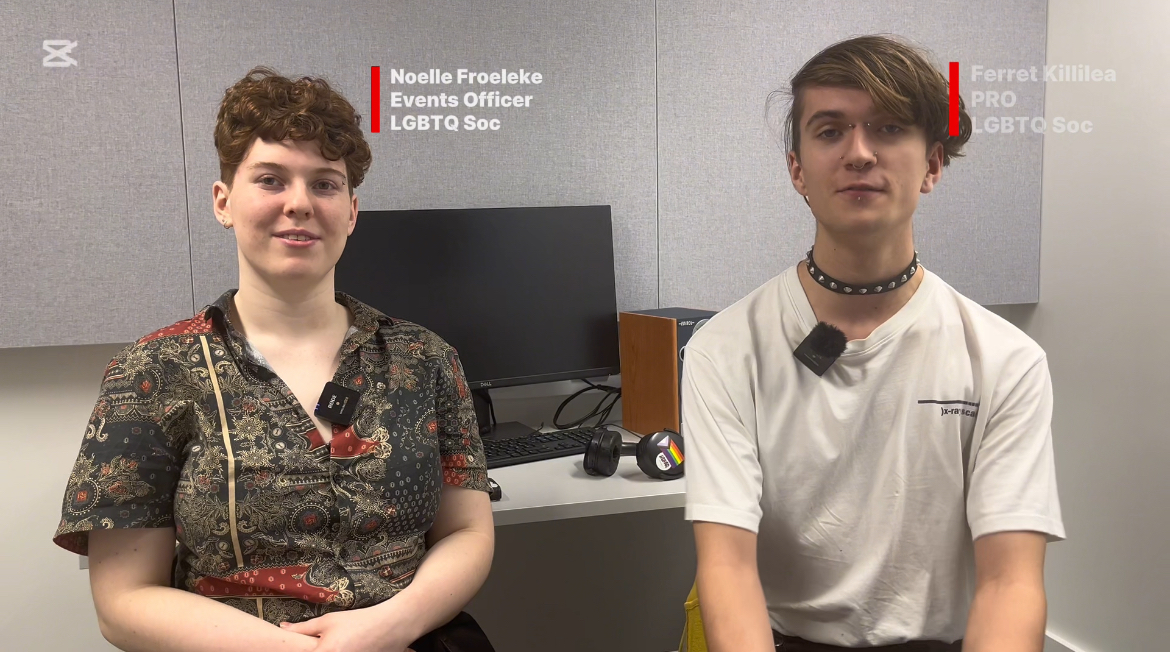
At TU Dublin, the LGBTQ society has become one of the most welcoming and active groups on campus, first established over 30 ago.
We talked to them to see what happens behind the scenes, what the society means to them, and why diversity and inclusion matter.
Inclusivity and providing a safe space for all participants are core values of sport, especially when it comes to identifying as LGBTQ+.
A basketball club in Dublin has been set up this year – aimed at being an inclusive sports environment for members of the LGBTQ+ community, wishing to partake in basketball.
The basketball club in question is Shamrock Sióga. Set up in May of this year, it became the first LGBTQ+ basketball club in Ireland.
Shamrock Sióga had their first game of the season, last month, against Renegade and won 38-35.
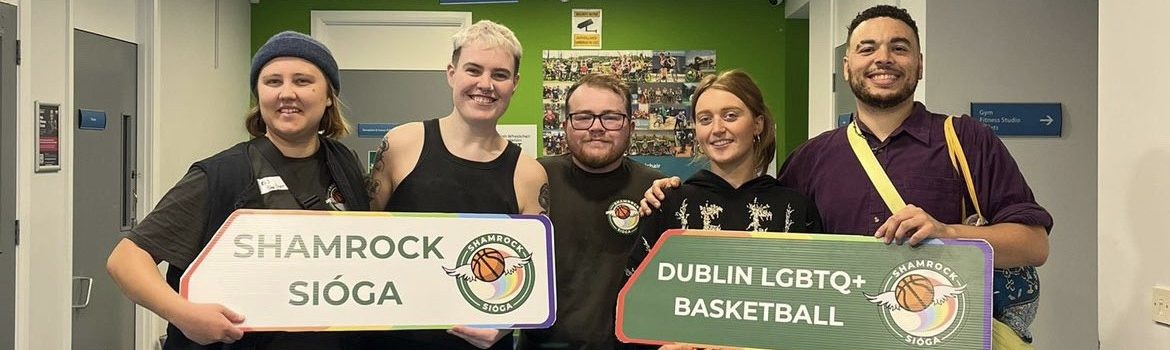
The Shamrock Sióga team and committee before their first game against Renegades. Photo: @dublinlgbtbasketball
Tatiana O’Brien–Santos (She/her) is the coach at Shamrock Sióga and gave The City an insight into her experience in the LGBTQ+ inclusive club.
“Being the coach of Shamrock Sióga is so rewarding, all of our players are so hard working and give it their all at every session. There is nothing but respect both ways,” she said.
Speaking about what Shamrock Sióga means to her, she said, “LGBTQ+ people face their obstacles in life and many times these are in a sports setting. For women and LGBTQ+ people, there is almost always justification needed for their participation and I have felt this personally almost all of my sporting life. I want to eliminate that for everyone.”
The coach refers to Shamrock Sióga as the “beginning of history”. She said, “As the first LGBTQ+ basketball club in Ireland, it’s an example – a statement that’s paving the way for all and any LGBTQ+ athletes and any other minority communities, and sometimes you just have to create that space yourself.”
Coach Tatiana O’Brien-Santos in her element at a recent training session. Photo: Tatiana O’Brien-Santos
When asked about the club’s success since its formation, she said, “Our growth rate and the feedback from our members on how impactful the club has been in terms of helping people feel like they belong and feel confident in a sports context is something I’m so proud that the club has been able to achieve.
“We have been featured in national media three times over the last 6 months. We have over 140 people in our club, our followers on our socials have tripled. We played our first ever basketball match and won, we are about to host the first exclusively LGBTQ+ basketball match in Ireland. I couldn’t be happier to see the support we have received.
“Being involved in basketball for so much of my life, I wanted to use my knowledge to help fuel growth for the club and get it to where I knew it could be. Within 3 months, we were a fully established basketball club with registered members, a clear structure and a great club culture, something made possible in collaborating so well with the committee of the club who truly work so hard for Shamrock Sióga,” she added.
Along with O’Brien-Santos, Shamrock Sióga thrives in its current success thanks to several additional members of a dedicated committee.
The Shamrock Sióga committee. Left to right: Kris Kalniņa, Jess Devine, Fionn Collins, Tatiana O’Brien-Santos and Danny Carby-Robinson. Photo: Tatiana O’Brien-Santos
DannyCarby-Robinson (He/Him) is the treasurer and registrar at Shamrock Sióga.
Carby-Robinson thrives on “connecting with others” and believes in the “power of small-scale community changes – to create a larger impact.”
“Being part of Shamrock Sióga has been such a fabulous experience. Having an LGBTQ+ basketball club is super important because it creates a safe and supportive space for people to enjoy the sport without fear of discrimination, judgment or shame,” he said.
He believes that everyone brings diverse aspects of being LGBTQ+, which will help ensure their work remains “inclusive, multifaceted, and representative of all walks of life.”
He attributes homophobia, transphobia and toxic masculinity in traditional sports environments as factors when considering LGBTQ+ hesitancy with engaging in sport.
“As a closeted teenager, I joined a rugby team but quickly became discouraged by the negativity around me during an impressionable time in my life. These experiences left a lasting impact.
“Joining an inclusive club has helped me rediscover my love for sports and has shown me the importance of creating supportive environments for LGBTQ+ individuals,” he said.
Carby-Robinson hopes for Shamrock Sióga to participate in the EuroGames 2025 in Lyon as the first ever Irish basketball club to do so.
“I also want to focus on building a stronger community. I hope to connect more with other queer organisations in Dublin on collaborative events, fostering relationships that strengthen our impact in the broader LGBTQ+ community,” he added.
Jess Devine (They/Them) is the club secretary and PR officer at Shamrock Sióga.
Devine calls their experience with Shamrock Sióga “life changing”. They said, “It’s a club I didn’t know I needed in my life. Now that I’m part of it, I can’t imagine my life without it. The community that has been built through this club is fantastic. I can’t wait to see this grow and flourish with more LGBTQ+ people.”
Speaking about inclusivity in sports, they said, “I think a lot of queer folk in sport would’ve played when they were younger and as they grow up there is no inclusive space for them anymore and they fall out of love with the sport.”
“I’ve felt this way in past basketball teams as a non-binary person on a women’s team. I didn’t feel included due to the language, the gendered terms in sport and not feeling safe to come out as non-binary.
Devine calls it “crucial” for people to have a safe space where they can be their 100% authentic self, and believes this should apply to sports clubs.
Devine’s future hopes for the club are to grow bigger and have an U18s division for queer kids. They’d also “love” to get into “as many tournaments as possible” and represent Ireland.
Fionn Collins (He/Him) is the chairperson at Shamrock Sióga.
Collins wanted to create a basketball team that “catered for all” in the LGBTQ+ community. He said, “The community we have created is amazing – a safe space for all the community in sports.”
Collins feels the club is opening doors for conversations about the LGBTQ+ community in sports. He sees it as a chance to educate people and show that sports is for everyone.
In relation to LGBTQ+ people staying away from sport, he attributes this to toxic masculinity – but believes things are “slowly changing” with the help of Sporting Pride and other organisations.
Collins believes it’s “super important to have an inclusive sport” – to have “all parts of minority communities” feeling recognised and seen in the sport they want to play.
Collins feels that improving inclusion in sports will reduce poor mental health in the LGBTQ+ community.
Collins’ future hope for the club is to become as big as other LGBTQ+ clubs in Ireland like Emerald Warriors and Na Gaeil Aeracha.
“I want us to also help push policies for our trans siblings within the basketball community, to allow them to be safe and play in the sport,” he added.
Kris Kalniņa (She/Her) deals with fundraising and court bookings at Shamrock Sióga.
Growing up in Latvia, where the sports culture is “rooted in the rigid traditions of the USSR,” Kalniņa felt isolated there as an LGBTQ+ athlete “as there was little room for openness.”
She claims being part of Shamrock Sióga’s committee has been “transformative”. She said, “It’s allowed me to help build a community that prioritises inclusivity and support for LGBTQ+ athletes – fostering connections among diverse individuals who share a love for basketball and sport.”
Kalniņa attributes “experiences of exclusion” to LGBTQ+ people avoiding sports and personally felt this way growing up. She said, “The fear of rejection often overshadowed my passion for athletics. Addressing these barriers is essential for fostering acceptance.”
“An LGBTQ+ basketball club is crucial for creating a safe space where individuals can express themselves freely while enjoying the sport,” she said.
Kalniņa’s future hope for the club is to “challenge the status quo by advocating for inclusivity and equity in sports,” and envisions “participating in competitions, proposing fair rule changes, and inspiring positive change.”
“It is something I’m incredibly passionate about. My experiences in sport have shown me the power and impact of creating a space where everyone feels they belong,” she said.
Unity Sports builds on the basketball coach’s mindset and approach, by “aiming to foster inclusivity and growth in sports,” particularly for women and the LGBTQ+ community.
O’Brien-Santos’ plan with Unity Sports is to “provide opportunities for people to be their best selves in sport, and to educate coaches, teams, and organisations on creating environments that truly welcome all athletes – all with the intention to grow the audience of women and LGBTQ+ sports events.”
“Whether it’s helping women feel valued in traditionally male-dominated sports or supporting LGBTQ+ athletes who’ve often felt overlooked, we’re focused on building leaders and advocates who can bring real change to sports culture.
“I’m creating Unity Sports to break down barriers and reshape what sport can look like for everyone,” she concluded.
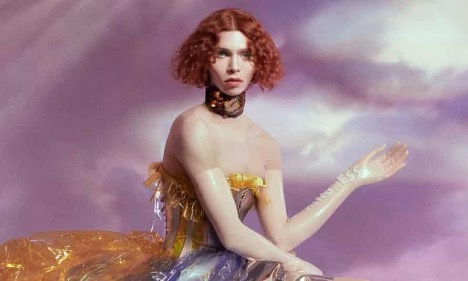
The iconic producer on the Oil of Every Pearl’s Un-Insides cover. Cover Art Credit to Soapworld
The music industry and trans community lost a pioneer on 30 January. The 34-year-old critically acclaimed producer SOPHIE died following an accidental fall in Athens, Greece – leaving behind a legacy of adoration from fans, friends and collaborators.
It’s difficult to forget hearing SOPHIE’s music for the first time. When BIPPfirst appeared on the radar of music listeners in 2013, it sounded like a dystopian future filtered through a nostalgic past, garnering widespread acclaim and speculation as to the identity of the reclusive artist. Rising to prominence alongside London’s PC Music collective, the acclaim would only grow more unanimous as SOPHIE’s elevated artistic and sonic vision cemented the Scottish producer’s place as one of the most forward-thinking musicians of the 2010s.
For Dublin based experimental-electronic producer Dark Mavis, the unforgettable introduction into the world of SOPHIE came initially through the song Hard, as it played in the Boiler Room set of label mate GFOTY and subsequently in the unlikeliest of places, the stockroom at his former workplace.
“After I heard that SOPHIE track at work, I became obsessed. I listened to every release, every set, everything I could get my hands on,” says Dark Mavis. “I think that was back in 2017 so I was a bit late getting into the music, but I’ve been a huge fan ever since,” he continues.
“It’s something that’s so difficult to emulate because SOPHIE had a truly unique talent for manipulating sound”
Dark Mavis
Kilkenny’s self-described purveyor of ‘occult digital hardcore’ Fomorian Vein too recalls a memorable first encounter with SOPHIE’s track Lemonade whilst reading a blog article in 2014.
“The overt influences from Eurodance, hardcore techno and noise music stood out immediately along with SOPHIE’s own distinct production, tracks like this were unheard of at the time and it was a much-needed breath of fresh air,” says Vein.
An uncompromisingly singular beatmaker, it’s difficult to pinpoint the exact influences from which SOPHIE crafted the sound.
Where genre descriptors fall short, SOPHIE’s music is most often likened jokingly or otherwise, to the physical materials such as metal and elastic that the producer meticulously sought to recreate through software synthesis and digital manipulation.
For Dark Mavis, this was a particular source of inspiration: “Both the found sound element of the music and how SOPHIE imagined and designed sounds that may not necessarily be real is hugely inspirational,” he says. “It’s something that’s so difficult to emulate because SOPHIE had a truly unique talent for manipulating sound in that way, but it’s something I would love to incorporate into my own music.”
SOPHIE was also adept at expanding the sonic world of collaborators, pushing them into realms they may have been initially reluctant to explore. SOPHIE played a crucial role in the musical development of close collaborator Charli XCX, who traded in the radio-friendly pop-rock of 2014’s Sucker for the ambitious soundscapes of the Vroom Vroom EP.
“The kicks, the snares and the acid bassline come together with Charli’s vocals to make perfect pop music,” says Mavis. “You hadn’t really seen anything like it in mainstream pop music, I still don’t think people are ready for it to cross over into the charts,” Mavis continues.
On Yeah Right, SOPHIE adorned the voices of west coast rapper Vince Staples and superstar feature Kendrick Lamar with booming bass and harsh percussion.
SOPHIE even collaborated with personal hero Madonna on the critically divisive but endlessly memed 2015 track Bitch I’m Madonna.
With the release of official debut Oil of Every Pearl’s Un-Insides, the once reclusiveSOPHIE (who preferred not to be addressed by any pronouns when discussed by media outlets) presented extremely personal and deeply emotive work which revealed and explored the artist’s trans identity.
SOPHIE presented an extremely personal and deeply emotive work which revealed and explored the artist’s trans identity
The success of the record and its accompanying videos secured SOPHIE a well-deserved spot in the pantheon of queer icons and its exploration of gender identity remains a major inspiration for LGBTQ+ artists across a variety of mediums.
“Oil as an album is a massively empowering statement on personal identity and sincerity that shakes a lot of people’s perceptions on what even seems possible within music,” says Fomorian Vein.
“The opening track It’s Okay To Cry had such an immediate, enormous and much needed impact on not just electronic music or pop music, but also how musicians in the public eye could learn to present themselves,” Vein continues.
SOPHIE’s life and career as a hugely innovative transgender music producer stands as testament to the empowerment and liberation of casting off restrictive gender and sonic constraints. The refrain of one of SOPHIE’s most beloved songs Immaterial reassures the listener that “you can be anything you want” – a fitting chorus for a song that will continue to soundtrack the self-discovery of young queer people for decades to come.





You must be logged in to post a comment.