Tag: Madonna

  • Immaterial Girl: How SOPHIE expanded the horizons of pop music

    Immaterial Girl: How SOPHIE expanded the horizons of pop music

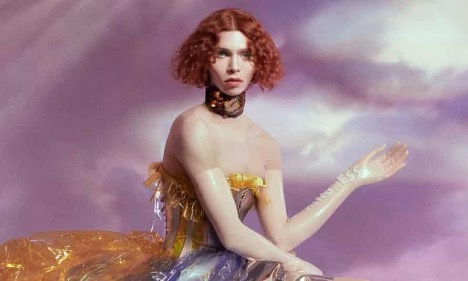
    The iconic producer on the Oil of Every Pearl’s Un-Insides cover. Cover Art Credit to Soapworld

    The music industry and trans community lost a pioneer on 30 January. The 34-year-old critically acclaimed producer SOPHIE died following an accidental fall in Athens, Greece – leaving behind a legacy of adoration from fans, friends and collaborators. 

    It’s difficult to forget hearing SOPHIE’s music for the first time. When BIPP first appeared on the radar of music listeners in 2013, it sounded like a dystopian future filtered through a nostalgic past, garnering widespread acclaim and speculation as to the identity of the reclusive artist. Rising to prominence alongside London’s PC Music collective, the acclaim would only grow more unanimous as SOPHIE’s elevated artistic and sonic vision cemented the Scottish producer’s place as one of the most forward-thinking musicians of the 2010s.

    For Dublin based experimental-electronic producer Dark Mavis, the unforgettable introduction into the world of SOPHIE came initially through the song Hard, as it played in the Boiler Room set of label mate GFOTY and subsequently in the unlikeliest of places, the stockroom at his former workplace. 

    “After I heard that SOPHIE track at work, I became obsessed. I listened to every release, every set, everything I could get my hands on,” says Dark Mavis. “I think that was back in 2017 so I was a bit late getting into the music, but I’ve been a huge fan ever since,” he continues.

    “It’s something that’s so difficult to emulate because SOPHIE had a truly unique talent for manipulating sound”

    Dark Mavis

    Kilkenny’s self-described purveyor of ‘occult digital hardcore’ Fomorian Vein too recalls a memorable first encounter with SOPHIE’s track Lemonade whilst reading a blog article in 2014. 

    “The overt influences from Eurodance, hardcore techno and noise music stood out immediately along with SOPHIE’s own distinct production, tracks like this were unheard of at the time and it was a much-needed breath of fresh air,” says Vein.

    An uncompromisingly singular beatmaker, it’s difficult to pinpoint the exact influences from which SOPHIE crafted the sound.

    Where genre descriptors fall short, SOPHIE’s music is most often likened jokingly or otherwise, to the physical materials such as metal and elastic that the producer meticulously sought to recreate through software synthesis and digital manipulation. 

    For Dark Mavis, this was a particular source of inspiration: “Both the found sound element of the music and how SOPHIE imagined and designed sounds that may not necessarily be real is hugely inspirational,” he says. “It’s something that’s so difficult to emulate because SOPHIE had a truly unique talent for manipulating sound in that way, but it’s something I would love to incorporate into my own music.”

    SOPHIE was also adept at expanding the sonic world of collaborators, pushing them into realms they may have been initially reluctant to explore. SOPHIE played a crucial role in the musical development of close collaborator Charli XCX, who traded in the radio-friendly pop-rock of 2014’s Sucker for the ambitious soundscapes of the Vroom Vroom EP. 

    “The kicks, the snares and the acid bassline come together with Charli’s vocals to make perfect pop music,” says Mavis. “You hadn’t really seen anything like it in mainstream pop music, I still don’t think people are ready for it to cross over into the charts,” Mavis continues.

    On Yeah Right, SOPHIE adorned the voices of west coast rapper Vince Staples and superstar feature Kendrick Lamar with booming bass and harsh percussion.

    SOPHIE even collaborated with personal hero Madonna on the critically divisive but endlessly memed 2015 track Bitch I’m Madonna.

    With the release of official debut Oil of Every Pearl’s Un-Insides, the once reclusive SOPHIE (who preferred not to be addressed by any pronouns when discussed by media outlets) presented extremely personal and deeply emotive work which revealed and explored the artist’s trans identity. 

    SOPHIE presented an extremely personal and deeply emotive work which revealed and explored the artist’s trans identity

    The success of the record and its accompanying videos secured SOPHIE a well-deserved spot in the pantheon of queer icons and its exploration of gender identity remains a major inspiration for LGBTQ+ artists across a variety of mediums. 

    “Oil as an album is a massively empowering statement on personal identity and sincerity that shakes a lot of people’s perceptions on what even seems possible within music,” says Fomorian Vein.

    “The opening track It’s Okay To Cry had such an immediate, enormous and much needed impact on not just electronic music or pop music, but also how musicians in the public eye could learn to present themselves,” Vein continues.

    SOPHIE’s life and career as a hugely innovative transgender music producer stands as testament to the empowerment and liberation of casting off restrictive gender and sonic constraints. The refrain of one of SOPHIE’s most beloved songs Immaterial reassures the listener that “you can be anything you want” – a fitting chorus for a song that will continue to soundtrack the self-discovery of young queer people for decades to come.
  • Will Madonna be the super-hero fighting against the Front National?

    Will Madonna be the super-hero fighting against the Front National?

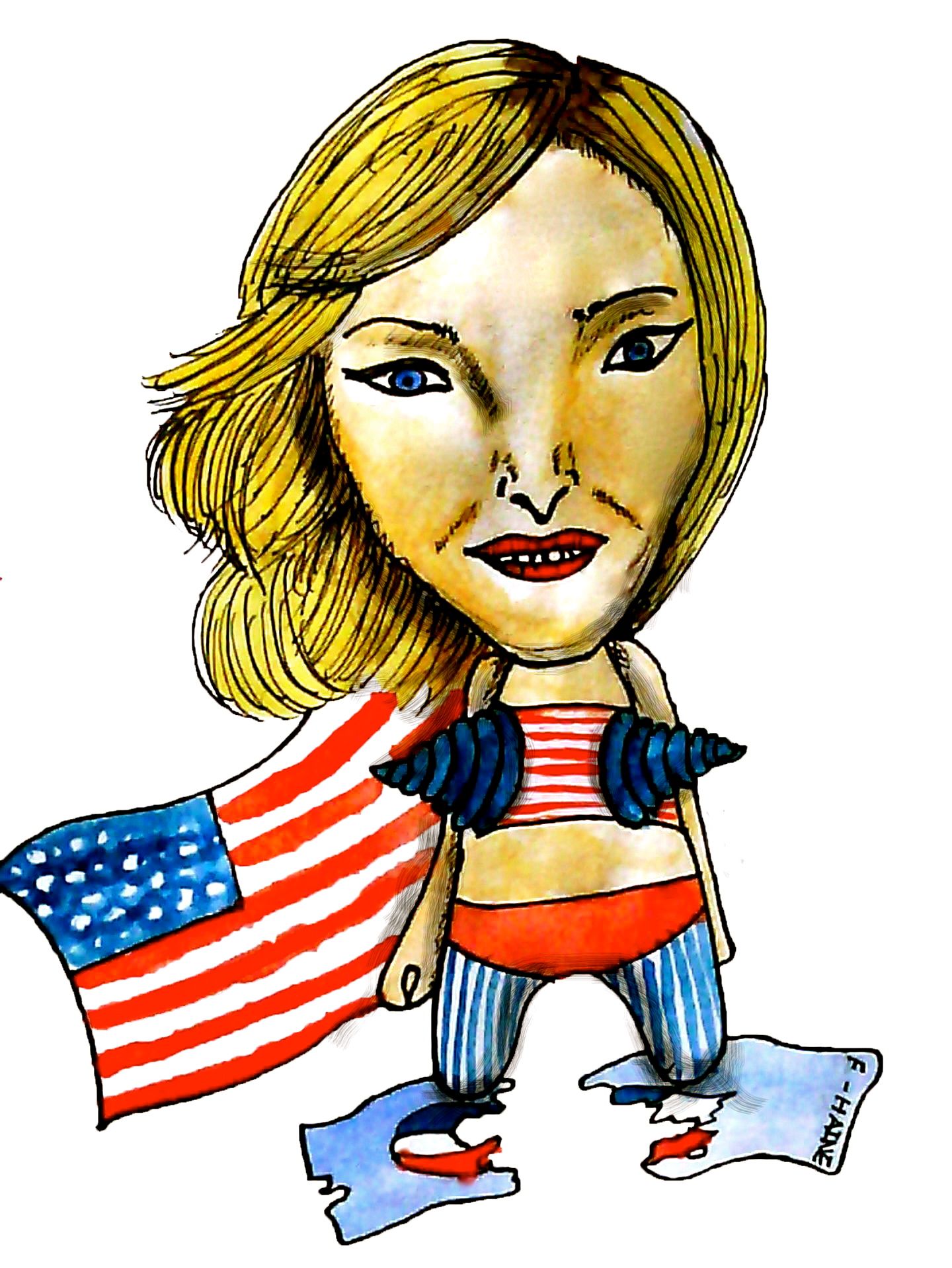
    - Super Madonna, tearing apart one poster from the Front National -  by Defné Cetin
    – Super Madonna, tearing apart one poster from the Front National – Illustration by Defné Cetin

    Madonna was invited on a French TV Show a few days ago and shared her point of view concerning the Front National. For those of you who have never heard of the Front National, they are an extreme-right party which bases their political agenda on extreme-nationalism, on the fears of the population, on racism etc … But without doing it in too obvious a way. They are carefully choosing the words they use in order to gain more and more popularity without people being too suspicious. And if you are honest, you might admit they are kind of succeeding.

    And for those of you who live under a rock and have not heard of Madonna, she is an old Pop Icon who somehow manages to keep her popularity in the music industry.

    In 2012, Madonna gave a performance in which a picture of Marine Le Pen (Head of the Front National) appeared with a swastika drawn on her forehead. Yet, when she was invited to talk to Le Grand Journal, she stated that she would like to have a drink with Marine Le Pen in order to listen to what she would have to say about human rights. Madonna also explained that quite often, when she was talking to people, she managed to change their point of view on things. How nice!

    If the solution to end such hateful political parties was to send them Madonna, why did associations not think about it earlier? We can not deny that Madonna has good intentions, but they somehow appear to be deeply unrealistic.

    The Front National is a political party that was created in 1972 by Jean-Marie Le Pen, which is now chaired by his daughter, Marine Le Pen. When Jean-Marie Le Pen was at the head of the party, there was no doubt for the population that the Front National was an extreme right political party. Jean-Marie Le Pen was well known for making shocking statements about nearly everything.

    I am not saying that the gas chambers did not exist. I couldn’t see them myself. I did not specifically study the topic. But I think that it is only a detail of World War II ‘s history.”

    (Jean-Marie Le Pen on the 13th September 1987)

    Homosexuality is not a crime, but it is a biological & social anomaly.”

    (Jean-Marie Le Pen on the 13th February 1984)

    The statements made by the creator of the Front National left no space open for any doubt about the political party’s main preoccupations. It is a party of intolerance, racism and homophobia. But since his daughter arrived at the head of the party, she managed to clean up the image given by her father. In France, we talk about the Dé-diabolisation of the Front National. Which means that the party is being de-diabolised. Marine Le Pen worked on a vast campaign to rehabilitate the name of the party. And since she arrived, it worked.

    According to a survey made by the Huffington Post in the end of November 2014, Marine Le Pen managed to gain 300% of adherents. Augmenting the number from 22,000 adherents in January 2011 to 83,000 in November 2014.


    Marine Le Pen managed to polish the image of the Front National, and people seem to believe that the party really changed its views on the society.

    According to a survey released today in Le Parisien, concerning the departmental elections, – France is separated into several areas called départements – 33% of the voters will chose the Front National, in front of the Union pour un Mouvement Populaire (27%, right party) and the Parti Socialiste (19%, left party).


    Some French people are worried about their future and do not see the differences between the main political parties that are the Parti Socialiste (left, current president François Hollande) and the Union pour un Mouvement Populaire (right, previous president Nicolas Sarkozy). They want some change and think that the Front National might not be that bad.

    But did the foundations of the political party really change? When checking Twitter statuses from Front National politicians, one will notice that nothing really changed. Many candidates to be elected representatives of the Front National are repeating the same kind of atrocities than Jean-Marie Le Pen.

    Marriage=A man and a woman. Those gays always want more.”

    Roger Dohen, candidate FN in the Pas-De-Calais, 23rd September 2012

    No, the Front National did not change that much. Yes, the roots of the Front National are still the same as 40 years ago, they are just well hidden under the ground.

    Even if this morning, Marine Le Pen accepted Madonna’s offer, I highly doubt that this meeting would have a successful ending. Or maybe she should bring a spade to destroy the roots.

    By Defné Cetin


  • Are females exploited by the music industry?

    Are females exploited by the music industry?

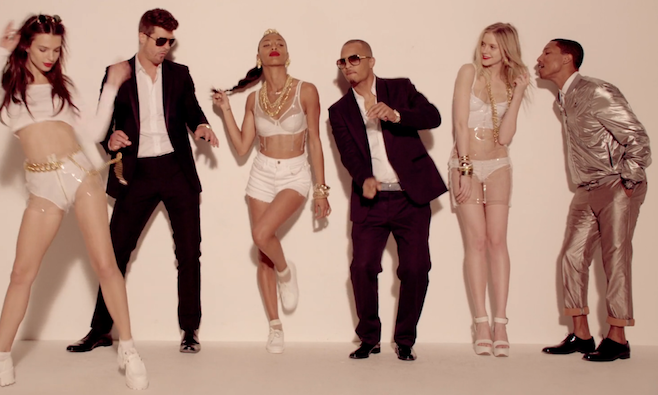
    Robin Thicke and Miley Cyrus performing at the 2013 VMA's.

    Robin Thicke and Miley Cyrus performing at the 2013 VMA’s.

    It is a well-known fact that the music industry’s sole purpose is to generate one thing and one thing only, and it is not music.

    Music is merely the by-product of the industry’s ravaging thirst to generate money. An industry whereby female sexuality – and sexuality in general – is one of the tools that the industry uses to increase potential profits. However, to say that females are exploited by the industry is a step to far.

    Exploitation is the unruly use of a person or a group of people in a cruel and unjust manner

    The vast majority of females who are “exploited” by the music industry receive (quite handsome remunerations for their services.

    Just like in advertising, the music industry employs the idea that “sex sells”. Miley Cyrus is not the first, nor will she be the last female artist to use her sexuality, her figure or her desirability in an attempt to increase her profile within celebrity culture.

    Cyrus is merely just the newest recruit to enlist into the sexuality culture to which the music industry has adopted – not created.

    Men find women desirable, women find other women desirable. These human elements are used to help generate profit in whatever manner possible.

    In 1981, Duran Duran hired female actresses to wrestle one another in mud, topless, in the video for ‘Girls on Film’.

    Madonna has been infamous for her use of sexuality throughout her music career – be it in her music videos or during her stage performances.

    The use of sexuality is not confined to just female artists.

    The gesture of crotch-grabbing is synonymous which Michael Jackson, while R’n’B artist D’Angelo starred completely naked, and oiled, in his video “Untitled (How Does It Feel)”.

    Females are not portrayed favourably in some sections of the music industry – especially in hip-hop or rap –  there is a strong case to claim that there is a high levels of misogyny in the aforementioned genres of music, but the females are not exploited. They are paid. If they are comfortable with flaunting what god gave them for the world to see in music videos, or gyrate in a sexual manner, that is their prerogative as professional female adults earning a living.