Tag: Mario Bowden

  • Explainer: What is the government’s minimum alcohol pricing all about?

    Explainer: What is the government’s minimum alcohol pricing all about?

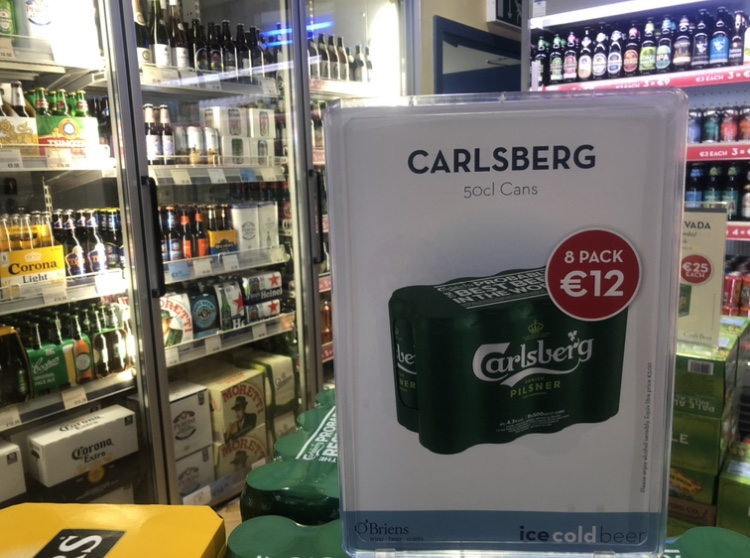
    Carlsberg advertisement in O’Briens Wines Glasnevin. Photo by Mario Bowden

    On Tuesday 4 May 2021, the government revealed plans to implement a minimum pricing on the sale of alcoholic products in of January 2022. 

    In a nutshell, the price of alcohol sold in off-licences will be determined by the strength of the product – priced at 10 cents per gram of alcohol. The higher the alcohol content, the higher the price.

    This policy is based on the 2018 Public Health Alcohol Act that the previous government decided not to put into action before the last election.

    Minimum pricing will not apply to bars and pubs, only to the off-licence sector.

    At the press conference to announce this policy, Minister for Health Stephen Donnelly and Tániaste Leo Varadkar spoke about the proposal’s aim to reduce the health harms of excessive drinking. The hope is that minimum pricing will curtail alcohol-related death and disease rates in Ireland. 

    Data shows that alcohol misuse is responsible for 2,700 deaths each year in Ireland.

    Data released by the health research board (HRB) revealed that during the pandemic in 2020, the average Irish person consumed 10.1 litres of pure alcohol – the equivalent of 116 bottles of wine and 445 pints of beer per person each year. This is a slight reduction from the 2019 average of 10.8 litres.

    The HRB noted this was a “relatively small decline, considering pubs have been closed for the majority of the year”.

    It’s also pretty far off the government’s goal to reduce the average per person alcohol consumption to 9.1 litres in 2020.

    Beer fridge in O’Briens Glasnevin. Photo by Mario Bowden

    “It’s understandable that people are drinking more at home,” said Varadkar at the press conference. “I’m doing so myself. To most drinkers, I want to say this: minimum pricing is not targeted at you. But, rather at the heaviest drinkers, those who attempt to seek out the cheapest alcohol. And particularly children, experimenting with alcohol for the first time.” 

    There is sufficient evidence to back the government’s plans. In 2018, Scotland introduced a similar minimum pricing system. Since its introduction, alcohol related deaths have fallen significantly. Canada has also had minimum pricing in place since 2010. 

    So, what will minimum pricing look like? 

    Minimum pricing will vary depending on the product being sold and its alcohol content.

    For instance, a 500ml can of lager will start at €1.70, whereas a 500ml can of cider will begin at €1.78. A bottle of wine’s minimum price will be €7.40, while 700ml bottles of vodka start at €20.71 and gins and whiskeys at €22.09.

    As the price is decided per gram of alcohol, it significantly increases as the percentage of alcohol increases – designed to impact on the strongest alcohol most.

    For example, a bottle of wine at 14% alcohol by volume (ABV), not an uncommon strength, works out at a minimum of €8.28.

    In shops like Lidl and Aldi, a number of good wines come in underneath this threshold – the shelves will be transformed.

    For those of us who enjoy a craft beer, you won’t be able to get a relatively strong IPA (6.5% ABV) in a 500ml can or bottle for €2.56 per can/bottle. We can wave goodbye to any four for €10 deals.

    Unpopular plan

    To little surprise, the new pricing scheme has come under scrutiny from both retailers and consumers alike. For consumers, the proposal mostly targets those with lower-incomes who will now be spending a bigger proportion of their income on drink. 

    Ireland’s alcohol prices already remain the second-highest in Europe – 88.9% higher than the EU average, only lower than Finland. 

    In Italy, for instance, a country closer to the EU average, a 660ml bottle of beer costs as little as 90 cents in a supermarket and imported German beer only around €1.60.

    Beer fridge in O’Briens Glasnevin. Photo by Mario Bowden

    For retailers like Pearse Greally, the manager of O’Brien’s Wines of Glasnevin branch, the lack of clarity communicated by the government has been frustrating. 

    “There’s not been that much information [given] to retailers yet. For example, how it will work with the smaller brands? We sell Tennents for €1. If the minimum price of that is going to be at €1.72, what does that mean for more premium beers like Heineken? Will Heineken then increase their price to €2.50 or three euro a can to keep its premium headline? Because this increase [in price] isn’t a tax, where is that increase coming from or going to?” asks Greally. 

    The government in the Republic of Ireland  is also calling on Northern Ireland’s government to implement its plans for minimum pricing at the same time as the south. Especially around Christmas time, when cross-border shopping is most active. Northern Ireland is set to introduce minimum pricing in 2023, a year after the Republic.

    “We have high competition with the North because drink is much cheaper there.” says Greally. “And if their minimum pricing doesn’t come into effect until January 2023, why are we doing it a year early? We’ve already increased the tax on drink as well and now we get this? So no one really understands from a retail point of view.” 

    While a number of unanswered questions remain, not least how off-licences will compete with pubs and restaurants, one thing is for sure: students can wave goodbye to cheap cans.

  • Weaving in the years: Meeting Ireland’s fresh face in the fashion industry

    Weaving in the years: Meeting Ireland’s fresh face in the fashion industry

    Woven pieces by Sarah Flynn Textiles and designer Sarah Flynn. Images courtesy of Sarah Flynn

    Celebrating a prestigious award ceremony in your living room is a strange dichotomy. 

    That’s how up-and-coming fashion designer Sarah Flynn, of Sarah Flynn Textiles, describes the experience of winning the 2020 Institute of Designers in Ireland Graduate Awards for the Fashion and Textiles category. Nonetheless, the champagne was popped. 

    The project she won it for, entitled Colourfully Conscious, was almost never completed. 

    Weeks before Flynn finished her final year in the National College of Art and Design, universities closed up shop due to Ireland’s first Covid-19 lockdown – leaving many students stranded with unfinished work.

    “We were at home with no equipment and no machinery. It was so hard to work out of a box room with absolutely nothing. We had no access to weaver looms. I discovered my love for hand-knitting during lockdown and based a lot of my collection on hand-knitting and weaving,” Flynn tells me.

    “Thankfully, Ncad got us back in for Makers Month and that’s when we had three weeks to make our full collection.”

    The project

    Colourfully Conscious is a collection of luxurious woven, hand-knit and digital-print fabrics for women’s wear spring summer collection 2020-21. 

    Una Curran modelling a scarlet red knitted piece in the Colourfully Conscious series. Image courtesy of Sarah Flynn

    Inspired by Moroccan tile patterns and fabric materials, Flynn combined traditional textile techniques with the geometric patterns most often seen in Marrakesh. At its core, the collection promoted slow fashion. 

    “I sourced natural materials such as cotton, wool, silks and seaweed yarns. The seaweed yarns I got from a supplier in Belgium,” Flynn says. “As well as that, I sourced dead-stock waste yarns from a local Irish mill, which would have gone to landfill otherwise. So it was nice to up-cycle these materials – they’re natural and still high-quality as well.”

    Una Curran wearing sapphire inspired top from the Colourfully Conscious collection. Image courtesy of Sarah Flynn

    “I think people need to investigate and realise why fast fashion is so cheap. Because the reality is if you’re not paying for the cost, someone else is”

    Sarah Flynn

    Ethical and sustainable production were the driving factors behind this collection. 

    By documenting these sustainable practices, Colourfully Conscious tries to demonstrate alternative practices that can be adopted by the textile industry as a whole. 

    For example, Flynn’s project incorporates natural dyes in an effort to combat the fact that the fashion industry is responsible for one-fifth of the world’s water waste and textile dying is the world’s second largest polluter of water globally

    “Dye is so potent and toxic,” explains Flynn. “It seeps into rivers and oceans and pollutes everything. I thought it was good to focus on that and how you can incorporate a more natural approach and stop using toxic chemicals in the process.”

    Flynn continues: “In Morocco, they concentrated on using natural dyes in their yarns and wools and then weave them into textiles such as rugs and fabrics – turmeric used as a dye is a big one. Paprika is another spice they use and there are loads of flowers too. But obviously, they can’t be grown in Ireland.” 

    While turmeric and paprika may not be readily grown in Ireland, there are sustainable methods being practiced for making natural dyes. For instance, the Apple Oak Fibre Works project in county Clare, who make dye from composted onion skins. 

    Getting down to business

    Woven Frames patterns. Image courtesy of Sarah Flynn

    With the leftover materials from her graduate project, Flynn decided to keep the sustainable cycle going and start up her own business – Sarah Flynn Textiles.

    “Instead of throwing it out, I was like ‘what will I do with this?’ So I decided to make these woven frames and basically use this zero-waste method and turn it into art. Each piece takes about two hours to put together.” explains Flynn.

    Flynn’s pieces don’t shy away from colour. Each squared frame has its own unique design, fixating you into a portal of otherworldliness. 

    I ask Flynn about growing her brand and getting her business up and running. 

    “It’s definitely a learning process. I love being creative so I’m always looking for ways to improve. I think it’s key to recognise that you don’t know everything. So it’s good to be open to new ideas and approaches,” she says. 

    Still in its early days, Flynn wants to stick to her guns and keep her fashion sustainable – a conflict she feels many brands face once they get off the ground. 

    “My brand’s mission is to get customers to see the impact you can curate through strong design processes. And to see the value of hand-made products. Instead of something that’s made a hundred times from plastic or clothes made en masse from cheap materials.” says Flynn. 

    Fast fashion is a problem facing the world over, and with online consumption increasing during the pandemic, lots more garments will find themselves in landfill.

    “I think people need to investigate and realise why fast fashion is so cheap. Because the reality is if you’re not paying for the cost, someone else is.” 

  • Three Castles Burning: An interview with historian Donal Fallon

    Three Castles Burning: An interview with historian Donal Fallon

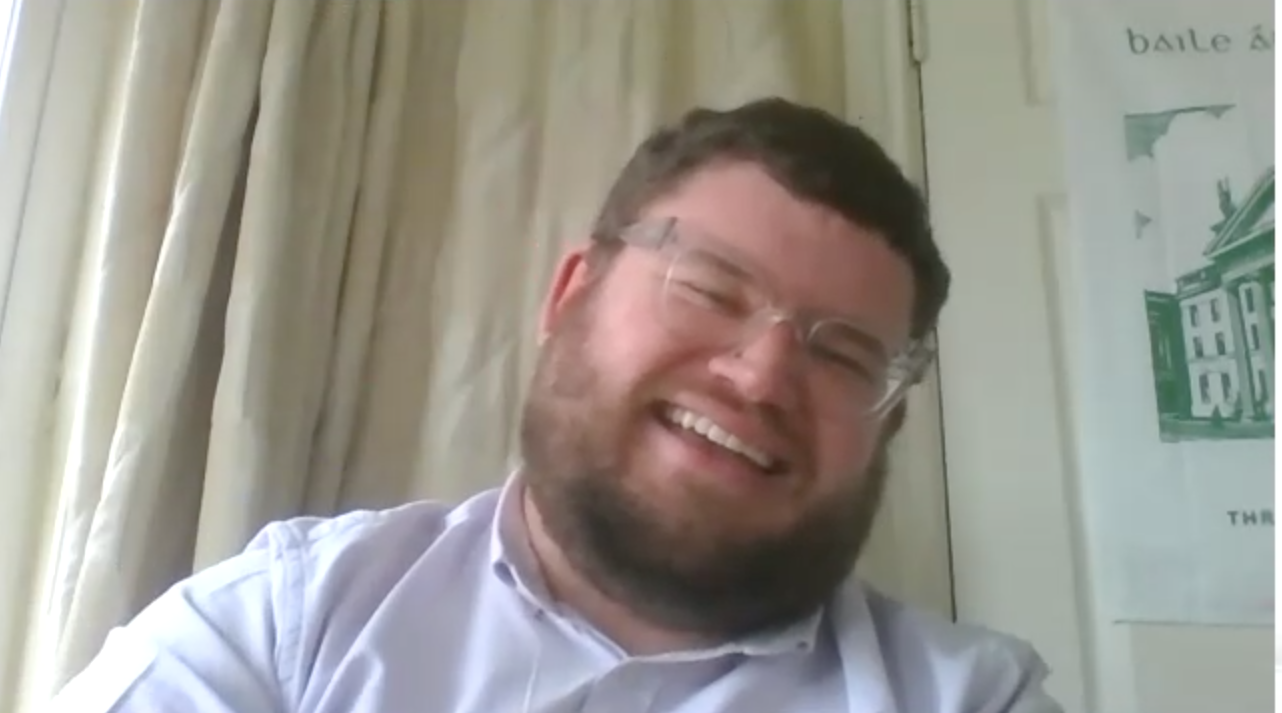
    A screenshot of Donal Fallon during his virtual interview with Mario Bowden. Screenshot by Mario Bowden

    It was while going for a walk around my 5km that I decided to reach out to historian Donal Fallon. In an episode of his podcast Three Castles Burning, Fallon mentions the previous life of an art deco building along the Royal Canal that now houses the new Bernard Shaw. To my surprise, it was the garage of the first Irish commercial airline – Iona National Airways. I couldn’t believe that a building that I walked and cycled by daily had such a unique life story.

    Three Castles Burning is a social history podcast, capturing the tales and intricacies that make up the fabric of Dublin. Running since November 2019, each episode contains a unique deep-dive into the city’s treasures – From discussing hallmark pubs such as Grogan’s, the emergence of subcultures like the punk scene in 1977, and even the stories of migrant communities who have left their stamp on the city, like the Italian community in Dublin who helped give rise to the chipper.

    Fallon, a tour guide in normal times, tells me that there’s a real chance to engage with Dubliners through the aural medium. 

    “When you work in heritage and tourism, the majority of the people you meet are not from here. That’s just how it is and that’s the same in any city. On a tour for visitors, you have to go from before Saint Patrick all the way to the Northern Irish peace process in two hours. So when you have an Irish audience, you have the ability to go into much finer, minute detail, which I really really like. It’s a different challenge,” Fallon says.

    “There are still people interested in local history, it’s not something you can just turn on and off”

    Donal Fallon

    Fallon’s no stranger to capturing all things Dublin. In 2009, he started a blog called Come Here to Me. Coining its name from the Dublin slang to express the tantalising exchange of information, the blog set out to capture the essence of the capital’s nooks and crannies – from music, history, politics, and even pub crawls. Come Here to Me was a big hit amongst Dubliners – and for Fallon, it gave him an audience. 

    Over time, however, the art of blogging began to dwindle, Fallon admits: “I noticed that the readership on Come Here to Me was kind of dropping off. Not like off a cliff, but over time there was less and less. And I wondered, where are those people going? Because they’re still there” Fallon chuckles.

    “There’s still people interested in local history, it’s not something you can just turn on and off. So the challenge for me was how do I get to reconnect with people who I knew were there from Come Here to Me. That I knew were still there,” he tells me.

    It was time for a change and Fallon saw podcasts as the way forward. He tells me how he learns as he goes, taking inspirations from some of his own favourite podcasts – such as the Bowery Boys Podcasts – a social history exploration of New York City. 

    “In a way, Podcasts are the new pirate radio”

    Fallon

    Listeners might notice Fallon’s shout-out to Radio Free Kimmage at the end of each episode. Like many others, I foolishly assumed that it was a real local radio station. But as Fallon explains to me, the nod towards a faux station is simply an homage to the pirate radio scene. Fallon see the parallels between that scene and what he’s doing now – providing alternative and independent content. 

    “Podcasts, in a way are the new pirate radio.” Fallon laughs. “They are increasingly widening what’s on offer. And I really like that. Especially if you look at the podcast charts in Ireland, the top of it is still big radio shows – usually clips from news shows on RTE and so on. But these independent programmes produced on kitchen tables in Kimmage can compete with them. I think that’s fantastic!”

    Three Castles Burning logo, by Donal Fallon

    Today, the podcast is a great success. Released every week, it has attracted an audience of not just locals, but ‘Dubliners in exile’ – with strong numbers of Irish abroad, from Britain to Australia – tuning in for their nostalgia fix. This is no surprise to Fallon.

    “I think that’s how it’s always been. If you go back all the way to when Joyce wrote about exile: the further you are from a particular place, the more you feel a connection to it. That’s been a very noticeable thing that Irish abroad have definitely gotten behind it. I’ve gotten very nice emails from people saying that they really miss these places. The Forty Foot in particular, that had a real emotional resonance with people,” he tells me.

    Each episode has the ability to intrigue anyone in a way that’s unique to them – much like my own experience passing the Bernard Shaw. With more people out and about on their daily walks, a podcast like this can spark curiosity to something right around the corner. 

    “I think if you can change someone’s everyday walk, and make them think about that one little thing that they didn’t know was there before, I think that changes the way people look at the city, but the way they look at life you know, to go a little bit slower. I always try to make the podcast a bit more visual. I know it’s all audio of course but I like saying ‘Next time you pass so-and-so, look at this’, I think that can change the way you look at the city,” he says.

    While Fallon is optimistic about some sort of bounce back for the heritage and tourism industry, the success of Three Castles Burning has kept the Irish history scene on the road – and in turn, our history alive.

  • Covid Abroad: How Italy was woken up to the first wave of coronavirus in Europe

    Covid Abroad: How Italy was woken up to the first wave of coronavirus in Europe

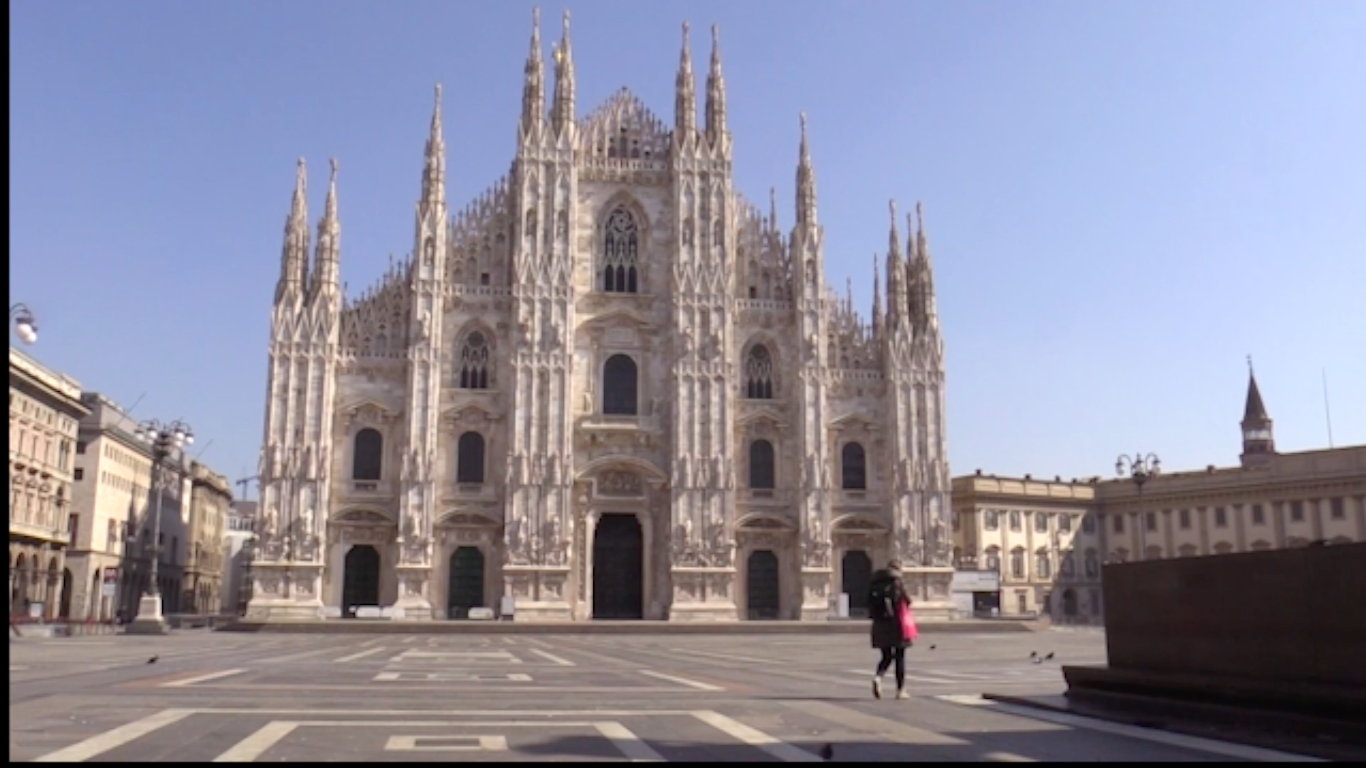
    An eerie empty duomo during the Italian Covid-19 crisis. Image by Andrea Lattanzi from Pexels.com
    Mario Bowden spoke to Maria Elena Tagliabue face-to-face over Zoom to hear about her experience as an Italian during the pandemic

    On the 23 February 2020, Maria Elena Tagliabue read the news that a town 20km from her was going into lockdown after an outbreak of a then-unknown virus imported from China. Back in her hometown of Crema for the weekend, in the north of Italy, an unusual gut feeling came over Maria Elena when her friends asked her to join them in a bar. 

    “I texted one of my friends saying ‘I don’t know if we should meet, is it safe?’ and he laughed a bit at me saying ‘Cmon! It’s just a flu. Our friend is a med student and he’s coming. C’mon see you later’. We met up beforehand and we noticed that the town was very eerie. Months later he apologised for pushing me to go out that night,” Tagliabue tells me.

    Two weeks later, coronavirus cases were spiralling out of control, and Italy’s hospitals became overwhelmed – especially in the North. The whole country was rapidly instructed to stay inside, without exception. Tourist sites were deserted.

    The coronavirus had arrived in Europe – and Italy was its first victim. 

    To this date, there have been 2.65 million cases of Covid-19 in Italy – and 92,000 deaths.

    Tagliabue calls me from her apartment in Varese, a town 50km from Milan. Varese is not far from Bergamo – a town where the virus hit its community hard and fast. Its hospital became overflowed with patients. Images emerged of mass coffin convoys – amplifying the virus’ threat on our screens.

    “I think it made it more real and [us] more anxious and cautious” says Tagliabue.

    “The stories people told from Bergamo and even my hometown Crema are heartbreaking. Especially in the first wave when things were more hectic. Hospitals were less organised and doctors had less masks,” she says.

    Despite the threat remaining high, Italy is easing its restrictions. Each region operates on a tiered coloured zone system – red being the most severe, orange slightly less restrictive and yellow the most moderate. There is also a white zone – a marker of low-danger Covid world. However, no region is currently there yet. 

    A lone seagull at the Roman Forum. Image by Stefano Barbieri via Pexels

    At the moment, regions across the country have begun transitioning to a yellow zone. Household visits are allowed, in-person teaching at schools can resume at a reduced capacity and restaurants and bars can open up until 6pm are among the most notable changes. Lombardy has entered the yellow zone.

    While it is a welcomed change, Tagliabue remains sceptical about opening up too soon. 

    “It doesn’t feel like this yellow zone can last very long.” she concedes. “Especially in Lombardy, which is the most populated region in Italy. There are things to do which leads to crowds. It feels liberating now but at the same time, I’m not confident this can last. Maybe [we can implement it in] March or April when [the] outdoors can be more useful,” she continues.

    “It doesn’t feel like this yellow zone can last very long. It feels liberating now – but I’m not confident it can last”

    Maria Elena Tagliabue

    The pandemic also spun Italy’s ever-controversial political climate into further uncertainty. While popularity was high for Giuseppe Conte after his initial dealing with the pandemic, the Prime Minister was forced to resign after Italia Viva leader Matteo Renzi, pulled his party out of an already unstable coalition – collapsing it in the process.

    Renzi’s decision was met with some scrutiny – as it embroiled the unwanted idea of fresh elections. But as a former Prime Minister himself, Renzi saw the need for change – and a pandemic was no excuse to continue on in the same vain. Italy’s economy shrunk by 8.9% in the last year and is experiencing its worst recession since the second World War. 

    On Thursday 4 February 2021, Mario Draghi was drafted in by President Sergio Mattarella to become the new Prime Minister. As the former chief of the European Central Bank, Draghi has been hailed for his role in pulling the EU out of the European debt crisis in 2012. He’s hoping that 2021 can mirror a similar, colossal turnaround. For Mario Draghi, it’s now his objective to prevent Italians going to the polls – by smoothly forming a new government and help recover Italy’s economy. 

    For Tagliabue, the virus remains an ongoing threat. Despite the lifting of restrictions, she believes sticking to her built up routine will keep herself and others safe. But she is a believer too. She looks forward to the first gig that she can go to in a post-covid world.