Tag: martin o’neill

  • Irish soccer fans give a unanimous verdict on Martin O’Neill

    Irish soccer fans give a unanimous verdict on Martin O’Neill

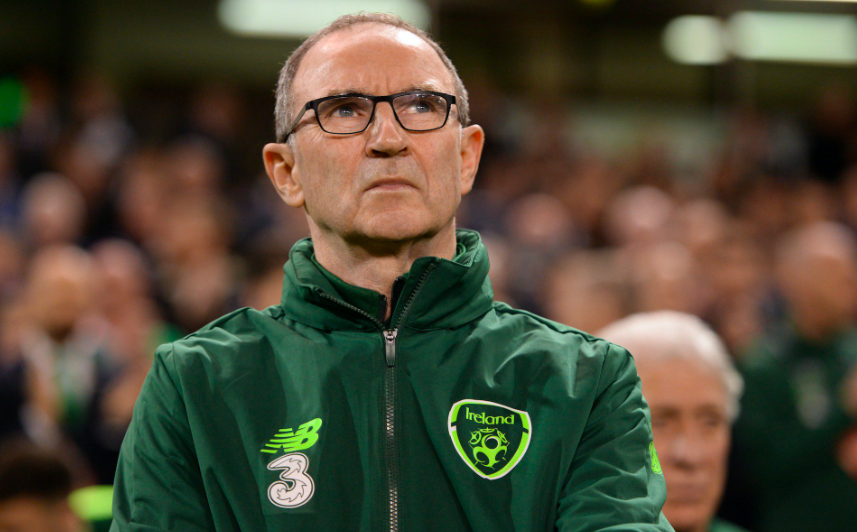
    TheCity.ie spoke to Irish soccer fans before the game with Northern Ireland at the Aviva Stadium on November 15th.

    The verdict over whether Martin O’Neill was still the man to lead Ireland was unanimous among supporters. Many have since got their wish as the Football Association of Ireland parted ways with both Martin O’Neill and Roy Keane.

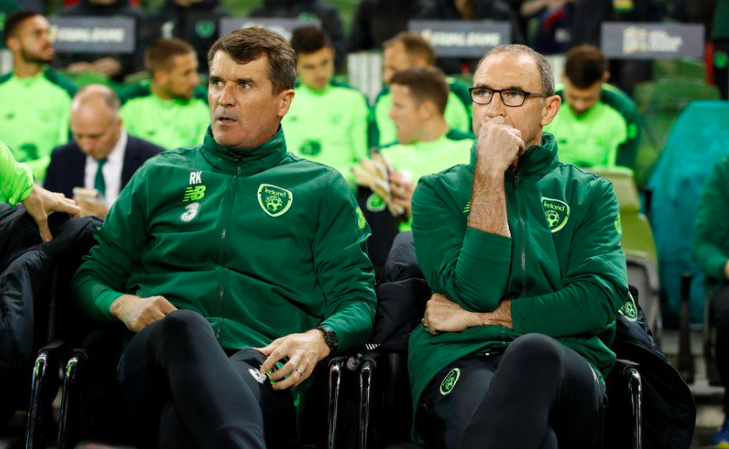
    The pair endured a turbulent end to their stints in the Irish setup with a lack of quality on the pitch and an abundance of controversy off it.

    The duo had enjoyed some of Irish soccer’s fondest memories including a victory against Italy in reaching the last 16 of Euro 2016 and win over the World Cup holders Germany at the Aviva stadium.

    A crucial victory away to Wales ensured a World Cup qualification playoff in 2017 before succumbing to Denmark in an embarrassing 5-1 home defeat.

    The Euro 2020 draw takes place in Dublin on December 2nd and Mick McCarthy looks to be the man tasked with taking Ireland to the tournament.


  • Was Martin O’Neill to blame for the poor attendances?

    Was Martin O’Neill to blame for the poor attendances?

    Apathy appears to be the main word to describe the attitude of Irish football fans towards the national team these days.

    This may have played a role in the decision taken by the FAI last Wednesday to part company with Martin O’Neill as Ireland manager.

    It had been a dreadful year for Martin O’Neill’s men, who ended 2018 without scoring a single goal in their last four games. The final goal scored by the Boys in Green in 2018 was a consolation effort by Shaun Williams in a 4-1 drubbing by Wales in Cardiff back in September (less than a year after Ireland had beaten the Welsh on the same ground to clinch a World Cup play-off).

    Ireland played out two goalless draws this international break, most recently away to Denmark last Monday night. However, it was the goalless draw against Northern Ireland last Thursday night – played out in front of a sparsely packed Aviva Stadium – which displayed the apparent apathy of the Irish fans for the national team for all to see.

    There was much talk about the empty seats on social media, with many blaming Martin O’Neill’s style of play for people not wanting to go to the game. Interestingly though, the last time Ireland played Northern Ireland in a friendly match at the Aviva Stadium back in 2011, there were only 15,092 people in attendance, compared to 31,221 fans at the Aviva last Thursday night. So were the empty seats at friendly internationals a product of Irish fans tiring of Martin O’Neill, or was this an ongoing issue spanning many years?


    Ireland did not play a single friendly international in front of a sell-out crowd at the Aviva during Martin O’Neill’s five year reign. The closest friendly to being a sell-out was the 0-0 draw against England back in June 2015 which was attended by 43,486 people, followed by 2016’s 1-1 draw with the Netherlands ahead of Euro 2016 which was watched by 42,438 spectators.

    The fact that no friendly game has sold out at the Aviva Stadium since Ireland’s very first game at the ground back in 2010 against Argentina shows that problems with empty seats at friendly games have deeper roots. Although, it is fair to say that distaste for O’Neil’s regime could still be seen in attendance figures. Those friendly games mentioned earlier against England and the Netherlands had higher attendances than Ireland’s two home UEFA Nations’ League games against Denmark and Wales last month. The 0-0 draw against Denmark on 13th October was seen by 41,220, while the 0-1 defeat to Wales was attended by 38,321 fans. Ireland played both Denmark and Wales at the Aviva Stadium in 2017 also, with attendance falling by 10,000 in the respective games a year later.


    Friendly games have mostly been treated with disregard by Irish fans ever since the Aviva Stadium opened back in 2010, even when Giovanni Trappatoni was in charge of Ireland. They are arguably not the best indication of the fans’ displeasure with the manager. The sharp drop in attendances for both the Danish and Welsh games in the space of a year would be more of an indication given they were competitive games.

    The next time Ireland will be in action will be in March when UEFA 2020 qualification begins. The draw for the qualification groups will take place in Dublin on December 2nd, where Ireland will find out who they will have to get past in order to qualify for their third consecutive European Championships.

    By the time Ireland line out again in March, there will be a new man in charge with former Irish boss Mick McCarthy taking the reigns. A big crowd will of course be expected for the new manager’s first game in charge, especially given it will be a competitive match. However, once Ireland take the field for their next friendly game at the Aviva, do not expect there to be a sell-out crowd.

  • Time to say goodbye? Defeat to Denmark should spell the end for Martin O’Neill

    Time to say goodbye? Defeat to Denmark should spell the end for Martin O’Neill

    “Just to say, thank you very much for giving us the space,” Danish manager Age Hareide sarcastically said following Denmark’s 5-1 drubbing of the Republic of Ireland, before going on to say, “they [Ireland] made it a little bit easy for us.”

    To have an opposition manager make comments of that ilk about a fellow professional’s  tactics does not bode well for Martin O’Neill’s future.

    O’Neill got it drastically wrong on Tuesday, maybe not initially, but his response to Ireland conceding was nothing short of farcical. Ireland had not conceded more than one game in a competitive home match under O’Neill prior to Tuesday night, mainly because they never leave themselves exposed as they did. To abandon such an approach with such a huge game still delicately poised beggar’s belief.

    Ireland were absolutely outclassed by an average Danish team at home in what surely ranks as the country’s worst defeat since the embarrassment that was the 5-2 defeat to Cyprus in 2006 (there have been bigger defeats since then, but the losses to Spain and Germany in 2012 can at least be put down to the fact that both teams were world class).

    It started so perfectly as well. Shane Duffy’s sixth minute goal gave Ireland the lead in the tie and seemingly set up 85 minutes of nerves for the Irish fans. Unfortunately, those nerves, or the lead, didn’t even last half an hour before the wheels came off.

    The equaliser changed everything. Ireland were moderately comfortable up to that point and even carved out two decent chances to extend their lead. However, once the Danes got on the scoresheet (shambolically) it was one-way traffic.

    Ireland proceeded to play with what Keith Andrews labelled ‘gung ho’ football and threw bodies forward in the immediate aftermath of conceding the equaliser and paid the ultimate price for it. There was no need to panic. With over an hour left, there was plenty of time to probe at the Danish defence and regain the lead.

    Instead, they played like they were 2-0 down and left themselves exposed on the break and were punished within three minutes. What was a manageable task suddenly became exceedingly difficult and the half time substitutions only compounded the problem. Removing two defensive midfielders exposed the Irish defence even more and Christian Eriksen made them pay dearly.

    Eriksen is genuinely world class and to give him the space that the Irish midfield did at 1-1 is criminal, especially when there was a need to be compact and see the game out to half time.

    Of course, O’Neill cannot have accounted for the individual errors that were the catalyst for so many of the Danish goals. Stephen Ward, a mark of consistency throughout Ireland’s campaign, froze on the big occasion and two of the Danish goals came directly from his errors. Cyrus Christie, usually dependable in a green jersey, looked edgy from the off and should have done so much better with his goal line clearance for the Danish equaliser. However, the tactics remain unjustifiable and inexcusable despite the errors.

    The ends have always justified the means during O’Neill’s reign, impressive 1-0 wins against Germany, Austria and Wales were built off the back of a rearguard action, but any one of those games could have gone the way Tuesday night’s match did. Had Germany put away one of the many first half chances they had in Dublin, you could make a case that the final score would resemble the one against Denmark. The same goes for Austria, who absolutely dominated the opening half in Vienna and, to a lesser extent, Wales.

    It is not last night that should be seen as the killer blow in Ireland’s qualifying campaign however. It is the absolutely abysmal 2017 that wrecked any hopes of automatic qualification.

    The group was there for the winning – ten points out of twelve at the beginning of the year was the perfect launchpad, but a lack of ambition against Wales at home (who had ten men for the best part of half an hour), an Austrian side who were in complete disarray, and a Georgian side that were sixth seeds in the group ultimately saw Ireland pick up three points from their next four games.

    Losing at home to Serbia, who were reduced to ten men around the hour mark, was also inexcusable. A lack of ambition on the manager’s behalf was at the forefront of these results. Sitting back on a 1-0 lead in Georgia perhaps best showcased this lack of ambition, and saw the Georgians enjoy more than 70% of the ball.

    Austria came to Dublin in June lacking confidence and lacking any real hope of qualifying for the World Cup. That should have been the game where Ireland laid down a marker and really went at the opposition, instead they resorted to the same type of football that had seen them drop points against Wales in March.

    O’Neill’s reign has not been all doom and gloom by any means and qualification for Euro 2016 and the subsequent qualification from the group stages are undoubted high points. However, these feats were only achieved because of the expansion of the Euros into a 24 team tournament. Ireland would not have qualified for any previous European Championship based off their last qualification, nor would they have made it out of the group stages in any other tournament.

    Admittedly, O’Neill has been a vast improvement on both of his predecessors in Giovanni Trapattoni and Steve Staunton, but his refusal to blood new talent and continue with the tried and trusted has led to Ireland continuing to play negative football where the ball is treated as the enemy.

    Whether O’Neill stays or goes, whoever is in charge next year has a rebuilding job on their hands and has to give youth a chance. There are some promising players in the Irish Under 21 squad, and friendlies in March offer the perfect chance to hand the more promising players their debuts. There is a plethora of promising players in the squad already that for too long have been overlooked, it is time also to put that to an end.

    By Shane O’Brien

  • What would an All-Ireland Football XI look like?


    Photo my Michael Kranebitter
    Photo my Michael Kranebitter

    What would an All-Ireland Football XI look like?

    By James Cox

    With the continued success of the Irish rugby team one cannot help but wonder how a united Ireland football team would fare. The nation has been divided in football since 1921 when the Football Association of Ireland (FAI) was formed following a split from the IFA over claims of bias towards Belfast. Since then both sides have had varying success, the Republic of Ireland more so in recent times having qualified for Euro 2012 and the 2002 World cup while the North’s last major tournament was the 1986 world cup in Spain. The thought of a united Irish side is something most Irish football fans have thought about, and possibly discussed over a beer or two, in this article we look at what a united Irish side of current internationals might look like.


    Goalkeeper:

    David Forde (Millwall and Republic of Ireland)

    David Forde has captured the hearts of the Republic’s fans after making his debut at 33, coincidentally against Northern Ireland in 2011. He has gone on to capture the number one role. Forde starred in the recent one all draw against World Champions Germany, making a number of key saves most notably from Mario Gotze.


    Defenders:

    Right back- Paddy McNair (Manchester United and Northern Ireland)

    Some may consider the 19 year old a surprise selection, especially seeing as he is yet to be capped by the North at senior level. However, McNair has impressed for United since being thrown into the first team in the 2-1 win over West Ham in September following an injury crisis. McNair has made twelve appearances this season and fitted in seamlessly at centre back and right back despite his age. United coaches feel McNair’s natural position is as an offensive midfielder and this is not surprising given his comfort on the ball.


    Centre back- Johnny Evans (Manchester United and Northern Ireland)

    Evans practically picks himself in this team. McNair’s team mate has been a first team regular at Old Trafford since 2009 having also come through the youth academy. He has racked up an impressive 129 appearances and counting for United and 31 international caps.


    Centre back- John O’Shea (Sunderland and Republic of Ireland)

    Similar to Evans, O’Shea is the Republic’s first choice centre back. He burst onto the scene with Manchester United in 2002 and made 256 appearances at the Old Trafford outfit. He joined Sunderland in 2011 and was immediately given the captaincy. O’Shea’s versatility has seen him play all over the park throughout his career, but he’s found his best position at centre back.


    Left Back- Marc Wilson (Stoke City and Republic of Ireland)

    Wilson represented Northern Ireland up until under 15 level when he switched his allegiance to the Republic. Wilson is a regular at Premier League side Stoke city and like O’Shea his versatility has seen him play all over the pitch, however left-back is where he has played his best football.


    Midfielders:

    Right midfield- Seamus Coleman (Everton and Republic of Ireland)

    You were wondering why Coleman was left out of the defence right? Well the simple reason is his attacking ability is vital to both Everton and the Republic. David Moyes signed Coleman for a bargain £60,000 from Sligo Rovers in 2009 and since then he has become one of the Premier League’s most consistent performers. With someone like McNair playing behind him, Coleman’s speed and attacking ability could be used to devastating effect.


    Centre midfield- James McCarthy (Everton and Republic of Ireland)

    The Glaswegian elected to represent the Republic in 2011 and has since become the fulcrum of the midfield. McCarthy’s passing game keeps the tempo up for any side he plays for, and at 24 he has yet to reach his prime. McCarthy was central to Wigan’s 2013 FA Cup win and his career looks like it has a lot more to offer.


    Centre midfield- Chris Brunt (West Bromwich Albion and Northern Ireland)

    Albion’s captain has recently moved from left mid into a more central attacking position and he has flourished here. While he’s only scored once in 46 Northern Ireland caps, Brunt offers a constant attacking threat often involved in the build up to Albion’s goals. His offensive abilities would balance well with the more defensive McCarthy.


    Left Midfield- Aidan McGeady (Everton and Republic of Ireland)

    Another Glaswegian who declared for the Republic, McGeady is a vital member of the Republic’s team. The flying winger is our third Everton representative, having joined the Toffees via Celtic and Spartak Moscow. He scored a crucial last minute winner in Ireland’s European qualifier against Georgia in September


    Forwards:


    Shane Long (Southampton and Republic of Ireland)

    Long’s talent has been underappreciated by some managers, most notably Ireland’s previous manager Trapatonni. Long has been a solid performer for Reading, Hull City, West Brom and Southampton and his work rate is an asset to any side he plays for.


    Kyle Lafferty (Çaykur Rizespor and Northern Ireland)

    On loan at Rizespor from Norwich, Lafferty has scored goals at every club in his nomadic career which has seen him play for FC Sion and Palermo among others. He was at his most prolific at Rangers scoring 104 goals between 2008 and 2012.


    Manager- Martin O’Neill

    With all due respect to the North’s gaffer Michael O’Neill, we had to go with Martin. The current Republic manager made 64 appearances for Northern Ireland in a distinguished playing career. His positive attitude and enthusiasm is infectious as we saw during his time managing Celtic and Aston Villa and his start to international management has been good so far.


    While Ireland may never unite in footballing terms it’s nice to dream. In the mean time both sides resume their Euro 2016 qualification campaigns this Sunday, Northern Ireland host Finland and the Republic of Ireland will take on Poland in Dublin.


  • Coleman and McCarthy recalled for Ireland’s November fixtures

    Coleman and McCarthy recalled for Ireland’s November fixtures

    Republic of Ireland boss Martin O’Neill has announced a 36-man provisional squad for the Republic of Ireland’s forthcoming Euro 2016 qualifier against Scotland in Glasgow on November 14. This squad will also play a friendly fixture against the United States in Dublin on November 18.

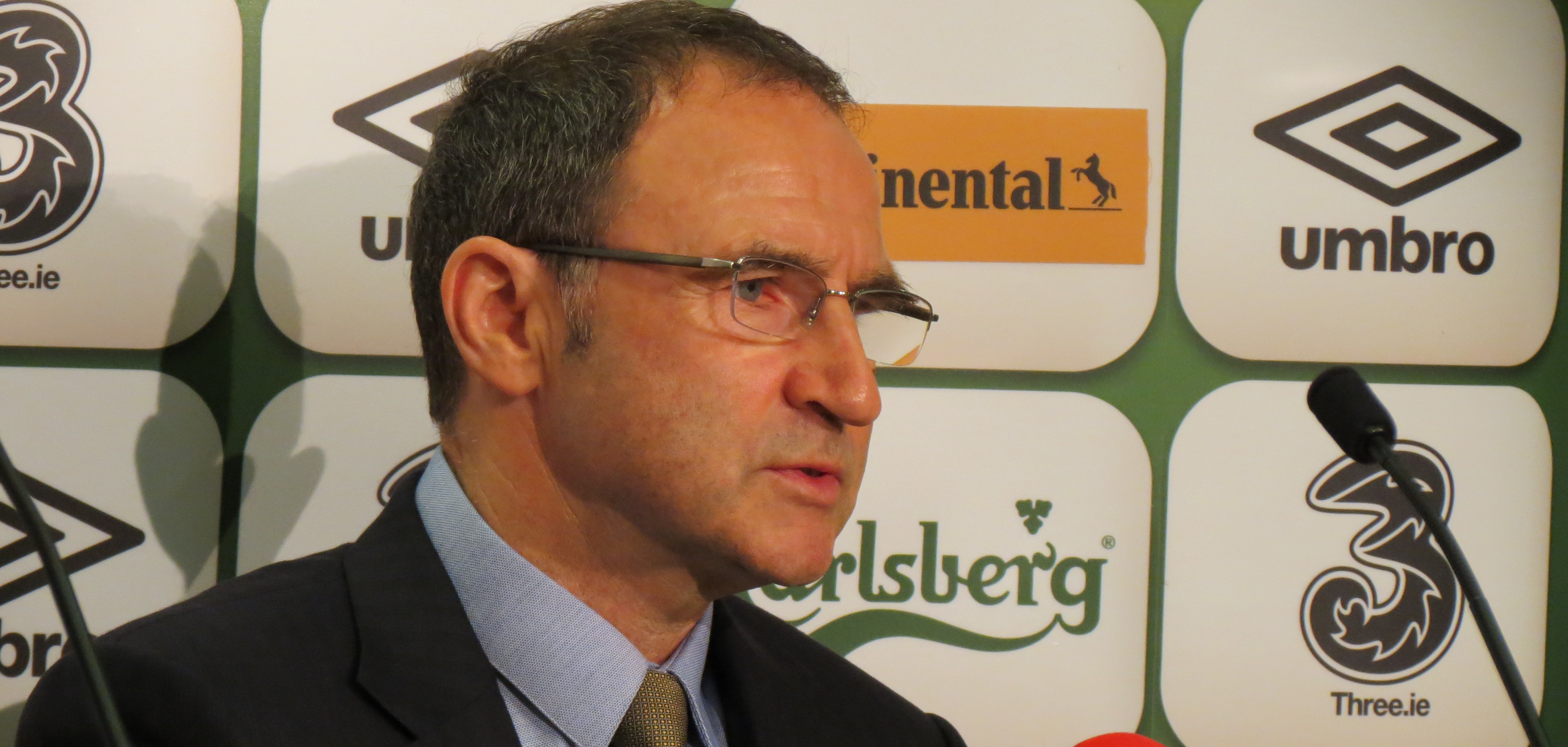
    Martin O'Neill addresses reporters at the FAI Headquarters in Abbotstown. Photo: James Hopper
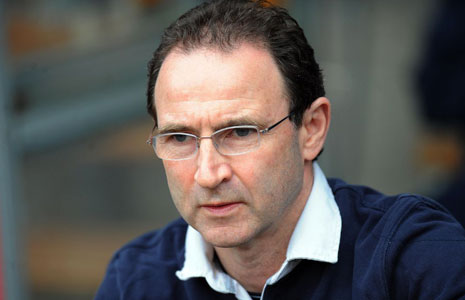
    Martin O’Neill addresses reporters at the FAI Headquarters in Abbotstown. Photo: James Hopper

    O’Neill has included the Everton duo of James McCarthy and Séamus Coleman in his squad after both missed the matches against Gibraltar and Germany in early October.

    There is no call-up however for Aston Villa’s Jack Grealish who was tipped to make his debut in the USA friendly at the Aviva Stadium. Stoke’s Glenn Whelan is included despite a broken leg suffered in the Germany game but there is no place for Wes Hoolahan of Norwich, who damaged ankle ligaments with his club after returning from international duty.

    Midfielder Whelan sustained a leg fracture in the 1-1 draw against Germany in Gelsenkirchen on October 14 and was all but ruled out of the Group D showdown against Scotland in Celtic’s Parkhead Stadium by his Stoke City boss Mark Hughes.

    However, O’Neill says that Whelan’s injury is “clearing up” after naming him in his initial squad of 36. “Glenn’s in the squad at this moment,” O’Neill said. “Initially, I thought he was going to be out for some time and while he is still struggling, the injury itself is actually clearing up and he’s giving himself every possible chance.

    “He’s getting better by the day, he’s still not weight-bearing but I’ll give him every opportunity. Even if I hadn’t included him in the squad here today, if he had felt he would be able to play, I would have reinstated him,” O’Neill added.

    Former Cork City defender Brian Lenihan has also made his way into the squad after impressing in training in the lead up to the qualifiers against Gibraltar and Germany in October. However, the uncapped fullback is unlikely to remain in the squad when the panel is trimmed down to a suitable size on November 10.

    “I thought for a young lad coming in with senior players he might have been a little bit nervous but he didn’t show it in the little games we played – in fact he did very, very well,” said O’Neill.

    “It was always going to be an ask for him to be playing in those games [Gibraltar and Germany] and while he may be a natural right-back where David Meyler isn’t, we needed some experience down that side, particularly out in Germany.”

    O’Neill went on to say, “It would have been harsh to have put him in there for that game [against world champions Germany], but he impressed enough to warrant being put in the squad at this minute. Obviously when we cut it down, we’ll see how it develops but he impressed everyone.”

    With November’s clash against Scotland proving to be a significant fixture, O’Neill is hoping that his players’ boosted confidence thanks to their result against Germany will help them secure a potentially pivotal result against their Group D rivals.

    “To score in the last minute of the game and get something from the world champions on their own pitch was really just fantastic. The players have naturally gained confidence from that.”

    “Scotland will not be easy – absolutely not. They’re flying at the moment, Gordon Strachan has them playing very well and they had a great result out in Poland. If nothing else, we must go there with some confidence.”

    Ireland currently sit in second place in Group D on seven points, three points ahead of Scotland.

  • A dream start for the Dream Team?

    A dream start for the Dream Team?

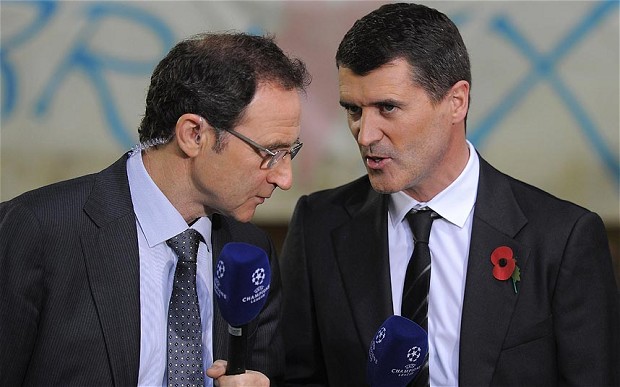
    The Irish dream-team of Martin O’Neill and Roy Keane have now presided over two friendly matches, and the country is once again tentatively optimistic about Irish soccer. We asked the people of Dublin what they thought:

    How do you think Martin O’Neill and Roy Keane will do? Let us know in the comments.

  • O’Neill and Keane appointed as Irish dynamic duo

    O’Neill and Keane appointed as Irish dynamic duo

    FAI chief executive John Delaney has confirmed that Martin O’Neill will be the new Republic of Ireland manager, with Roy Keane as his number two in what the Irish support hope will signal “a new era for Irish football.”

    O’Neill is expected to appoint his own backroom staff with the combined package estimated to cost the FAI more than €2 million per annum.

    Delaney has stated that an official press conference and unveiling will take place on Saturday 9th November.

    Interestingly, it was Martin O’Neill’s decision to bring Roy Keane into the frame, with Delaney claiming that the FAI had no participation in the decision.

    The new number one and two have a lot in common despite their almost 20 year age difference. Both have played for Nottingham Forest under the great Brian Clough, and both men have held the reins at Sunderland football club.

    With Keane and O’Neill  both having taken a brief hiatus from the game since their last jobs, the Ireland vacancy seems like a fantastic opportunity for the two Irishmen to get back into the game, albeit at an international level which neither have experience in managing.

    Keane will take his first step back into the game after his spell at Ipswich Town in 2011.
    Keane will take his first step back into the game after his spell at Ipswich Town in 2011. Credit: Figo29 on WordPress

    O’Neill and Keane are a perfect balancing act – O’Neill, the affable Belfast man with his modest personality and calm temperament. Keane, with his determined and infallible attitude, renowned for his hot-headed nature and no-nonsense take on the game.

    Neil Lennon stamped his approval on the appointment stating “they’re two great characters with a vast knowledge of the game, two very proud men as well. God help the players!”

    On paper, this looks like a potentially successful appointment, although the danger is also there for all to see. It would have been a huge mistake to hire another foreign manager after Trapattoni’s spell, but Keane and O’Neill are widely respected and influential figures in the game. And more importantly, they’re Irish!

    However, can two big characters and personalities work so closely together and generate a successful partnership to take Irish football forward, or will it be a case of one step forward and two steps back for John Delaney and the FAI?

    The Irish support has already taken to social media sites such as Facebook and Twitter, in particular, to voice their opinions on the matter. The decision seems to be met with a widely mixed reaction.

    Paddy Power have tweeted: “Ireland to qualify for Euro 2016 now 5/6! 3/1 to qualify for World Cup 2018. First to leave their job, 4/6 Keane v 11/10 O’Neill.”

    Featured image credit: Wiki

  • King bows out after controversial spell as interim boss

    King bows out after controversial spell as interim boss

    Noel King’s time as interim manager after Giovanni Trapattoni’s swift departure as Ireland’s head coach was originally seen as a breath of fresh air by the majority of Irish fans.

    The 57-year-old Dubliner is no stranger to the beautiful game, having played for more than two decades in the League of Ireland, managing in it for twelve, and even had a spell at French second division club Valenciennes.

    Having managed the Irish women’s international team from 2000-2010 and the Irish U-21s for the last three years, King has more than enough experience to work with the senior players of the national team, having coached a handful of his squad at the U-21 level.

    Trapattoni's spell in charge took a drastic turn after the miserable performance in Euro 2012. Photo courtesy of Davit Hakobyan on flickr
    Trapattoni’s spell in charge took a drastic turn after the miserable performance in Euro 2012. Photo courtesy of Davit Hakobyan on flickr

    His decision to invite a couple of the Airtricity League’s top players to train with the national team before the Germany game was revitalising and invigorating to see, compared to Trapattoni who continually denied the fact that there is a competitive football league in Ireland.

    The easy approach for King to adapt in the last two qualifying fixtures of the campaign was to deploy an attractive, attacking philosophy of play with a ‘nothing to lose’ mentality, which has been called for on numerous occasions by the Irish supporters and also by some sections of the media.

    In doing so, King may have won some fans and finish his interim spell earning some plaudits for giving it a go against Germany and Kazakhstan.

    However, this was indeed the easy choice and King opted to take the harder and more courageous route by stamping his own authority on the squad for those two games and no Irish supporter can complain about the two results recorded, regardless of the performance against Kazakhstan in the Aviva.

    King’s defiant and belligerent reaction to RTE’s Tony O’Donoghue in the final post-match press interview was met with great interest. Asked about his team selection after the game, he jumped into a histrionic defence of his choices and berated the journalist after walking out of the interview.

    His short spell in charge has been a drastic contrast to his Italian predecessor and his outburst illustrated his passion, emotion and patriotism for the country’s football, unfortunately this also showed a certain naïveté about the demands on those involved at the top level of management on the world stage.

    Former Sunderland boss Martin O'Neill is the bookmakers' favourite for the Ireland job. Photo: dalli58 on flickr
    Former Sunderland boss Martin O’Neill is the bookmakers’ favourite for the Ireland job. Photo: dalli58 on flickr

    Noel King has been and will continue to be an influential character on the Irish football circuit, but he was never going to be chosen to fill the void as the national coach.

    John Delaney and the FAI have a tremendously important decision to ponder regarding the appointment of the future manager of Ireland, with Mick McCarthy, Martin O’Neill and Roy Keane all being deemed early frontrunners for the post.