
Tag: media

  • From likes to learning: Irish university launches new social media ‘influencing’ course 

    From likes to learning: Irish university launches new social media ‘influencing’ course 

    By Leonardo Parada Borda

    A new university course in content creation and social media was introduced last week by the South East Technological University (SETU) for people looking to become ‘influencers’.

    The programme (bachelor of arts content creation and social media) will begin in Carlow next September, with applications opening in November this year. 

    Although courses in social media and content creation already exist in Ireland, this course is slightly different. It is the first full-time bachelor’s degree (NFQ Level 7) course in Ireland, with a course duration of three years. 

    Other courses, like the social media marketing courses at University College Dublin (UCD) or the Atlantic Technological University (ATU), offer part-time courses in which you receive a diploma (not on the NFQ) or a certificate (NFQ Level 6) and runs for a duration of three months. 

    So, what makes it different to other courses like social media marketing or journalism? 

    Dr Eleanor O’Leary, the programme director of the course, said that the programme focuses a lot more on practical skills like creative writing, creative video and audio skills, journalism, and crisis management.  

    “The bachelor in content creation and social media is designed to provide students with a broad education to work in front of and behind the camera in digital environments,” she said. 

    Dr O’Leary mentions that the course intends to develop “students’ creativity and individual aesthetic”. 

    “We are also very focused on preparing students for working online and understanding the risks and challenges of operating in this space and the impact on mental health and wellbeing,” she added. 

    “Influencing has grown, and I think it will continue to grow as a form of marketing.”

    Alan Kelly, Social Media Marketing Coordinator at ATU

    With its ever-changing nature, social media poses another obstacle. Influencers must learn how to adapt to the latest trends within the industry to succeed. It’s a way for them to maintain authenticity and address cultural and societal issues. 

    “We stay up to date by working with industry experts, supporting and undertaking research, co-creating our educational offerings with students and industry leaders and reviewing what we offer every year,” Dr O’Leary said.

    Photo by: Carlos Muza/ unsplash.com

    “Having worked in media education for over a decade, you are attuned to the aspects of media industries that change and those that stay the same. Core skills are often consistent over time, and it’s about paying attention to how audiences respond to, utilise, and communicate through new media technologies,” she added. 

    Mr Alan Kelly, the course coordinator for social media marketing at ATU, mentioned that the new course integrates all aspects of marketing, business, and technology into the programme. 

    “I think the degree itself isn’t focused only on influencing, so I think it’s sustainable because it has many aspects,” Kelly said. 

    “Fair play to them. They’re trying to be seen, and by including the words ‘influencer’, they’ve managed to market the programme really well based on that.” 

    “Influencing has grown, and I think it will continue to grow as a form of marketing,” he added. 

    Kelly said the course has a promising future and will ‘continue to evolve and grow’ if there is more emphasis on marketing and business rather than influencing. 

    “I don’t think there will be that many sustainable jobs, I think a lot of people are already there, but I think the course itself offers a lot more than influencing, which I do think is really important.” 

    “You can go out there and be an influencer without doing a course. If you have some decent technical skills, you can look up a YouTube video, but people don’t know enough about the ethical issues and the legal aspects that come with it.” 

    Kelly mentioned that Meta and the virtual world will also help social media influencers stay active and have an additional platform to market themselves. 

    “It will evolve. New platforms have come out. We can look at Meta and the virtual world as an example. Marketing will migrate there, and so will influencers,” he said. 

    “I think there is still that ethical and legal minefield out there […] There will also be people who want to fight with you on social media, and the way they communicate that with you can be terrible. There are going to be problems going forward.”

  • Does Instagram promote unattainable goals?

    Does Instagram promote unattainable goals?

    Since its creation back in 2010, Instagram has gone from strength to strength and has quickly become one of the most popular social networking sites, with over 800 million users worldwide.

    However, for an alarming amount of its users and mental health experts, the positivity which Instagram encourages is becoming a major issue in the lives of many young people around the world.

    There is a relentless nature to Instagram, a feeling among its users that they must project nothing short of a ‘perfect’ lifestyle. From this arises the same question that has been asked millions of times before, ‘when is it time to stop scrolling?’

    In comparison to Twitter, where a simple spelling mistake in a viral tweet earns you some nasty nicknames, Instagram actually appears to be quite a friendly platform to interact with. It is a visually led site, where trending posts will only go viral due to popularity. This is measured in likes that occur through a simple ‘double-tap’ on your screen, meaning posts go viral because of positive reactions.

    However, there is growing concern that the emphasis on promoting positivity may be harmful to both yourself and those who see your content. Facebook may make you believe its users are boring, whereas Twitter may make you believe everyone is feisty, but Instagram, in many cases, makes you believe that everyone else is happier and better off than you. Being bombarded with happy couples, expensive clothing or just simple good looks in your face every time you open the application may not have a good impact on your mental health, and recently this has been highlighted as a major issue that needs tackling.

    In 2017, the Royal Society for Public Health (RSPH), an independent charity seeking to improve the mental health of the public, produced a country-wide survey of 14 to 24 year-olds, in which they asked them to rank the ‘big five’ (Twitter, Facebook, Snapchat, Youtube, Instagram) in terms of how each one affected their sleep, and their F.O.M.O (fear of missing out).

    Instagram came last in this survey, with results showing particularly bad scoring on areas such as sleep, self-body-image and F.O.M.O. Only Snapchat came close in terms of negativity. However, many believed Snapchat provided an opportunity for ‘real-world relationships’.  Niamh McDade of the RSPH said: “On the face of it, Instagram can look very friendly. But that endless scrolling without much interaction doesn’t really lead to much of a positive impact on mental health and well-being. You also don’t really have control over what you’re seeing. And quite often you see images that claim to be showing you reality, but aren’t. That’s especially damaging to young men and women.”

    The likelihood among young men and women is that they are following their favourite celebrities or footballers, all of whom are living lavish lifestyles much different to the norm. Logging onto a feed displaying items you can’t afford will create anxiety and depression and this is just one aspect of the potentially harmful factors associated with Instagram.

    For Darragh, a 23-year-old from Dublin, the unrealistic nature of Instagram led to an unhealthy mind-set, one he says he could feel himself slipping into. “I just remember being in final year when my life revolved around studying and getting assignments done, the same sort of posts I was always seeing began to really annoy me. Seeing people going out and having a good time, or even travelling just really got to my head because I would be spending hours every day following the same routine for a year. It got to the point where I could feel I was about to get annoyed before I would even open the app but I would do it anyway, it was strange, sort of like an addiction that I hated.”

    Unfortunately for Darragh, things became worse, something he partially puts down to his use of social media, including Instagram. He said: “The whole time I kept thinking that the feeling of depression or even anger looking at any sort of post would pass as soon as final year was finished, but it just never went away, and I wasn’t able to get that thought process out of my head. I ended up going to St. Pats for their mental health programme, that’s how bad it got.”

    Instagram has always been the same platform, since its creation it has always been about self-promotion and perhaps displaying a false portrayal of how we live.

    So, what changed? Why, after several years of using social media, was it only now Darragh saw issues with it? One factor Darragh believes might have played an integral role was the introduction of ‘sponsored’ posts, a system where you come across various adverts, mainly fitness related, that will appear on your timeline or as you tap through stories.

    As well as this, a new algorithm meant popular posts based off follower numbers make it to your timeline even if you never followed them yourself. Darragh believes “I was never that active during that [final] year … sports had to be put on hold for projects and I could tell in my appearance I was gaining a bit of fat. And then I start seeing fitness posts everywhere and it just makes me that bit more conscious and it is nothing less than horrible feeling to deal with.”  

    Through Darragh’s words, I was able to understand how his daily battle with mental-health is one that is not easily won. We are constantly having adverts for the latest fitness workout or new fashionable clothing brand shoved down our throat, and it is advertising that is already impossible to avoid.

    The constant use of Instagram may leave us chasing an unrealistic lifestyle that we will never reach, leaving us with an unfulfilled feeling that won’t ever go away.

    For more information and advice on issues surrounding social media, you can visit http://www.rsph.co.uk

  • The digital playground bully

    The digital playground bully

    As another chat app raises fears about online harassment of children, it’s clear that parents, teachers and young people must work together to challenge this behaviour. Eimear Dodd reports

    (more…)

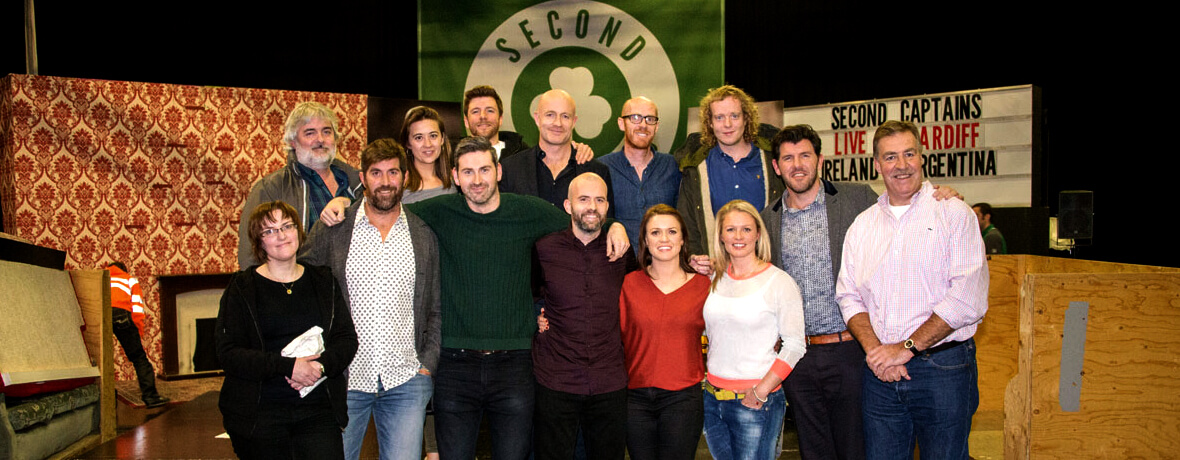
  • Second Captains are leading the Irish podcast charge

    Second Captains are leading the Irish podcast charge

    James Carroll reviews Second Captains World Service and speaks to the show’s Ken Early about podcasts, politics, and plans for the future.

    (more…)

  • Abercrombie takes on Dublin city

    Abercrombie takes on Dublin city

    It’s only been a few weeks since Abercrombie and Fitch opened its 10th European flagship store in Dublin and despite the plummeting temperature outside it’s safe to say this store is heating up.

    Known for its scantily clad dressed topless models at the door and “casual luxury” clothing, Abercrombie and Fitch is going down very well with Irish shoppers. Although the recession has got people watching every penny, it looks like people are willing to drop the cash and splash to have this logo on their jumper.

    So what is it about Abercrombie that gets people so sucked in? Since going public at the end of 1996, A&F has kept a high public profile through its sexually-orientated marketing, which has often resulted in numerous lawsuits, however whatever they’re marketing is working. The models they use portray an idealist American athletic type with washboard abs you could grate cheese from. So obviously its working, young adults see these super humans and want to emulate them. It’s a pretty obvious marketing plan isn’t it?

    So who is behind this so-called Abercrombie generation? Who’s pumping the cash into this multi-million dollar company? Many would have thought the fascination with Abercrombie would have faded out about 4 years ago, but evidently not. Even its brother store Hollister & Co in Dundrum Town Centre is packed with queues out the door every day. It seems the Irish just can’t get enough!!

    Young children and adults are always under pressure to conform, just take the music they listen to Justin Bieber, The Jonas Brothers, Miley Cyrus it’s like musical sheep, they follow the herd with what is popular. The same goes for what they wear, if it’s cool to wear Abercrombie and Fitch, you can bet their parents are getting moaned at all day long to get them some clothes from Abercrombie and Fitch, much to the delight of Abercrombie and Fitch executives.

    Abercrombie is somewhat of a pop culture sensation, it symbolises the modern generation. The impact that media and marketing can have upon a nation, in just over a decade this brand has taken a global position on the world and has essentially been so profitable by playing on people’s vulnerabilities. People are known to feel the need to conform, to fit in, to be and look the best they can. Abercrombie and Fitch took these insecurities and used them to manipulate a nation.

    They target young adolescents because as we all know, this is a time when all you want to do is fit in. And the way Abercrombie and Fitch sees it, you can all fit in by looking the same, by having a generation all walking around with large, obnoxious and unavoidable Abercrombie logos in your face.

    TheCity.ie took to the streets of Dublin to ask them what they thought of Abercrombie and Fitch’s store opening up in Dublin.

    by Caroline Ewins

    Heres what Dublins saying about the new flagship store.

    Video By Blaithin, Aidan, Caroline and Brendan.