TheCity.ie spoke to Irish soccer fans before the game with Northern Ireland at the Aviva Stadium on November 15th.
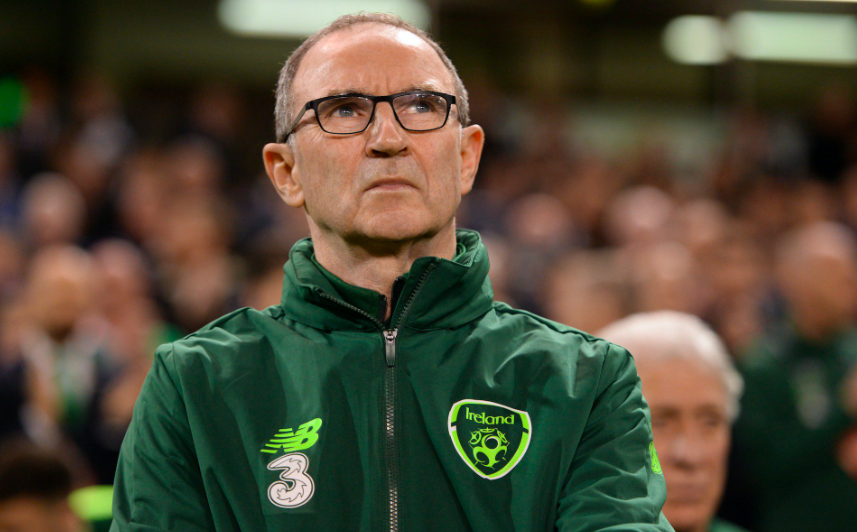
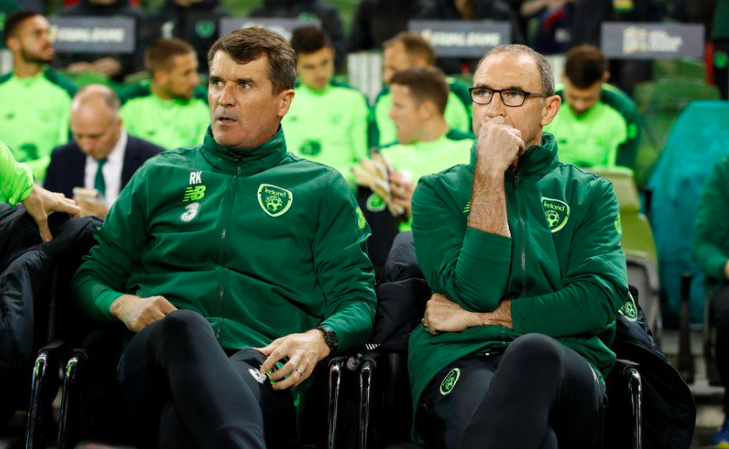
The verdict over whether Martin O’Neill was still the man to lead Ireland was unanimous among supporters. Many have since got their wish as the Football Association of Ireland parted ways with both Martin O’Neill and Roy Keane.
The pair endured a turbulent end to their stints in the Irish setup with a lack of quality on the pitch and an abundance of controversy off it.
The duo had enjoyed some of Irish soccer’s fondest memories including a victory against Italy in reaching the last 16 of Euro 2016 and win over the World Cup holders Germany at the Aviva stadium.
A crucial victory away to Wales ensured a World Cup qualification playoff in 2017 before succumbing to Denmark in an embarrassing 5-1 home defeat.
The Euro 2020 draw takes place in Dublin on December 2nd and Mick McCarthy looks to be the man tasked with taking Ireland to the tournament.
Apathy appears to be the main word to describe the attitude of Irish football fans towards the national team these days. This may have played a role in the decision taken by the FAI last Wednesday to part company with Martin O’Neill as Ireland manager. It had been a dreadful year for Martin O’Neill’s men, who ended 2018 without scoring a single goal in their last four games. The final goal scored by the Boys in Green in 2018 was a consolation effort by Shaun Williams in a 4-1 drubbing by Wales in Cardiff back in September (less than a year after Ireland had beaten the Welsh on the same ground to clinch a World Cup play-off). Ireland played out two goalless draws this international break, most recently away to Denmark last Monday night. However, it was the goalless draw against Northern Ireland last Thursday night – played out in front of a sparsely packed Aviva Stadium – which displayed the apparent apathy of the Irish fans for the national team for all to see. There was much talk about the empty seats on social media, with many blaming Martin O’Neill’s style of play for people not wanting to go to the game. Interestingly though, the last time Ireland played Northern Ireland in a friendly match at the Aviva Stadium back in 2011, there were only 15,092 people in attendance, compared to 31,221 fans at the Aviva last Thursday night. So were the empty seats at friendly internationals a product of Irish fans tiring of Martin O’Neill, or was this an ongoing issue spanning many years?
Ireland did not play a single friendly international in front of a sell-out crowd at the Aviva during Martin O’Neill’s five year reign. The closest friendly to being a sell-out was the 0-0 draw against England back in June 2015 which was attended by 43,486 people, followed by 2016’s 1-1 draw with the Netherlands ahead of Euro 2016 which was watched by 42,438 spectators. The fact that no friendly game has sold out at the Aviva Stadium since Ireland’s very first game at the ground back in 2010 against Argentina shows that problems with empty seats at friendly games have deeper roots. Although, it is fair to say that distaste for O’Neil’s regime could still be seen in attendance figures. Those friendly games mentioned earlier against England and the Netherlands had higher attendances than Ireland’s two home UEFA Nations’ League games against Denmark and Wales last month. The 0-0 draw against Denmark on 13th October was seen by 41,220, while the 0-1 defeat to Wales was attended by 38,321 fans. Ireland played both Denmark and Wales at the Aviva Stadium in 2017 also, with attendance falling by 10,000 in the respective games a year later.
Friendly games have mostly been treated with disregard by Irish fans ever since the Aviva Stadium opened back in 2010, even when Giovanni Trappatoni was in charge of Ireland. They are arguably not the best indication of the fans’ displeasure with the manager. The sharp drop in attendances for both the Danish and Welsh games in the space of a year would be more of an indication given they were competitive games. The next time Ireland will be in action will be in March when UEFA 2020 qualification begins. The draw for the qualification groups will take place in Dublin on December 2nd, where Ireland will find out who they will have to get past in order to qualify for their third consecutive European Championships. By the time Ireland line out again in March, there will be a new man in charge with former Irish boss Mick McCarthy taking the reigns. A big crowd will of course be expected for the new manager’s first game in charge, especially given it will be a competitive match. However, once Ireland take the field for their next friendly game at the Aviva, do not expect there to be a sell-out crowd.
Noel King’s time as interim manager after Giovanni Trapattoni’s swift departure as Ireland’s head coach was originally seen as a breath of fresh air by the majority of Irish fans.
The 57-year-old Dubliner is no stranger to the beautiful game, having played for more than two decades in the League of Ireland, managing in it for twelve, and even had a spell at French second division club Valenciennes.
Having managed the Irish women’s international team from 2000-2010 and the Irish U-21s for the last three years, King has more than enough experience to work with the senior players of the national team, having coached a handful of his squad at the U-21 level.
Trapattoni’s spell in charge took a drastic turn after the miserable performance in Euro 2012. Photo courtesy of Davit Hakobyan on flickr
His decision to invite a couple of the Airtricity League’s top players to train with the national team before the Germany game was revitalising and invigorating to see, compared to Trapattoni who continually denied the fact that there is a competitive football league in Ireland.
The easy approach for King to adapt in the last two qualifying fixtures of the campaign was to deploy an attractive, attacking philosophy of play with a ‘nothing to lose’ mentality, which has been called for on numerous occasions by the Irish supporters and also by some sections of the media.
In doing so, King may have won some fans and finish his interim spell earning some plaudits for giving it a go against Germany and Kazakhstan.
However, this was indeed the easy choice and King opted to take the harder and more courageous route by stamping his own authority on the squad for those two games and no Irish supporter can complain about the two results recorded, regardless of the performance against Kazakhstan in the Aviva.
King’s defiant and belligerent reaction to RTE’s Tony O’Donoghue in the final post-match press interview was met with great interest. Asked about his team selection after the game, he jumped into a histrionic defence of his choices and berated the journalist after walking out of the interview.
His short spell in charge has been a drastic contrast to his Italian predecessor and his outburst illustrated his passion, emotion and patriotism for the country’s football, unfortunately this also showed a certain naïveté about the demands on those involved at the top level of management on the world stage.
Former Sunderland boss Martin O’Neill is the bookmakers’ favourite for the Ireland job. Photo: dalli58 on flickr
Noel King has been and will continue to be an influential character on the Irish football circuit, but he was never going to be chosen to fill the void as the national coach.
John Delaney and the FAI have a tremendously important decision to ponder regarding the appointment of the future manager of Ireland, with Mick McCarthy, Martin O’Neill and Roy Keane all being deemed early frontrunners for the post.




You must be logged in to post a comment.