Tag: Middle East

  • Focus on peace: Ireland’s pro-Palestine demonstrations  

    Focus on peace: Ireland’s pro-Palestine demonstrations  

    By Leon Thompson

    Ireland’s support during the Gaza crisis has extended following the announcement of €13 million in aid being sent to Palestine.

    Tánaiste Micheál Martin announced the aid in Dáil Éireann as an acknowledgement of the escalated violence in the Middle East. 

    Mr Martin hopes “a lasting and sustainable peace” can be achieved following Israel’s declaration of war on Hamas when Israeli citizens were attacked two weeks ago. Mr Martin has also said the Irish government unequivocally condemns the attacks made by Hamas and expresses their deepest condolences for the Israeli people affected.  

    The Ireland-Palestine Support Campaign (IPSC) is supporting demonstrations nationwide, while the national demonstration to end the slaughters in Gaza will take place in Dublin tomorrow afternoon. 

    Cork, Cavan, Clare, Kerry and Belfast will also see demonstrations tomorrow. 

    The Garden of Remembrance in Dublin 1 should expect demonstrators at 1pm on the 21st of October following IPSC’s announcement saying, “As Apartheid Israel continues pounding the captive and besieged people of Gaza with indiscriminate bombing and gets ready for a full-scale invasion, all with the blessing of Western powers, we ask you to join us at an emergency solidarity rally in support of the Palestinian people.” 

    Crowds are expected to attend while TD Mr Paul Murphy has announced his support and attendance saying, “When does Palestine get the right to defend itself? 75 years of ethnic cleansing and apartheid…17 years of a brutal siege on Gaza…10,000 Palestinians killed in the last 15 years. Stop the slaughter!”

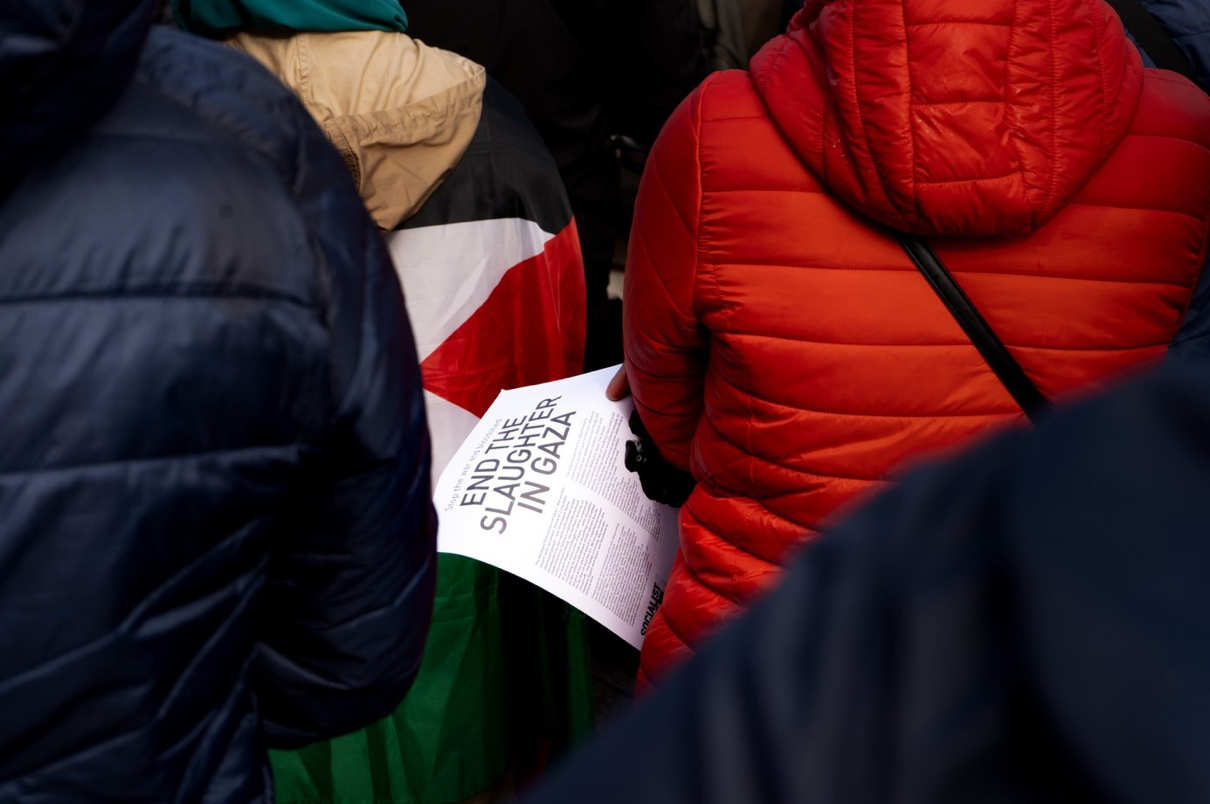
    Demonstrators at a protest. Image: unsplash.ie

    Other counties such as Tipperary and Antrim saw protests yesterday, October 19th while counties such as Louth, Longford, Cork, Down and Armagh will hold more demonstrations throughout the month of October. 

    The last demonstration supported by the IPSC is anticipated for Co.Mayo on the 25th of October. 

    Campaigners were outside of the Dáil on October 18th with Diarmuid Breatnach in attendance calling it “a duty and a pleasure” as he anticipated the outcome of the debate happening inside.  

    In Cork, one demonstrator Patrick Hobbart said: “…it’s deeply distressing to witness the enduring hardships faced by the Palestinian people who have carried the heavy burden of apartheid and colonialism for generations. It’s imperative to acknowledge that Hamas doesn’t speak for all Palestinians. The Israeli government must heed this plea and halt their relentless assault on innocent civilians. In this conflict, there are no victors…the international community must unite to demand an immediate ceasefire.” 

    Kevin Callinan, General Secretary of Fórsa Trade Union echoed Mr Martin’s sentiments, “The killing of Israeli civilians by Hamas and the collective punishment of the people of Gaza by the Israeli government will do nothing to end the occupation and bring about peace,” he said. 

    President of the EU Commission Ursula von der Leyen’s statement declaring “Europe stands with Israel” has led to a lot of pushback from members of the European Parliament (MEP) especially  

    MEP Clare Daly commended protesters that occupied the European Commission’s Office in Dublin saying: “So proud of friends and comrades…currently occupying the European Commission offices in Dublin as we here in Strasbourg go in to vote on a shameful Parliament motion that fails to condemn Israel for its ongoing crimes against humanity in Gaza.”

    Protesters outside of Dublin’s European Commission’s Office. Image: X

    The office was occupied by concerned citizens organised into a group called Dublin for Gaza, with one member Lamia Tadjine saying: “Let us be clear—blood is on the hands, not just of the Israeli military and leadership, but on the hands of those states and institutions who have provided cover for these atrocities, such as the European Union.”
  • The Human Rights Violations Seen From Space

    The Human Rights Violations Seen From Space

    The City’s Cameron Weymes compares historical Google Earth imagery to illustrate human rights violations committed by various governments in the Middle East.

    Human rights have been defined as “norms that aspire to protect all people everywhere from severe political, legal, and social abuses.”

    Each event shown below has been documented by rights organizations to be contrary to these principles.

    Slide the bar left and right to reveal differences

    The Iraqi government assault on the Marsh Arabs

    [twentytwenty]

    marshhawizah121984

    marshhawizah122002

    [/twentytwenty]

    What Human Rights Watch said:

    “HRW believe that many of the acts of the Iraqi government’s systematic repression of the Marsh Arabs constitute a crime against humanity”

    The Background

    In March 1991, in the aftermath of the Gulf War, uncoordinated uprisings against Baath Party rule broke out in Iraq, one in the Kurdish majority north and another in the Shia south. The revolts were in response to George H.W. Bush’s appeal for the Iraqi people to “Take matters in to their own hands and force Saddam Hussein to step aside.”

    While the Kurds achieved success by establishing an autonomous zone in the north, the Shia rebellion had been put down by Saddam by early April.

    During the conflict many rebels had sought refuge in Iraq’s marshlands, home to 200,000 people who relied on the area for fishing and agriculture. In response to the perceived disloyalty of the Marsh Arabs, Saddam executed hundreds of locals, forcibly transferred its population to the cities and began draining the wetlands.

    The Satellite Photos

    The tragic environmental and humanitarian effects of these actions can be seen from the above satellite photos. The ‘Hawizeh Marshes’ were left almost entirely devoid of water, halting a way of life that had existed for centuries.

    Systematic destruction of Kurdish towns in southeastern Turkey

    [twentytwenty]

    nusaybin782015

    nusaybin9132016

    [/twentytwenty]

    What the UN said:

    “The UN Human Rights Office published a report detailing allegations of massive destruction, killings and numerous other serious human rights violations committed between July 2015 and December 2016 in southeast Turkey, during Government security operations that have affected more than 30 towns and neighbourhoods and displaced between 355,000 and half a million people, mostly of Kurdish origin.”

    The Background

    Nusaybin is a city of 80,000 people in southeastern Turkey, a region with an ethnic Kurdish majority. In late 2015, fighting broke out between the Turkish army and Kurdish militants. By the summer of 2016, Turkish government forces had put down the insurrection and began demolishing thousands of homes, leading to accusations of collective punishment against Nusaybin’s residents.

    The Satellite Photos

    The above images show houses destroyed by the Turkish government in Nusaybin.

    [twentytwenty]

    sur2014

    sur2017

    [/twentytwenty]

    The Satellite Photos

    Similarly to Nusaybin, large parts of Diyarbakir, the largest Kurdish majority city in Turkey, were flattened after fighting broke out in 2016 between Kurdish militants and the Turkish army.

    The indiscriminate aerial bombardment of rebel-held Aleppo

    [twentytwenty]

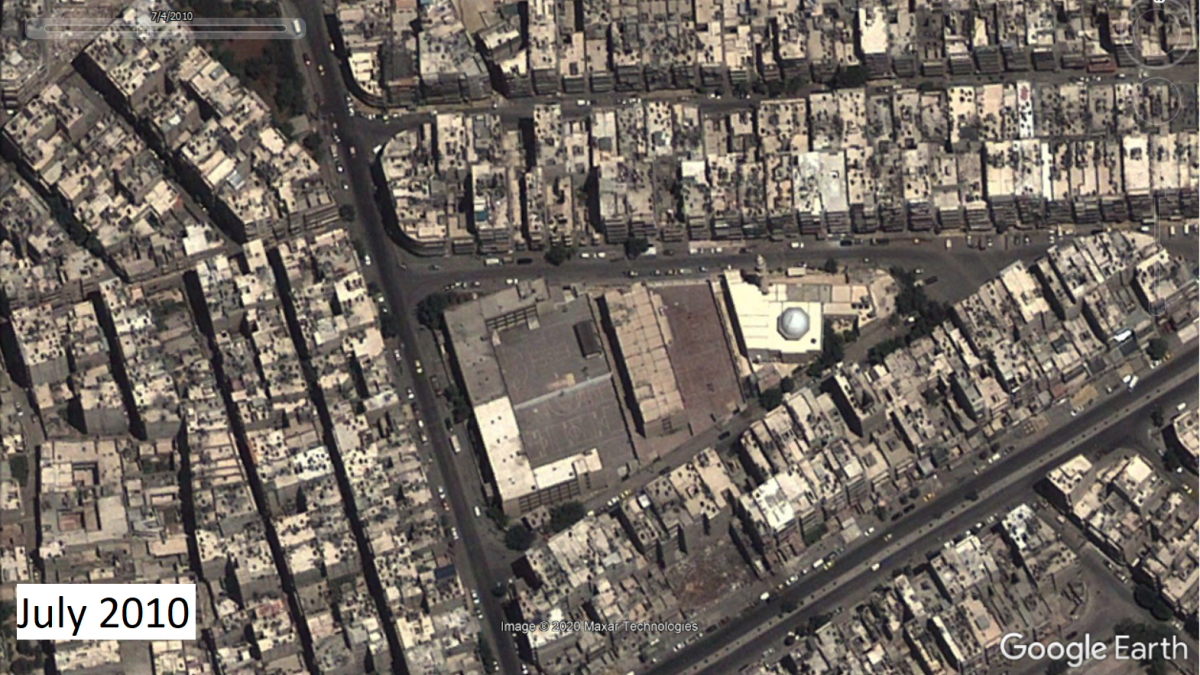
    eastaleppojuly2010

    eastaleppofeb2017

    [/twentytwenty]

    What Human Rights Watch said:

    “The Syrian military has dropped barrel bombs, sometimes dozens in one day, on opposition-held neighborhoods in Aleppo, Idlib, Dara’a and other cities and towns. They have pulverized markets, schools, hospitals and countless residences. Syrians have described to me the sheer terror of waiting the 30 seconds or so for the barrel bomb to tumble to earth from a helicopter hovering overhead, not knowing until near the very end where its deadly point of impact will be.”

    The Background

    In 2012, Syrian rebels fighting Bashar al-Assad began taking control of large swaths of Aleppo, Syria’s largest city. The rebels would eventually take the eastern half of the city, before a regime offensive backed by Russian airpower regained control in late 2016.

    The conduct of the Syrian regime and its Russian allies during the battle led to widespread allegations of war crimes, as highly inaccurate barrel bombs (barrels full of scrap metal and explosives) were dropped on densely populated rebel-held areas.

    The Satellite Photos

    The above images show the effect of regime and Russian airstrikes on buildings in eastern Aleppo.

    The expansion of Illegal Israeli settlements in the West Bank

    [twentytwenty]

    westbanksettlements2

    westbanksettlements1

    [/twentytwenty]

    What Amnesty International says:

    “Israel’s policy of settling its civilians in occupied Palestinian territory and displacing the local population contravenes fundamental rules of international humanitarian law.”

    The Background

    Israel took control of the West Bank following a Six-Day War with its Arab neighbours in 1967. The territory has subsequently undergone a process of colonisation as over half a million Israeli settlers have moved into the West Bank and East Jerusalem, an act illegal under international law.

    The Satellite Photos

    The above image shows the illegal expansion of the Nofei HaSela settlement in the occupied West Bank.

  • The Saudi opposition group born in Dublin

    The Saudi opposition group born in Dublin

    A Saudi human rights group has been launched in Dublin two weeks ago, making it the first Saudi human rights group abroad.

    The launch of the group, Citizens Without Chains (CWC),  took place on Friday the 29th of September at the Wood Quay Venue in Dublin.

    The group’s founder, Abdulaziz Almoayyad, is a businessman who has been living in Ireland for the past three years. He lives in Roscommon with his wife and three year old son.

    Mr Almoayyad said the conditions in Saudi Arabia in the last few years have become “increasingly complicated”, as a wave of arrests took place in the country over the past few months.

    He has a digital marketing company in Saudi Arabia and said he fears the Saudi government could freeze his assets as a result of his activism.

    “I don’t think opposing the Saudi government will be a walk in the park,” he said. “But if a person is aware enough he has a responsibility to do something about it, he has to.”

    Saudi opposition story
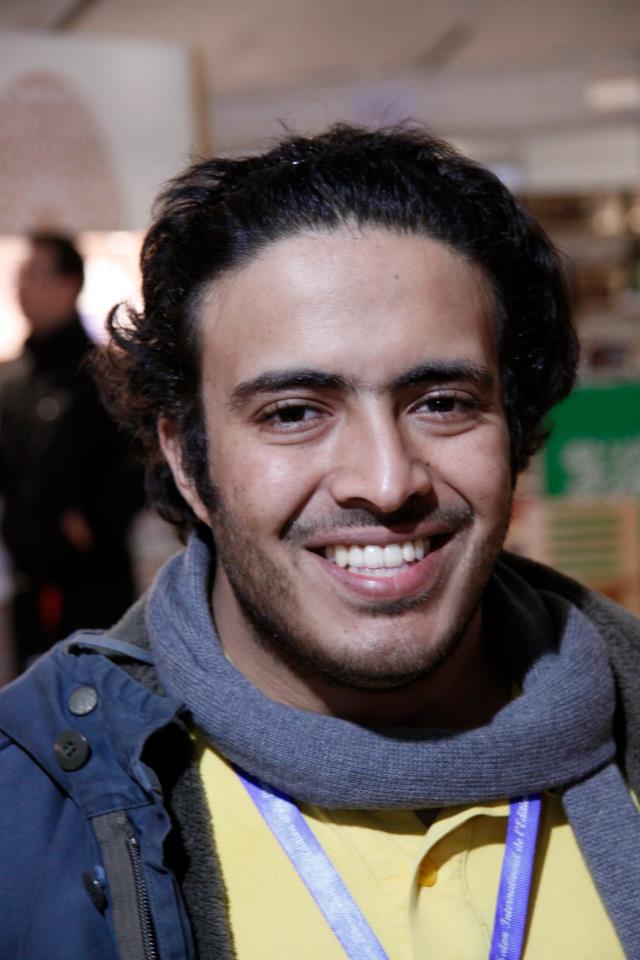
    Abdulaziz Almoayyad is the founder of Citizens Without Chains, an opposition group to Saudi Arabia.

    Mr Almoayyad said life in Ireland has inspired him to take on a more active stance in human rights and politics, as he saw “liberalism and equality” in operation.

    His father, who passed away a few years ago, was the General Manager of the Ministry of Finance in Saudi Arabia. He said his wife and family, some of whom hold positions of authority in the Saudi government, are supporters of the government and are not happy with his actions.

    “They don’t like what I’m doing. My mother said ‘why are you doing this Abdulaziz?’ I told her I have to be true to myself,” he said.

    He said his family are aware of the risk he is taking by speaking about his views publicly, but he said: “It’s a responsibility because the nation needs someone to speak out.”

    Mr Almoayyad said he fears that his three year old son would grow up to be “an intellect and free thinker”, something that could risk his freedom in Saudi Arabia, he said.

    He said people have been fearful of being part of groups that criticise Saudi Arabia. As a result, he thought creating “a public opposition group” would lessen people’s suspicions and fears, as everything will be “open and anyone can join”.

    “We found a lot of support from Saudi people and intellectuals abroad,” he said. “At the end of the day, we want to unite people. We don’t speak about ideology. We believe that the Saudi nation deserves freedom of thought and speech. We have different ideologies but are joined by a common interest [in Saudi human rights].”

    The group defines their aims in a statement, which says: “To reform the legislative framework of Saudi Arabia, to allow for the true civic participation and emancipation of all citizens. We aim to establish a system which allows for free and fair elections, and to open the civic space for free speech, and the emancipation of socio-political thought.

    “The movement, with the support and consent of its members, will aim to create a society which is built on the sharing of knowledge, ideas and culture, and which is protected by the rule of law to celebrate the diversity and freedom of these.”

    Andrew O’Brien, Trade Union Coordinator for Labour Youth, was present at the launch of CWC.

    “It’s the case of Citizens Without Chains highlighting the human rights abuses in their home country with a desire of instituting human rights and democratising the country,” he said.

    Mr O’Brien said CWC “highlights humans rights abuses by the Saudi regime” and “challenges the status quo in Saudi Arabia”.

    He said although there was an “exhilaration” recently when the Saudi government allowed women to drive, the human rights situation in the country “reeks of the kind of totalitarianism” imposed by authoritarian states.

    By Hajar Akl

  • A passion 4 food and a passion for home

    A passion 4 food and a passion for home

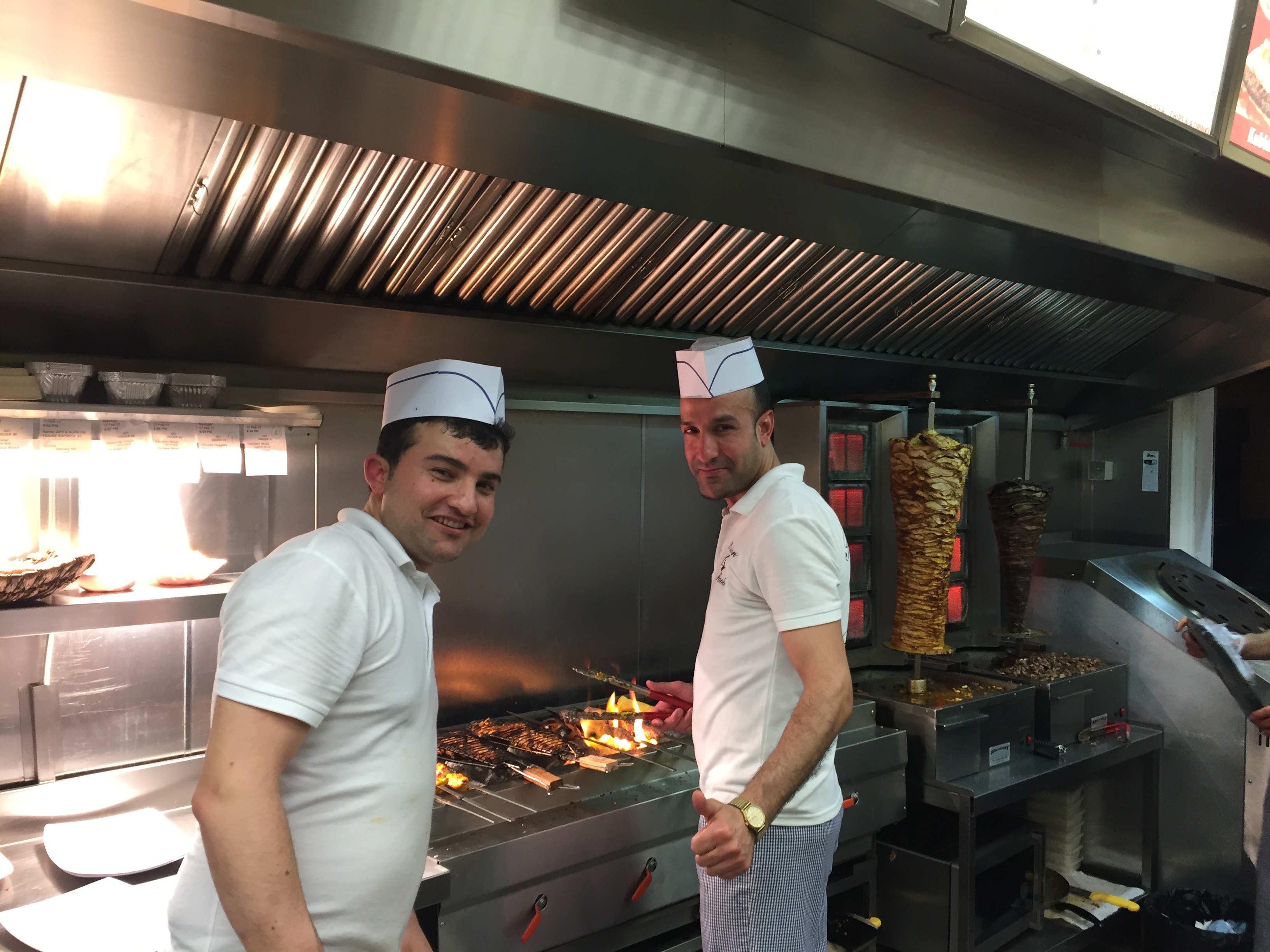
    James Carroll visits Passion 4 Food to sample the authentic food and learn about the international crossfire affecting Kurdistan.

    (more…)