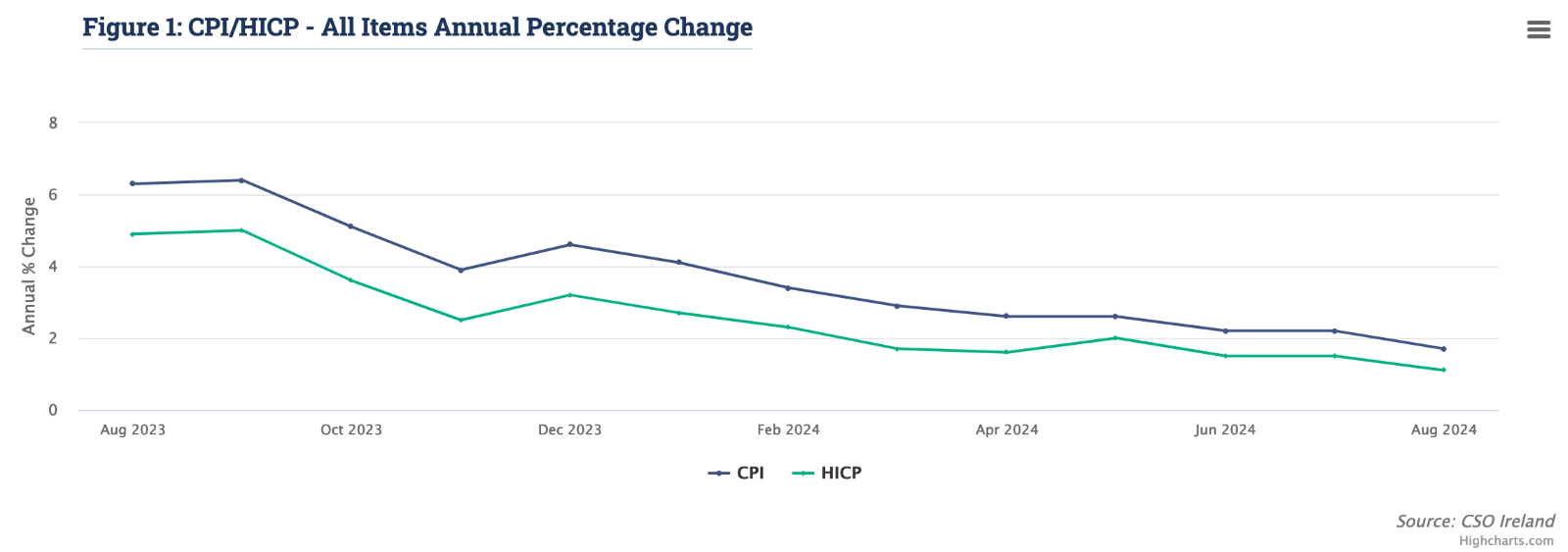
The latest statistics show that the Consumer Price Index (CPI) rose by 1.7% between August 2023 and August 2024, down from July’s increase of 2.2% from last year.
Commenting on the report Anthony Dawson a Statistician in the prices division said, “Today’s publication of the CPI shows that prices for consumer goods and services in August 2024 rose by 1.7% on average when compared with August 2023. This is the first time since June 2021 that the CPI, Ireland’s official measure of inflation, has been below 2.0%.”
Source: CSO Ireland
The biggest drop in pricing was found in clothing and footwear, which went down by 6%, and a drop of 2% in utility prices such as fuel, water and electricity.
When asked about the effect these drops have on consumers Maeve Ahern, an author on the report stated: “We’re looking at a positive downward trend for households in terms of their utility bills and clothing costs mostly due to providers cutting their rates by about 3%.”
Alcohol and tobacco saw a rise of nearly 4% as did transport costs, the highest increases in comparison to last year were found in restaurants and hotels at 4.5% which according to Ahern is a direct result of alcohol becoming more expensive this year.” The national average price for a pint of larger now sits at €6.25.
Transport has gone up “primarily thanks to an increase in petrol and diesel, alongside airfares getting more expensive as well,” says Ahern.
The CPI also stated that “Miscellaneous Goods & Services” have risen by 4%. This would be items such as health and motor insurance, or personal grooming services such as salons and barbers, according to Ahern.
According to the EU Harmonised Index of Consumer Prices (HICP), which measures the average inflation rates across the EU, prices on average went up by 1%.
Alongside the CPI the National Average Price table was released. This measures the average prices for select goods and services across the country.
Source: CSO Ireland.
Other notable items include a decrease in the cost of a slice pan on average, cheese and spaghetti, with a 2 litre carton of milk remaining the same price.
Dawson added: “It’s important to remember that this is only a flash estimate and not the final HICP which is released in January of next year, so full quality control can’t be guaranteed, these flash estimates are a useful indicator to see the type of trajectory we’re on however.”
“I’ve definitely been spending more the last few shops, I think things are just getting pricier everywhere, especially food,” said Mary Donnelly (36), a primary school teacher when asked about her shopping habits.
When asked about her thoughts on Ireland’s inflation rate dropping, she said, “I can’t say I have much a grasp on that, but if things don’t change soon, we’re all going to be making major changes to our lives, especially with the cost of rent on top of all this.”
John Scally, a senior economist with the Central Bank commented that, “we’re getting closer to our target of 2% annual inflation by 2025, 2% is an important target to hit for Ireland for the creation of conditions that will lead to sustainable growth for both households and for businesses as well.”
According to Scally, “inflation has become much harder to parse in recent years thanks to the ongoing war in Ukraine affecting prices of things like gas and even crop plants and of course the Covid 19 pandemic which completely threw off the world economy never mind just Ireland’s.”
“Ireland has always been at the whim of external inflation since we’re an open economy, and thankfully the shocks are beginning to subside, as of now we’re looking into inflation for next year and for two years ahead of that to keep our estimates as accurate as possible.”
“We’re looking into ways to further improve our accuracy by looking at implementing new tools like machine learning and AI which should help not only with the accuracy of our reports but also the speed we can get them finished at.”
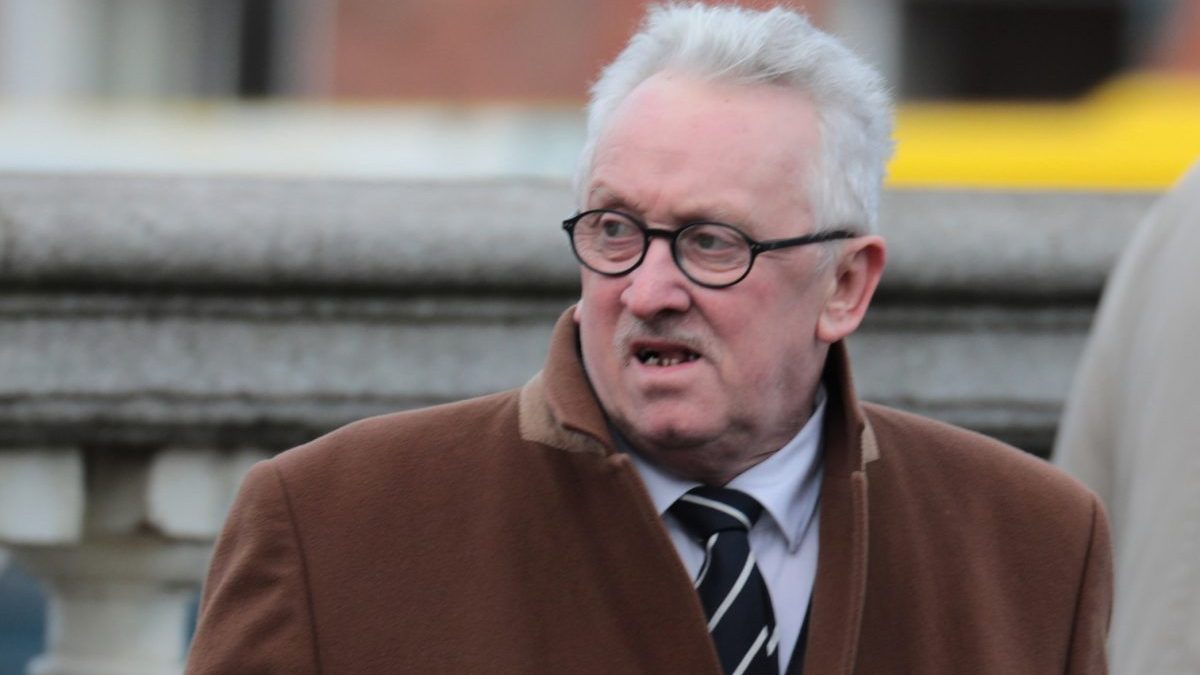
PRESSURE: John Joseph Murphy at the High Court in February where he was questioned about his debts (Photo: Collins Courts)
John Joseph Murphy recently suffered a heart attack 24 hours after being questioned in court about his unpaid €3.5million bank loans. TheCity.ie’s Paul Caffrey, who’s been in court covering this extraordinary case as it’s developed since February, profiles this Wexford businessman and explores his rise and fall over the past two decades.
As a co-owner of the landmark Gresham Hotel in Dublin during the boom years, property developer John Joseph Murphy was riding high.
Brimming with hope and confidence when interviewed by The Irish Times in July 2004, having just won control of Ireland’s oldest hotel, he brushed aside fears that he might turn it into one big apartment block.
“The Gresham will always be the Gresham. There will be no change there. It’s business as usual,” he told the newspaper.
The 200-year-old Gresham Hotel on O’Connell Street, Dublin, that John Joseph Murphy once owned (Photo: YouTube)
Irish Times business journalist Jane O’Sullivan reported that Murphy told her with a laugh:“We are not going to knock anything down and build apartments. We do believe in the underlying business and the value it can deliver.”
Perhaps at the time, he could afford to be light-hearted. It was the height of the Celtic Tiger era and he was one of a consortium of three investors who’d just won control of the Gresham Hotel Group.
This included its flagship, 200-year-old, 323-bedroom hotel that dominates Upper O’Connell Street in the capital, along with Cork’s Gresham Metropole, London’s Gresham Hyde Park and the Gresham Memphis in Amsterdam.
The group also controlled the Gresham Belson in Brussels, the Gresham Carat in Hamburg and the Royal Marine Hotel back home in Dún Laoghaire.
WATCH: Explaining the historical significance of the Gresham Hotel that’s welcomed guests from the Beatles to Princess Grace (Video: Dublin City Public Libraries/YouTube)
Sounding like a man who was ready for anything when interviewed 16 years ago, Murphy told TheIrish Times about his apparent plans for world domination – in the hotel domain, at least.
“We are not afraid to invest where we see fit. We are not afraid to acquire more hotels. But where we see any particular asset that can’t deliver, we won’t be afraid, if necessary, to dispose of it.”
John Joseph Murphy speaking in 2004
Back in the early to mid-Noughties, the easy availability of credit created endless temptation for those with any stake in the booming property sector.
This all came to a shuddering halt with the September 2008 global economic crash that was exacerbated in Ireland by the collapse of our then-bloated property market.
Known as JJ to his friends, Murphy was a seasoned developer with a solid pedigree in the property industry. He appeared to be set up for life as he embarked on a range of projects.
PICTURESQUE: Castle Oaks Hotel in Limerick that John Joseph Murphy sold in 2018 to pay off about half of his bank debt – but it wasn’t enough to get him off the hook (Photo: YouTube)
Resulting from the December 2018 sale of that hotel property, that dates back to the 19th Century, the father-of-three managed to reduce his debt by nearly €3million, the High Court heard.
After signing a deal to purchase the 64-bedroom hotel in December 2018, Supermac’s owner Pat McDonagh told the Limerick Leader: “It is going to be business as normal.”
But it’s Murphy’s failure to repay the remaining €3.45million that has led him to the High Court where he’s now being sued for the full return of his bank borrowings.
Bank of Scotland having pulled out of Ireland in 2010, his loans were later purchased by finance fund Feniton Property Finance. It was Feniton that took the legal proceedings against him.
The High Court’s commercial wing first ordered him to pay back the €3.45million to Feniton in April 2019.
When he didn’t pay the debt, the fund looked for other ways to pursue him.
The Four Courts in Dublin, where John Joseph Murphy’s case is being heard (Photo: Paul Caffrey)
On February 18 last, Feniton’s lawyers cross-examined Murphy in court about what assets he may have at his disposal to satisfy the unpaid judgment.
In robust exchanges, Feniton’s barrister Micheál O’Connell SC told him:
“You are going to have to answer these questions.”
CROSS-EXAMINATION: Seasoned barrister Micheál O’Connell SC questioned property developer John Joseph Murphy at length about his unpaid debt on February 18 (Photo: The Bar of Ireland)
But Murphy’s lawyers later claimed in court that on the following day, February 19, the father-of-three suffered a heart attack after getting an email from Feniton’s legal team that was “of concern in terms of its content”.
The exact contents of the email was not outlined in court.
Murphy, of Stony Park, Wexford, was rushed to the Mater Hospital in Dublin and underwent quadruple bypass surgery for his “very serious condition”, the High Court was told.
When his lawyers announced this in court on March 5, Feniton’s lawyers argued it was “extraordinary” to suggest an email from their side had brought on his heart condition.
But Mr Justice David Barniville, who was presented with a GP’s report detailing Murphy’s condition, agreed to put the case on hold for at least a month.
Timeline infographic: Paul Caffrey
TheCity.ie was in court in February for Murphy’s testimony 24 hours before his health scare. We returned on March 5 when the court was told of his health condition.
Dressed in a three-piece grey suit with white shirt, black and white striped tie and bronze-coloured cufflinks, he was questioned for almost three hours about what assets (any property or cash) he may have to satisfy the debt.
From the witness box, the waistcoated Wexford developer claimed he had “no assets” to pay back the millions.
Under questioning by Micheál O’Connell SC, for Feniton, Murphy claimed he was “kept” by his three adult children who paid his bills for a decade after he fell on “hard times”.
His three offspring “supported me for many years when I was on hard times,” the developer told the court, adding:
“I had no money. Over a period of ten years, these people kept me.”
Murphy explained:
“They’d have paid my bills, my ESB insurance. I had no income during that period.”
Murphy has a 41-year-old son who’s a chef and two daughters in their 30s, one who works for a US tech company, it was heard.
HISTORIC: The Four Courts complex in Dublin is where all High Court commercial cases are heard and decided on (Photo: Paul Caffrey)
Asked by Mr O’Connell SC if the children helped “out of the goodness of their hearts”, Murphy replied: “Completely out of family…This was a family matter.”
Murphy later “decided to reimburse” them by giving them €250,000 collectively, it was heard.
But Feniton struggled to find any record of that payment, it was heard.
Later, Murphy told the court:
“I don’t have any assets. This is the whole point here.”
Asked if his attitude was that his creditors “can wait”, Murphy said the outstanding €3.45million debt related to a partnership with a man he hasn’t seen nor spoken to “in eight to ten years.”
And he added:
“I don’t even know what this [€3.45million] debt is for – it’s ten years old.”
(Factfile infographic: Paul Caffrey)
Before he left court on February 18, Murphy was ordered to provide further information and/or documents to Feniton about his assets by 5.30pm on Tuesday, March 3.
He was due to appear in court again on Thursday, March 5. Instead on that day, his lawyers brought news of his February 19 heart attack.
The case is currently on hold as the courts are dealing only with urgent cases during the Covid-19 lockdown. Chief Justice Frank Clarke recently made a statement on the matter.
According to official Companies Registration Office (CRO) records seen by this website, Murphy hasn’t been a director of the Gresham Hotel Company Ltd since December 2006 when he resigned from that position.
His December 7, 2006 resignation was recorded in documents filed with the CRO in February 2007.
Dubliners love a good market. The Liberty Market, George’s Street Arcade and Moore Street Market are just a few of the more iconic examples. So, why is it that within the unstable and uncertain business climate, markets remain a vital and thriving part of Dublin industry?
One of the
undoubted features of markets is the personal touch that they offer shoppers
and each market manager and stall owner has their own story to tell. Des
Vallely is the owner and director of Irish Village Markets who run in various
locations around the city and country. Despite his success, Des does not come
from a trading background.
“I took an interest in
organic growing whilst working in the IT sector. What initially started as a
hobby, developed into a full-time career,”said
Vallely.
“Terenure would have always had farmers markets back in the day so it was to bring something old back and to try and revitalise it”
– Des Vallely
“Once I started growing
vegetables, I needed an outlet for my produce and decided to start my own
market in Monkstown and set up a market every weekend. We were soon joined by
other growers and producers which led to the establishment of Irish Village
Markets.”
Anne Talbot’s Bushy Park Market is relatively new to the scene in Dublin terms. The market she runs with Georgina Culshaw first set up its stalls in 2014 in Terenure Village before relocating to Bushy Park. The market has quickly become a great asset to the area and its community.
Anne said: “It was set up initially as a volunteer project. Terenure would have always had farmers markets back in the day so it was to bring something old back and to try and revitalise it.
“It’s now a destination for young families and people in the community to really come out and hang out and enjoy”
– Anne Talbot
“This is its fifth year that it’s been running up here and it’s now a destination for young families and people in the community to come out and hang out and enjoy a really nice park at the same time,” said Anne.
“Parents are able to come down and watch their kids and have a coffee and then hang around. It has just become a concrete Saturday destination that people rely on in the area.
“It’s very heavily community focused though. That’s the main agenda for it. The purpose of it was to create a destination for young families and that is still its purpose and I think that will remain its purpose.”
Vallely believes markets need to capitalise on the community feeling they can generate as it’s one of their prized assets.
“Visitors seem to enjoy the atmosphere and experience when visiting markets and share this experience with family and friends,” said Vallely. “This generates a good level of interest and drives additional footfall to markets.”
There are also
practical benefits to shopping in markets. Karl Merry, Assistant Inspector at
the Licensing Section of Dublin City Centre believes it is vital for members of
the public to support local markets. He said: “There is a growing awareness
that supporting local businesses is good for the local economy, the standard of
produce is probably better, and it is generally a more sustainable way to
shop.”
“The standard of produce is probably better, and it is generally a more sustainable way to shop”
– Karl Merry
Anne Talbot agrees that markets offer a great opportunity to support local businesses: “We have a policy here as well that most of the people are local so we let local people come in first and then if we can’t fill that niche then we start going out further.
“It just gives small little industries a chance to show off their wares and not have to pay extortionate rents at the same time it’s kind of a win/win situation.”
Sustainability and protecting the environment are becoming increasingly important factors in determining where people choose to do their shopping. Local markets have a big advantage over bigger national and multinational retailers in this area.
“Climate change is becoming a consideration in how people shop,” said Merry. “People are more conscious of buying food in a way that impacts less on the environment.”
Minister for Finance Paschal Donohoe has announced new measures in the 2020 Budget to reduce Ireland’s contribution to the current climate crisis.
In the Dáil on Tuesday morning, Minister for Finance Paschal Donohoe delivered his speech on the package, describing climate change as being “without doubt our defining challenge.”
The Minister announced a €6 increase on the carbon tax, applicable to fuels including petrol and diesel. These changes were implemented from midnight on Tuesday, but the increase to other fuels will follow in May of next year, after the winter heating season. The Government ultimately intends for the tax on carbon to rise from €20 in 2019 to €80 in 2030.
Minister for Finance, Paschal Donohoe Photo Credit: Wikimedia Commons
The Minister said this will raise €90 million, which will be ring-fenced for the funding of “new climate action measures”.
A portion of the revenue gained from the carbon tax will go towards funding a package targeted at the midlands. The Minister said, “€20 Million will be dedicated to the creation of a new energy efficiency scheme targeted initially at the social housing stock in the region. This aims to create new, sustainable employment in the region.”
The €6 million will go towards the Just Transition Fund, targeted at The Midlands to re-skill workers and assist local communities and businesses in The Midlands. €5 million will also be dedicated to restoring bogs to their natural habitat. The bogs will become “carbon sinks”, which will be able to absorb carbon.
Another €5 million will go towards the reduction of greenhouse gas emissions and enhanced biodiversity.
The earnings from the carbon tax increase will also include €11m for electric vehicle grants and charging networks – which will double the number of electric car charging outlets currently available to the public, as well as €9m for greenways.
“little more than a government cash-grab dressed up as a green initiative”
AA Roadwatch has warned that the carbon tax increase will do very little to reduce Ireland’s over-reliance on the private car, criticising the move as “little more than a government cash-grab dressed up as a green initiative.”
Director of Consumer Affairs for the AA, Conor Faughan stated: “Investing in public transport infrastructure, LUAS-like systems across our main cities, quality cycle lanes, all these measures would do far more to get people out of the car than a tax increase ever will.”
The 1% diesel surcharge has been replaced with a nitrogen oxide emissions charge. This will apply to new cars registered from January 1st of next year. The charge will apply on a euro per milligram/kilometre basis with the rate increasing in line with the level of nitrogen oxide emitted. The first 60mg per kilometre of nitrogen oxide emissions will be charged at €5 per milligram. Above 60mg per kilometre, the charge will amount to €15 per milligram. Above 80mg, it will be €25.
This means a new diesel car with emissions of 43mg per kilometre will have a charge of €215 added. A new petrol car with emissions of 23mg per kilometre will have a charge of €115.
“The Government ultimately intends for the tax on carbon to rise from €20 in 2019 to €80 in 2030”
The Government is aiming this charge at older, more polluting cars, which could cost some owners several hundred euros. This charge will not affect electric vehicles, as they do not directly emit nitrogen oxide. €8 million has been reserved for grants awarded to consumers who purchase fully electric cars.
Contrary to this, the Government is scrapping the grant scheme for businesses who purchase electric vehicles.
Richard Bruton, Minister for Communications, Climate Action & Environment said in a statement, “the generous benefit-in-kind tax relief that is available for these vehicles is considered adequate incentive to drive growth in this sector.”
The 2016/17 football season saw the rise of plenty of young stars. By the end of the season young players were attracting big clubs and massive transfer fees. Over the summer transfer window Ousmane Dembele, aged 20 from Borussia Dortmund, was signed by Barcelona for a fee of €105m, while 18 year-old Kylian Mbappe was signed by PSG from Monaco in a loan deal that will see him sign for the Parisian super club next summer for a fee of €145m.
With these young players and many more showing their worth, I decided to find out which of the top 5 leagues are the most generous when it comes to giving these players opportunities.
Based on the total number of minutes played by all players last season, against the total number of those minutes given to youth players, decided as players aged 21 and under, I calculated the percentage of playing minutes given to youth players in each of Europe’s top 5 football leagues.
Based on this data, the French Ligue 1 is the best location for young talent to play, coming in with nearly 3 times as many minutes given to youth players as the last placed Premier League.
To delve further, I calculated the most and least youth friendly clubs in each league based on their minutes given to youth players.
Surprisingly, it’s one of the most expensive squads in the Premier League that tops the list for giving minutes to youth players, although aside from the academy graduate Marcus Rashford the remaining minutes come from Luke Shaw and Anthony Martial, coming in at a collective €85m in transfer fees.
It’s no surprise to see Spurs so high with the majority of their minutes coming from Young Player of the Year Dele Alli, and Everton make their way in at third thanks to Mason Holgate and Tom Davies making their way onto the scene this season.
Crystal Palace are the only team in any of the Top 5 leagues to not give a single minute to youth players, while their neighbours in the league table Swansea gave less than a full 90 minutes themselves. Chelsea, however, were flying without youth, although most of their young lads were finding playing time over at Vitesse.
There are similar findings in other leagues with Serie A leaders Juventus, and Real Madrid and Barcelona battling it out for the title in Spain, all rejecting the use of youth themselves. The only player to really make a mark in any of these teams is Marcos Asensio at Real Madrid, whom Zidane has taken a liking to. Maybe it’s the luxury of being able to send players out on loan to develop at smaller clubs that allows these teams to have fantastic squads while also having thriving youth at a moment’s notice.
Toulouse lead the line for youth players, they’re currently sitting in 12th, after two relegation-threatening 17th place finishes in a row maybe the young lads have been the kick that team needs to move up the table.
Finally I took a look at the individuals who have found the most success in each position this season.
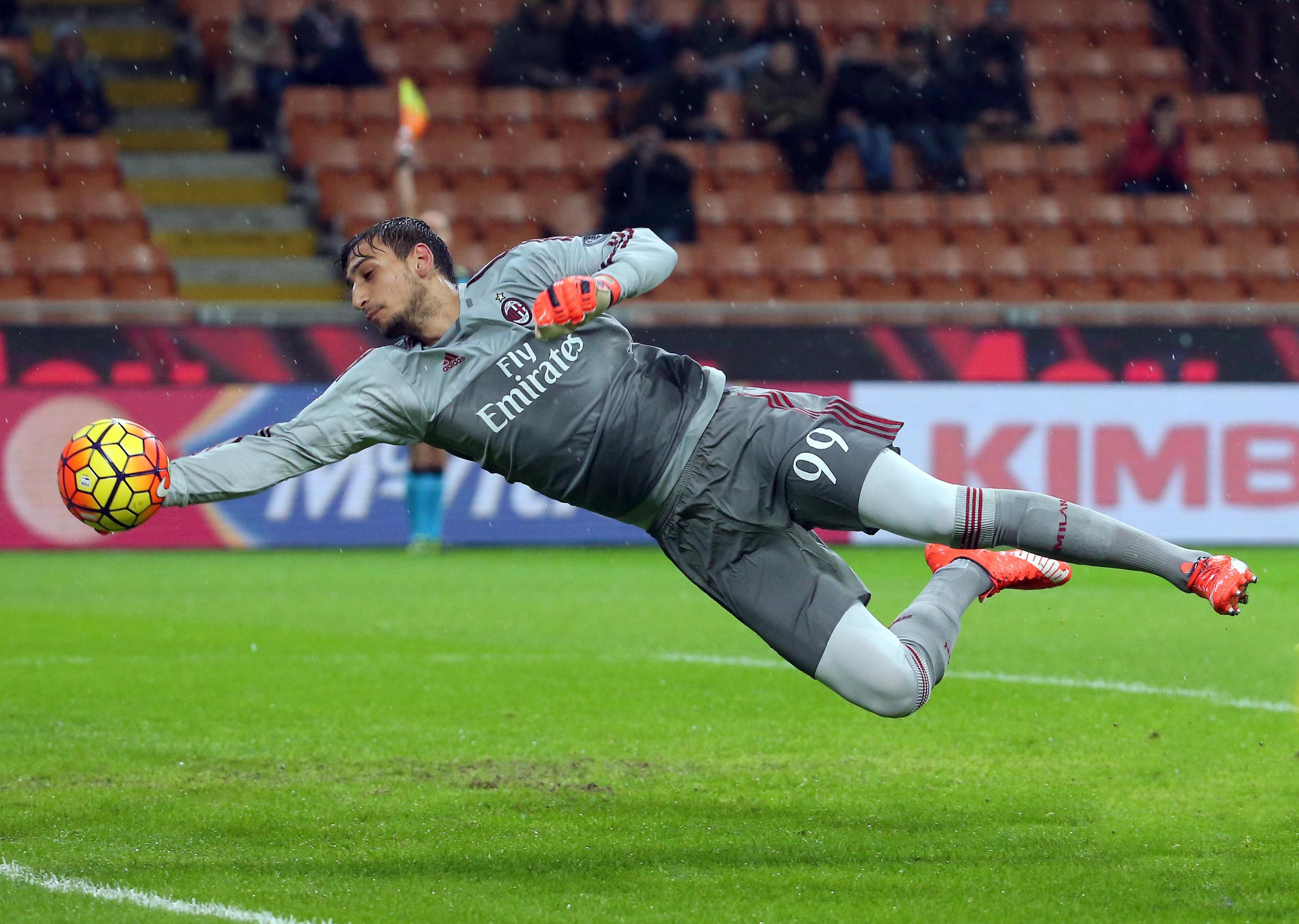
Gianluigi Donnarumma was an ever-present for AC Milan last season, leading to a pursuit of the 18 year-old by Juventus who he desperately tried to sign for over the summer before changing his mind and staying with Milan.
Football tends to flow more freely as you move up the pitch and so generally teams like to have more consistent defensive line ups than in attack, and this is shown here as the further forward you go from Goalkeeper to Forward, the less minutes are given on average.
The total amount spent on marketing the island of Ireland overseas increased in 2016 for the first time in five years.
The tourism marketing fund for 2016 was €35,053,000, an increase of €1,000,000 compared to the figure for 2015.
The total figure for the marketing fund decreased annually from the years 2011 to 2015, making 2016 the first year to see an increase in the fund in five years.
Source: Kieva McLaughlin and John Smith
From 2008 until 2011, there is a clear correlation between the amount spent on marketing and the number of tourists who visited Ireland. However, from 2012 to 2015, the number of tourists continued to rise even as the amount spent decreased.
Supposedly, this rise in tourists will continue to increase, with over 9 million tourists, the highest number ever, expected to have visited Ireland by the end of this year.
The majority of the 2016 fund, €25,106,000, comes from the State’s share of the agreed North/South co-funding of Tourism Ireland’s destination marketing of the island of Ireland overseas.
Year
Tourism Marketing Fund (Tourism Ireland’s allocation)
Tourism Marketing Fund (Fáilte Ireland’s allocation)
Tourism Marketing Fund (TOTAL)
2008
€33,685,000
€16,315,000
€50,000,000
2009
€32,185,000
€15,065,000
€47,250,000
2010
€30,242,000
€14,008,000
€44,250,000
2011
€34,942,000
€11,141,000
€46,083,000
2012
€29,335,000
€10,019,000
€39,354,000
2013
€28,445,000
€8,800,000
€37,245,000
2014
€28,363,000
€8,213,000
€36,576,000
2015
€25,992,000
€8,061,000
€34,053,000
2016
€25,106,000
€9,947,000
€35,053,000
Source: Kieva McLaughlin and John Smith
Tourism Ireland is a north/south body, and therefore receives funding from the Northern Ireland exchequer for its core overseas marketing activity. The agreed ratio for marketing activity is two euros in the south for one euro in the north.
Tourism Ireland Ltd is the all-island tourism marketing company that was established after the Good Friday Agreement.
The remainder of the fund, €9,947,000, is used by Fáilte Ireland to support niche, product and regional marketing.
The marketing of Ireland overseas appears to be paying off as CSO figures show that overseas visits to Ireland for 2015 grew by 13.7% compared to 2014.
All of the main overseas markets grew in 2015. Visits from Mainland Europe increased by 15.4%; visits from the U.K. were up by 12.1%; visits from North America increased by 14.0% and other long-haul markets increased by 13.7%.
Tourism Ireland undertook the extensive Global Greening initiative as part of the St. Patrick’s Day celebrations, which saw some 180 landmark buildings and sites, including the Great Wall of China, and the Christ the Redeemer statue in Rio de Janeiro, Brazil, light up green to mark the day.
AFTER SATURDAY, 1st December 2012 – cash and leap card fares for Dublin Bus, Luas, Iarnród Éireann and Bus Éireann services will increase.
Prepaid tickets prices will also increase, but this change will not come into affect until early 2013.
The move, approved by the National Transport Authority, was made due to Ireland’s “difficult economic circumstances” and increasing fuel costs – despite cost cutting measures in the industry.
For Dublin Bus, the last fare increases were introduced in January 2012.
What does this mean for the city’s commuters?
Cash paying commuters are the worst affected by the increase. While those using Leap Card and prepaid tickets will still suffer price increases, these options still offer better value over cash fares.
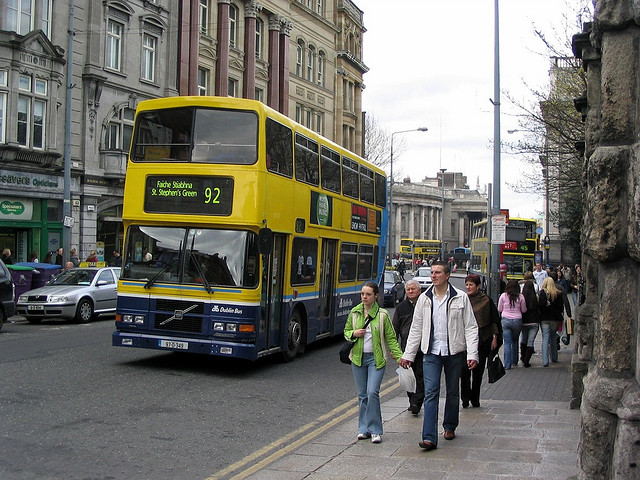
On Dublin bus – the new price adjustment will see cash fares increase by an average of 11%. Meanwhile, leap card fares will be increased by an average of 7%.
For example, a cash paying adult travelling 8 to 13 stages on Dublin Bus previously had to pay €2.15. After December 1st 2012, this same journey will now cost €2.40.
Dubliners availing of the Dublin Bus’ ‘City Fare’ to get around the capital are also affected – with their cash paying fare increasing from €0.60 to €0.65 cent.
How do these new fares compare with nearby European capitals?
Across the pond – London’s bus service charges passengers a flat cash fee of £2.30, or at a discounted fare of £1.35 if using the Oyster Card (similar to Dublin’s Leap Card).
Meanwhile in Paris, the French pay a flat fee of €1.70 per bus journey.
Further South, commuters in Madrid pay a flat cash fare of €1.50 per bus journey.
What adult passengers paid Dublin Bus before the fare increase What adult passengers are paying Dublin Bus after the fare increase











You must be logged in to post a comment.