Tag: Music industry

  • New York Times’ documentary Framing Britney Spears shines a spotlight on sexism

    New York Times’ documentary Framing Britney Spears shines a spotlight on sexism

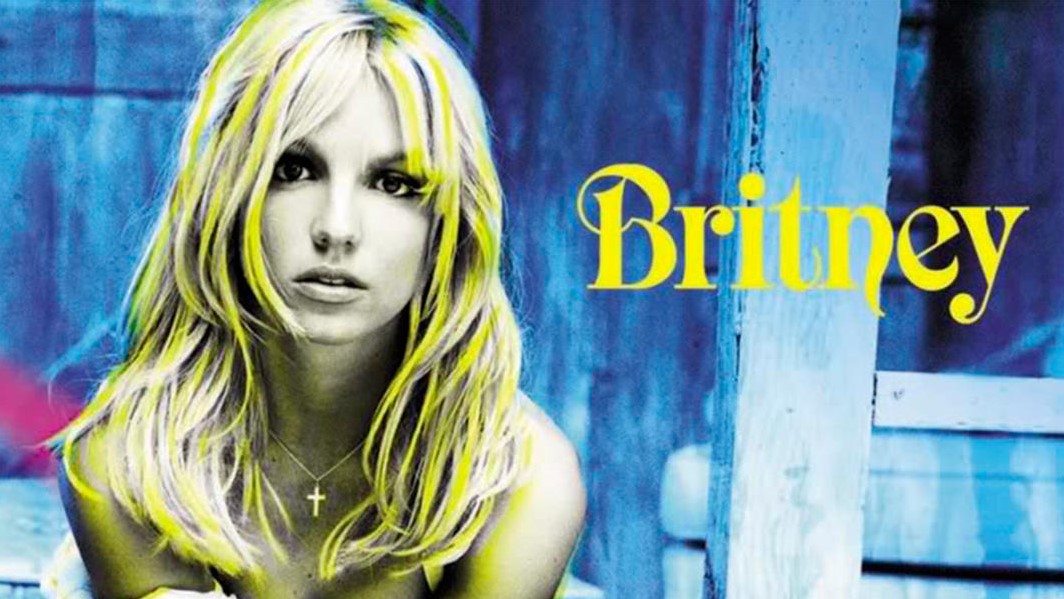
    Album artwork of Spears’ third studio album, Britney

    It was 1998 when a 16-year-old Britney Spears hit our TV screens with the music video for her debut single Hit Me Baby One More Time – a song that would propel her to superstardom.

    Twenty-three years later, society’s fascination with the pop star’s life is still going strong. 

    With six number one albums, 10 world tours, highly publicised mental health struggles, and now the #FreeBritney movement that focuses on her unusual conservatorship case, Spears’ name has never left the media – and tabloid culture has eaten up her every move. These are all things Framing Britney Spears explores as it documents the rise and fall of the global sensation.  

    Much of the documentary focuses on the media’s treatment of Spears, and how the blatant sexism and misogyny directed towards the singer, along with the lack of respect for her privacy, acted as a catalyst to cause the deterioration of her mental health and subsequent loss of control over her own life. 

    Throughout the documentary, we are presented with archive interview footage where media figures frequently ask inappropriate questions or make remarks centred around the singer’s sexuality. Spears is constantly asked about her clothing, breast implants, relationships, and her virginity – but rarely about her actual music. 

    This is something Spears has had to endure throughout the entirety of her career, and something she highlighted as a double-standard from the get-go. 

    The documentary focuses on Spears, but it’s also a look at the treatment of young women in the industry as a whole. Spears was not alone in her constant experience of casual misogyny. 

    “It’s hard enough being a woman in a male dominated industry”

    Soulé

    Many people have taken to social media to highlight examples of these misogynistic behaviours that took place right before our eyes.

    For example, the following clip from The Ellen Show, where singer Taylor Swift is relentlessly probed about the number of romantic partners she has had and is so humiliated that she is reduced to tears. 

    Swift is no stranger to the criticism surrounding her sexual life, and has often remarked on how her male counterparts do not go through the same levels of scrutiny.

    As more and more examples popped up online, I wondered to what extent this type of  casual misogyny exists here, in the Irish entertainment industry. The experiences of massive public figures like Spears and Swift are magnified, but similar occurrences are all too relatable for young women in the industry worldwide. 

    “As far as I’m concerned [sexism and misogyny] has been and still is a major issue, not only here in Ireland but all over the world”

    Katerina Chrysopoulou

    In October last year, Dublin drummer Emmanual ‘Smiley’ Osungboun made a number of sexist comments on a now deleted podcast referring to artist Soulé by name and implying women’s musical skills or abilities are influenced by their menstrual cycle. His comments were not surprisingly met with much outrage and disappointment. 

    “It’s hard enough being a woman in a male dominated industry – it’s another thing having fought and succeeded in obtaining a seat at the table to have our skills undermined based on our ‘periods’,” Soulé wrote on twitter. 

    This is just one example of the exhausting misogynistic behaviours female artists must endure.

    “As far as I’m concerned [sexism and misogyny] has been and still is a major issue, not only here in Ireland but all over the world. I’m from Greece and before I moved to Dublin I was an active musician there and can honestly say I have experienced similar behaviours in both countries.” Says Katerina Chrysopoulou, a Greek musician and performer based in Dublin.

    Katerina Chrysopoulou playing in Whelans. Photo courtesy of Katerina Chrysopoulou. Instagram page @_katerinachrys

    Chrysopoulou adds that she wants to be clear about one thing – the problem of sexism is not a men vs women problem, as is commonly thought. Although 99% of her experience with sexism has come from men, she has also been subjected to sexism by women.

    Katerina Chrysopoulou in Dun Laoghaire pier. Photo courtesy of Katerina Chrysopoulou. Instagram page @_katerinachrys

    “One example, which I’ve experienced myself, is the way men – and sometimes women – treat females who are in a position of power. Female band leaders, conductors, music teachers, and many more, have such a hard time doing their job because they are not taken seriously only because they are women. And when they finally try to make people take them seriously, they will be called bossy, crazy, hysterical, and asked if they are on their period,” she says.

    The unfortunate truth is that sexism and misogyny are extremely deep-rooted in our society and double standards remain prevalent. But Chrysopoulou believes there are many things one can do in order to better cope with these issues in the industry – or any workplace for that matter.

    “Surrounding yourself with people who love and support you is a big one, as they will create a support ‘system’, if you like, that will protect and uplift you at all times.

    “Facing sexism is not an easy thing and the more confident we are in ourselves and our skills, the easier it will be to stand up for ourselves, face those issues and even attempt to stop them from happening to us once and for all.”

  • Spoiled for Choice

    Spoiled for Choice

    Sarah Harford takes a listen to the nominees for this year’s Choice Music Prize, and discovers that there’s much more to Ireland’s music scene than what we’re hearing on the radio.

    Like our very own version of the prestigious Mercury award, the Choice Music Prize has been recognising the best in Irish talent since it was established in 2005. Previous winners have included Jape, Two Door Cinema Club, and Villagers.


    Choice Music Prize – Album of the Year 2016
    • All Tvvins – IIVV
    • Bantum – Move
    • Wallis Bird – Home
    • The Divine Comedy – Foreverland
    • Lisa Hannigan – At Swim
    • Katie Kim – Salt
    • James Vincent McMorrow – We Move
    • Overhead The Albatross – Learning to Growl
    • Rusangano Family – Let The Dead Bury The Dead
    • We Cut Corners – The Cadences Of Others


    This year sees a fantastic, diverse selection of artists nominated which truly represent the wide range of music emerging from the country right now. From the instrumental atmospheric rock of Overhead The Albatross, to Limerick hip-hop group Rusangano Family, and everything in between – this list definitely has the zeitgeist covered.

    While some familiar names appear here, such as The Divine Comedy and Lisa Hannigan, many of these artists are perhaps less well known but have been gaining momentum on the Irish live music scene in the last few years.


    All of these acts, with the exception of James Vincent McMorrow who is on tour in Australia, will be performing at the award ceremony on Thursday 9 March at Vicar Street. Choice co-founder David Reid describes the night not just as an award show, but a live music event, highlighting the best new developments in Ireland.

    “The Choice Music Prize is an attempt to put a spotlight on Irish music for two and half months,” Reid told The Irish Times. “There is one winner but it is about ten Irish acts.”

    It seems clear that the Choice prize aims to do more than just put on a good show. It creates a dialogue about contemporary Irish music, and a real buzz around the acts involved. Many of these musicians and groups have been appearing more in newspapers, magazines, and on the airwaves since the shortlist was announced back in January.


    The winner takes it all

    While the awards may be beneficial to the industry and to those nominated, there can only be one winner who will take home the €10,000 prize money.

    The Choice Music Prize differs from other ceremonies in that it has a history of choosing unexpected winners. The competition is generally judged on music alone rather than airplay figures or record sales. This means that there have been many surprises over the years, with chart-topping figures such as Bell X1, The Script, and Hozier losing to less-established acts.

    The judging panel is typically composed of some of the most authoritative names in music criticism in Ireland, from print, radio, and online media. This year’s judges include RTÉ 2fm’s Dan Hegarty, Colm O’Regan from Hot Press, and Paddy McKenna of Joe.ie.

    So who will they choose? It’s impossible to predict, but the short list is packed full of great contenders.

    Lisa Hannigan and James Vincent McMorrow have both had a great year, creatively and commercially. At Swim and We Move are both fantastically cohesive sonic departures for these artists, and are the only two albums nominated that reached number one in the Irish charts in 2016. Both musicians have been nominated for the prize before, but neither have been successful.


    But the others cannot be discounted or underestimated. Bantum, Overhead The Albatross, and Rusangano Family are all nominated for interesting and diverse self-released albums, brimming with fresh ideas and musical fusion.

    Innovative singer-songwriters Wallis Bird and Katie Kim are also potential contenders, along with alt-rock groups All Tvvins and We Cut Corners.


    The only act on the list who has won previously is The Divine Comedy who scooped up the prize back in 2006. Now the band from Northern Ireland are nominated for their eleventh album.


    Overall there’s a rich selection of textures and ideas across these ten albums. The high calibre of talent is shown by the fact that many big names did not make it onto the short list, such as Bell X1, Lisa O’Neill, and previous winners The Gloaming.


    Popular demand

    While the main Choice Music Prize may be an unpredictable affair, the Song of the Year category is based on a public vote. The 2016 shortlist has many familiar names, but still provides a great mix of both new and established acts.


    Song of the Year 2016
    • The Coronas – ‘What a Love’
    • Hare Squead – ‘If I Ask’
    • Heroes in Hiding – ‘Hospital’
    • Niall Horan – ‘This Town’
    • James Vincent McMorrow – ‘Rising Water’
    • Picture This – ‘Take My Hand’
    • Raglans – ‘Who Knows’
    • Saint Sister – ‘Tin Man’
    • Soulé – ‘Love No More’
    • Walking on Cars – ‘Ship Goes Down’


    The Song of the Year list leans more to the mainstream in comparison to the principal Choice award, with tracks from Walking on Cars, The Coronas, and the mediocre effort from a post-One Direction Niall Horan. There are still some inspired picks thrown into the mix, however, such as the rising folk-duo Saint Sister, and the electronic soul beats of Soulé.

    With one award chosen by the critics, and another by the public, will there be a stark difference between the two winners? Is there a dichotomy between what is good and what is popular?

    Personally, I feel that this is an engaging aspect of the competition, which highlights what is both important and relevant in contemporary music in this country.


    On the radio

    This year the Choice Music Prize is being sponsored by RTÉ 2fm. On 1 February the station had an ‘All Irish Music All Day’ event to celebrate the announcement of the award nominations. Since then, there has also been increased airplay for these Irish acts that generally don’t get a look in among the big UK and US artists that dominate the popular airwaves.

    However, is this enough? Data from Radiomonitor, published in The Irish Times, reveals that less than 20 percent of the music played on our radio stations in 2016 was Irish.

    Interestingly, last year’s Choice Music award winner, Soak, was played only nine times on 2fm in the nine months after she scooped up the trophy.

    Other countries such as France and Canada have national quotas in place to ensure that indigenous music is being played and heard. Last December, Labour TD Willie Penrose proposed a similar bill to introduce a 40 percent quota for radio stations in Ireland.

    Such concerns are regularly raised to the Dáil, but it doesn’t seem likely that legislation will be passed on this matter any time soon. For a change to occur there needs to be more of an interest and a demand from the general public.

    Listening to the nominees for Choice Music Prize 2016, it seems clear that we should be paying more attention to the wealth of music coming from this small island. Don’t believe me? Tune in this Thursday night.


    Listen to the nominees here


    sarah-harford-twitter-handle

    Featured image: James Vincent McMorrow by arianta via Flickr
  • Are females exploited by the music industry?

    Are females exploited by the music industry?

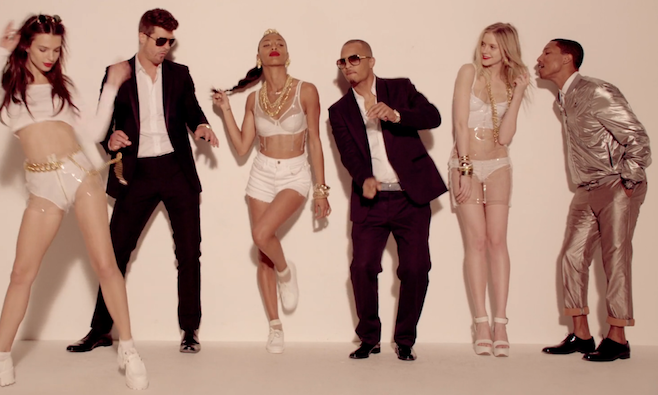
    Robin Thicke and Miley Cyrus performing at the 2013 VMA's.

    Robin Thicke and Miley Cyrus performing at the 2013 VMA’s.

    It is a well-known fact that the music industry’s sole purpose is to generate one thing and one thing only, and it is not music.

    Music is merely the by-product of the industry’s ravaging thirst to generate money. An industry whereby female sexuality – and sexuality in general – is one of the tools that the industry uses to increase potential profits. However, to say that females are exploited by the industry is a step to far.

    Exploitation is the unruly use of a person or a group of people in a cruel and unjust manner

    The vast majority of females who are “exploited” by the music industry receive (quite handsome remunerations for their services.

    Just like in advertising, the music industry employs the idea that “sex sells”. Miley Cyrus is not the first, nor will she be the last female artist to use her sexuality, her figure or her desirability in an attempt to increase her profile within celebrity culture.

    Cyrus is merely just the newest recruit to enlist into the sexuality culture to which the music industry has adopted – not created.

    Men find women desirable, women find other women desirable. These human elements are used to help generate profit in whatever manner possible.

    In 1981, Duran Duran hired female actresses to wrestle one another in mud, topless, in the video for ‘Girls on Film’.

    Madonna has been infamous for her use of sexuality throughout her music career – be it in her music videos or during her stage performances.

    The use of sexuality is not confined to just female artists.

    The gesture of crotch-grabbing is synonymous which Michael Jackson, while R’n’B artist D’Angelo starred completely naked, and oiled, in his video “Untitled (How Does It Feel)”.

    Females are not portrayed favourably in some sections of the music industry – especially in hip-hop or rap –  there is a strong case to claim that there is a high levels of misogyny in the aforementioned genres of music, but the females are not exploited. They are paid. If they are comfortable with flaunting what god gave them for the world to see in music videos, or gyrate in a sexual manner, that is their prerogative as professional female adults earning a living.