Tag: National Transport Authority

  • Taxi complaints on the rise in Ireland

    Taxi complaints on the rise in Ireland

    Figures released by the National Transport Authority have revealed that the number of complaints lodged against taxi services in Ireland is rising. Nathan Davies explores the statistics behind the rising complaints.


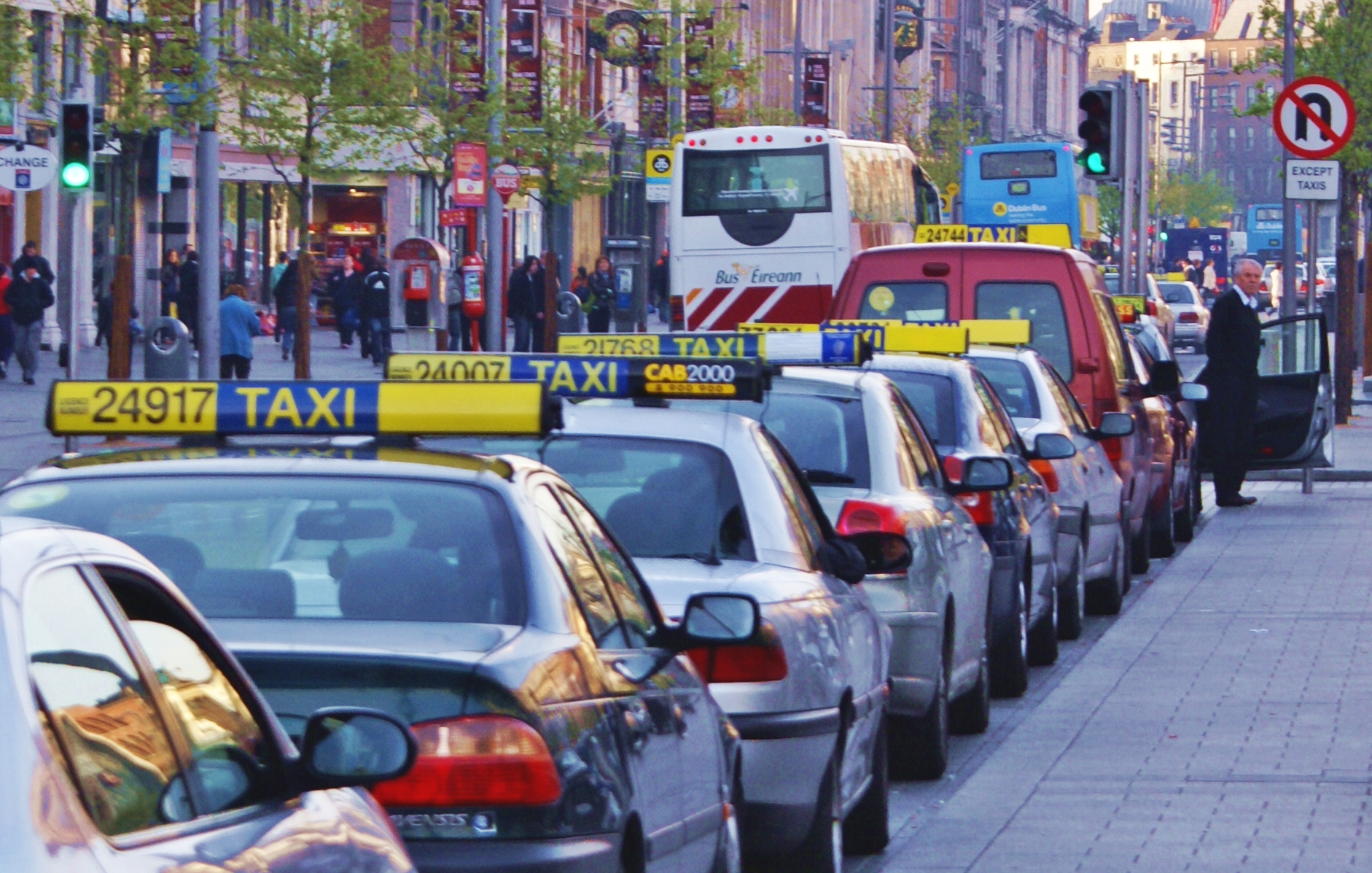
    Photo taken by Jaqian, sourced from Wikimedia Commons

    The figures cover complaints lodged against all Small Public Service Vehicle (SPSV) licensed drivers. This includes all taxi, hackney, limousine, and dispatch operator services in the country.

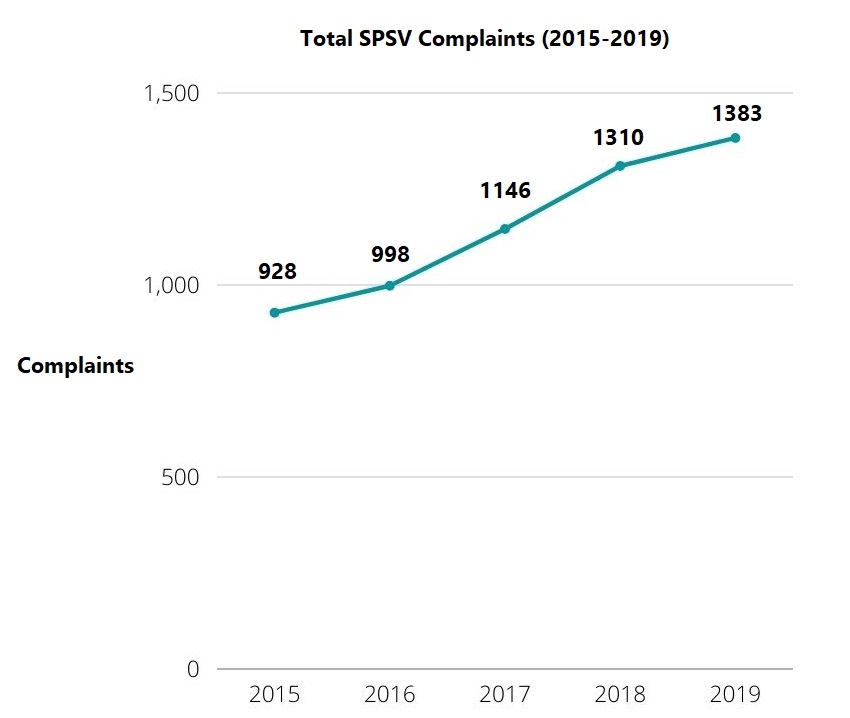
    The statistics from the National Transport Authority (NTA) show that 1,383 complaints were filed with the NTA in the year of 2019. This number is larger than the previous year which stood at 1,310.

    In fact, every year on record that has been published by the NTA has seen a higher number of complaints than the year before it.

    Complaints in the year of 2015 stood at just 928, meaning that there has been a 50% rise in official complaints in the past five years.

    Figures from 2020 have not been finalised yet, however early numbers suggest that the trend is continuing, with complaints filed in January and February of 2020 being higher than the respective months in 2019.
    The figures released by the NTA come as part of the “complaints procedure” introduced with the Taxi Regulation Act 2013. The legislation requires that the NTA receives and lodges any SPSV-related complaints under the following categories:

    a)      Condition, roadworthiness, and cleanliness,

    b)     Conduct, behaviour, and identification of a driver,

    c)      Overcharging or other matters related to fares charged by the driver,

    d)     Matters relating to hiring and booking,

    e)     Identification and the general appearance of the vehicle.

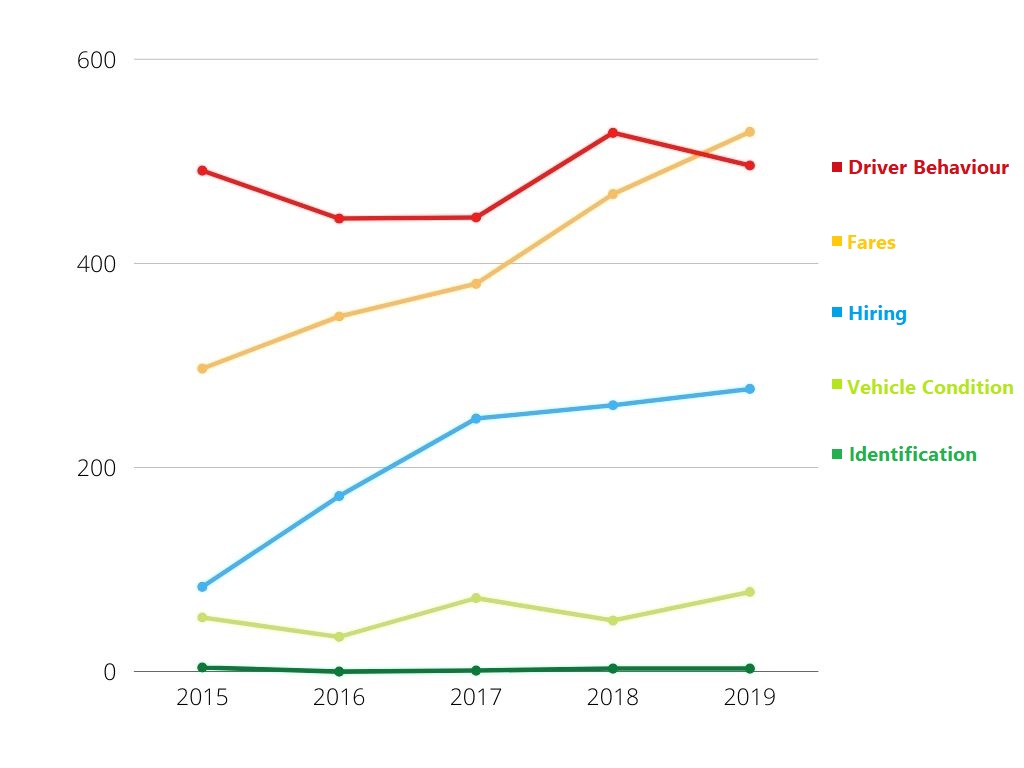
    The total number of complaints are divided into these five categories and reveal that fare matters and driver behaviour are the most common reason a complaint is made. Here is a breakdown of the specific complaints over the past five years:
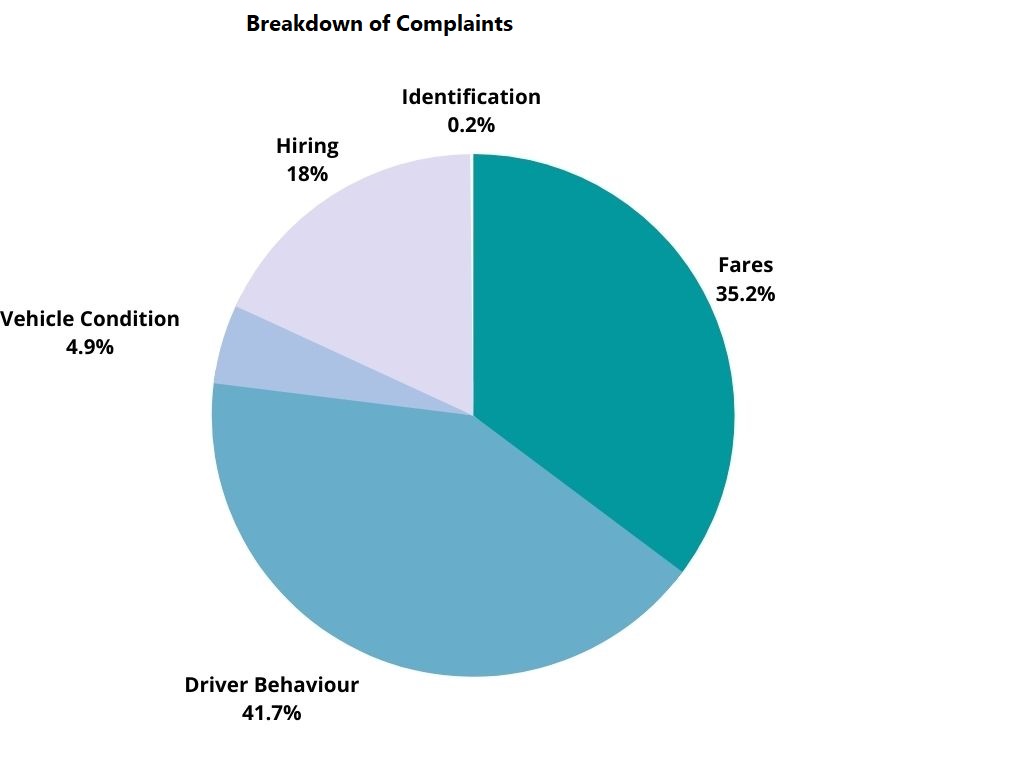
    More than three quarters of all complaints lodged relate to issues with either fares or driver behaviour. While driver behaviour has been the most reported issue, the number of complaints have remained stable over the five year period. In contrast, the number of fare and hiring complaints have risen dramatically, with hiring complaints more than tripling in five years.
    When questioned by TheCity.ie on the statistics, NTA representative Dermot O’Gara suggested that the rise in numbers was due to an improved complaint-lodging system introduced in 2014:

     “Improved contact forms have made it easier for consumers to submit compliments or complaints about taxi services nationwide” he said.

    “This, together with enhanced consumer education, have had a positive impact leading to an increase in both the compliments and complaints received.”

    While it is true that easier access to complaint forms would increase numbers, this does not explain the continued rise over several years. This also fails to explain why some complaints are increasing faster than others. With no figures on SPSV compliments being released it is also impossible to compare the two to see any correlation.
  • Cyclist safety uncertain as Luas Cross City prepares to launch

    Cyclist safety uncertain as Luas Cross City prepares to launch

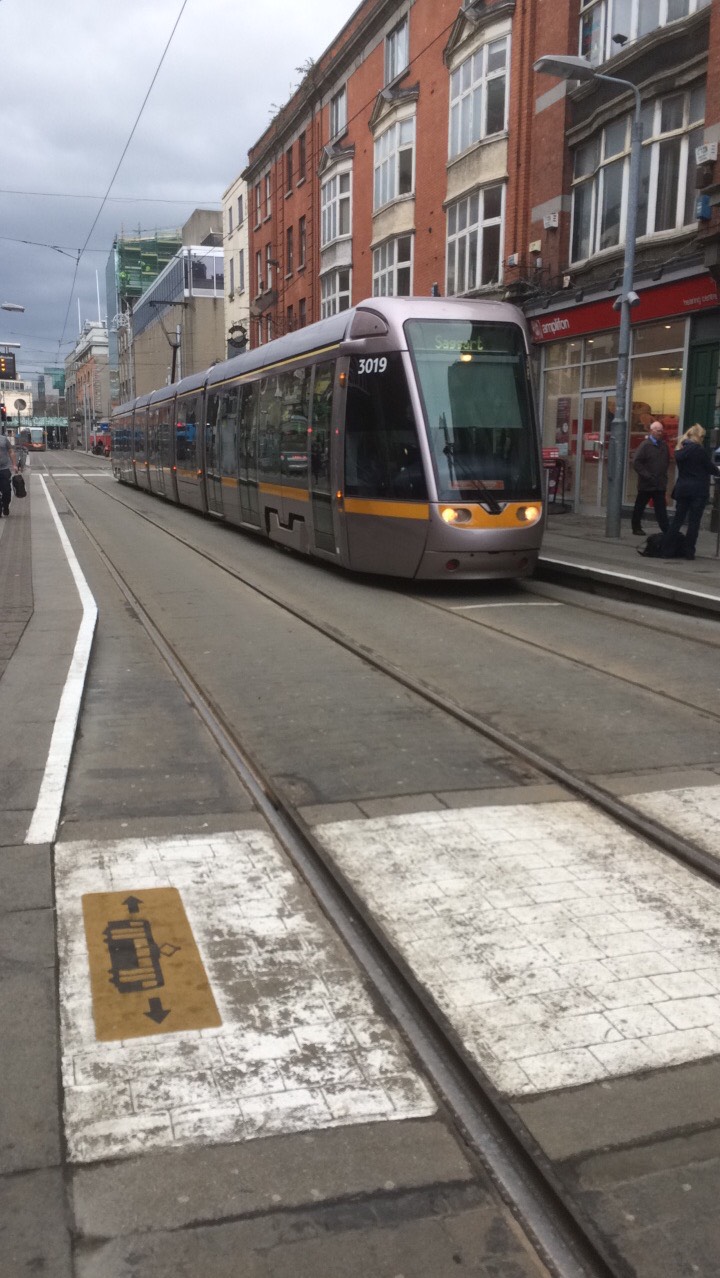
    With the Luas Cross City project almost launched, Lee Shields explores the dangers to the city’s cyclists as Luas tracks have been extended across the city.

    The new Luas Cross City line is due for it’s official start of service on Saturday at 2pm.  The service is an extension of the Green Line through the City Centre to Broombridge.

    The project was started back in June 2013 and has produced an additional 5.9km of track through countless hours of costly construction to deliver a more efficient travel for cross city commuters.

    This new line, although a welcomed change to a somewhat primitive city in public transport as compared to our European counterparts, has come with some backlash.  That being the safety of cyclists, where problems arose even during the construction of the tracks.

    Areas which have proved problematic are those which are heavily congested with traffic, with luas tracks on the road and it’s difficult to manoeuvre with cars tailgating.  The affected areas include Dawson Street, Nassau Street, Lower Grafton Street and College Street on the south side and Parnell Square, Dominick Street and Marlborough Street on the north side.

    These areas were included in a report by the National Transport Association (NTA).  The report called ‘Assessment of cycling feasibility on the Luas Cross City route’, was published in mid-October. However, Colm Ryder, the chairperson from the Dublin Cycling Campaign (DCC), stated that although the report issued a variety of warnings on safety for cyclists at these locations, “There has been a deal of confusion over this report and its recommendations.”

    Mr. Ryder informed me that over the past year DCC had been engaging with Transport Infrastructure Ireland (TII), the agency responsible for cyclists’ safety.  However, although discussions were progressing they have ceased, and he said, “no developments have taken place since early this year, which, to say the least, is very disappointing and we could even say negligent on the part of TII.”

    One safety precautioned that had been discussed was a rubber infill along the tracks that would be mostly dangerous towards cyclists.  These rubber infills deemed to be quite expensive, ranging to €800,000 per kilometre.  However, the engineering consultants, Jacobs, deemed that it would only be necessary in high risk areas.  But, the trams would end up tearing the rubber, and would need replacing regularly.

    IMG_3174
    Image: Lee Shields


    Colm Ryder stated, “Rubberised track inserts have been discussed, and initially recommended in the 2012 Jacobs Report.  But, TII state that the replacement cost of these is too prohibitive.  Dublin Cycling Campaign say that not enough investigation has been done in terms of their efficacy, but also how many locations would they be required in? We have been told that they would have to be replaced regularly, but that should not be the issue. If they have to be replaced so be it, if they improve safety.”

    I got in contact with TII and the LuasPR returned somewhat contradictory statements.  They said, “Regarding the rubber infill, it is deemed better practice to not have infill in the track areas once trams are running to schedule which has been the case now for 3 months.”

    As regards to their concern about cyclist safety, they said that a final review has been carried out on the design of traffic arrangements at busy junctions such as College Green.  They state that signage will be erected in these areas advising cyclists to dismount before entering the area and remount when it is safe to do so.  However, Colm Ryder added to this point saying, “to be clear cyclists are not banned from using any part of the on-street LUAS lines on the new route.”

    In addition to the signage, LuasPR said, “In parallel with the erection of the new signage NTA are also working with Dublin City Council to provide a two-way cycle lane through College Green (on the Bank of Ireland side) which will link College Street to Dame Street (for westbound cyclists) and link Dame Street to Westmoreland Street (for northbound cyclists). This cycle-way does not form part of the Luas Cross City project.”  Obviously new specific cycle lanes would increase safety, but how long this will take remains unclear.

    As regards to complaints put forward on this matter they said, “There have been a relatively small number of complaints during the project which have been dealt with on an individual basis by our team.”  Colm Ryder contradicts this claim however saying that, “In relation to cyclists’ complaints, we in Dublin Cycling Campaign have received numerous stories and reports of cycling accidents/incidents over the past months, some of them quite serious.”

    “We recommend that cyclists proceed with the greatest caution when riding parallel to the tracks, and ideally keep their speed at a safe level, to ensure that they can make any required manoeuvres easily and safely.  But in the case of the Dublin track layout, an awful lot is being asked of the cyclist, in terms of trying to stay safe!”