
Tag: Niamh Alexander

  • Away with the dairy: Going vegan for Green Week

    Away with the dairy: Going vegan for Green Week

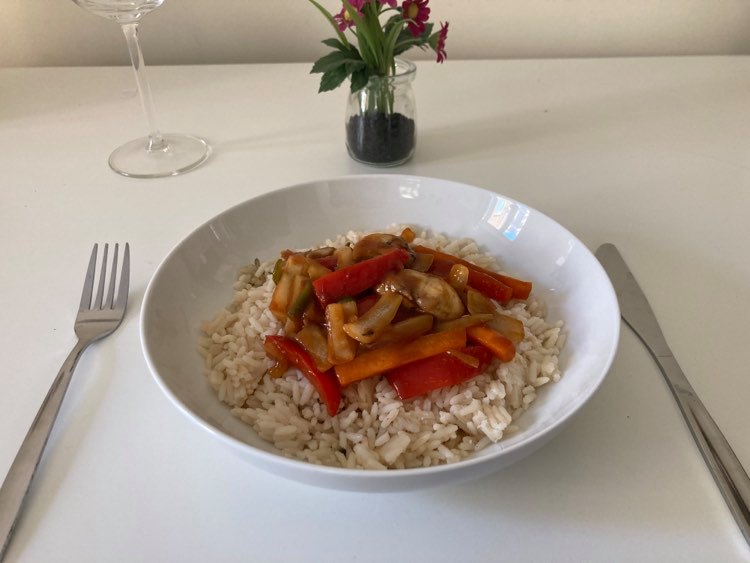
    This vegan stir-fry is so full of flavour, you won’t notice the lack of meat. Photo by Niamh Alexander

    It has become widely accepted that when it comes to reducing our carbon footprint, going vegan is one of the most impactful things we as individuals can do.

    It is a little bit surprising then that just under 1% of the world’s population is vegan.

    Numerous studies have proven that the food production industry is one of the largest contributors to climate change, with livestock production alone contributing around 14.5% of total greenhouse gas emissions (higher even than the transport sector). While some meat industries are more sustainable than others, even the most eco-friendly meat products are more harmful than the ‘worst’ vegetables.

    Further studies have shown that a global reduction in our meat and dairy intake by 2050 would cause a reduction in emissions of over 72%.

    You do not realise how many food products contain dairy until you’re not allowed to eat it

    Faced with facts like these, it’s hard to argue against adopting a vegan diet, especially when our planet is steadily approaching the point of no return. 

    With this in mind, I decided to try and switch to veganism for a (brief) period of time to see how difficult it can be. (Answer: very.)

    I knew going into this challenge that it wouldn’t be cutting out meat that would be the most difficult part, but the lack of dairy.

    I definitely found that it was dairy products like milk and cheese that I missed the most. You do not realise how many food products contain dairy until you’re not allowed to eat it.

    My first challenge was finding something to eat for breakfast that wasn’t just a quick and easy bowl of cereal.

    A quick google search told me that most cereals are not actually vegan because of the added vitamin D that apparently comes from sheep (who knew?), which ruled out my foolproof plan of simply substituting my usual milk with a soy or almond alternative.

    I found that smoothies made with almond milk and dairy-free yoghurt were a good way to start the day, and tasted amazing. I used frozen fruit, which is a good way to reduce food waste by ensuring the fruit doesn’t go bad before you get through it, and it’s cost effective. 

    Lunch was also a bit tricky, as I struggled to come up with something that wasn’t just a sandwich or wrap with a meat filling and copious amounts of cheese. 

    I may have cheated a little bit here by making a large pot of butternut squash soup with enough to last me several days. Served with a slice of soda bread, this is a really simple and filling lunch option. 

    I did switch things up at the end of the challenge and tried out this sweet potato salad recipe, which tasted amazing and was so easy to make.

    Butternut squash soup, photo by Niamh Alexander

    I opted for a vegan burrito instead – and honestly, it was hard to tell the difference

    Surprisingly, dinner was probably the easiest meal to find vegan alternatives for.

    One of my favourites was a vegetable stir-fry with cashew nuts added in as a protein-rich substitute for meat. For the sauce I used this maple syrup and ginger recipe – which tasted just as good as it sounds.

    I definitely found my willpower being tested when my housemate suggested a takeaway towards the end of the week, and I wanted nothing more than a cheesey pizza.  Thankfully, I resisted and opted for a vegan burrito instead – and honestly, it was hard to tell the difference. 

    I am a self-confessed picky eater, so going into this I was unsure if I would be able to stick it out. I found I was putting a lot more thought into what I was eating, which had the knock-on effect of making me eat a lot healthier. 

    I do have a lot of admiration for people who stick to a vegan diet full time – it takes a lot of effort to make sure everything you are eating is definitely vegan, but that is probably something that gets easier over time. 

    I don’t think I had long enough to notice most of the benefits I’ve read about, but I did feel more energised throughout the day – probably because I was making healthier choices (and chocolate had been ruled out).

    While I probably won’t be switching to a full-time vegan diet any time soon, I will definitely be putting more effort into reducing my meat intake and doing what I can to source sustainable products.
  • Same ocean, different boat: The rural-urban lockdown divide

    Same ocean, different boat: The rural-urban lockdown divide

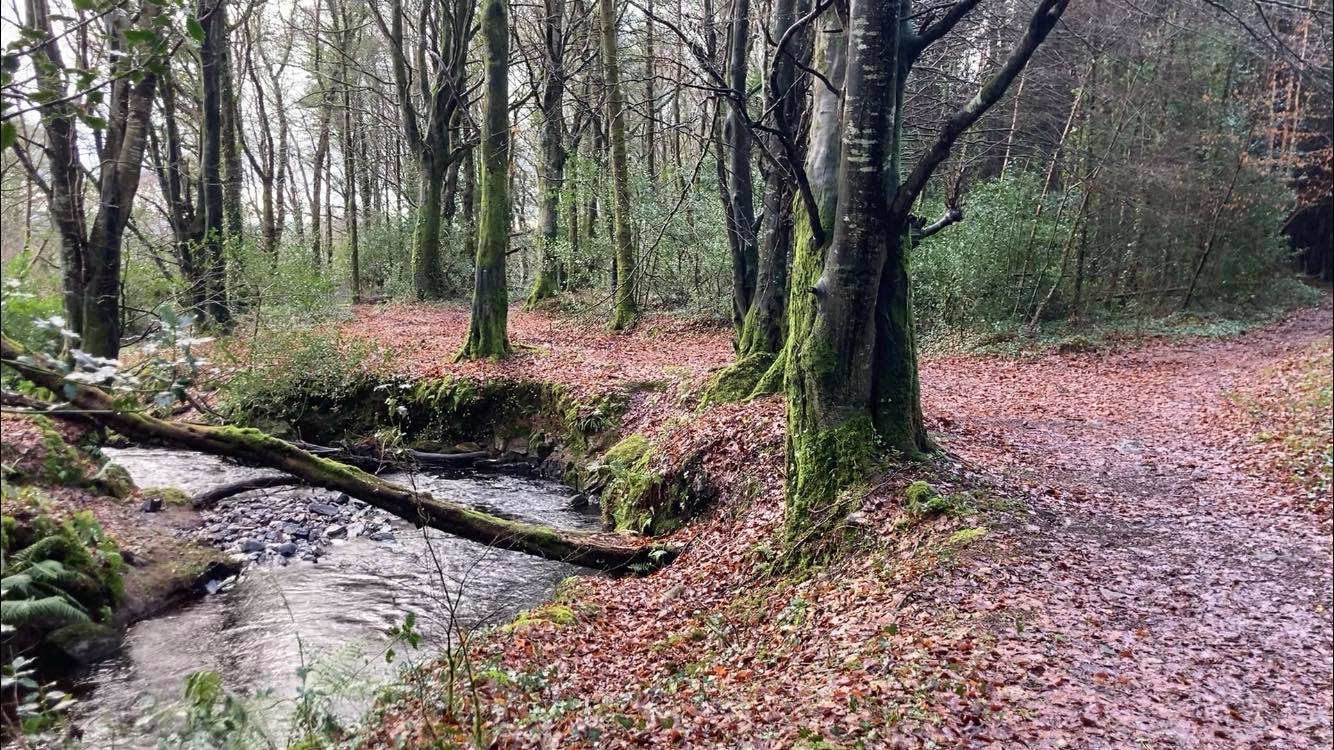
    Monellan Woods in County Donegal. Photo by Niamh Alexander

    “We’re all in the same boat.”

    We have all heard this saying in some shape or form since lockdown began. It has been repeated over and over as a way of reassuring the masses that we are all in this together – that we need to present a united front to beat the virus.

    Which is true – to an extent.

    It might be more accurate to say we are all in the same ocean, but different boats.

    Every one of us will have a different experience of lockdown to tell. Do you live with your family or housemates or even alone? Maybe you have not left the house since last March or maybe you are a key worker and haven’t actually stayed at home at all. Do you live on the top floor of an apartment building or in a spacious house with a garden?

    The River Liffey in Dublin city. Photo by Stephen Hylands via Pexels.com

    This is especially true in the case of quarantining in the countryside versus in a city. I have experienced both country and city living, and I can attest to the vastly different experiences. 

    “I spent the first lockdown at home, and I live in quite a rural area,” says Arlene Bonner, a student from Donegal who has since moved to Dublin.

    “We were lucky that the weather was really good, so I actually spent a lot of it outside, you know going for walks or just sitting in the garden. I think that maybe lessened the feeling of anxiousness or claustrophobia that a lot of other people talked about. There’s a woods near my house so I spent a lot of time there which was nice,” she says. 

    For Dublin resident Jennifer Carleton, the experience was very different:

    “I would definitely love to be quarantining in the countryside instead of the city. I live in a housing estate so there isn’t a lot of green spaces that I can really enjoy. I’m beside a really busy road so I don’t have a lot of options. I kind of just have the one route if I want to go for a walk or anything. I spend most of my time indoors,” she tells me.

    Georgian houses in Dublin. Photo by Skitterphoto via Pexels.com

    For a lot of people, this is the main draw for living in more rural areas, especially during lockdown. Having the option to explore more open spaces and scenic countryside can make for a more pleasant lockdown experience.

    “I think lockdown is going to be pretty lonely no matter where you are”

    Jennifer Carleton

    However, countryside living can also have its drawbacks.

    “I do think being in lockdown in Donegal was a lot more isolating than Dublin. I didn’t really see anyone except my family for the full six weeks, but in Dublin I live in an apartment complex, so I have lots of neighbours that I see most days. There’s always people around,” says Bonner.

    When asked if she found lockdown in a city to be isolating, Carleton said that lockdown is difficult regardless of where you spend it:

    “I think lockdown is going to be pretty lonely no matter where you are, but yeah I do think being in a city is easier in that sense. I know most of my neighbours so we’re able to meet up outside as long as we stay far apart.”

    Most people assume that the isolation of the countryside would be relatively safer than a crowded city. However, this has not rung true for Ireland’s Covid-19 statistics. Rural areas have reported some of the highest number of cases per 100,000 of the population since the pandemic began.

    For a while, Donegal had the highest 14-day incidence rate in the country. Other rural areas have been particularly high – Co Offaly currently has a 14-day incidence rate of 369.4, higher even than Dublin.

    In contrast, some urban areas such as Blackrock or Dun Laoghaire in Dublin have experienced a considerably low number of cases per 100,000.

    It is difficult to know exactly why cases in some rural areas have been so high, and health officials have yet to pinpoint an exact reason. 

    “I do think it’s a case of letting your guard down. I think people expect rural areas to be safer and they might not be as good at sticking to some of the restrictions. It’s a lot harder to forget about (the pandemic) in a busy city,” says Bonner.

    Whatever the reason, it is important to remember that not everyone’s experience of the lockdown has been equal.

    In particular, minority groups have been disproportionately affected by Covid, with “Black, Black Irish, Asian, Asian Irish and Traveller groups [being] more likely to contract Covid-19 than those who are white Irish”, which can be attributed to occupation and housing conditions, according to a recent report by The National and Economic Social Council (NESC).

    The report shows that groups such as migrants, Irish Travellers, and those living in Direct Provision centres live in circumstances that leave them more susceptible to the virus.

    Issues such as poor renting conditions, house-sharing with non-family members, and overcrowding has led to significant Covid-19 outbreaks within these groups.