Tag: Palestine

  • All-day protest outside the Dáil demands movement on the Occupied Territories Bill 

    All-day protest outside the Dáil demands movement on the Occupied Territories Bill 

    Protesters gathering on Kildare Street in favour of the OTB. Photo credit: Kelly Smyth. 

    Dozens of protesters from across the country gathered outside Leinster House aiming to progress the passing of the Occupied Territories Bill (OTB), with many calling for services be added to the bill. 

    By Kelly Smyth 

    Demonstrators have gathered outside of the Dáil urging the Government to push forward on passing the OTB, with many branches of the pro-Palestinian movement uniting for the protest. 

    Groups from as far as Kerry joined in the demonstrations, with artistic performances, poetry and speeches being notable features of the all-day demo. The groups were accompanied by politicians, notably Senator Frances Black, throughout the day. 

    The OTB is a proposed piece of legislation that would criminalise Irish businesses trading goods with illegal settlements as per international law. The Bill aims to prevent trade with Israeli settlements in occupied Palestine, such as the West Bank and East Jerusalem.  

    A protestor from Limerick spray-painting a sign at the scene. Photo Credit: Kelly Smyth. 

    Caroline O’Keane, a member of Irish Healthcare Workers for Palestine, spoke on behalf of the group regarding their presence outside of Leinster House. 

    “We’re here today because what they’re doing there is completely against all of our ethical beliefs and everything that we work for,” said O’Keane. 

    “It’s a mystery to all of us here why the government has not enacted this bill. So we’re here to try and push this bill forward in the Dáil, get it enacted, and stop buying goods from the illegally occupied territories in Palestine.” 

    Caroline O’Keane alongside Irish Healthcare Workers for Palestine members. Photo Credit: Kelly Smyth. 

    Another protester, Eileen Yates, expressed a much more personal reason for her presence at the protest; her experience of motherhood guided her support for the OTB. 

    “I am a mam. I see kids like my own being killed. I have a friend in Gaza with four kids who have never seen a life without genocide,” said Yates. 

     Eileen Yates holding her handmade sign. Photo Credit: Kelly Smyth. 

    As part of the protest, Sinn Féin TD Donnachadh Ó Laoghaire addressed the crowd, calling for services to be added to the bill. 

    “Why shouldn’t there be consequences for who trades not only in goods, but also in services? The Irish Government has fallen behind,” he said. 

    Donnachadh Ó Laoghaire TD addressing the protesters. Photo Credit: Kelly Smyth. 

    Following Ó Laoghraire’s address, Senator Frances Black attended the demonstration, meeting many of the organisers of the event. 

    Speaking to TheCity, Black expressed disappointment with the Government’s delay in passing the bill. 

    “We’ve seen absolutely no signs of this bill getting moved at all. The people have not forgotten those promises, that’s why they’re here today. The activists are saying, ‘We want this bill passed’, and they want it passed as soon as possible,” she said. 

    Senator Frances Black speaking with a protestor. Photo Credit: Kelly Smyth. 

    Black, who first introduced the bill in 2018, believes the passing of the bill will set an example to the international community on upholding international law. 

    “There are no consequences to what Israel is doing, breaking international law on a daily basis. And the reality is that if there are no consequences to what they’re doing to the Palestinian people, if we don’t stand up for what’s right and for international law, then none of us are safe. And I think that’s really important to say. So we need to now really get this bill passed as soon as possible.” 

    The last time the OTB was discussed in the Dáil was in November, with the Government claiming the legality of implementing the Bill being a reason it is being delayed.  

    “The trade in services is considerably more complex than goods and there remains considerable legal uncertainty as to whether the inclusion of services is permissible under EU law. We know for certain that the inclusion of goods is permissible under EU law. 

    We need legal clarity on the point on services. We must take into account practical issues with regard to implementation should services be included in the scope of the Bill,” said Minister for State for Europe and Defence Thomas Byrne. 

    It remains to be seen whether the Bill will be passed in coming months or if services will be included in any progress despite pressures from protesters. 

  • Herzog Park renaming shelved as campaigners reject claims of antisemitism  

    Herzog Park renaming shelved as campaigners reject claims of antisemitism  

    By Seán Kavanagh  

    A vote to rename Herzog Park in Rathgar was withdrawn from the Dublin City Council’s agenda on Monday Dec. 1 as it was deemed not “legally sound”.  

    Chaim Herzog was an Irish-born Israeli soldier, lawyer and politician who served as President of Israel from 1983 until 1993, and the Dublin park was renamed in his honour in 1995.   

    The campaign to remove his name from the park was launched in early 2024 by Irish Sport for Palestine as they believed that “the legacies of Chaim Herzog and his family should not be associated with a public park in Dublin.” 

    “After consultation with Dublin City Councillors, we submitted a motion to the Council to ‘Remove the name Herzog Park, located in Rathgar, Dublin 6 and rename the park to Gaza Park’,” Rebecca O’Keeffe, a spokesperson for Irish Sport for Palestine, said. 

    The proposed renaming of the park caused great controversy amongst Jewish leaders around the world and many deemed the proposal to be “antisemitic”. 

    “The attempt to erase the name of a Jewish person from a public space is something that happened thousands of times in Nazi Germany,” Rabbi Elchanan Poupko, host of The Jewish World Podcast, said.  

    “In the broader context of the war being waged on the Jewish people today around the world, removing Herzog’s name is deeply unsettling,” Poupko added.  

    Taoiseach Michéal Martin echoed Poupko’s sentiments in a press release and urged Dublin City Council to reconsider their “divisive” proposal. 

    Irish Sport for Palestine strongly rejects the idea that the name change is antisemitic and says that many Jewish communities support their proposal, including Irish Jews for Palestine. 

    “We would like to point out the claims and accusations that have been made as part of the backlash are false and dangerous. Anti-Zionism is not antisemitism and equating the two is wrong. We reject this conflation and refute these accusations in the strongest manner,” O’Keeffe said.  

    Irish Sport for Palestine also claim that the backlash from Irish, Israeli and US governments were a “blatant and coordinated attempt to undermine due process” by interfering with the Councils vote.  

    “Renaming the park is not erasing history, rather it is refusing to honour and commemorate the violent colonial legacy of Chaim Herzog and his family. We believe our motion is a chance to promote a much more inclusive, representative and accurate view of history,” O’Keeffe said.  

    Members of Dublin City Council’s Commemorations and Naming Committee agreed to the removal of Herzog’s name in July and Dublin City Councillors were set to vote to confirm or reject the name removal on Monday. 

    The process of approving name changes in public parks was amended following a legislation change in 2019, and Councillors must now agree to all name changes via a ballot. 

    According to Minister for Housing and Local Government, James Browne, the regulations that govern this ballot have not yet been implemented and thus Dublin City Council currently does not hold the authority to authorise name changes 

    Despite this setback, Irish Sport for Palestine said that they will continue to fight to have Herzog Park renamed.  

    “We will absolutely continue our campaign to Rename Herzog Park. We maintain that a park in Dublin being named after a man who engaged in a campaign of colonisation as a part of the creation of the Zionist state is wholly wrong and inappropriate,” O’Keeffe said.  

  • The Occupied Territories Bill Protest in Pictures

    The Occupied Territories Bill Protest in Pictures

    On the 19th of November 2025, a protest took place outside the Dáil calling for the Occupied Territories Bill to be implemented.  

    The Bill is a proposed law which would ban trade with countries who are illegally occupying territory, most notably Israel’s current occupation of Palestine.  

    This would lead to Ireland no longer engaging in the trading of goods with the Occupied Palestinian Territories.  

    There was a meeting that morning in which People Before Profit-Solidarity tabled a motion calling for the Bill to be passed through the Oireachtas before the end of the year, with other opposition parties also in support of the motion. 

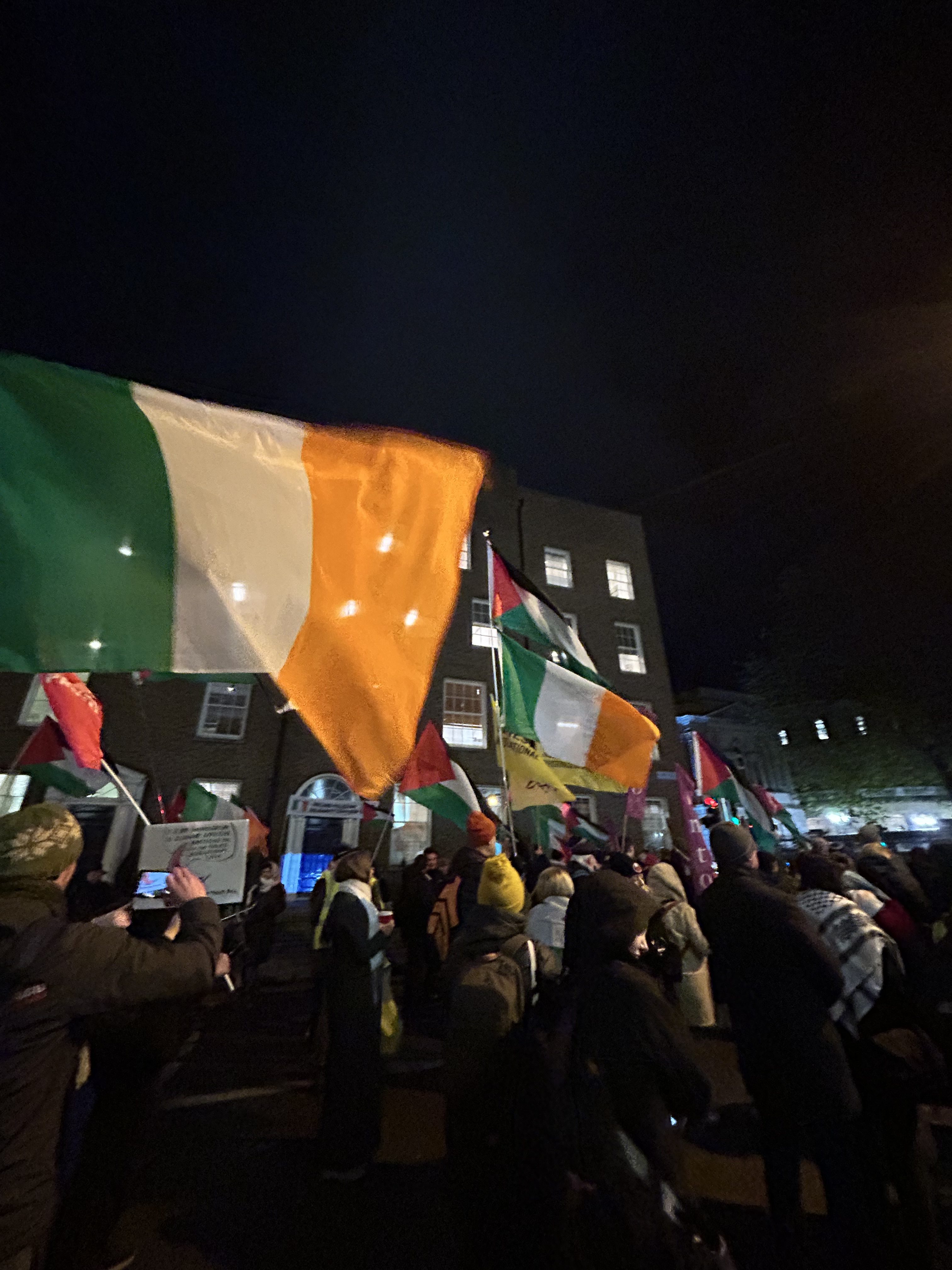
    The protest was full of Irish and Palestinian flags, and everyone was in support of the Bill being passed.  

    With loud chanting and a clear message, here is how the protest unfolded. 

    Photo 1: The calm before the storm. The ever-bright Dáil Eireann lights up the area, half an hour before the protest was set to begin. As the numbers began to build, so did the police presence, with multiple guards and a Garda car in attendance. 
    Photo 2: The protest began at 5:30pm just opposite the Dáil. Crowds began to increase at around 5:15pm, with banners, such as the “Ireland – Palestine Solidarity” banner, being raised above the gathering crowd.
    Photo 3: A man pictured with the Palestinian flag draped around him, anticipating the beginning of the protest. 
    Photo 4: The man making all the noise. Constantly beating his Palestinian drum to show his support and make his voice heard, while inspiring others around him to make as much noise as him. 
    Photo 5: This man had a clear message at the protest: “Pass The Damn Bill”. A message to the Irish Government to get the Bill passed as soon as possible, with bombs seen within some of the letters on the sign, highlighting the violence in the Middle East at the moment.  
    Photo 6: As the flags began to be raised, so did the signs. This woman pictured holds hers up proudly, demanding the Bill be passed in its entirety. The speech bubble on the sign is being said by a watermelon, a symbol of Palestinian resistance and solidarity. 
    Photo 7: This photo shows how large the crowd grew during the protest. At this point, everybody had their flags and banners but most importantly, their voices. With never-ending chanting, the crowd started to cover every inch of the road just across from the Dáil. 
    Photo 8: With both Irish and Palestinian flags now on full display, hand in hand, a message is projected on one of the buildings, calling for the end of arms trade with Israel. 

  • Catastrophe: Nakba II – Fintan Drury with Dublin Book Festival 

    Catastrophe: Nakba II – Fintan Drury with Dublin Book Festival 

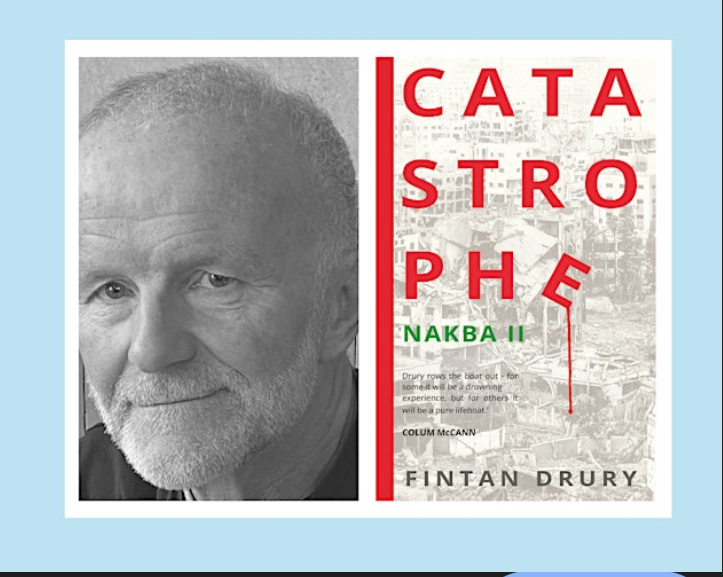
    Author Fintan Drury with his latest work – Photo courtesy of Dublin Book Festival 

    Catastrophe: Nakba II brings the decades-long plight of the Palestinian people into focus at the Dublin Book Festival. 

    The Dublin Book Festival is in partnership with Green Foundation Ireland and TU Dublin. 

    Attending gives students and the general public a chance to hear authors in discussion, ask questions, and engage with current debates. 

    DBF 2025 runs from 5 – 9 November across venues in Dublin, featuring over 100 events including: author talks, panel discussions, workshops, walking tours, and launches. 

    On Wednesday 5 November, hosted at TU Dublin, Grangegorman, Irish journalist-turned-author Fintan Drury will present his latest work. 

    He explains his inspiration for the book.,  

    “My main inspiration was my mother who died 20 years ago. She was a devout Catholic and proud Irishwoman who believed both the Vatican and the Irish government had not done nearly enough for the Jewish people during the Holocaust,” said Drury.   

    “She used to say, ‘at least nothing like that could happen again’. It has. I can research, write and talk so as I’m an old fella with grandchildren I thought I should look at what was happening to the Palestinians.” 

    Drury was a news and current affairs journalist with RTE in the 1980s. He was a correspondent in Northern Ireland and did overseas reporting before presenting Morning Ireland for over two years. 

    He left RTE at 30 and worked in business until 2015, establishing his own communications consultancy and Ireland’s first full-service sports management business, with both companies continuing to trade today.  

    He has a longstanding interest in human rights and migration – in his twenties he took a six-month sabbatical from RTE to work with GOAL in Sudan.  

    When he returned to journalism and to writing in 2016 it was after spending time working in a refugee camp in Greece at the height of the Syrian war. He wrote a 15-part series on an individual Syrian refugee’s story in the Irish Times. 

     Since then, he’s been a regular opinion and feature writer on migration and gambling addiction in the media in Ireland and sometimes in the UK. 

    Photo courtesy of Fintan Drury 

    His research for the book consisted of a “huge amount of reading”, followed by trips to Lebanon, Jordan and the West Bank as well as carrying out interviews in places in Europe, UK and Ireland too. 

    Drury explained the publishing process., “It wasn’t difficult as I was known for opinion writing and I’d published another book (about my time in business) so I knew my way around, I’ve a great agent in Louise Dobbin of Repforce and Merrion Press is an outstanding publishing company which is known for its independence and courage.” 

    What he would like readers to take away from the book is, “First, better understand this genocide has nothing to do with October 7th, 2023. Two, Israel is not a democracy; it’s an apartheid, settler colonial state that wants to destroy any prospect of a state of Palestine.”  

    Reviewers have described the book as “Urgent and thought- provoking” and “Well researched, organised and deeply affective”. 

    Catastrophe: Nakba II has been received extremely well by the Irish audience and greater public and has been shortlisted for non-fiction book of the year which Drury considers to be an honour. 

    In today’s media landscape, where narratives around Israel and Palestine can often be simplified or polarised, Drury’s book aims to provide a deeper historical and journalistic context. 

  • Freedom Flotilla activist feels “utterly abandoned” by Irish Government

    Freedom Flotilla activist feels “utterly abandoned” by Irish Government

    Freedom Flotilla activist Dr Veronica O’Keane told The City she felt “utterly abandoned” by the Irish Government in their response to their capture in international waters.  

    The group experienced “absolute brutality,” while in custody, according to Keane, “No opportunity was too small to be used as a weapon of humiliation,” she said. 

    O’Keane and Fionn MacAurthur were two of the 22 Irish citizens on the Freedom Flotilla mission delivering aid to Gaza when they were intercepted “120 nautical miles off Gaza strip,” MacAurthur told Tthe City. 

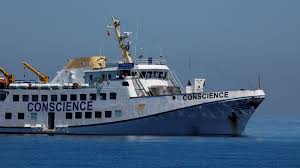
    O’Keane and MacAurthur, were travelling on the Conscience when they were intercepted by the Israeli Occupying Forces “We were a boat filled with 90 medics and journalists when a military machine descended on us,” said O’Keane. 

    “We sat there in life vests with our hands in the air while their guns’ lasers pointed at our chests,” said MacAurthur.  

    Once they reached the detention facility, they said the physical abuse began, “We had to kneel for hours with our heads down and if we looked up or to the side they came and hit us on the head,” said MacAurthur.  

    They only had access to “filthy water,” said O’Keane, and many of them refused food as you wouldn’t trust it,” said MacAurthur.  

    The activists maintain that what they went through pales in comparison to what others in the prison experienced.  

    “You could hear Palestinians being tortured from our cells,” said MacAurthur. 

    “One of my friends was a nurse, they took her to a room where there was a Palestinian who had just been tortured. He was just in his underwear and covered in blood, they had forced dogs on him,” said MacAurthur. 

    “One of the girls [on the Conscience] was Israeli, two Israeli police pulled her by her hair and kneed her twice in the stomach,” said MacAurthur. 

    In the prison, “there was a hierarchy of racial discrimination,” said O’Keane. 

    “I was in a cell with a black woman, she was heavily discriminated against, she was badly bruised and treated very unpleasantly,” said O’Keane. 

    When the Israeli military boarded the conscience “they singled out the Arab men, their hands were ziplocked behind their backs and they were kept on the upper deck,” said O’Keane. 

    The activists maintain that despite the brutality they faced it’s only a fraction of what Palestinians are experiencing, and they want attention to remain on Palestine rather than themselves. 

    “Unfortunately, people have put us in the limelight and said that we’re heroes having tried to bring humanitarian aid to Gaza, to people of Gaza. We’re not, we never wanted to have to do this. We wish we’d never have to go on these boats and put our own lives at risk to it for the Palestinian people. More focus needs to be put on Palestinian people rather than us,” said MacAurthur. 

  • ‘Paddystinians’ – The Surge in Irish Support for Palestine

    ‘Paddystinians’ – The Surge in Irish Support for Palestine

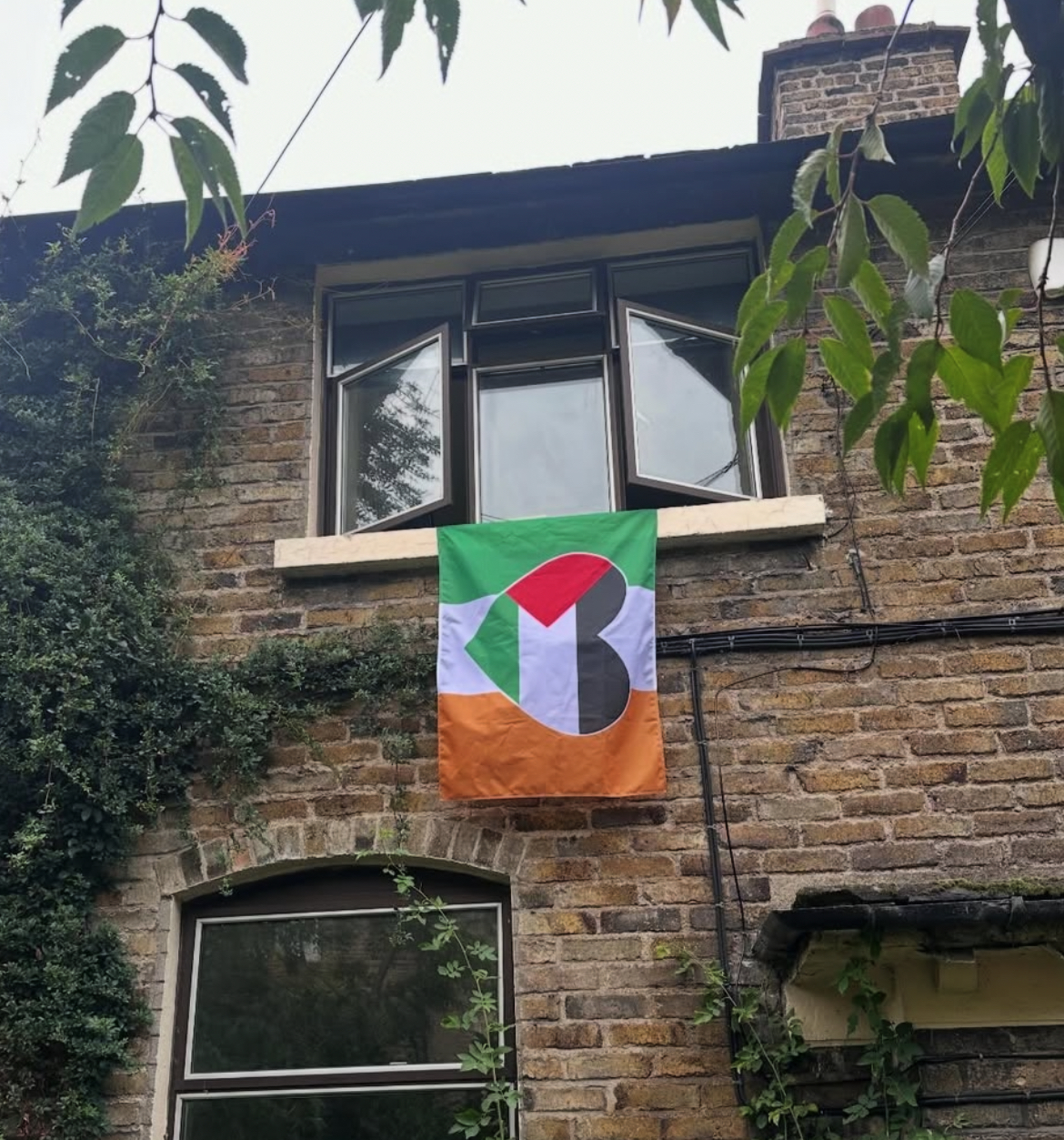
    Photo Courtesy : Céad Míle Flags

    In recent years, many Irish people of all ages and backgrounds increasingly have one thing in common – standing in solidarity with Gaza and Palestinians.

    From large-scale marches through the city centre to local fundraisers and solidarity vigils, Irish people are voicing their concern over the humanitarian crisis in Gaza.

    Ireland has long held a unique position in global solidarity movements, shaped by the country’s own history of colonialism and conflict.  

    Many Irish people see parallels between their past and the Palestinian struggle.  

    That sense of shared history continues to resonate, particularly among younger generations who are increasingly vocal on issues of global justice. 

    There are many fundraising groups such as Irish Queers for Palestine, Irish Artists for Palestine, GAA for Palestine.

    Earlier this month, Electric Picnic festival saw many artists, both Irish and international, vocalising their support.

    Artists such as Kneecap, Hozier, Becky Hill, and Girls Don’t Sync all paid massive tributes to Palestine and the festival was packed with red, green, black and white flags.

    Artists show their solidarity for Palestine at Electric Picnic. Taken at the ‘Mother After Dark Stage’.
    Photo Courtesy of Jack Maguire

    Among many groups are ‘Irish Sport for Palestine’, who are currently pushing the following narrative; “Show Israel the red card”. 

    The group describes themselves as egalitarian, anti-sectarian, anti-racist, and all-Ireland based.   

    “We started the group as many Irish sports figures, and indeed sports fans, were and continue to be opposed to Israeli apartheid, genocide and occupation,” spokesperson Joanne McDonald said.

    “There was a collective understanding that we needed to add voices from sport to demand a ceasefire and end the brutal occupation of Palestine,” she said.

    “Israel is a terror state and sport sanctions need to be applied”

    Joanne McDonald of Irish Sport for Palestine

    The group has come together with Bohemian FC and Fairsquare to call for UEFA to suspend Israel’s football association (FA). 

    They are fighting for this as Israel’s FA is breaking UEFA and FIFA rules by facilitating clubs operating in illegal West Bank settlements and failing to stop racist and violent chants targeting Palestinians. 

    They explain that the bigger picture is how the United Nations has found Israel guilty of committing genocide in Gaza. 

    “Football cannot ignore these violations while Palestinians are starved, displaced and killed,” said McDonald.  


    A recent campaign – Photo Courtesy : Irish Sport for Palestine

    Another Irish support group is ‘Céad Míle Flags’. 

    They aim to “re-claim” the Irish tricolour flag from the recent popularity of using it in anti-immigrant and far-right protests across the country. 

    Photo courtesy of Céad Míle Flags

    €10 of every purchase of their Palestine flag gets donated to the Irish Red Cross Gaza Crisis Appeal. They also have options of Ukrainian-Irish hybrid flags or Indian-Irish flags.

    They are also made with 40% recyclable materials and the flags are 100% recyclable and you can click here if you want to see more of their products on Instagram.

    In big ways and small, across cities, towns, and rural communities, MANY Irish people are showing up for Palestine, not just in protest, but in both creativity and compassion. 

    Whether it’s musicians on festival stages, sports fans calling for justice on the pitch, or young artists sewing flags from recyclable fabric, support for the Palestinians remains a popular cause.

  • In Photos: Thousands take to the streets for Dublin’s largest Palestine protest to date 

    In Photos: Thousands take to the streets for Dublin’s largest Palestine protest to date 

    By Liam Murphy

    On Saturday, October 5, thousands of people took to the streets of Dublin to mark one year of Israeli escalation in Gaza. 

    The march, the biggest of its kind to date in Ireland, called for an end to Israel’s occupation, an end to the use of Irish airspace for transporting weapons, and for the Irish Government to act in holding Israel accountable.  

    Several chants were also heard supporting Lebanon, following recent attacks there, also by Israel. 

    The national march, titled ‘GAZA: One Year of Israel’s Genocide’, began at the Garden of Remembrance and made its way to Molesworth Street, where a stage had been set up. 

    Speakers on the stage included Oscar-nominated and BAFTA-winning Palestinian filmmaker Farah Nabulsi, Palestinian photojournalist Eman Mohammed, Zak Hania, who recently returned home from Gaza after seven months, and Ireland Palestine Solidarity Campaign’s chairperson Zoë Lawlor. 

    Music on the day came from renowned Irish singer-songwriter John Spillane, Palestinian-Irish singer Roisin El Cherif, and Palestinian rapper Talha Alali.   

    All photos taken by Liam Murphy

    Protestors gather at Dublin’s Garden of Remembrance with signs and banners. 
    A group gathers with signs; Some with donation QR codes, others with song lyrics, others with art – Each with meaning. 
    Supporters gather around a 30ft Palestinian flag, as the crowd prepares to march. 
    A young girl wearing a keffiyeh poses as the march makes its way down O’Connell Street. 
    ‘From the River to the Sea, Palestine will be free’ – chants are heard across the capital city. 
    Protestors feel the heat as one bloc light up flares as the march moves down O’Connell Street 
    A masked up keffiyeh-wearing group stand roadside on O’Connell Bridge holding a red Hezbollah flag. 
    A woman holds up a scarf, branded with the Keffiyeh pattern and the Palestinian flag and Irish tricolour flag. 
    ‘You’d care if it was Cork!’ – A protestor holds up a sign on Molesworth Street, calling out the Irish Government 
    The march makes its way around the corner from Dawson Street, now heading up towards Leinster House. 
    Cork singer songwriter John Spillane tuning up before taking to the stage to perform his song ‘Palestinian Sunbird’ 
    Zak Hania smiles as crowds applaud his entrance. Hania spent seven months in Gaza unable to return home. 
    Palestinian rapper Talha AlAli (known as Wise Wolf) performs his newest single ‘Inshallah’ with Irish artist Blue Niall 

  • Focus on peace: Ireland’s pro-Palestine demonstrations  

    Focus on peace: Ireland’s pro-Palestine demonstrations  

    By Leon Thompson

    Ireland’s support during the Gaza crisis has extended following the announcement of €13 million in aid being sent to Palestine.

    Tánaiste Micheál Martin announced the aid in Dáil Éireann as an acknowledgement of the escalated violence in the Middle East. 

    Mr Martin hopes “a lasting and sustainable peace” can be achieved following Israel’s declaration of war on Hamas when Israeli citizens were attacked two weeks ago. Mr Martin has also said the Irish government unequivocally condemns the attacks made by Hamas and expresses their deepest condolences for the Israeli people affected.  

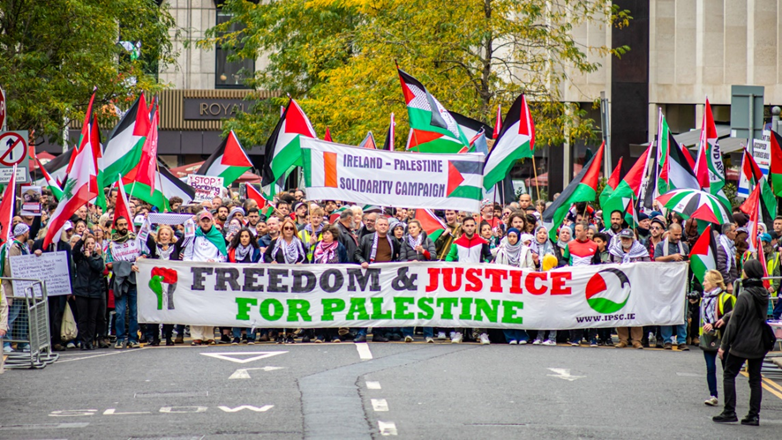
    The Ireland-Palestine Support Campaign (IPSC) is supporting demonstrations nationwide, while the national demonstration to end the slaughters in Gaza will take place in Dublin tomorrow afternoon. 

    Cork, Cavan, Clare, Kerry and Belfast will also see demonstrations tomorrow. 

    The Garden of Remembrance in Dublin 1 should expect demonstrators at 1pm on the 21st of October following IPSC’s announcement saying, “As Apartheid Israel continues pounding the captive and besieged people of Gaza with indiscriminate bombing and gets ready for a full-scale invasion, all with the blessing of Western powers, we ask you to join us at an emergency solidarity rally in support of the Palestinian people.” 

    Crowds are expected to attend while TD Mr Paul Murphy has announced his support and attendance saying, “When does Palestine get the right to defend itself? 75 years of ethnic cleansing and apartheid…17 years of a brutal siege on Gaza…10,000 Palestinians killed in the last 15 years. Stop the slaughter!”

    Demonstrators at a protest. Image: unsplash.ie

    Other counties such as Tipperary and Antrim saw protests yesterday, October 19th while counties such as Louth, Longford, Cork, Down and Armagh will hold more demonstrations throughout the month of October. 

    The last demonstration supported by the IPSC is anticipated for Co.Mayo on the 25th of October. 

    Campaigners were outside of the Dáil on October 18th with Diarmuid Breatnach in attendance calling it “a duty and a pleasure” as he anticipated the outcome of the debate happening inside.  

    In Cork, one demonstrator Patrick Hobbart said: “…it’s deeply distressing to witness the enduring hardships faced by the Palestinian people who have carried the heavy burden of apartheid and colonialism for generations. It’s imperative to acknowledge that Hamas doesn’t speak for all Palestinians. The Israeli government must heed this plea and halt their relentless assault on innocent civilians. In this conflict, there are no victors…the international community must unite to demand an immediate ceasefire.” 

    Kevin Callinan, General Secretary of Fórsa Trade Union echoed Mr Martin’s sentiments, “The killing of Israeli civilians by Hamas and the collective punishment of the people of Gaza by the Israeli government will do nothing to end the occupation and bring about peace,” he said. 

    President of the EU Commission Ursula von der Leyen’s statement declaring “Europe stands with Israel” has led to a lot of pushback from members of the European Parliament (MEP) especially  

    MEP Clare Daly commended protesters that occupied the European Commission’s Office in Dublin saying: “So proud of friends and comrades…currently occupying the European Commission offices in Dublin as we here in Strasbourg go in to vote on a shameful Parliament motion that fails to condemn Israel for its ongoing crimes against humanity in Gaza.”

    Protesters outside of Dublin’s European Commission’s Office. Image: X

    The office was occupied by concerned citizens organised into a group called Dublin for Gaza, with one member Lamia Tadjine saying: “Let us be clear—blood is on the hands, not just of the Israeli military and leadership, but on the hands of those states and institutions who have provided cover for these atrocities, such as the European Union.”

  • The Human Rights Violations Seen From Space

    The Human Rights Violations Seen From Space

    The City’s Cameron Weymes compares historical Google Earth imagery to illustrate human rights violations committed by various governments in the Middle East.

    Human rights have been defined as “norms that aspire to protect all people everywhere from severe political, legal, and social abuses.”

    Each event shown below has been documented by rights organizations to be contrary to these principles.

    Slide the bar left and right to reveal differences

    The Iraqi government assault on the Marsh Arabs

    [twentytwenty]

    marshhawizah121984

    marshhawizah122002

    [/twentytwenty]

    What Human Rights Watch said:

    “HRW believe that many of the acts of the Iraqi government’s systematic repression of the Marsh Arabs constitute a crime against humanity”

    The Background

    In March 1991, in the aftermath of the Gulf War, uncoordinated uprisings against Baath Party rule broke out in Iraq, one in the Kurdish majority north and another in the Shia south. The revolts were in response to George H.W. Bush’s appeal for the Iraqi people to “Take matters in to their own hands and force Saddam Hussein to step aside.”

    While the Kurds achieved success by establishing an autonomous zone in the north, the Shia rebellion had been put down by Saddam by early April.

    During the conflict many rebels had sought refuge in Iraq’s marshlands, home to 200,000 people who relied on the area for fishing and agriculture. In response to the perceived disloyalty of the Marsh Arabs, Saddam executed hundreds of locals, forcibly transferred its population to the cities and began draining the wetlands.

    The Satellite Photos

    The tragic environmental and humanitarian effects of these actions can be seen from the above satellite photos. The ‘Hawizeh Marshes’ were left almost entirely devoid of water, halting a way of life that had existed for centuries.

    Systematic destruction of Kurdish towns in southeastern Turkey

    [twentytwenty]

    nusaybin782015

    nusaybin9132016

    [/twentytwenty]

    What the UN said:

    “The UN Human Rights Office published a report detailing allegations of massive destruction, killings and numerous other serious human rights violations committed between July 2015 and December 2016 in southeast Turkey, during Government security operations that have affected more than 30 towns and neighbourhoods and displaced between 355,000 and half a million people, mostly of Kurdish origin.”

    The Background

    Nusaybin is a city of 80,000 people in southeastern Turkey, a region with an ethnic Kurdish majority. In late 2015, fighting broke out between the Turkish army and Kurdish militants. By the summer of 2016, Turkish government forces had put down the insurrection and began demolishing thousands of homes, leading to accusations of collective punishment against Nusaybin’s residents.

    The Satellite Photos

    The above images show houses destroyed by the Turkish government in Nusaybin.

    [twentytwenty]

    sur2014

    sur2017

    [/twentytwenty]

    The Satellite Photos

    Similarly to Nusaybin, large parts of Diyarbakir, the largest Kurdish majority city in Turkey, were flattened after fighting broke out in 2016 between Kurdish militants and the Turkish army.

    The indiscriminate aerial bombardment of rebel-held Aleppo

    [twentytwenty]

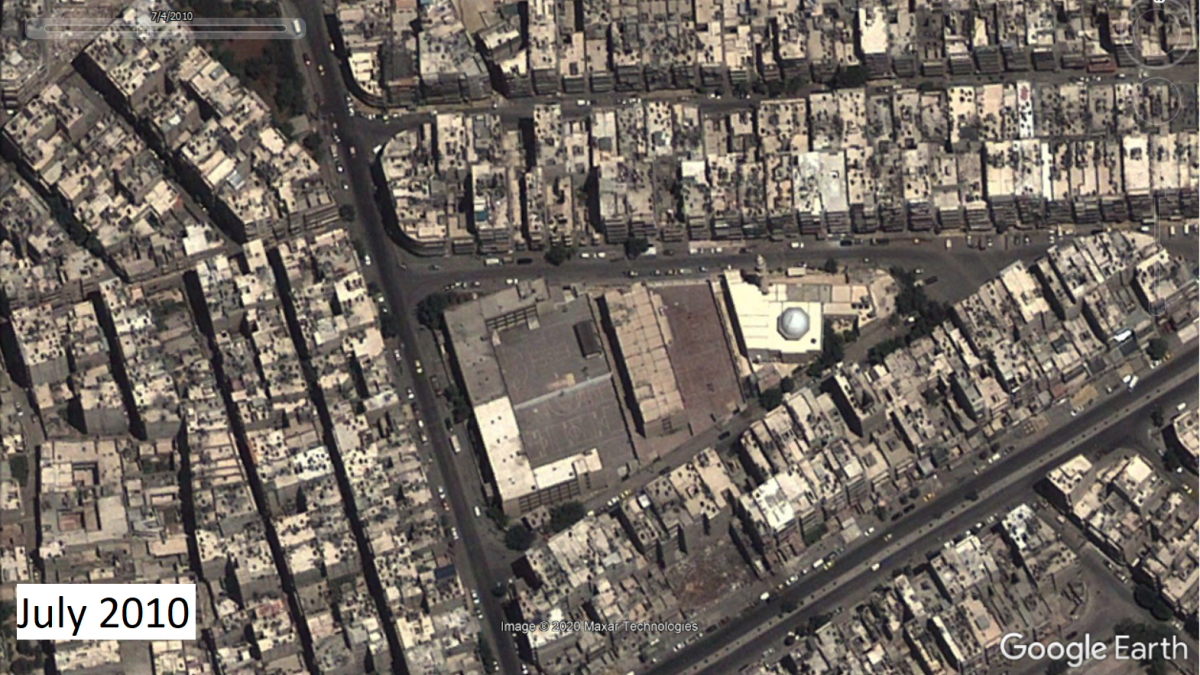
    eastaleppojuly2010

    eastaleppofeb2017

    [/twentytwenty]

    What Human Rights Watch said:

    “The Syrian military has dropped barrel bombs, sometimes dozens in one day, on opposition-held neighborhoods in Aleppo, Idlib, Dara’a and other cities and towns. They have pulverized markets, schools, hospitals and countless residences. Syrians have described to me the sheer terror of waiting the 30 seconds or so for the barrel bomb to tumble to earth from a helicopter hovering overhead, not knowing until near the very end where its deadly point of impact will be.”

    The Background

    In 2012, Syrian rebels fighting Bashar al-Assad began taking control of large swaths of Aleppo, Syria’s largest city. The rebels would eventually take the eastern half of the city, before a regime offensive backed by Russian airpower regained control in late 2016.

    The conduct of the Syrian regime and its Russian allies during the battle led to widespread allegations of war crimes, as highly inaccurate barrel bombs (barrels full of scrap metal and explosives) were dropped on densely populated rebel-held areas.

    The Satellite Photos

    The above images show the effect of regime and Russian airstrikes on buildings in eastern Aleppo.

    The expansion of Illegal Israeli settlements in the West Bank

    [twentytwenty]

    westbanksettlements2

    westbanksettlements1

    [/twentytwenty]

    What Amnesty International says:

    “Israel’s policy of settling its civilians in occupied Palestinian territory and displacing the local population contravenes fundamental rules of international humanitarian law.”

    The Background

    Israel took control of the West Bank following a Six-Day War with its Arab neighbours in 1967. The territory has subsequently undergone a process of colonisation as over half a million Israeli settlers have moved into the West Bank and East Jerusalem, an act illegal under international law.

    The Satellite Photos

    The above image shows the illegal expansion of the Nofei HaSela settlement in the occupied West Bank.

  • Palestinian Flag to Fly Over City Hall in “Gesture of Solidarity”

    Palestinian Flag to Fly Over City Hall in “Gesture of Solidarity”

    Green, white and black with a red triangle – the Palestinian tricolour is not typically seen above Dublin City Hall, however, there is a proposal to fly the flag there next month. Cormac Murphy explores the debate.

    (more…)