Tag: pets

  • Ireland Implements first stage of XL Bully ban: Key changes starting from October 1st

    Ireland Implements first stage of XL Bully ban: Key changes starting from October 1st

    Ireland has officially implemented a ban on XL Bully dogs, which came into effect on October 1st, 2024. The ban was introduced by Minister for Rural and Community Development Heather Humphreys in response to a series of high-profile attacks involving the breed. 

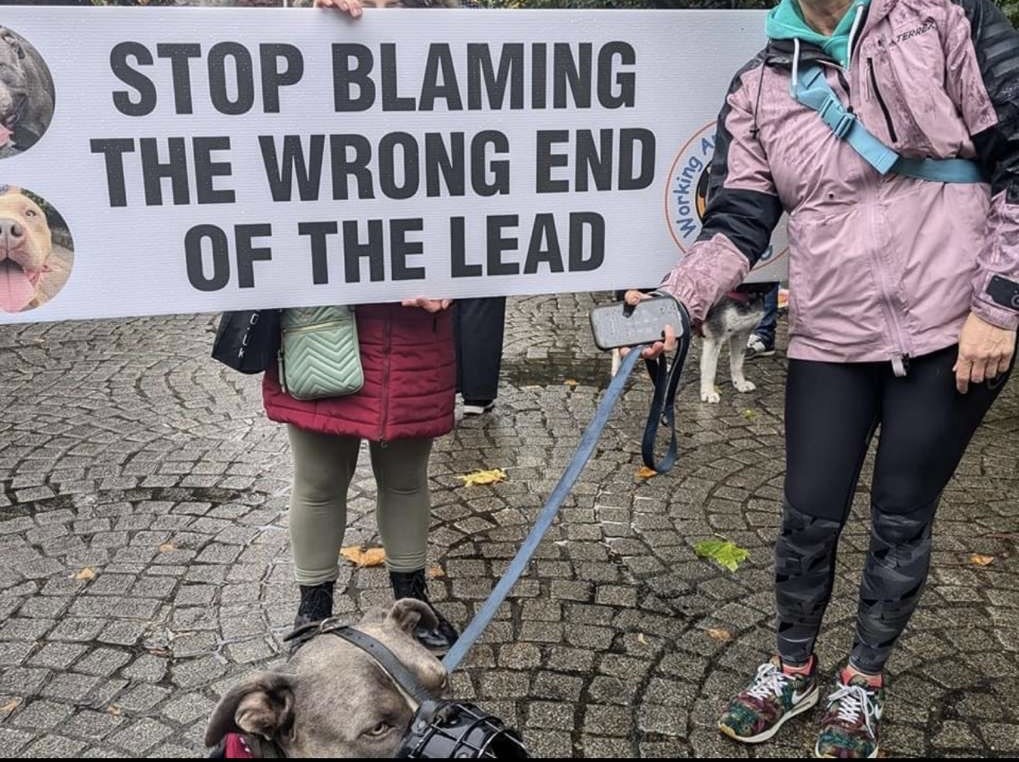
      Banners at XL Bully ban protest. Photo by Sandra Dudkiewicz 

    The ban will be enforced in two phases. As of October 1, 2024, it is illegal to import, breed, sell, or rehome XL Bully dogs. From February 1, 2025, it will also become illegal to own an XL Bully unless the owner has obtained a ‘Certificate of Exemption’. 

    This certificate will allow owners to keep their current XL Bully dogs, provided they meet certain criteria such as licensing, neutering, and microchipping the animal. 

    A deadline of February 2025 has been set for animal welfare groups and shelters to rehome or export XL Bullies already in their care. 

    The decision has generated debate, with some supporting the move as a necessary measure for public safety, while others, including animal rights groups, express concerns about the future of these dogs and the impact on shelters 

    A joint statement published by Dogs Trust Ireland, Irish Blue Cross, MADRA, and the ISPCA states that they will continue to urge the government to prioritize enforcing and adequately funding existing laws that address the root causes of dog aggression across all breeds and types of dogs. 

    This includes cracking down on unscrupulous breeders who prioritize profit over dog welfare and public safety, penalizing irresponsible owners of dangerously out-of-control dogs, and educating and empowering responsible dog owners. 

    “While we are disappointed with the approach the government is taking, we remain committed to continuing our work to advocate and ensure that the welfare of all dogs is protected,” the statement said. 

    Sister of Nicole Morey who was tragically killed by an XL Bully earlier in June this year spoke to RTE news and expressed that the ban is not enough and fears that there will be more accidents linked to the breed. 

    “I think there should be a stricter law brought in. They’re dangerous dogs. They’re not small little puppies. They’re not dogs that you could just mess around with. They can just switch in two seconds,” she said. 

    Earlier in September almost 200 people attended a protest at Stephans Green in Dublin following the news of the new regulations related to the breed. 

    XL Bully owner and attendee Wiktoria Kumorek spoke to The City. “It truly breaks my heart it is unfair that these dogs are being judged solely on their appearance. My dog is gentle, and affectionate and with proper training and care, they are no more dangerous than any other large dogs.” 

    “The problem is not the breed, it is irresponsible ownership just like with any other dog or animal,” she added. 

    XL Bully ban protests in September in Trinty Point. Photo by Sandra Dudkiewicz 

  • Recent dog thefts leave pet owners feeling anxious

    Recent dog thefts leave pet owners feeling anxious

    In recent months, there has been a huge increase in reports of dogs being stolen. The DSPCA believes this is linked to an increase in demand for dogs during the pandemic. But how has this affected pet owners?

    Niamh Talbot took to St.Anne’s park to speak with local people about whether or not they feel more anxious when out walking their dogs.

  • Reduction in euthanasia for Dublin’s dogs

    Reduction in euthanasia for Dublin’s dogs

    Last year saw a significant decrease in the number of stray or abandoned dogs in Dublin being euthanised when compared to 2015.

    Figures obtained from each of the council offices show how out of 1,423 dogs claimed by the four Dublin councils, 109 were put down; a 21 percent reduction from 2015’s figures which saw 138 stray dogs in Dublin being euthanised.

    Dublin City Council had the lowest euthanasia rate with just under four percent of its claimed dogs  being put down, with the majority of the rest either being reclaimed by owners, re-homed or taken to a dog welfare group.

    Killian Dog image#

    Dún Laoghaire/Rathdown had the most successful reclaim rate with 33 percent of its claimed dogs finding homes again.

    As well as a decrease in the number of stray dogs being put down, the overall number of stray dogs claimed by councils in 2016 slightly decreased from the previous year’s total. And the 1,516 stray dogs found in 2015 decreased by six percent to 1,423 by the end of 2016.

    Despite this positive reduction, many problems regarding mistreatment and the large number of stray dogs still on the streets still need to be addressed.

    Áine McAnally is a volunteer at Dogs Aid Animal Sanctuary, a charity set up to house, rehabilitate and rehome stray or abandoned dogs.

    She said: “Education is going to be the most important tool to decrease the number of stray and abandoned dogs. Currently dogs are easy to come by, cheap to buy and so some people are able to discard them without thinking too much about it because there is no value put on the animal. People need to be educated regarding either neutering their dogs or being hyper vigilant when their dogs are in heat and allow no dog wander on their own.”

    Despite the best efforts of shelters and dog charities such as Dogs Aid, the sheer amount of strays which are turned in on a yearly basis, even with a reduction in numbers, is still often too much for shelters to cope with. Shelters are often forced to refuse dogs due to lack of space, and ultimately this can result in the animal being put down.

    “We work on the basis that we can only do what we can do. We have between 60 and 70 dogs in the sanctuary at any one time and about 30 core volunteers that help run the sanctuary. This is our capacity and we don’t go over that or the dogs will suffer. We take in as many dogs as we can, and as soon as a kennel space is available we fill that with another dog,” said McAnally.

    Efforts by councils and shelters are responsible for an overall improvement in the 2016’s figure yet the problem of stray and abandoned dogs needs to be addressed at the source; the owners.

    By Killian Dowling


  • Ireland’s first cat lounge opens its doors

    Ireland’s first cat lounge opens its doors

    Ireland’s first highly-anticipated cat lounge opened its doors in Dublin earlier this month. Cara Croke and Megan Walsh paid a visit to speak to the woman behind it all. 

    Located in Smithfield Square, The Cat Lounge welcomed its first visitors on the 10th of October and has received a great response since.

    Owner and cat-lover Georgina O’Neill was inspired to open the lounge when she was shown photographs of a cat café in Japan back in 2014.

    Cara + cats
    Our reporter Cara Croke getting to know some of the residents of The Cat Lounge

    “I’d first heard about cat cafés when my brother visited one in Japan. I knew Ireland needed one and ever since then I planned to open my own here in Dublin,” said Georgina.

    Georgina explained she wanted the lounge to be a great place for those who can’t have pets at home due to living in an apartment or living with someone who has allergies.

    Cat lounge
    The Cat Lounge is located in Smithfield Dublin

    The lounge allows animal lovers to spend 90 minutes at a time with the kittens with a tea or coffee from their hot drinks machine. 

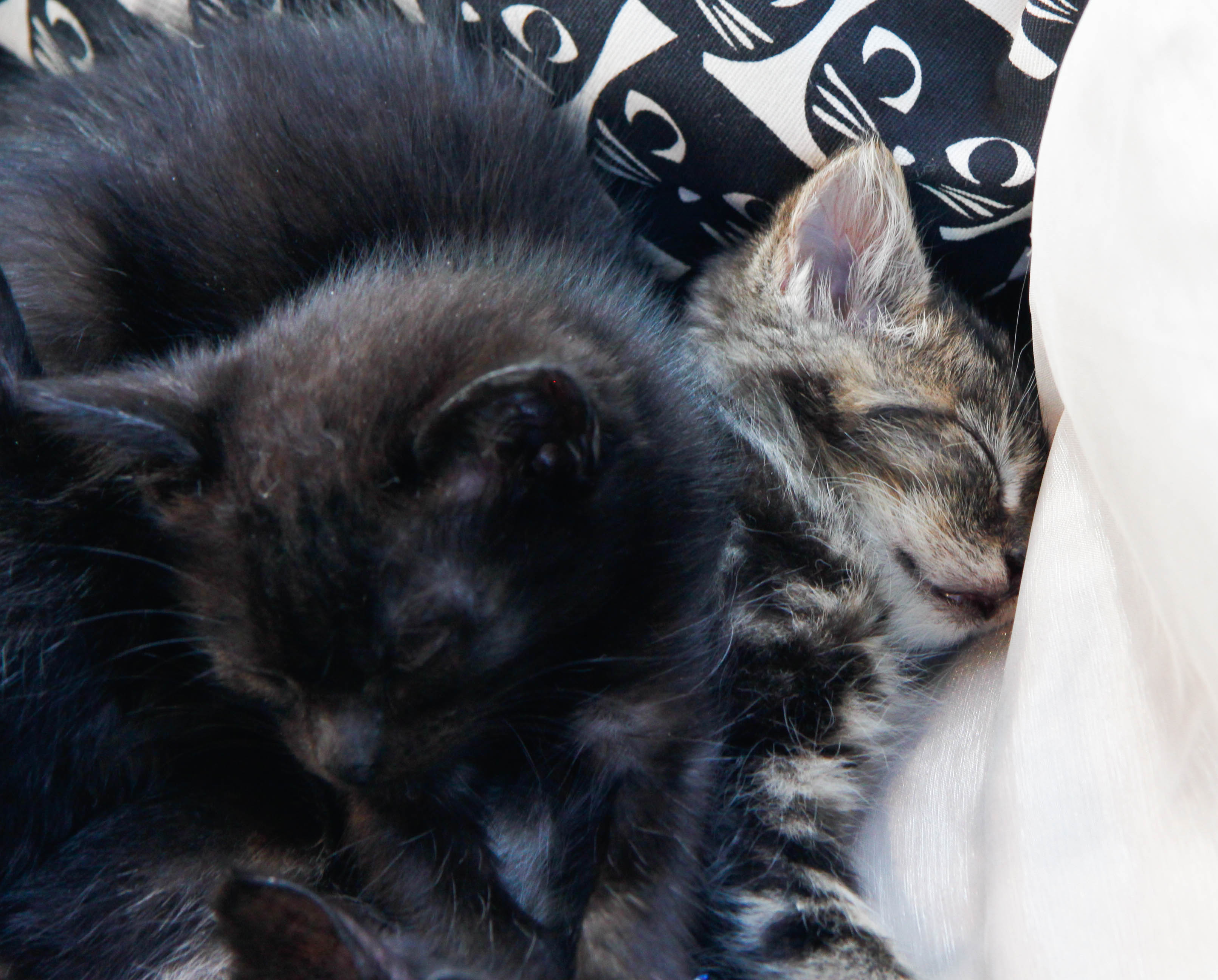
    So far, The Cat Lounge is home to eleven kittens from two litters. 

    “Six of the kittens are black and the rest a mix of tabby, white, and black and white. They were rescued from the local vet after they had been handed in to be euthanised.”

    Cat lounge sign

    Two of the eleven kittens have been named so far, with plans to name the rest through the help of social media. Georgina has hopes that some of the kittens will be adopted once they are six months old, however she has her concerns that the black litter will be harder to re-home.

    “The black cats find it harder to be re-homed because people can be so superstitious. People want interesting looking cats and for some reason they think black isn’t. I’m hoping the lounge will give potential owners an opportunity to come in and fall in love with the cat’s personalities.”

    For now, the kittens all live together in The Cat Lounge and are doted on daily by Georgina, her three staff, and cat-loving members of the public.

    Georgina says in the two weeks since opening, the response to the lounge has been fantastic, however, with mornings being the quietest time for visitors, they have plans to host events for charities during this time in the future.

    You can book your slot with the kittens at www.catlounge.ie for €15 per person.


    By Cara Croke and Megan Walsh.

  • Keeping pets safe at Halloween

    CC image courtesy of Crystal Agozzino on Flickr.
    CC image courtesy of Crystal Agozzino on Flickr.

    Halloween season is exciting for us humans but for pets, it can be a very distressing time of year.

    Household pets, mainly dogs, can get very agitated around Halloween time, due to the noise of fireworks and also by the flashes at night time.

    According to vet Peter Wedderburn, who is better known as ‘Pete the Vet’, the best thing for dogs at this time of year is to make sure that they have somewhere that they can go that is cosy and reasonably well protected by noise.

    “Basically you want somewhere where they can go and feel comfortable and chilled out, and if there is background noise and fireworks, they’re not bothered about them”, he says.

    Pete suggests that a typical ‘safe’ place for dogs would be a cupboard under the stairs, or a boiler room, where you can put plenty of bedding, a hot water bottle and some of their favourite toys.

    He also stresses the importance of dog pheromone, which can be bought in plug form.

    “When a bitch produces milk, she produces a scent that puppies find reassuring”, says Pete, “scientists have extracted that scent and have made an artificial form of it and put it into a vaporizer”.

    Pete, who is also Ireland AM’s resident vet, says that if dogs have this pheromone in the air around them, then they feel more comfortable and reassured.

    There is also an increased issue of cruelty towards animals around the Halloween period.

    “When there are young people out and messing around, where there is fire and fireworks then animals are vulnerable, so people should be aware of that”, says Pete.

    Even cats, who usually roam around, are at risk at this time of year. Like dogs, they can be also frightened by fireworks, but a more serious matter is reports of them being thrown into bonfires.

    Both cats and dogs are also at risk of blackcat fireworks been thrown at them by youths.

    “Keep cats in around Halloween because they can get into trouble, and make sure that your dog has an ID tag on it because it can get out and run away”, says Pete.

    Every year there are reports of people deliberately harming animals during the Halloween season

    Pete advises people that if they hear of, or see any cruelty to animals going on, to get some evidence and  report it.