
Tag: Podcasts

  • Reject modernity, embrace tradition: could Bebo be back for good?

    Reject modernity, embrace tradition: could Bebo be back for good?

    The classic Bebo logo, via Wikipedia Commons

    When the homepage of the once beloved social media site displayed a coming-soon message, rumors began to swirl online of Bebo’s highly anticipated return, which has since been confirmed by co-founder Michael Birch. 

    Before Facebook’s uncontested dominance through the 2010s, Bebo was a strong contender in the then emerging field of social media, gaining a considerable foothold in Ireland, Britain, Australia and New Zealand. 

    The site was sold to AOL in 2008 for $850m but was later bought back by Birch and his wife Xochi for $1m. 

    “I feel like it allowed for the creative side of the individual to be expressed a lot better than current social media sites”

    Veronica Lee

    During the height of its popularity, Bebo seemed to exert an outsized influence on the Irish cultural landscape – mullets were dyed and straightened to achieve the “spicer” style popularised on the site, friendships were forged or torn asunder at the hands of its top 16 function – even Love/Hate crime boss Nigel ‘Nidge’ Delaney was depicted as a Bebo devotee. 

    In 2006, it was described by the Irish Independent as “officially the most popular site in Ireland”, boasting over 500,000 Irish users at the time. 

    While a cynic may view the site’s return as yet another extension of the nostalgia industrial complex that has all but defined millennial cultural output, it’s not hard not to see the appeal of a return to Bebo’s simplistic interface and apolitical landscape in the Q-anon era. 

    Late last year Myspace, a comparable relic of the pre-Zuckerberg internet was revived by an 18-year-old coder named An, capturing the imagination of Gen-z who missed out on the site’s original run. 

    The Author in His Bebo Days, taken by Jake Hurley

    Bebo differs from the social media sites that outlasted it mainly because of the large scope of customisation available to users, including skins (profile themes and layouts), flashboxes (videos which would autoplay upon loading a Bebo page) and a variety of apps and widgets that could be embedded into your personal site. 

    “I used to make custom Bebo skins using an early version of photoshop. They were terrible and embarrassing but the skills I learned from that set the foundation for a lot of what I do today,” said Zak Milofsky, 26, who now works as a photo editor. 

    Veronica Lee, also 26, recalls being drawn to this element of Bebo when she first made an account.

    “I loved that aspect of Bebo, being able to have control over the complete layout of the page,” she told me. “I feel like it allowed for the creative side of the individual to be expressed a lot better than current social media sites.”

    This element of customisation made Bebo the perfect space for Irish teenagers to develop their own sense of identity, as well as divide themselves into subcultural groups. 

    Two prominent but ideologically opposed factions reigned supreme amongst mid-noughties Dublin-area teenagers – both vying for dominance of the coveted, now redeveloped space outside Dublin’s Central Bank. 

    First were the scene kids, a less brooding emo offshoot focused on brightly dyed hair, clothes from the American chain Hot Topic and an affinity for the kinds of Warped Tour bands who now sport extensive “controversies” sections on their Wikipedia pages. 

    The spicers, a uniquely Irish phenomenon, were more inward facing then their globalist scenester cousins and sported a unique aesthetic built around elaborate mullets, extensive Adidas wardrobes and a penchant for “shuffling” to hardcore techno.

    “I would have liked to think I was a spicer, I had a white Adidas jumper that was washed once a month because I only had one and needed to wear it at all times,” Invisible Friends podcast host Aoife Doran, 23, tells me. “I also had a side fringe so severe that it actually worsened my lazy eye and resulted in me having to wear an eye patch at 13. Not a look.” 

    As a facilitator of unbridled and often downright confusing youth expression, Bebo was predictably met with moral panic amongst parents – the flames of which were stoked in no small part by media outlets which tended to suggest a link between the site and a rise in binge drinking amongst Irish teens. 

    “Selecting your top 16 could make or break a friendship”

    Zak Milofsky

    “Happiest when: I’m locked at Wez! Drinks: Hino! Dutch Gold! I swear to god it’s actually nice! Cans are mingin’, bottles all the way,” wrote an unnamed bebo user quoted in a 2006 Irish Independent article.

    To circumvent the watchful eyes of concerned parents, many mid-2000s teens were forced to take matters into their own hands.

    “I surreptitiously made an account in my neighbours office with my friend. My mam walked in, saw what was happening and took away my Gameboy for two weeks because she believed Bebo was the most dangerous thing to youths of the day,” 22-year-old Matt Corrigan admits. 

    The risk of a confiscated Gameboy was a risk worth taking, as the stigma of being left out of the Bebo craze and the social politics built around the top 16 friends ranking was too great to endure. 

    “Selecting your top 16 could make or break a friendship. I think the ability to share so much about yourself online was new to the Bebo teens and created a competitive atmosphere where there was pressure to keep updating,” Milofsky says.

    Despite Bebo’s ultimate fall from grace at the hands of social media behemoth Facebook, it’s clear that the site holds a particular place in the hearts of Irish millennials. What remains to be seen however, is if nostalgia is enough to get Bebo’s planned relaunch off the ground. 
  • Three Castles Burning: An interview with historian Donal Fallon

    Three Castles Burning: An interview with historian Donal Fallon

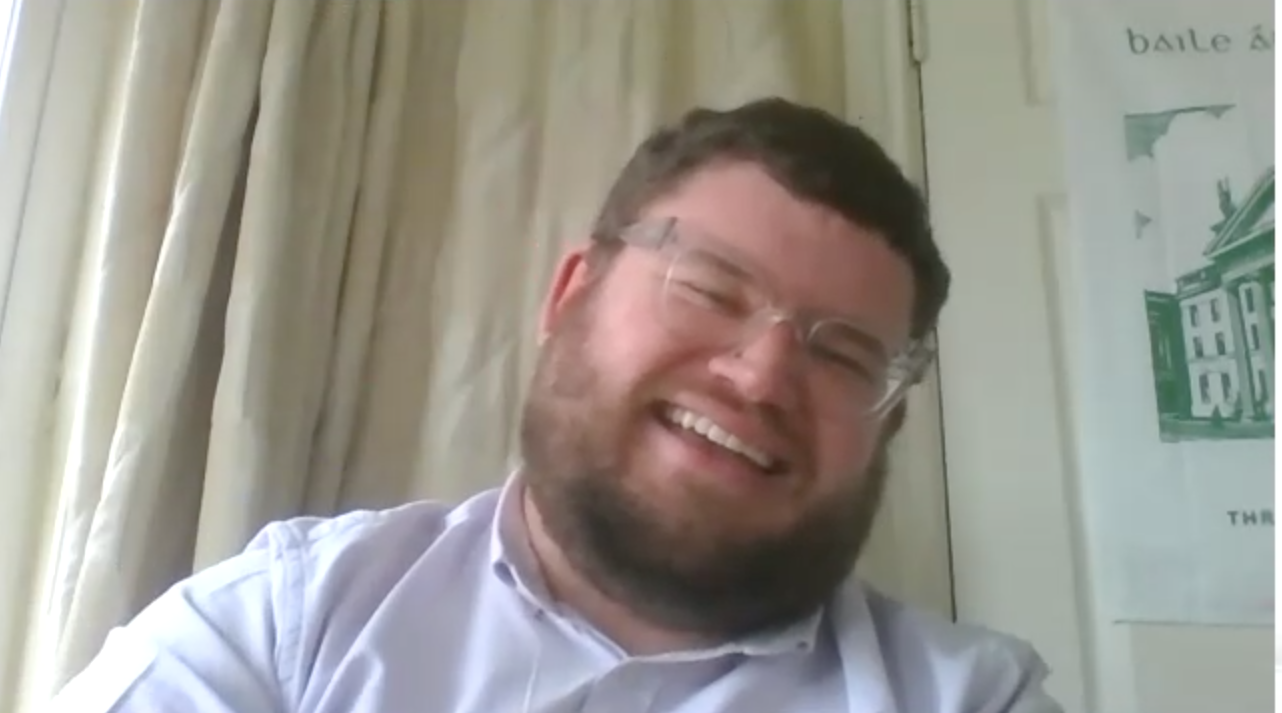
    A screenshot of Donal Fallon during his virtual interview with Mario Bowden. Screenshot by Mario Bowden

    It was while going for a walk around my 5km that I decided to reach out to historian Donal Fallon. In an episode of his podcast Three Castles Burning, Fallon mentions the previous life of an art deco building along the Royal Canal that now houses the new Bernard Shaw. To my surprise, it was the garage of the first Irish commercial airline – Iona National Airways. I couldn’t believe that a building that I walked and cycled by daily had such a unique life story.

    Three Castles Burning is a social history podcast, capturing the tales and intricacies that make up the fabric of Dublin. Running since November 2019, each episode contains a unique deep-dive into the city’s treasures – From discussing hallmark pubs such as Grogan’s, the emergence of subcultures like the punk scene in 1977, and even the stories of migrant communities who have left their stamp on the city, like the Italian community in Dublin who helped give rise to the chipper.

    Fallon, a tour guide in normal times, tells me that there’s a real chance to engage with Dubliners through the aural medium. 

    “When you work in heritage and tourism, the majority of the people you meet are not from here. That’s just how it is and that’s the same in any city. On a tour for visitors, you have to go from before Saint Patrick all the way to the Northern Irish peace process in two hours. So when you have an Irish audience, you have the ability to go into much finer, minute detail, which I really really like. It’s a different challenge,” Fallon says.

    “There are still people interested in local history, it’s not something you can just turn on and off”

    Donal Fallon

    Fallon’s no stranger to capturing all things Dublin. In 2009, he started a blog called Come Here to Me. Coining its name from the Dublin slang to express the tantalising exchange of information, the blog set out to capture the essence of the capital’s nooks and crannies – from music, history, politics, and even pub crawls. Come Here to Me was a big hit amongst Dubliners – and for Fallon, it gave him an audience. 

    Over time, however, the art of blogging began to dwindle, Fallon admits: “I noticed that the readership on Come Here to Me was kind of dropping off. Not like off a cliff, but over time there was less and less. And I wondered, where are those people going? Because they’re still there” Fallon chuckles.

    “There’s still people interested in local history, it’s not something you can just turn on and off. So the challenge for me was how do I get to reconnect with people who I knew were there from Come Here to Me. That I knew were still there,” he tells me.

    It was time for a change and Fallon saw podcasts as the way forward. He tells me how he learns as he goes, taking inspirations from some of his own favourite podcasts – such as the Bowery Boys Podcasts – a social history exploration of New York City. 

    “In a way, Podcasts are the new pirate radio”

    Fallon

    Listeners might notice Fallon’s shout-out to Radio Free Kimmage at the end of each episode. Like many others, I foolishly assumed that it was a real local radio station. But as Fallon explains to me, the nod towards a faux station is simply an homage to the pirate radio scene. Fallon see the parallels between that scene and what he’s doing now – providing alternative and independent content. 

    “Podcasts, in a way are the new pirate radio.” Fallon laughs. “They are increasingly widening what’s on offer. And I really like that. Especially if you look at the podcast charts in Ireland, the top of it is still big radio shows – usually clips from news shows on RTE and so on. But these independent programmes produced on kitchen tables in Kimmage can compete with them. I think that’s fantastic!”

    Three Castles Burning logo, by Donal Fallon

    Today, the podcast is a great success. Released every week, it has attracted an audience of not just locals, but ‘Dubliners in exile’ – with strong numbers of Irish abroad, from Britain to Australia – tuning in for their nostalgia fix. This is no surprise to Fallon.

    “I think that’s how it’s always been. If you go back all the way to when Joyce wrote about exile: the further you are from a particular place, the more you feel a connection to it. That’s been a very noticeable thing that Irish abroad have definitely gotten behind it. I’ve gotten very nice emails from people saying that they really miss these places. The Forty Foot in particular, that had a real emotional resonance with people,” he tells me.

    Each episode has the ability to intrigue anyone in a way that’s unique to them – much like my own experience passing the Bernard Shaw. With more people out and about on their daily walks, a podcast like this can spark curiosity to something right around the corner. 

    “I think if you can change someone’s everyday walk, and make them think about that one little thing that they didn’t know was there before, I think that changes the way people look at the city, but the way they look at life you know, to go a little bit slower. I always try to make the podcast a bit more visual. I know it’s all audio of course but I like saying ‘Next time you pass so-and-so, look at this’, I think that can change the way you look at the city,” he says.

    While Fallon is optimistic about some sort of bounce back for the heritage and tourism industry, the success of Three Castles Burning has kept the Irish history scene on the road – and in turn, our history alive.