The Women’s Protest became a massive movement in Poland. Women and everyone supporting them took to the streets in a fight for their rights. As protests in Poland hit the third week, similar protests in solidarity with Polish women have been taking place all over the world.
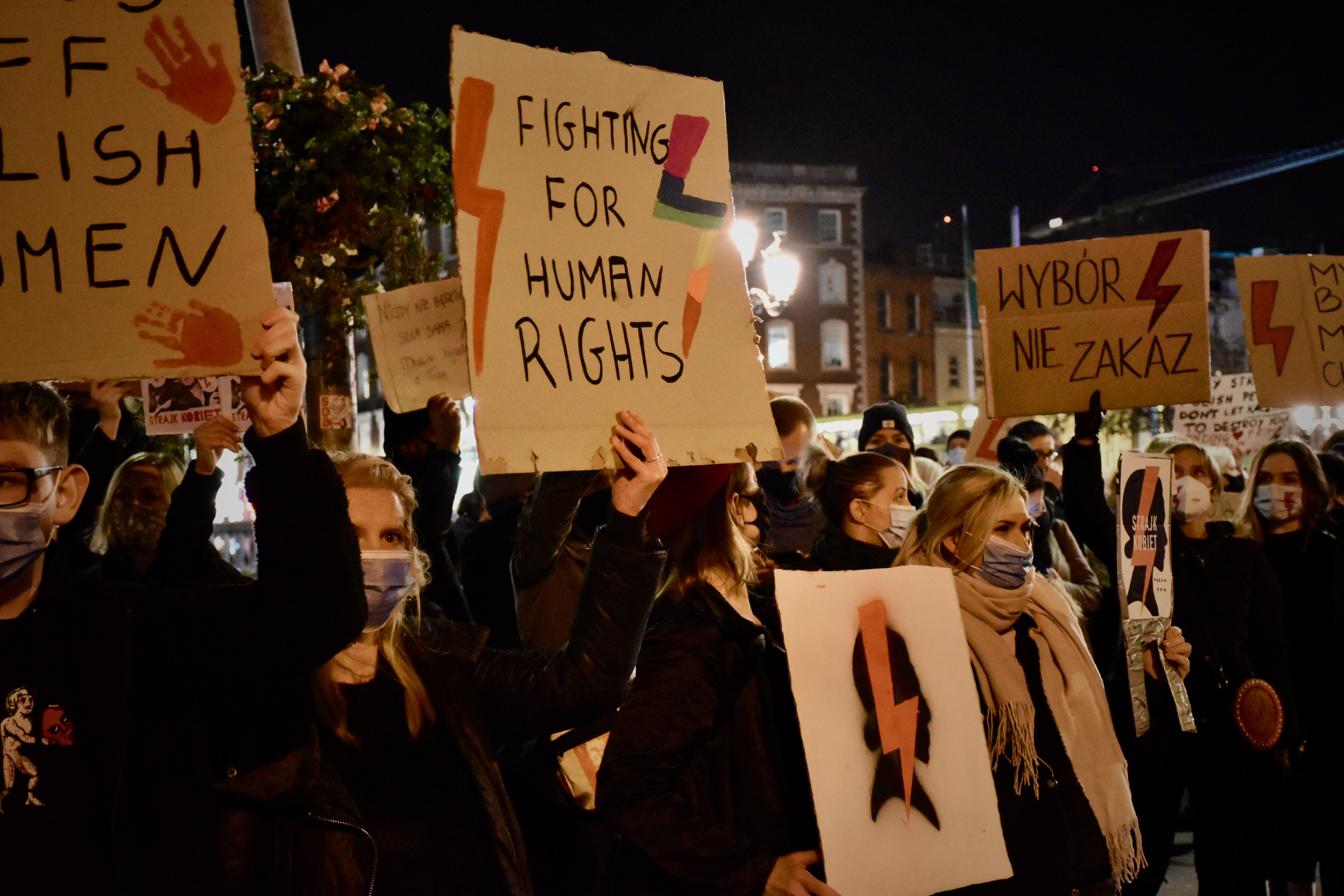
On the 30th of October the march to support Polish women was held in Dublin City Centre. The organisers of the march were surprised by the amount of people that showed up.
Laura Matjusaityte spoke with the organiser of the march Ariana Jeż about the march in Dublin and the situation in Poland.
Organising and executing a protest is much easier nowadays. We’ve seen this globally with examples such as #BlackLivesMatter, #FreeBelarus, #EndSARS and the most recent #WomenProtest in Poland. Laura Matjusaityte delved into social media to see what is happening on the streets of Poland.
It all started four years ago. In 2016, a draft law on a stricter ban on abortions in Poland was proposed, after an anti-abortion citizens coalition succeded in collecting some 450,000 signatures for a petition on a ban on abortions.
Even before the petition, Poland was one of the European countries with the strictest abortion laws. Abortions in the country were legaly permitted only in three cases: when there is severe foetal abnormality, when there is threat to mother’s health and in cases of rape and incest.
In early October 2016, women in Poland dressed all in black went out on the streets to protest against the proposed draft law on abortions. It was a peaceful protest, where women declined to work or do any chores on the day and expressed their grief for their reproductive rights by wearing black.
On the 22nd of October, 2020, a Constitutional Tribunal in Poland ruled on a stricter ban on abortions. According to the new law, abortions are no longer permitted in cases with severe foetal abnormality. Abortions in the cases of rape and incest and where mother’s health is at risk remained legal.
This ruling, once again, brought black-clothed women back to the streets, to protest for their rights.
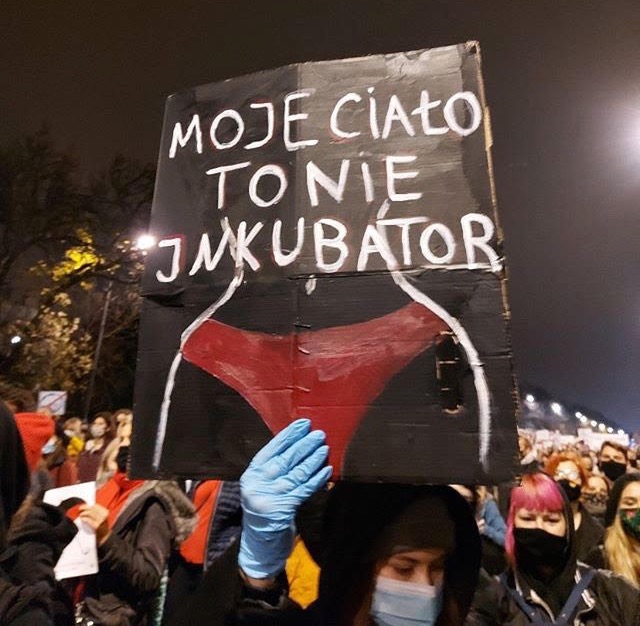
As the protests move into a second week, it seems that women in Poland are far from giving up. Instead they are getting more innovative in expressing their frustration. One example is the use of strong language in their chants and slogans.
One of the Facebook groups dedicated to the protests Ogólnopolski Strajk Kobiet (“National Women’s Strike”) posted on their account:
“Some commentators present the visual setting of protests as vulgar or worse, and banners interpret as going beyond the standards of social debate. We would like to point out that protesters using provocative images and symbols is an example of expression of anger and helplessness against a decision that was taken without respect for human rights…”
Emilia Wanat, a protester and activist from Warsaw, agreed that the language of the protests is getting more vulgar.
“The vast majority of participants agree that we have already been polite. If there is no dialogue, we can only shout and swear,” said Wanat.
The ambush on social media proves that the protesters are getting more irritated. Many videos show demonstrators shouting such slogans as “wypierdalać”, while the new hashtag claims #tojestwojna (#thisiswar), which shows that the protesters are not messing around.
Some protesters have used vandalism to express their anger. Catholic Churches have become the main targets. In these protests the Church and the government, that often go hand in hand, are seen as the main enemies of the demonstrators.
Wanat admitted that there were occasional riots outside churches in many parts of the country, as police and opposing groups are trying to defend the entrance to churches against activists.
“The demonstrations are starting to resemble the Black Lives Matter movement – rather peaceful but with occasional cases of vandalism,”
Wanat said
In another instance a video posted on Youtube showed a crowd of young protesters gathered in front of the church engaging in a heated debate with a priest.
Evidence of vandalism is being displayed in the posts on Twitter as well. One shows graffiti of lightning, a symbol of the movement, on the walls of the church.
Tak było w nocy w Warszawie, kościół. św. Anny. Widzimy się za niedługo na ulicach! pic.twitter.com/t3e3aREwts
Another protester from Warsaw, Jakub Tuchay, said that the protests are mainly peaceful, but that there were instances where police used pepper spray.
“Now in Poland we have a war for women rights and for human rights,” Tuchay said.
However, when the question comes to the human rights protesters appear to be divided.
A controversial question among protesters is whether the LGBTQ community should be included in the strike. Some women participating in protests said that the women’s strike is about women’s rights and there shouldn’t be a mix of interests by including the LGBTQ community.
Others see it differently, with one of the Twitter user posting:
“To all those who don’t like the rainbow on #StrajkKobiet, I would like to say 2 things:
LGBT people attend all protests, whether they are about courts or women’s rights, because they understand solidarity.
2. They won’t go home, they will keep fighting whether you like it or not.”
Wszystkim tym, którym się tęcza na #StrajkKobiet nie podoba, chciałabym powiedzieć 2 rzeczy: 1. Osoby LGBT bywają na wszelkich protestach, czy chodzi o sądy, czy prawa kobiet, bo rozumieją solidarność. 2. One nie pójdą do domu, będą walczyć dalej, czy wam się to podoba czy nie 🏳️🌈
Major discussion regarding LGBTQ inclusion broke out on Instagram when protesters started to oppose the idea of the march for solidarity.
“I am participating in strikes because I am fighting to respect women’s free choice on the issue of abortion. Why connect the LGBT community to it? I understand that they are with women, but why suddenly the strike should be rainbow and not black? A strike for everything and nothing is starting here,” one Instagram user wrote.
“What do the rainbow flags have for an abortion decision? I do not agree, I was fighting for another cause,” other comment said.
“It is not appropriate to combine LGBT with a strike, they are two different things. I’m with women but not LGBT!” a protest supporter wrote on Instagram.
The discussion was filled with thoughts that allowing the LGBTQ community to march side by side with women might do more harm than good:
“Everything will fall apart in a moment. Don’t do it! It’s a women’s strike. I am for equality, I support LGBT people, but they are a minority and for many people in Poland it is controversial, and MASS is needed to initiate changes,” another Instagram comment read.
A recent post on Facebook by an LGBTQ+ community from Wrocław, a city in Poland, showed their solidarity with the women protests saying: “We feel discriminated against in our country, a country that we love so much. Women are also being discriminated against and that is why we stand behind them.”
The post on Facebook brought a backlash among protesters once again with some protesters showing their disagreement.
“It seems to me that the colors will harm the protesting women more than they will help them,” one of the comments said.
Even without a consensus on the LGBTQ community’s inclusion in the strikes, it seems that the protesters are not leaving the streets. Live videos posted on Instagram show Warsaw and other cities of Poland streets full of people shouting slogans and carrying banners. In some places cheerful music is playing and people are dancing.
“It seems like we’re having a carnival on the streets. People are dancing and singing, nobody is going anywhere. The banners are hilarious – but this is the internet and memes generation,” Wanat said.
Whether it be a romantic getaway or some fun and frolics with friends, Christmas is the perfect time to book a weekend break in one of Europe’s cities. Stuck for ideas of where to go? Check out The City’s pick of the best European destinations, with plenty of tips and things to do.
Munich
“Ein bier, bitte!” First things first, when that plane hits Bavarian soil, you must grab one of Munich’s famous beers. The touristy thing to do is head to the Hofbräuhaus, where you can enjoy some Hofbräu beer together with some traditional Bavarian music and dance. The “Haus” also serves food, however, you can save your euros and grab much nicer bratwurst, or german sausage, on the street. Some other famous beers to try include Augustiner, Paulaner and Löwenbräu. If you’re not a big beer fan, then order a radler, a combination of beer and lemonade that’s very popular in Munich.
The Englischer Garten, German for “English Garden”, is a large public park in the centre of Munich, and is well worth the stroll. Kleinhesseloher Lake in the centre offers a nice seating area where you can grab a beer and some food, or bring your own picnic. Release your inner child and take a peddle boat out on the lake.
For the boys and their toys, a trip to the BMW museum is a must. The museum is basically a gigantic showroom, displaying hundreds of models of cars, jeeps, and bikes for you to climb into, or on. Grab a selfie in that red convertible you’ll never afford! If it’s any consolation, the museum is free. Good of them, eh?
Munich lies at the foot of the Alps, so if you have the time then hop on a train and head to the mountains. Neuschwanstein Castle, “the fairytale castle”, is one of Bavaria’s finest castles to visit, with breath-taking views of the surrounding countryside. With a nice hike up, you’ll even get some exercise in to work off that beer belly.
Prague
If you’re looking for a laid back getaway and some “good vibes”, then the Czech Republic’s capital Praha is for you. Old Town Square is a charming place to start, located in the heart of the city. The architecture by itself is pretty eye-catching, but the combination of buskers, street traders and al fresco dining in this cobbled square provides a great atmosphere.
Known for its great partying scene and never-ending supply of absinthe, nights out in Prague can get quite interesting. For those of you still yolo-ing out there, it is a must that you attempt one of Prague’s infamous pub crawls. The night starts off with a t-shirt and an unlimited supply of some lethal alcoholic mixture that’s impossible to drink. After a quick pep talk with your friends you’ll put your head down and drink it anyway, because hey, it’s free. Nobody really knows what happens after this, and then if you’re lucky you might even wake up in your own hostel the next day. Happy days!
If you can manage it, a visit to the John Lennon Wall is sure to reach into your soul and soothe your hangover blues. Bring a marker and spread your words of love on the wall, every inch of which is covered in colourful graffiti from the thousands who have come to visit before. Some guy is sure to be killing it on his guitar singing “Let It Be” or “Hey Jude”, so chill out and enjoy!
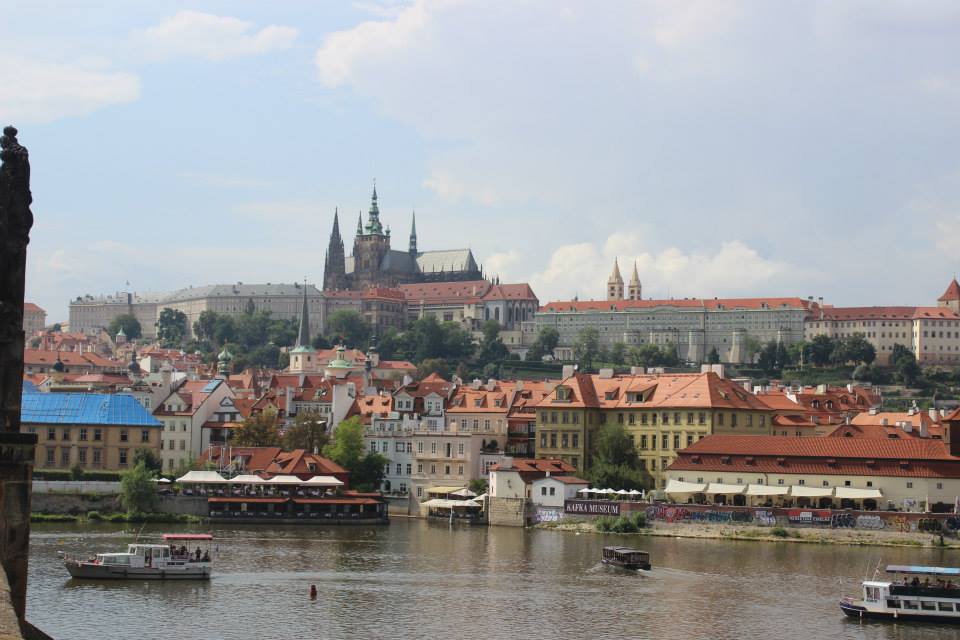
Overlooking the entire city is Prazsky Hrad, or Prague Castle, which is well worth the visit for the views alone. If you’re a history head, then the castle is the best place to learn about the city’s past. Some parts are free to the public, if you just want to have a stroll around the castle grounds, while others require a ticket for entry.
If you’re wondering what that sweet, sugary scent is in the air as you wander around the streets of Prague, then that would be Staroceske Trdlo – a chewy, cinnamon, sugar-dusted pastry. Just try it. That is all.
Krakow
Referred to by locals as “The Real Capital of Poland”, Krakow is definitely underestimated when it comes to European cities. Post-communism, it has developed into a cultural hub of excellence – from its exciting galleries and museums to its quality cafés, pubs and nightlife. The Main Market Square, an impressive 10 acre square in the centre of Krakow, is one of its main attractions. Here you will find Kosciol Mariacki, otherwise known as The Church of the Virgin Mary, where a trumpet player sticks his head out of the tower on the hour, every hour, and gives you a tune. Legend has it that during the 2012 UEFA Euros the English team, who stayed in a hotel just around the corner, blamed the trumpet player for their poor performance on the field as he “kept them up all night”.
If you like walking tours, then Krakow is top of the list when it comes to witty guides and really interesting tours. A general tour of the city will bring you to all the main attractions, such as the hilltop castle. The tour of the Jewish Quarters is particularly interesting. Like most central European cities, Krakow is steeped in WWII history, and this tour gives a great insight into the life of the Jewish community in Krakow during Hitler’s reign. Famous sites include the old ghetto walls and Schindler’s Factory. The infamous Auschwitz Concentration Camp is just an hour outside the city, and buses travel to and from the site daily.
Budapest
Hungary is famous for its thermal springs with healing qualities, and you cannot visit Budapest without a few hours of relaxation in the baths. Also known as ‘The City of Baths’, Budapest has many different medicinal baths to try. Széchenyi is one of the best public baths, with both indoor and outdoor baths of varying temperatures and medicinal qualities. If you’re visiting during the summer months then hit it’s famous bath parties for a night you’re guaranteed (not) to remember.
If you fancy some sightseeing, Gellért Hill offers the best view of Budapest and the river Danube, which separates Buda on the west bank from Pest on the east. Dohány Street Synagogue is Europe’s largest synagogue, and marking the border of Budapest’s Jewish Ghetto, is steeped in the history of World War II. If you take a stroll along the banks of the Danube on the east, you will come across ‘The Shoes on the Danube Bank’, a Jewish memorial for the jews who were ordered to take their shoes off and line up to be shot into the river. You will also find Hungary’s impressive Parliament Buildings along this bank.
The hop-on hop-off City Bus Tour is probably the best way to get around to all of the attractions in Budapest, working out about €20, the buses come around every 15 minutes and will save you time and walking on a short city break. As for the local cuisine, you cannot leave without trying some traditional goulash, a perfect dish for a cold winters day.


You must be logged in to post a comment.