Tag: poverty

  • The main concerns of young Irish in today’s hectic world 

    The main concerns of young Irish in today’s hectic world 

    A new survey shows that Ireland faces several challenges and major international problems, which make it hard for young people to grow up with confidence and ease when looking towards the future.  

    According to the most recent Central Statistics Office (CSO) “Growing Up in Ireland” survey, people aged 25 are mostly concerned about housing and poverty, with domestic issues being the most impactful. 

    Their concern is understandable. This is not only a policy issue but also a real and ongoing challenge. Many people in Ireland are aware of it through their own experience, or through family members and friends who are facing housing difficulties. 

    New stories emerge every week of students commuting long distances, couples in their 30s trapped in shared flats, or young adults who simply cannot afford to move out from their parents.  

    In total, over ten thousand people were officially homeless in Ireland in 2022, and more than 7,200 of them were in Dublin – a city rapidly becoming unliveable for many.   

    Although poverty and housing instability often come hand in hand, one of the main issues facing Irish families of all backgrounds is finding safe, reasonably priced homes. According to the latest government statistics, as of December 2024, more than 2,000 families in Ireland were residing in emergency housing. 

    This has a huge impact on children, as homelessness affects every aspect of their lives from infancy to young adulthood. Temple Street Hospital research shows that homelessness has a negative influence on a child’s physical, emotional, cognitive, and social development. 

    Even though the number of homeless people for young adults is not the highest out of the age groups, it is still a significant number, despite Ireland having one of Europe’s lowest youth unemployment rates (ages 15-24). 

    Ireland’s youth unemployment rate appears to be encouraging. Compared to several other EU member states, including Spain and Greece, where youth unemployment still surpasses 25%, the Irish percentage is far lower at only 12% of those aged 15-24 being unemployed or out of education. 

    But having a job does not guarantee housing access. Many young Irish workers are underemployed, working part-time, on zero-hour contracts, short term or temporary employment, and sometimes without any benefits or security being offered with the contract.  

    New data from the CSO shows that 18% of 25-year-olds went back to their parents’ house after attempting to live on their own, while 43% have never left. This indicates that by their mid-twenties, over 60% of young adults remain in the family home. Many of whom do so out of necessity rather than choice.  

    The numbers show a generation trapped by rising rents, stagnating incomes, and a property market that continues to price everyone out of the market but the wealthiest. While Ireland has one of Europe’s fastest-growing economies, many of its younger residents and workers are missing out on that wealth.  

    Having a stable place to live is one of the basic prerequisites for being able to engage as a full member of society and build your own independence, future and family. Yet it has become a privilege that is denied for so many young people in Ireland.  

    High pricing, a lack of availability, and low-quality housing are causing stress and worry, forcing thousands of young people to go abroad, including those educated and certified to become much-needed teachers and healthcare workers.  

    Without continuous and engaged government intervention, we risk allowing another generation to grow up not finding in Ireland the security and support they need to thrive.  
  • In her words: from homeless to housed

    In her words: from homeless to housed

    By Robert Geoghegan

    This article consists of both written and spoken word. *Jane’s name has been changed to protect her privacy.

    You could be forgiven if you thought that Dublin city today almost embodies the opening paragraph from Charles Dickens’ book A Tale of Two Cities. Depending on who you talk to, we are nearing the best of times, and again you could ask someone else and they might tell you it is the worst of times.

    *Jane

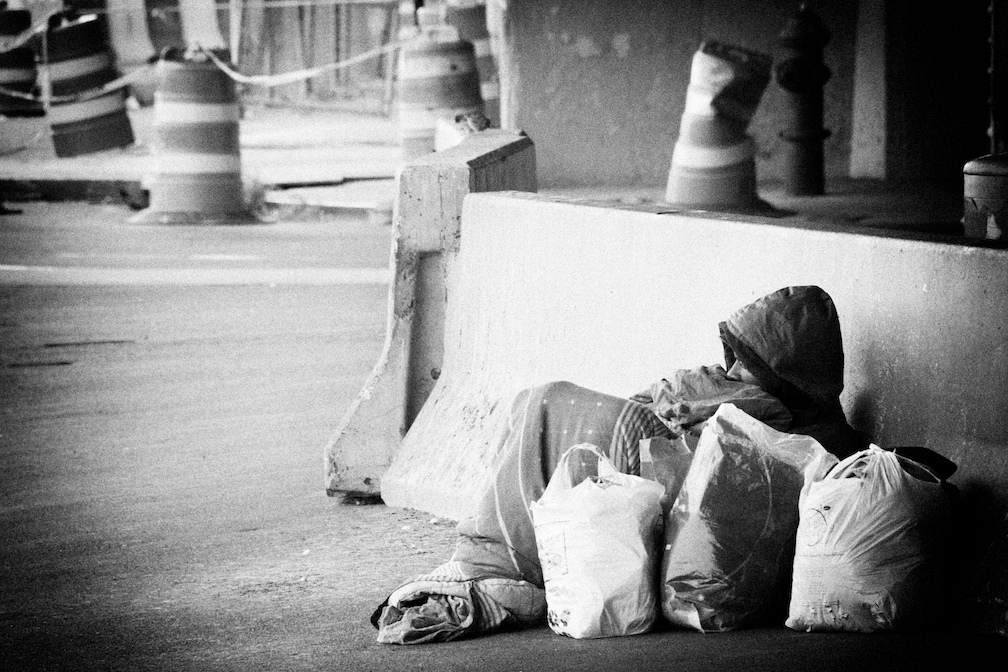
    Ireland has been in the midst of a housing and rental crisis over the last number of years and consequently, there has been an increase, year-on-year, of people finding themselves homeless.  The preconceived notion that all homeless people are either drug addicts or alcoholics, is a notion that should have been challenged a long time ago.  We now know, or at least we should know, that homelessness could happen to anyone.  The current figures say that a total of 10,275 individuals are in emergency accommodation with nearly 1,000 of them being children. Steadily, more people are finding themselves couch surfing, moving back into their parental home or on the brink of poverty just to pay the rent. 

    This is the story of a young woman called Jane* who found herself through a series of unfortunate circumstances that led to her becoming homeless. For Jane, like most people, her adult life began after she opened her Leaving Cert results. Unfortunately, those results were not what Jane was hoping for. Looking for results to anchor her in the age of wisdom, instead they anchored her in an age of young foolishness, tripping up Jane’s dreams of going to college.

    Moving back into your parents’ home is a thought some might consider.  For many there is a sense of shame moving back, for Jane moving back was the only option.  For a while, everything was back on track and being at home offered stability for Jane and her son if only momentarily.

    The spring of hope, for Jane, turned into the winter of despair. Leaving her mother’s house with nothing but a bag of essentials, having left her son with his father, Jane set out to find somewhere to stay for the night.  What do you do? Where do you go? People say school never prepares you for real life, how to pay taxes or balance a budget. School certainly doesn’t tell you what to do when you find yourself in the precarious situation that is homelessness. Jane found herself ringing her local county council who in turn gave her a free phone number to ring.

    When you ring the number, you are greeted with an automated service. You must wait on the phone as numbers count down to zero. For this, you need a fully charged phone or a phone at all for that matter. You then wait until it counts all the way down to 1 and if you are lucky, you’ll have a bed for the night. Most people above the number 50 usually don’t receive one. Upon finding herself lucky enough to get a bed for the night, the reality of Jane’s situation set in.

    Incredulously for Jane, the people staying at the shelter had jobs. They were regular people in difficult circumstances. People you wouldn’t take a second glance at, people you walk beside on the way to work or even work with.

    All throughout her homeless ordeal, Jane was trying to complete a degree course to become a secondary school teacher. Jane found her grades slipping and felt a sense of shame while on her teaching placement; teaching the youth of tomorrow how to best lead their lives, Jane couldn’t help feeling like a fraud and ashamed at finding herself homeless. The emotional strain became too difficult as she juggled being homeless, a single mom away from her child, and a student; so, she decided to defer.

    Things began looking up for Jane when her Housing Assistance Payment (HAP) was accepted by a landlord. HAP is a form of social housing support for people who have long-term housing needs. With this new form of security things began to turn around for Jane.

    She considers herself one of the lucky ones as she managed to transition from being homeless to a private rental accommodation and in the end, managed to finish her degree.

    But the threat of homelessness remains a very real threat for Jane. With the continued rental costs spiralling out of control, who knows how long the best of times will last.

  • Food waste: A problem we produce but don’t talk about

    Food waste: A problem we produce but don’t talk about

    Image: Ross Mc Govern
    Image: Ross Mc Govern Mass amounts of waste

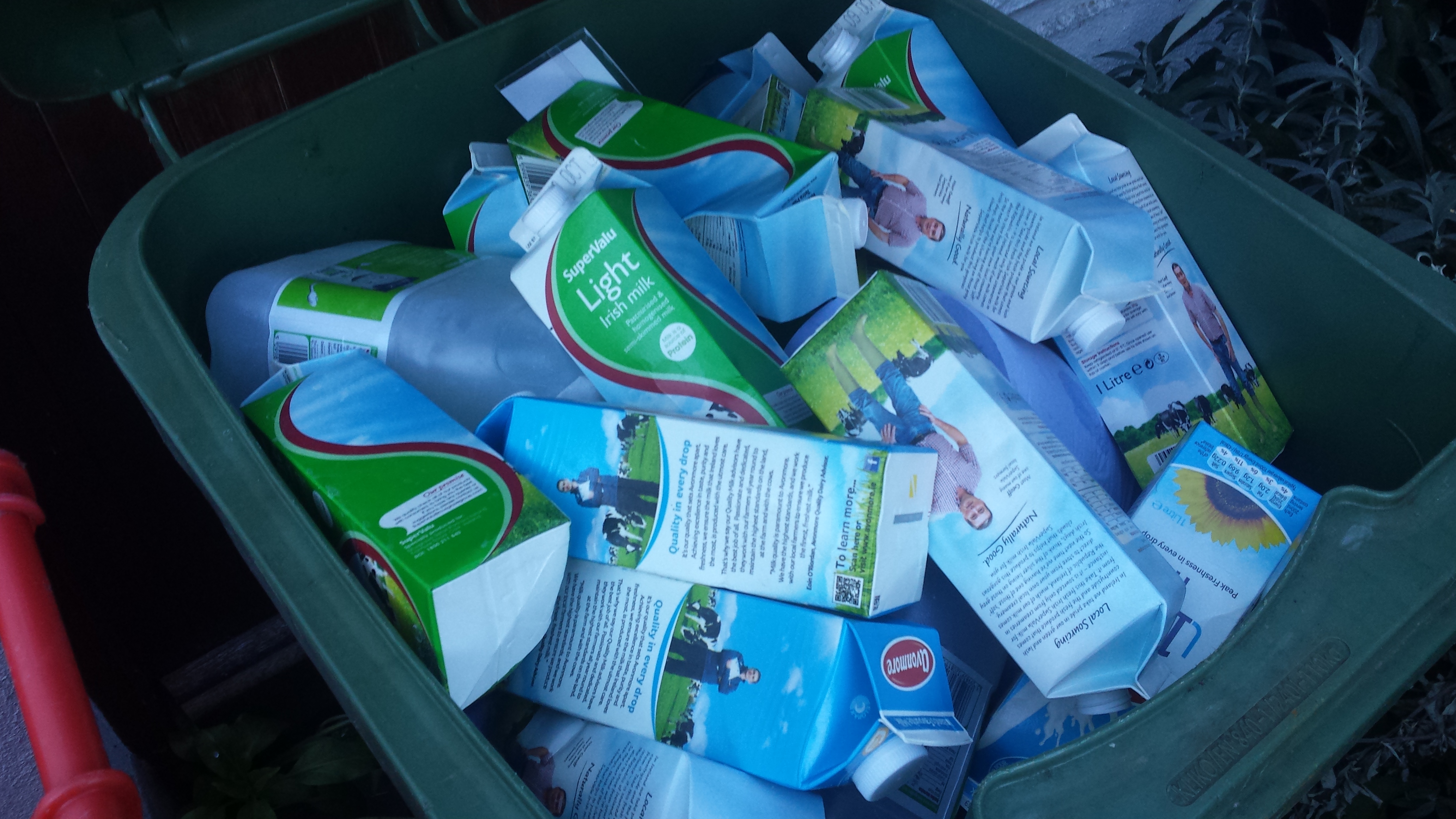
    In Ireland we produce about one million tonnes of food waste annually and if we give each tonne a value of roughly €2000 that equates to over €2 billion of food not being used and going in the bin. It is also estimated that 600,000 people experience some form of food poverty in this country.

    We are ranked fifth worst in Europe for dealing with the problem. Figures like these make sense to people, however many just furrow their brows and make solemn sounds and agree that things are bad, but until you actually see vast quantities of food being thrown out you don’t really understand the situation.

    Image: Ross Mc Govern
    Image: Ross Mc Govern Food in a waste bin in a supermarket

    Picture this: a chicken is born on a factory farm and reared along with a few thousand others. Once it is of killable age it is slaughtered, gutted, beheaded and de-feathered. It comes into a supermarket, via an 18 wheel articulated truck, and is prepared and put into an oven. This roast chicken is then left on a hot counter waiting for someone to buy it, if this doesn’t happen it is put into a trolley at the end of the night and dumped into a bin along with all the other food waste. The chicken’s life has been completely pointless. It has served no function and now only rots.

    In the shop where I work about €4,000 is thrown in the bin every week and this number rises sharply around Christmas to over €10,000. In case you’re wondering, yes I’ve seen whole turkeys being thrown out after the people who ordered the bird got theirs somewhere else. The situation has gotten better over the last few years. The ‘display until’ and ‘sell by’ dates have nearly all been removed from packing, these dates are used to make the stock controller’s job easier. The ‘best before’ and ‘use by’ dates are now the only form of shelf life indication that products have. Food manufactures are inclined to be very cautious when creating these dates for their products as it removes liability for them in case somebody were to ingest spoiled goods. God forbid anyone just used their nose. Fun fact: even ice that has been stored in a freezer has a best before date.

    Image: Ross Mc Govern
    Image: Ross Mc Govern Past the sell by goods are simply thrown out

    There are community based social enterprises that have been set up to combat both problems of food waste and hunger. One of them is foodcloud.ie set up by co-founders Iseult Ward and Aoibheann O’Brien and chef Sophie Morris. It works via a smartphone app or the website.

    A supermarket or restaurant uploads details of their surplus and when the food can be collected. A text is then sent to the nearest community organisation in the area, they accept the offer and collect it directly from the business. Iseult ward’s sees things clearly “one in every four calories produced from food in the world, is wasted. “We want Irish people to think about how they can reduce this waste”.

    Solutions like foodcloud.ie are fantastic but supermarkets are wary of giving away their waste as the fear of someone getting sick looms over their waste policies. Put simply, if half a carrot is a bit soft it can’t just be chopped up and the offending half thrown away, the whole thing needs to be chucked. Many of the organisations wishing to tackle the problem often state that “uncertain demand” in what supermarkets buy contributes to the problem and that reducing this more money can be saved.

    From being on the ground I would have to state that supermarkets accept that they will produce waste and if they remain competitive in their national market, then that means that waste will continue to be produced. Until Irish people are willing to talk about how much food is thrown out in their own houses, the glut that fills this “uncertain demand” will continue to grow in our landfills.