The Central Statistics Office on November 13th released the consumer price index for this year, which shows a 2.9% increase in the inflation rate over the last 12 months, which is the fastest and highest rise of inflation since March of 2024.
The increase will affect the prices of food items such as dairy and pastries. The price of poultry and meat increased by 6.6% which will affect the price of viands such as Chicken, beef, and turkey.
Meat prices at dunnes – Photo By: Synoah Penaflorida
Aside from household staples, an increase of 7.7% in health insurance, 3.7% in electricity, and 3.6% in rent was reported in the current figures.
Going around Dublin city centre, TheCity asked a few people how much they will be spending this Christmas.
Economist, Dr. Clare O’Mahony, will also be commenting on the hiking prices this holiday season.
A new report from the Central Statistics Office (CSO) shows the annual rate of inflation, as measured by the Consumer Price Index (CPI), rose to 5.3% higher in November 2021 compared with November 2020. The largest annual change since June 2001 (+5.3%).
The most notable changes in the year were increases in Transport (+16.2%), Housing, Water, Electricity, Gas & Other Fuels (+12.0%), Restaurants & Hotels (+3.9%) and Alcoholic Beverages & Tobacco (+3.4%).
A decrease occurred in Miscellaneous Goods & Services (-0.3%).
Consumer Prices in November increased by 0.6% in the month. This is the thirteenth month in a row that has shown monthly inflation. Prices rose by 0.3% in November 2020.
The biggest monthly price increases were in Clothing & Footwear (+3.3%) and Transport (+1.3%). There were decreases in Alcoholic Beverages & Tobacco (-0.7%) and Restaurants & Hotels (-0.1%).
The largest upward contributions to the CPI in the year were Transport (+2.07%), Housing, Water, Electricity, Gas & Other Fuels (+1.92%), Restaurants & Hotels (+0.61%) and Alcoholic Beverages & Tobacco (+0.23%).
The largest downward contribution to the CPI in the year was Miscellaneous Goods & Services (-0.03%).
The main factors contributing to the annual change were as follows:
Transportincreased primarily due to higher prices for diesel, petrol and motor cars, an increase in airfares and a rise in the cost of services in respect of personal transport equipment.
Housing, Water, Electricity, Gas & Other Fuelsrose mainly due to higher rents and mortgage interest repayments and an increase in the cost of electricity, home heating oil and gas.
Restaurants & Hotels increased primarily due to a rise in the cost of hotel accommodation and higher prices for alcoholic drinks and food consumed in licensed premises, restaurants, cafes etc.
Alcoholic Beverages & Tobacco rose mainly due to an increase in the cost of tobacco products and higher prices for wine sold in supermarkets and off licences.
Miscellaneous Goods & Servicesdecreased primarily due to a fall in the cost of motor insurance premiums and lower prices for jewellery, clocks & watches and articles & products for personal care. This decrease was partially offset by higher health insurance premiums.
The sub index for Services rose by 5.3% in the year to November, while Goods increased by 5.0%. Services, excluding mortgage interest repayments, increased by 5.4% in the year since November 2020.
The CPI excluding tobacco increased by 0.6% in the month of November and rose by 5.3% in the year. The CPI excluding mortgage interest increased by 0.6% in the month and rose by 5.3% in the year.
Prices on average, as measured by the EU Harmonised Index of Consumer Prices (HICP), increased by 5.4% compared with November 2020.
The most notable changes in the year were increases in Transport (+17.1%), Housing, Water, Electricity, Gas & Other Fuels (+14.3%), Restaurants & Hotels (+3.9%) and Alcoholic Beverages & Tobacco (+3.4%). There was a decrease in Miscellaneous Goods & Services (-0.9%).
The HICP increased by 0.6% in the month. This compares to an increase of 0.3% recorded in November of last year.
The most significant monthly price changes were increases in Clothing & Footwear (+3.3%) and Housing, Water, Electricity, Gas & Other Fuels (+1.5%). There were decreases in Alcoholic Beverages & Tobacco (-0.8%) and Restaurants & Hotels (-0.2%).
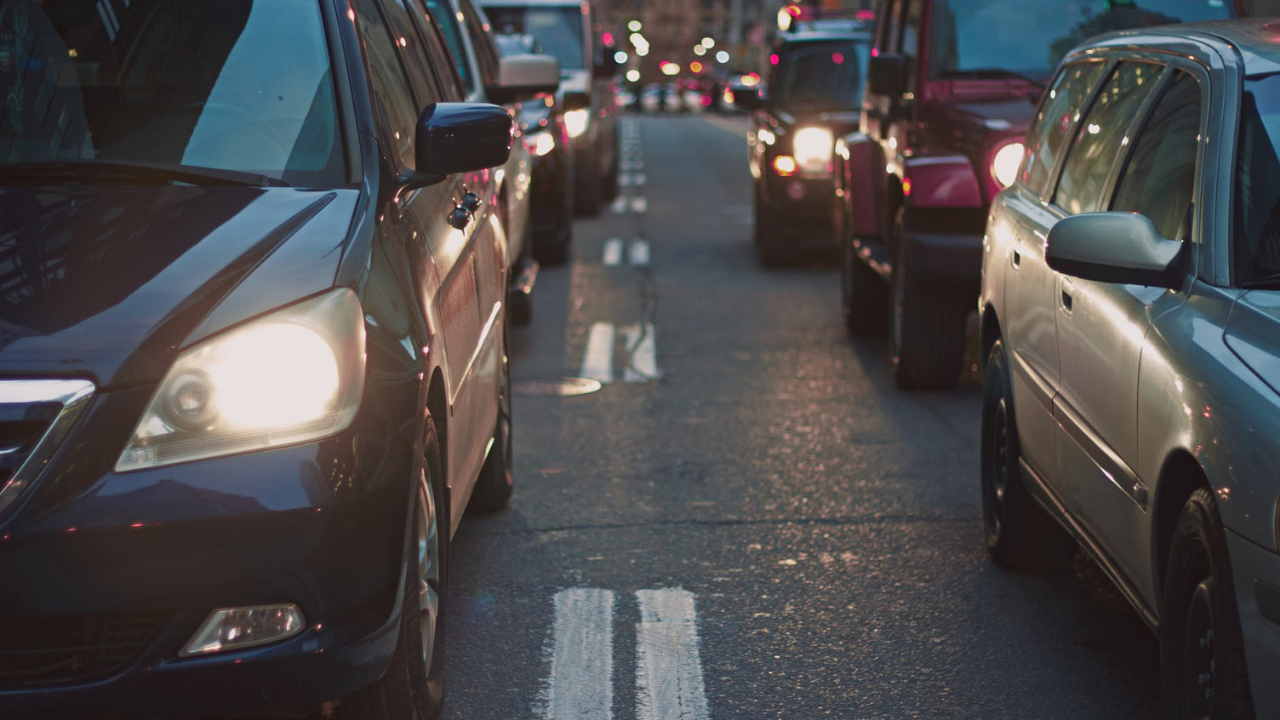
Will we go back to pre-pandemic bumper-to-bumper traffic jams? Image courtesy of Life of Pix via Pexels.com
Over the last year, Dublin’s city centre has gone through periods of being like a ghost town, with shops, restaurants, and retail outlets shut down, causing reduced traffic and nearly barren streets due to restrictions.
Drivers, businesses, cyclists, and pedestrians are all competing for space in the city, and with the pandemic’s demand for outdoor spaces the competition for space is more prevalent than ever.
Reducing the number of cars in the city isn’t anything new – before the pandemic, the installation of Luas tracks meant fewer streets in the city could be driven through. Dublin County Council’s city development plan has, since 2016, been working to make Dublin into a pedestrian and cyclist friendly city.
If you do choose to venture into the city by car, the parking prices are often sky-high, with spaces ranging from 60 cent to a whopping €3.20 an hour.
Is Dublin’s city centre destined to become pedestrianised, with public transport walking, and cycling being the only way to venture into the heart of the city? And is that such a bad thing?
I asked the people of Dublin for their thoughts on the matter.
“At 30km you’re barely moving. I understand safety but I don’t think it’s fair”
Brian
Earlier this month, the Love 30 campaign backed by Lord Mayor of Dublin Hazel Chu, sought to bring the speed limit of the city down to a blanket 30km/h in an effort to improve safety and reduce road accidents.
However, while the campaign garnered some support it was also met with backlash from certain members of the public and some county councillors.
The campaigners are now attempting to bring in a 40km/h, which will apply to roads like Dorset Street and the Clontarf Road.
“At 30km you’re barely moving. I understand [it for] safety, but I don’t think it’s fair. The guy in the car now, the motorist, is being penalised for every single thing. People are paying high car tax and insurance, and I think they have a right to bring their car [into Dublin city] and pay exorbitant prices in car parks,” says Brian, a Dublin native.
These streets belong to the pedestrian! Image courtesy of Jeshoots.com via Pexels.com
This frustration is understandable for those working by car or van in and around the city. Changes in infrastructure over the last few years has already meant changing routes and a reduced speed limit, which can lead to further disruption of services and cause motorists frustration and stress.
“The government and the councils have tried to get rid of cars and traffic from the city centre for long enough, some of us live areas not too far from the city who do not have an adequate public transport system”
Brída
What about those sharing the road with motorists, the people whose safety this campaign is trying to protect – would a lower speed limit make the city safer?
“Absolutely, especially for cyclists as well. I know there’s a lot of talk ‘oh you know they’re not paying road tax’ but a lot of cyclists are motorists as well, and they cycle in the city. I’ve cycled on the ‘Tunnel of Death’ on Westmoreland street and it’s tricky enough, especially for cyclists but pedestrians as well,” says Jo, an avid cyclist who I met on Grafton Street.
While there are some clear benefits to this proposal, it’s unclear if the Love 30 campaign will be robust enough to stave off its critics, and that plan may already be dead in the water.
However, this campaign isn’t the only plan to change the city’s infrastructure.
Minister for Transport Eamon Ryan and the department of transport have released a paper proposing that congestion charges should be implemented in Dublin and Cork city.
This is in an effort to reduce carbon emissions by discouraging motorists from driving in the city – reducing traffic and air pollution.
“Today is my first time in the city for god knows how long and I’ve just found it so easy to cross the road”
Stephen
“A lot of people already leave their cars in train stations and travel in by train,” says Graham from Dublin, who agrees with the idea of congestion charges.
For pedestrians, less traffic around Dublin city is a nice prospect – especially when they’ve become accustomed to it after a year of lockdown.
“Today is my first time in the city for god knows how long and I’ve just found it so easy to cross the road. There’s buses but there’s not so many cars, which I was surprised by because I thought people were genuinely back at work, and I’ve really enjoyed that, but then again I’m a bit of an introvert,” says Stephen.
Apart from pleasing the pedestrians, the environmental benefits of congestion charges are clear, and can be seen by the success of cities like Stockholm.
But, is the city ready for a change like this?
“The government and the councils have tried to get rid of cars and traffic from the city centre for long enough. Some of us live areas not too far from the city that do not have an adequate public transport system. We’re not near the Luas, not near the proposed underground and we have an appalling bus system,” says Brída, a Rathfarnham native who feels strongly that the government should focus on improving public services before ridding the city of cars.
It’s clear that something needs to change, and it needs to provide adequate services to the public while considering the environmental impact.
If we are to tackle emissions in a meaningful way traffic needs to be reduced, but if the intention is to pedestrianise the city further, the public transport system may need a closer look.







You must be logged in to post a comment.