7,484 people were committed to Irish prisons in 2017, according to the Irish Prison service, figures obtained under the Freedom of Information Act show.
The latest figures from the Irish Prison Service show the number of people committed to Irish prisons has decreased significantly since 2014. In 2014 13,408 people were sent to Irish prison. This figure increased to 14,182 in 2015. 2016 saw marked improvement with a drop down to 12,579. While 2017 saw the level almost halve; down to 7,484.
Of this number, 6,043 were male, with 1,081 females entering prison the same year. Irish men and women make up the bulk of the Irish prison population. In 2017, 882 Irish women and 4,844 Irish men were incarcerated here.
This was followed by 15 Polish females and 253 Polish males. The third highest nationality in Irish prison was amongst Romanians; with 39 females and 203 males.
The bulk of the prison population for both males and females is made of persons between the ages of 21 and 40 years. The highest age demographic in 2017 was males and females between 30 and 40 years, with 2,498 men and 2,109 women in this age group committed to prison last year.
For home address, by county, given by persons committed in 2017, Dublin ranks the highest with 2,490 people. This is followed by Cork with 721 and Limerick on 464.
For people who stated their chosen religion to the Irish Prisons Service, Roman Catholics made up the largest demographic on 716 in 2017. Overall, 191 practicing Muslims were in Irish prisons in the same year, while Christians made up the third largest religious group on 189.
There have been 67 deaths in Irish prisons between 2010 and 2017 according to figures released under the Freedom of Information Act 2014.
A high of 14 people died in 2015 while 2012 and 2016 saw the lowest figure since the turn of the decade with just five fatalities. Last year nine inmates died, which was an increase on the previous year.
In 2010, a total of eleven people died which then dropped by five the following year. Nine people died in 2013.
The most common form of death was misadventure, with sixteen deaths categorised in that way.
Fourteen people died from natural causes, while the same amount of people died from suicide. A high of three people took their own lives 2013, while a record four died from natural causes in 2015.
There was one confirmed unlawful killing in 2015, while there are ongoing inquests in relation to twelve incidents since 2010. There are seven active inquests from last year, while two inquests from 2013 are still ongoing.
The Irish Prison Service (IPS) accommodates more than 3,500 prisoners across seven prisons. The IPS compiles data on a daily basis, which when looked at altogether paints a comprehensive picture of life in Ireland’s prisons.
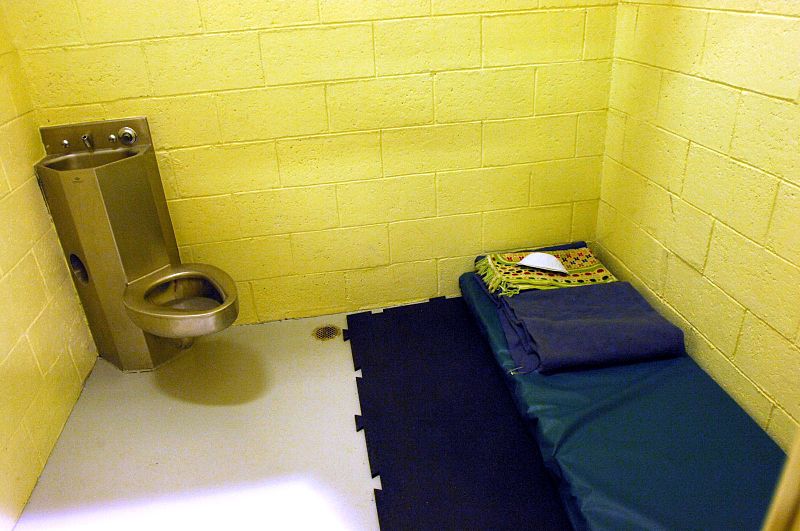
Access to a private toilet at all times is considered a basic right under best practice standards, but in Ireland not everyone has access to one due to upgrades needed in prisons and because of over-crowding.
The following chart shows the number of people who don’t have access to a private toilet at all times. The problem is worst in Cloverhill, a remand prison in Clondalkin where more than 50% of inmates must use a toilet in front of others.
In addition, some 312 prisoners were still ‘slopping out’ their cells in Portlaoise, Limerick and Cork prisons. Compensation claims are expected to be lodged by former prisoners who were subject to this practice, after similar cases in Scotland were brought to a successful conclusion for the claimants.
Access to a private toilet 24 hours a day
Work is underway to eliminate, where possible, the need for prisoners to share cells. Due to increasing capacity numbers just under a third of prisoners are now in shared cells.
In a recent parliamentary question on the subject of shared cells Minister for Justice Frances Fitzgerald pointed out that not everyone in the system wishes to be housed in a single cell.
“It should be borne in mind that in certain cases prisoners are housed together for reasons other than lack of capacity. Family members and friends often elect or are assigned a shared cell,” she said in response to a question tabled by Labour TD Ciarán Lynch.
“Shared cell accommodation can be very beneficial from a management point of view particularly for those who are vulnerable and at risk of self-harm. There will always be a need for certain prisoners to be accommodated together.”
Type of cell accommodation
Under new rules introduced by former Minister for Justice Alan Shatter in 2012, prisoners have the ability to lodge complaints against prison authorities. The most serious of these are investigated by an independent body. In Dublin prisons last year 631 complaints were lodged by prisoners.
Staff in Cloverhill Prison in Dublin had the highest number of complaints made against them by prisoners, with 257 grievances filed.
Some 44 ‘category A’ complaints, which deal with the most serious allegations, were lodged by Cloverhill prisoners last year.
However the IPS said that 24 of these complaints related to one incident and were not upheld after investigation.
Prisoner complaints are divided into six categories, the most serious of which deals with alleged “assault or use of excessive force” as well as “ill treatment, racial abuse and discrimination”.
This category also covers “intimidation and threats” and complaints of this nature are dealt with outside of the prison services due to the gravity of the allegations.
Mountjoy and Wheatfield prisons in the capital were the second and third most likely place for serious complaints to be lodged. Mountjoy prisoners submitted 19 complaints of this type, while in Wheatfield there was 18.
Meanwhile another 109 complaints were lodged in Irish prisons for other serious issues including “verbal abuse of prisoners by staff” or “inappropriate searches”.
Again, Cloverhill was subject to the most complaints under this heading, with 41 lodged.
The Clondalkin prison has a higher turnover than most other Irish prisons which could account for its high level of complaints, a spokesman for the IPS said.
The most common complaints among the Irish prisoner population however, were for basic service level issues.
They lodged 490 complaints in Dublin prisons under this category in 2014, with the Midlands topping the list at 254 complaints.
These cover issues such as “complaints about visits, phone calls, reception issues, missing clothes, not getting post on time, not getting appropriate exercise” according to official guidelines.
Number of complaints per prison
“The fact that prisoners are submitting complaints through the system is evidence that prisoners have a confidence in the system and that any issues they raise will be listened to and addressed by prison management,” a spokesman for the IPS said.
When first given the motion, “Should capital punishment be reintroduced to Ireland?” I thought I would find myself on the argument against reinstatement. However when I sat down to actually think about it, I felt that in certain circumstances it should be.
The death penalty is a very contentious issue. In countries which still utilise it, most notably the United States, it is very rarely far from controversy. “Wrongful conviction” pleas are a common occurrence in criminal cases which result in the death penalty. Famous cases include the Anthony Davis case and that of Lee Harvey Oswald.
This is one of the main reasons why I feel that capital punishment should be reintroduced to Ireland, but only in certain circumstances. I do feel that the majority of criminals should have to serve the full duration of the sentence handed down to them. I also think a life sentence should mean life in prison, not just 25 years with the possibility of early release.
However, if the case arises where a person shows no regard for human life on a grand scale, and tries to destroy as many as possible, I think a life sentence may not be enough. In cases of terrorism or mass murder, the death penalty should be an option as a judicial sentence.
Hypothetically speaking, (I stress “hypothetically”) if someone planted a bomb, or began shooting amongst the crowd on Grafton Street on a busy afternoon, they are showing blatant disregard for the lives of others. They are trying to damage as many lives as they can, not just directly, but indirectly also.
When convicted, the maximum sentence that can currently be handed down to that person in the Republic of Ireland is a life sentence. Why, as tax payers, should we have to pay to keep that person in prison? We are paying for their food, water, shelter and well-being for as long as they are behind bars.
They are a clear danger to society, with no chance of ever being released. This should surely be a clear call for the reintroduction of the death penalty. As stated earlier, I feel the majority of prisoners should have to serve their time in full. The length of their sentence should accurately reflect the severity of their crime so they have the time to reflect upon what they did.
A (hypothetical) mass murderer or terrorist isn’t going to be affected by their time behind bars. They should face the death penalty so that the State can wipe their hands of them and not have to support them in any way.



You must be logged in to post a comment.