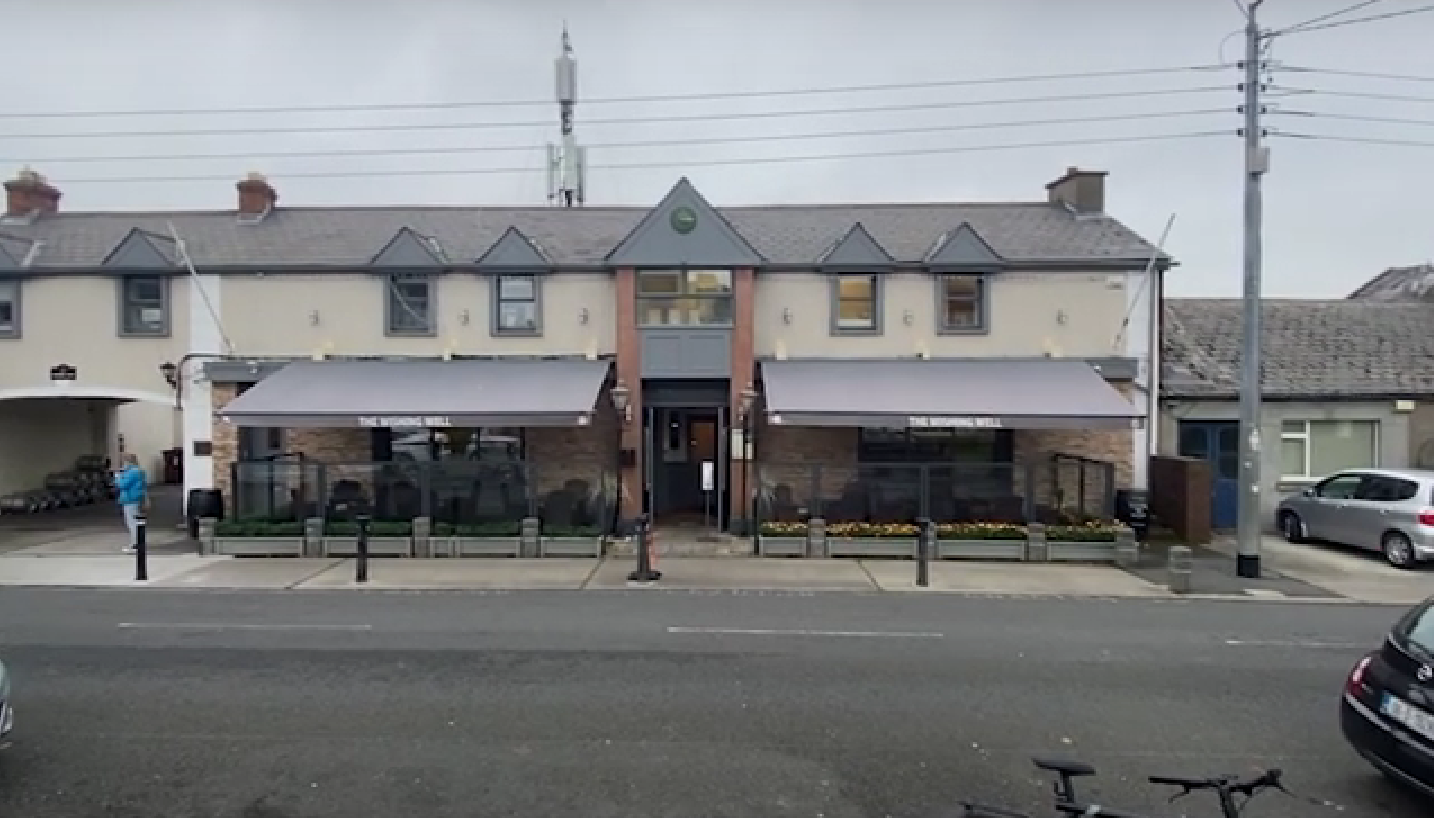
The local bar scene has been drastically affected by COVID-19. Business’ needs to adapt to uncertain circumstances. Christopher O’Flaherty from “TheCity.ie” sat down with Rob and Gar owners of the wishing well Blackrock since 1992, nicknamed “The Well” by locals. Rob and Gar explain what they did to adjust to COVID-19 and how it has affected the Wishing Well. The answer may surprise you!
Facebook Group Old Dublin Pubs is a place to share nostalgic memories of wet pubs that are long-gone. Rebecca Daly spoke to members of the group to find out what the group offers and why it is so relevant today.
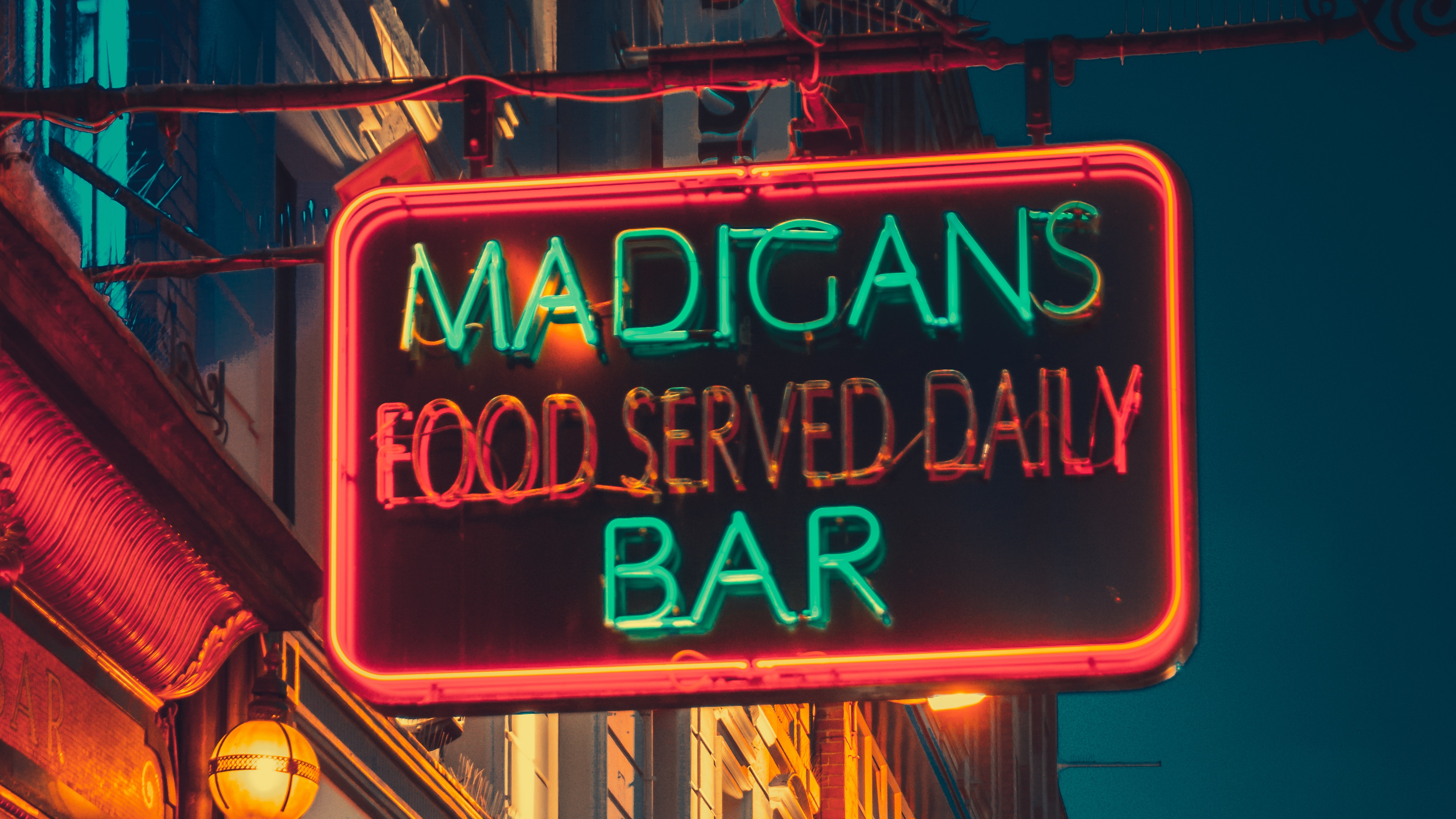
Madigans Bar on Amiens Street. Photo by Lucian Petronel Potlog via Pexels.com
The 15th of March brought with it the closure of all pubs in the country as a result of concerns over the then-new virus COVID-19.
While wet pubs in other counties were given the green light to re-open on the 21st of September, Dublin’s pubs were told to remain shut due to a rise in positive coronavirus cases. Now with the introduction of Level 5, it will be another four weeks at least before they can even consider welcoming patrons in again.
Eager pub-goers in the capital have certainly been missing the act of heading to their local for a few rounds with their friends.
However, one Facebook group has come together to recall times spent in their favourite pubs over the years and share retro photos of long-gone spots.
Set up in 2014 by a group of Dubliners, Old Dublin Pubs looks to bring nostalgic memories of popular watering holes together. Some of the charming images shared there are of pubs that shut their doors before the new millennium, while others only shut their doors in March.
Regardless of if the pubs have still traded up until the pandemic, the group asks members to focus on pre-2000s images and stories.
Throughout the hundreds of photos on their page, you’ll find familiar places such as the Brazen Head, The Liberty Belle and Toners, as well as pubs that have long since shut down or changed their name. Some of the images even go back as far as the 1900s.
Under each photo are comments from strangers around the county. They recount memories of lively nights filled with song, dance and conversation
Some photos feature famous faces in their local pubs such as The Dubliners, Phil Lynott and even Christy Brown.
Pub adverts are also featured on the page, which can bring a whole new level of nostalgia to the group members. One 1967 ad for The Embankment in Tallaght reads, “There you can leave behind congested city streets, park your car in the roomy car park, take a seat in the spacious Lounge, and relax over your drinks to the best of entertainment.”
Tony Carey from Tallaght had his first pint of Guinness in the Tap Pub in Chapelizod in 1964. Four years later, he became a distillery delivery driver until 1986. Carey would deliver to pubs across the country as well as in Dublin City. He recalls that in those days, bartenders would offer free pints to their delivery drivers.
For Carey, going to the pub was not about alcohol. It was more a social event than an opportunity to drink.
Joining the Old Dublin Pubs group allowed him and many others like him to recall the golden days in their favourite spots.
“It’s like going down memory lane of one’s social life of the past.” He said.
The group helps people to relive the joy of heading to the pub in pre-Covid times. Carey said, “It’s important to remember the Dublin culture of socialising in different ways, and of the enjoyment of being part of that and remembering friends present and past who were part of your life.”
Old Dublin Pubs now has 5,100 members and will allow anyone with an interest in getting nostalgic over some of Dublin’s greatest pubs to join.
With many pubs across the country forced to close their doors for a second time due to the rise in cases in recent weeks, it breathes more uncertainty for the license trade. Ciaron Noble spoke with Kildare man Dave Mahon whose family have been at the heart of the license trade in Leinster for over half a century.
Publicans are closing their doors for the second time this year. Video courtesy of Mahon’s pub in Kildare.
Many businesses have been massively impacted by the pandemic, which has been causing havoc within many sectors and greatly damaging our economy. You could argue however that the pub/license trade has felt the greatest wrath of business closures more than any other industry.
JJ Mahons of Kildare Town has been in the wholesale business for over 70 years, while also running a pub on the main street. Over time they have become one of the largest independent drink distributors in the Leinster area and like pubs nationwide, they have been massively affected by Covid-19.
The pub itself has only been open for a period of two weeks since the middle of March. “The wholesale/bottling business hasn’t really functioned properly since the start of March – we would have had staff of at least 30 and now we probably have less than six people, and three of those are family,” said manager Dave Mahon. “Percentage wise currently we are probably doing 5-10% of our usual turnover.”
There are undoubtedly countless pubs in a similar boat to the one Mahons find themselves in. Many of the pubs that were forced to shut in March have had to close their doors permanently and while we are in the midst of the second wave, we might see more publicans forced to close their doors indefinitely. We can’t rule out further waves meaning that it really will be survival of the fittest in the industry.
“The only pubs that will probably survive are the old ones where the mortgage is paid off or where they’re family run, but even at that they’ll need to be doing volume if they’re going to survive,” said Mahon.
It is felt by some publicans that the government should have protected the license trade by introducing a minimum union price on sales of alcohol across supermarkets and other outlets to enable publicans to compete with prices.
“Let’s be honest here, why would anyone go to the pub if you can buy a bottle of vodka in the supermarket for half nothing – if the government was to do anything for the license trade they need to introduce minimum unit pricing,” Mahon urged.
Since the budget last week, the government hae brought in a new support system that will help the pub and hospitality sector. The plan will see businesses who have been forced to close because of current restrictions receive up to a maximum of €5,000 per week. This is a proposal that generally seems to be welcomed by many, as a starting point for much needed assistance during this crisis.
People haven’t forgotten the video of a packed Temple Bar near the beginning of the national public health emergency, with the majority of publicans agreeing with public health guidelines at the time. “It was the logical thing to do, I get why the government had to close the pubs, it made sense,” Mahon agreed.
Mahon’s, like many pubs across the country, don’t serve food which prohibited them from opening in late June, missing out on the majority of the summer trade. This is a period where the industry is usually quite busy and they make a good slice of their yearly revenue. During this time-frame the virus was at its lowest point, with the number of daily cases greatly reduced from the peak in March/April.
“While the cases were low, I know a good few pubs that could have opened safely with big outdoor areas and at least they would have made a bit of money before the imminent 2nd lockdown, instead of letting us open when cases started to rise again for a period of two weeks,” Mahon remarked.
With more uncertainty looming in the coming months it’s unclear when Mahon’s pub will be allowed to open again and when the wholesale business will be back in full flow once more. Welcoming the idea of additional help from the government, Mahon outlined his hopes for the future, stressing that the government should increase mortgage breaks and help protect the publicans.
“I hope the government encourages people to go to hotels, restaurants and pubs when this is all over, no sector has been financially hit harder than these sectors. Let’s hope we can all weather the storm, it’s a long winter.”
STRICT: Currently, queueing outside supermarkets is the new normal, with many outlets only allowing in one shopper at a time and banning children in some cases as Coronavirus continues to spread (Photo: Paul Caffrey)
During the month of March, the population went on a €363million panic-buying spree. The shops are much calmer now, but queuing outside supermarkets — with stricter controls on how many customers can enter a store at any one time —has become the new normal. In words, pictures and video, TheCity.ie’s Paul Caffreyhas been keeping track of the “shopageddon” phenomenon since March 13
“No sausages. No teabags. No potatoes,” the senior security guard at a north Dublin supermarket boomed with a wry grin to a colleague over his two-way radio.
The weary-looking herds of shoppers rushing from one aisle to another — just trying to grab what they can — didn’t seem to have registered a word of his worrying summary.
But that was only the start: there was no bread left and most of the fruit, vegetables and frozen food were gone, too – even though there was a full delivery to this store at eight o’clock this morning.
Meanwhile, queues for the checkouts — one family after another with an overflowing full-size shopping trolley — were snaking back into the aisles.
It was nearly 6pm on the evening of Friday, March 13 at Tesco Kilbarrack in north Dublin — 31 hours since Leo Varadkar announced a virtual shutdown of the country on account of the global Covid-19 outbreak — and the place was full of people completely ignoring Government pleas not to panic buy.
Throughout this large store, which acts as a lifeline to thousands of families and elderly people in the long-established north Dublin areas of Raheny, Kilbarrack, Coolock, Artane and Donaghmede, there was an air of quiet panic.
Even though people here were keeping calm and being respectful to others, many seemed grimly determined to buy up everything in sight.
However, this “emergency” buying wasn’t quite what you might put at the top of your essentials list for what was then expected to be a fortnight of being housebound. At one checkout, a man was hurriedly purchasing exactly 20 Easter eggs and not much else.
NEW ORDER: Local councils were quick to create new markings on walkways to reflect the social distancing rules intended to combat the spread of Covid-19 (Photo: Paul Caffrey)
At 11am on Thursday, March 12, the Taoiseach announced from Washington that all colleges, schools and various other public facilities would close for at least two weeks.
Up until that moment, students at TU Dublin Aungier Street had been assured by college officials it was largely “business as usual”, with classes proceeding as normal.
Everything changed on that Thursday morning, when students were suddenly told to leave the building by 6pm and not return until further notice.
Similar to the situation in supermarkets, the college library was gripped by a sense of panic as students anxiously rushed to get the books and other materials they’d need to complete their assignments (not due for months).
“If people go out and buy products that they don’t need to stockpile, they are going to cause a problem,” Minister Humphreys warned on Thursday, March 12. And she tweeted the following day: “Shop as normal.”
But her advice, echoed by Health Minister Simon Harris, was largely ignored. In scenes that have been echoed the world over, throngs of eager shoppers descended on supermarkets and chemists, even leading to some forced store closures.
Tesco in Clarehall on Dublin’s Malahide Road was forced to close temporarily on Thursday, March 12 for restocking, while Tesco Liffey Valley reportedly shut down for 30 minutes that day after a big influx of customers. Lidl and Aldi then introduced “product purchasing limits” on selected items.
Gardaí were placed on alert, with officers told to “patrol the environs of supermarkets and chemists, with a view to providing comfort and reassurance” to shoppers, according to a memo sent by Assistant Garda Commissioner Pat Leahy to rank-and-file members on the night of Thursday, March 12.
SLICED PANIC: This north Dublin Tesco was fully sold out of bread by midday on Friday, March 13 – but these shelves had been full only three hours earlier (Photo: Paul Caffrey)
On Friday March 13, my first visit to Tesco Kilbarrack is at 9.30am, when stocks are at healthy levels thanks to an 8am delivery.
I recognise a friendly local taxi driver who wisely makes straight for a well-stocked bread aisle. By midday, every last sliced pan here will be gone.
Normally stationed at the Dublin Airport rank, he’s decided that his normal place of work is a no-go zone due to the Coronavirus outbreak.
The self-employed middle-aged Dubliner will be out of pocket as a result, but he’s accepting of the situation and even appears relaxed about it.
“There’s no way I could work the airport today. They’ll all be coming back from Cheltenham, full of booze and all over each other, then jumping into my car.
“Not to speak of the people who could be flying in from anywhere in the world. I’ll sit tight for a few days — it’s for the good of our health, after all,” he tells me.
At a café opposite the Tesco, a cautious barista is very short on customers. Wearing a standard-issue facemask, he’s trying to offload his best fresh pastries for the knockdown price of €2 each.
This Tesco store nearly ran out of all fruit and veg by the afternoon of Friday March 13, with bananas, cucumbers, lettuce and potatoes all sold out by 4.30pm (Photo: Paul Caffrey)
When I return to the Tesco itself some hours later, at about 4.30pm, a team of three senior staff is standing near the frozen food section looking suitably grave in a huddle with their arms folded.
The bread section is completely cleared out; I’m told all sliced pans were gone by midday — while most of the fruit, vegetables and frozen food has also disappeared.
It took only four days before that extreme weather eased off and life was largely back to normal.
The managerial team walk around surveying the empty and near-empty shelves, making notes on their clipboards. Pointing to one well-raided cosmetics shelf, one of the executives remarks: “Those will all be gone by tomorrow.”
How one newspaper reported the disquiet in our shops in its Friday, March 13 edition (Photo: Twitter/Irish Daily Star)
At the checkouts, an elderly woman queuing just ahead of me with a modest number of purchases in her black and red tartan wheelie bag is bemused by the slightly frenzied atmosphere and crowds of customers surrounding her.
“I don’t know what all the fuss is about,” she calmly tells me.
“Though, I’m just buying for myself. At least this has made them open a few more checkouts than they normally do, but it’s still not enough, is it?”
Reflecting on the public health emergency at hand, she tells me: “I’m 89, so I’m supposed be in the ‘at-risk’ category, aren’t I?
“But I’m not letting it worry me. I don’t see why we can’t go about our business as normal — as long as we don’t travel.”
Later that afternoon, I call round to my 101-year-old neighbour. She’s exceptionally fit and alert and still leads an active life. I’ve known her since I was a small child and she’s never seemed afraid of anything before.
Despite no official guidelines having yet been issued for the over-70s, she already intends to stay indoors at all times and is resigned to miss Mass, regular coffee mornings with her friends or any other activities involving the outdoors or groups of people for at least a fortnight.
Gesturing towards her television that’s switched to standby while we chat, she insists: “I won’t be going anywhere until this is all over. It’s out there somewhere, so I could catch it.”
DESERTED: Dún Laoghaire town centre at 5pm on the dot on a weekday in March 2020. For decades, this key intersection has been chock-a-block without fail during evening rush hour (Photo: Paul Caffrey)
By the night of Sunday, March 15, this north Dublin Catholic church was in shutdown, with a typed notice on the main doors advising parishioners: “Mass in this church is suspended until further notice.” (Photo: Paul Caffrey)
At midday on Saturday, March 14, I returned to Tesco to find the shelves well stocked again. But, pointing to the bread shelves, the head security guard told me: “If you need any bread, I would get it now.”
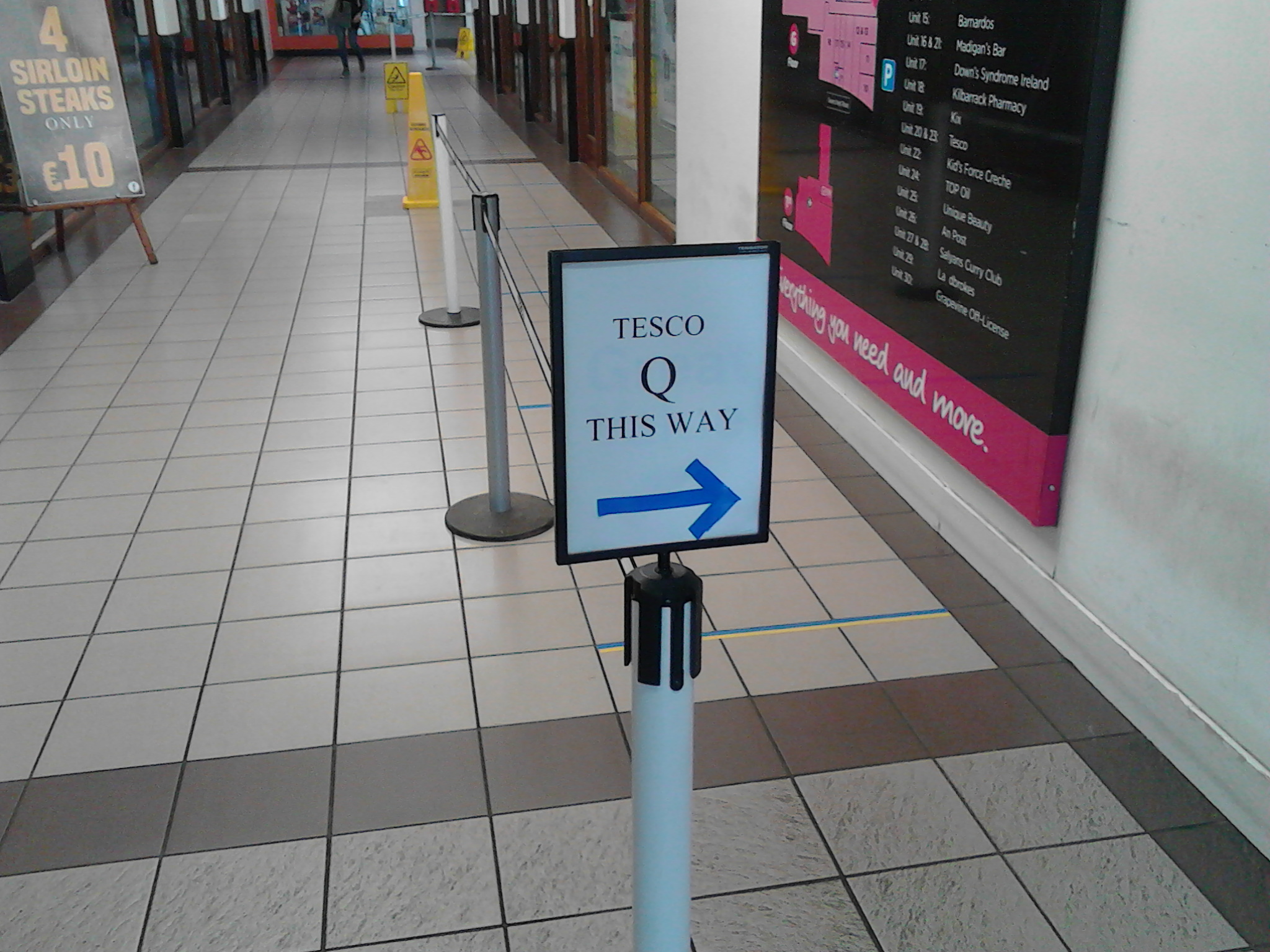
Present-day at the same supermarket, the numbers entering the premises are being more tightly controlled with customers made to queue outside — and only being allowed in one at a time. This is enforced by in-store security.
On Sunday March 15, all pubs were asked to close until March 29 at the earliest — but not all publicans immediately complied.
TheCity.ie called to three Dublin public houses on that Sunday evening and while two were closed completely, one was still defiantly doing a brisk trade.
How one popular north Dublin neighbourhood pub announced its closure on Sunday, March 15 on foot of Government advice (Photo: Paul Caffrey)
You can catch up with how “shopageddon” had eased off by March 26 — only for panic-buying to make a return on March 28, the morning after lockdown was announced — in this follow-up video.
WATCH: ‘The calm before the storm’
This video made by Paul Caffrey for TheCity.ie documents events of March 26-28 in the supermarkets and on the streets of Dublin
During a €363million nationwide panic-buying spree in the second half of March, €3.5million was spent on loo rolls alone, according to consumer habits researchers Nielsen.
Since then, Tesco.ie has asked its customers to shop in store if possible because home-delivery slots have become a “precious resource” that should be set aside for those who need it. The grocery giant has been experiencing high demand for its home-delivery service, with a message on its homepage for registered customers this week warning of low stocks.
This warning to would-be home-delivery service users appeared on Tesco.ie’s homepage for registered customers this week (Photo: Tesco.ie)
As of April 28, there are 19,877 confirmed cases of Covid-19 in the Republic of Ireland. There have been a total of 1,159 deaths related to the virus here.
There has been a lot of debate in recent years surrounding the closing times of pubs and nightclubs in Ireland.
Much unlike a lot of our neighbours on the mainland, closing times for nightclubs especially in Ireland are quite early, around 2 to 3am. This often leads to a bottleneck of people leaving at once, creating a multitude of problems in managing club-goers.
There are many who would rather see the closing times extended to between 4 and 5am, as well as introducing gradual closing, which would ensure that a massive, hard to organise group is not leaving all at once. However, there are also some people who think that the current closing times of pubs and clubs is acceptable.
The City took to the streets to ask people around Dublin what they think of the current situation surrounding pub and club licensing laws.




You must be logged in to post a comment.