“The free movement of persons is a fundamental right guaranteed to European Union (EU) citizens by the Treaties. It is realised through the area of freedom, security and justice without internal borders.” This EU legislation guarantees freedom for its citizens but for the same cannot be said for those outside the strict EU borders. Outside Fortress Europe, migrants endure extreme hardship, risking their lives to enter the EU.
In April around 900 Libyan migrants were drowned off the coast of Sicily in a desperate attempt to cross the EU border and escape the adversity they left behind. TheCity spoke to the journalist and PHD student, Roisin Boyd to discuss how such a tragedy occurred under EU legislation.
Please see below for definitions:
Asylum Seeker – Oxford Dictionary Definition – A person who has left their home country as a political refugee and is seeking asylum in another: ‘only asylum seekers who are granted refugee status are allowed to work in the country’
Refugee – Oxford Dictionary Definition – A person who has been forced to leave their country in order to escape war, persecution or natural disaster: ‘tens of thousands of refugees fled their homes’
Migrant – Oxford Dictionary Definition – A person who moves from one place to another in order to find work or better living conditions.
For more information on this topic please click below:
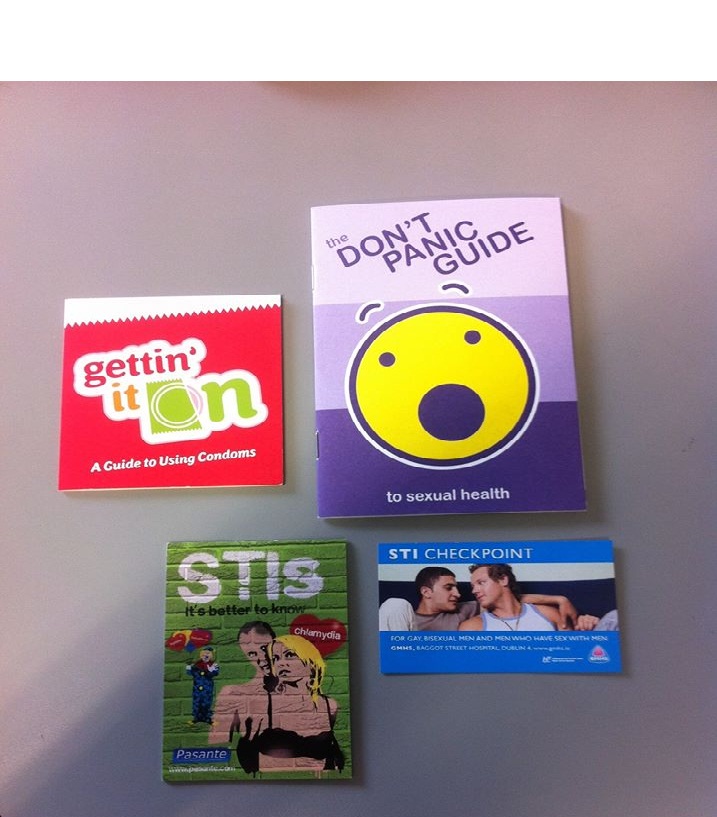
Pamphlets from DIT medical centre. Photo by Rachael Hussey
Ireland has experienced huge changes in society over the last thirty years. While traditionally Ireland was a predominantly catholic and conservative country, attitudes and behaviours around sex are changing and with a more liberal contemporary Irish population emerging, our sex lives have transformed along with this.
The National Medicines Information Centre says, “A recent Irish study found that there was a lack of awareness amongst young people (17-34 years) of symptoms suggestive of STIs, and that there were significant levels of high risk behaviour.”
In 2006 the Crisis Pregnancy Agency and the Department of Health and Children published research on The Irish Study of Sexual Health and Relationships by UCD. This study analysed the behaviours and attitudes of a group of Irish people in relation to sex, sexuality, contraception and sexually transmitted infections.
The Irish Study of Sexual Health and Relationships by UCD say “There is a great deal of evidence from research that sexual culture in Ireland is undergoing immense change and moving closer to that of the UK and continental Europe.” With these changes, awareness and education surrounding the dangers and challenges faced with unprotected sex needs to be addressed in a more vigorous way, particularly for young adults.
The study revealed that younger people’s attitudes are now more liberal “Between 1973 and 2005, the proportion of Irish people agreeing that sex before marriage is ‘always wrong’ fell from 71% to 6%. Attitudes among younger Irish people have become more liberal at a faster pace than those of older Irish people.” The change in attitudes has impacted on average number of sexual partners for Irish people, which contributes to the higher levels of STIs in young adults. “Although 29% of men overall have had a single partner over lifetime, this proportion increases across age cohorts: 46% of men aged 55-64 reported a single partner compared to 23% of those aged 18 to 24.”
While the rates of partners have increased the risk of contracting a sexually transmitted infection increases with that. Ireland’s change in attitudes and behaviours surrounding sexual activities may not reflect their knowledge and practise. DIT students Louise Casey, 22 years old and Zoe Kinsella, 20 years old, both reveal they first received sex education in fourth year of secondary school but fail to remember any significant information given on STIs. “Just a few scary pictures, that was it” said Zoe Kinsella. Louise Casey remembers an ‘ice-breaker’ with a condom and a banana but admits she “was still a bit foggy on the STI details”.
The first year students feel female contraception methods such as the contraceptive pill impact on the use of condoms. “I think lads definitely rely on the girl to be on the pill and they look at it like it is so handy” says Louise Casey. “I feel like if you are in a relationship and both of you have been checked then you are free to have sex without a condom if you are on the pill but besides that, if you are having sex with random people and you are like ‘well I am not going to get pregnant so that’s fine’ but you can still catch loads of STIs because if that is your attitude, how many other people have that attitude?” says Zoe Kinsella.
The girls see alcohol as a huge factor for unprotected sex rates. Casey says, “When you are drunk nothing matters. You are so much more impulsive, if you want to do it you are going to do it, there is nothing stopping you.”
Chlamydia being the most prevalent STI in Ireland, reveals the highest rates in young adults. According to the Health Protection Surveillance Centre in regards to the 2013 annual report, rates of chlamydia in 2013 were 6,262 with the highest age specific rate in 20-24 year olds. The rate in females (1,060 per 100,000) was almost 1.5 times greater than in males in this age group (687 per 100,000).
Femi Bankole, DIT’s student union welfare officer believes that education is key and thinks it is down to maturity as teenagers leaving secondary school and entering college start experiencing a lot of new things and experiences while education helps navigate young people towards safe sex. Bankole ran a sexual health campaign within the first six weeks of the first semester to ensure new students receive the most knowledge as early as possible.
“Drink and drugs are a huge factor,” says Bankole. On a positive note Bankole sees a rise in the rates of young people who are choosing to get checked out after unprotected sex and an increase in students desire to learn and educate themselves on STIs.
According to The Irish Study of Sexual Health and Relationships by UCD, the most common reasons for non-use among respondents aged 18 to 24 are: drinking alcohol/taking drugs (20%), no contraception available (18%), sex not planned (16%) and not thinking to use contraception (15%). A further 18% of those aged 18 to 24 report ‘no contraception available’, 16% that sex was ‘not planned’ and 15% that they ‘didn’t think to use’. The results suggest that, for the 18-24 group at least, unpreparedness and situational factors such as alcohol and drugs are the major reasons for failing to use contraception.
Overall STI annual rates in Ireland have increased from 2,228 in 1989 to 12,753 in 2013. Alcohol and drugs, access to contraception and freedom are all factors when it comes to the rates of STIs amongst the under 25s. While Femi Bankole, welfare officer in DIT, sees a rise in student’s awareness and education around safe sex, there is still a long way to go in regards safe sex education in the early years, provided in an accessible way. As Zoe Kinsella states, “The most information I have ever received was from the back door of the girls toilets in DIT where they say 80% of women with chlamydia do not know they have it.”
Most of us don’t question how many calories are in a steaming plate of creamy tagliatelle when out for a meal or while ordering our favourite takeaway, but very soon we will not be able to avoid this. In February this year, Ireland’s health minister Leo Varadkar announced that by 2016 all menus from restaurants, takeaways and any establishments serving food must include the calorie information on the menu.
While statistics show that obesity is a growing crisis in Ireland and something that must be tackled – according to the Irish Heart Foundation (IHF) obesity has increased by 67% between 1990 and 2000 – do we really need to know the calorie count for our meals when we’re eating out? What once in Ireland may have been a monthly treat has now turned into a regular occurrence and with so many people eating a number of their meals outside of the home, will calorie information positively impact on Ireland’s obesity crisis?
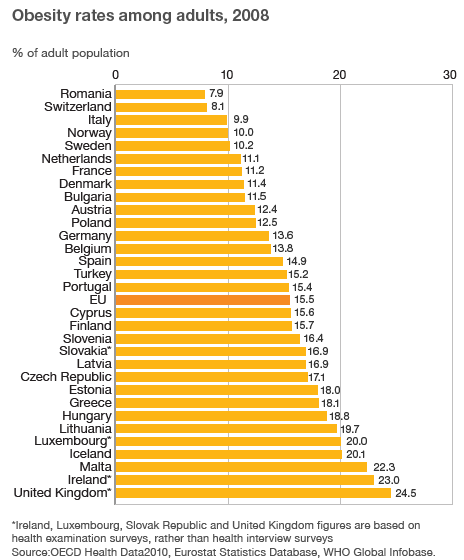
Irish Obesity rates are now the second highest in Europe at 23 percent according to the Organisation for Economic Co-operation and Development. European obesity levels map
2 out of 5 adults are overweight and 1 in 5 children aged between 5 and 12 are overweight or obese.Irish obesity level statistics
“I think there is an issue with passive eating,” says Sinead Shanley a dietician from the Irish Heart Foundation. “There are studies showing after 20 minutes of sitting, there is a massive change in hormones, in your resting metabolic rate, in the calories you burn, in the fat you burn. We are sitting down for much longer, with sedentary lifestyles people are sitting down for at least eight hours a day, and this affects our bodies.”
Obesity may not just be a matter of calories, but of appetites fuelled by the content of our food. Calorie information alone without details of fat, sugar and salt may be missing a big part of the problem. “The overriding message is we are eating too many convenience foods and whether we like it or not, they tend to be high in fat or high in sugar and/or salt,” Shanley says.”Anything that is high in energy and low in nutrition and is eaten on a regular basis makes it really, really difficult to try to control and manage your weight.”
Stacey Machesney, from Glenville Nutrition, agrees that there are many factors contributing to the massive increase in obesity rates in Ireland. “We must look at the overall picture, the increase in fast foods, the accessibility and convenience of cheap processed foods, the increase in the variety of high sugar foods, the cost of the ‘bad’ food compared to the healthy options, taste, increase in sedentary lifestyle, the list goes on,” she says.
While Ireland continues to lose the obesity battle, is it only governments that have a responsibility to keep up the fight? If our changed lifestyles are the main culprit for obesity, then the health sector, the food industry and the education system, among others, need to work together to ensure the problem is dealt with.
“The onus is on the wider community and government to fund and allow charities to go in and implement initiatives and give support,” Shanley says. “It is the responsibility of society, the community and the food industry to try and regulate and make the healthier choices the easier choices. We need to support the individual making the choices.”
People still choose foods based on factors other than health. Machesney recalls: “The Irish Universities Nutrition Alliance carried out a nutrition survey of 1,500 adults between 18 and 90 years of age in 2011 to see what adults are eating. They were given six food choice motives, including taste, cost, health and nutrition, convenience, ‘feel good’ (i.e. mood), and weight control. What do you think was the number one? Taste. Even when adults know about food health they still choose taste over health.”
Rachael from TheCity, spoke with the managers of Joe Burger Jo’Burger on Castle Market Street and Urban Picnic Urban Picnic in George’s Street Arcade about the calorie information on menus and the effects this will have on their business.
Calorie information in restaurants will no doubt help the public on better educating themselves on rough guidelines when eating out, and it is a step in the right direction, but, as Shanley says, “just a step”. She says the Irish Heart Foundation would particularly like to see an emphasis on informing eaters about salt content: “Overeating and excess calories is a real problem in Irish obesity but this information doesn’t highlight the salt, so that would be a huge difficulty we would have with it. If we reduce our salt intake by half a teaspoon per day it would prevent 900 deaths per year from stroke or heart attack.”
The IHF also recommends a traffic light system which looks at fats and the quality of fats along with calories. “We are looking at what type of fats are in the food. From our point of view the quality of fats is really important and that is missed completely.”
Again, Machesney agrees. “I think it is never too late to make a change. As a society we are getting bigger in numbers and in waist sizes. We need to educate ourselves on what we are eating. It is great adding calorie information to menus but then let us also teach people how to read calories properly. It is not enough to count calories but we need to know what portion is being given to protein, carbohydrates and fat. If we could help people to help themselves we will have a better chance than trying to force change.”
There is also the argument that the implementation of calorie information on the culinary industry will have grave repercussions for small businesses due to cost. The Food Safety Authority of Ireland (FSAI) have an online tool for businesses but Shanley suggests there needs to be more support.
Shanley is, in the end, optimistic. “When calories are displayed, restaurants will make more of an effort to actually change and opt for healthier options because they are exposed,” she says. “The government have said calorie posting was one of a range of measures on obesity planning for 2015 and other measures will be revised like healthy eating guidelines a new obesity policy action plan such as the Health and Wellbeing Operational Plan 2015.”
Looking at calories alone is not enough to ensure a healthy balanced diet but it can help people avoid meals that are extremely high in calories – which will more likely be high in fat, sugar and salt. But the focus needs to be more on overall health. The onus is on everyone from the schools to businesses and everyone in between to make the effort to provide healthy foods and to educate people on healthy eating, which in turn will lead to society making better choices with food.
Experts’ Top 3 tips for a healthy lifestyle
Sinead Shanley, dietician from the Irish Heart Foundation, recommends:
Reducing consumption of processed foods. We know now that they are generally the types of foods that are high in the unhealthier fats and also can be high in sugar and salt. Some 65 to 70% of our salt intake comes from processed foods. Freshly prepared food would be number one. That goes from breakfast to lunch boxes to dinners.
Keeping fats to a minimum. Keep high-quality fats in your diet, particularly polyunsaturated, which is in line with the Mediterranean style diet and the diet we advocate.
Prioritising fibre is key as it reduces your bad cholesterol, makes you feel fuller for longer. It is almost a negative calorie, as the body does not absorb any of the calories from fibre as it simply pushes through the body.
Stacey Machesney from Glenville Nutrition recommends:
Eating the Rainbow – ensure you are eating a colourful range of fruits and vegetables.
Eating a little protein with every meal to help balance insulin levels and keep you fuller for longer.
Measuring your portion size. Many people are overeating without even knowing. The recommended meat portion is the size of a deck of cards.
‘We do everything from highbrow arts screenings to very lowbrow cult screenings and everything in between. It is a beautiful and comfortable cultural space filled with like-minded film lovers.’
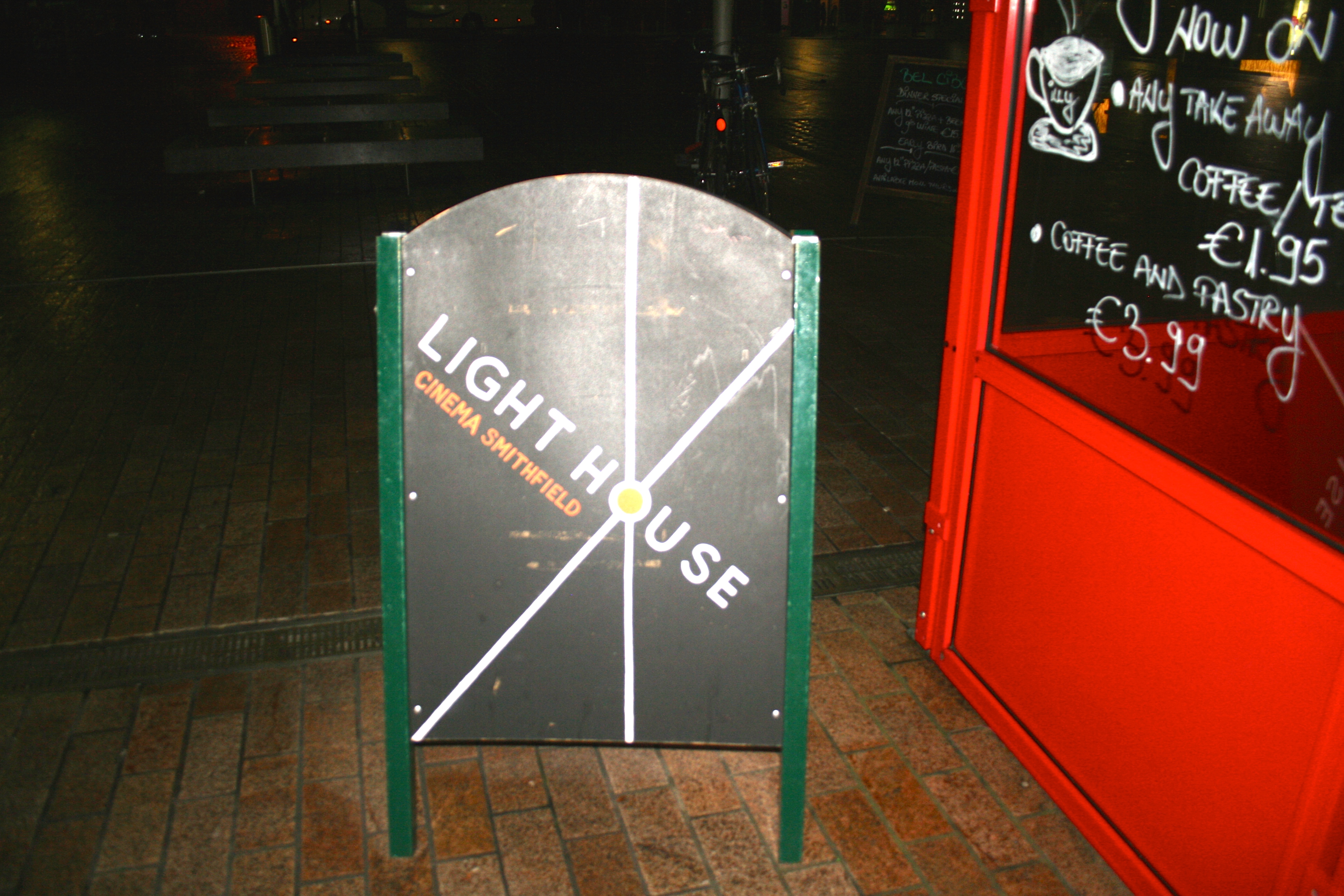
Outdoor sign for Light House Cinema, Smithfield. Photo by Rachael Hussey
Located in Smithfield, the Light House Cinema is an extraordinary space offering a special viewing experience. Whether you are a fan of Indie films and documentaries or you just want a new encounter, away from the generic, offerings of the ‘omniplexes’ scattered across the Dublin streets, this cinema is for you!
Set up in 1988, originally this cinema was based in the city centre on Middle Abbey Street until 1996. In 2008 the cinema was re-established in Smithfield with the help of State funding for the area. It is based in the Market Square development, surrounded by office buildings, residents, cafes and shops.
With four screens and a capacity of 614 seats this cinema offers an intimate and unusual experience. The building itself has an aura of a sizeable art gallery with stylish architecture and a minimalist interior design. The contemporary feel is developed further in its attention to detail such as lightings, the café, wine bar and table tennis set up. The whole atmosphere of the place encourages you to sit back and relax, take some time for yourself and expand your horizons. If cinema is a form of escapism, encouraging viewers to enter a different world for a few hours, then the surroundings at the Light House elevate this escape to the level of art.
Classic Film Posters in Light House Cinema, Smithfield. Photo by Rachael Hussey
Apart from its relaxing atmosphere and interesting location, the film choices for the cinema only add to its charm. With a mixture of small, independent films and a few Hollywood movies, the cinema manages to cater to a wide audience. If there is an exciting new Irish film or a thought-provoking documentary, it is likely you can find it at the Light House. Paired with a slice of decadent chocolate biscuit cake and a glass of red, who can resist?
The cinema is similar to the Irish Film Institute in the city centre where art house cinema is mixed with a cafe and film clubs. This approach, where love of film is paired with arts and culture and interactive participation through loyalty cards and membership is something that is appreciated by film buffs. The IFI has a two-tiered membership card from €25 (€15 concession price) to €99 http://www.ifi.ie/home/membership/ while the Light House offer a three-tier system including a free membership, a €25 membership and a €100 membership. http://www.lighthousecinema.ie/membership.php?PHPSESSID=k57kromja1j7dfathvav97k2v1
Sign for Light House Cafe, Smithfield. Photo by Rachael Hussey
Price wise the Light House fares competitively with bigger cinemas where the focus is on blockbusters and Hollywood movies. For an evening adult ticket in the Light House it is €9, while the Savoy Dublin charges €8.50 and Movies at Dundrum charge €10.20. For students an evening ticket will set you back €7.50 in the Light House and respectively it is €7 at the Savoy Dublin and €8 for Movies at Dundrum.
As many cinema lovers know, the level of comfort while watching a great film is paramount to your experience (along with great snacks). The Light House seats are extremely comfortable and are en par with Movies at Dundrum which is definitely a good thing as both are large and cushy.
Images from the Light House Cinema
This slideshow requires JavaScript.
I spoke with the Light House Cinema’s programmer Charlene Lydon to get her take on what makes the cinema special and how they run their cinema compared with the competition.
What do you think draws viewers to the Light House cinema versus the regular ‘run of the mill’ cinemas around Dublin
C. I think the diversity of the programme that we offer is one of the main attractions to Light House. We do everything from highbrow arts screenings to very lowbrow cult screenings and everything in between. Also the fact that it is a beautiful and comfortable cultural space filled with like-minded film lovers. We aim to ensure that our customers feel at home and comfortable here. We also have a bar which serves wine and craft beer that you can take with you into the screening. That usually sits very well with people.
Between Hollywood Babylon and The Cinema Book Club and art exhibitions, the Light House cinema provides a niche service to the customers. Does this encourage the build up of repeat and loyal customers, building a relationship with the patrons?
C. I believe that Light House can be everything to everyone. We reach out to all kinds of audiences and hopefully the focus that we have on niche films and groups makes the space feel like “theirs” when they come here. Our book club and various cult film nights create great memories for people and I absolutely think (hope!) that creates a very special relationship between the cinema and its audience.
Can you elaborate on the services: Cinema Book Club and Hollywood Babylon and what this provides to customers?
C. Cinema Book Club is both a cultural and a social initiative. We started it about two and a half years ago with the idea of making our space a social space, but also as a way of including some film-themed discourse in a very informal way. We encourage people to read a specific book each month, then we show the big-screen version and have a post-screening chat in the bar afterwards. We have a great group and the discussions are always very lively!
Hollywood Babylon is actually programmed separately to our regular programme. The club does regular monthly screenings of cult films, preceded by “Trailer Trash” which is a playlist of fun, silly, crazy videos so it gets the audience warmed up before the film begins. Always a bit raucous and always very fun!
Is it a priority of the Light House to include these alternative experiences along with just screening films?
C. Definitely! As the programmer of the cinema, I feel that it is really important to satisfy all the various crazy desires of the Dublin cinema-goer which includes the acclaimed films that are released each week, but also classic films, cult films, films that scare you, films that make you dance (of course, dancing is always encouraged, where appropriate) and we even do morning screening at half-volume for parents with babies to attend so they can keep up with the best new films. We also, on very special occasions, throw themed party nights, such as our Lebowski party and our Wes Anderson party and a The Shining-themed Halloween party! It all adds to the individual experience.
As your cinema screens many art house films, documentaries and small indie films, does this put added pressure financially as they are not as lucrative as big Hollywood blockbusters?
C. It certainly means that we have to work harder to promote the films we show. Many of them don’t have big marketing budgets so you won’t see posters on the sides of buses. However, our audience is made up of discerning film lovers who tend to keep their fingers on the pulse so we find that they do their research. We also bolster the programme with one-off event screenings, live arts screenings and film retrospectives.
A lot of people enjoy the differences provided even food wise, the addition of coffees, fresh cakes and wine is very popular. Why do you think this is?
C. The audience that comes here tends to enjoy the fact that we feel very different to the multiplexes. While we do serve the traditional popcorn (of course!) we also offer a selection of lovely cakes and coffees and a great selection of fine wines and craft beers at the bar so you feel that little bit fancier on your night out. AND we have a ping-pong table and board games in our bar for our customers to enjoy.
Are there any plans for the future to further develop the cinema?
C. No plans as yet but we always have something up our sleeve!
I highly recommend you check out the Light House if you have yet to visit this fascinating spot. Take the time to enjoy the experience, whether you go for a coffee before hand, have a glass of wine after the movie or just stopping for a game of ping pong and a stroll through the building, looking at the old movie posters.
While the location may be slightly off the beaten track for some, with car park access available and the red-line Luas a stones throw from Market Square, no Dubliner has an excuse to avoid this cinema!
For the latest film showings at The light House see programme below:
Having spent many weekends in Galway and viewing myself as somewhat of a Galway aficionado, I felt compelled to share my experiences of this small city in the west of Ireland. If you wish to escape the busy streets of Dublin but still want to immerse yourself in urban life, Galway is the perfect spot for you!
With a population of 75,000 it may be small but it is certainly mighty. Galway is known for its stake in the arts and culture scene and there is always something going on in this town. While the weather can often be less than inspiring, you can be sure to find something to do when you pass through and when the weather is good in Galway it oozes an effervescent energy.
In the city centre there are plenty of bars, pubs, restaurants, cafes and shops to keep you entertained for a long weekend or even a week or two holidays. There is always something happening in the city that is different, making your trip that little bit extra special.
What’s on in Galway?
If you are planning a trip in the upcoming weeks there is lots of exciting events. Over the Easter weekend the annual food festival took place at the Spanish Arches. Paired with sunny skies and not a drop of rain in sight (but plenty of wine) it made for a memorable feast. Whatever your taste buds crave, there was something to satisfy it so I recommend checking it out next year. There is also a weekly market in Galway City, which opens all year on Saturday and Sundays and even on Fridays in July and August. This market has been running for centuries and you can find everything from beeswax candles to falafels to wooden furniture. http://galwaymarket.weebly.com/
Galway Food Festival, Easter Weekend 2015. Photo by Rachael Hussey
Galway Food Festival, Easter Weekend 2015. Photo by Rachael Hussey
Galway Food Festival, Easter Weekend 2015. Photo by Rachael Hussey
Galway Food Festival, Easter Weekend 2015. Photo by Rachael Hussey
Organic fruit and vegetables, Galway Food Festival, Easter Weekend 2015. Photo by Rachael Hussey
Galway Food Festival, Easter Weekend 2015. Photo by Rachael Hussey
For film fanatics, The Japanese Film Festival is coming to the Eye Cinema from the 12th April to the 16th. http://www.jff.ie/
For those who would are looking for more action and adventure, there is the Galway Water Sports Show on the 11th and 12th of April. http://galwaywatersportshow.com/
For the brave at heart who long to be at one with the elements, The Western Lakes and Atlantic Challenge (WLAC) might be what you are after. This cycling challenge suits everyone; it includes a short cycle (family friendly) and also a long cycle for the more athletically gifted. Taking place on the 26th April, it gives you enough time to get into shape before the big day. http://www.wlac.ie/
The Cúirt International Festival of Literature takes place in Galway City this year and it runs from the 21st April to the 28th and includes authors such as Colm Toibin and Jane Hershfield. From a celebration of Yeats to a Poetry Slam, the festival includes an eclectic mix that caters to many audiences. http://www.cuirt.ie/en
Over the summer there will continue to be exciting events so be sure to keep a look out for upcoming events in Galway for Summer 2015.
Where to Eat?
Despite its diminutive size as far as cities go, you can always find somewhere to eat and all appetites are catered for. Whether it is a salad and a healthy juice or hearty pub grub and a nice pint, Galway will have it. Here are my top places to eat depending on the mood you or in or your dietary requirements.
Weekend Brunch
As brunch continues to gain popularity across Ireland and we scratch our heads to think of what life was like before it became part of our weekend ritual, here is the lowdown to Galway’s best brunch options.
Gourmet Tart Co. in Salthill is a great place to go for something quick and delicious. It has a lovely deli and bakery section as well as serving lunch and dinner. On the weekends they cater for the brunch clientele and it is always tasty and the service is reliable. Rachael’s recommendations: brioche French toast, as it is zesty and sweet. http://www.gourmettartco.com/
My favourite place to spend a Sunday morning in Galway is Ard Bia at Nimmos. From the cakes displayed at the entrance door, to the stone bar, to the fresh juices, to the menu, everything is perfection! This place is hidden away under the Spanish Arches and is a must try. Not only is the food delicious but also the vibe is great and the building itself is quaint and full of character. The waiter’s laid back but friendly attitude will make you feel at home especially after a night on the town. Rachael’s recommendations: my absolute favourite brunch dish from here is the buttermilk pancakes, they are fluffy cakes of heaven and with honey, mascarpone and berries accompanied, they are the perfect Sunday treat. http://www.ardbia.com/
Ard Bia at Nimmo’s, Spanish Arches, Galway. Photo by Rachael Hussey
Ard Bia at Nimmo’s, Spanish Arches, Galway. Photo by Rachael Hussey
Ard Bia at Nimmo’s, Spanish Arches, Galway. Photo by Rachael Hussey
Art fro sale in Ard Bia at Nimmo’s, Spanish Arches, Galway. Photo by Rachael Hussey
Gourmet Tart Co. Salthill, Galway. Photo by Rachael Hussey
Lunch
For lunch in the city my best recommendation is McCambridges. Based conveniently on Shop Street in the city centre this is a charming spot. While it may not look like much from the outside, inside there is a large delicatessen grocery store full of specialist foods and a coffee spot. Upstairs is the restaurant and you can often be kept waiting to get your hands on their delectable lunch options. Rachael’s recommendations: the falafel wrap and don’t forget to order a side of sweet potato fries. They have nice desserts for afters as well. https://mccambridges.com/
McCambridges, Shop Street, Galway. Photo by Rachael Hussey
Coffee in the sun. McCambridges, Shop Street, Galway. Photo by Rachael Hussey
McCambridges, Shop Street, Galway. Photo by Rachael Hussey
Dinner
For a fairly fancy dining experience that costs a little extra, it has to be Kai. Based just outside the city centre on Sea Road, this small spot offers something unique to its punters. With a constantly changing menu, Kai keeps you on your toes and everything is made with fresh and organic ingredients and for vegetarians out there, the options are always great. With mains starting at €20 it is not a cheap option but you won’t be disappointed in quality or taste. http://kaicaferestaurant.com/
If you are craving something more exotic, check out eastern Tandoori. With reasonable prices, attentive staff and delicious Indian cuisine, Eastern Tandoori is a hit in my books. Based on Spanish Parade it is easily accessible for those spending the day in the city centre. Rachael’s recommendations: onion bhaji to start followed by tikka masala and garlic naan bread. http://eastern-tandoori-galway.com/
Eastern Tandoori, Spanish Parade, Galway. Photo by Rachael Hussey
Pub Grub Dinner
There are plenty of pubs to choose from and here are a couple of pubs that do great drinks and food too. A few pints or glasses of wine, paired with hearty and flavoursome food might be the ticket after a busy day in Galway.
Everyone who goes to Galway should venture to Salthill, this seaside town is only a ten-minute drive from the city centre and is packed with pubs. Oslo is one that combines a good atmosphere, craft beer and great food perfectly. After taking a stroll down the promenade, be sure to pop in to Oslo for a drink and some food. Rachael’s recommendations: the falafel burger or the broiled salmon. http://www.galwaybaybrewery.com/oslo/
A little bit further outside the city you will find a pub that holds a restaurant upstairs, Tom Sheridan’s Bar & Restaurant in Knocknacarra. You may need a car to venture out here but if you have a rented car or you are willing to get a taxi, you can spend an enjoyable evening here. Rachael’s recommendations: traditional fish and chips but most items I have tried have not disappointed. http://tomsheridans.ie/
Where to Party?
Galway is known as a student city and a party place. Whether you are a student out with classmates or on a long weekend off from work or on a hen/stag do, there are plenty of places to let your hair down with a few drinks and some music. While there are much fewer clubs in Galway compared to Dublin, there is an abundance of pubs and a few nightclubs worth visiting.
Pubs
As well as the pubs mentioned for pub grub there are a couple of city centre pubs that stand out for me.
Tigh Neachtain’s is in the centre of the city and covers all bases for a popular Irish pub. It is over 100 years old so it has character and history, they host live music nights and have over 130 types of whiskey, what more could you want? http://www.tighneachtain.com/
Located on the same street in the Latin Quarter is The Quays. This pub trumps Tigh Neachtain as it is nearly 400 years old and it also provides music throughout the week. This area of town is always buzzing and a great place to start your evening off. http://www.galwaycitypubguide.com/the-quays.html
The Quay’s, Latin Quarter, Galway. Photo by Rachael Hussey
Tigh Neachtain, Cross Street, Galway. Photo by Rachael Hussey
Tigh Neachtain, Cross Street, Galway. Photo by Rachael Hussey
Clubs
The nightclub scene is not huge in Galway as more emphasis is placed on pubs but there are two nightclubs worth visiting if you have the stamina to keep going after visiting the Galway pubs.
Halo is situated on Upper Abbeygate Street and is an upmarket spot. It is over 23s however so not suitable for the younger students. It has a smoking area and has sizeable dance floor areas and with cocktails for under €10 it is pretty reasonable as far as club prices go. http://www.halonightclub.com/
Karma Club is another popular nightclub and is conveniently located on Eyre Square. It is a good spot to hit after 12.00 am when you are looking to keep the party going till the early hours, just be aware nightclubs in Galway close earlier and you will be out on the streets by 2.30 am. http://www.karma.ie/
Coffee and Cake
If you have little interest in hitting the bars, there are plenty of cute coffee and tea joints around town. My favourites are Cupan Tae, which will wow you with its kitschy furnishings and mouth watering homemade cakes and its neighbour, Pura Vida. They do great coffees and juices and it has a substantial outdoor area for a seat in the sun.
Cupan Tae, Quay Lane, Galway. Photo by Rachael Hussey
Cupan Tae, Quay Lane, Galway. Photo by Rachael Hussey
Pura Vida, Quay Street, Galway. Photo by Rachael Hussey
Whatever you enjoy doing on a weekend away Galway certainly has it. Only two hours by car from Dublin and with hourly buses leaving from the quays in the city centre for only €12 single journey, check Galway out this year for an idyllic staycation.
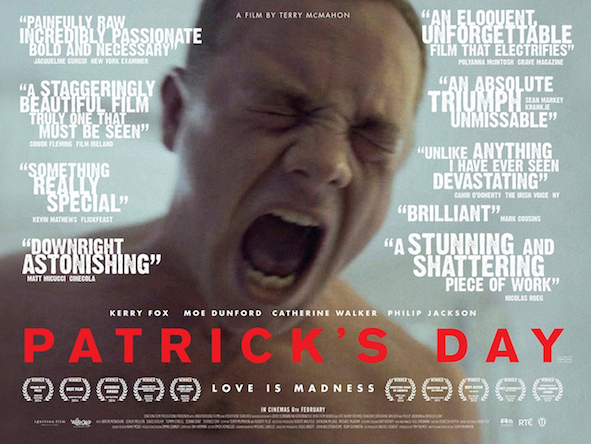
Terry McMahon has brought Irish audiences a stunning piece of work that continues to push the boundaries for Irish cinema. The piece comes after a hugely successful 2014 for Irish film with the likes of John Michael McDonagh’s dark comedy, Calvary, and Lenny Abrahamson’s quirky hit, Frank. The pressure is on this year for films that live up to such predecessors.
Patrick’s Day certainly sets the tone for Irish film in 2015 and grabs your attention from the first scene. Irish actor Moe Dunford gives a stunning and heartbreaking performance as schizophrenic 26-year-old Patrick Fitzgerald. Patrick’s world takes on new meaning when he meets a depressed air hostess Karen Prescott (Catherine Walker), but his mother Kerry Fox refuses to loosen the tight grip she has on her adult son.
Following the development of Patrick and his first real experience of love, sex and independence, his controlling and protective mother does everything in her power to break up the union, with the help of a jaded garda, John Freeman (Philip Jackson). Dunford’s portrayal of a naïve and troubled young man living in a mental institution is truly breathtaking and devastating. The supporting cast adds to the rawness of the film.
The striking cinematography by Michael Lavelle captures the essence of the story and brings it to life. Patrick’s journey is one that will make you laugh, cry and inspire you. Patrick’s Day brings mental health issues to the forefront and does so in a respectful, realistic and highly emotive manner. The message of this film certainly comes to life.
It is safe to say the bar has been raised for 2015 Irish film and I urge you all to see this spectacular film this year.
Albert Brooks, Alessandro Nivola, David Oyelowo, Oscar Isaac and Jessica Chastain in A Most Violent Year. (IMBD)
By Rachael Hussey
With Oscar season in full swing, spending an evening at the cinema is an easy option. Our long winter continues and there is nothing like a warm box of popcorn and some dimmed lights to escape our surroundings. After seeing a trailer for J. C. Chandor’s third movie, A Most Violent Year, I was intrigued. Loving films and all things New York and crime-related, it was an easy choice for my mid-week movie night.
It’s set in 1981, when a Brooklyn based oil tycoon is on his way to the top. Oscar Isaac (Drive, The Bourne Legacy) plays ambitious immigrant Abel Morales, who runs a successful oil company. Isaac does a tremendous job of portraying the juxtaposition of the ruthless capitalist as well as the dedicated family man. Jessica Chastain (Lawless, The Help) plays his fiery New York wife Anna Morales, with spunk and attitude, in many ways tougher than her husband.
The 1980s in New York City were notorious for crime, violence and police corruption and this film does an excellent job of portraying this in a strong yet understated way. As an oil mogul, Abel’s business is continually targeted for robberies, particularly his trucks distributing oil. We see how one truck driver, Julian (Elyes Gabel), copes with the constant threat of armed robbery after experiencing it early in the film. Julian admires his boss, who coming from a similar background against all odds created an empire, successfully assimilating the ‘American Dream’.
The film deals with the protagonists struggle to remain a moral and law abiding entrepreneur while also creating a prosperous empire. Aspiring to a position above his seditious competition Abel struggles to keep his position in the oil world with jealous competition, crime and the law continuously on his tail trying to bring him down. Issues of capitalism and extreme wealth are evident as Morales’ grip on his success slips and his desperation grows while he attempts to hold on to his business.
What’s great about the film is the clever and understated way it portrays the different sides of society: the exuberant wealth, the corruption from the law, the poverty and crime and the hard-working oil employees, representing the working class. While I admire the values of the film, the strong acting and the first-class production values, the essence of this gets lost along the way. As Abel’s obsession with staying on top progresses and his life continues to unravel the audience sees the seedy and corrupt side of this world but it does not happen quickly enough. The message of the story could have been achieved a lot sooner and with a lot more vigour while retaining the style and voice.
A Most Violent Year is a well-produced and well-cast film but it lacks the je ne sais quoi to make it a masterpiece or a classic film that will stand the test of time. While it has some memorable scenes and some beautiful cinematography of New York, the story is a little bit too long; so I suggest you see this if you are in the mood for a slow watch. Despite the title, there is little violence shown and not as much action as one might hope to see in a crime drama.
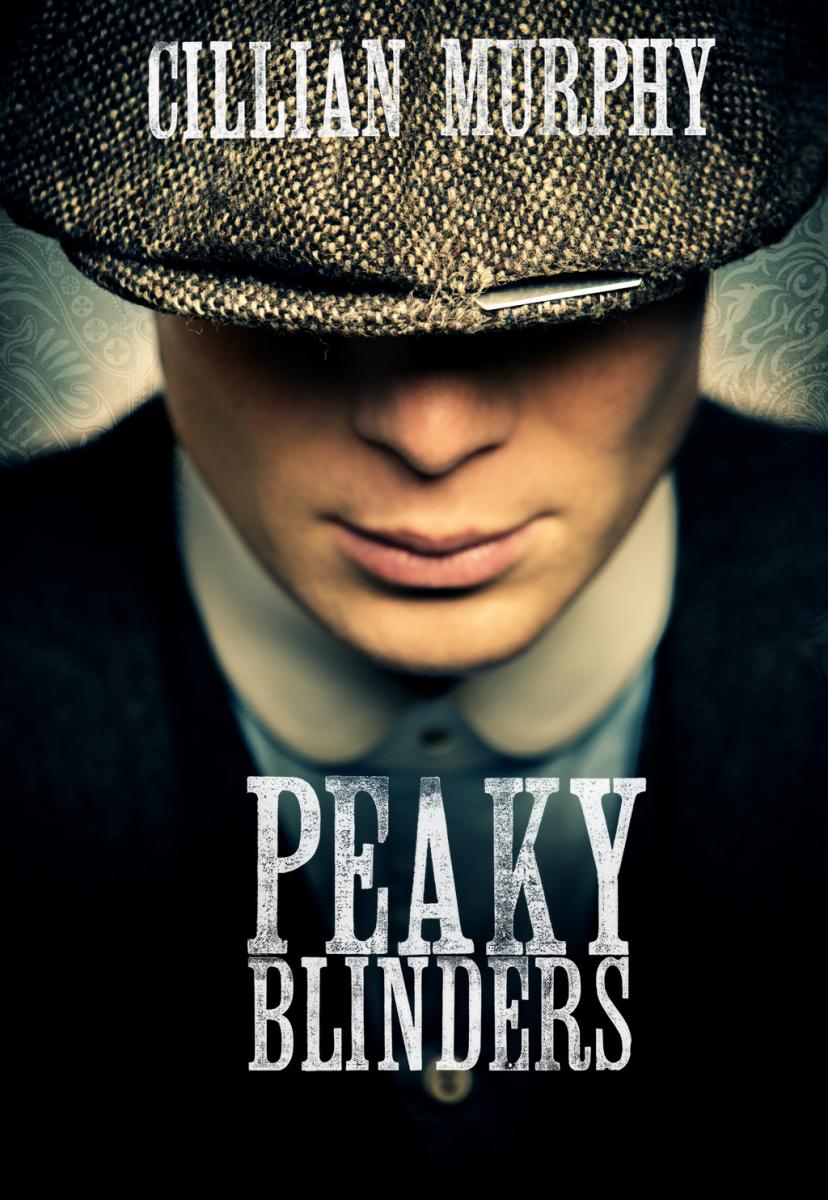
Promotional picture for BBC3 series, Peaky Blinders. (filmaffinity.com)
Rachael Hussey
The fact that I watched the entire first season in one weekend will tell you all you need to know about BBC2 series Peaky Blinders (or maybe about my social life). With only six episodes in the season, you will not be left feeling shortchanged, as they are an hour long and certainly pack plenty of drama in to the sixty minute slot. While it aired originally over a year ago, premiering in September 2013, you can now catch up with season one and two on Netflix.
Set in the mean streets of Birmingham city in 1919, Peaky Blinders deals with the aftermath of World War One both for the soldiers who survived but will never be the same and for the women who were left to pick up the pieces. The series follows the Peaky Blinders gang on their escapades around Birmingham, as they establish their bookkeeping business and deal with family trials and tribulations.
Despite the ridiculous name of the criminal gang there is real historical precedent. A British gang in an earlier period bore the name ‘Peaky Blinders’ due to the razor blades stitched into the front of their caps, ready to blind an enemy. In the show, Tommy Shelby is the head of the gang, with his brothers at his side, causing mayhem wherever they go. Tommy, played by Cillian Murphy, is a force to be reckoned with and his steely looks could frighten the most powerful foe.
The star-studded cast helps make this TV series come alive, along with the first class production values and great script. Actors like Sam Neill, who plays the loathsome Northern Ireland Police Officer Chief Inspector Campbell. and Helen McCrory, who plays the Shelby brother’s Aunt Polly, are along with Murphy the stars of the show and take the drama to another level.
The main storyline through season one pertains to some misplaced weapons that have got into the hands of the Peaky Blinders. With the British police force quickly on their tale to avoid the guns being sold on to the IRA, CI Campbell comes on the scene, travelling from Belfast to take back the weapons. The series sees a game of cat and mouse between bad boy Tommy Shelby and obsessive Campbell. With love interests, enemies, family issues, post-traumatic stress disorder and everything in-between, Peaky Blinders is a strong, well developed and entertaining series.
This series is not for the faint-hearted with plenty of violence and sex so be warned! There is a definite resemblance to HBO’s prohibition-era American series, Boardwalk Empire, in both style and script. Peaky Blinders looks promising so far with strong acting and incredible detail to set and wardrobe. If anything will put you off it will be the accents: it sounds like every actor has taken a different route with the Brummie twang. But don’t let that put you off: by the end of episode two you won’t even be distracted by it.
With temperatures plummeting to minus 7 degrees Celsius this morning in Dublin, what can we do to stay warm?
As February begins and signs of daffodils approach, many did not expect the drop in temperature this week. According to Met Éireann, ‘‘Today will be very cold but mainly dry apart from a few scattered wintry showers of sleet this afternoon – with some light flurries of snow possible too and tonight will be mainly dry, but very cold and frosty, with widespread icy patches as temperatures fall to between -2 and -4 degrees.’
With temperatures remaining below freezing we must look to novel ways to keep warm this February. As a person who dreads the cold and feels the need to wrap up warm even in ten degree weather, I have many tricks to remain toasty in any cold conditions. These options are cheap and effective ways to keep Jack Frost at bay. So, whether you are a poor student trying to keep the heating bills down or someone who spends time outdoors, there are many cost effective ways to keep the cold out.
Hand Warmers
Hand warmers. Photo by Rachael Hussey
Now these are particularly useful if you know you will be spending some time outdoors in the freezing weather, it could be for a sports event, if you work outside or if you have a long walk to work or college. The hand warmers work by disk activation for the first time, instantly heating up and remaining warm for a couple of hours. After the first use you can reheat them by placing them in a bowl of boiling water for five to ten minutes. Once heated you dry them off and they are ready to go. they are most useful in your pockets, putting your toasty hands in to keep warm.
Alternatively, you can keep them under your clothes, warming up your tummy or back whenever you are feeling the cold. You can find these online at Littlewoods Ireland, Go Outdoor Ireland and many pharmacies stock them too. For around a tenner you can have warm hands for hours.
A person wearing long johns. Photo by John Lee (Wikipedia)
Another cheap option to staying snug is thermal wear, okay it is not the sexiest of items but if you are feeling good on the inside it will shine on the outside! Nowadays you can pick up thermal wear in Pennys, Dunnes Stores or any department store. From long sleeved tops to long johns, you no longer have to suffer in sub-zero weather.
A small fleece blanket can become very useful at home for times when you just need that extra level of comfort. Whether you are sitting on the couch watching TV or your room feels like the Antarctic, a fleece throw can be your best friend. A personal tip for those particularly cold nights is to place a fleece blanket between yourself and your duvet, the trapping of the fleece between layers adds the much needed extra warmth.
You can pick up these blankets in Penneys, Dunnes Stores or any home store around the city. Penneys have a blue throw for only six euro and with prices like that you really cannot go wrong.
Once you have braved the elements and have returned to the safety of your home I suggest you pull out the slippers! You do not have to be 85-years-old to enjoy a good pair of slippers. They are much warmer and comfortable than wearing your shoes indoors so find your inner granny and whip out the slippers!
The kind with a sole are most durable but fluffy soft soled slippers are also great. Another tip is to wear slipper socks in bed and if you are particularly cold like me, wear them around the house under your slippers. These items are cheap as chips and again, Penneys and Dunnes are the best places to find these items on a budget. For slippers under a tenner they are a steal!
Lastly, we have the classic cheap and effective way to warm the cockles, the hot water bottle. Small, light and economical, the long established heating method is perfect for a student or someone on a budget to instantly heat up. All you need is your trusty hot water bottle and a kettle with some water. In Ireland the hot water bottle is a staple in any household and with more fashionable covers coming out all the time there is no excuse not to indulge in one.
My personal favourite brand is Fashy, a German brand which lasts for years and is very user friendly, meaning a wide spout to avoid any burns or mishaps. They also have many funky covers to choose from and are relatively inexpensive. Everywhere from Boots to Debenhams stock hot water bottles in Ireland so pick one up and you will not regret it.
We here at TheCity.ie hope you can stay warm this February and if you follow these helpful tips you are sure to find a happier and healthier version of yourself through the cold snap.
Musicians at Gus O’Connor Pub, Doolin, Ireland. Photo by Gerald Tapp.
Dust away the cobwebs at Dublin’s Tradfest this weekend. For most of us January is a time where money is tight and the days are dark and long. You can end your January on a high however with music and craic for five days straight. From Wednesday January the 28th to Sunday the 1st of February there will be performances around Dublin to celebrate Irish traditional and folk music.
With various performances taking place each day there is something for everybody. From Paddy Casey to The Dublin Legends, some of the best of Irish music can be experienced in the heart of Dublin. Every day over the five days there will be various artists performing around Dublin as well as other events relating to traditional Irish music.
Wednesday will see the long established Irish group Hothouse Flowers take to the stage in Saint Patrick’s Cathedral with tickets going for €35.99. For a good cause you can attend a Gala Benefit, Trad Against Racism Night. This Gala is organised by Sport Against Racism Ireland.
According to the website SARI’s ‘aim is to present sporting and cultural events that brings people together from different cultural backgrounds.’ Tickets are selling for €30 apiece.
Along with many popular acts such as Mick Flannery and The Undertones the decision to pick monumental places around Dublin for their events such as City Hall and Dublin Castle to add culture and history to the festival. Be sure to pop in to the city centre and get involved in the Trad culture for the weekend.











You must be logged in to post a comment.