
Tag: racing

  • What it Takes to Win the Toughest Offshore Sailing Race in the World 

    What it Takes to Win the Toughest Offshore Sailing Race in the World 

    By Luke Hurson 

    “It would be the equivalent to winning an Olympic gold medal in what we do.” 

    Irish skipper Tom Dolan became only the third non-French sailor to win the ‘Solitaire du Figaro’, one world’s most prestigious yacht races on September 12.  

    Image credit: La Solitaire du Figaro Paprec Instagram 

    La Solitaire du Figaro Paprec is renowned as the toughest single handed multistage offshore sailing race in the world, with the finish positions for the race calculated on cumulative time. 

    “Three legs they call them, so three separate races between six and seven-hundred miles. We leave on a Sunday and get in on a Thursday, so we’re at sea for four days on our own and then we try to rest and recover as much as we can and then we go again the following Sunday. We do that for three weeks straight,” Dolan said. 

    The Mullagh man secured victory on the 55th edition of the race aboard his boat, the ‘Smurfit Kappa-Kingspan’. He finished ninth in the first of two stages but went on to win the second 515-mile stage and then finished 7th in the third and final stage but had already done enough to clinch the overall lead. 

    Dolan grew up on a farm in Mullagh, on the border of Meath and Cavan where he developed a keen interest in boats from a young age. 

    “When I was young, I used to love pirate movies, I used to make boats out of cardboard boxes,” he said. Dolan explained that this caught his father’s attention, and so they decided to buy a boat. 

    “We went up to Boyle in Roscommon and bought this little wooden boat. We used to go out on Lough Ramor in Cavan and float about a bit, I suppose that’s how I got the taste for it.” 

    He stopped sailing during his teenage years as his friends were more interested in football than boats. Despite this, whenever he sailed, he felt it always came naturally to him. 

    “My mother sent me to Dublin on a holiday for a week and I went to a sailing school out in Dún Laoghaire, I remember being good at it,” he said. 

    The 37-year-old first heard about La Solitaire when working for a boat racing association called Glenans in Cork. 

    “There used to be a lot of French volunteers that would come over and work during the summer. A buddy of mine started telling me about this race that he was going to try to do when he went back to France and he started showing me videos on YouTube. I remember thinking that ‘this is mad’, and ‘how do the skippers do all of this stuff on their own especially for so long?” he said. 

    Image credit: Tom Dolan Skipper Instagram 

    He decided to move to Concarneau, France in 2011 due to the lack of accessibility for sailing in Ireland. 

    “I wanted to learn more about boats and sailing. I wanted to be a technician on sailing boats. I never thought I’d end up being a skipper and definitely never thought I’d end up winning it, (La Solitaire). I first landed in France 12 years ago, so I’ve spent a third of my life there almost,” Dolan said.  

    The multiple stage race is an extremely challenging task. “It’s very intense because the level is so high and all the boats are the same, so there is always someone beside you. You’re continuously competing and you’ve no help. If you hurt yourself, you’ve got to patch yourself up, there’s no manager on the sidelines or substitutions, you’re completely on your own,” he said. 

    After spending so much time by himself, Dolan finds the return after the race a shock to the system. 

    “When you get in, there’s all these cameras and people throwing champagne and it’s a bit of a shock. You miss being on your own actually.” 

    Time is still needed for Dolan to fully process his big win. “It’s a bit weird, devoting 12 years of your life to something and now it’s done, I have to take it in and enjoy the moment for a bit.” 

    He hopes to return to Ireland for a trip to visit family in the near future. 
  • Greyhound Racing: Are we Supporting a Blood Sport?

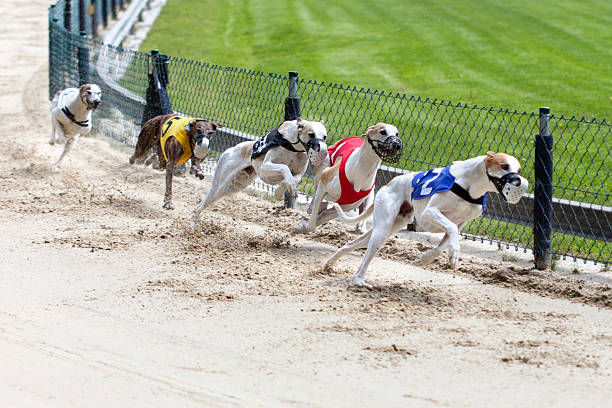
    Greyhound Racing: Are we Supporting a Blood Sport?

    Ellen Corrigan investigates Greyhound racing during their busy Christmas period and asks if the lucrative sport is ethical.

    “If you’re looking for something different for a great night out, you’ll find it at Shelbourne Park Greyhound Stadium. Nothing beats the excitement of greyhound racing, and some of the most prestigious greyhound fixtures of the year take place right here!”

    This is the description that features on the Shelbourne Park Greyhound Stadium website. They, along with other greyhound racing stadiums such as Curaheen and Galway Racing Park, advertise their racing stadiums as an entertainment venue. They promote their venues as a place to drink with friends, enjoy a meal and even host a communion or confirmation party for children.

    Undoubtedly, many businesses will turn to these venues to host their annual Christmas party. However, behind the drinks and quick bets is a sport with an uncomfortable history.

    The Irish Greyhound Board (IGB) is a semi-state body established to regulate and promote greyhound racing. On their website, they also advocate greyhound racing events as “a fun filled night out”, promising to provide entertainment for the whole family.

    What each website fails to mention, however, is the fact that approximately 8,000 registered racing greyhounds disappear every year. The Greyhound Rescue Association of Ireland (GRAI) estimates that this figure could be closer to 10,000. They estimate that 3,000 greyhounds are submitted to pounds every year, the majority of which end up being euthanised.

    Worryingly, some reports suggest the fate of these missing dogs can be horrific. In May 2017, the Irish Times reported on comments made by Aideen Yourell of the Irish Council Against Bloodsports. She said: “They (greyhounds) can be killed in all sorts of fashions. We’ve had incidents of finding them shot, ears cut off and brutalised, drowned or sold on to live in appalling states.”

    In 2013, six greyhounds were found shot in the head and dumped in a quarry in Limerick. A newspaper report from the time explained how the dogs had failed to “show promise at racing trials”.

    This was one of many incidents reported in County Limerick, where cases of large graves containing bodies of greyhounds have been discovered. The GRAI have also described cases where members of the public have found dogs hanging from trees.

    They say it is common practice for owners of unwanted greyhounds to tie the animal to a short rope connected to a tree, with their paws barely touching the ground. The animal becomes distressed, and subsequently hangs itself in its struggle.

    With such distressing reports publicly surfacing, has it become an issue for the Irish government who fund and support the greyhound racing industry?

    Socialist Party TD Paul Murphy first voiced his concerns about the number of missing greyhounds in the Dáil in 2013. At the time, he said “Figures show that these dogs do not end up in rescues or re-homed. Many end up shot or beaten over the head, then thrown into a pit or quarry as has been shown in recent high profile cases.”

    Recently, he objected to the government’s allocation of €80 million for the Horse and Greyhound Racing Fund, saying “Another year, another €80 million for the horse and greyhound racing industries … how long can you continue to ignore the horrific conditions faced by greyhounds in this industry?”

    Despite the evidence of cruelty, greyhound racing is still promoted as an invaluable tourism asset. A study conducted by high-profile economist Jim Power in 2010 attempted to cast the Irish greyhound industry in a positive light, promoting its tourism value. The report, prepared for the Irish Greyhound Board, said: “The industry employs just over 10,300 people directly and indirectly. The gross wage bill generated by this employment is estimated at €207 million per annum and the tax contribution from this employment is estimated at €21 million.

    “The total cost to greyhound owners each year of keeping the ‘greyhound pipeline’ in operation is around €244 million. This is a significant amount of expenditure, and much of it is injected into local economies and supports thousands of local jobs. The IGB has delivered a very impressive financial performance in recent years, and the industry has been strongly supported,” the report also said.

    With the industry generating such revenue, the battle to bring an end to greyhound racing seems almost impossible. Dr. Andrew Kelly, C.E.O. of the ISPCA, acknowledges this struggle. When contacted, he said: “The reality is that there is no prospect of greyhound racing or hare coursing being banned in our generation – whilst protesting and calling for a ban (as some organisations do) has a place, we believe that the greatest improvements for greyhound welfare will be achieved by engaging with the industry and lobbying key decision makers and legislators for change.”